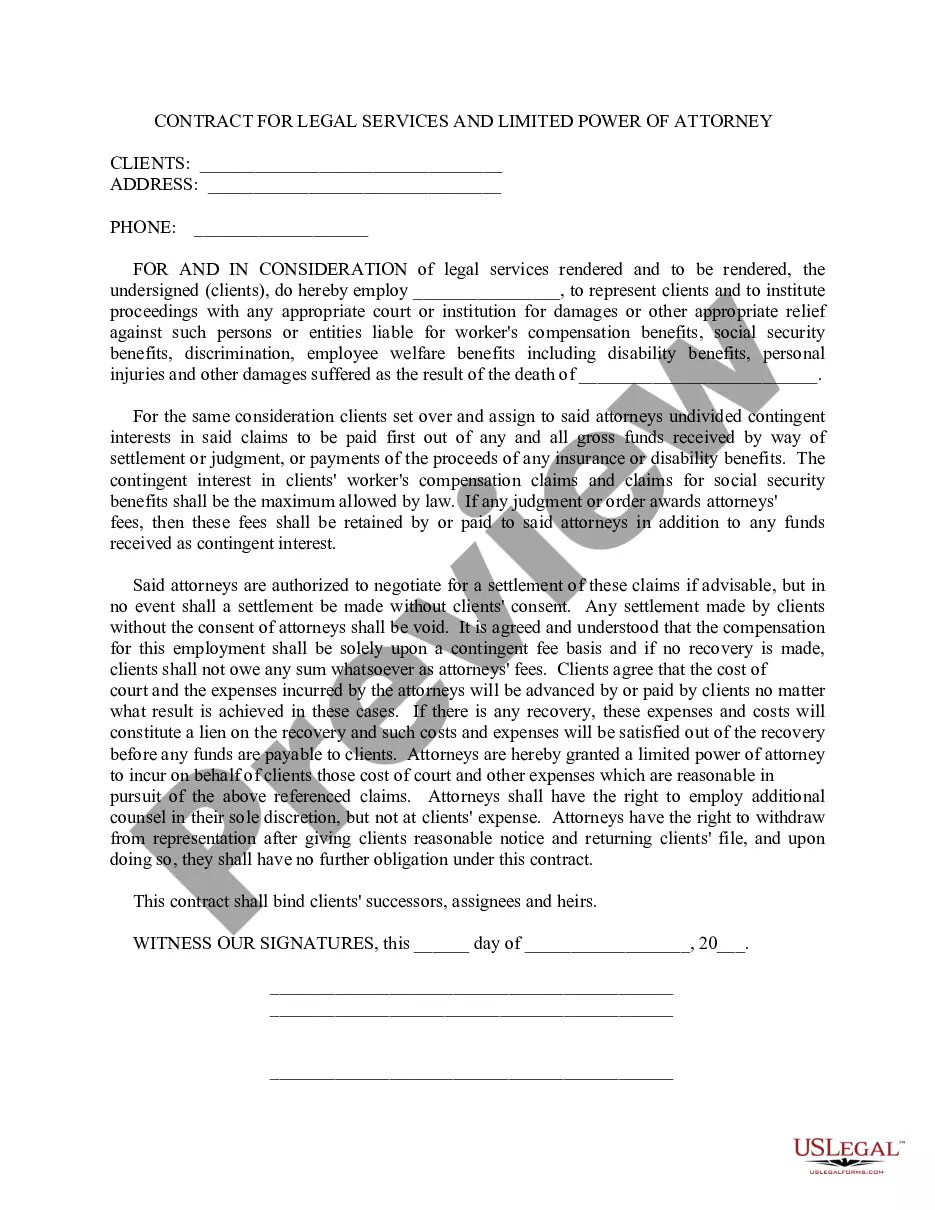
Louisiana Judgment Mutual Restraining Orders Divorce
Overview of this form
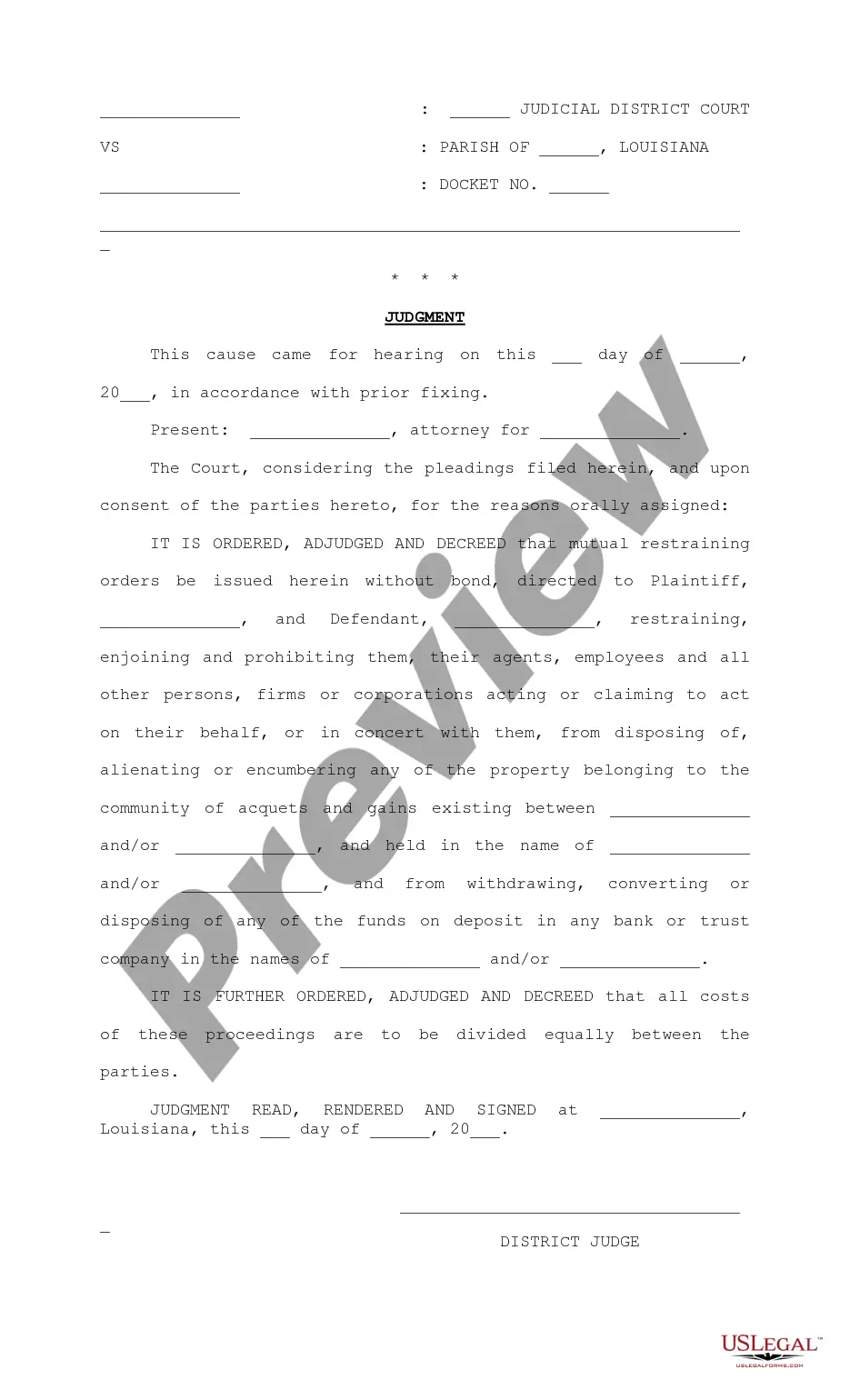
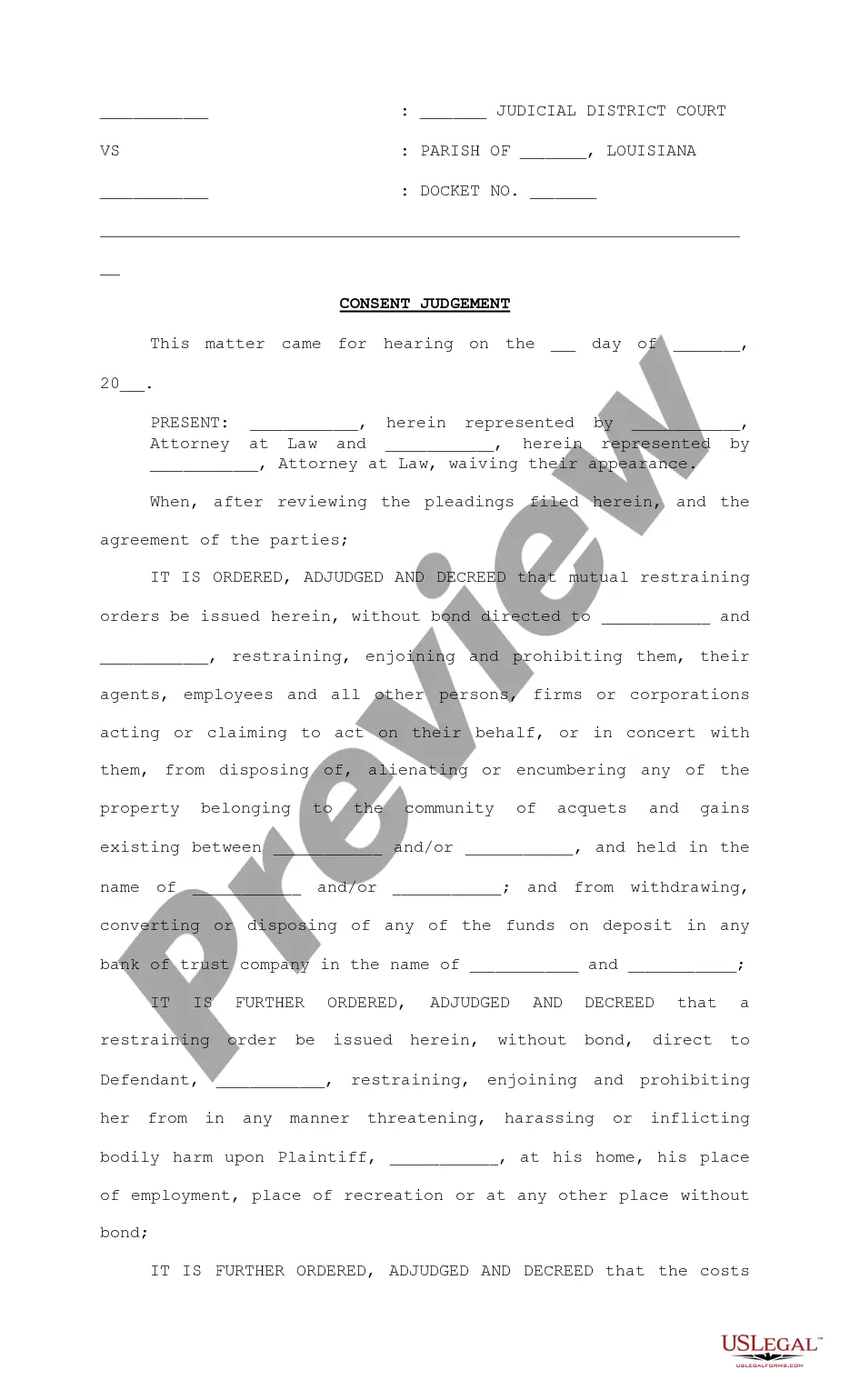
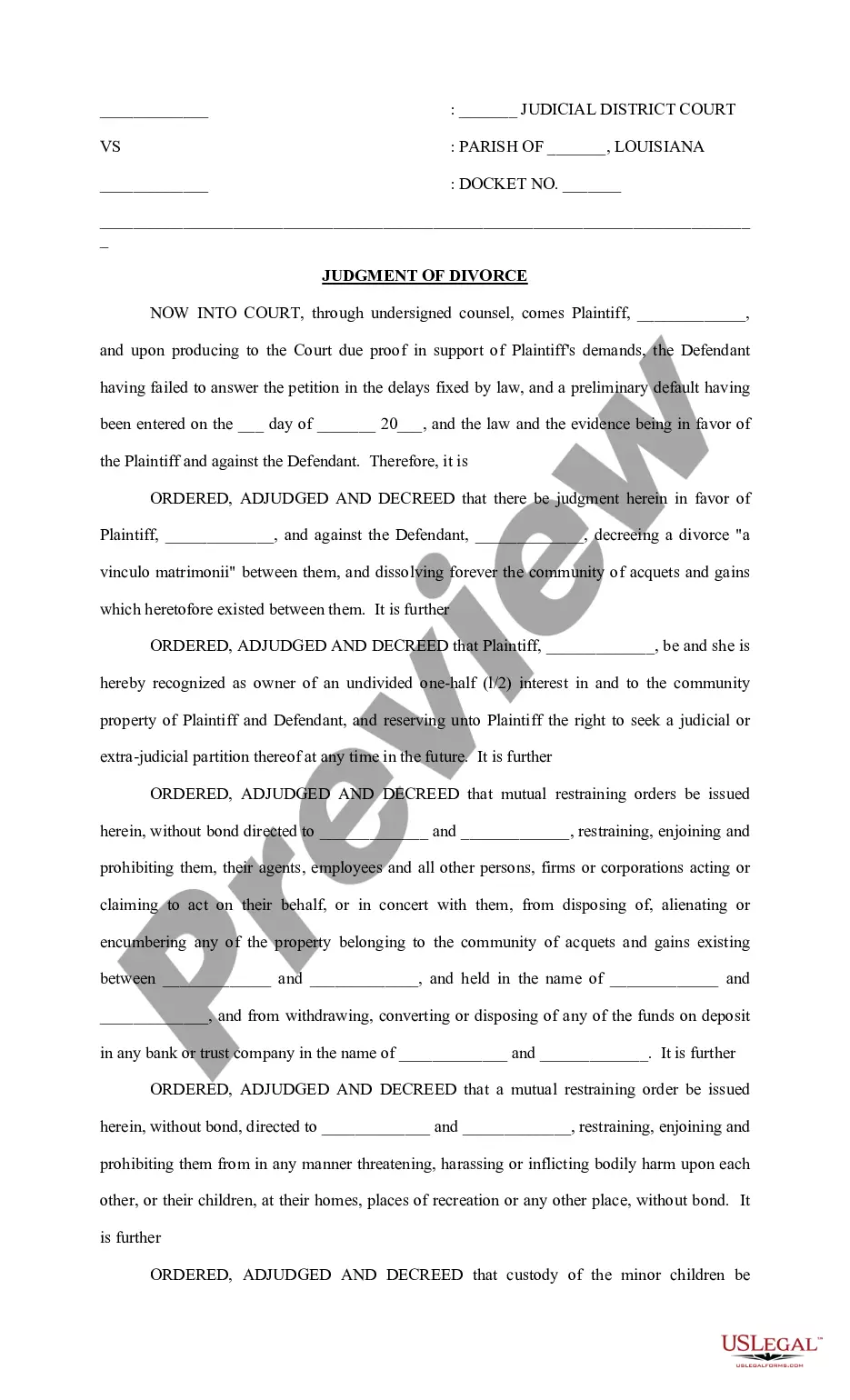
The Judgment Mutual Restraining Orders Divorce form is a legal document that establishes mutual restraining orders between parties in a divorce case. Its primary purpose is to prevent both parties from disposing of or encumbering community property and from withdrawing funds from shared bank accounts during the divorce process. This form is essential for ensuring that both parties maintain their assets and rights until the divorce is finalized, setting it apart from other divorce-related forms that may not include these specific protective measures.
Key parts of this document
- Identification of the parties involved in the divorce.
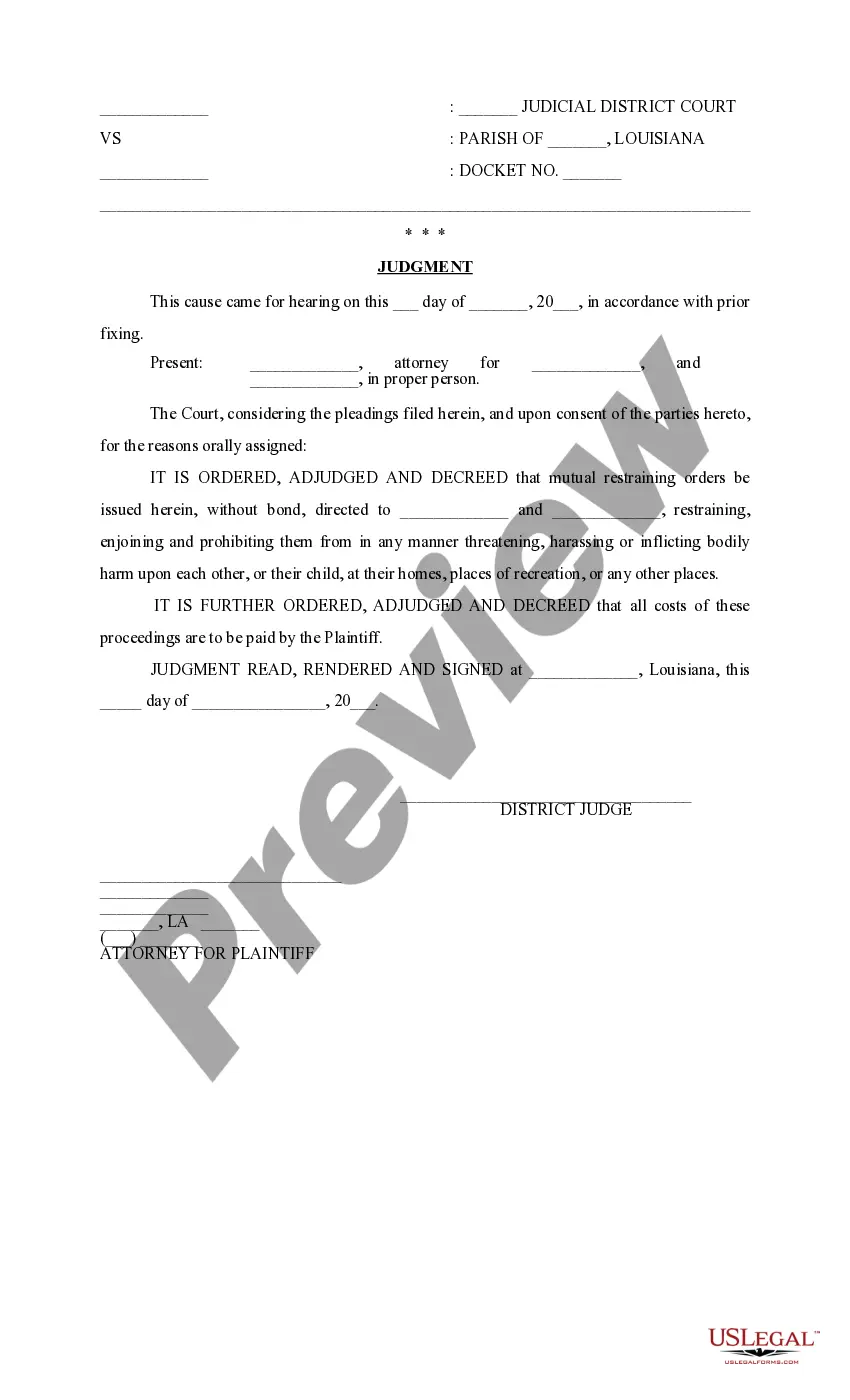
- Provision directing the issuance of mutual restraining orders.
- Clause prohibiting disposal or encumbering of community property.
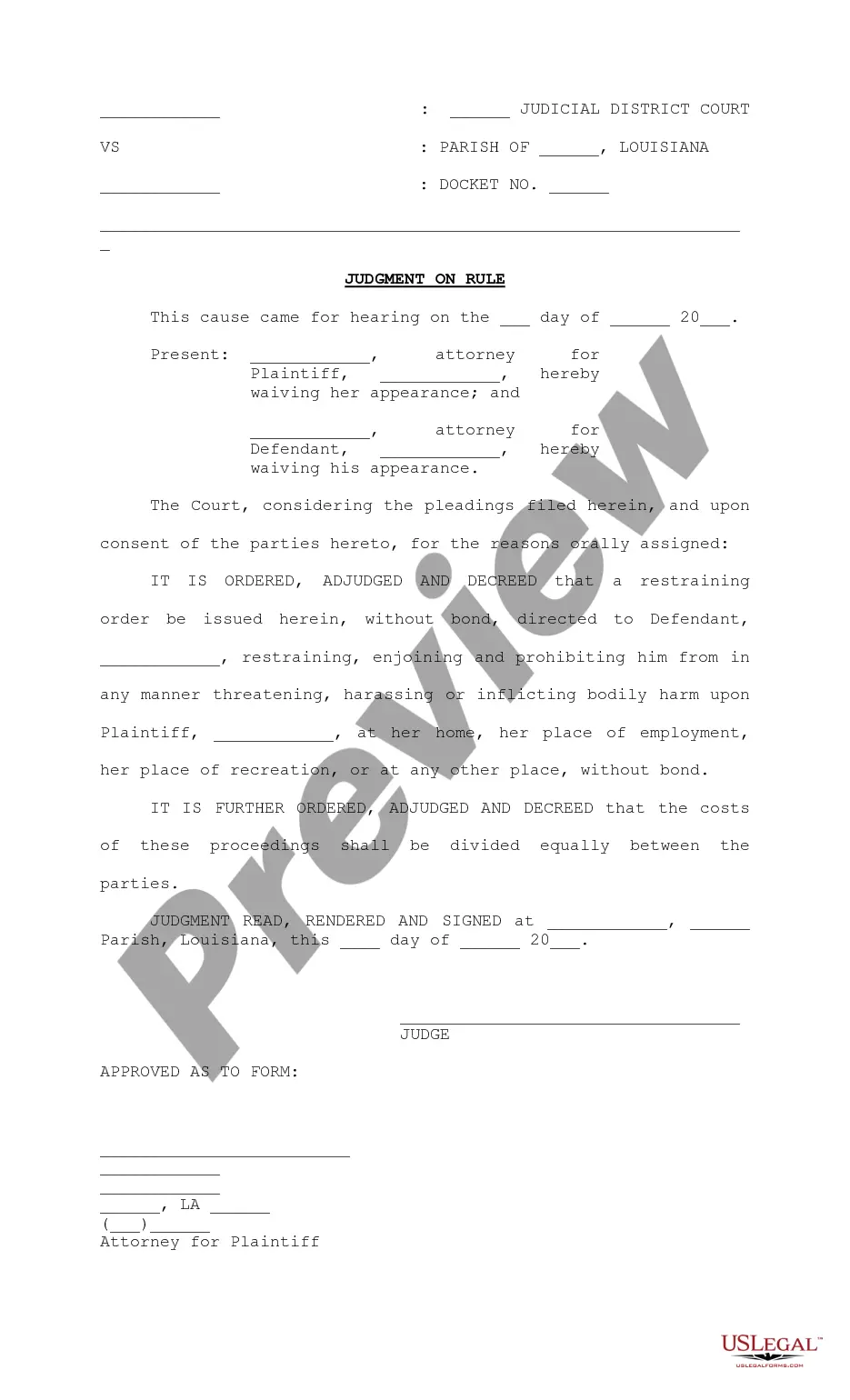
- Instruction regarding the equal division of proceeding costs.
- Date and signature lines for judicial and attorney approval.
When to use this document
This form should be used when both spouses in a divorce agree to prevent the other from selling, transferring, or otherwise diminishing the value of community property. It is particularly important to use this form if there are shared bank accounts or other communal assets that need to be protected during the divorce proceedings to avoid potential disputes or financial harm.
Who this form is for
- Spouses who are undergoing a divorce and wish to protect their shared assets.
- Individuals who have mutually agreed upon the need for restraining orders to safeguard community property.
- Parties involved in a divorce that may have contentious financial aspects warranting mutual legal protections.
How to complete this form
- Begin by entering the names of the Plaintiff and Defendant in the designated areas.
- Specify the community property that needs to be protected under the restraining orders.
- Include the docket number and other relevant case identification details.
- Fill in the date of the agreement and the court's location for the judgment.
- Ensure both parties sign the form, along with their respective attorneys, if applicable.
Notarization requirements for this form
Notarization is generally not required for this form. However, certain states or situations might demand it. You can complete notarization online through US Legal Forms, powered by Notarize, using a verified video call available anytime.
Get your form ready online
Our built-in tools help you complete, sign, share, and store your documents in one place.
Make edits, fill in missing information, and update formatting in US Legal Forms—just like you would in MS Word.
Download a copy, print it, send it by email, or mail it via USPS—whatever works best for your next step.
Sign and collect signatures with our SignNow integration. Send to multiple recipients, set reminders, and more. Go Premium to unlock E-Sign.
If this form requires notarization, complete it online through a secure video call—no need to meet a notary in person or wait for an appointment.
We protect your documents and personal data by following strict security and privacy standards.

Make edits, fill in missing information, and update formatting in US Legal Forms—just like you would in MS Word.

Download a copy, print it, send it by email, or mail it via USPS—whatever works best for your next step.

Sign and collect signatures with our SignNow integration. Send to multiple recipients, set reminders, and more. Go Premium to unlock E-Sign.

If this form requires notarization, complete it online through a secure video call—no need to meet a notary in person or wait for an appointment.

We protect your documents and personal data by following strict security and privacy standards.
Mistakes to watch out for
- Failing to fully identify the community property subject to the restraining orders.
- Not having both parties sign the form, which is crucial for its validity.
- Leaving out the docket number or relevant case information.
- Not reviewing state-specific requirements before submission.
Benefits of using this form online
- Immediate access to legally drafted templates by licensed attorneys.
- Convenience of downloading and completing the form at your own pace.
- Editability allows users to tailor the form to their specific needs.
- Secure storage of documents available for future reference.
Looking for another form?
Form popularity
FAQ
Legally, you can date while going through divorce proceedings. If you have a covenant marriage, as recognized by the state of Louisiana, you may need to go through significant counseling before moving on, including dating, since a covenant marriage makes it much more difficult to pursue divorce.
Usually yes, but sometimes no. Temporary restraining orders will appear so law enforcement officers can see it.But if the hearing results in a permanent restraining order, it goes on your record. But even restraining orders that should be expunged sometimes stay in the system longer.
In a 103 divorce, the spouses must live separate and apart for at least 180 days prior to the filing of the petition (365 days if there are minor children involved).You must have an agreement on child support and custody or a trial on those issues with a judgment in order to get a divorce with children in Louisiana.
The answer to your question is no, if no reason is given, then a judge will not grant a protective order (what a restraining order is known as in the State of Texas). Keep in mind that even if you think that is no reason for a protective order, the person...
When parents choose to end their marriage through divorce, they may need to address a variety of complex child custody issues.However, protective orders can also be based on false accusations, or they may be used in an attempt to gain an unfair advantage during divorce.
Louisiana provides for fault and no-fault divorce options.Under a 102 divorce, a spouse can file a petition for divorce, allege jurisdiction and venue, and request a judgment of divorce after the parties have lived separate and apart from service of the petition or written waiver of service for a period of 180 days.
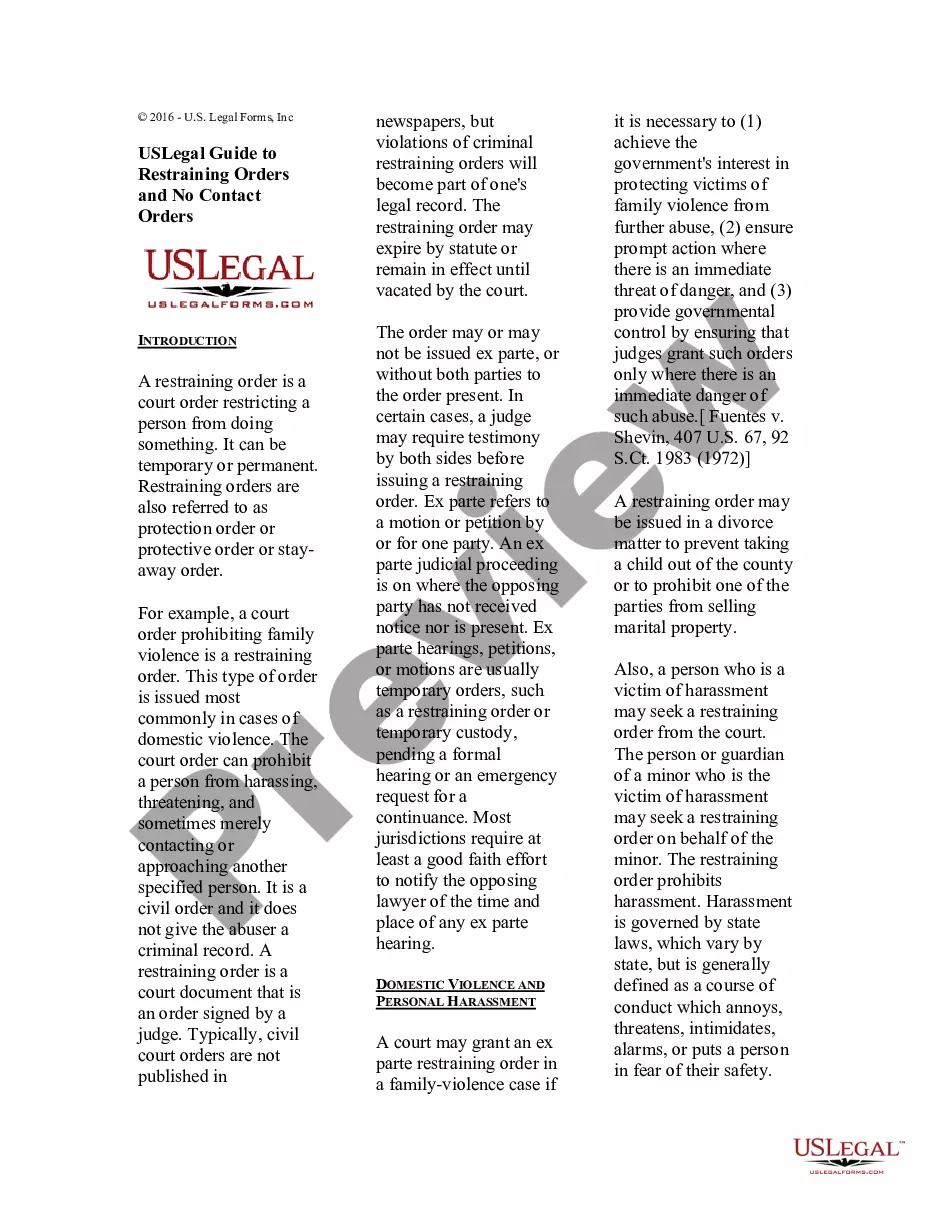
The process of going through a divorce takes an emotional toll on those involved, and can sometimes bring out the worst in even the nicest people. When it comes to your safety and the safety of your children, you can never be too careful, which is why restraining orders are common during a divorce.
In a proceeding for a separation from bed and board in a covenant marriage, a court may award a spouse all incidental relief afforded in a proceeding for divorce, including spousal support, claims for contributions to education, child custody, visitation rights, child support, injunctive relief and possession and use
The only time that you should file is when your ex-partner behaved in a way that warrants a restraining order. If you lie about your reasons for getting a restraining order against your ex, you could be the one who it hurts. Your partner can dispute the order.