Louisiana Judgment mutual restraining orders
Overview of this form
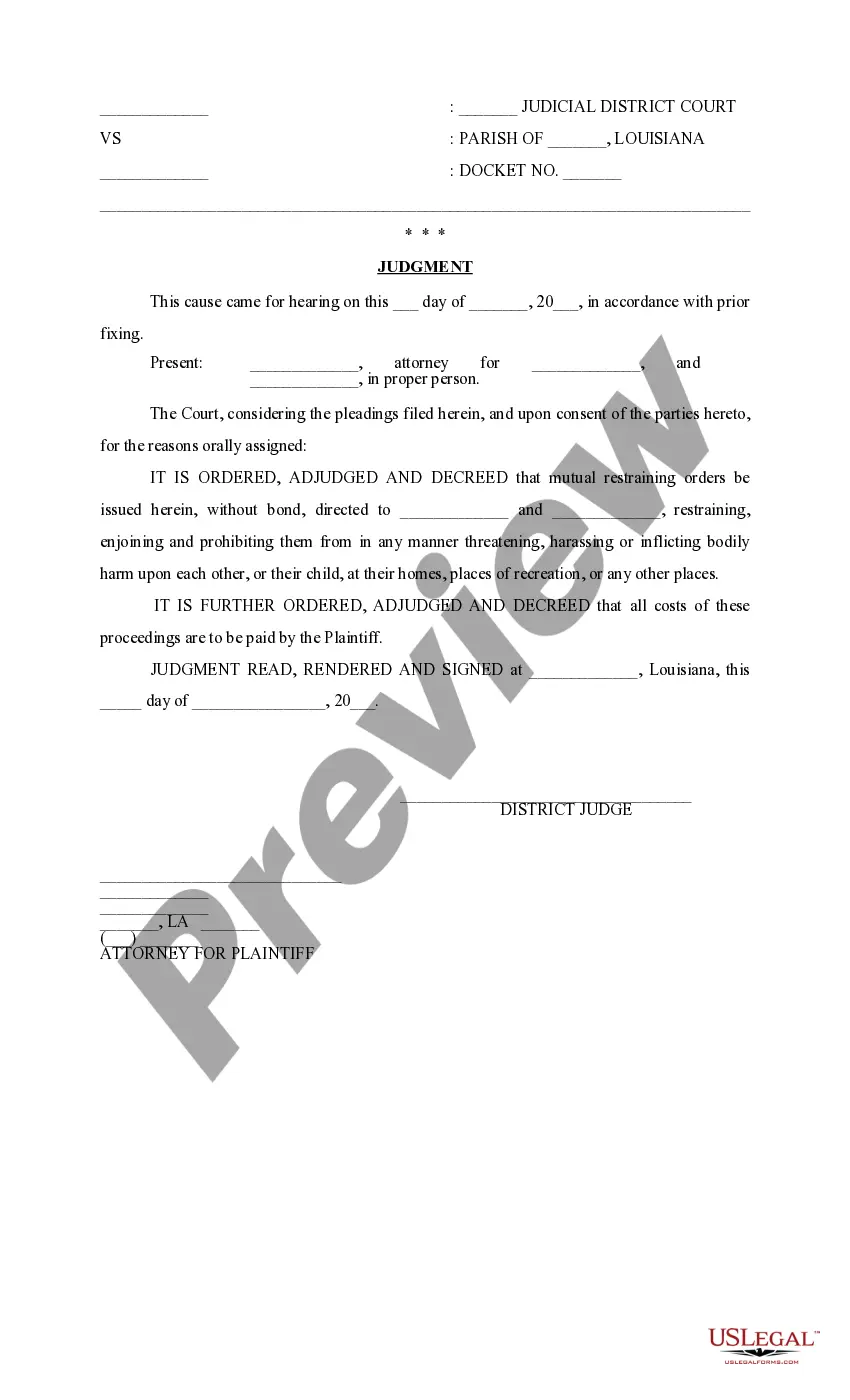
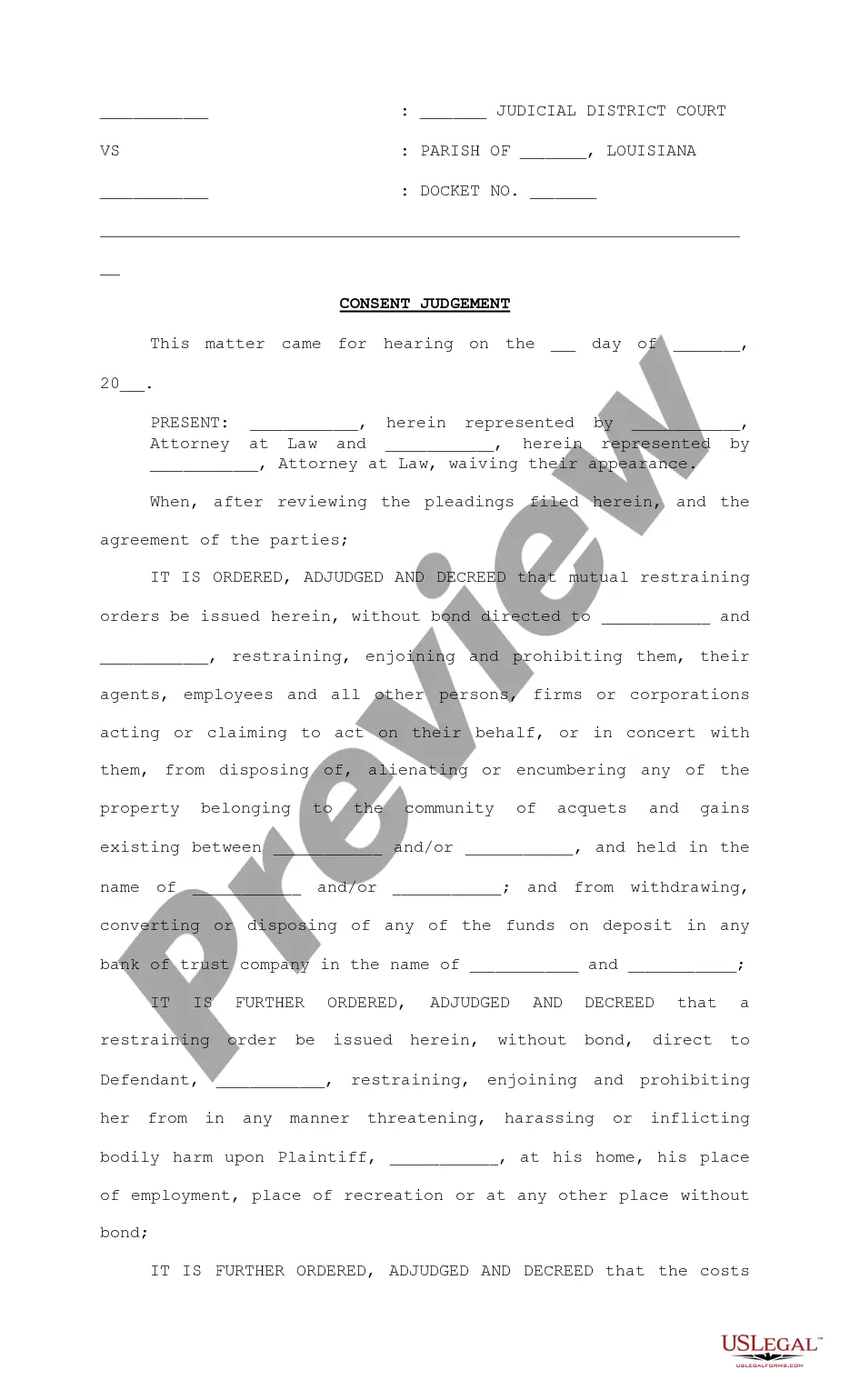
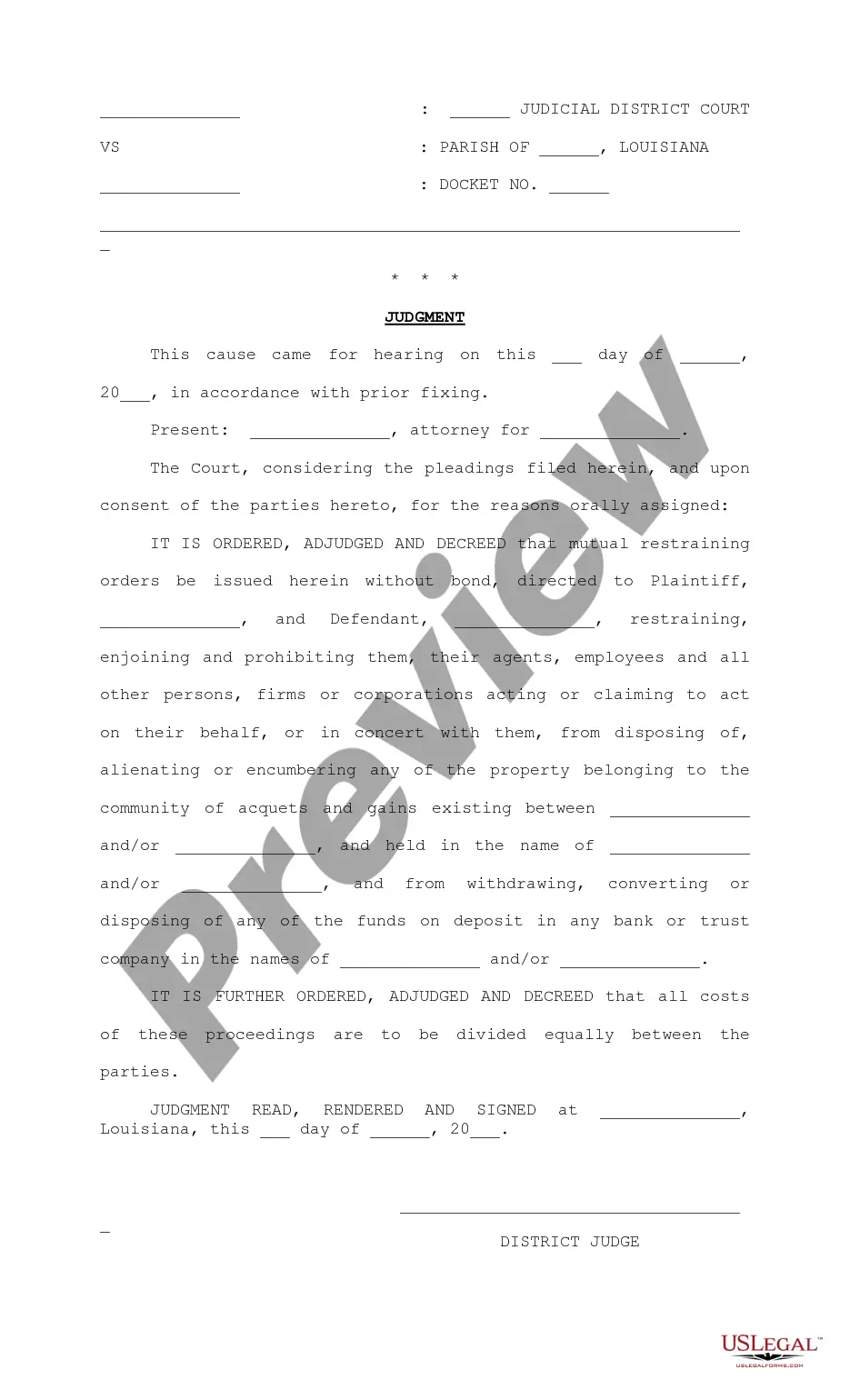
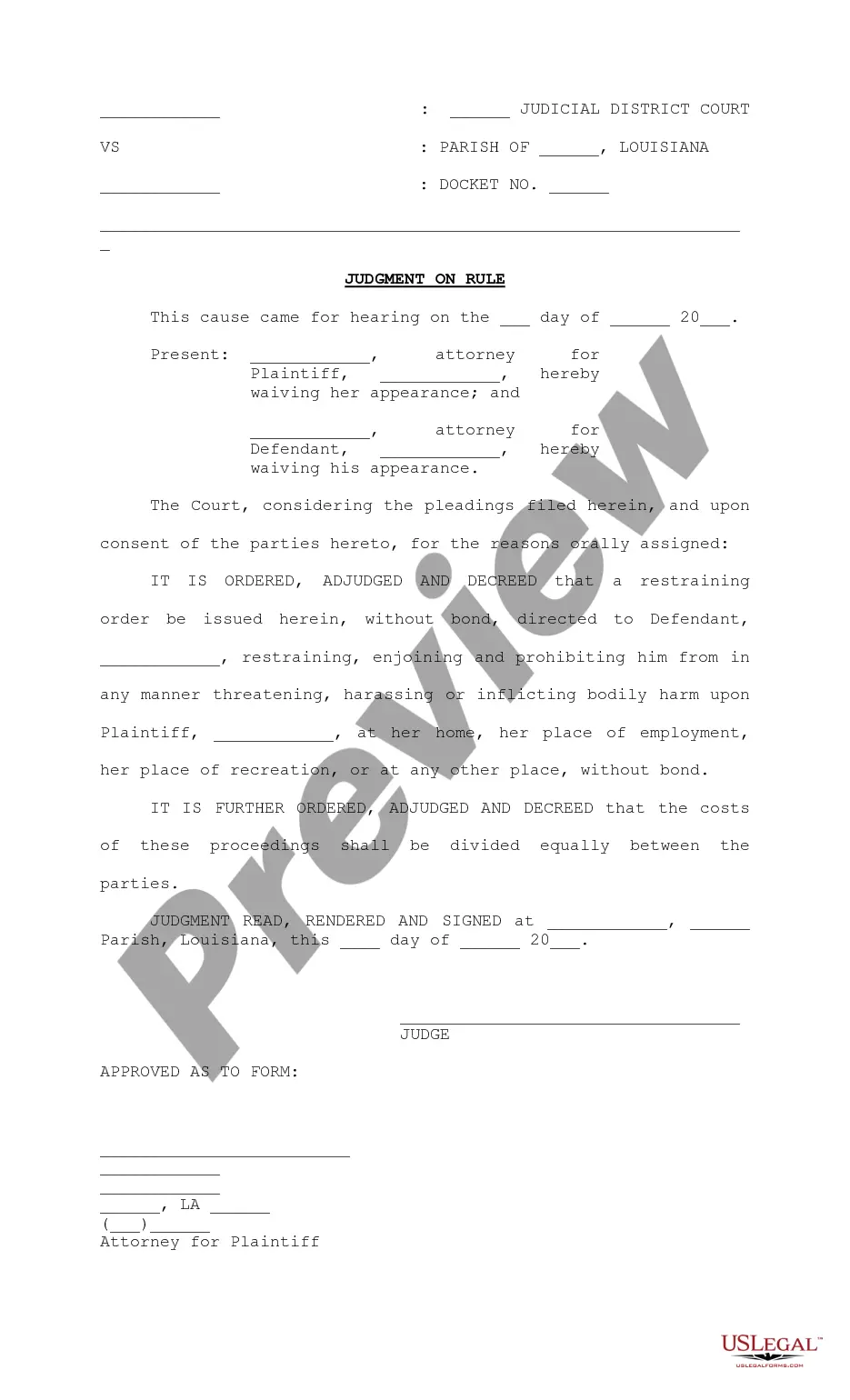
The Judgment mutual restraining orders form is a legal document used in divorce cases to obtain mutual restraining orders issued by a court. This form prohibits the parties involved from threatening, harassing, or harming each other or their child. Unlike other judgments, this form represents a Consent Judgment, meaning it is based on an agreement between the parties to resolve the matter amicably, thereby ending the litigation with an enforceable court order.
Form components explained
- Court information: Includes details about the court, such as the parish, and docket number.
- Present parties: Names of the parties involved and their legal representation.
- Mutual restraining orders: Specific orders prohibiting threats, harassment, or harm between the parties and regarding their child.
- Cost responsibility: Indicates that the plaintiff is responsible for all court costs associated with the judgment.
- Date and judge's signature: Required for the judgment to be valid and enforceable.
Common use cases
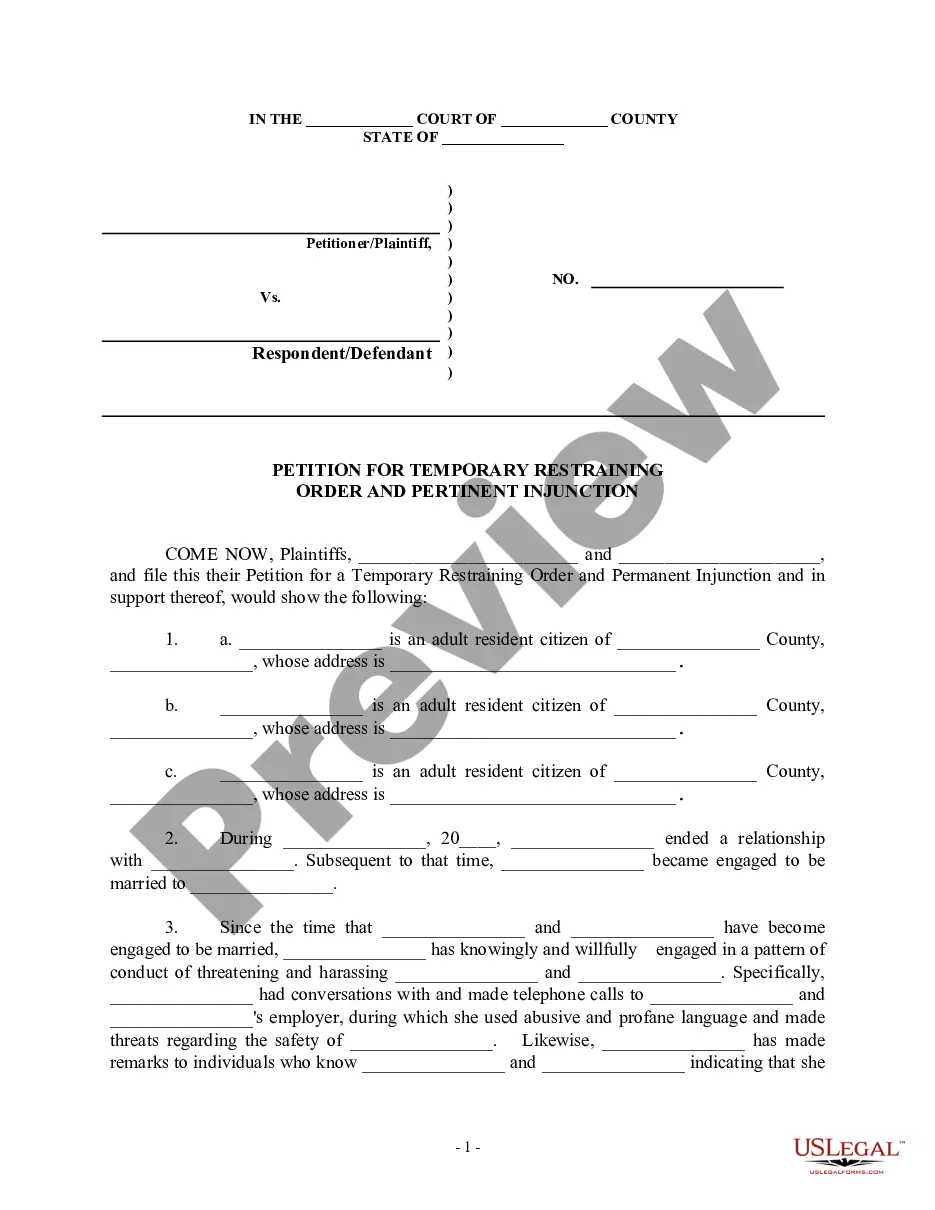
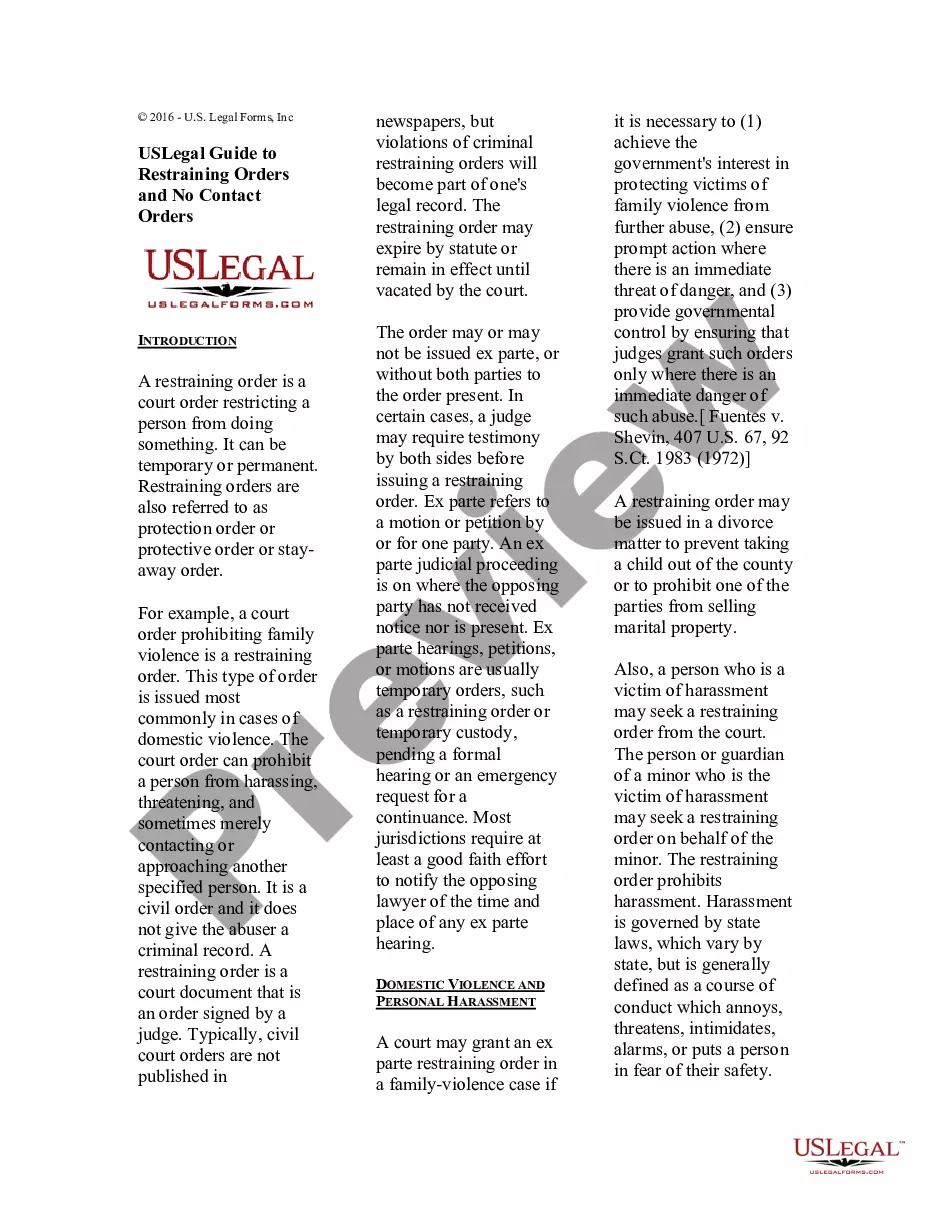
This form is used when parties involved in a divorce or custody case agree to mutual restraining orders to prevent any form of threats or harassment. It is particularly relevant when there is a concern for safety between the parties or for the well-being of a child involved in the proceedings.
Who can use this document
This form is intended for:
- Individuals going through a divorce who require court-ordered mutual restraining orders.
- Parents seeking protection for themselves and their children from potential threats or harassment by the other parent.
- Parties who have reached an agreement on the terms of their mutual restraining orders.
How to prepare this document
- Identify the parties: Fill in the names of the parties involved in the divorce case.
- Enter court information: Include the parish and docket number at the top of the form.
- Specify the restraining orders: Clearly outline the prohibitions against threatening, harassing, or harming each other or their child.
- Indicate responsibility for costs: State that the plaintiff will pay all court costs associated with the judgment.
- Provide dates and signatures: Include the date of the hearing and ensure the judge's signature is obtained for validity.
Notarization guidance
Notarization is not commonly needed for this form. However, certain documents or local rules may make it necessary. Our notarization service, powered by Notarize, allows you to finalize it securely online anytime, day or night.
Get your form ready online
Our built-in tools help you complete, sign, share, and store your documents in one place.
Make edits, fill in missing information, and update formatting in US Legal Forms—just like you would in MS Word.
Download a copy, print it, send it by email, or mail it via USPS—whatever works best for your next step.
Sign and collect signatures with our SignNow integration. Send to multiple recipients, set reminders, and more. Go Premium to unlock E-Sign.
If this form requires notarization, complete it online through a secure video call—no need to meet a notary in person or wait for an appointment.
We protect your documents and personal data by following strict security and privacy standards.

Make edits, fill in missing information, and update formatting in US Legal Forms—just like you would in MS Word.

Download a copy, print it, send it by email, or mail it via USPS—whatever works best for your next step.

Sign and collect signatures with our SignNow integration. Send to multiple recipients, set reminders, and more. Go Premium to unlock E-Sign.

If this form requires notarization, complete it online through a secure video call—no need to meet a notary in person or wait for an appointment.

We protect your documents and personal data by following strict security and privacy standards.
Common mistakes
- Failing to complete all required sections of the form.
- Not obtaining the judge's signature, which is necessary for enforceability.
- Leaving out the court information, which can result in delays or rejections.
Why complete this form online
- Convenience of downloading the form directly from your home.
- Editability allows you to customize the form based on your specific circumstances.
- Access to forms drafted by licensed attorneys ensures compliance with legal standards.
Looking for another form?



Form popularity
FAQ
The cost to file a request for restraining order is $148.50. If you are unable to pay the cost, you may fill out a Motion to Proceed In Forma Pauperis. You can obtain this form from the Civil Division Office in Room 251 or by calling 389-3017.
In situations where a court issued a restraining order that lack jurisdiction, that order is also invalidated. If this is proven during the trial, you are not bound by such an order. Falsely accused. In case you are falsely accused of violating a restraining order, a defense attorney can clear you of all the charges.
If a Judge hears from an individual about past cases of physical or emotional abuse without a good explanation from the other side, a restraining order can be granted.If the connection between the parties is something else, like neighbors, then the restraining order is a civil one, not domestic violence.
There are typically two reasons for a denied restraining order petition: Petitioner did not establish a claim for relief. Petitioner did not appear at the time set for the ex parte hearing on the petition.
After a full court hearing, a judge can issue a protective order. A protective order can generally last up to 18 months, and can later be renewed after a hearing in front of a judge. The parts of the protective order that tell the abuser to not abuse, harass, or interfere with you can last forever.
You can fill out and file a Response to Request for Civil Harassment Restraining Orders (Form CH-120. ) where you tell the judge your side of the story about what happened. Even if you do not file a Response, GO TO YOUR HEARING!
The court is looking for a description of your relationship to the respondent, when, where, what happened, and who did what to whom. Using the facts of the incident only, keep your statement brief and to the point. Briefly describe the most recent incident of abuse and/or threats of abuse or other behaviors.
Emergency Temporary Restraining Orders: If you are in need of emergency protection outside of regular court hours, the court may grant you an emergency temporary restraining order if there is an immediate and present danger of abuse. The judge must consider any and all past history of abuse, or threats of abuse, in