Mississippi Warranty Deed from Individual to Individual with Retained Life Estate
What is this form?
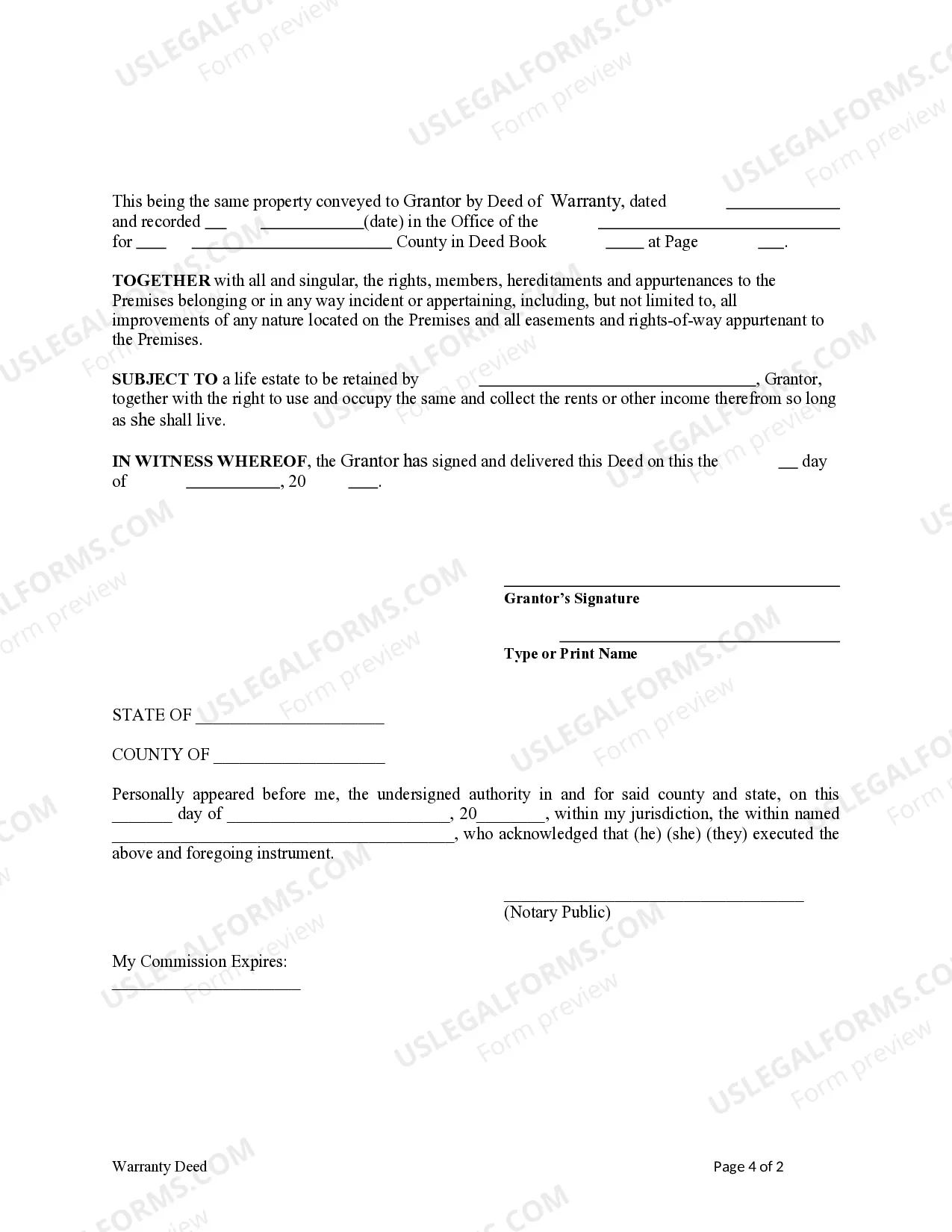
This form is a Warranty Deed from Individual to Individual, which allows the Grantor to transfer property to the Grantee while retaining a life estate. This means the Grantor can continue to live on or use the property until their death. This form is unique as it combines a property transfer with a retained life interest, distinguishing it from standard quitclaim deeds or traditional warranty deeds without retained interests.
Key components of this form
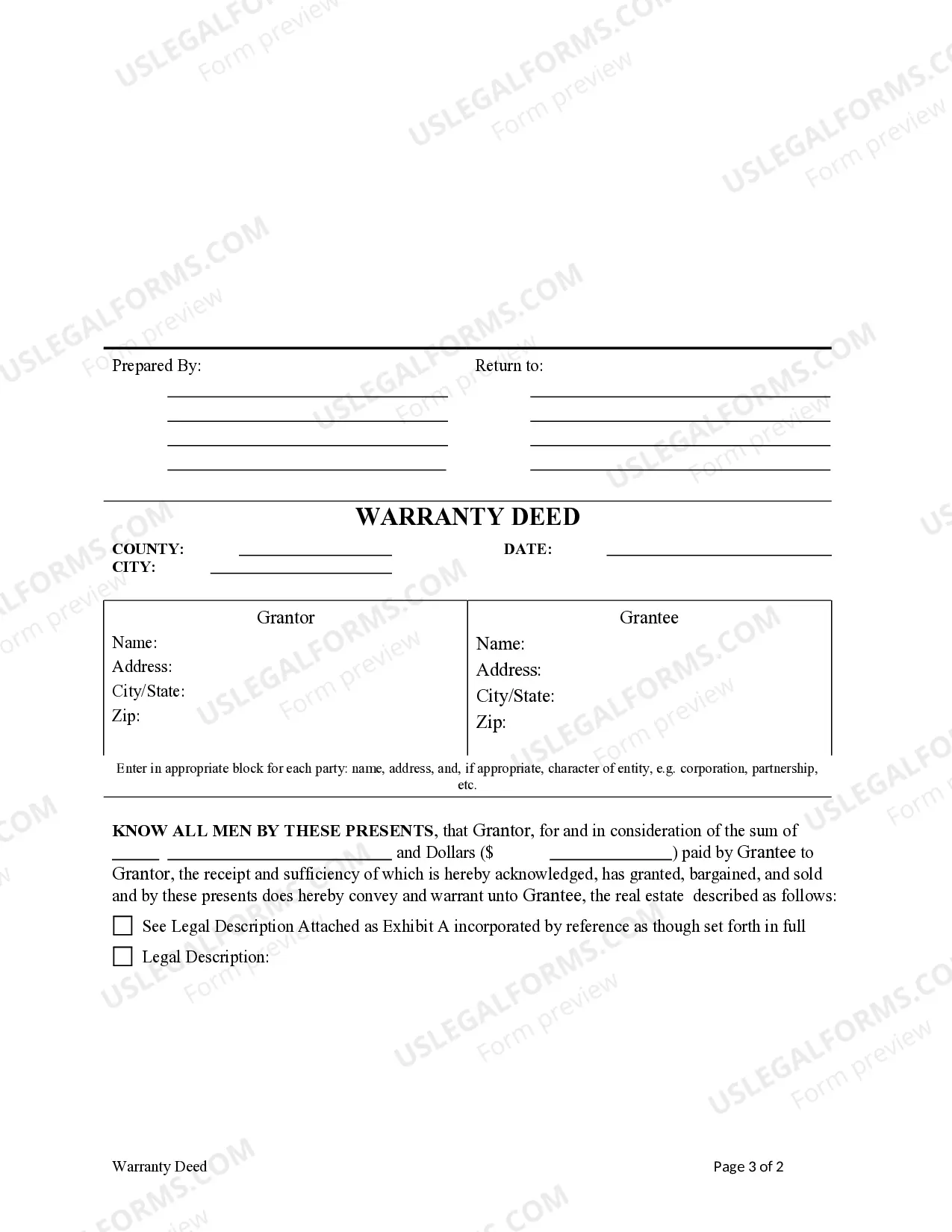
- Identification of the Grantor and Grantee.
- Description of the property being conveyed.
- Retention of a life estate by the Grantor.
- Legal language ensuring compliance with state laws.
- Signature fields for both parties involved in the transaction.
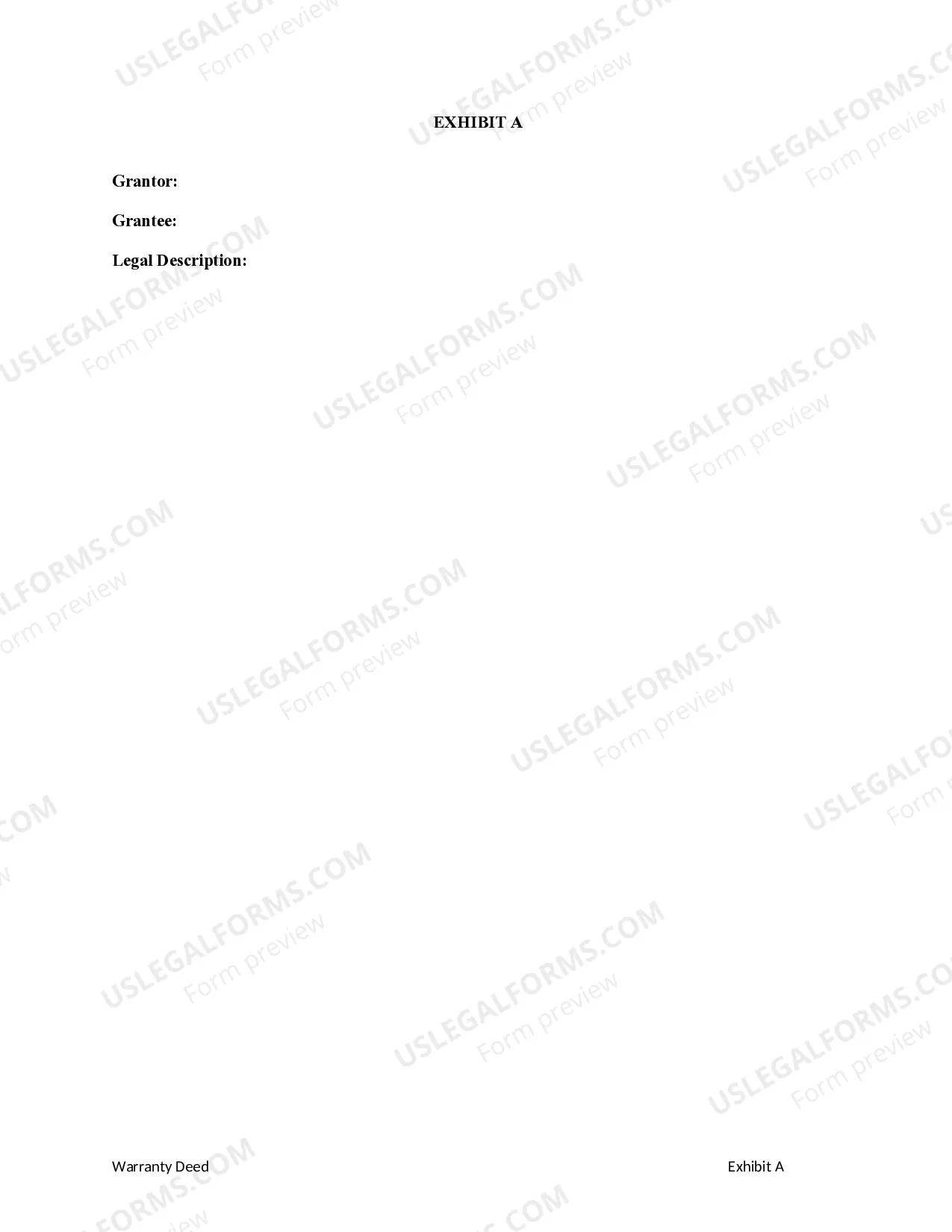
- A legal description attached as an exhibit.



When this form is needed
This form is typically used when an individual wishes to convey property to another individual while still maintaining the right to occupy or use the property for their lifetime. It is beneficial in estate planning or when transferring property within families, ensuring that the Grantor can continue living in the property without affecting the Grantee's ownership rights after the Grantor passes away.
Who this form is for
- Individuals transferring ownership of property to another individual.
- Anyone wishing to retain a life estate in the property they are conveying.
- People involved in estate planning or family property transfers.
- Individuals looking for a legally compliant method of property transfer.
How to prepare this document
- Identify the parties: Enter the full names of the Grantor (seller) and Grantee (buyer).
- Describe the property: Provide a detailed description of the property being transferred.
- Specify the life estate: Clearly state that the Grantor retains a life estate.
- Enter the date: Fill in the date of the transaction.
- Sign the document: Both parties should sign the form in the designated areas.
- Attach the legal description: Include the legal description of the property as an exhibit.
Notarization requirements for this form
This form must be notarized to be legally valid. US Legal Forms provides secure online notarization powered by Notarize, allowing you to complete the process through a verified video call.
Get your form ready online
Our built-in tools help you complete, sign, share, and store your documents in one place.
Make edits, fill in missing information, and update formatting in US Legal Forms—just like you would in MS Word.
Download a copy, print it, send it by email, or mail it via USPS—whatever works best for your next step.
Sign and collect signatures with our SignNow integration. Send to multiple recipients, set reminders, and more. Go Premium to unlock E-Sign.
If this form requires notarization, complete it online through a secure video call—no need to meet a notary in person or wait for an appointment.
We protect your documents and personal data by following strict security and privacy standards.

Make edits, fill in missing information, and update formatting in US Legal Forms—just like you would in MS Word.

Download a copy, print it, send it by email, or mail it via USPS—whatever works best for your next step.

Sign and collect signatures with our SignNow integration. Send to multiple recipients, set reminders, and more. Go Premium to unlock E-Sign.

If this form requires notarization, complete it online through a secure video call—no need to meet a notary in person or wait for an appointment.

We protect your documents and personal data by following strict security and privacy standards.
Common mistakes to avoid
- Failing to properly describe the property, which can lead to disputes.
- Not specifying the retained life estate clearly, causing confusion about ownership rights.
- Omitting signatures or dates, which can invalidate the deed.
- Using outdated forms that may not comply with current state laws.
Why complete this form online
- Convenient access to legal forms from anywhere, at any time.
- Editable fields for precise information entry.
- Guaranteed compliance with state laws, provided by licensed attorneys.
- Immediate download allows for quick completion and filing.
Looking for another form?
Form popularity
FAQ
What happens to a life estate after someone dies? Upon the life tenant's death, the property passes to the remainder owner outside of probate.They can sell the property or move into and claim it as their primary residence (homestead). Property taxes will not be reassessed.
With a life estate deed, the remainderman's ownership interest vests when the deed is signed and delivered (or recorded in the public record). Accordingly, the children's ownership interest in the property vested upon their father signing the deed and recording it in the public records, or the year 2000.
The creation of a life estate is accomplished by the language to Recipient for life or, if it is to be a life estate pur autre vie, to recipient for the life of (another person). The holder of the life estate is called the life tenant. If the property is to return to the original owner after the death of the life
Almost all deeds creating a life estate will also name a remaindermanthe person or persons who get the property when the life tenant dies.The life tenant is the owner of the property until they die. However, the remainderman also has an ownership interest in the property while the life tenant is alive.
A life estate deed permits the property owner to have full use of their property until their death, at which point the ownership of the property is automatically transferred to the beneficiary.
A person owns property in a life estate only throughout their lifetime. Beneficiaries cannot sell property in a life estate before the beneficiary's death. One benefit of a life estate is that property can pass when the life tenant dies without being part of the tenant's estate.
1The date the deed was made;2The name of the party granting the life estate and their address;3The name of the grantee and their address;4The address and a legal description of the property that is subject to the life estate;How to Set up a Life Estate: 10 Steps (with Pictures) - wikiHow\nwww.wikihow.com > Set-up-a-Life-Estate
Can a life estate deed be contested? The answer is YES! The Life estate is an agreeable choice, particularly where there is an advantage in having the life estate revert back to its real owner (Grantor or Life Tenant).
A life estate is a form of joint ownership that allows one person to remain in a house until his or her death, when it passes to the other owner.