Louisiana Answer and Reconventional Demand Divorce - with name change and temporary restraining order
Overview of this form
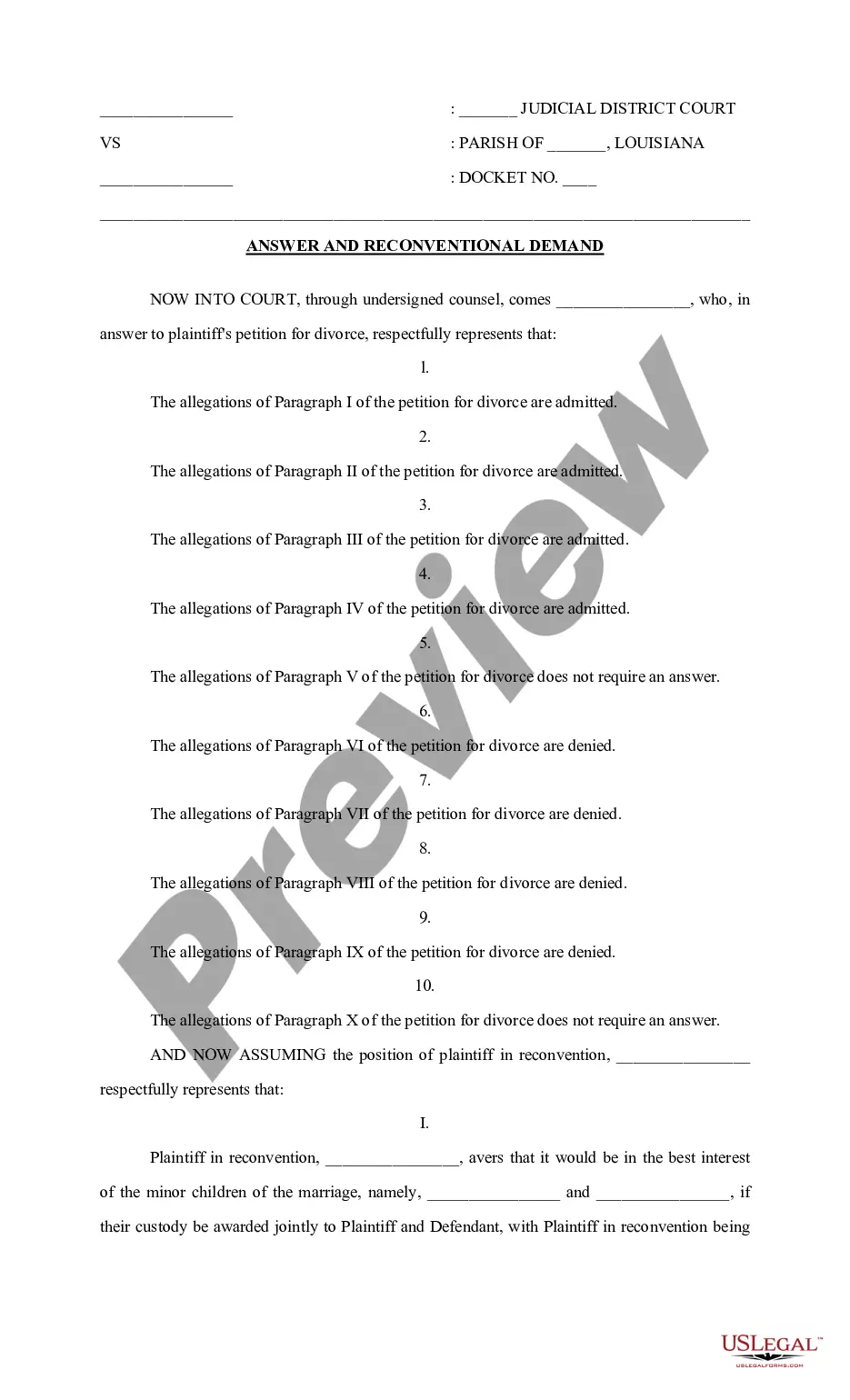
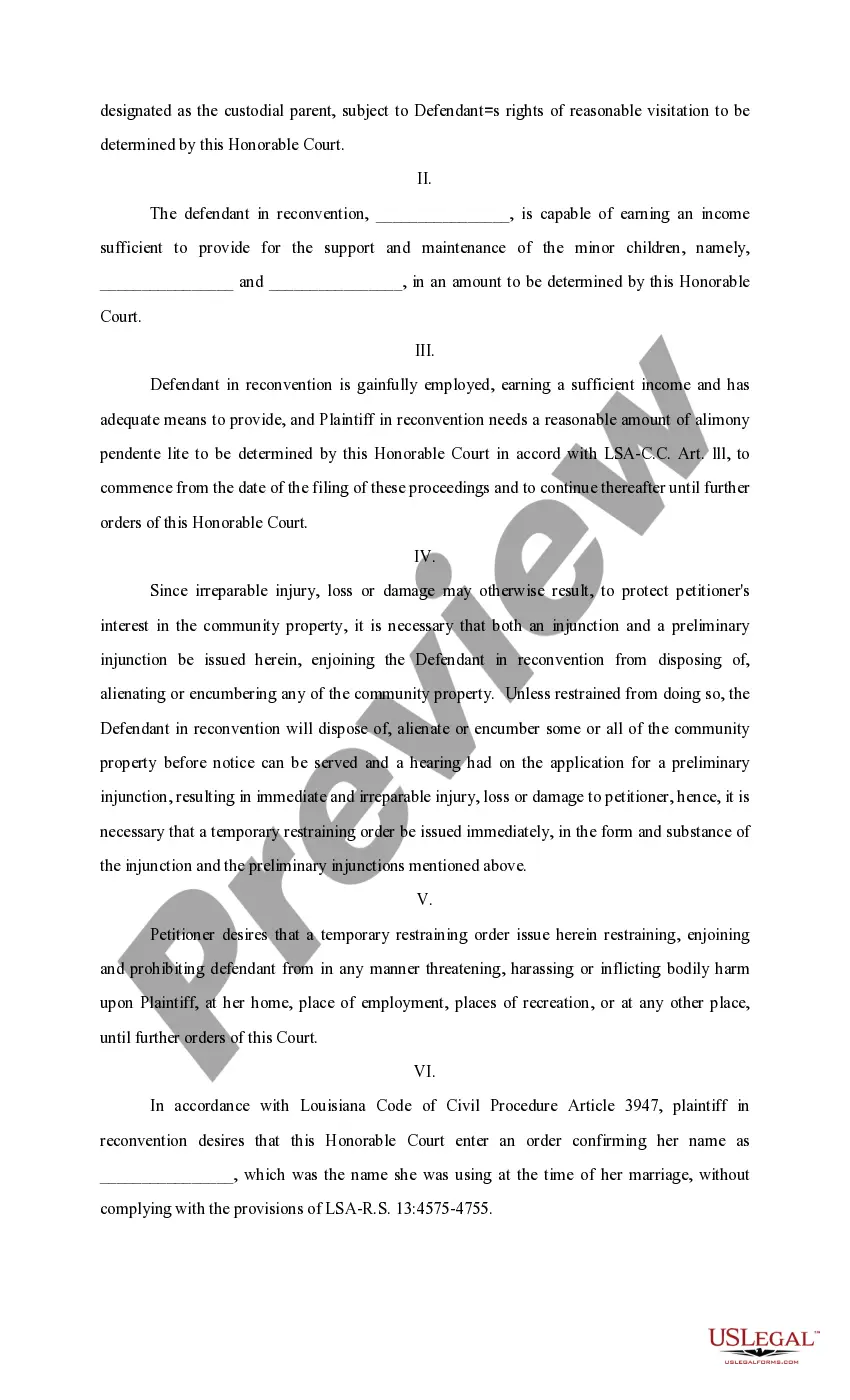
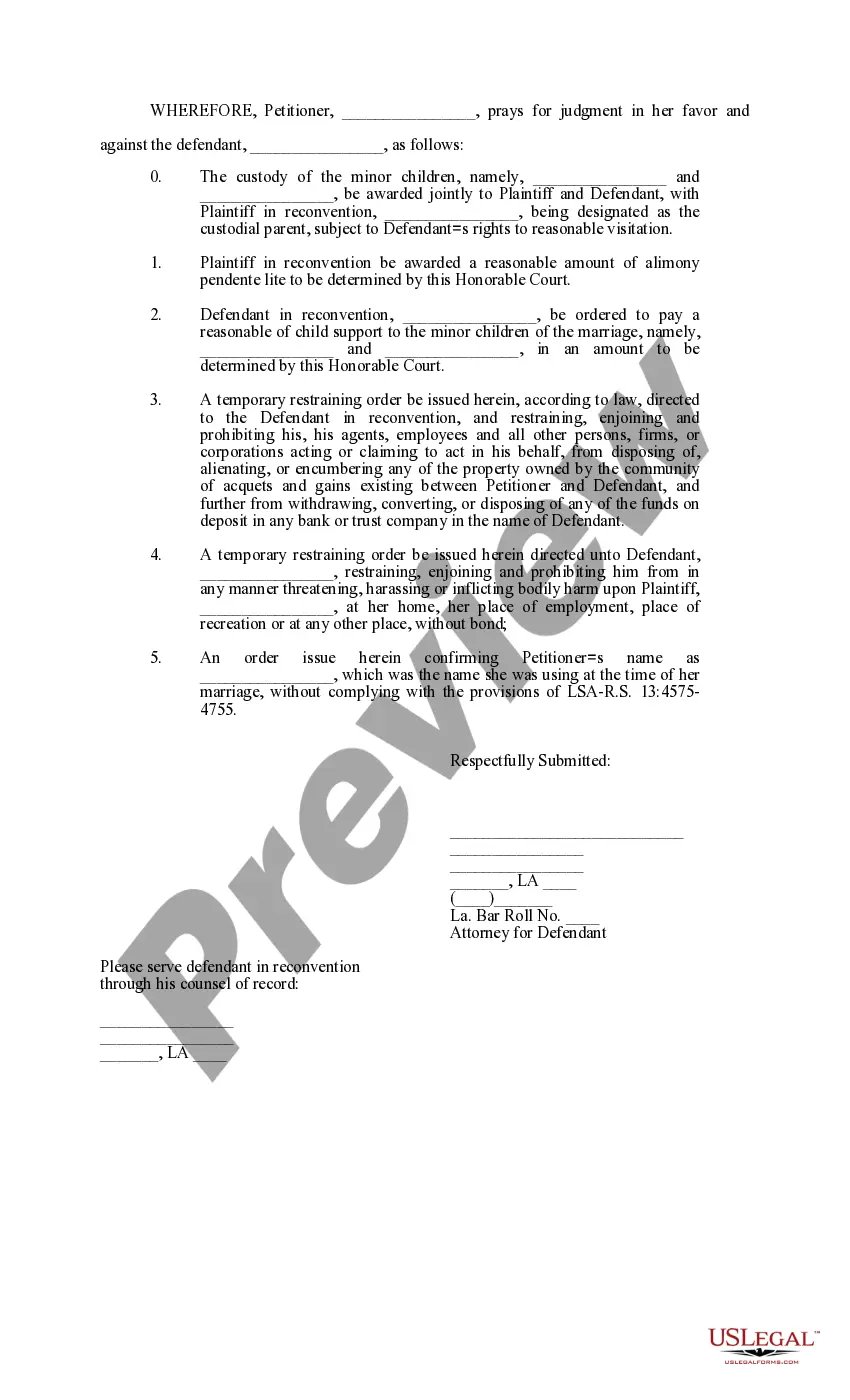
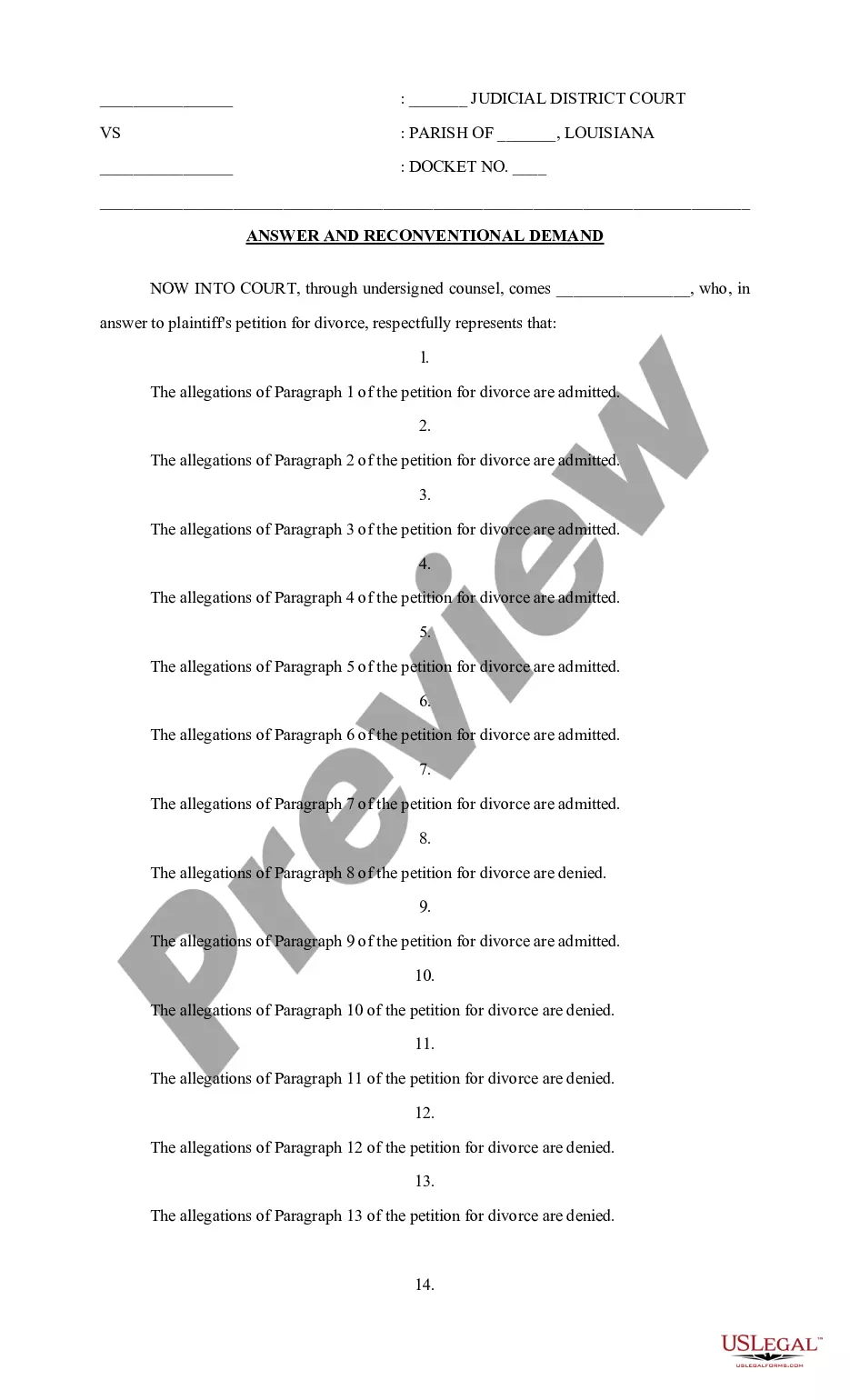
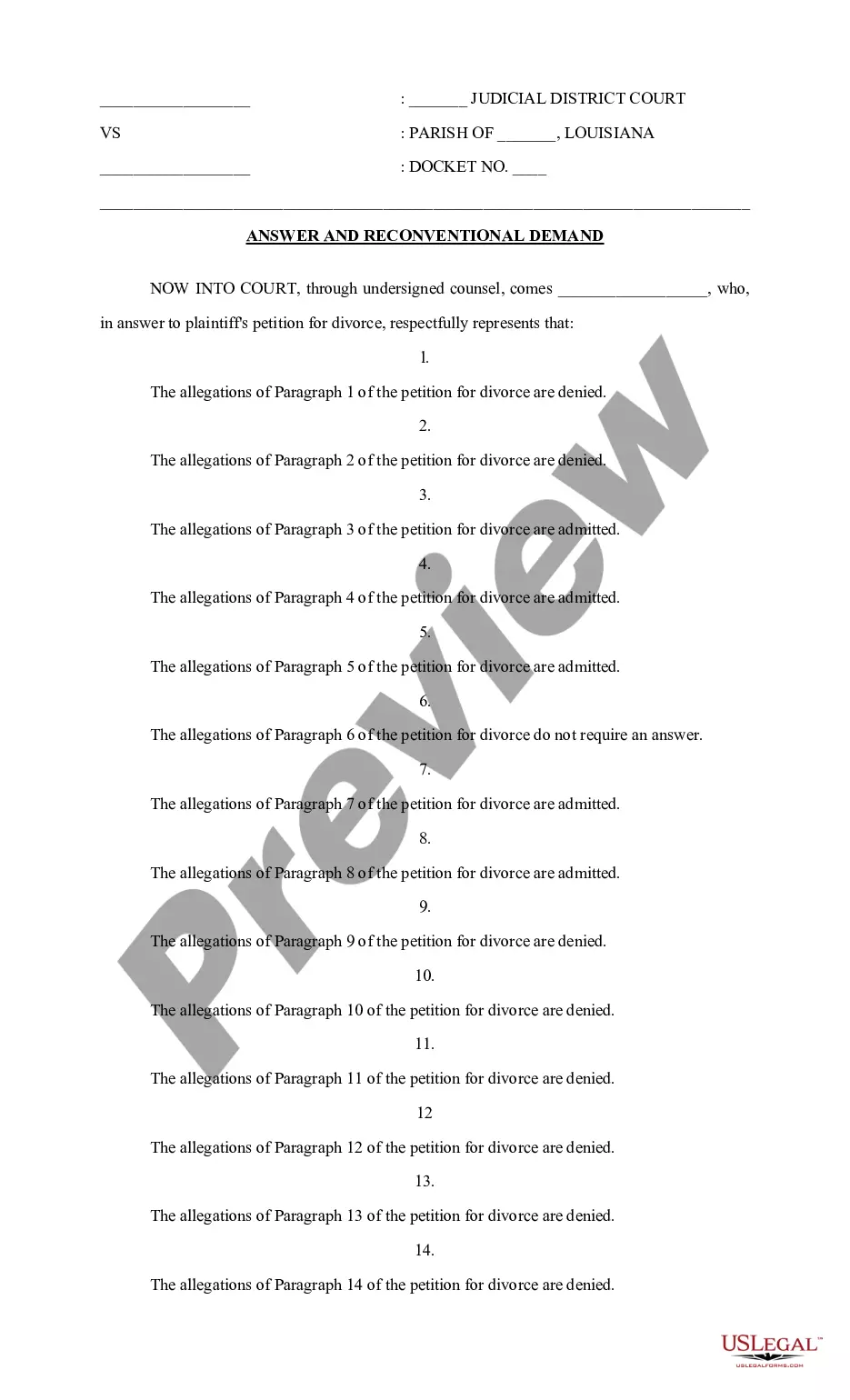
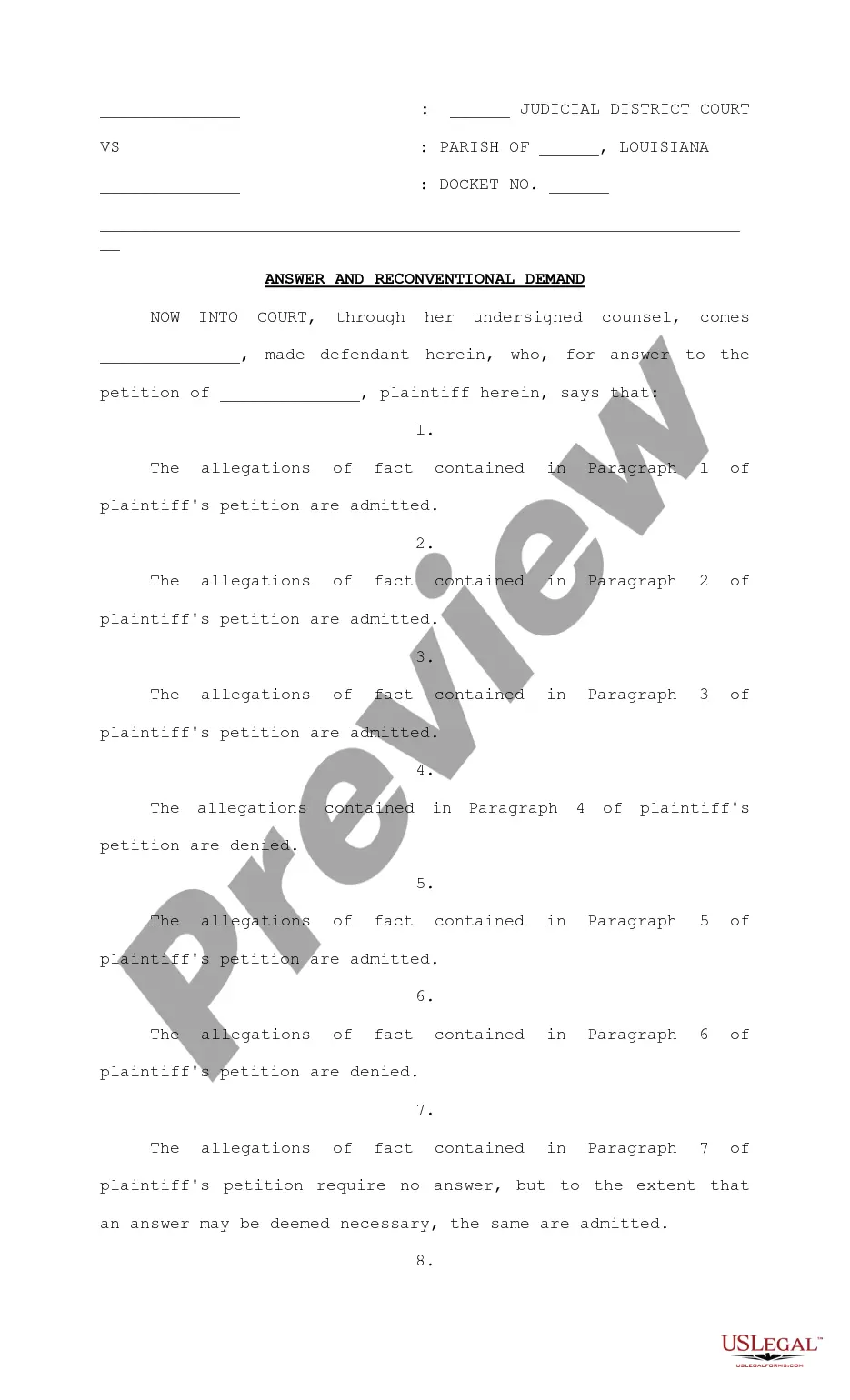
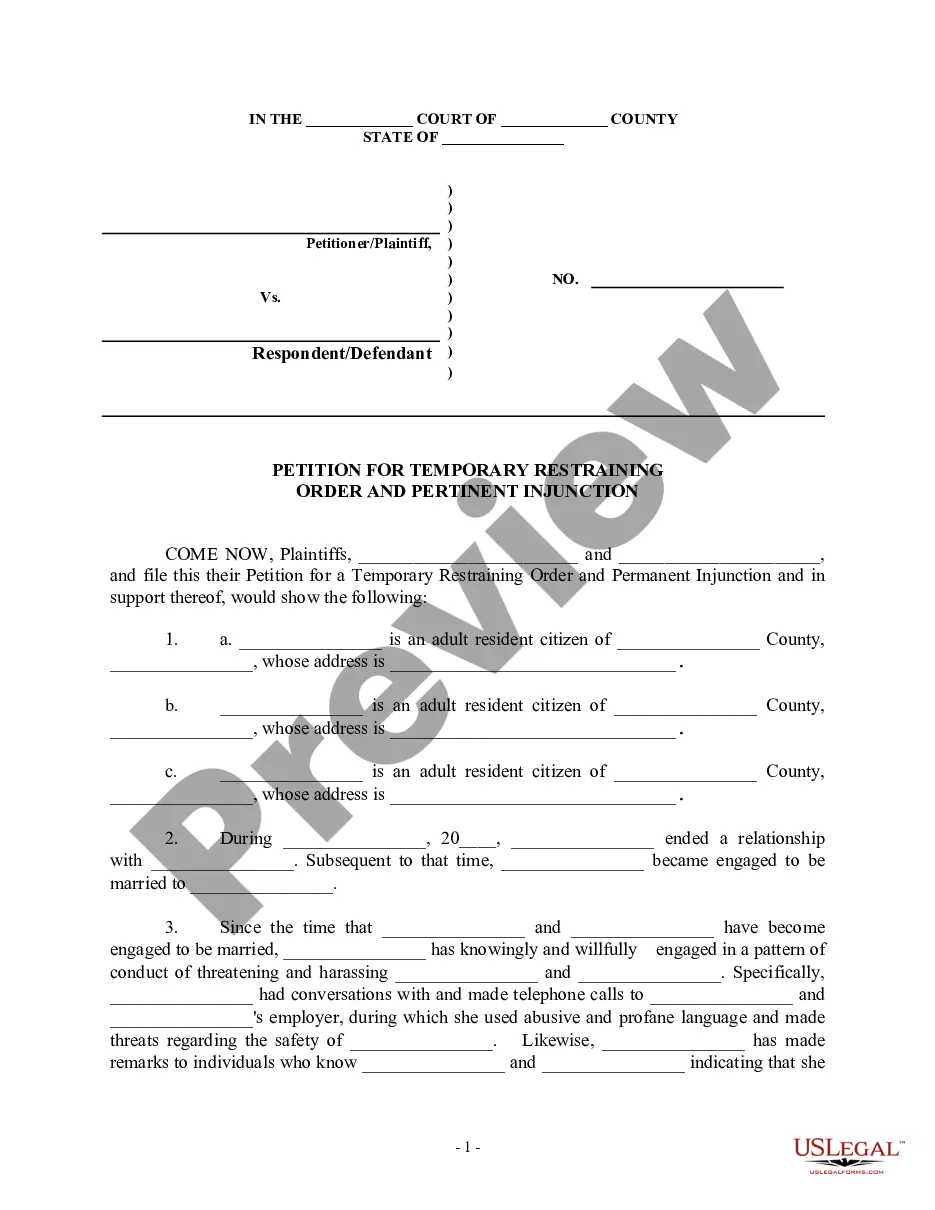
The Answer and Reconventional Demand Divorce is a legal form used by a defendant in a divorce case to respond to the allegations made in a plaintiff's Petition for Divorce. This form allows the defendant to present their own claims against the plaintiff, known as reconvention. It not only addresses custody and financial support for minor children but also facilitates a name change and includes a request for temporary restraining orders to protect against harm or asset disposal during the divorce proceedings.
Key components of this form
- Defendant's answers to the allegations stated in the plaintiff's petition.
- Claims for joint custody of minor children with specified visitation rights.
- Request for child support and alimony pendente lite (temporary support).
- Requests for temporary restraining orders to prevent asset disposal or harassment.
- Petitioner's request to legally resume their maiden name.
When to use this document
This form is typically used during divorce proceedings when the defendant wishes to respond to claims made by the plaintiff while simultaneously making their own requests through reconvention. It is essential for situations involving minor children and disputes about custody, support, and safety concerns. Use this form if you are facing divorce and want to ensure your rights and interests are protected.
Who can use this document
- Individuals who have been named as defendants in a Petition for Divorce.
- Those seeking to establish claims for child custody, child support, or alimony.
- Parties who need immediate protection through temporary restraining orders during pending divorce proceedings.
- Individuals wishing to change their name back to their maiden name as part of the divorce process.
Completing this form step by step
- Begin by identifying the parties involved in the divorce.
- Respond to each allegation in the plaintiff's petition, detailing which are admitted or denied.
- Outline your requests for custody, support, and any temporary restraining orders.
- Specify your requests for alimony and child support, providing any necessary income information.
- Complete the section requesting to resume your maiden name, ensuring compliance with relevant statutes.
- Sign and date the form before submission to the court.
Notarization requirements for this form
This form does not typically require notarization unless specified by local law. It is advisable to check with your local court or attorney to confirm if notarization is needed for your specific circumstances.
Get your form ready online
Our built-in tools help you complete, sign, share, and store your documents in one place.
Make edits, fill in missing information, and update formatting in US Legal Forms—just like you would in MS Word.
Download a copy, print it, send it by email, or mail it via USPS—whatever works best for your next step.
Sign and collect signatures with our SignNow integration. Send to multiple recipients, set reminders, and more. Go Premium to unlock E-Sign.
If this form requires notarization, complete it online through a secure video call—no need to meet a notary in person or wait for an appointment.
We protect your documents and personal data by following strict security and privacy standards.

Make edits, fill in missing information, and update formatting in US Legal Forms—just like you would in MS Word.

Download a copy, print it, send it by email, or mail it via USPS—whatever works best for your next step.

Sign and collect signatures with our SignNow integration. Send to multiple recipients, set reminders, and more. Go Premium to unlock E-Sign.

If this form requires notarization, complete it online through a secure video call—no need to meet a notary in person or wait for an appointment.

We protect your documents and personal data by following strict security and privacy standards.
Common mistakes
- Failing to thoroughly read and respond to all allegations in the plaintiff's petition.
- Omitting important details regarding custody and support which could affect legal outcomes.
- Not providing sufficient evidence or rationale for requests made in reconvention.
- Missing signatures or dates on the completed form, potentially invalidating the submission.
Advantages of online completion
- Convenient access: Download the form anytime and from anywhere.
- Editability: Easily fill in information and customize according to your situation.
- Reliability: Forms are drafted by licensed attorneys, ensuring legal accuracy.
What to keep in mind
- The Answer and Reconventional Demand Divorce is a crucial form for defending against divorce allegations while making counterclaims.
- It addresses not only custody and financial support but also personal safety and name changes.
- Following Louisiana-specific legal requirements is essential for effective filing.
Looking for another form?
Form popularity
FAQ
The Article 103 divorce allows a couple to divorce without the waiting period typically required. This type of divorce requires one spouse to file for a fault-based reason, such as infidelity or cruelty. To navigate this complex procedure, it's helpful to consult with legal resources that help you understand the broader spectrum of your Louisiana Answer and Reconventional Demand Divorce, including name change and temporary restraining order provisions.
The cost to file a request for restraining order is $148.50. If you are unable to pay the cost, you may fill out a Motion to Proceed In Forma Pauperis. You can obtain this form from the Civil Division Office in Room 251 or by calling 389-3017.
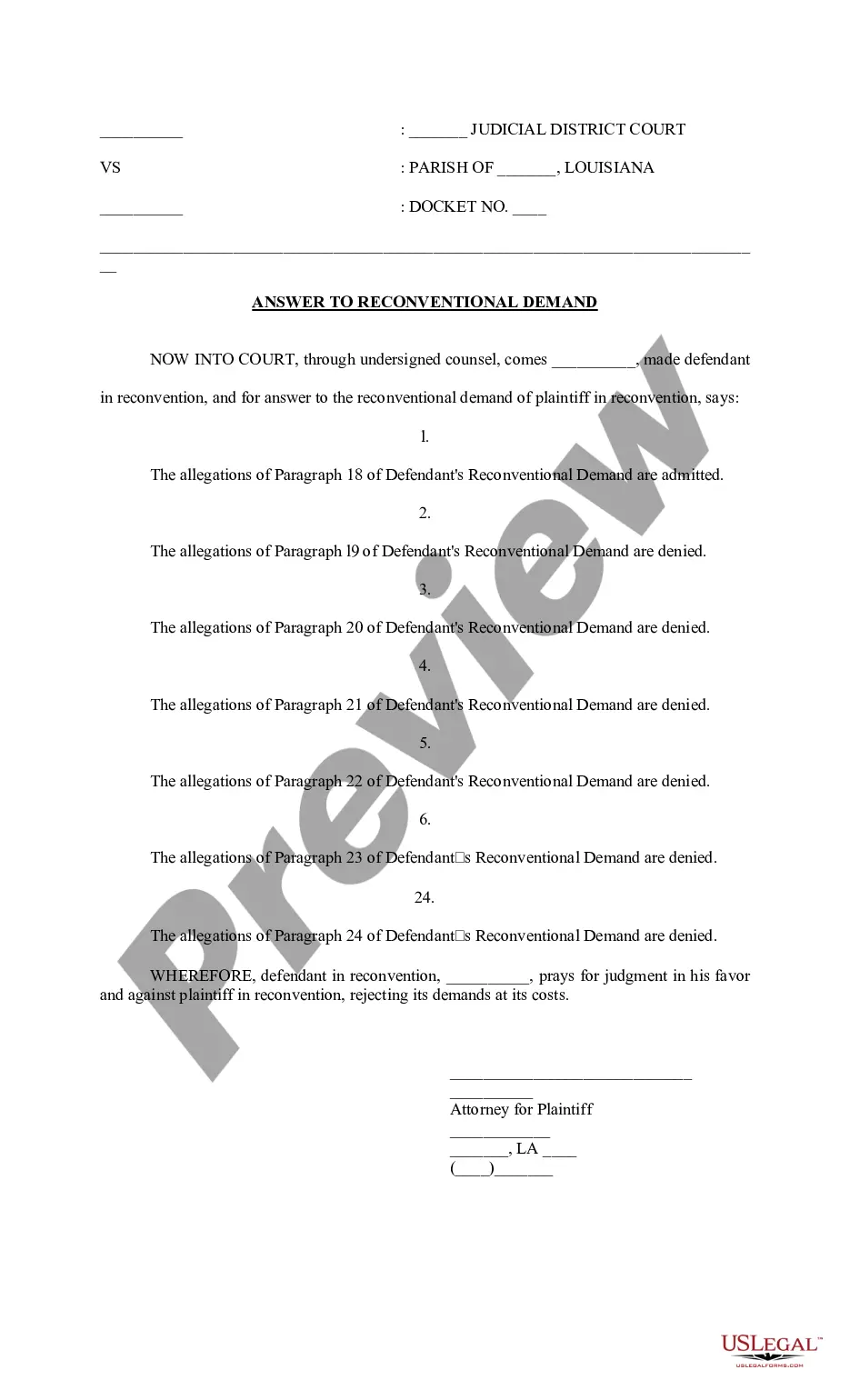
Reconventional demand is the Louisiana term for a counterclaim. 1 IN THE UNITED STATES DISTRICT COURT FOR THE NORTHERN DI. Page 1. Reconventional demand is the Louisiana term for a counterclaim.
After a full court hearing, a judge can issue a protective order. A protective order can generally last up to 18 months, and can later be renewed after a hearing in front of a judge. The parts of the protective order that tell the abuser to not abuse, harass, or interfere with you can last forever.
A condition of a parole release which requires that the alleged offender stay away from any specific person. An order issued according to Louisiana Revised Statute § 46 (prohibited communication between offender and victim).
To get a restraining order, you can contact an attorney, law enforcement, call an abuse hotline, go to the courthouse, or call 911 if you are in immediate danger. If you go to the sheriff's office or the courthouse, they will provide you with forms to fill out to request the restraining order.
Emergency Temporary Restraining Orders: If you are in need of emergency protection outside of regular court hours, the court may grant you an emergency temporary restraining order if there is an immediate and present danger of abuse. The judge must consider any and all past history of abuse, or threats of abuse, in
A Stay Away Order is an Order issued by a Judge in a domestic violence, domestic battery, or stalking case. The Order is effective unless cancelled or modified during the period that the court has jurisdiction over the case.
The Stay-Away Order is issued when the criminal case is initiated and the defendant makes his or her first appearance in court (the arraignment).It tells the defendant to stay away from the victim or a witness (usually 100 yards away) and from his or her place of employment.
The cost to file a request for restraining order is $148.50. If you are unable to pay the cost, you may fill out a Motion to Proceed In Forma Pauperis. You can obtain this form from the Civil Division Office in Room 251 or by calling 389-3017.