Louisiana Answer and Reconventional Demand with Restraining Order in Divorce
What is this form?
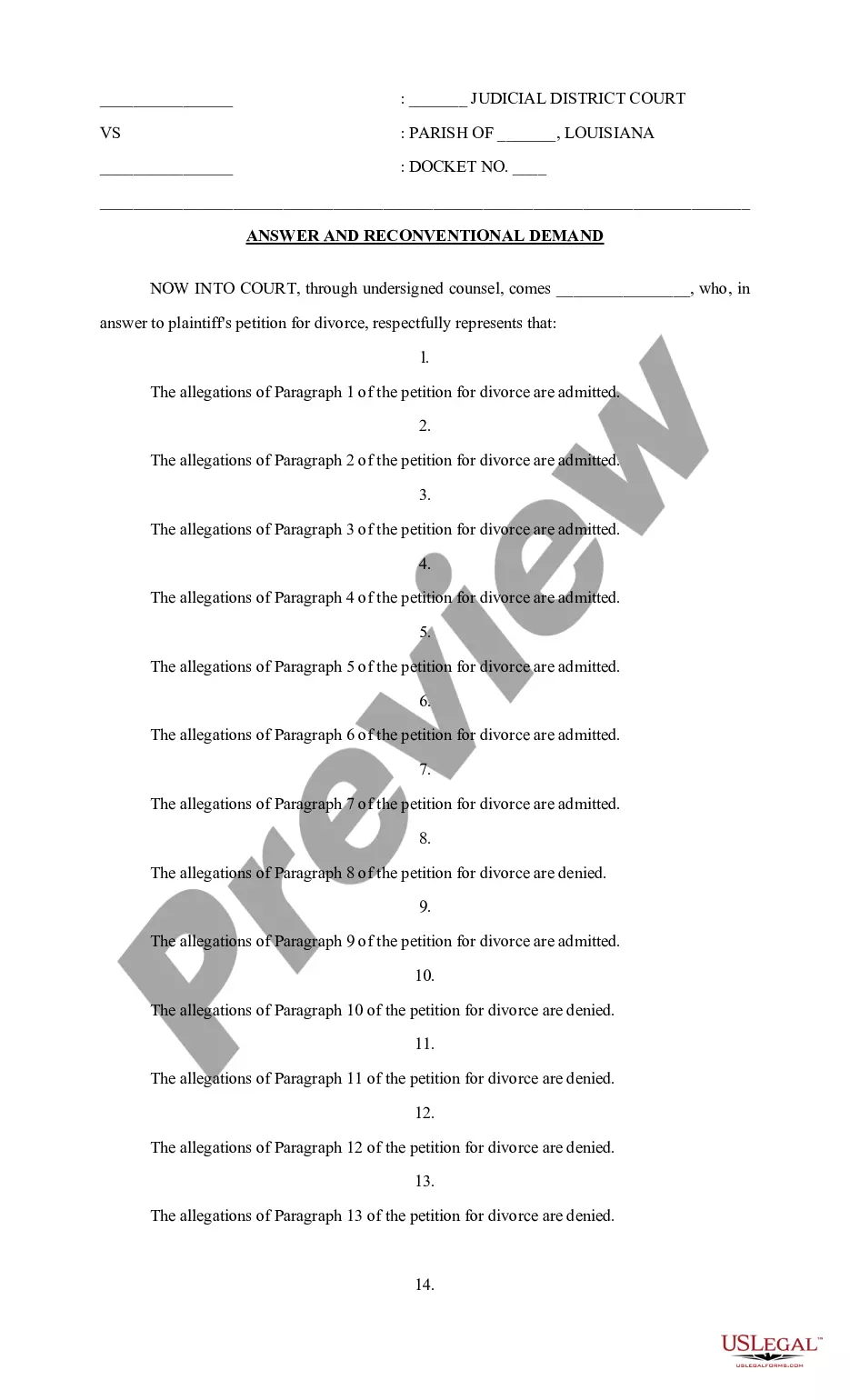
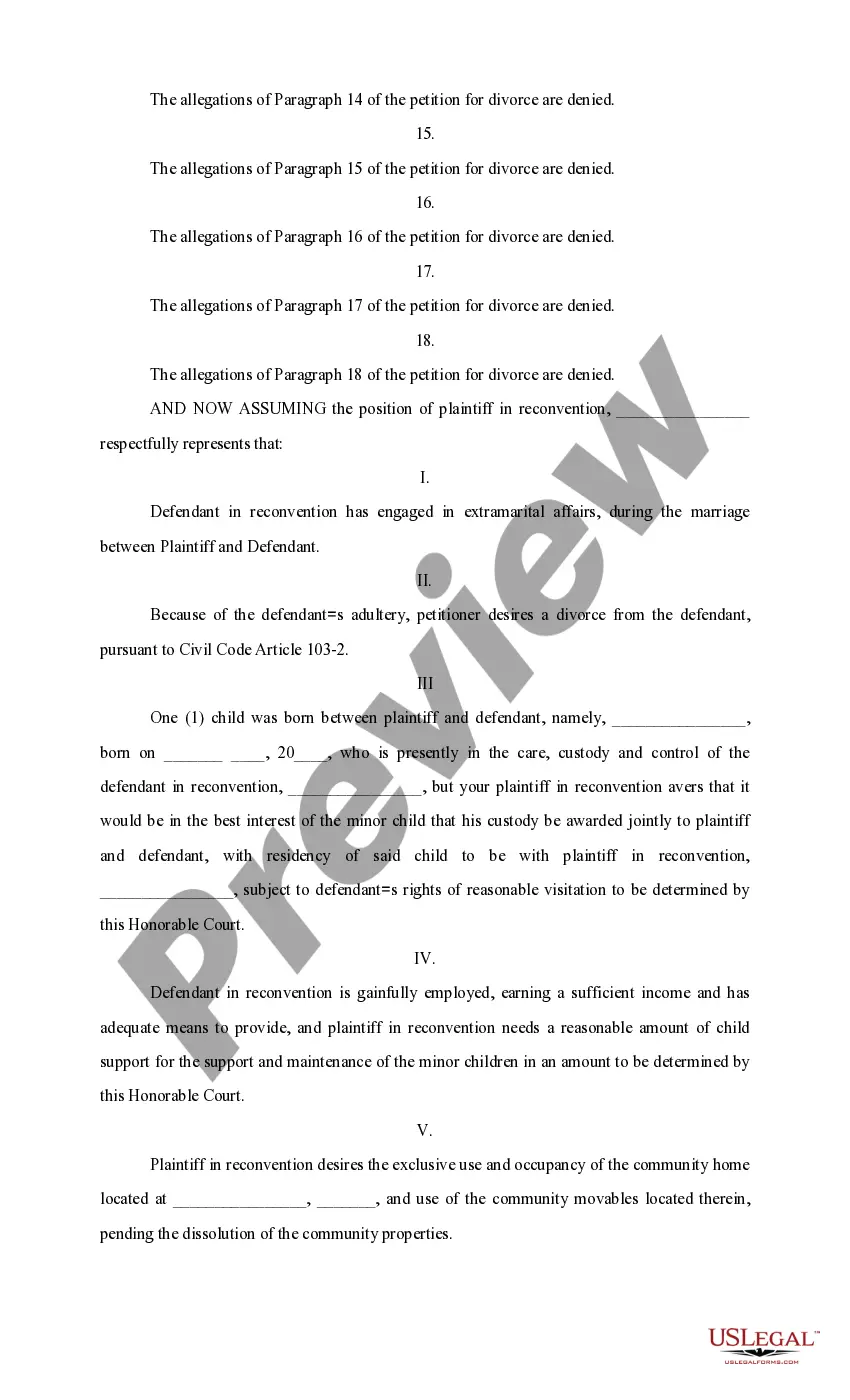
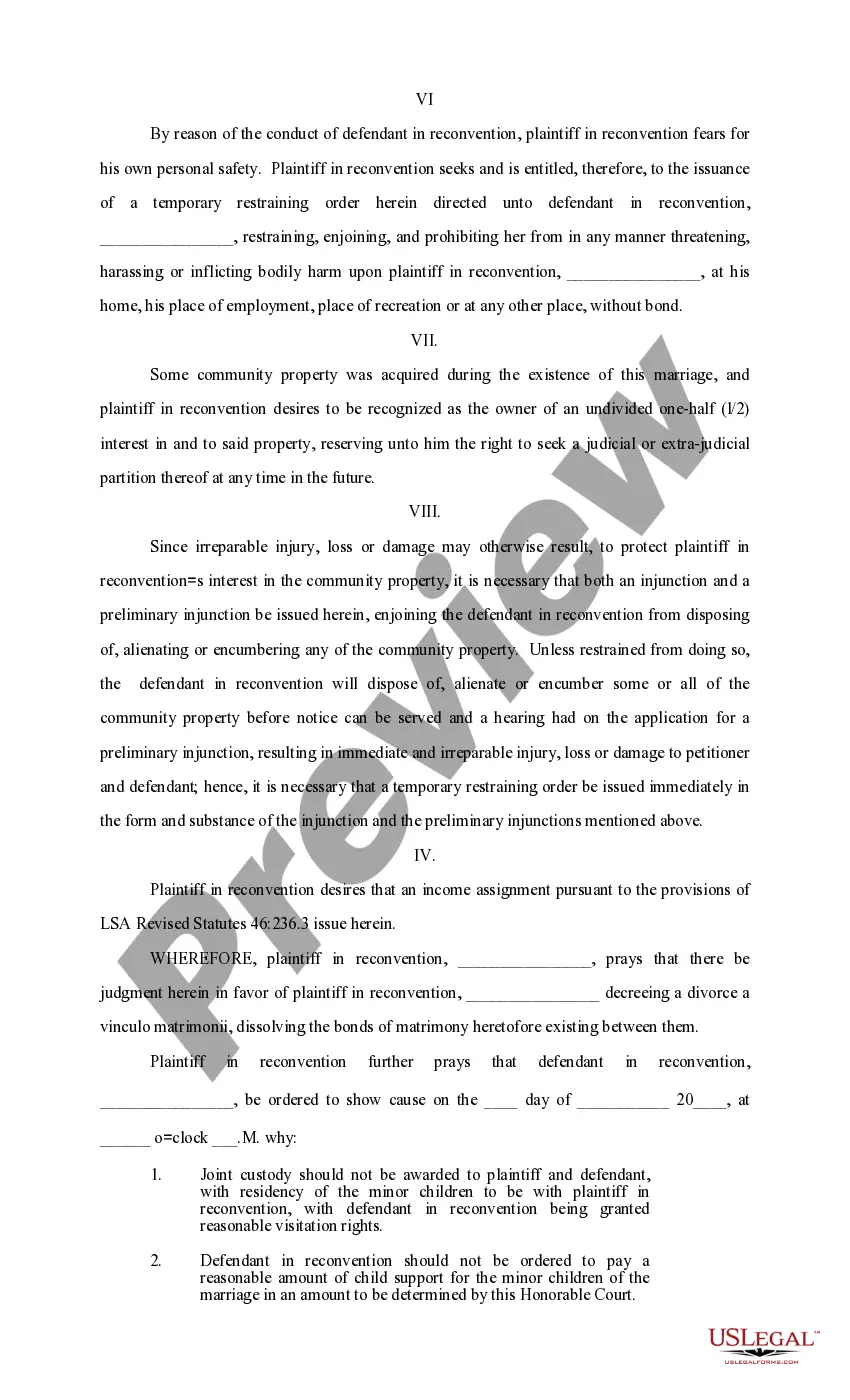
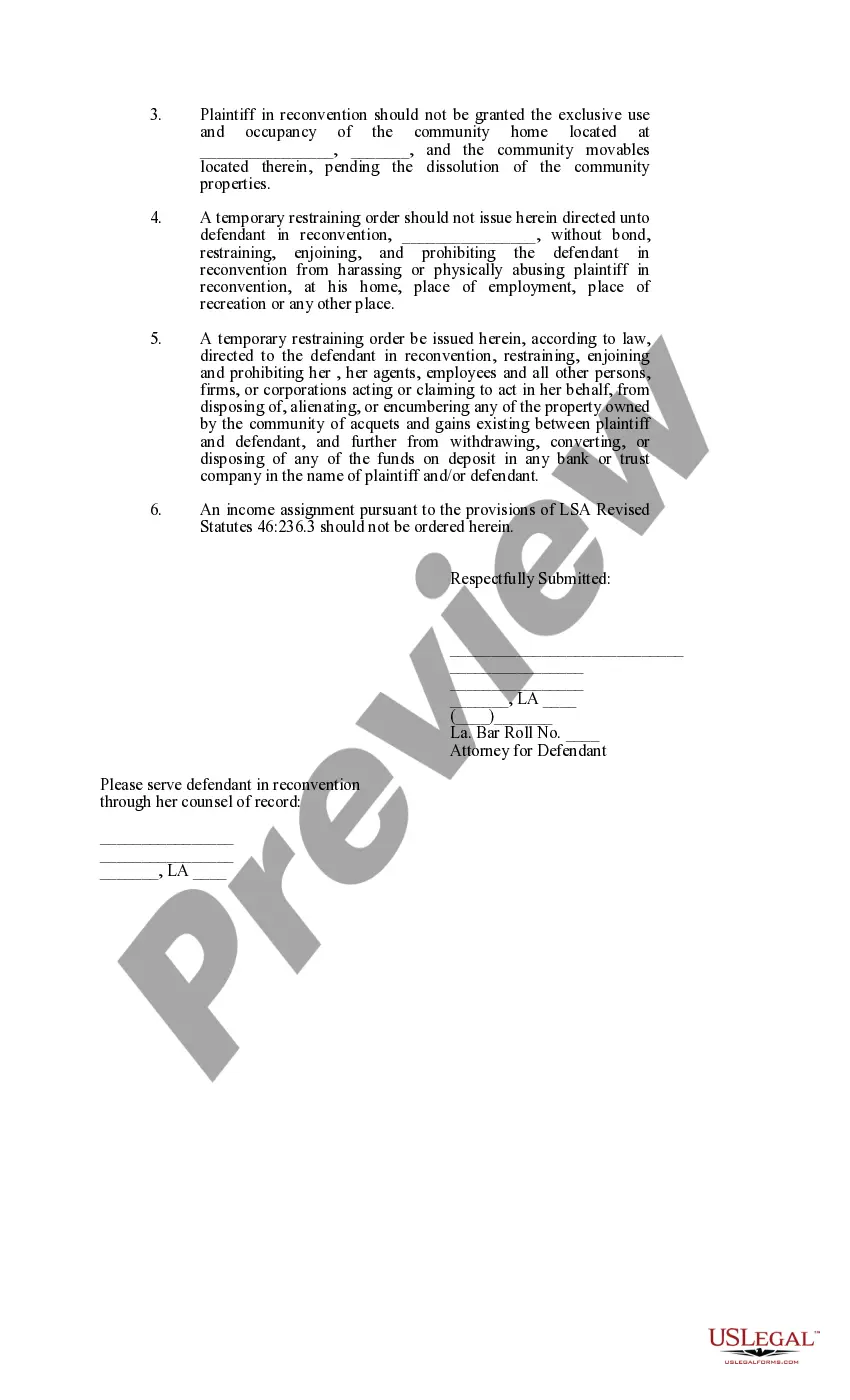
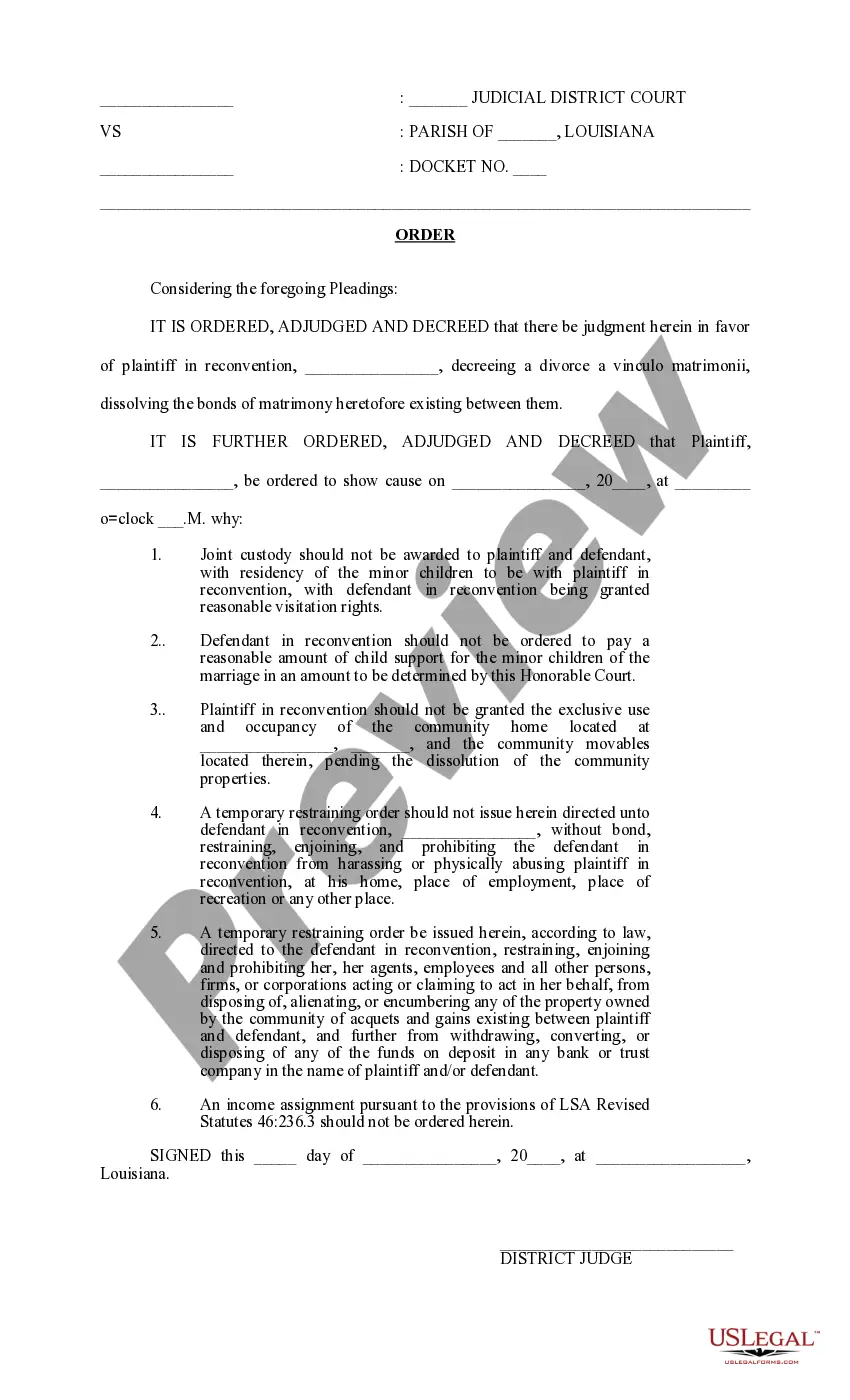
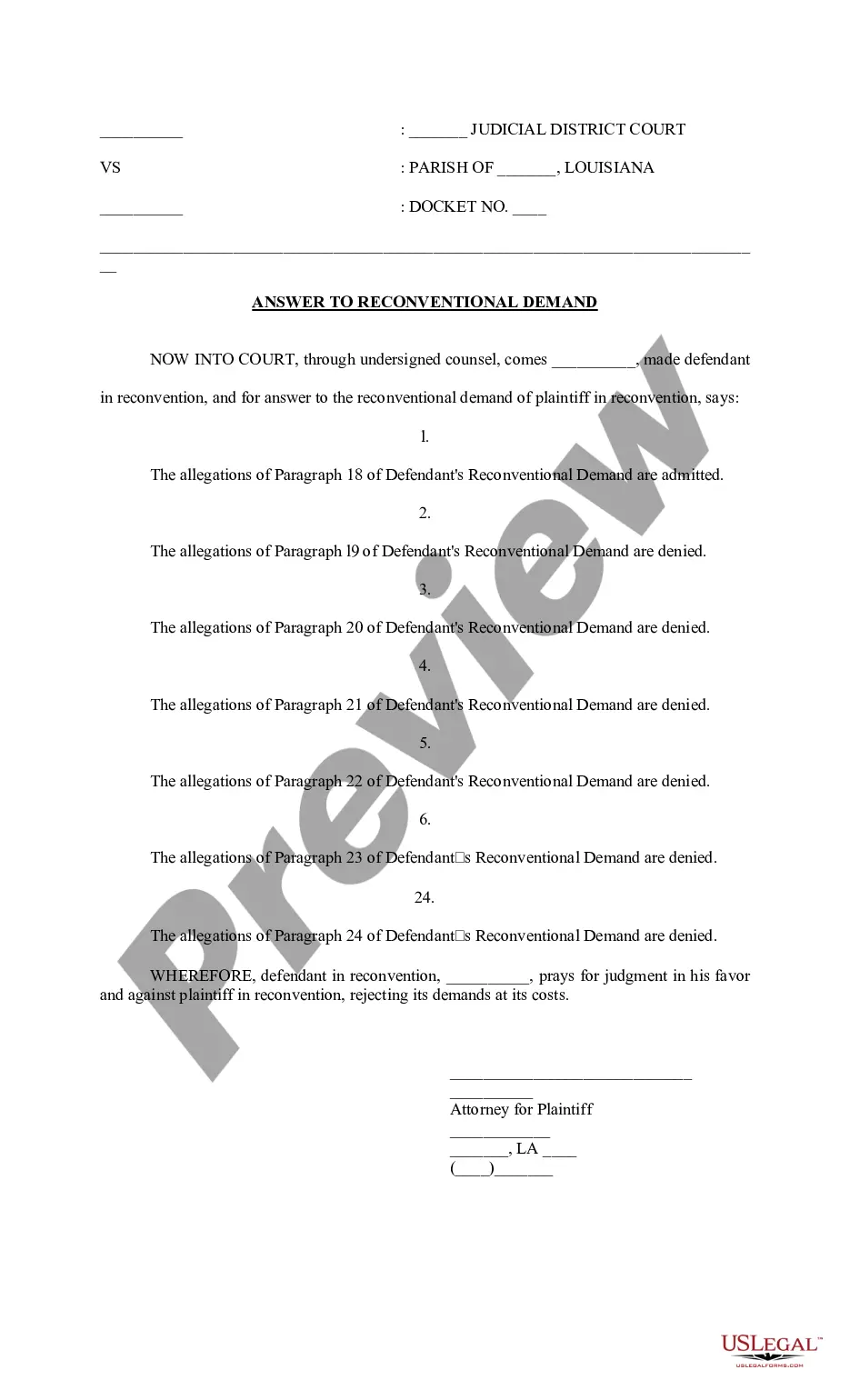
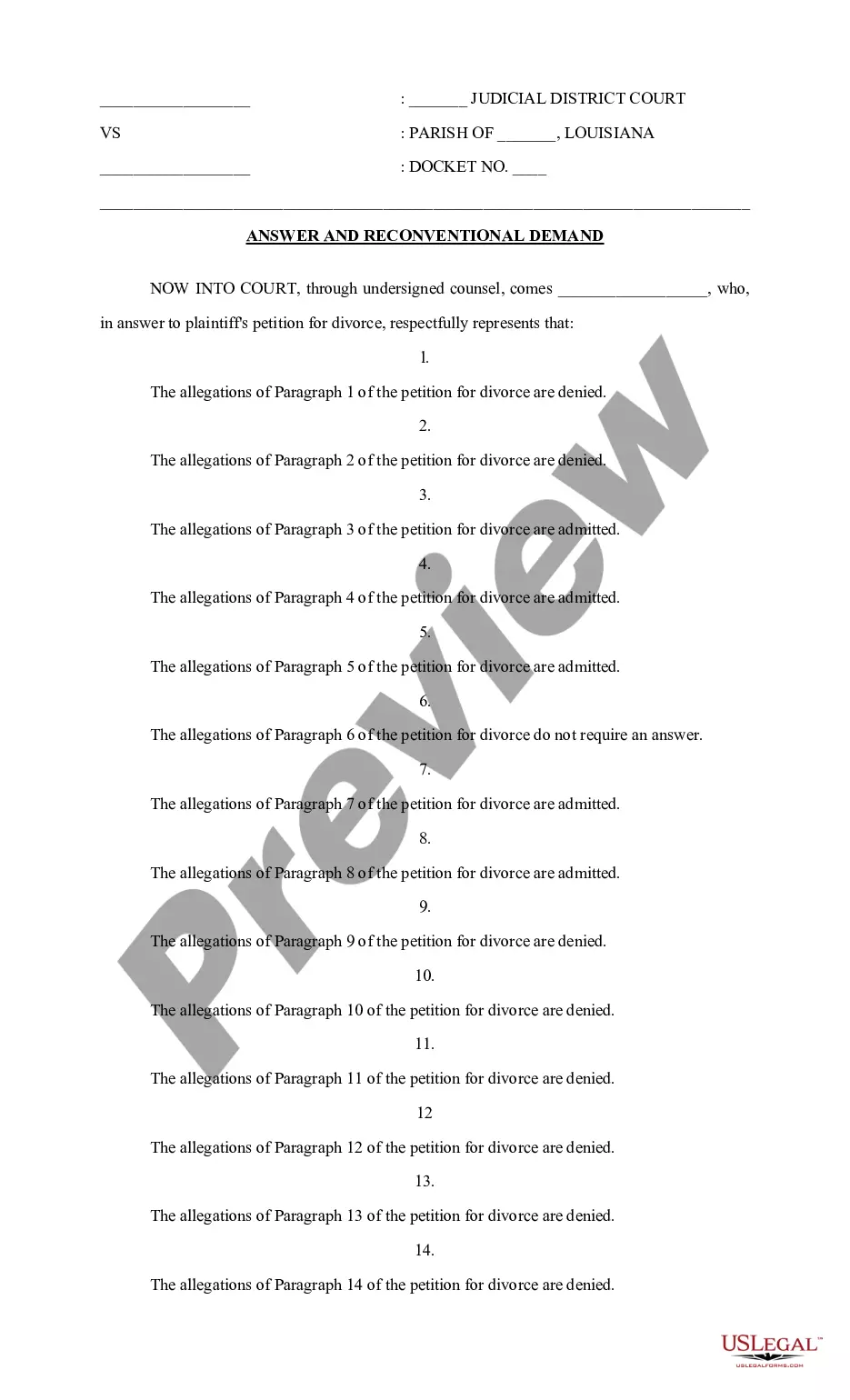
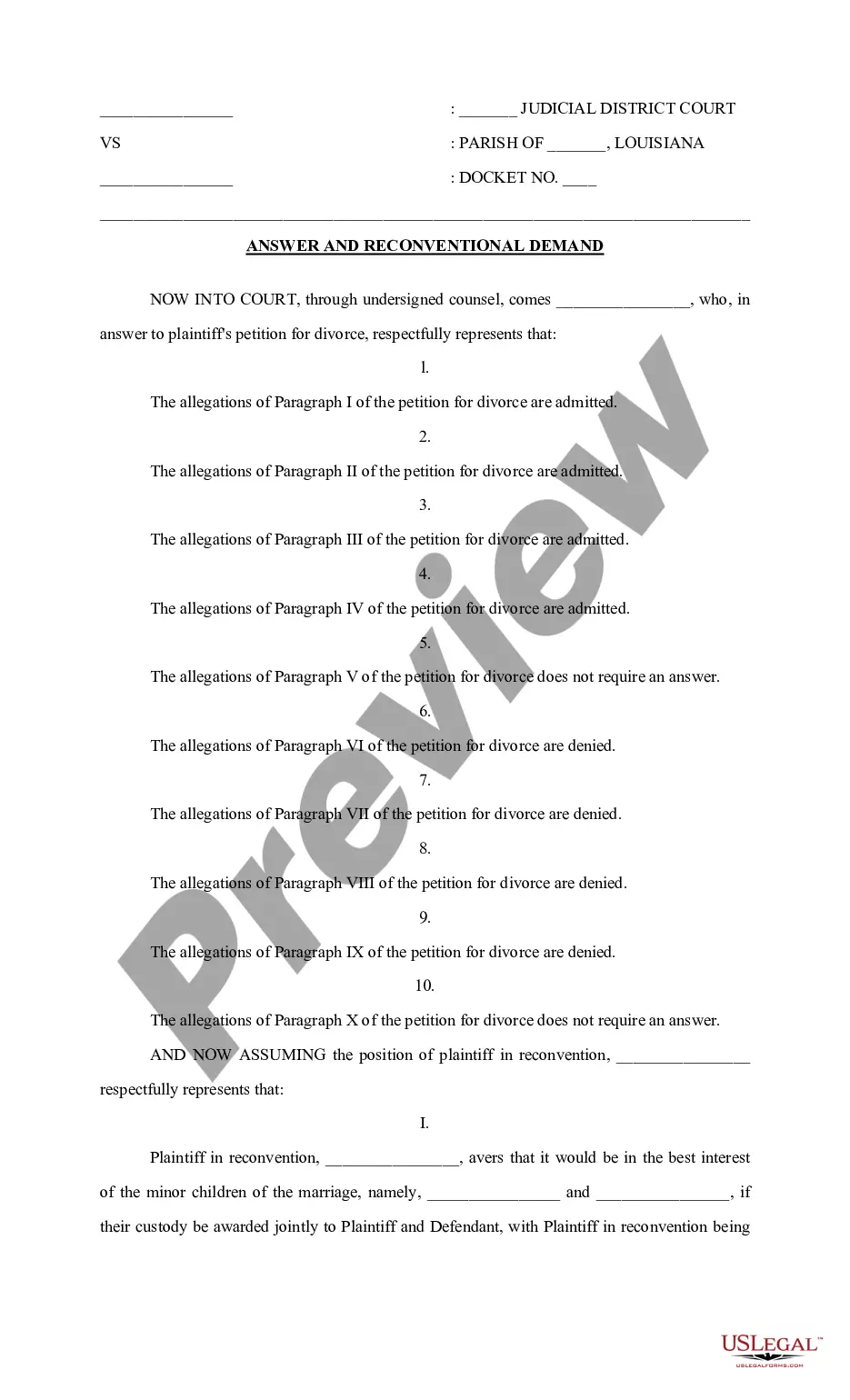
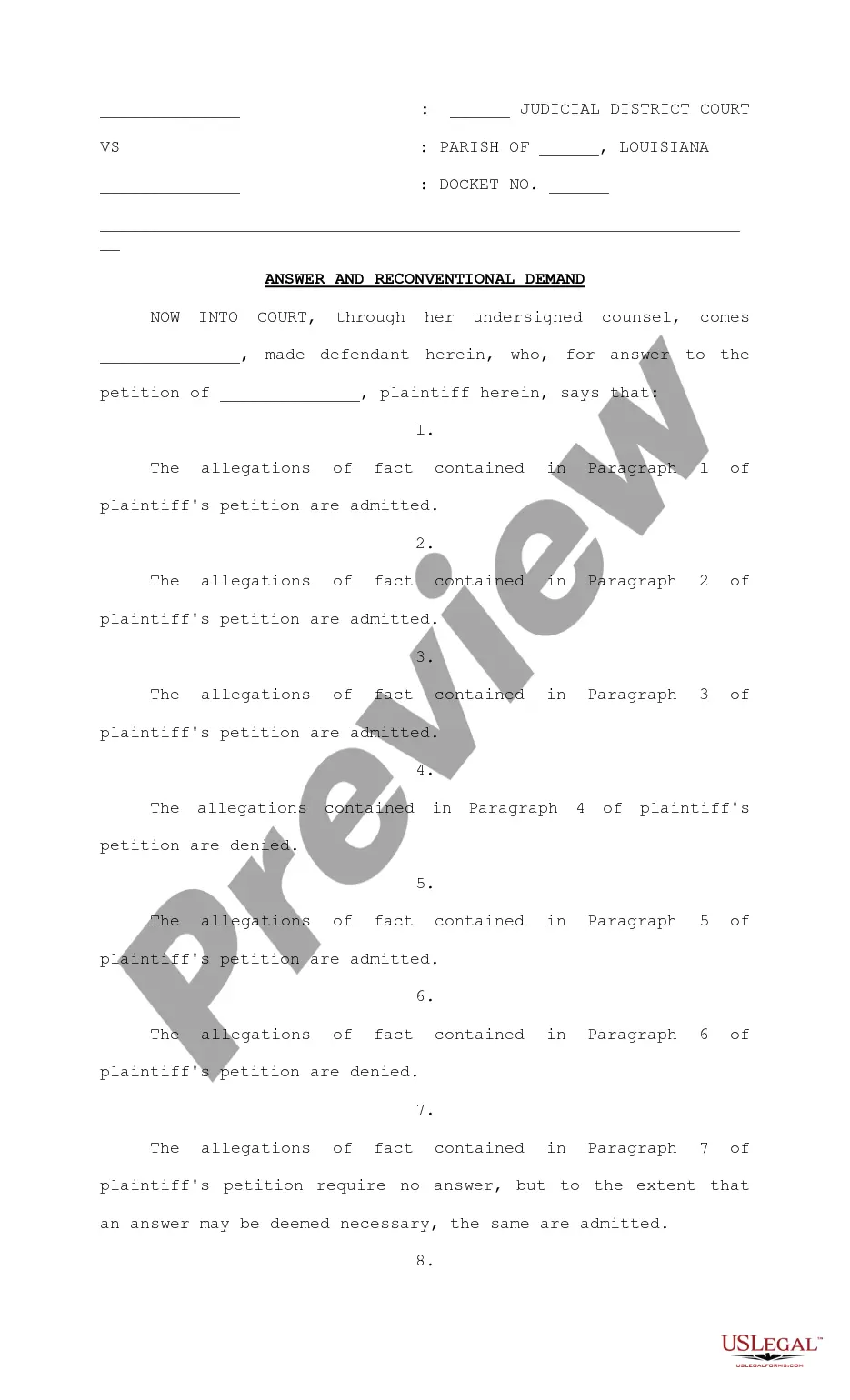
The Answer and Reconventional Demand with Restraining Order in Divorce is a legal document that allows a defendant in a divorce case to respond to the plaintiff's allegations while also initiating their own claims. This form is specific to Louisiana and is used when a defendant wishes to request a divorce on grounds of adultery while addressing issues such as child custody, child support, property division, and a temporary restraining order to protect their safety.
Key parts of this document
- Response to the plaintiff's allegations listed in the petition for divorce.
- Claims of adultery against the defendant in reconvention, justifying a request for divorce.
- Details on custody arrangements for any minor children involved.
- Request for child support and provision for an income assignment order.
- Request for exclusive use of the family home during divorce proceedings.
- Application for a temporary restraining order to ensure personal safety.
Common use cases
This form should be used if you are a defendant in a divorce proceeding in Louisiana who wishes to respond to the allegations made against you while simultaneously claiming a divorce based on alleged adultery. It is also appropriate in situations where child custody, support, and property issues need to be addressed, and protection from potential harm is necessary.
Who this form is for
- Individuals who are defendants in a divorce case in Louisiana.
- People seeking to counterclaim for divorce based on the other's adultery.
- Parents looking to address child custody and support issues during divorce proceedings.
- Anyone needing to request a restraining order due to concerns for personal safety.
Instructions for completing this form
- Identify the parties involved, including the plaintiff and defendant in reconvention.
- Respond to each of the allegations listed in the plaintiff's petition, marking admitted or denied as applicable.
- State your claims for divorce and provide details regarding the grounds for adultery.
- Specify requests concerning child custody, child support, and property division.
- Complete the section for the temporary restraining order to ensure your safety, if applicable.
Is notarization required?
This form does not typically require notarization unless specified by local law. However, it is always advisable to check local regulations to ensure compliance.
Get your form ready online
Our built-in tools help you complete, sign, share, and store your documents in one place.
Make edits, fill in missing information, and update formatting in US Legal Forms—just like you would in MS Word.
Download a copy, print it, send it by email, or mail it via USPS—whatever works best for your next step.
Sign and collect signatures with our SignNow integration. Send to multiple recipients, set reminders, and more. Go Premium to unlock E-Sign.
If this form requires notarization, complete it online through a secure video call—no need to meet a notary in person or wait for an appointment.
We protect your documents and personal data by following strict security and privacy standards.

Make edits, fill in missing information, and update formatting in US Legal Forms—just like you would in MS Word.

Download a copy, print it, send it by email, or mail it via USPS—whatever works best for your next step.

Sign and collect signatures with our SignNow integration. Send to multiple recipients, set reminders, and more. Go Premium to unlock E-Sign.

If this form requires notarization, complete it online through a secure video call—no need to meet a notary in person or wait for an appointment.

We protect your documents and personal data by following strict security and privacy standards.
Common mistakes to avoid
- Failing to respond to each allegation, which may weaken your position.
- Not clearly stating the basis for your claims in reconvention.
- Neglecting to specify custody and support needs adequately.
- Overlooking the need for a restraining order when safety is a concern.
Why complete this form online
- Easy access to legal forms drafted by licensed attorneys.
- Convenient download options allow for immediate use.
- Forms are customizable to fit specific legal needs and situations.
- Reliable and up-to-date legal language compliant with Louisiana law.