Missouri Complex Will with Credit Shelter Marital Trust for Large Estates
About this form
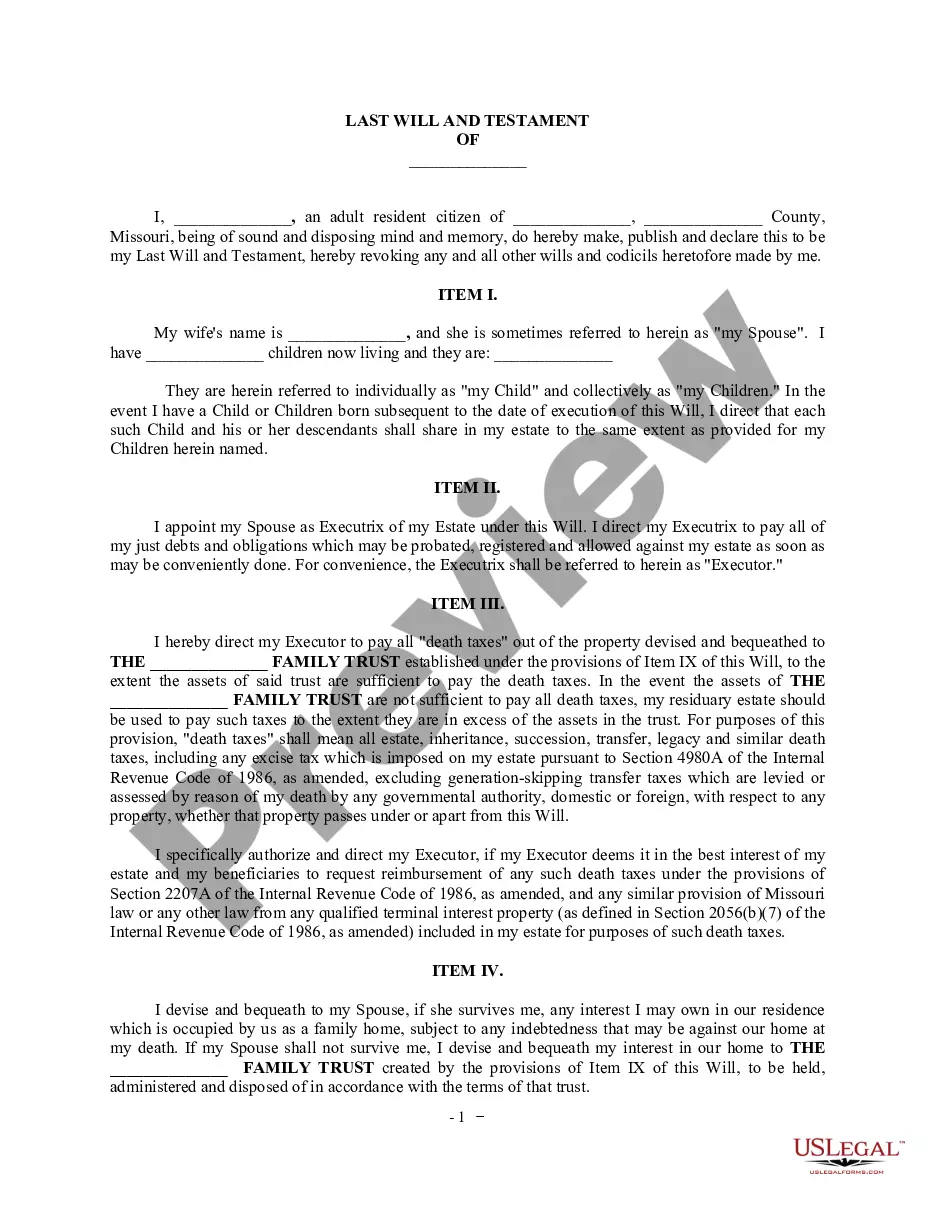
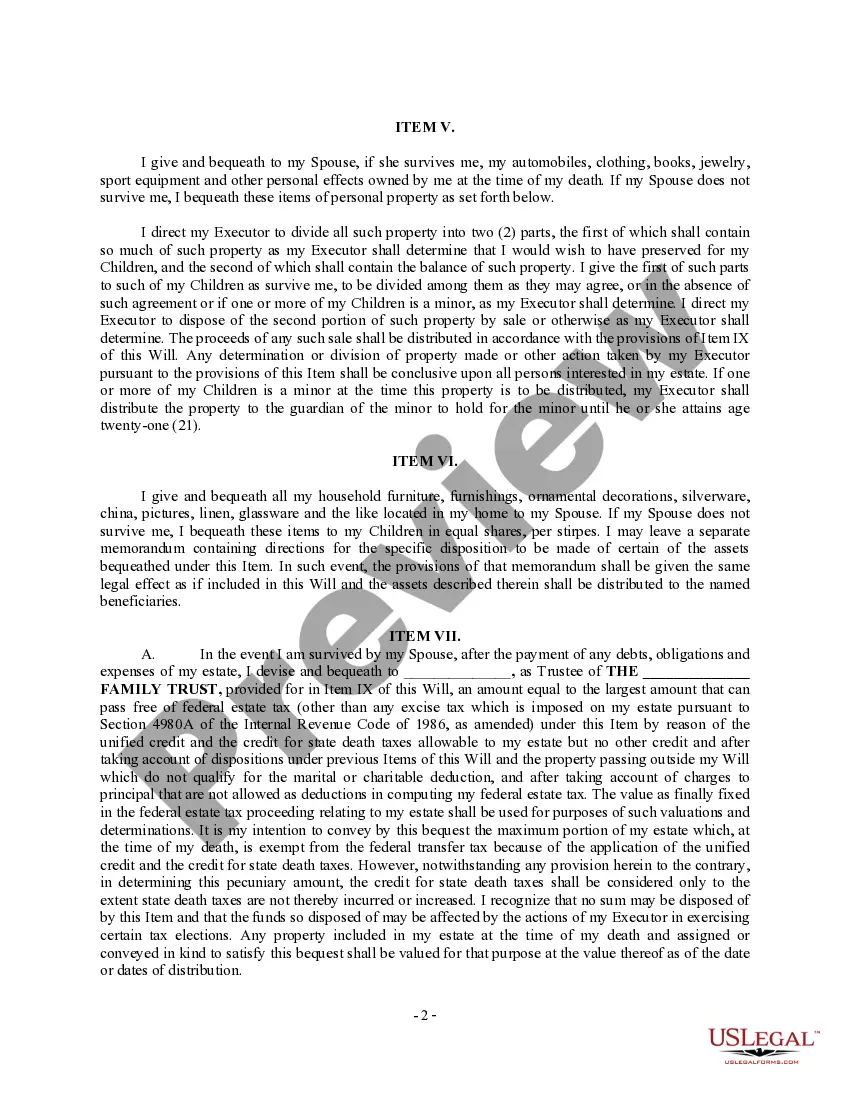
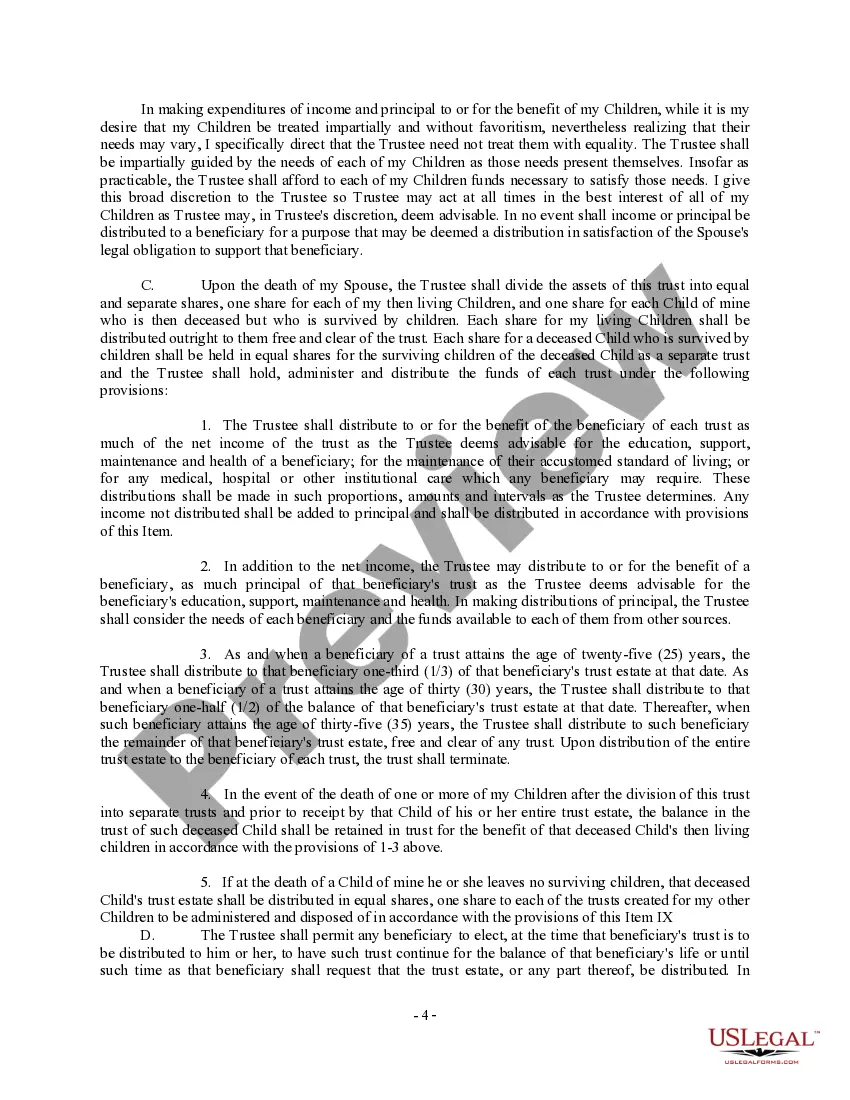
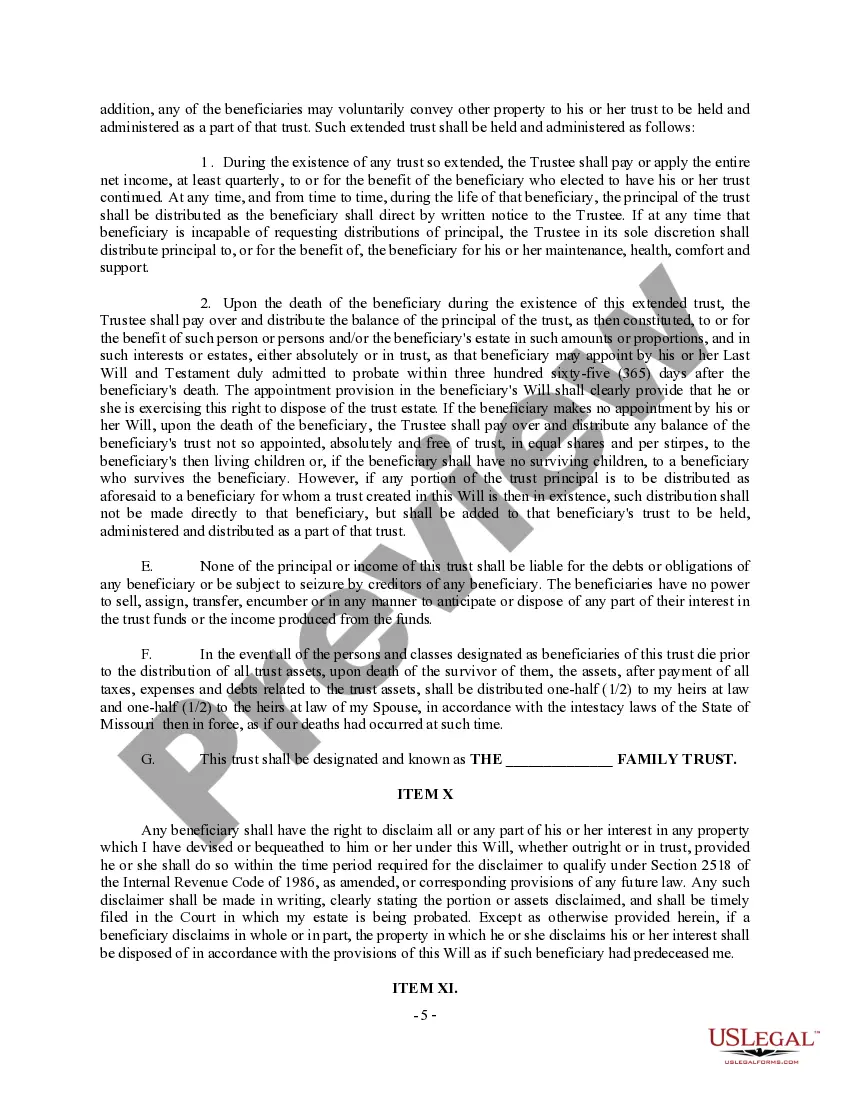
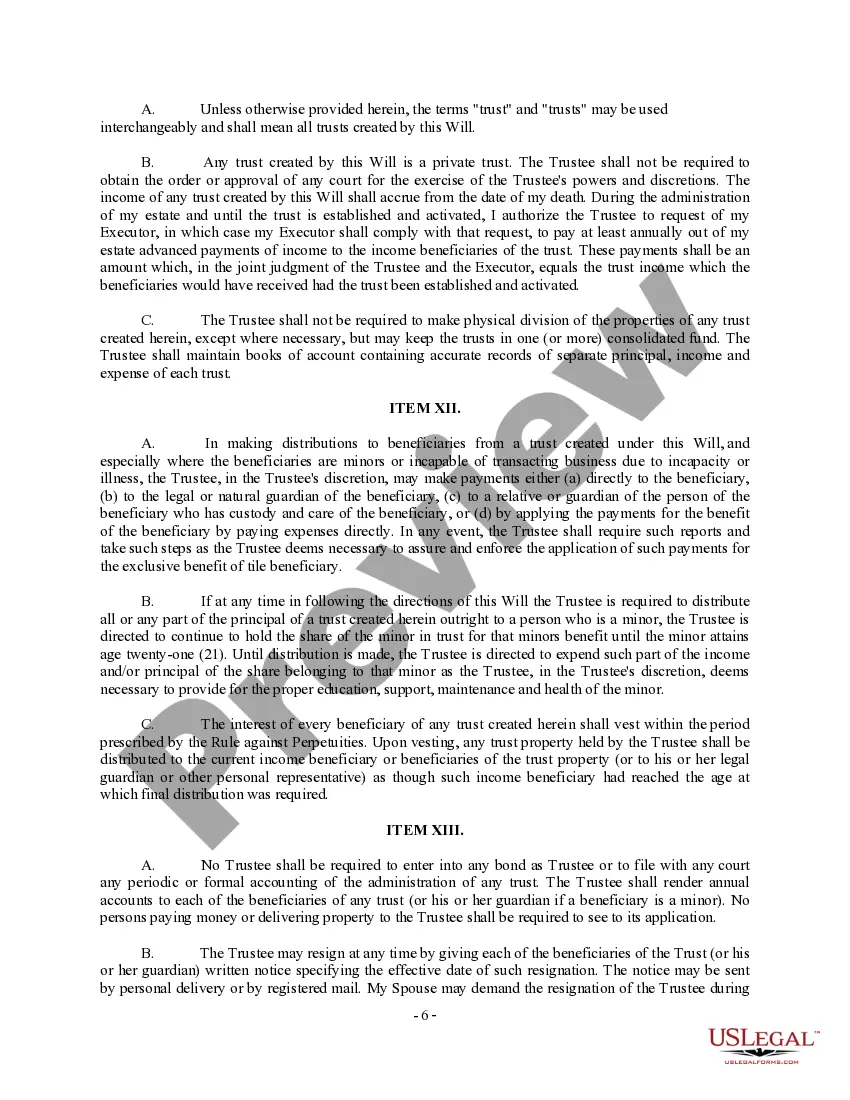
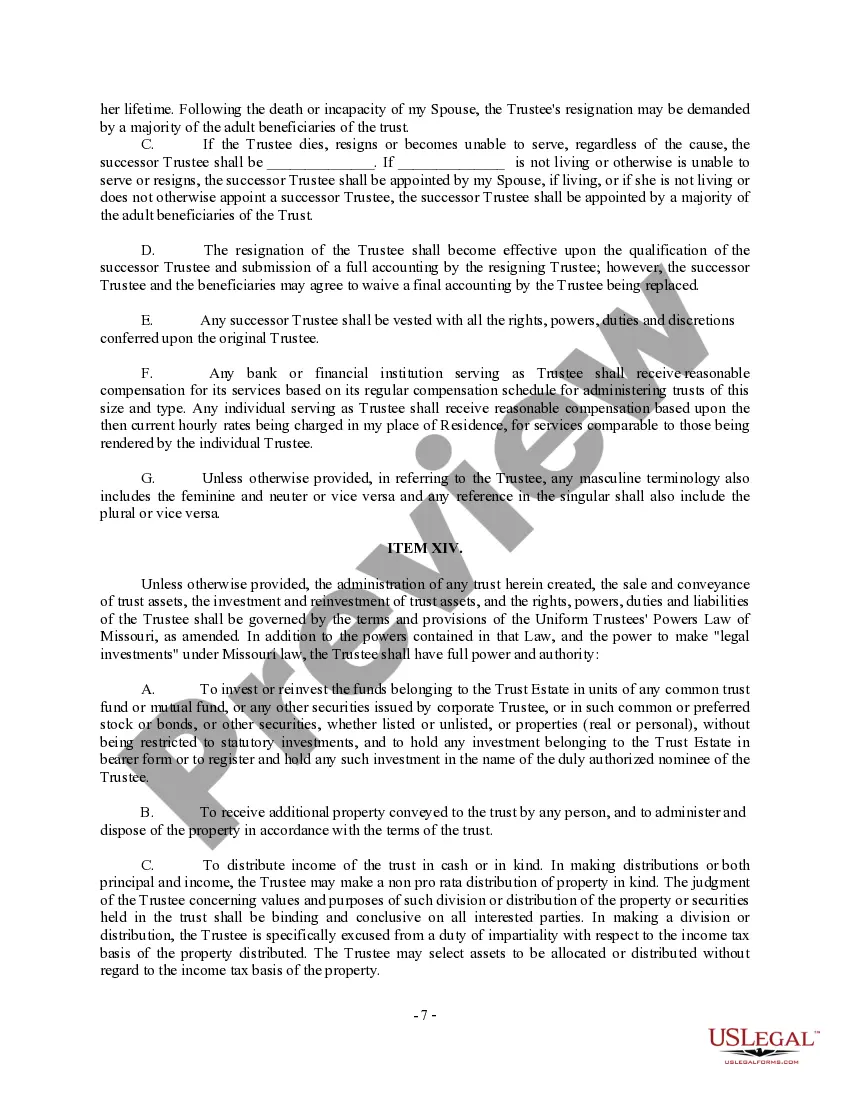
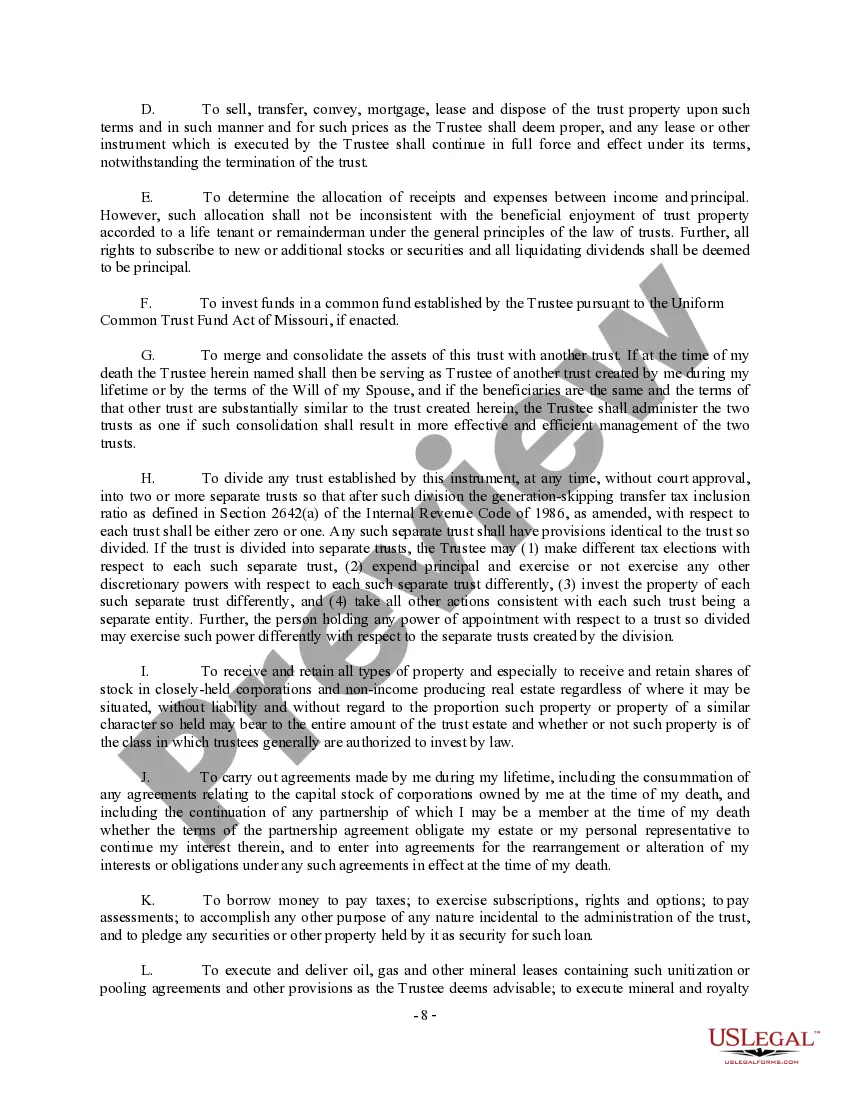
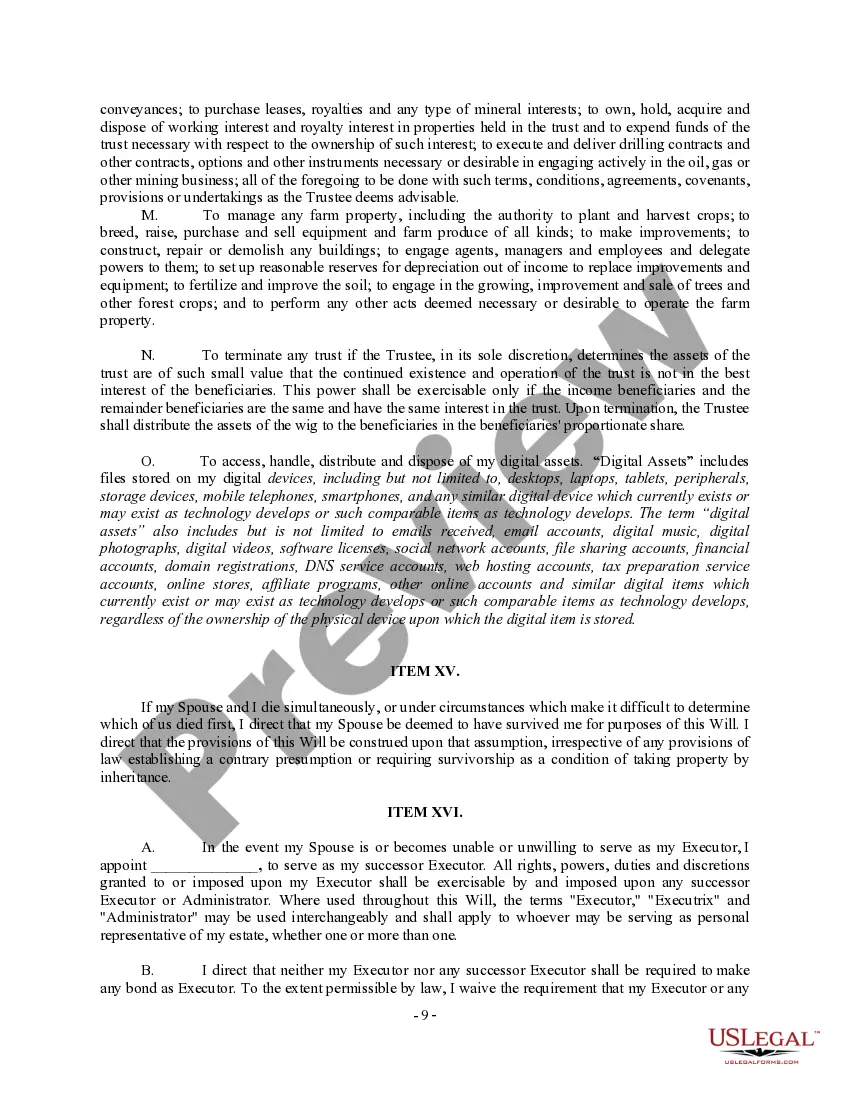
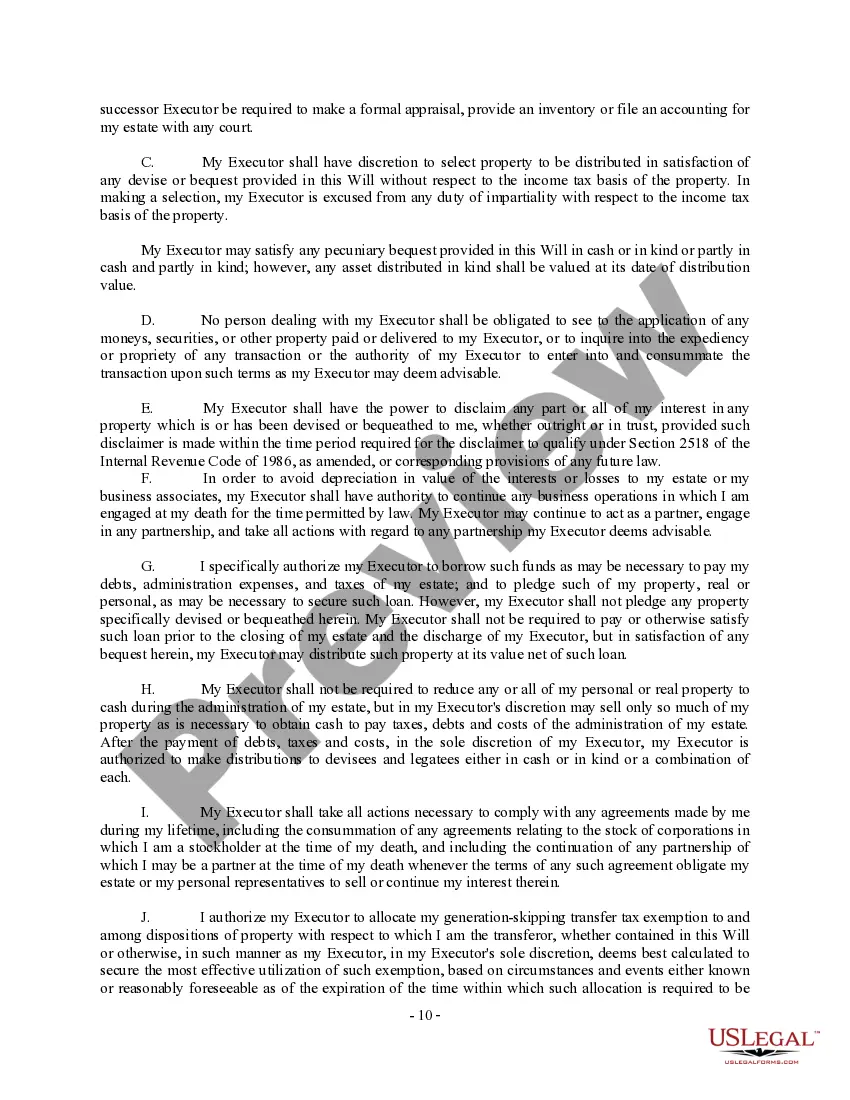
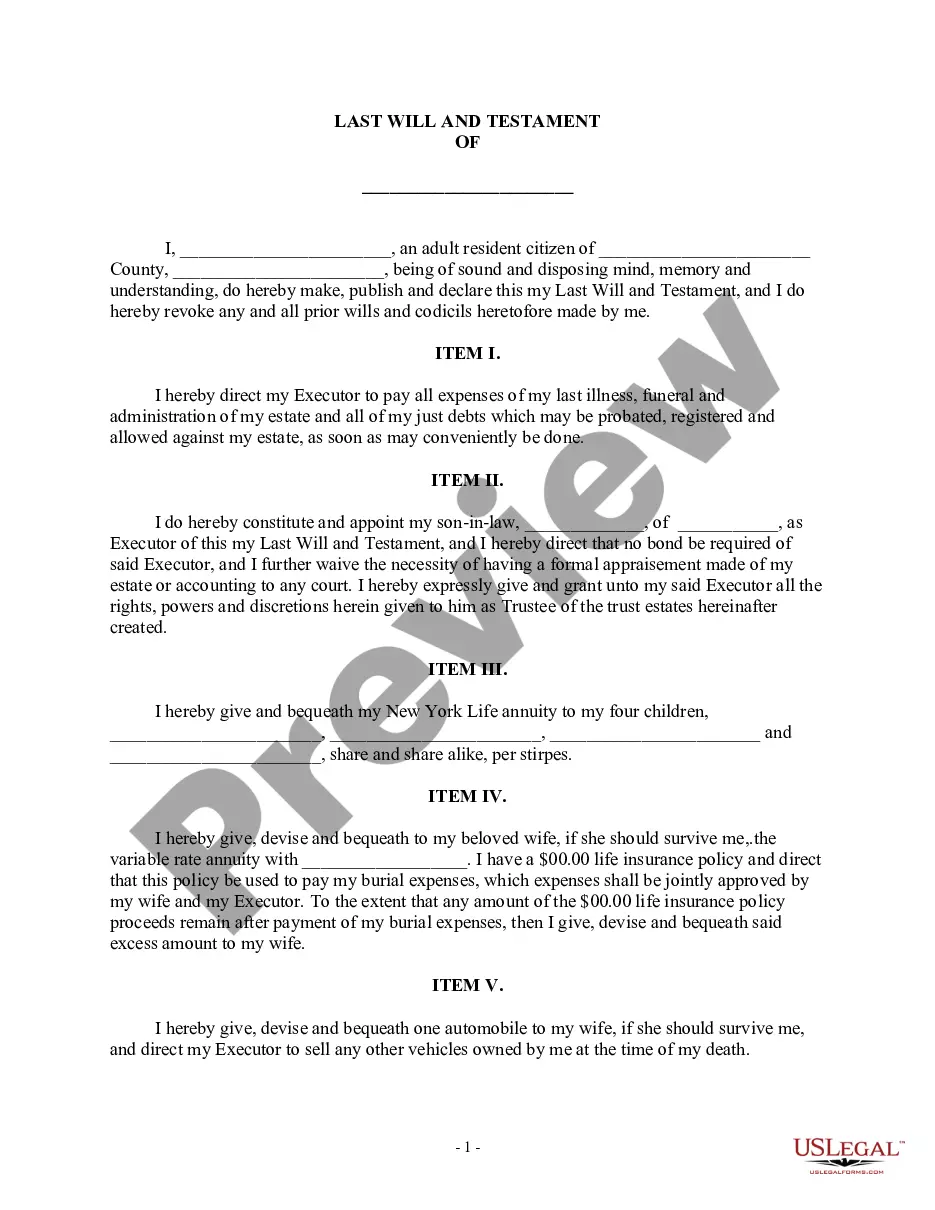
The Complex Will with Credit Shelter Marital Trust for Large Estates is a specialized estate planning document designed to help couples maximize their tax-free inheritance for their heirs. This form combines the benefits of a last will and testament with a credit shelter trust, ensuring that a certain amount of the estate can bypass estate taxes, thereby providing substantial financial advantages to beneficiaries. Unlike simpler wills, this complex will addresses larger estates and incorporates provisions specifically tailored toward tax efficiency and family wealth preservation.
Main sections of this form
- Testamentary provisions for the distribution of assets to the surviving spouse and children.
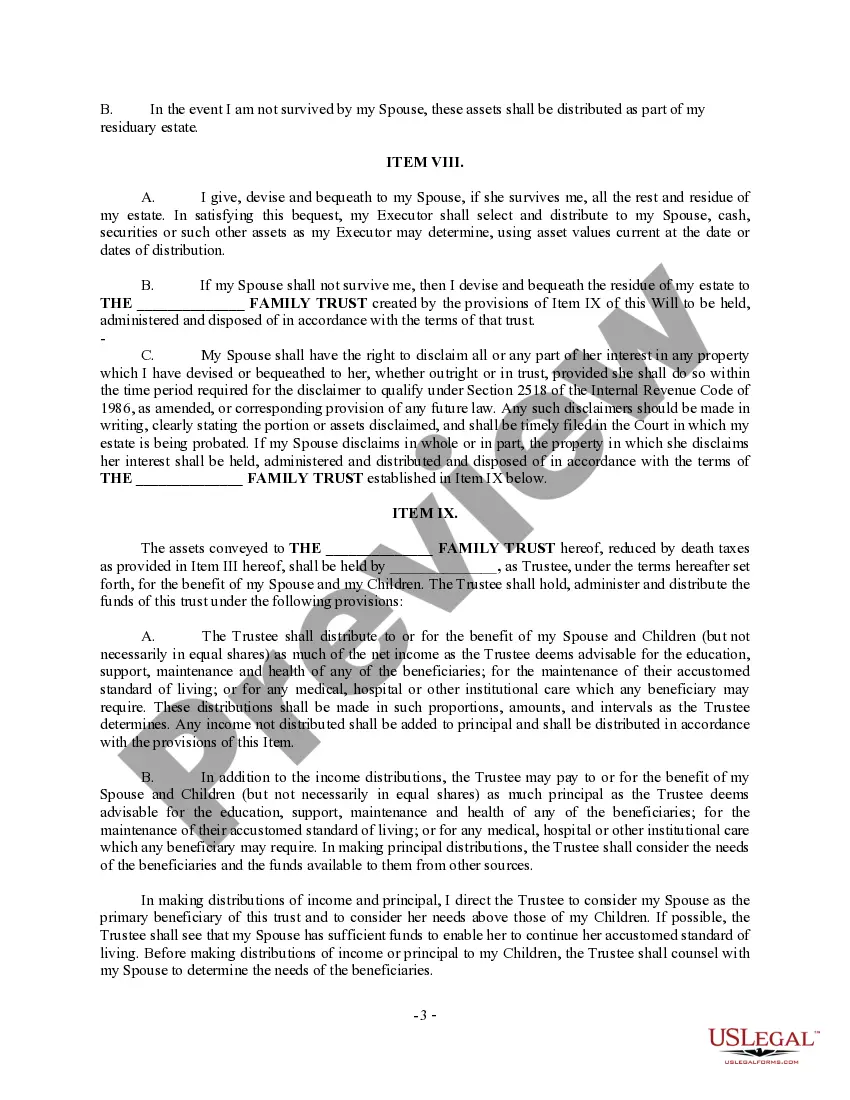
- Creation of a Credit Shelter Trust to hold the maximum tax-free amount for children.
- Appointment of an executor to manage estate affairs.
- Specific instructions regarding the payment of debts and taxes from the estate.
- Details on how income from the trust will be disbursed to beneficiaries.





Common use cases
This form should be used when a couple has a large estate and wishes to provide for their spouse while ensuring that a significant portion passes to their children without incurring estate taxes. It is particularly useful for individuals seeking to minimize tax liabilities upon death and secure financial stability for their family. By establishing this will and trust, individuals can make clear and efficient provisions for their loved ones in the event of their passing.
Who needs this form
This form is ideal for:
- Married couples with substantial assets.
- Individuals concerned about estate tax implications for their heirs.
- Parents wishing to provide for their children while ensuring tax efficiency.
- Those wanting to create a comprehensive estate plan that protects family wealth.
Completing this form step by step
To complete the Complex Will with Credit Shelter Marital Trust for Large Estates, follow these steps:
- Identify and provide the names and details of all relevant parties, including the testator, spouse, and children.
- Determine and specify the assets to be included in the trust and provide clear instructions for their distribution.
- Fill in the details regarding the appointment of the executor and trustee.
- Review and sign the will in the presence of witnesses, ensuring compliance with Missouri's legal requirements.
- Consider having the document notarized for additional legal validation, depending on personal preference.
Does this form need to be notarized?
Yes, this form must be notarized to be legally valid. Notarization provides an additional layer of authenticity, ensuring that the signatures are verified and that the document is executed correctly. US Legal Forms offers integrated online notarization services, allowing you to complete this process through a secure video call at any time, ensuring convenience without the need for travel.
Get your form ready online
Our built-in tools help you complete, sign, share, and store your documents in one place.
Make edits, fill in missing information, and update formatting in US Legal Forms—just like you would in MS Word.
Download a copy, print it, send it by email, or mail it via USPS—whatever works best for your next step.
Sign and collect signatures with our SignNow integration. Send to multiple recipients, set reminders, and more. Go Premium to unlock E-Sign.
If this form requires notarization, complete it online through a secure video call—no need to meet a notary in person or wait for an appointment.
We protect your documents and personal data by following strict security and privacy standards.

Make edits, fill in missing information, and update formatting in US Legal Forms—just like you would in MS Word.

Download a copy, print it, send it by email, or mail it via USPS—whatever works best for your next step.

Sign and collect signatures with our SignNow integration. Send to multiple recipients, set reminders, and more. Go Premium to unlock E-Sign.

If this form requires notarization, complete it online through a secure video call—no need to meet a notary in person or wait for an appointment.

We protect your documents and personal data by following strict security and privacy standards.
Common mistakes
- Failing to update the will after life changes such as marriage, divorce, or the birth of children.
- Not clearly defining the assets to be placed in the trust.
- Poorly selecting the right executor or trustee, which may lead to conflicts.
- Neglecting to sign the will in front of the required number of witnesses.
- Overlooking state-specific requirements that may affect the validity of the document.
Benefits of completing this form online
- Convenient online access to customizable legal forms.
- Ability to easily edit the document to fit specific needs and circumstances.
- Drafted by licensed attorneys, ensuring legal compliance and accuracy.
- Downloadable formats allow for immediate use and printing.
What to keep in mind
- The Complex Will with Credit Shelter Marital Trust is designed for larger estates to minimize estate taxes.
- This form provides a clear pathway for wealth transfer to family members while complying with Missouri laws.
- Proper completion requires identifying all pertinent parties and assets to secure effective estate planning.
- Online notarization is available to facilitate the validation of the will.
Looking for another form?

Form popularity
FAQ
While a credit shelter trust offers many benefits, there are some disadvantages to consider. For instance, it may require ongoing management and legal oversight, which can incur costs. Additionally, a Missouri Complex Will with Credit Shelter Marital Trust for Large Estates may limit flexibility in how assets can be used after the first spouse's death. It's wise to weigh these factors with a trusted advisor to determine the best estate planning strategy for your needs.
Typically, a credit shelter trust does not go through probate, which can streamline the transfer of assets. When implementing a Missouri Complex Will with Credit Shelter Marital Trust for Large Estates, you can designate assets to the trust, allowing them to bypass the probate process. This ensures a faster and more private distribution of your estate. Working with professionals can help you structure your trust effectively to maximize these benefits.
In general, assets held in a marital trust are not included in the estate of the deceased spouse. This is especially relevant when considering a Missouri Complex Will with Credit Shelter Marital Trust for Large Estates. By utilizing this type of trust, you can effectively manage and protect your wealth while ensuring it passes to your heirs without unnecessary taxation. It’s important to consult with a legal expert to understand how these assets may interact with estate laws.
Yes, a credit shelter trust is typically classified as a complex trust. This type of trust allows you to take advantage of estate tax exemptions by sheltering a certain amount of assets from taxation. By implementing a Missouri Complex Will with Credit Shelter Marital Trust for Large Estates, you can effectively manage your estate while providing for your spouse and other beneficiaries. Utilizing our platform, uslegalforms, can guide you in setting up the right trust for your needs.
Yes, a trust can help you avoid probate in Missouri. When you establish a trust, your assets transfer directly to the beneficiaries upon your passing, bypassing the probate process. This means your loved ones can access their inheritance without delays or the costs associated with probate proceedings. Creating a Missouri Complex Will with Credit Shelter Marital Trust for Large Estates can further streamline estate management and ensure your wishes are fulfilled efficiently.
Trust B is irrevocable, the surviving spouse cannot change its terms. When one spouse dies the survivor must hire a lawyer or an accountant to determine how to best divide the couple's assets between the deceased spouse's irrevocable trust and the surviving spouse's revocable trust.
You can be trustee of your own living trust. If you are married, your spouse can be trustee with you. Most married couples who own assets together, especially those who have been married for some time, are usually co-trustees.
Unlike with a QTIP trust, the surviving spouse typically has complete control over a marital trust, including use of the trust assets and final say on designating who the final beneficiaries are. A QTIP trust offers more control to the grantor but less control to the surviving spouse compared to marital trust.
QTIP trusts are put to use in estate planning and are especially useful when beneficiaries exist from a previous marriage but the grantor dies before a subsequent spouse does. With a QTIP, estate tax is not assessed at the point of the first spouse's death, but is instead determined after the second spouse has passed.
The trust qualifies for the marital deduction. In a QTIP trust, the surviving spouse must receive all income generated by the trust property for life, paid at least annually.After the surviving spouse's death, the property passes to the remainder beneficiaries of the trust, who usually are the children of the couple.