Kentucky Paving Contractor Package
Understanding this form package
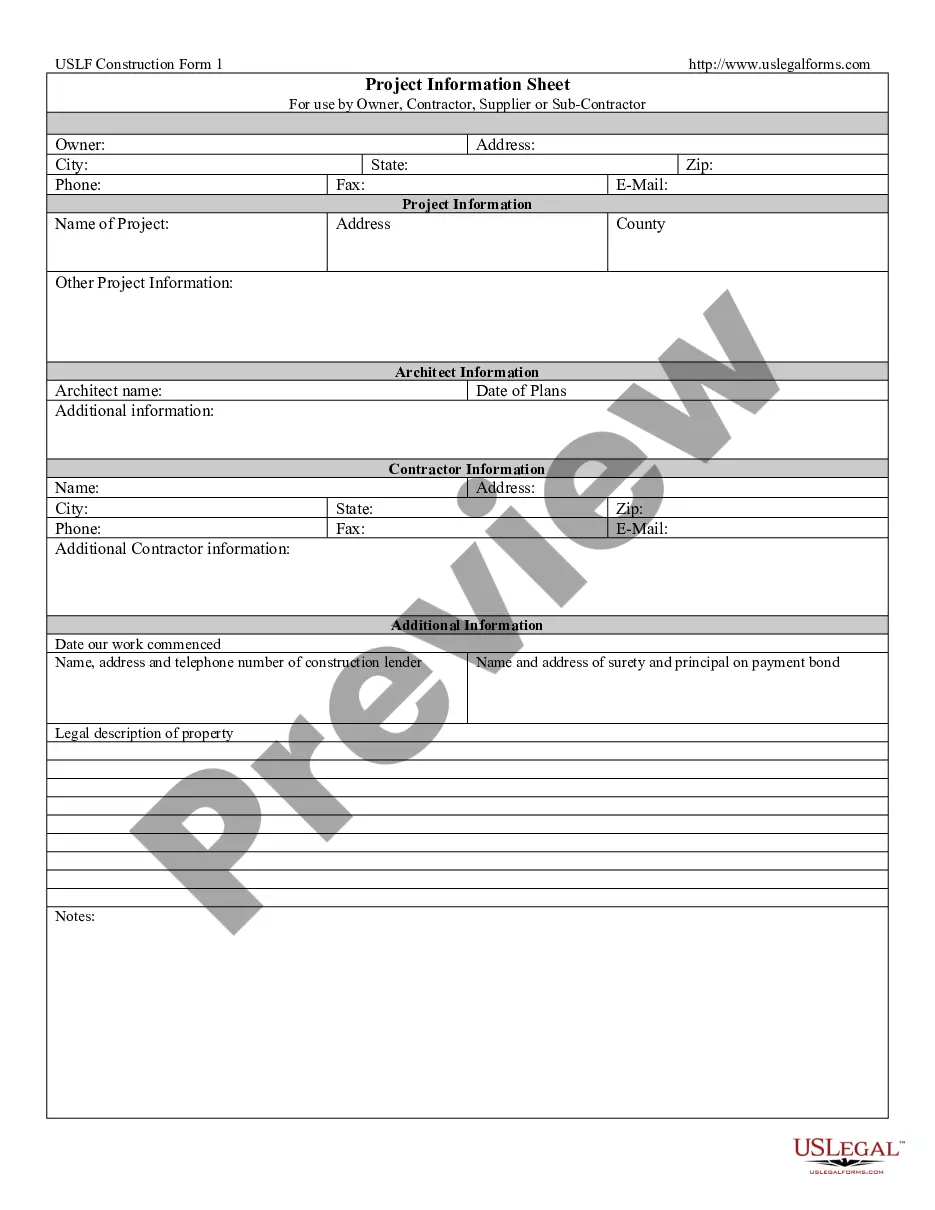
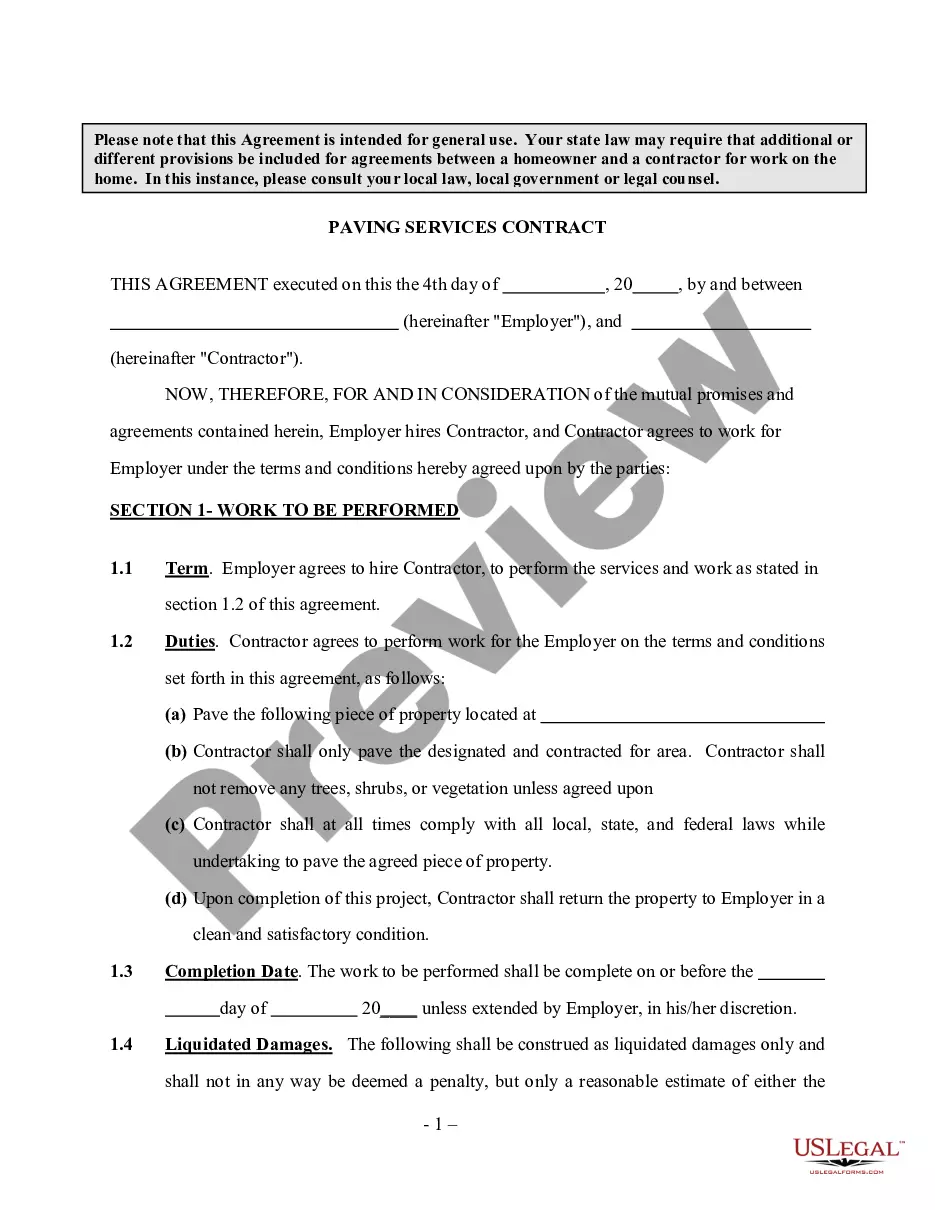
The Kentucky Paving Contractor Package includes essential legal documents designed specifically for paving contractors, owners, suppliers, and subcontractors. This package aims to protect your legal rights and claims while addressing important legal matters related to projects for installing, creating, or maintaining paved surfaces on residential properties. Central to this package is the paving contract, which complies with Kentucky state law, ensuring that you have the necessary legal framework to operate in compliance with local regulations.
What’s included in this form package
- Paving Contract for Contractor
- Contractor's Weekly Equipment Summary
- Contractor's Bid Log
- Contractor's Bid Follow Up Letter
- Contractor's Summary of an Estimate
- Construction Accident Report
- Construction Safety and Health Plan
- Change Order for Construction or Repairs by Contractor
- Certification of Completion by Contractor
When this form package is needed
This form package is helpful in various scenarios, including:
- When entering into a new paving contract with a homeowner or client.
- When changes to an existing contract need to be documented.
- When completing a project and needing official documentation of completion.
- When tracking bids or submitting bid follow-up communications.
- When maintaining compliance with workplace safety regulations.
Who can use this document
- Paving contractors looking to formalize agreements with clients.
- Homeowners hiring contractors for paving projects.
- Suppliers that provide materials for paving jobs.
- Subcontractors who work on paving projects and need to protect their interests.
- Any parties involved in the bidding process for paving contracts.
Completing these forms step by step
- Review the included forms to familiarize yourself with the requirements.
- Identify and clearly state the parties involved in the paving project.
- Complete the necessary fields, ensuring all information is accurate.
- Enter the dates and signatures required on the forms.
- Store completed forms in a secure location for easy access and reference.
Notarization details for included forms
Forms in this package usually don’t need notarization, but certain jurisdictions or signing circumstances may require it. US Legal Forms provides a secure online notarization option powered by Notarize, accessible 24/7 from anywhere.
Get your form ready online
Our built-in tools help you complete, sign, share, and store your documents in one place.
Make edits, fill in missing information, and update formatting in US Legal Forms—just like you would in MS Word.
Download a copy, print it, send it by email, or mail it via USPS—whatever works best for your next step.
Sign and collect signatures with our SignNow integration. Send to multiple recipients, set reminders, and more. Go Premium to unlock E-Sign.
If this form requires notarization, complete it online through a secure video call—no need to meet a notary in person or wait for an appointment.
We protect your documents and personal data by following strict security and privacy standards.

Make edits, fill in missing information, and update formatting in US Legal Forms—just like you would in MS Word.

Download a copy, print it, send it by email, or mail it via USPS—whatever works best for your next step.

Sign and collect signatures with our SignNow integration. Send to multiple recipients, set reminders, and more. Go Premium to unlock E-Sign.

If this form requires notarization, complete it online through a secure video call—no need to meet a notary in person or wait for an appointment.

We protect your documents and personal data by following strict security and privacy standards.
Typical mistakes to avoid
- Failing to sign or date forms before submission.
- Omitting necessary details in contract terms or specifications.
- Ignoring safety regulations when preparing the Worker Safety and Health Plan.
- Not keeping copies of changed orders for records.
Why complete this package online
- Convenient access to legal documents tailored for Kentucky paving contractors.
- Editability allows users to customize forms to fit specific project requirements.
- Reliable updates ensure forms reflect current legal standards and practices.
Legal use & context
- This package provides a legally binding framework for paving contracts compliant with Kentucky law.
- Utilizing these forms helps prevent disputes by facilitating clear communication between parties involved.
Main things to remember
- The Kentucky Paving Contractor Package offers essential documents to safeguard legal rights in paving projects.
- The included forms ensure compliance with state regulations, protecting both contractors and clients.
- Properly completed forms can enhance project management and provide clarity in contractual relationships.
Looking for another form?

Form popularity
FAQ
To find the cubic footage of the project, multiply the length by the width by the depth in feet, or just use a cubic footage calculator. For example, a 102032 wide x 202032 long driveway with a depth of 32033 would be 50 cubic feet.
Q: How long should I stay off the new asphalt? Normally, 24-hours is all that is required to use your new asphalt surface. In very warm weather, we recommend staying off the fresh asphalt for 1 - 2 days, as the surface cools.
A paving contractor is a company that constructs paved surfaces such as roads, sidewalks, concrete floors. They also work on larger projects, such as airport runways. These companies are hired by homeowners, businesses, and municipal agencies to pave new surfaces or repair existing ones.
Asphalt takes six to twelve months to fully cure, and remains a little more susceptible to damage for that time. However, it takes 48 to 72 hours to "dry" enough for foot and vehicle traffic. This is for new asphalt. Resurfaced asphalt can be dry in as soon as a few hours.
Since asphalt needs time to harden and cure, usually 6-12 months, your parking lot or driveway will remain soft and pliable until then. You may walk on the new pavement immediately, but keep automobile traffic off of it for at least 3 full days and longer in hotter temperatures.
Paving an asphalt driveway costs $4,739 on average, with a typical range between $2,932 and $6,564. This project runs $7 to $13 per square foot, including $2 to $6 per square foot for materials and $5 to $7 per square foot for labor. If you need replacement, you'll pay $8 to $15 per square foot.
Typically, you want to keep the pavement dry for at least two days, minimally, so make sure that rain isn't going to be an issue before you start your driveway paving in this situation.
Strong blacktop driveways are typically built using crushed angular gravel as a base. This gravel needs to be a minimum of 6 inches thick for light vehicle traffic such as cars and pickup trucks.
Every time your driveway gets wet, water can enter the asphalt through cracks and cause significant damage. While it may not be visible, this damage can still be extensive and, if untreated over time, can result in potholes and other forms of serious damage requiring costly repairs.