Indiana Living Trust for Husband and Wife with One Child
What is this form?
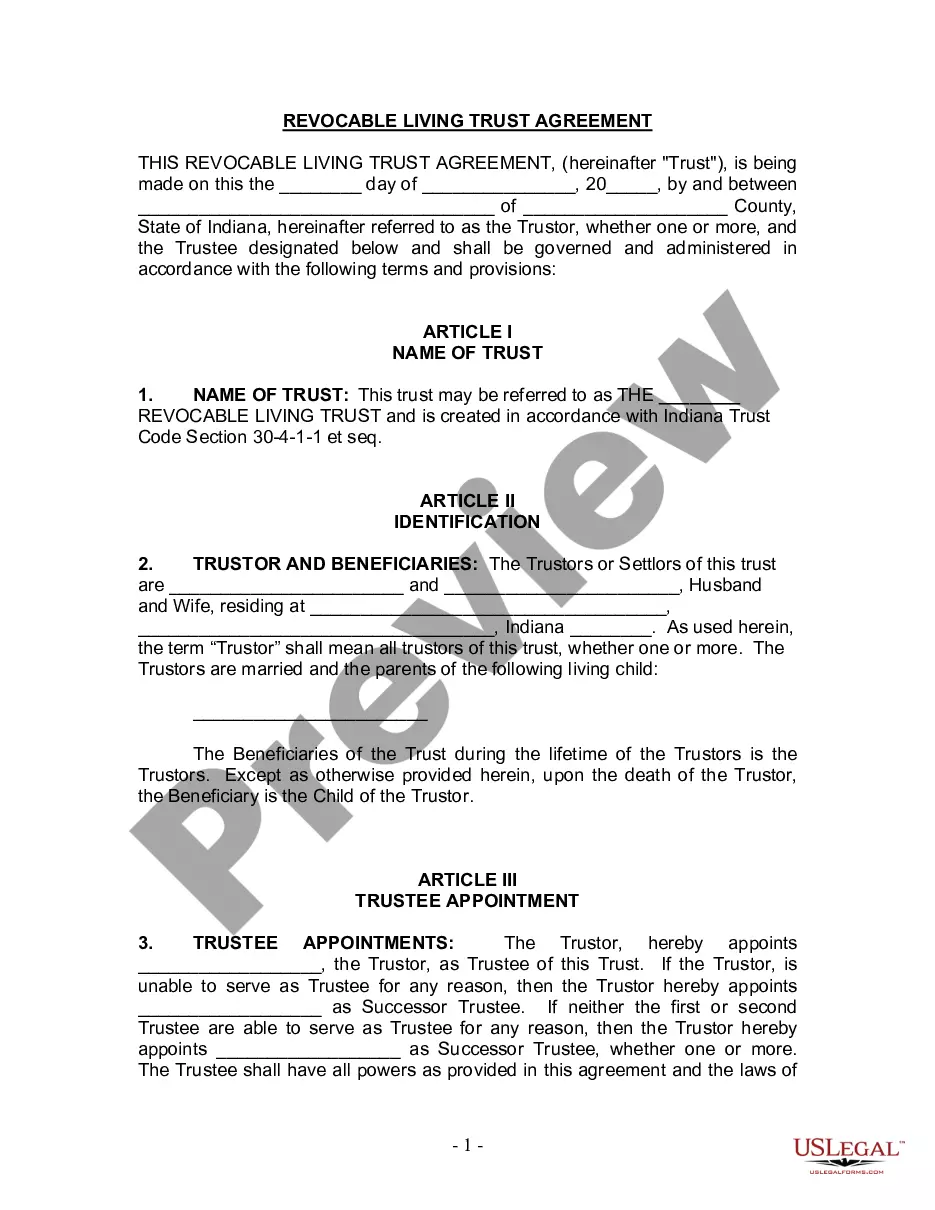
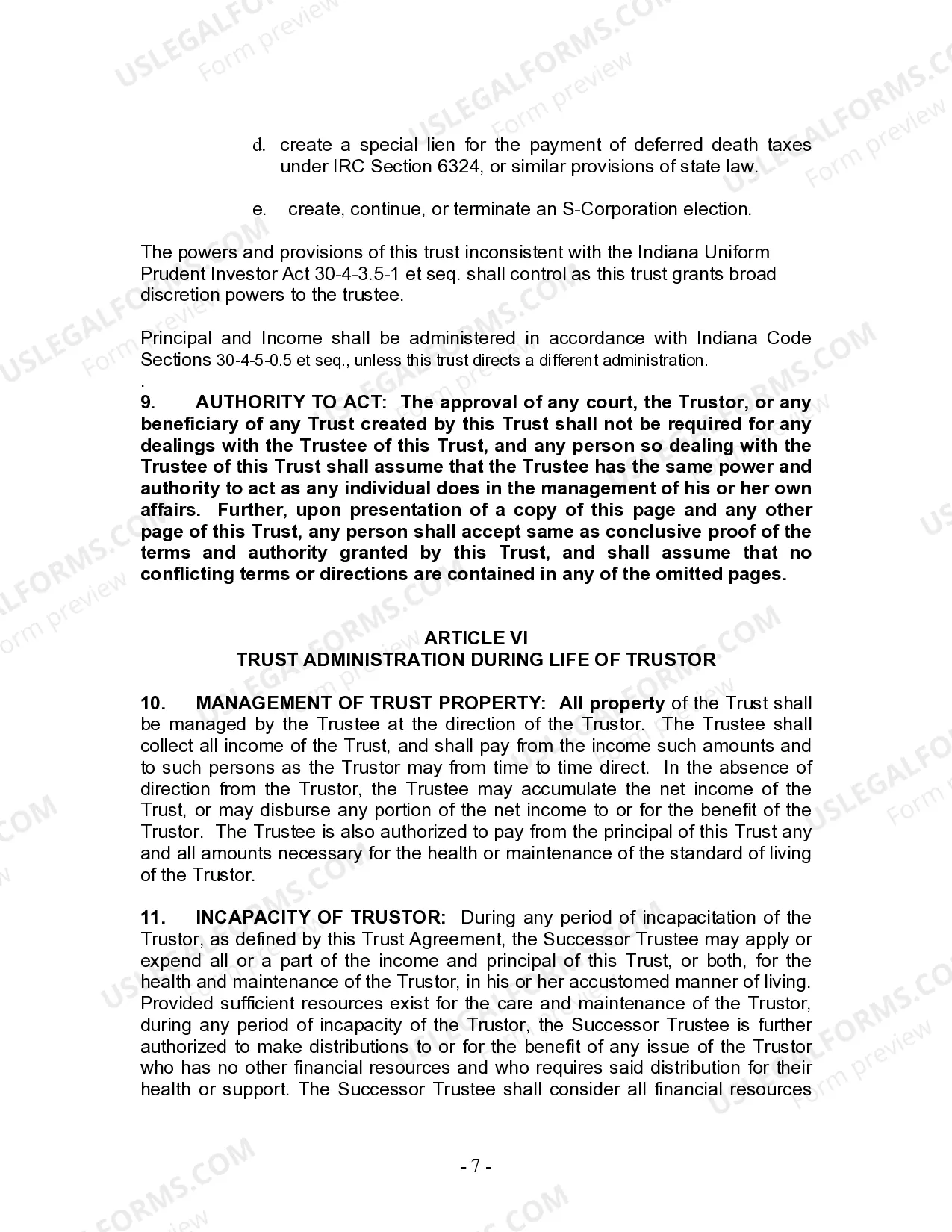
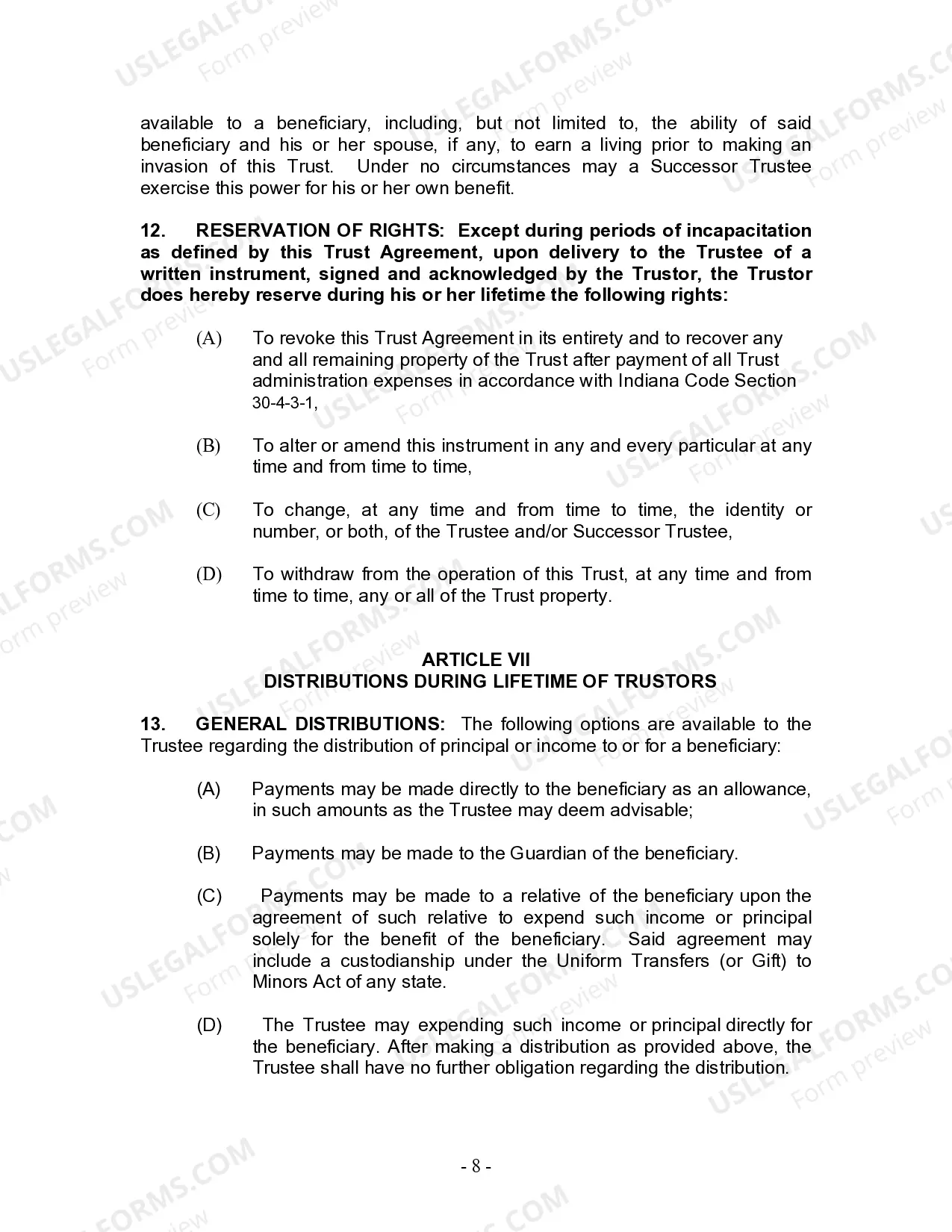
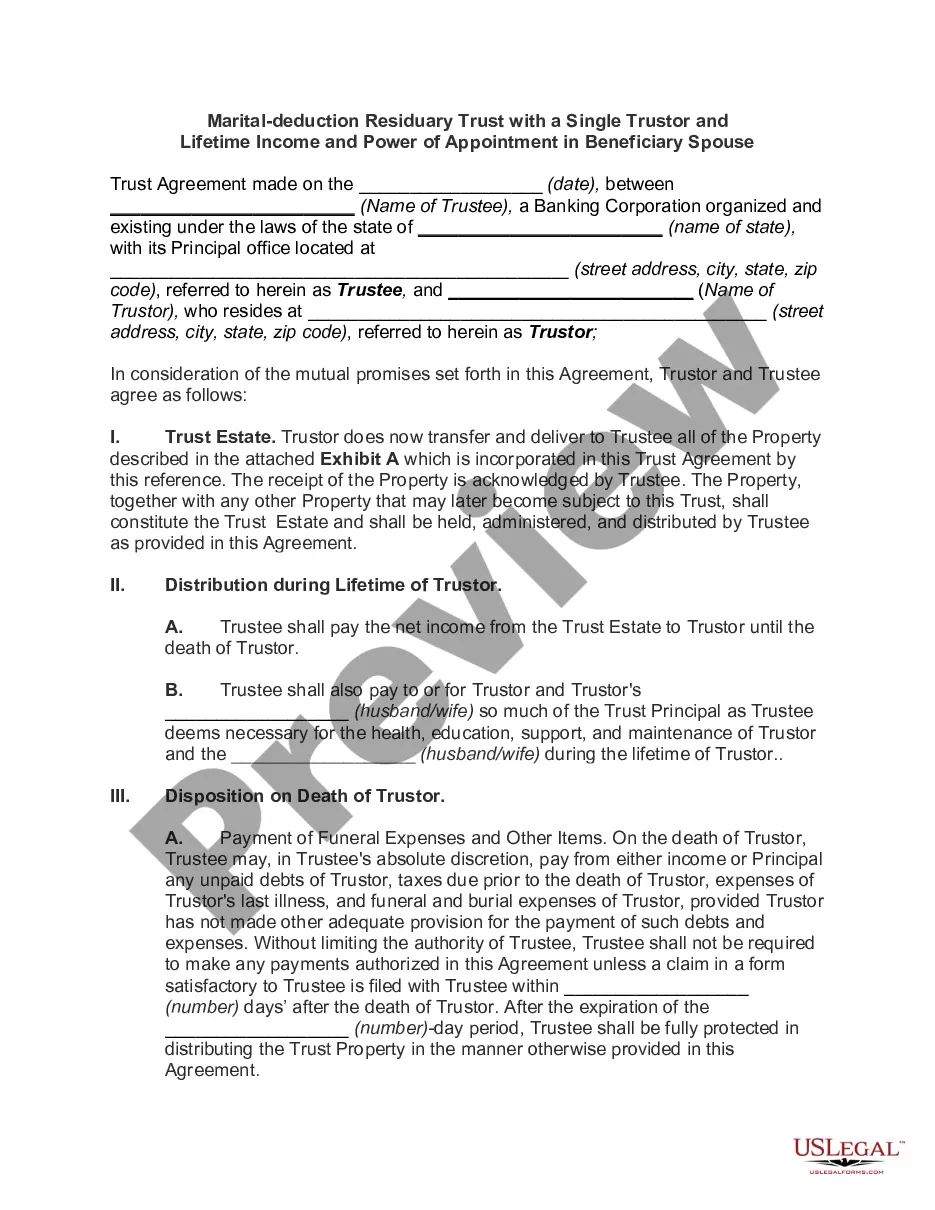
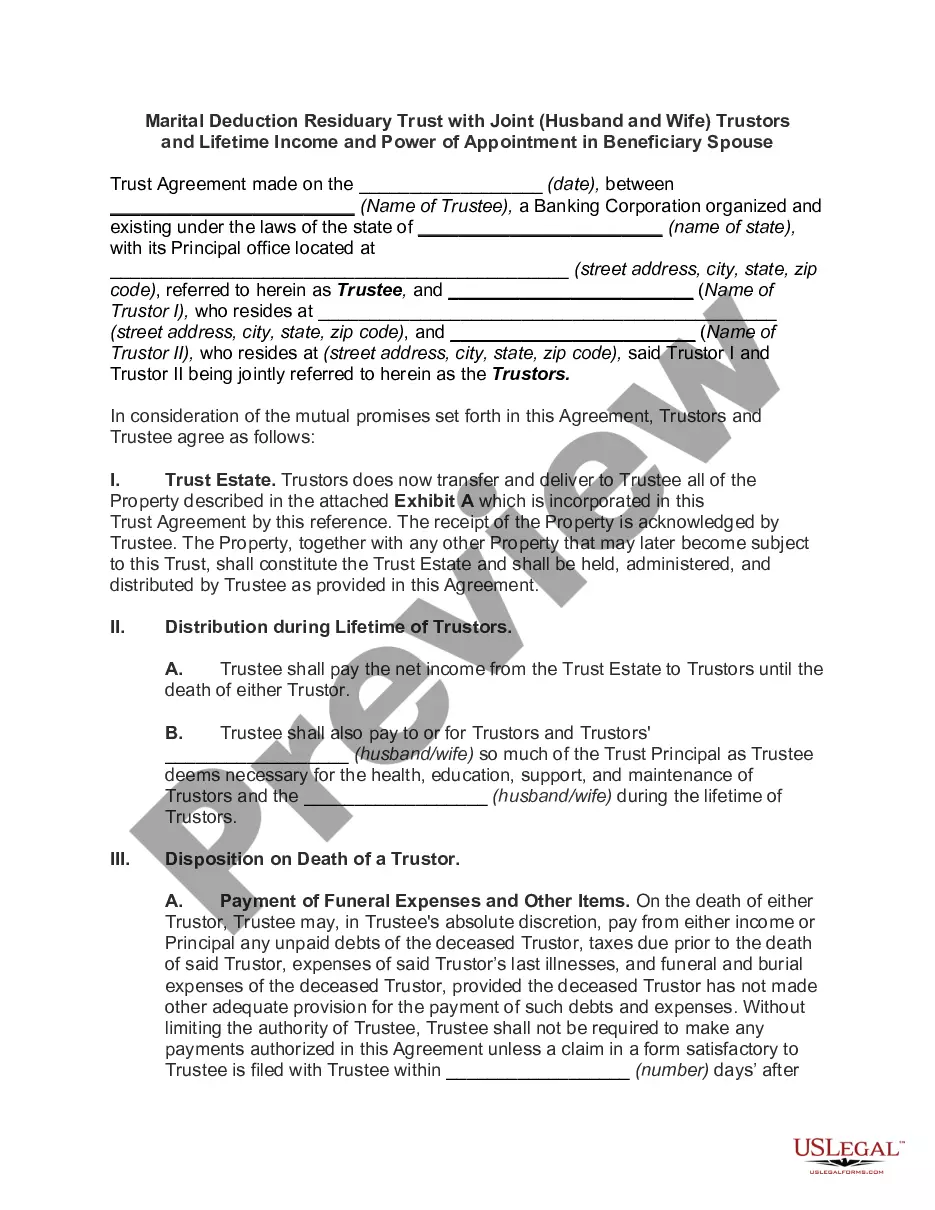
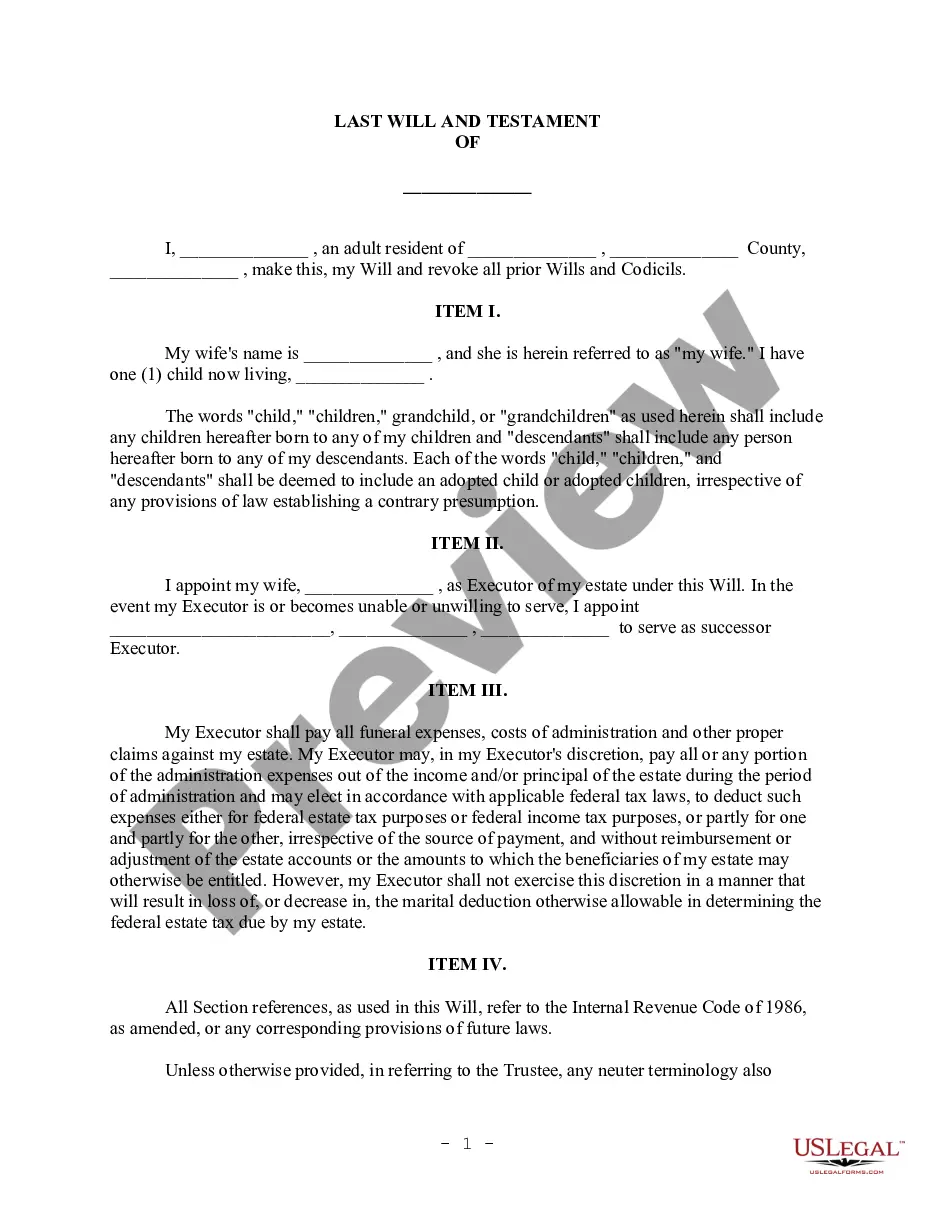
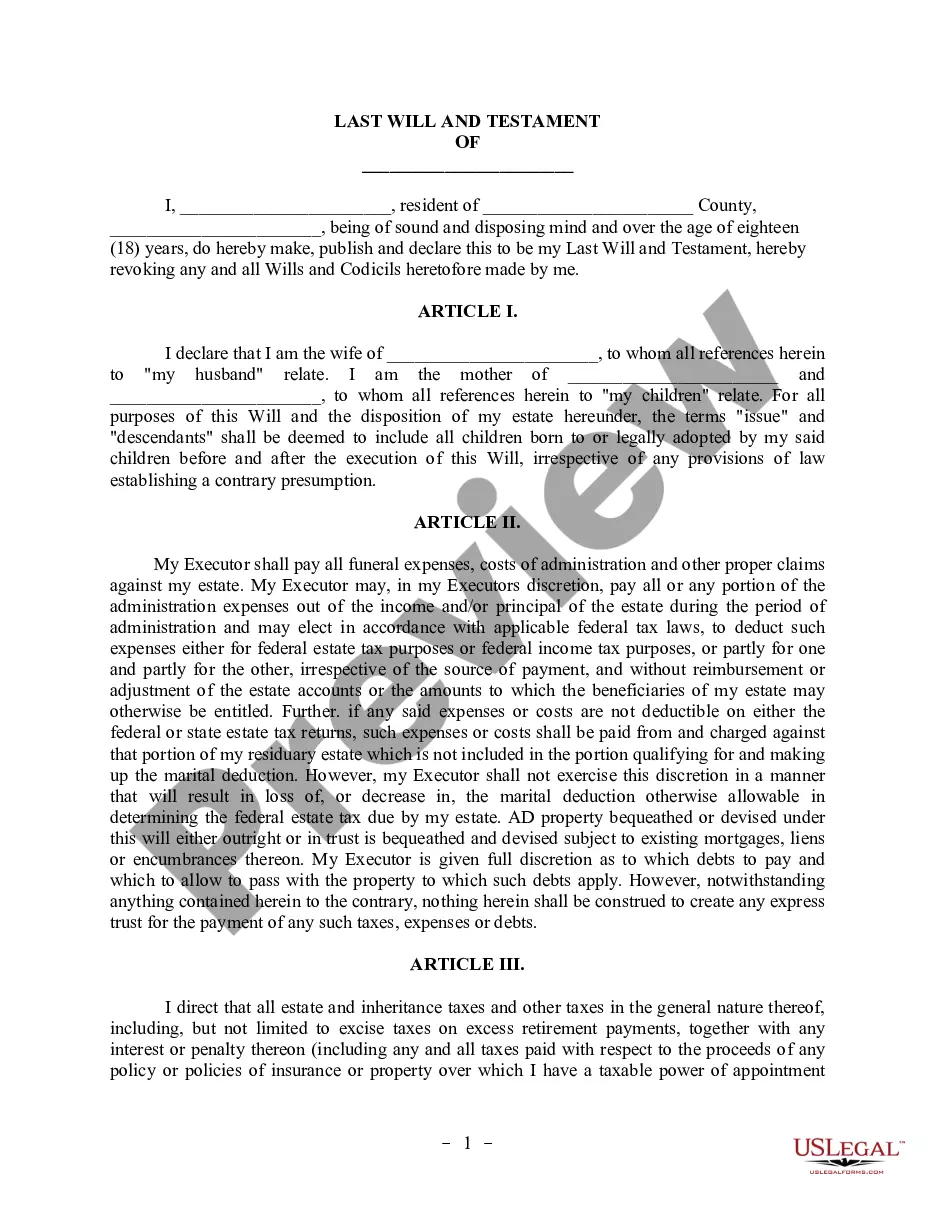
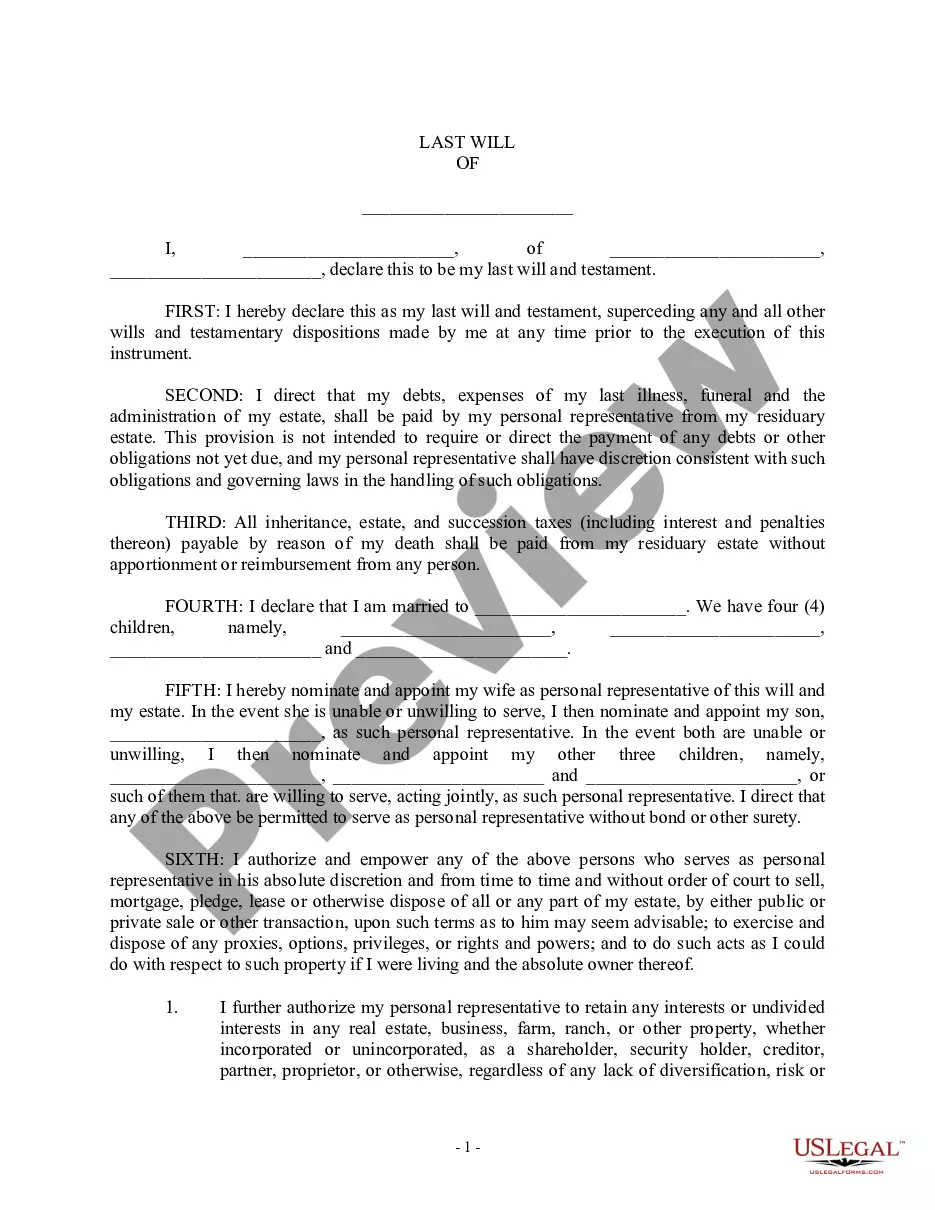
This Living Trust for Husband and Wife with One Child is a legally binding document that allows a married couple to manage their assets during their lifetimes and dictate how those assets will be distributed upon their death. This form differs from a will because it helps avoid probate and allows for asset management while the trustors are still living. A living trust enables the creators to retain control over their assets and ensures that their child is the primary beneficiary after both parents pass away.
Key components of this form
- Trustor and beneficiary identification: Details the names and addresses of the husband, wife, and their child.
- Trustee appointment: Designates the trustee to manage the trust and outlines successor provisions.
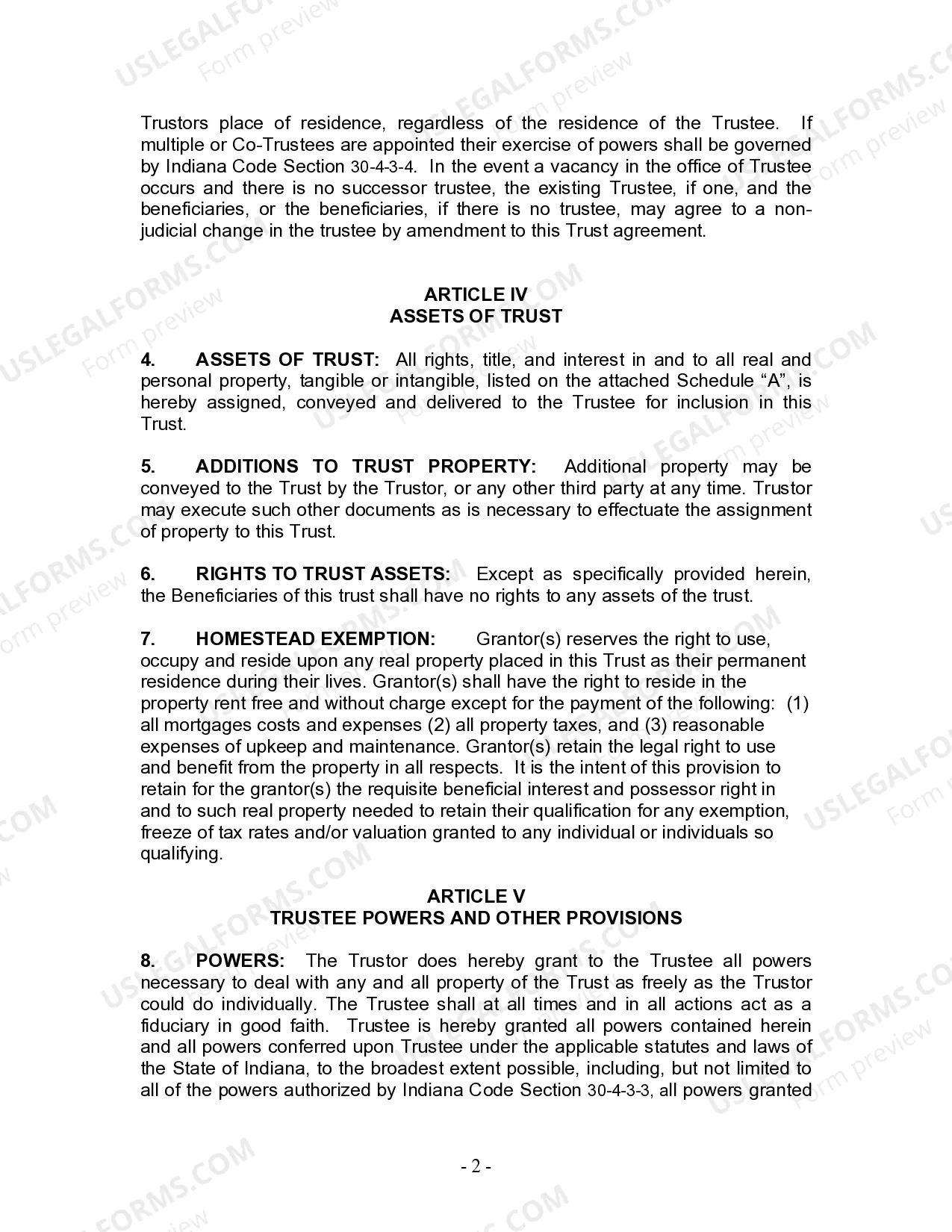
- Assets of the trust: Lists properties and assets to be included in the trust and conditions for additional property.
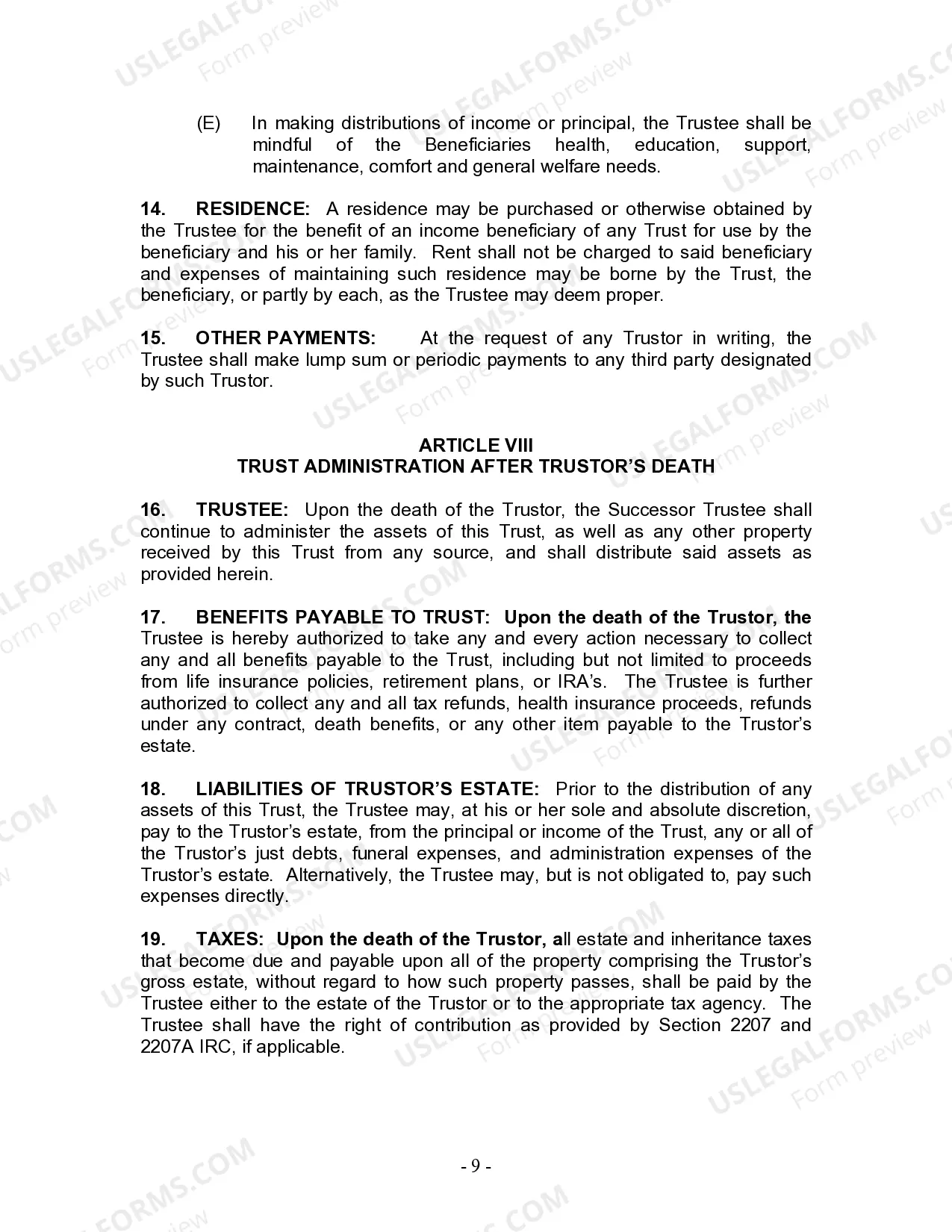
- Trust administration: Describes how the trust will be managed during the trustor's lifetime and after their death.
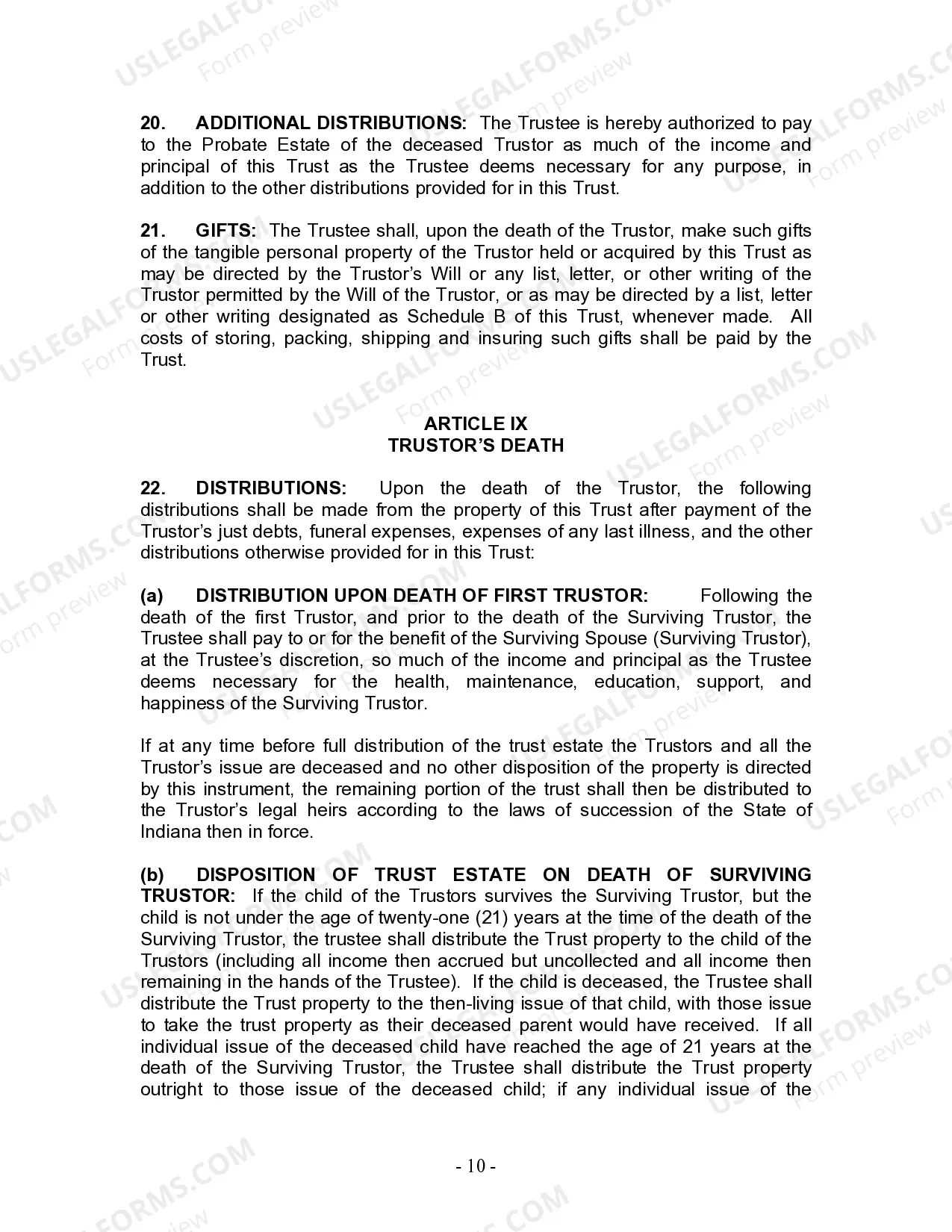
- Distribution instructions: Outlines how the trustâs assets will be distributed among the beneficiaries upon the death of the trustors.

Situations where this form applies
This form is essential for couples who want to ensure that their assets are managed according to their wishes without going through the lengthy probate process. It is particularly beneficial for families looking to provide for their minor child or children, allowing for a smoother transfer of assets upon the death of both parents, while ensuring financial management during the parents' lifetimes.
Intended users of this form
- Married couples with one or more minor children who want to establish a living trust.
- Couples seeking to bypass the probate process for their estate.
- Individuals planning for the management of their assets in case of incapacity.
How to prepare this document
- Identify the parties involved: Enter the names and addresses of the husband, wife, and their child.
- Designate the trustee: Specify who will manage the trust and identify any successor trustees.
- List the trust assets: Detail all real and personal property being placed into the trust.
- Define distribution terms: Clearly state how and when the trust assets will be distributed after the death of the trustors.
- Complete the notarization: Sign the trust agreement in the presence of a notary public, if required.
Does this form need to be notarized?
Yes, this form must be notarized to be legally valid. This ensures the authenticity of the signatures and the integrity of the document. US Legal Forms provides integrated online notarization, allowing you to notarize your form securely through a video call, no travel required.
Get your form ready online
Our built-in tools help you complete, sign, share, and store your documents in one place.
Make edits, fill in missing information, and update formatting in US Legal Forms—just like you would in MS Word.
Download a copy, print it, send it by email, or mail it via USPS—whatever works best for your next step.
Sign and collect signatures with our SignNow integration. Send to multiple recipients, set reminders, and more. Go Premium to unlock E-Sign.
If this form requires notarization, complete it online through a secure video call—no need to meet a notary in person or wait for an appointment.
We protect your documents and personal data by following strict security and privacy standards.

Make edits, fill in missing information, and update formatting in US Legal Forms—just like you would in MS Word.

Download a copy, print it, send it by email, or mail it via USPS—whatever works best for your next step.

Sign and collect signatures with our SignNow integration. Send to multiple recipients, set reminders, and more. Go Premium to unlock E-Sign.

If this form requires notarization, complete it online through a secure video call—no need to meet a notary in person or wait for an appointment.

We protect your documents and personal data by following strict security and privacy standards.
Typical mistakes to avoid
- Not listing all assets properly, which may lead to confusion or disputes later.
- Failing to designate successor trustees, which can complicate trust management.
- Leaving vague or unclear distribution instructions, which may result in unintended outcomes.
Benefits of completing this form online
- Convenient access to legal forms that can be downloaded and filled out at your own pace.
- Editable templates that allow for customization based on individual circumstances.
- Availability of legally compliant forms drafted by licensed attorneys, ensuring accuracy and reliability.
Looking for another form?
Form popularity
FAQ
Joint trusts are easier to fund and maintain.In a joint trust, after the death of the first spouse, the surviving spouse has complete control of the assets. When separate trusts are used, the deceased spouses' trust becomes irrevocable and the surviving spouse has limited control over assets.
At the time of your death, the assets in your family trust are protected by the exemption, and the assets in your marital trust are protected by the marital deduction. No estate taxes are due.
A marital trust allows the couple's heirs to avoid probate and take less of a hit from estate taxes by taking full advantage of the unlimited marital deductiona provision that enables spouses to pass assets to each other without tax consequences.
A marital trust allows the couple's heirs to avoid probate and take less of a hit from estate taxes by taking full advantage of the unlimited marital deductiona provision that enables spouses to pass assets to each other without tax consequences.
Separate trusts may offer better protection from creditors, if this is a concern. For example, at the death of the first spouse, the deceased spouse's trust becomes irrevocable, which makes it harder to access by creditors. And yet the surviving spouse can still access it for income and other needs.
Generally, trusts are considered the separate property of the beneficiary spouse and the assets in a trust are not subject to equitable distribution unless they contain marital property.Any funds remaining in the trust or in a separate account will continue to be the separate property of the beneficiary spouse.
In California, surviving spouses already receive all of the community property upon the death of their spouse.However, creating a joint will is still an option in California, and while it might help a couple save some time and money on their estate plan, it can also lead to some complex problems.
Typically, when a married couple utilizes a Revocable Living Trust based estate plan, each spouse creates and funds his or her own separate Revocable Living Trust. This results in two trusts. However, in the right circumstances, a married couple may be better served by creating a single Joint Trust.
Q: Can a person have more than one trust? A: Yes, it is not that uncommon for a person to be the beneficiary of multiple trusts. However, caution should be used. Trusts come in many shapes and sizes and can serve multiple purposes and can be established by you or by someone else for your benefit.