Louisiana Title Opinion
What is this form?
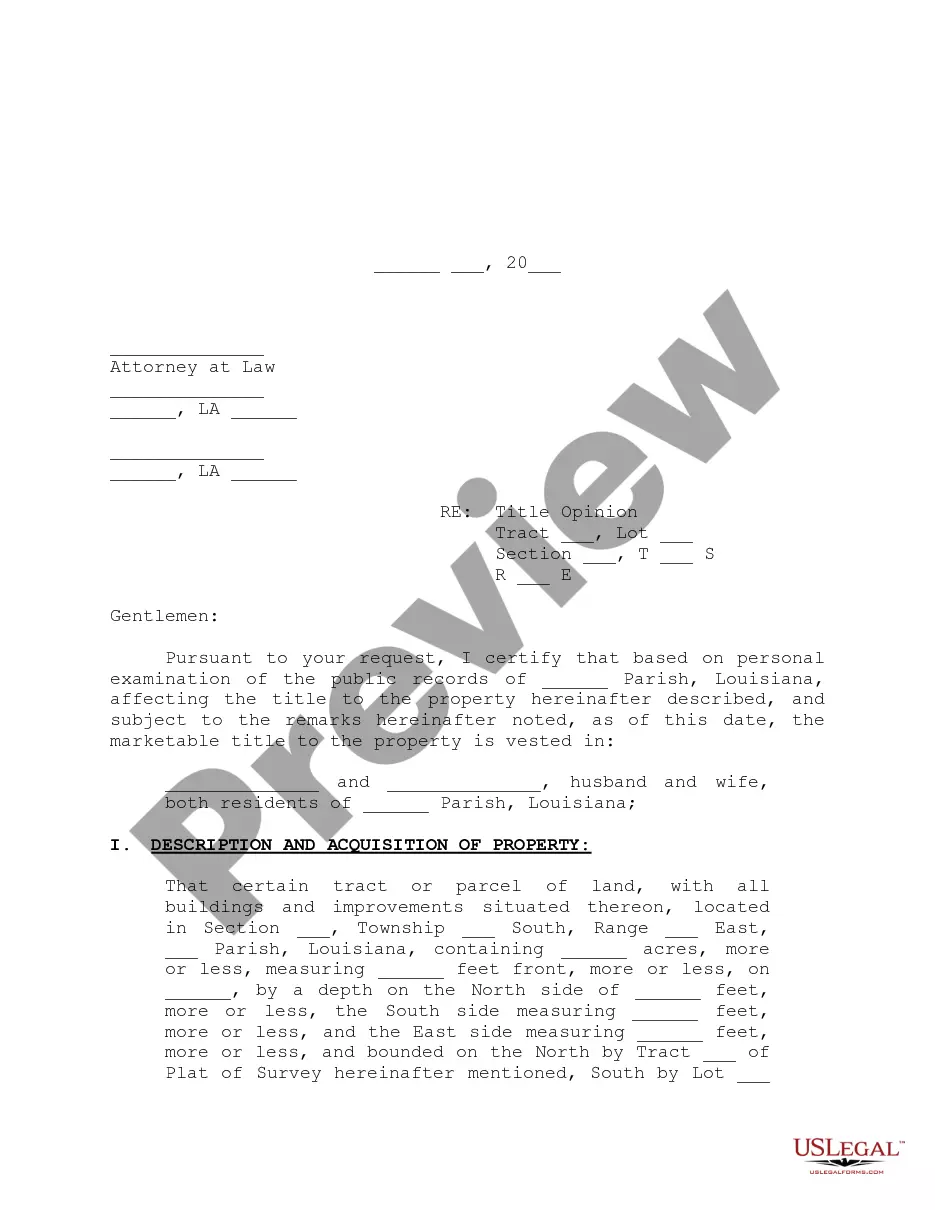
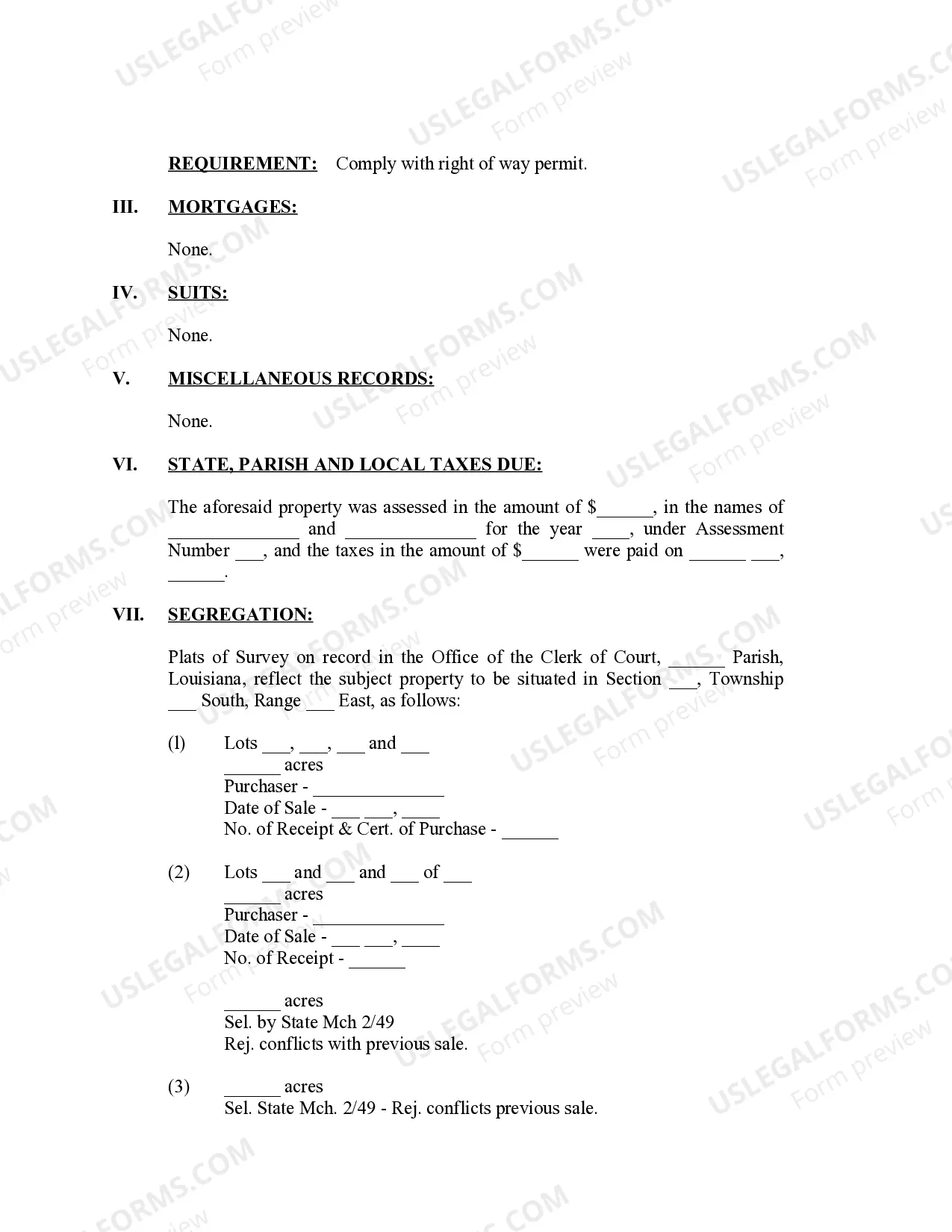
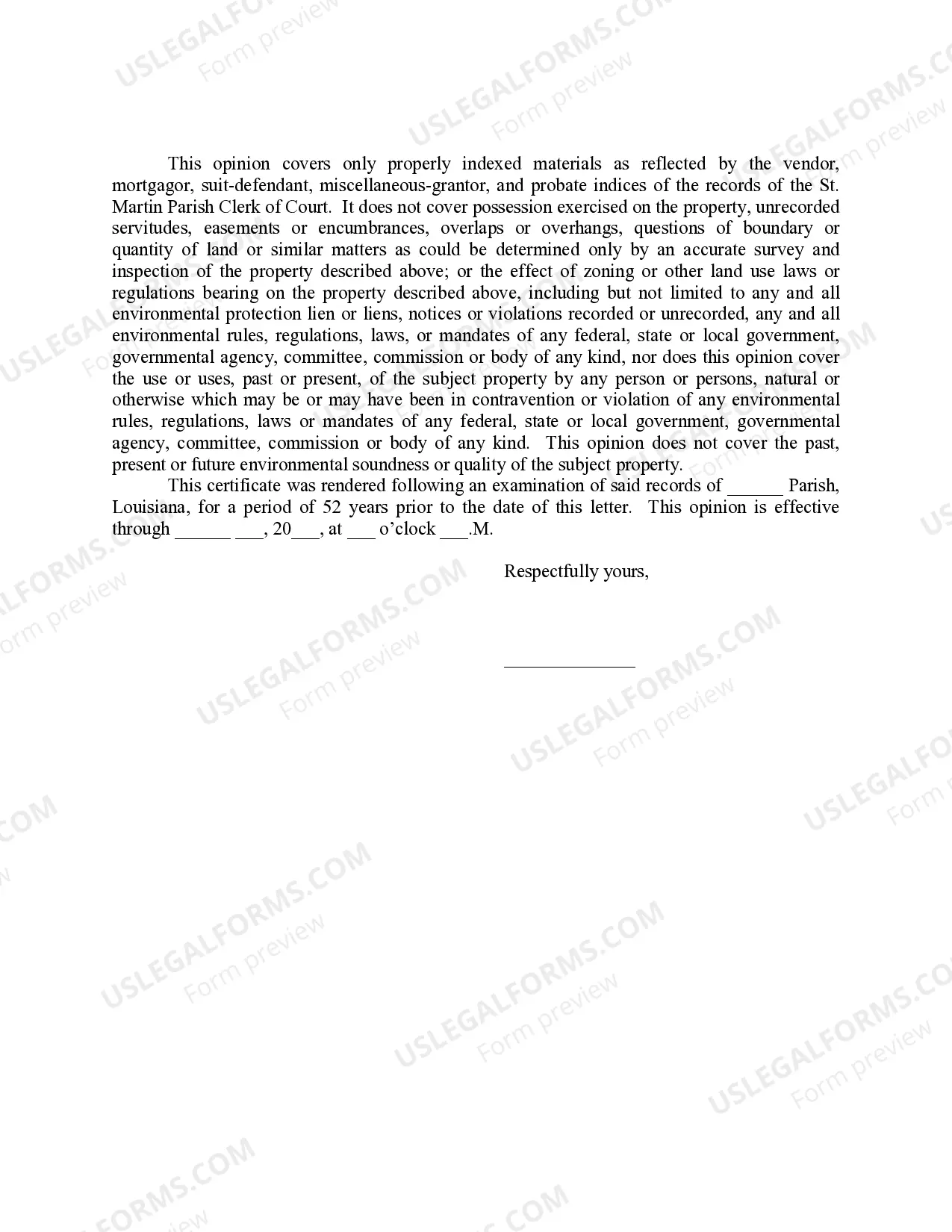
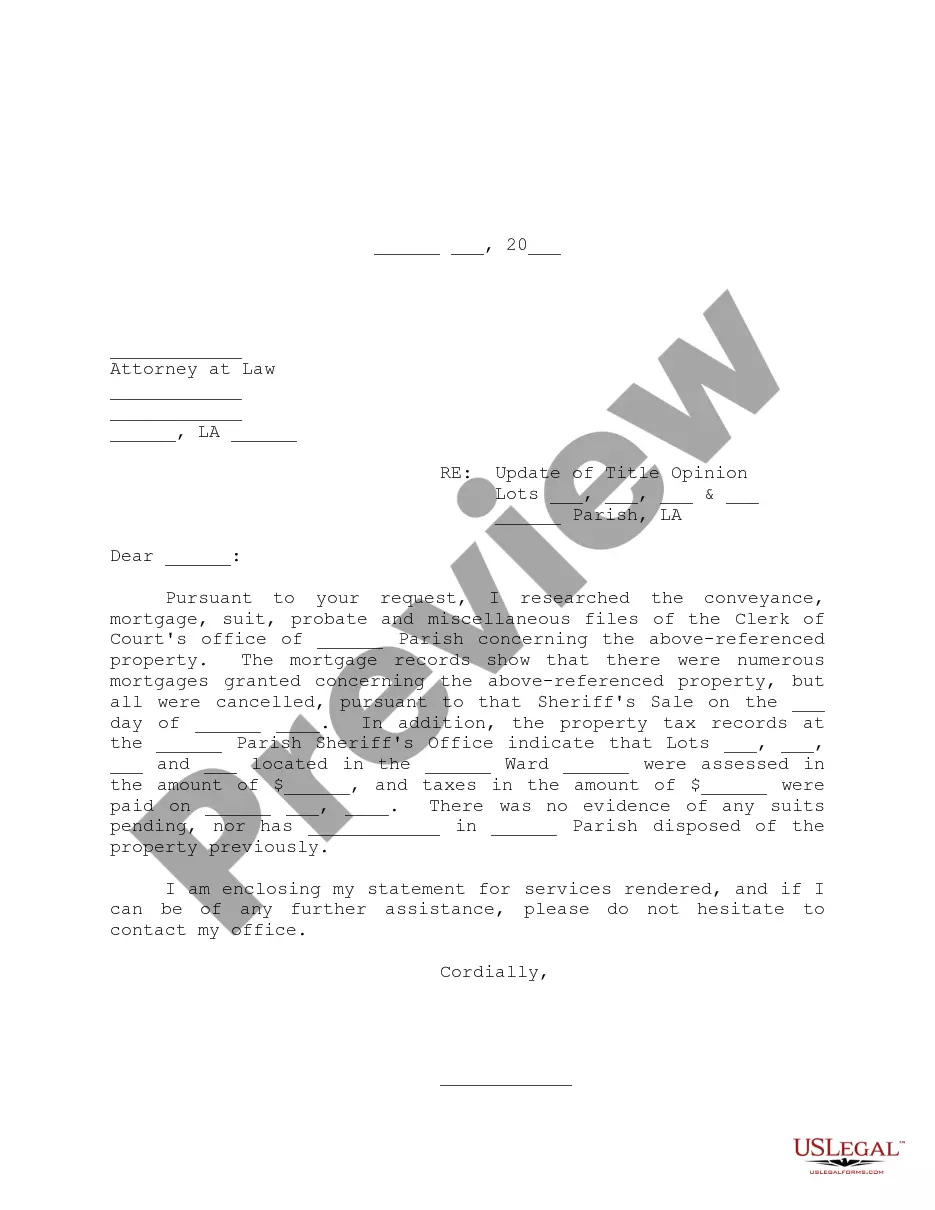
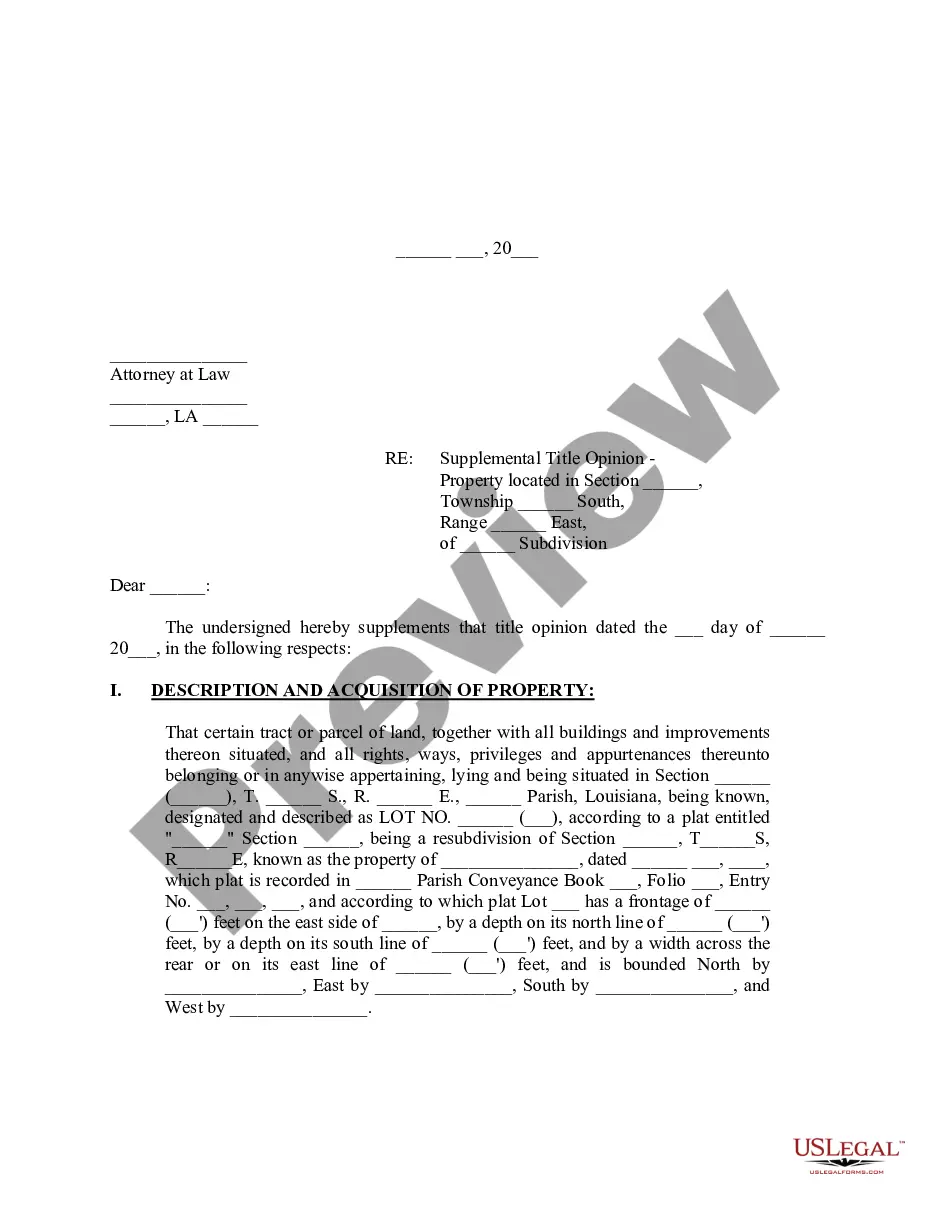
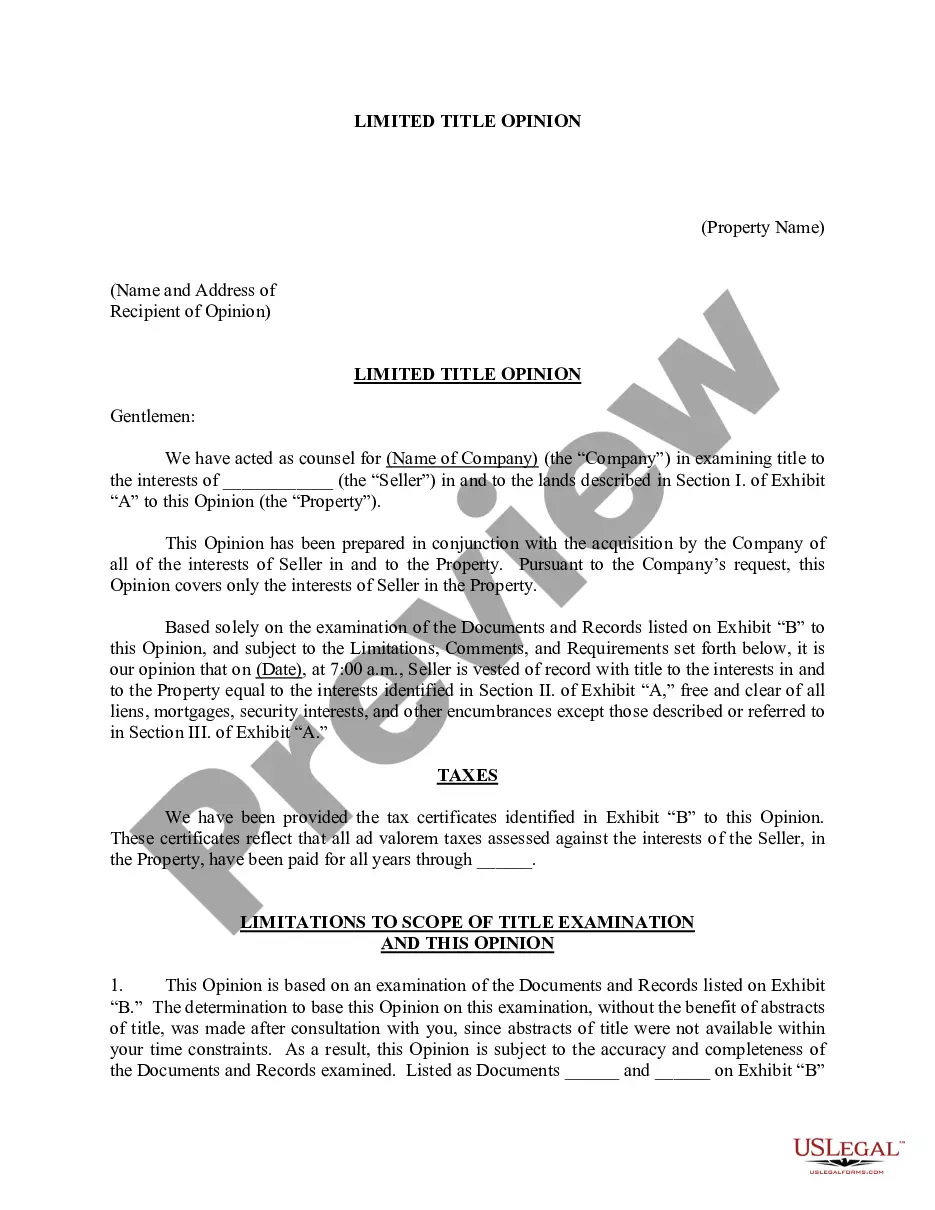
A Title Opinion is a legal document provided by an attorney that assesses the merchantability of a property title. This opinion outlines the property details, identifies the owners, and highlights any title exceptions the attorney has discovered. Distinct from title insurance, a Title Opinion gives legal insights into potential ownership issues, which is essential for banks and mortgage companies before issuing loans or mortgages.
Key components of this form
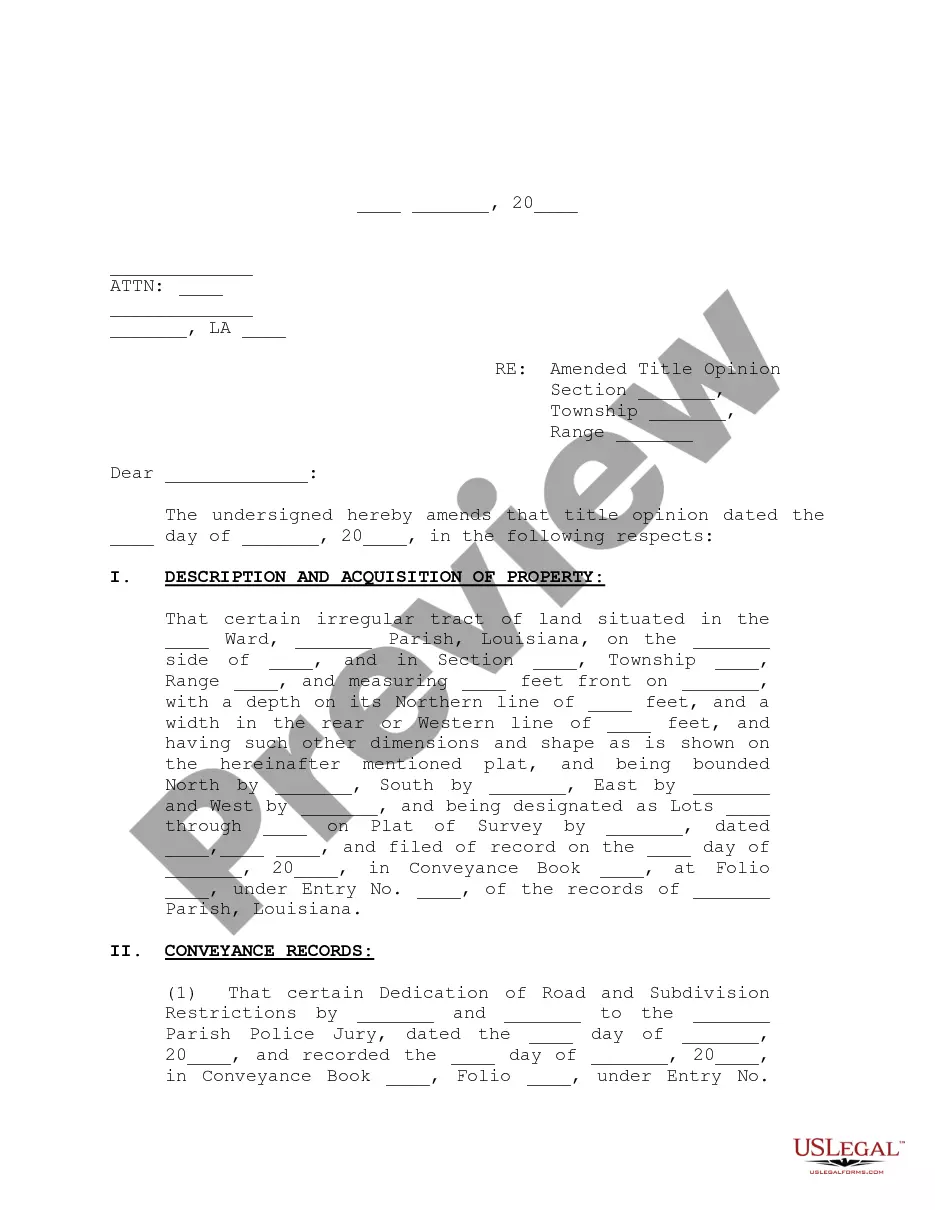
- Property description, including location and dimensions.
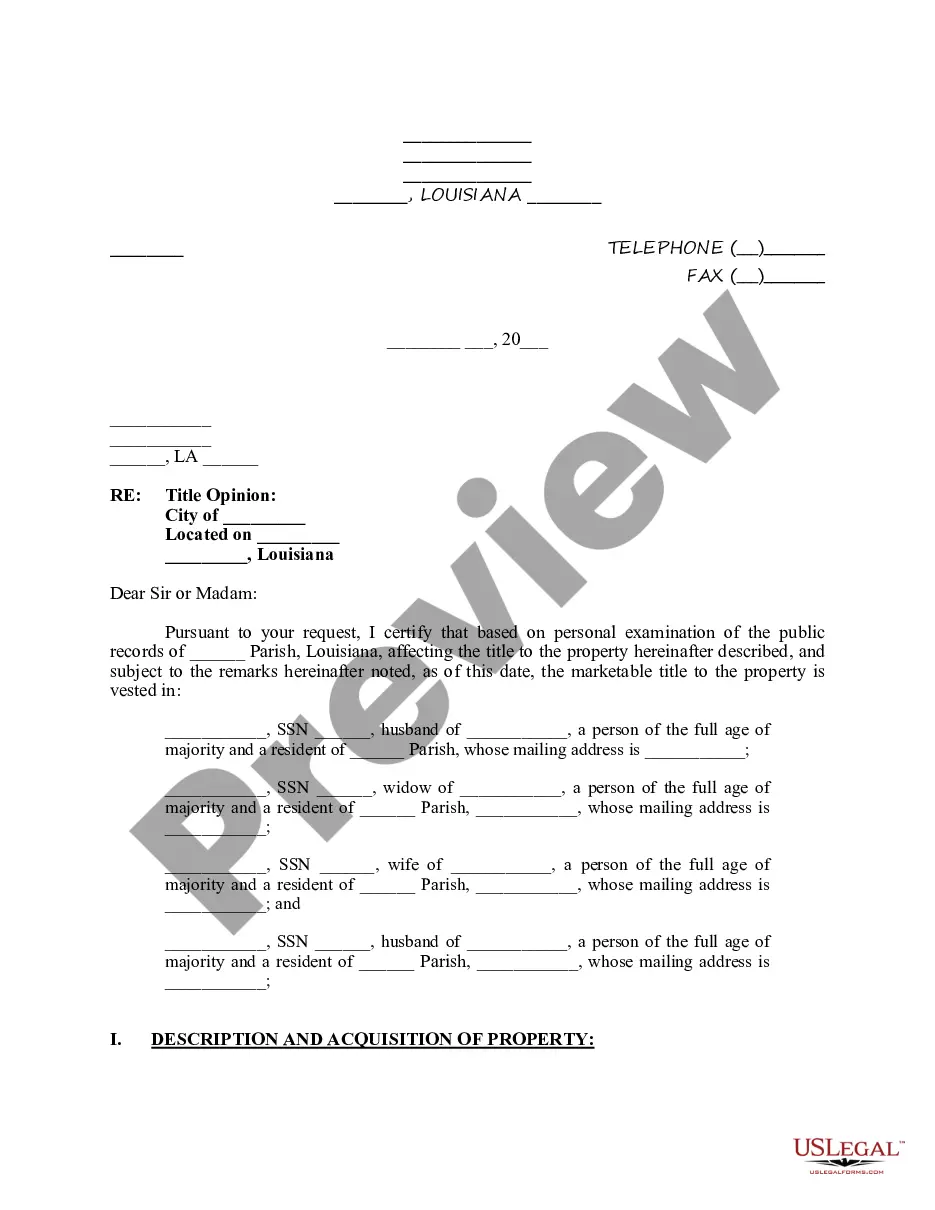
- Names of current owners and any prior ownership details.
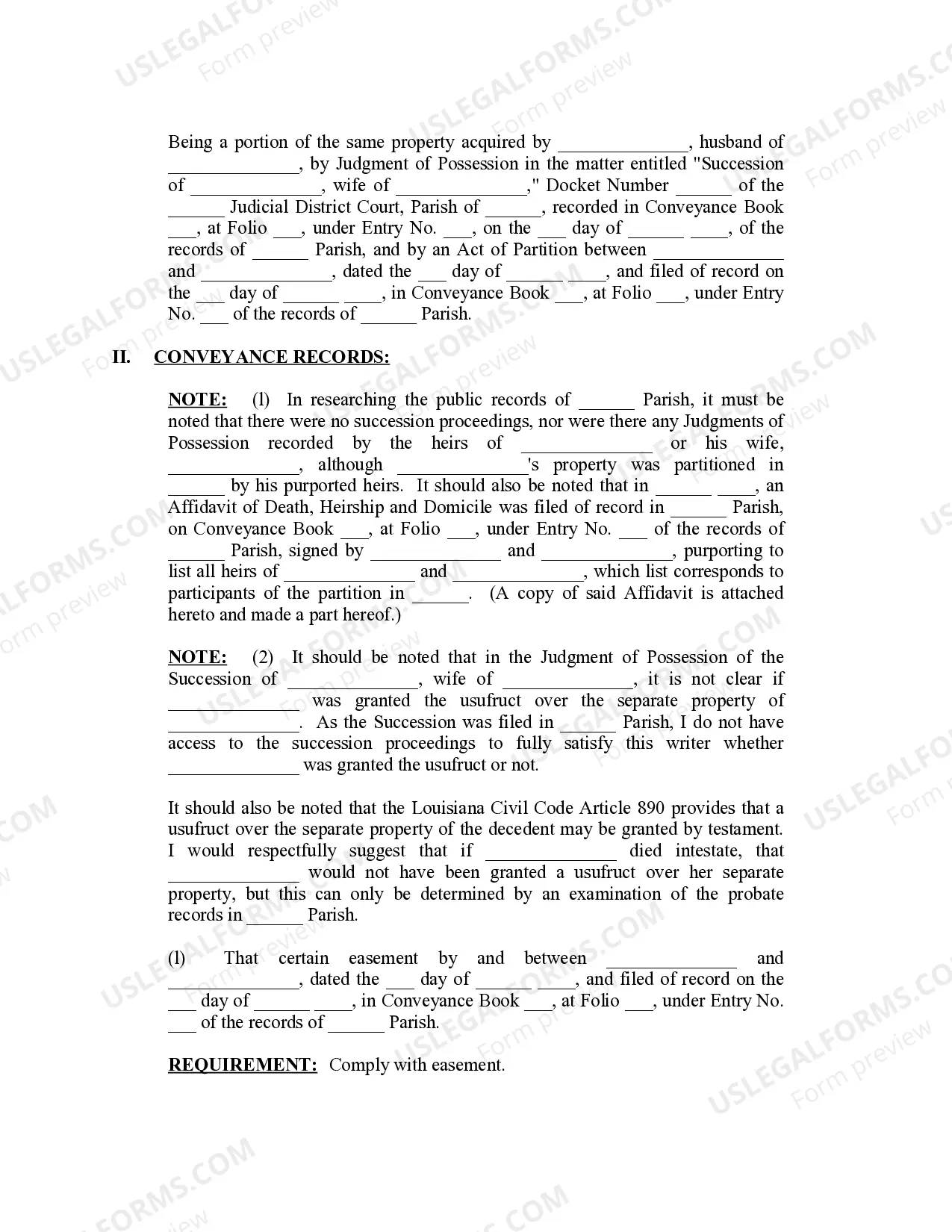
- Examination of public records related to the property title.
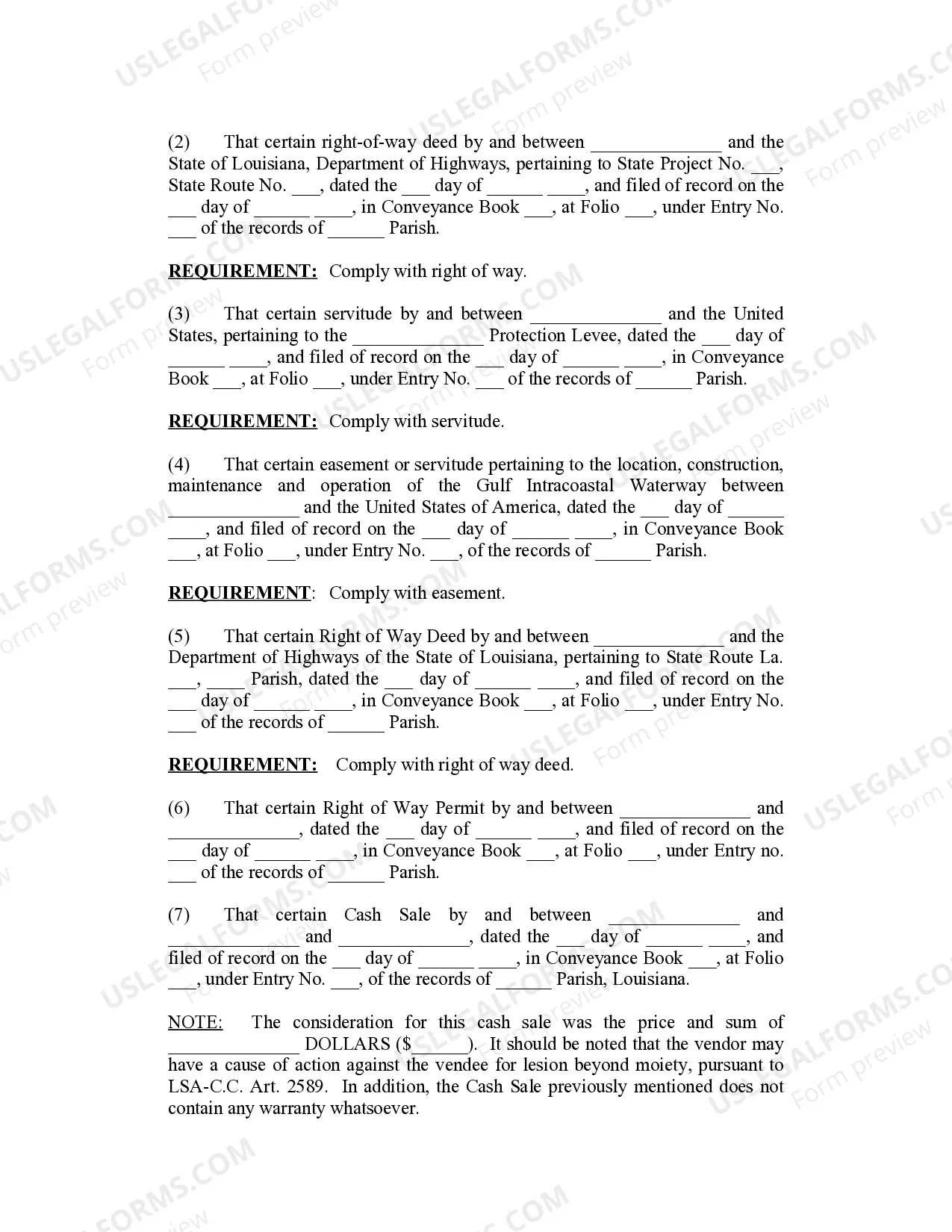
- Identification of easements, servitudes, and any encumbrances.
- Summary of compliance requirements with existing rights of way and permits.
- Assessment of taxes due on the property.
When this form is needed
This form is typically used when purchasing real estate, refinancing a mortgage, or when a lender needs to confirm clear title before financing. It may also be necessary during estate settlements or property partitions to ensure all legal aspects of the title are examined and addressed.
Who needs this form
- Individuals purchasing property who require assurance of clear title.
- Real estate agents and brokers facilitating property transactions.
- Loan officers and mortgage companies needing legal verification of title.
- Estate executors managing real estate within an estate.
Completing this form step by step
- Identify the property by providing the full address and legal description.
- Input the names of all current property owners as recorded.
- Document the results of the public records examination, noting any title issues.
- List all relevant easements and encumbrances associated with the property.
- Enter the details concerning outstanding taxes and their payment status.
Notarization guidance
Notarization is required for this form to take effect. Our online notarization service, powered by Notarize, lets you verify and sign documents remotely through an encrypted video session, available 24/7.
Get your form ready online
Our built-in tools help you complete, sign, share, and store your documents in one place.
Make edits, fill in missing information, and update formatting in US Legal Forms—just like you would in MS Word.
Download a copy, print it, send it by email, or mail it via USPS—whatever works best for your next step.
Sign and collect signatures with our SignNow integration. Send to multiple recipients, set reminders, and more. Go Premium to unlock E-Sign.
If this form requires notarization, complete it online through a secure video call—no need to meet a notary in person or wait for an appointment.
We protect your documents and personal data by following strict security and privacy standards.

Make edits, fill in missing information, and update formatting in US Legal Forms—just like you would in MS Word.

Download a copy, print it, send it by email, or mail it via USPS—whatever works best for your next step.

Sign and collect signatures with our SignNow integration. Send to multiple recipients, set reminders, and more. Go Premium to unlock E-Sign.

If this form requires notarization, complete it online through a secure video call—no need to meet a notary in person or wait for an appointment.

We protect your documents and personal data by following strict security and privacy standards.
Common mistakes to avoid
- Failing to accurately describe the property, leading to confusion or disputes.
- Omitting necessary names or significant title exceptions in the opinion.
- Neglecting to check for unpaid taxes, which can result in complications.
Benefits of completing this form online
- Convenience of accessing and completing the form from anywhere.
- Editability allows for customized input based on individual property details.
- Reliability of forms drafted by licensed attorneys ensuring legal compliance.
Looking for another form?
Form popularity
FAQ
Title examination is a close examination of all public records that affect the title to the real estate you are purchasing. The search involves reviewing past deeds, wills, and trusts to make sure the title has passed correctly to each new owner.
Title Insurance: The new alternative However, it is important to note that, unlike a title opinion, which attempts to assure good title and/or security, title insurance is meant to insure against the risks specified in the subject policy. In other words, title insurance only insures covered risks.
To put it simply, title insurance is a way to protect yourself from financial loss and related legal expenses in the event there is a defect in title to your property that is covered by the policy.Title insurance also differs in that it comes with no monthly payment. It's just a one-time premium paid at closing.
Title Insurance and Title Policy are the same; it is the same contract, same protection, and coverage. However, the term insurance and policy are different by definition but are often time used and are commonly interchanged.
As with many other types of insurance, an owner's title insurance policy can feel like a waste of money if you never need to use it. But it's a small price to pay to protect your interests in case anyone challenges your title after you close on your home.
Two basic types of title insurance policies are available to owners of real property in California: (1) a standard coverage policy and (2) an extended coverage policy. A standard policy insures primarily against defects in title which are discoverable through an examination of the public record.
The opinion of title is the legal opinion which attests to the validity of the title deed to a parcel of property. The opinion is sometimes issued in conjunction with an insuring title agency.
Abstract of title is a record of the title history of a property or other significant asset, including transfers, liens, and legal actions that are connected to the property.
Abstracts of title and title insurance commitments are fundamentally different in the information they provide and in their uses. A title commitment provides the foundation for the issuance of an indemnity contract, while an abstract provides documents that affect title to property in chronological order.