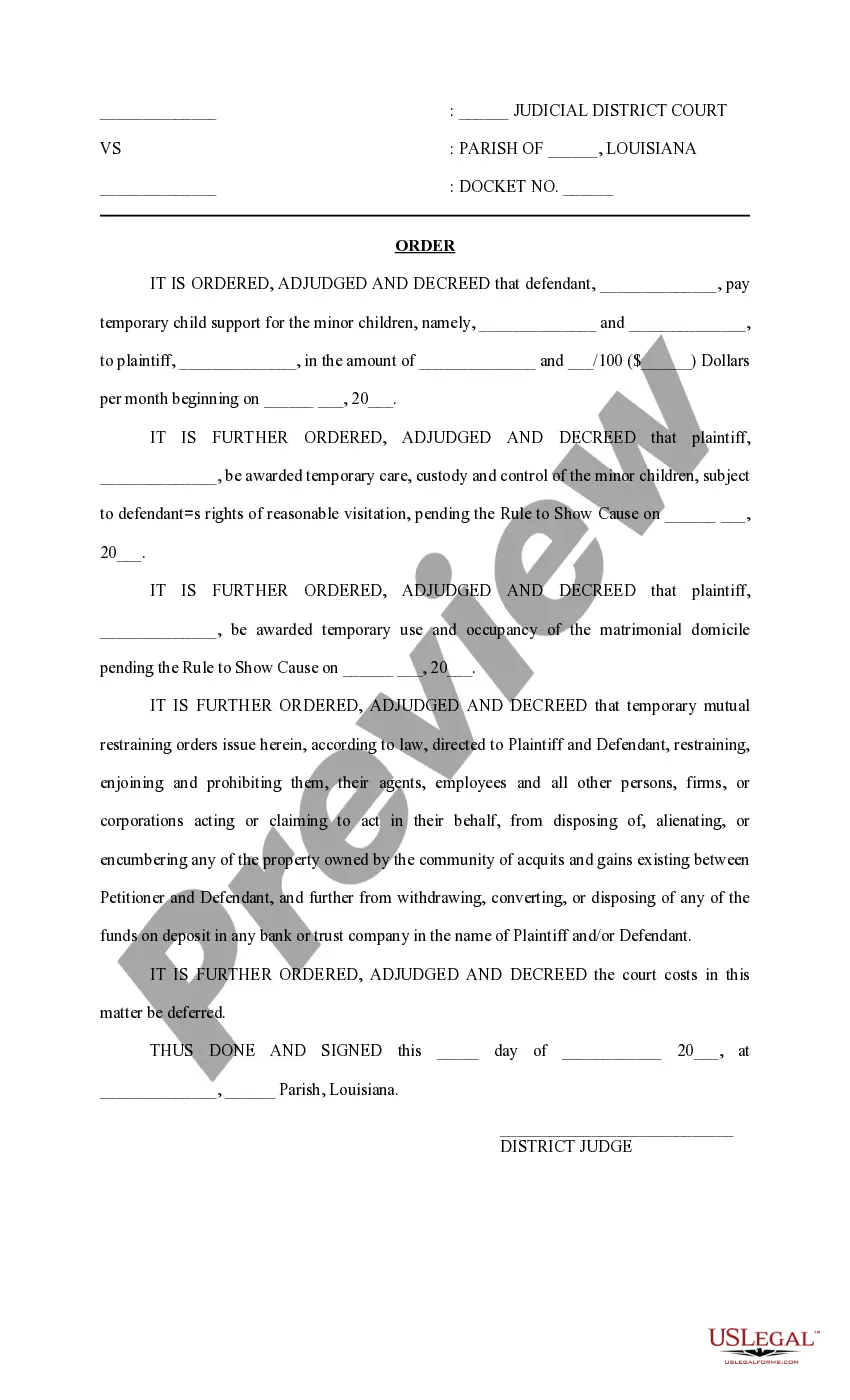
Louisiana Order for Child Support, Temporary Custody, Use of Domicile, Temporary Restraining Orders
Understanding this form
The Order for Child Support, Temporary Custody, Use of Domicile, Temporary Restraining Orders is a legal document that outlines the temporary arrangements for child custody and support during ongoing legal proceedings. This form specifies the temporary financial obligations of the defendant towards child support, grants temporary custody to the plaintiff, and includes provisions for the use of the family home. It also establishes temporary mutual restraining orders to prevent either party from disposing of marital assets.
Key parts of this document
- Order for temporary child support payment amount and due date.
- Award of temporary custody of minor children to the plaintiff.
- Provision for temporary use of the family home by the plaintiff.
- Mutual restraining orders preventing disposal of community property.
- Deferral of court costs associated with the proceedings.

Situations where this form applies
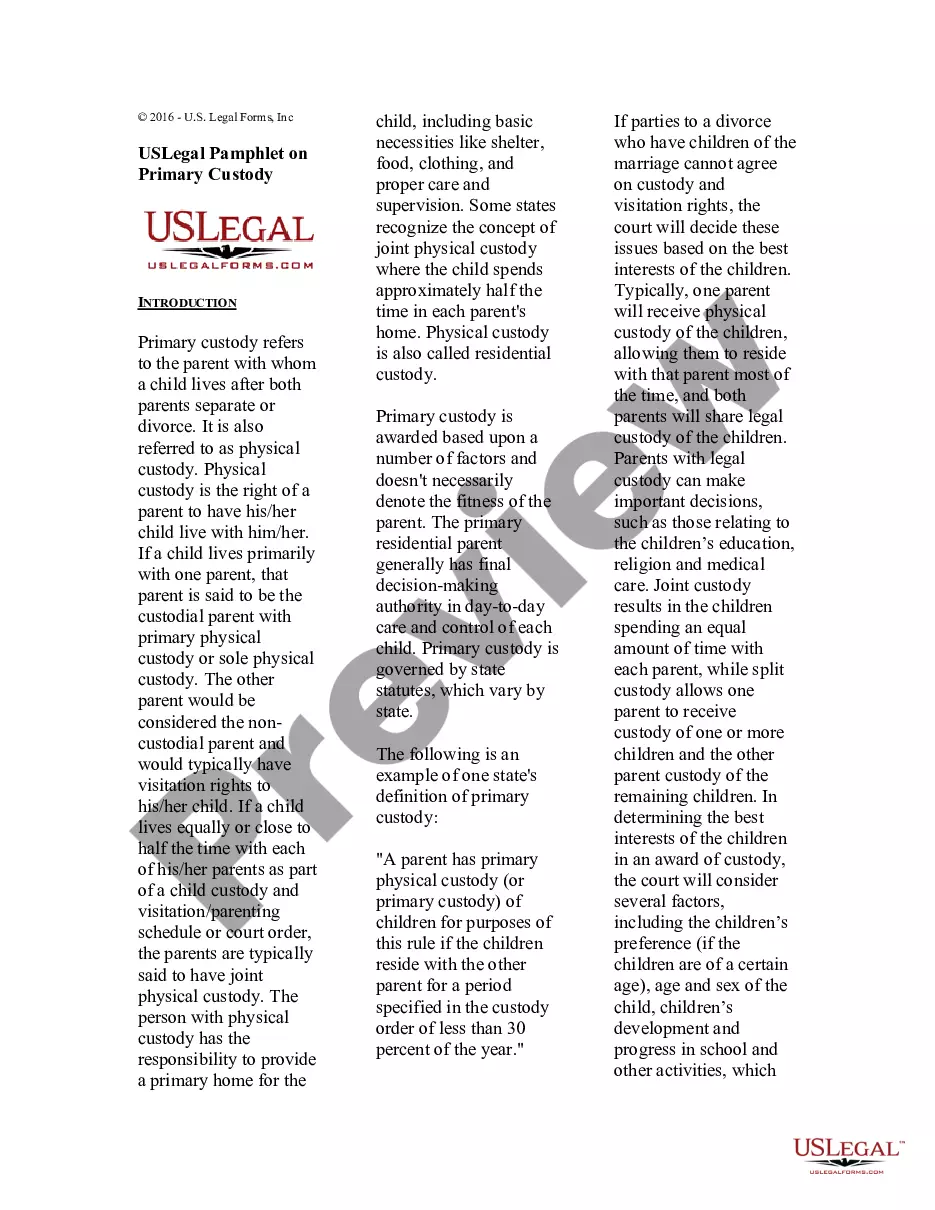
This form is typically used when parents are undergoing a legal separation or divorce, and immediate arrangements for child support and custody need to be established. It is appropriate to use this form during a temporary hearing, where the court needs to determine urgent matters such as financial support and living arrangements for children while further legal proceedings take place.
Who needs this form
- Parents seeking temporary child support arrangements.
- Individuals involved in custody disputes during divorce proceedings.
- Persons needing temporary use of the family residence pending court decisions.
Instructions for completing this form
- Identify the parties involved (plaintiff and defendant) and their roles.
- Enter the details of the minor children for whom custody and support are being requested.
- Specify the amount of temporary child support to be paid and the start date.
- Document the terms for temporary custody and use of the family residence.
- Sign and date the form before submitting it to the court.
Is notarization required?
This form does not typically require notarization unless specified by local law. It is important to check local requirements to ensure compliance.
Get your form ready online
Our built-in tools help you complete, sign, share, and store your documents in one place.
Make edits, fill in missing information, and update formatting in US Legal Forms—just like you would in MS Word.
Download a copy, print it, send it by email, or mail it via USPS—whatever works best for your next step.
Sign and collect signatures with our SignNow integration. Send to multiple recipients, set reminders, and more. Go Premium to unlock E-Sign.
If this form requires notarization, complete it online through a secure video call—no need to meet a notary in person or wait for an appointment.
We protect your documents and personal data by following strict security and privacy standards.

Make edits, fill in missing information, and update formatting in US Legal Forms—just like you would in MS Word.

Download a copy, print it, send it by email, or mail it via USPS—whatever works best for your next step.

Sign and collect signatures with our SignNow integration. Send to multiple recipients, set reminders, and more. Go Premium to unlock E-Sign.

If this form requires notarization, complete it online through a secure video call—no need to meet a notary in person or wait for an appointment.

We protect your documents and personal data by following strict security and privacy standards.
Common mistakes
- Failing to include all necessary parties' names and details.
- Not specifying the correct amount for child support payments.
- Omitting details about visitation rights.
- Submitting the form without proper signatures or dates.
Benefits of using this form online
- Convenient access: Download the form at any time from your home.
- Editable content: Customize the form to fit your specific situation.
- Reliability: Forms drafted by licensed attorneys ensure legal validity.
Main things to remember
- The order establishes temporary arrangements for child custody and support.
- It is important for protecting the interests of both parties during legal proceedings.
- Complete the form accurately to avoid delays in the court process.
Looking for another form?

Form popularity
FAQ
The court can issue a TRO without the abuser present; however, the abuser will be notified of the rule against him, and a date for a hearing will be set. See RS 35. Long-term Protective Orders: After a hearing, a court can issue a protective order that lasts up to 18 months unless otherwise stated.
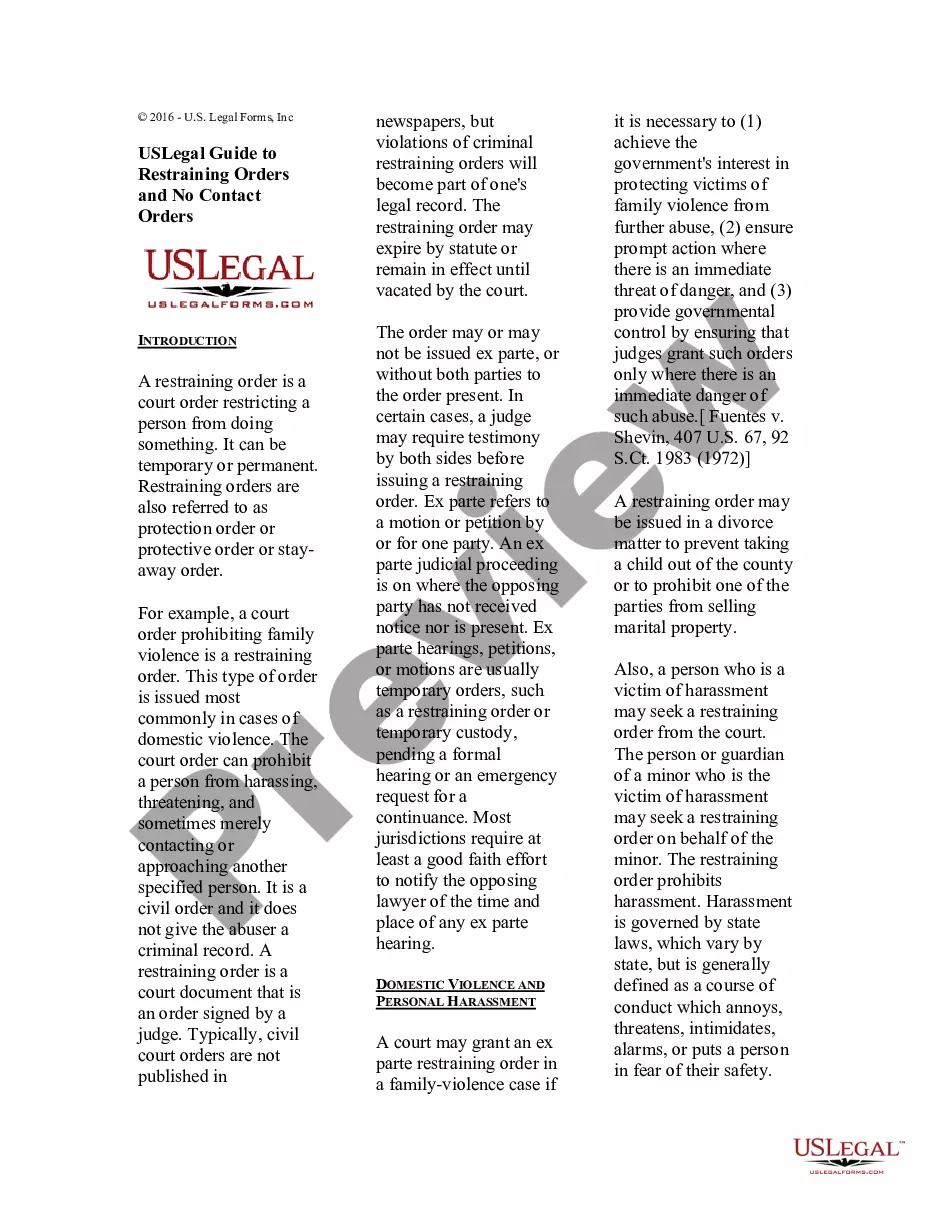
A temporary restraining order (TRO) is a legal document issued by a judge before trial that forces or prevents an action for a specified time frame. During court cases that involve trademark infringement or the use of a trade secret, a TRO can halt patent, copyright, or trademark infringement in the short term.
Emergency Temporary Restraining Orders: If you are in need of emergency protection outside of regular court hours, the court may grant you an emergency temporary restraining order if there is an immediate and present danger of abuse. The judge must consider any and all past history of abuse, or threats of abuse, in
Temporary restraining orders usually last between 20 and 25 days, until the court hearing date. When you go to court for the hearing that was scheduled for your TRO, the judge may issue a permanent restraining order. They are not really permanent because they usually last up to 5 years.
Stay Away Provision: Ordering the abuser to stay at least a certain number of yards or feet away from the victim, his or her home, job, school, and car. The stay-away distance can vary by state, judge or the lethality of the situation, but is often at least 100 yards or 300 feet.
A court order that lasts only until the court can hear further evidence. A Temporary Restraining Order (TRO) is a court order of limited duration. A TRO commands the parties in the case to maintain a certain status until the court can hear further evidence and decide whether to issue a preliminary injunction.