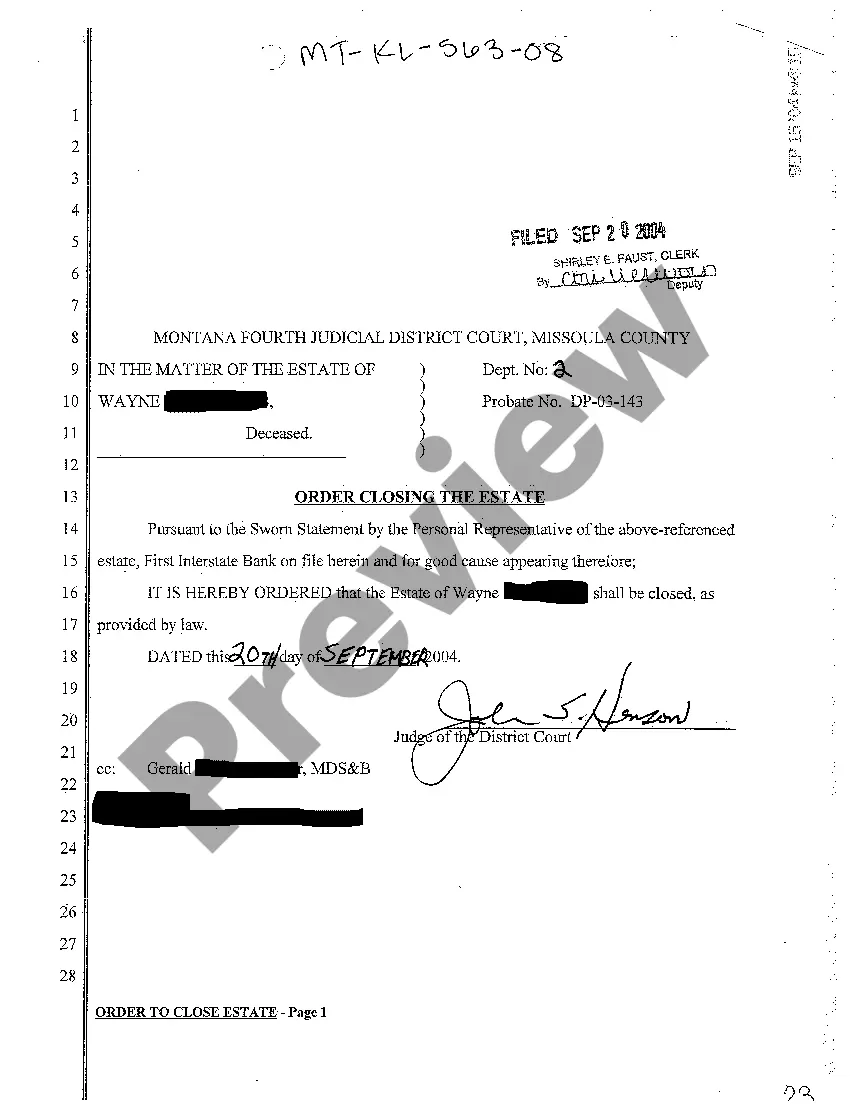
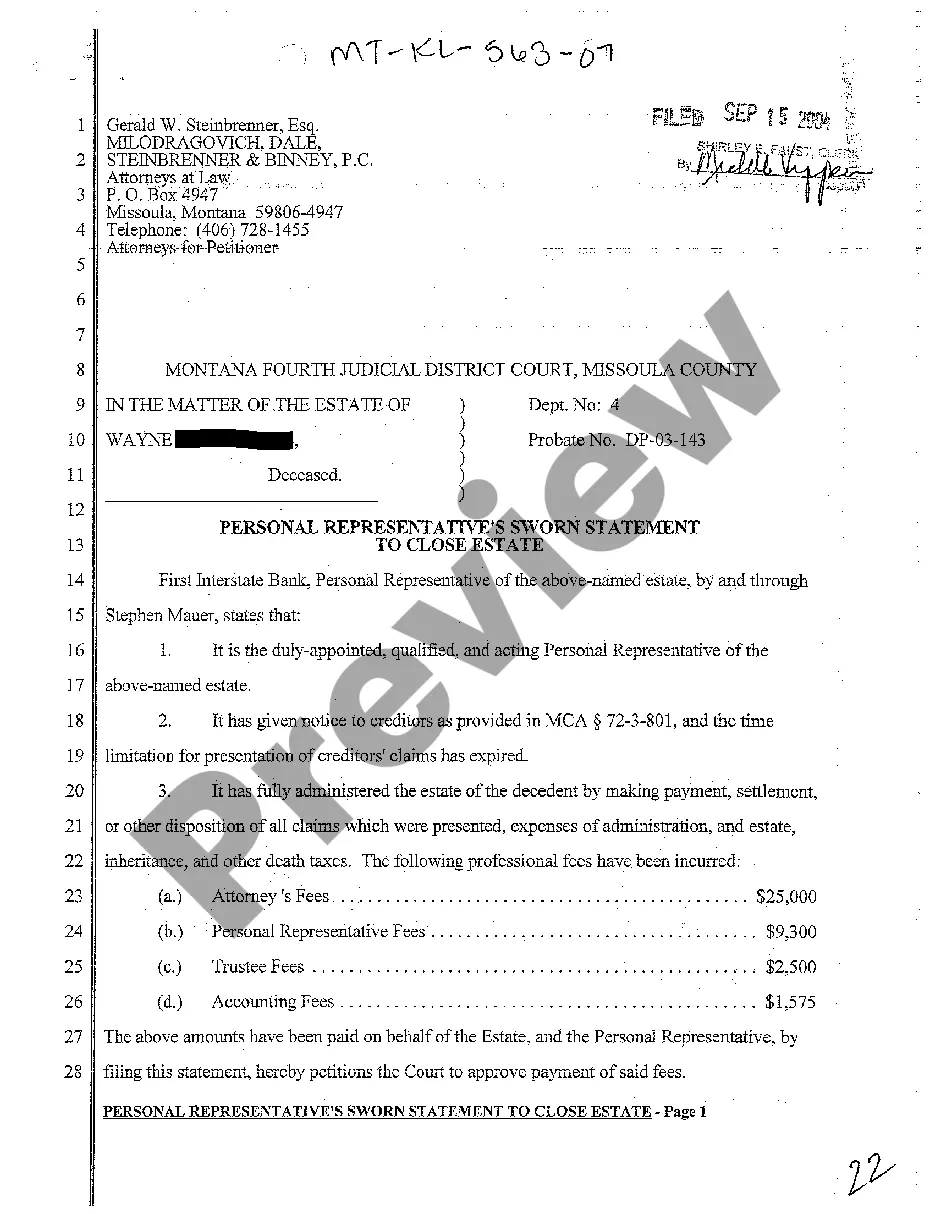
Montana Order Closing the Estate
Description
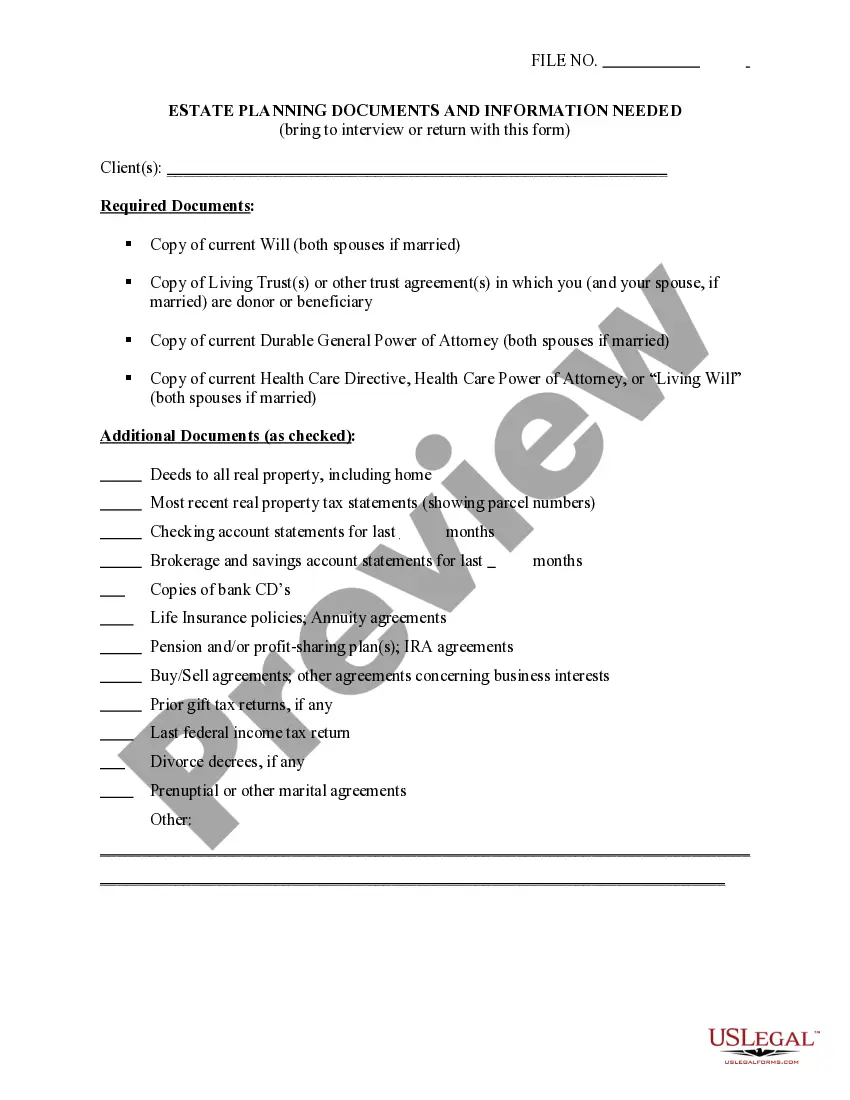
How to fill out Montana Order Closing The Estate?
Obtain a printable Montana Order Closing the Estate in just a few mouse clicks from the most extensive collection of legal electronic files. Locate, download, and print expertly prepared and certified samples on the US Legal Forms website. US Legal Forms has been the leading provider of economical legal and tax documents for US citizens and residents online since 1997.
Users with a subscription must sign in directly to their US Legal Forms account, download the Montana Order Closing the Estate, and find it stored in the My documents section. Users without a subscription need to follow the instructions below.
After you’ve downloaded your Montana Order Closing the Estate, you can complete it in any online editor or print it out and fill it out manually. Utilize US Legal Forms to access 85,000 professionally drafted, state-specific forms.
- Ensure your form complies with your state’s regulations.
- If available, read the form’s description to learn more.
- If provided, examine the template to discover additional content.
- Once you are confident the form fits your needs, click Buy Now.
- Create a personal account.
- Select a plan.
- Pay using PayPal or credit card.
- Download the template in Word or PDF format.
Form popularity
FAQ
Retirement accountsIRAs or 401(k)s, for examplefor which a beneficiary was named. Life insurance proceeds (unless the estate is named as beneficiary, which is rare) Property held in a living trust. Funds in a payable-on-death (POD) bank account.
In Montana, you can make a living trust to avoid probate for virtually any asset you ownreal estate, bank accounts, vehicles, and so on. You need to create a trust document (it's similar to a will), naming someone to take over as trustee after your death (called a successor trustee).
Small estate administration is a simplified court procedure that is an alternative to the longer probate process. It is available when the person who dies did not own that much in assets. There is often a limit to the value of the property, such as $25,000 or $100,000.
Write a Living Trust. The most straightforward way to avoid probate is simply to create a living trust. Name Beneficiaries on Your Retirement and Bank Accounts. For some, a last will is often a better fit than a trust because it is a more straightforward estate planning document. Hold Property Jointly.
Joint tenancy with right of survivorship. Property owned in joint tenancy automatically passes, without probate, to the surviving owner(s) when one owner dies. Tenancy by the entirety. Community property with right of survivorship.
If you are unmarried and die without a valid will and last testament in Montana, then your entire estate goes to any surviving children in equal shares, or grandchildren if you don't have any surviving children. If you die intestate unmarried and with no children, then by law, your parents inherit your entire estate.
Under Montana statute, where as estate is valued at less than $50,000, an interested party may, thirty (30) days after the death of the decedent, issue a small estate affidavit to to demand payment on any debts owed to the decedent.
In some situations, probate can be finished within six months. When the formal procedure is followed, the typical time required to complete probate is about ten months.