Complaint for Encroachment - Projecting Windows Overhanging Plaintiff's Property
What is this form?
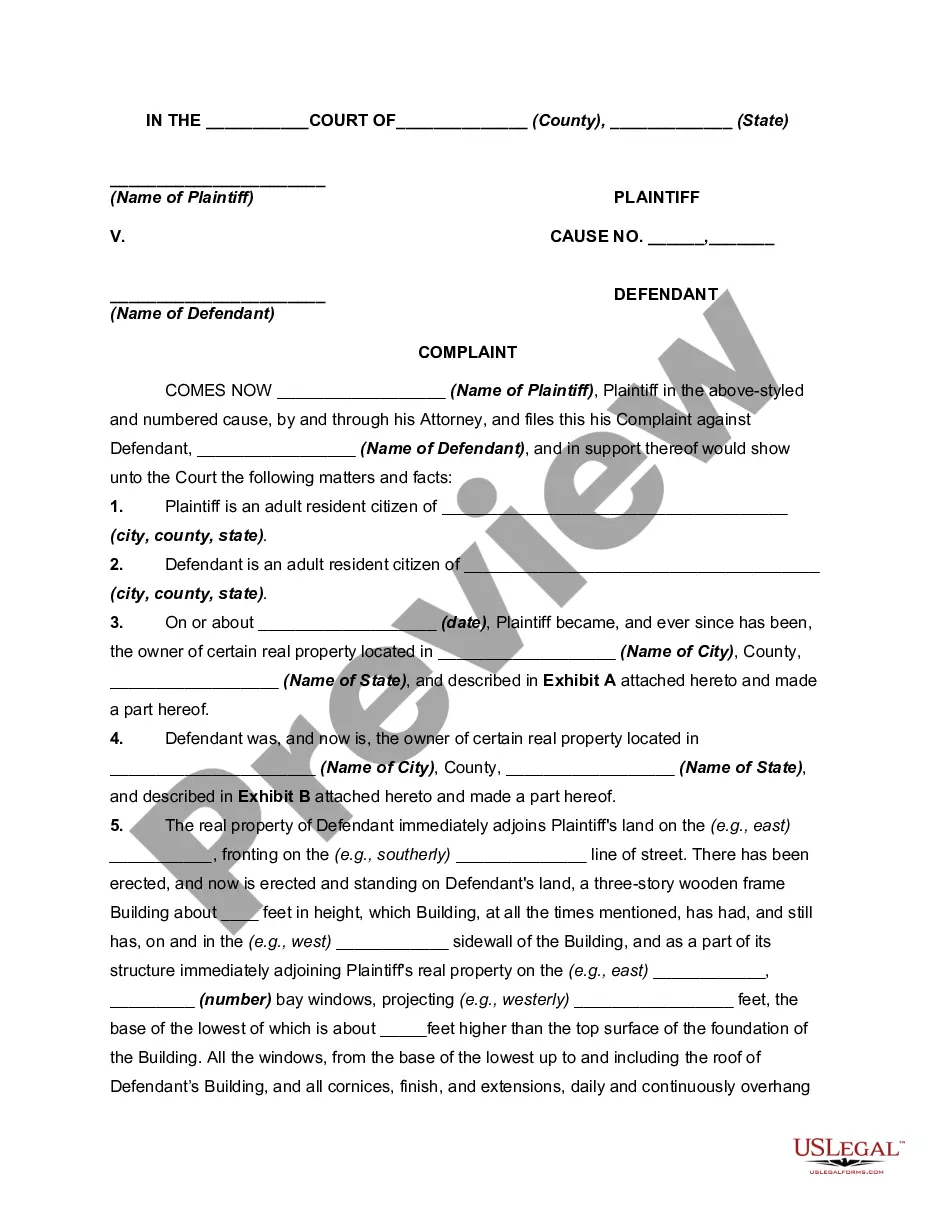
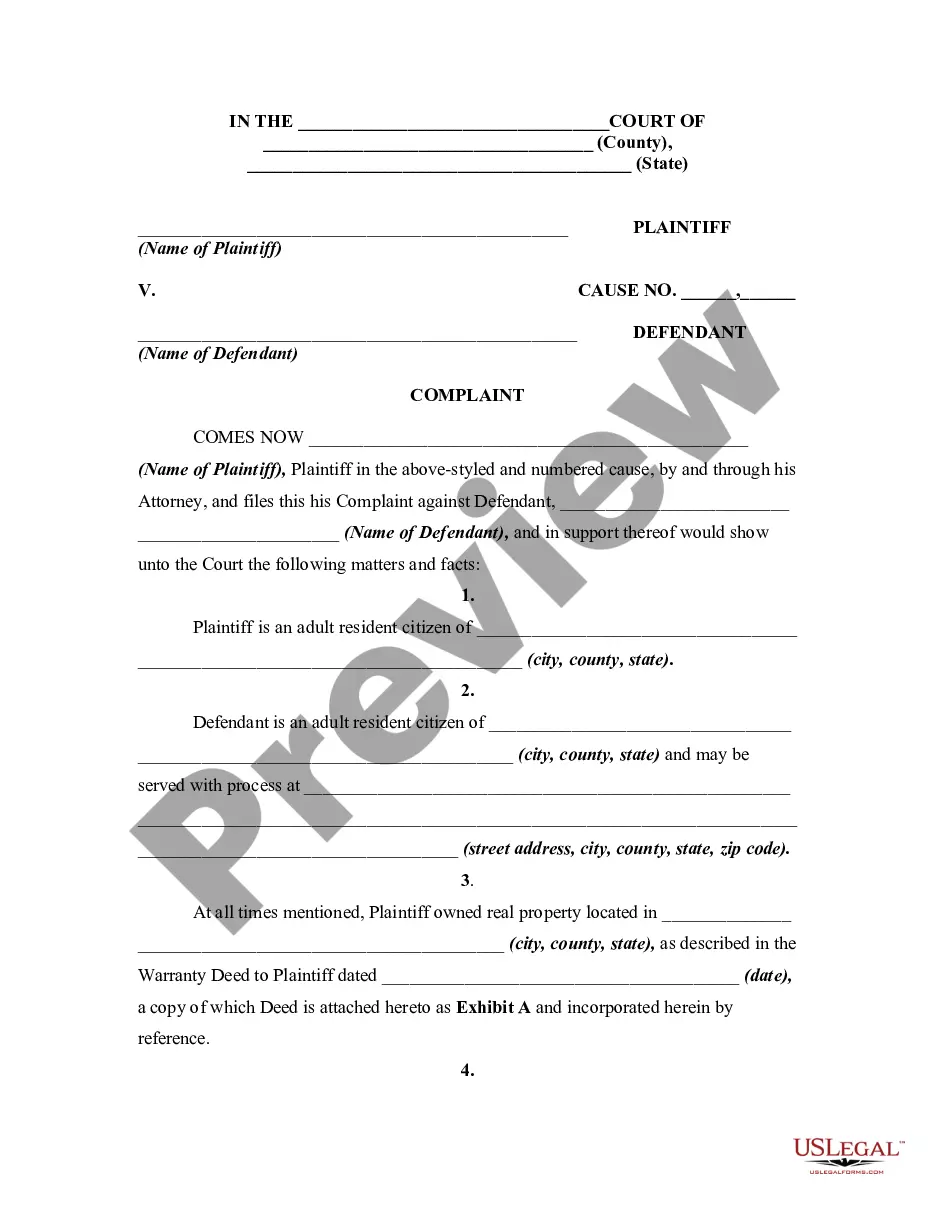
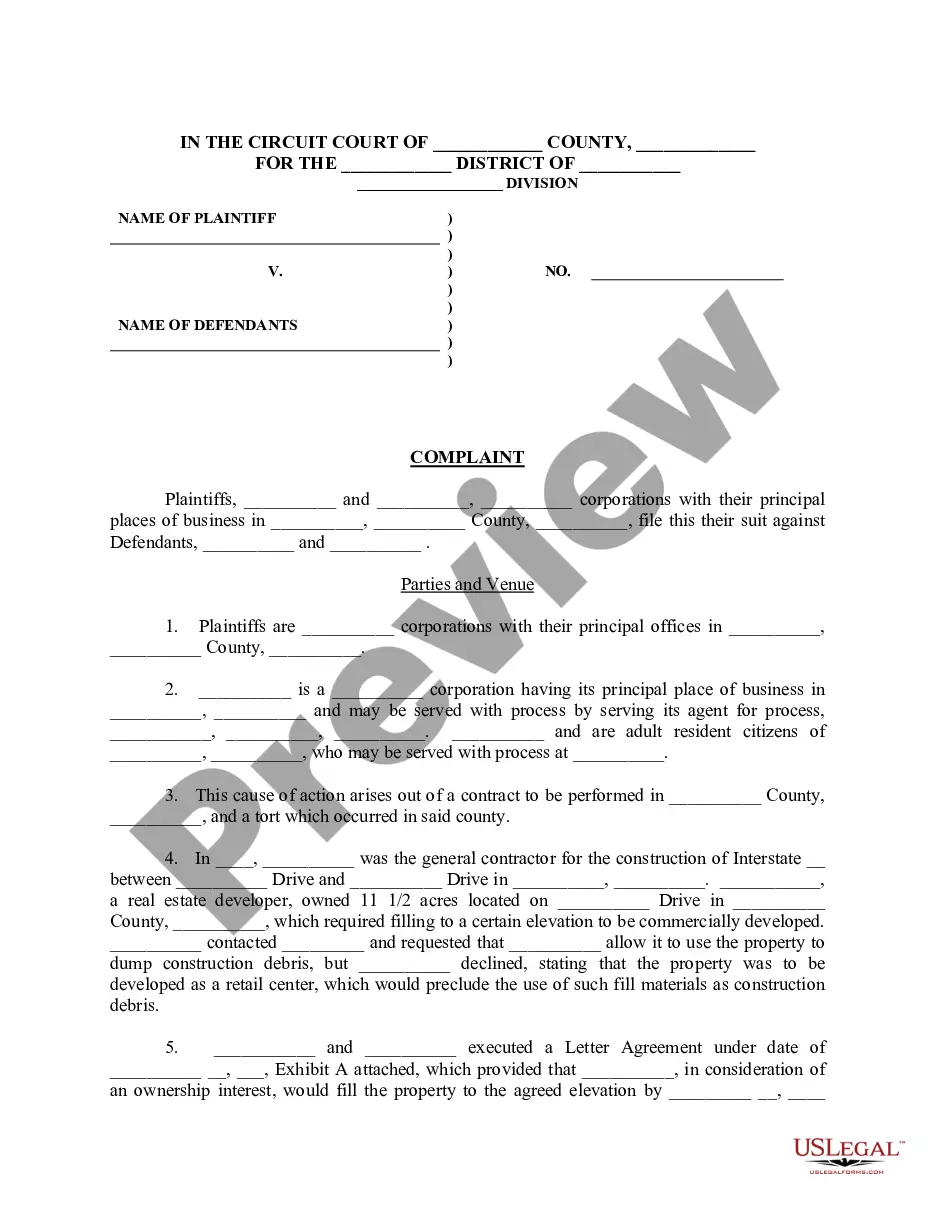
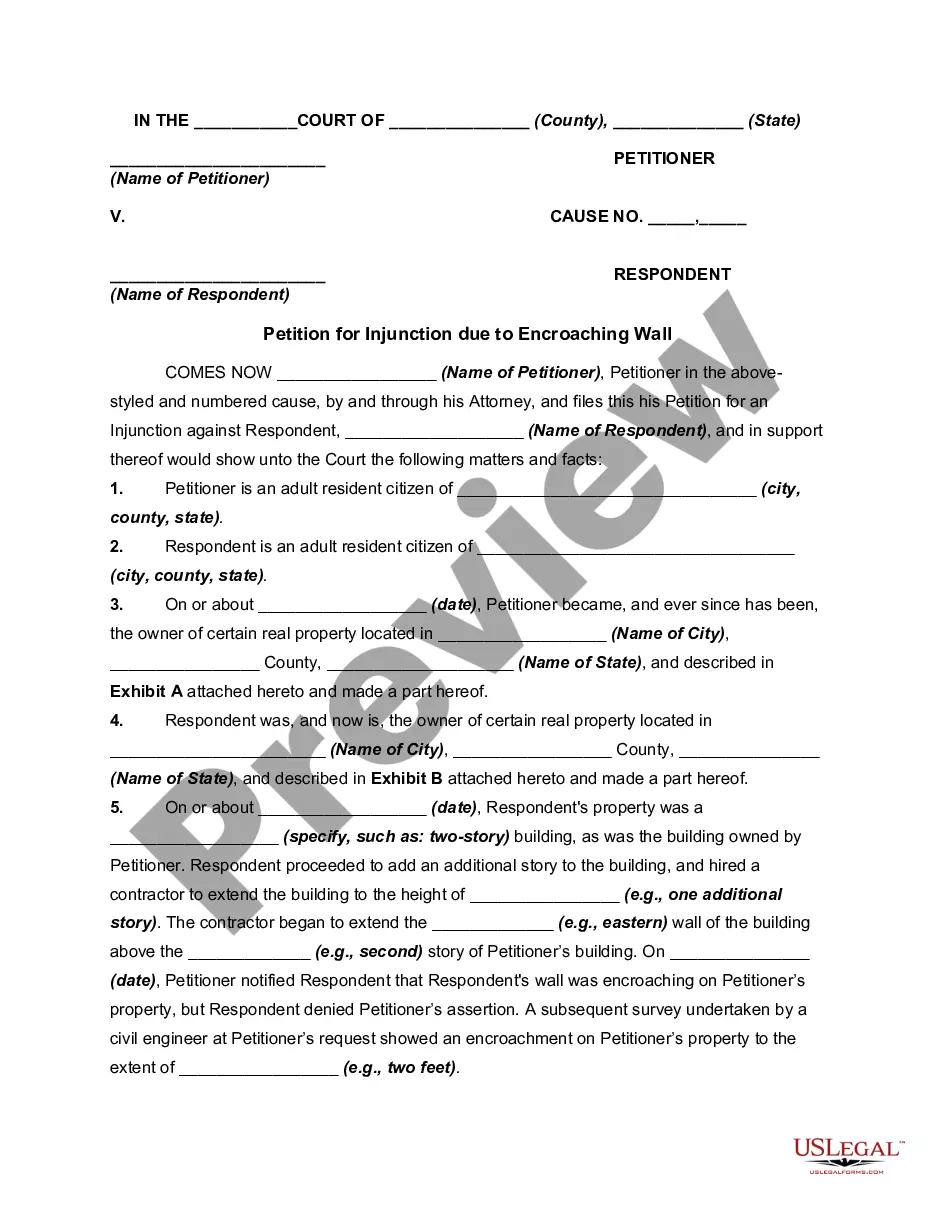
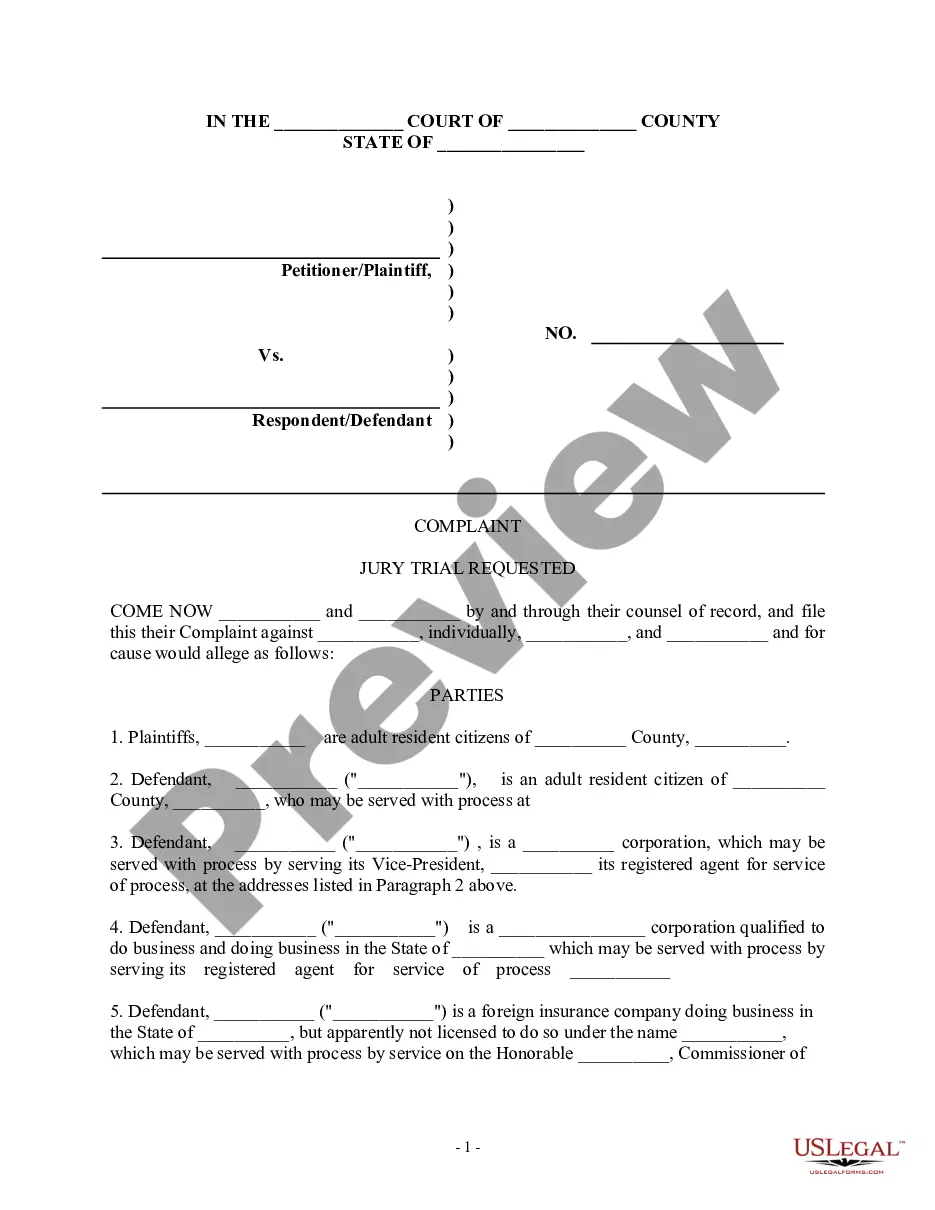
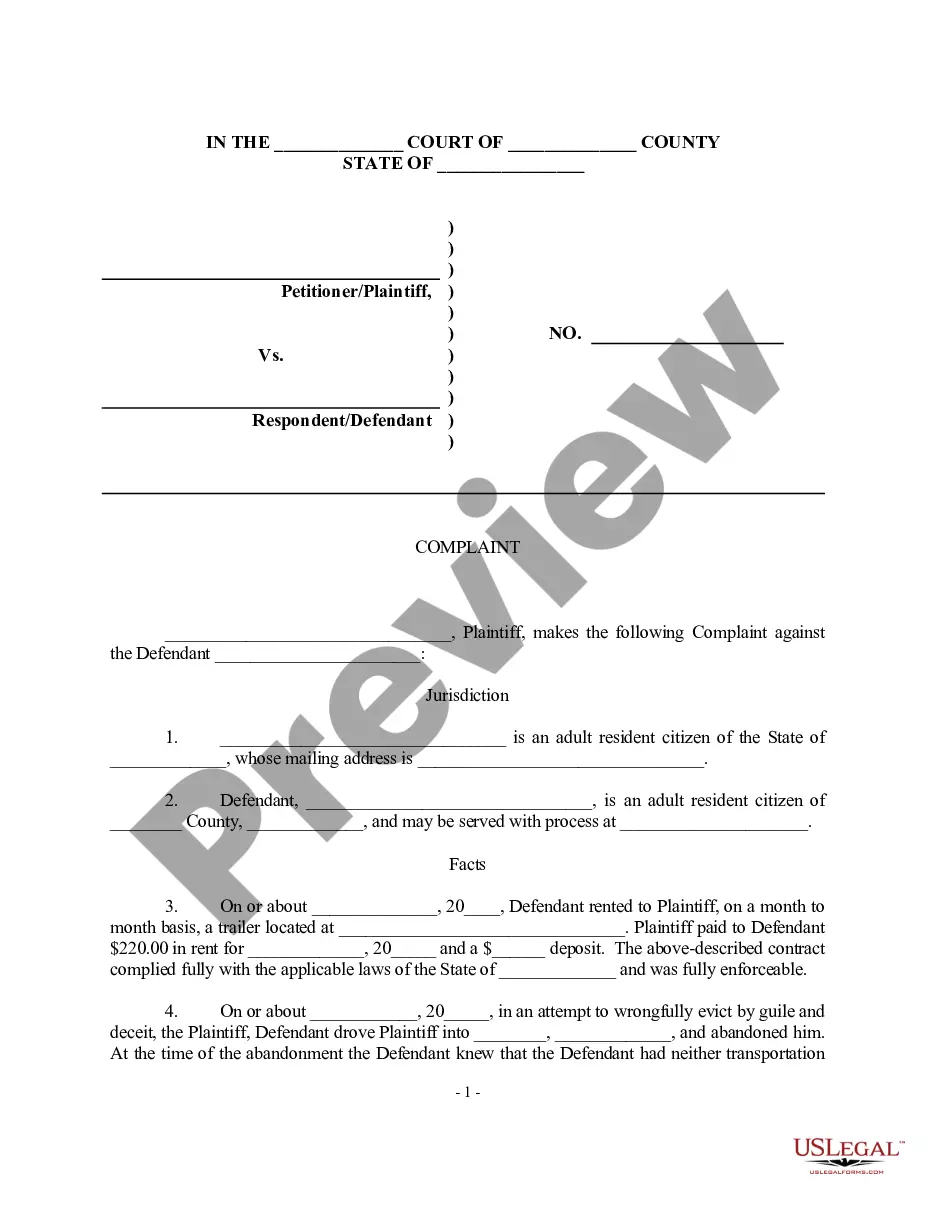
The Complaint for Encroachment - Projecting Windows Overhanging Plaintiff's Property is a legal document used to address disputes when a neighbor's structure, such as a building with bay windows, extends over your property boundaries. This form allows the plaintiff to seek a legal remedy for encroachments that affect their use, value, and enjoyment of their property. It follows a "notice pleadings" format aligned with the Federal Rules of Civil Procedure, which is utilized in many states for such legal matters.
What’s included in this form
- Name and contact information of the plaintiff and defendant
- Description of the properties involved, including boundaries and location
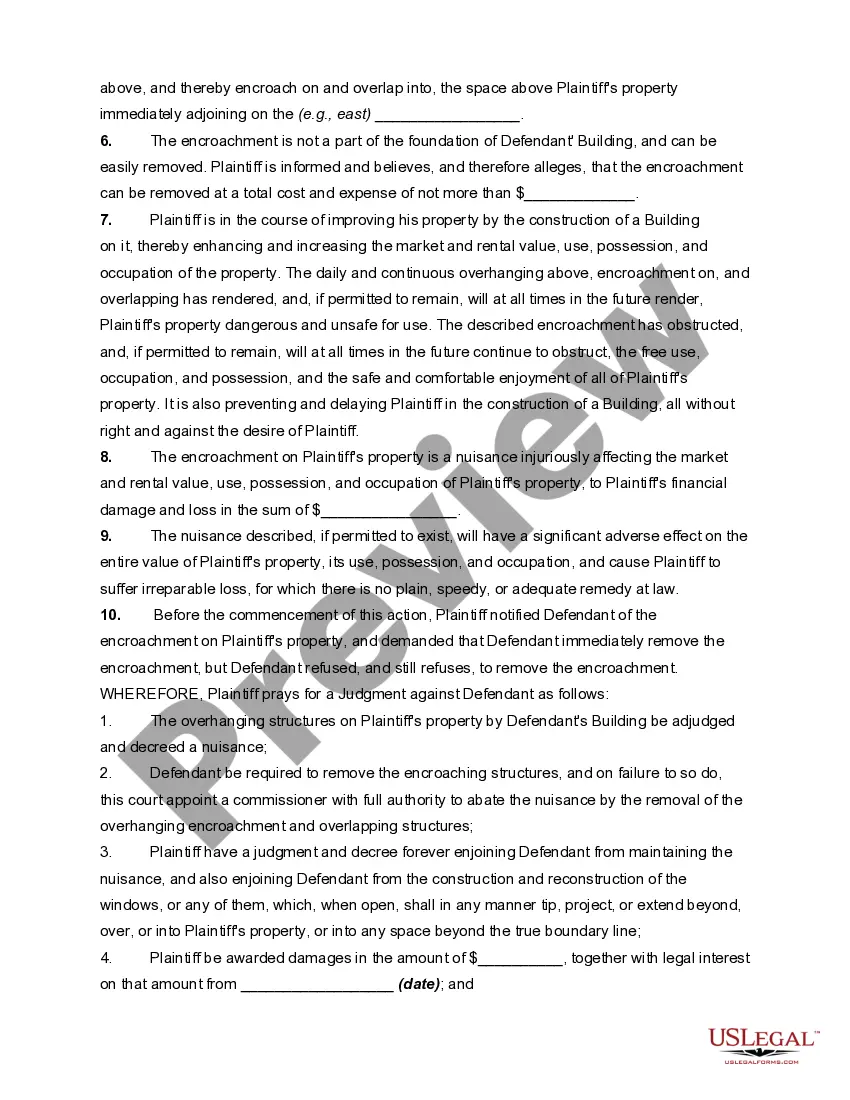
- Details regarding the nature of the encroachment and its effects
- Request for relief, including removal of the encroachment and damages
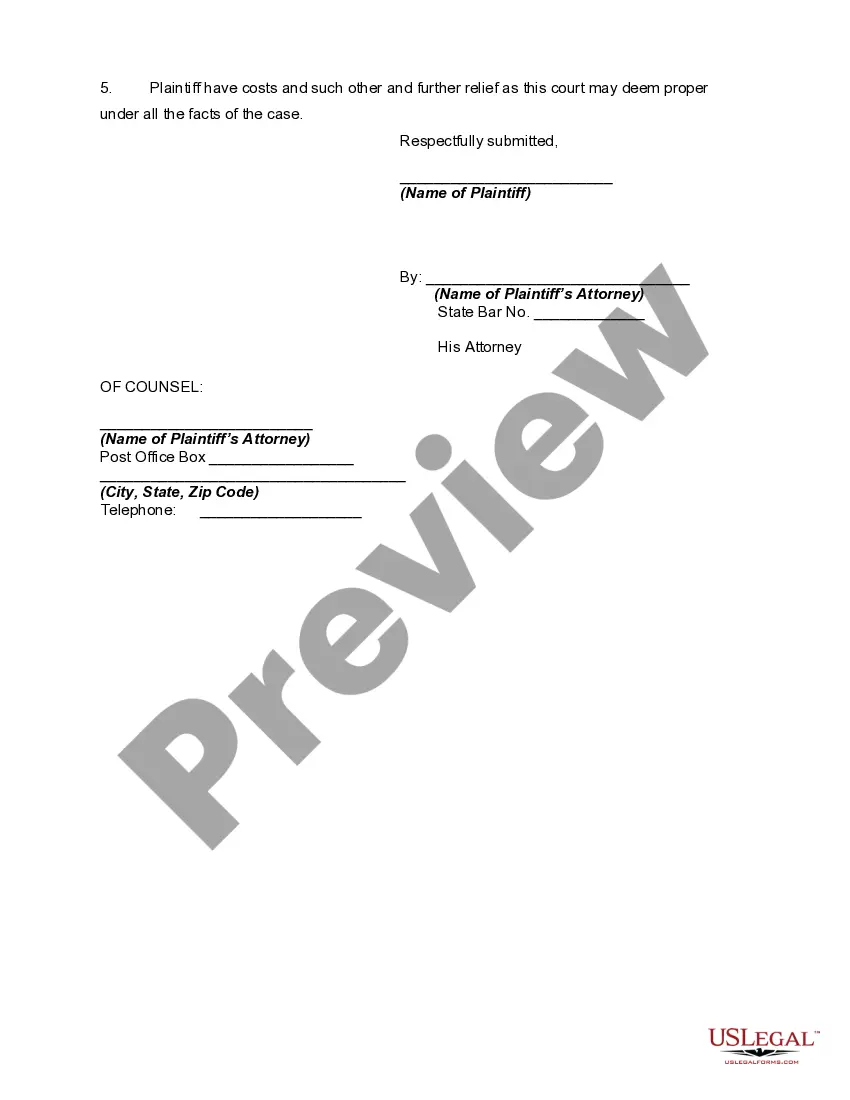
- Signature sections for the plaintiff and their legal representation
Common use cases
This form should be utilized when you discover that a neighbor's structure, such as windows or overhanging elements, encroaches onto your property. It is appropriate in situations where the encroachment has caused you inconvenience, reduced property value, or personal safety concerns, and attempts to resolve the issue with the neighbor have failed.
Who should use this form
This form is intended for:
- Property owners who have experienced encroachment from neighboring properties
- Individuals seeking legal recourse for nuisance or boundary disputes
- Those looking to improve or develop their property but are hindered by encroaching structures
How to complete this form
- Identify the plaintiff and defendant by filling in their names and addresses.
- Specify the details of the real properties involved, including city, county, and state.
- Describe the nature of the encroachment, including the dimensions and any relevant dates.
- State the damages incurred and the relief sought in clear terms.
- Sign the form, ensuring all required signatures from the plaintiff and their attorney are included.
Notarization requirements for this form
This form needs to be notarized to ensure legal validity. US Legal Forms provides secure online notarization powered by Notarize, allowing you to complete the process through a verified video call, available anytime.
Get your form ready online
Our built-in tools help you complete, sign, share, and store your documents in one place.
Make edits, fill in missing information, and update formatting in US Legal Forms—just like you would in MS Word.
Download a copy, print it, send it by email, or mail it via USPS—whatever works best for your next step.
Sign and collect signatures with our SignNow integration. Send to multiple recipients, set reminders, and more. Go Premium to unlock E-Sign.
If this form requires notarization, complete it online through a secure video call—no need to meet a notary in person or wait for an appointment.
We protect your documents and personal data by following strict security and privacy standards.

Make edits, fill in missing information, and update formatting in US Legal Forms—just like you would in MS Word.

Download a copy, print it, send it by email, or mail it via USPS—whatever works best for your next step.

Sign and collect signatures with our SignNow integration. Send to multiple recipients, set reminders, and more. Go Premium to unlock E-Sign.

If this form requires notarization, complete it online through a secure video call—no need to meet a notary in person or wait for an appointment.

We protect your documents and personal data by following strict security and privacy standards.
Common mistakes
- Failing to accurately describe the encroachment and its impact on your property.
- Not providing complete information about the properties involved.
- Omitting required signatures or documentation.
Why use this form online
- Convenient access to a legally drafted template that saves time.
- Editability allows you to customize the form to your specific situation easily.
- Reliability assured by using templates created by licensed attorneys.
Looking for another form?
Form popularity
FAQ
There is a term for this battle of land: encroachment. An encroachment happens when a fence or another piece of your neighbor's property crosses the property lines. Other examples of encroachments could involve trees, parts of a building, fencing or any other fixtures located on both pieces of property.
Stay civil. Don't use this disagreement to vent months or years of anger at your neighbor. Hire a surveyor. Check your community's laws. Try to reach a neighbor-to-neighbor agreement. Use a mediator. Have your attorney send a letter. File a lawsuit.
Case 1- If your neighbour/trespasser does not claim an ownership to the property and is modest enough to leave the encroachment in place, but wants to use the property for a specified time, you can give a written agreement to the encroacher allowing him to use the property, with you retaining the actual proprietorship
A Land Survey Works Wonders for Boundary Disputes. If you feel like your neighbor has or is developing on top of your land, you may want to get a professional land survey. Talk it Over and Offer Concessions. Bring on a Neutral Third Party. Hire a Qualified Estate Attorney.