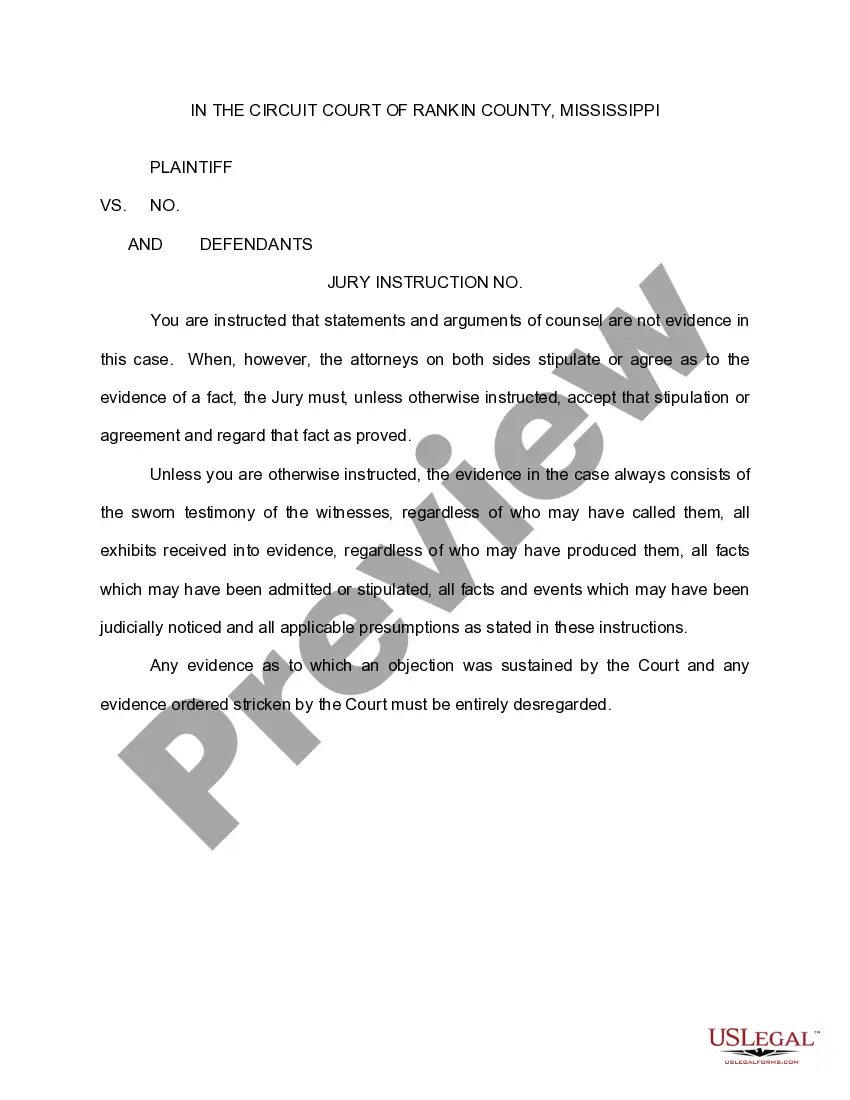
Contribution, Conveyance, and Assumption Agreement representing natural gas and oil exploration with multiple mergers
Understanding this form
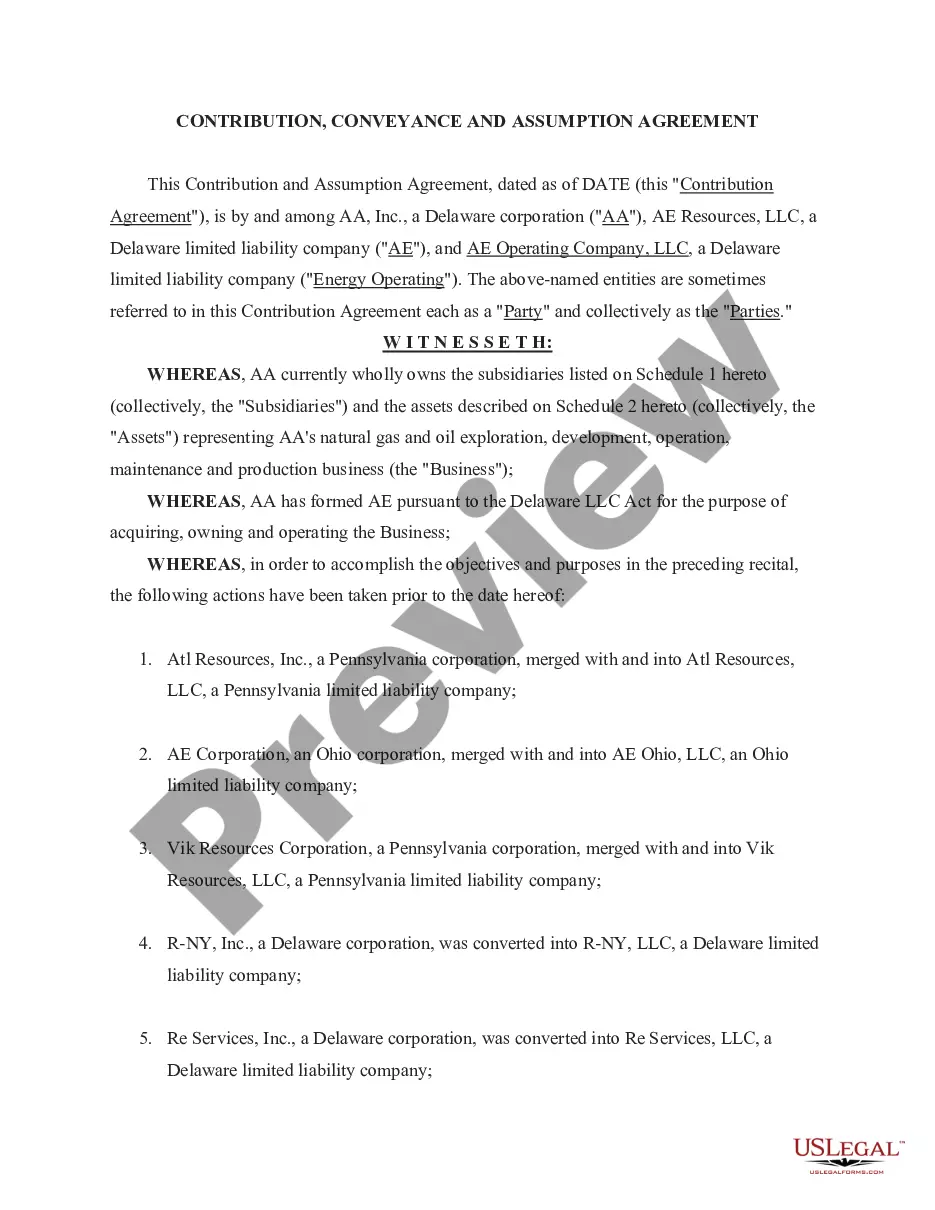
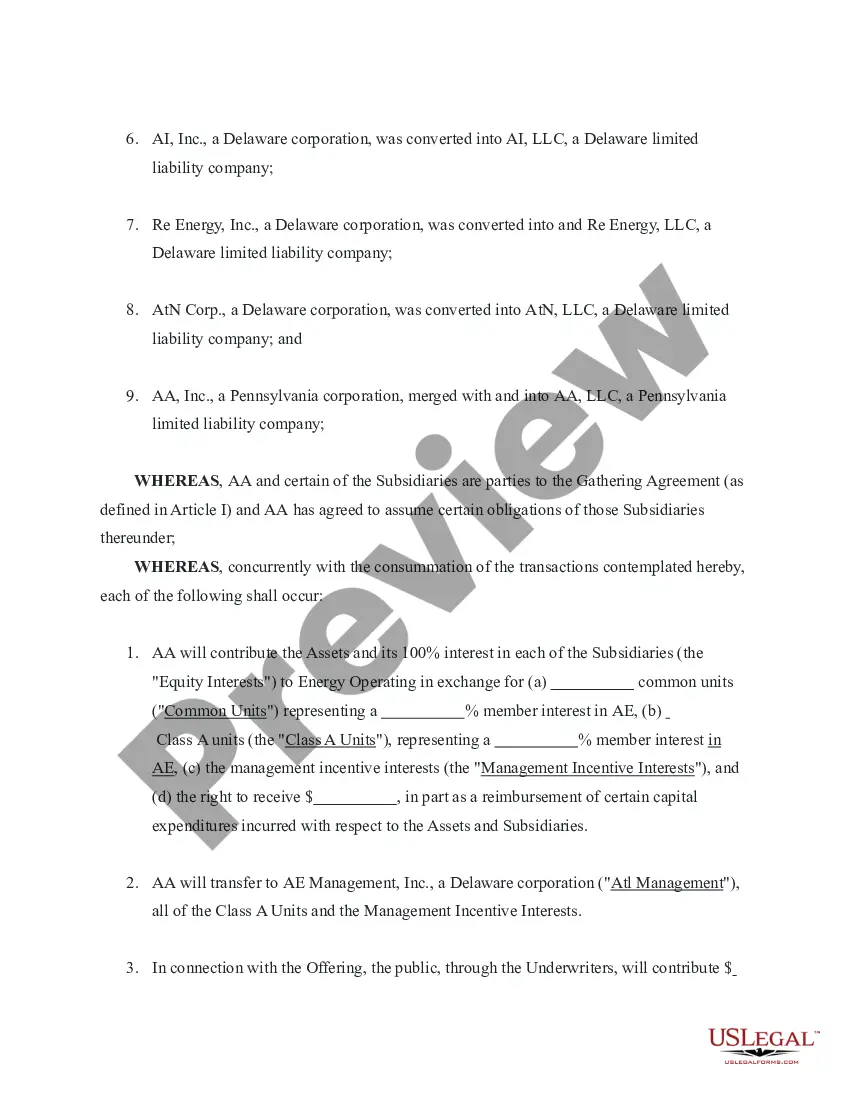
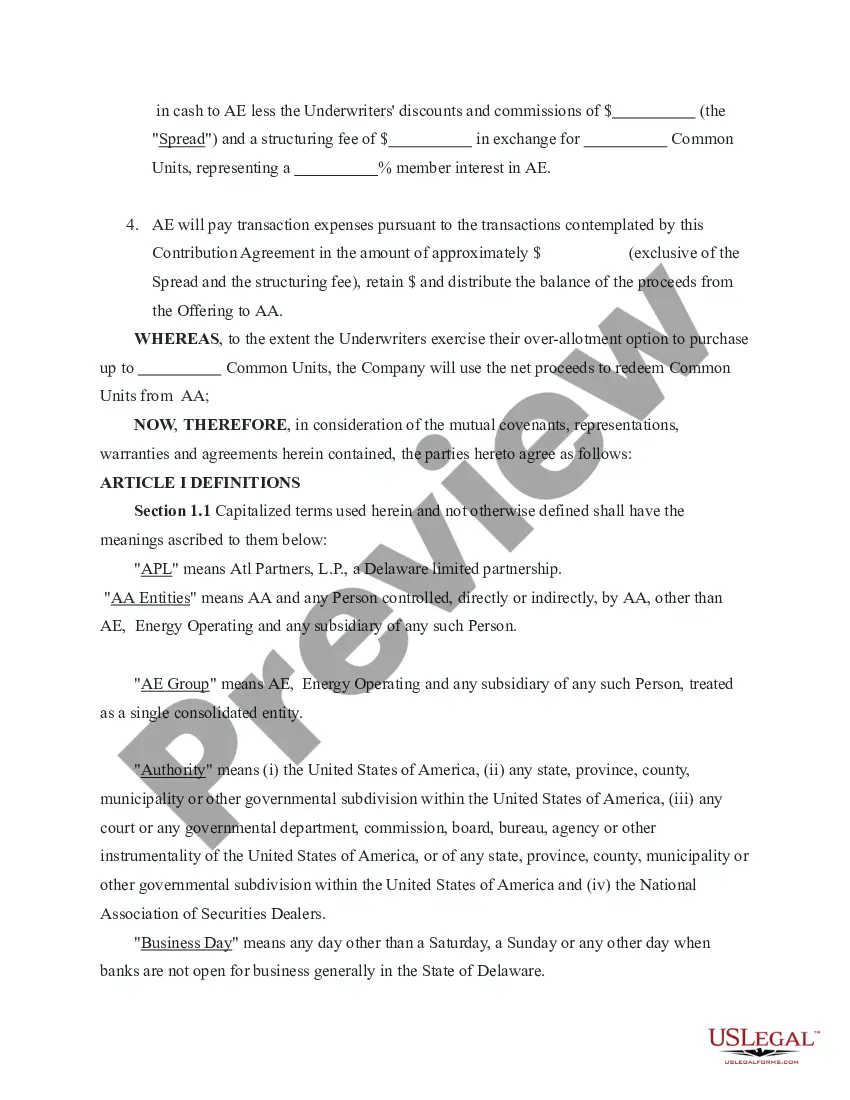
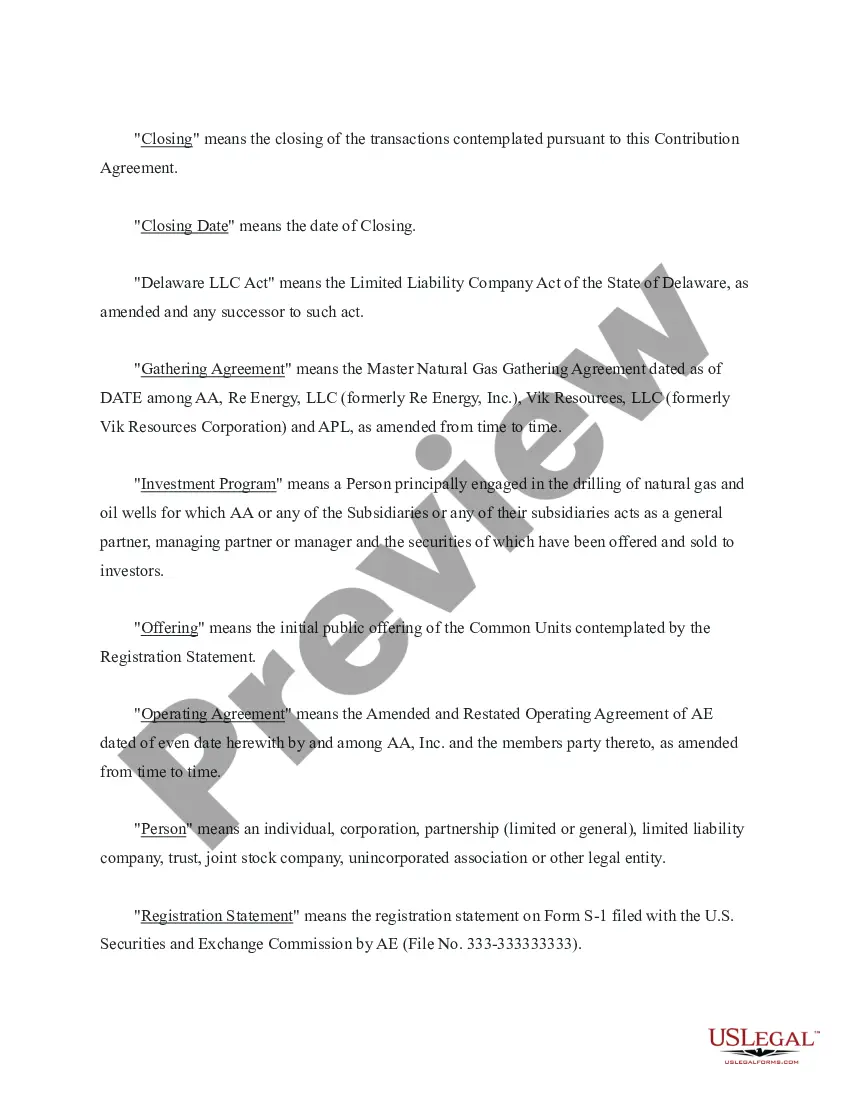
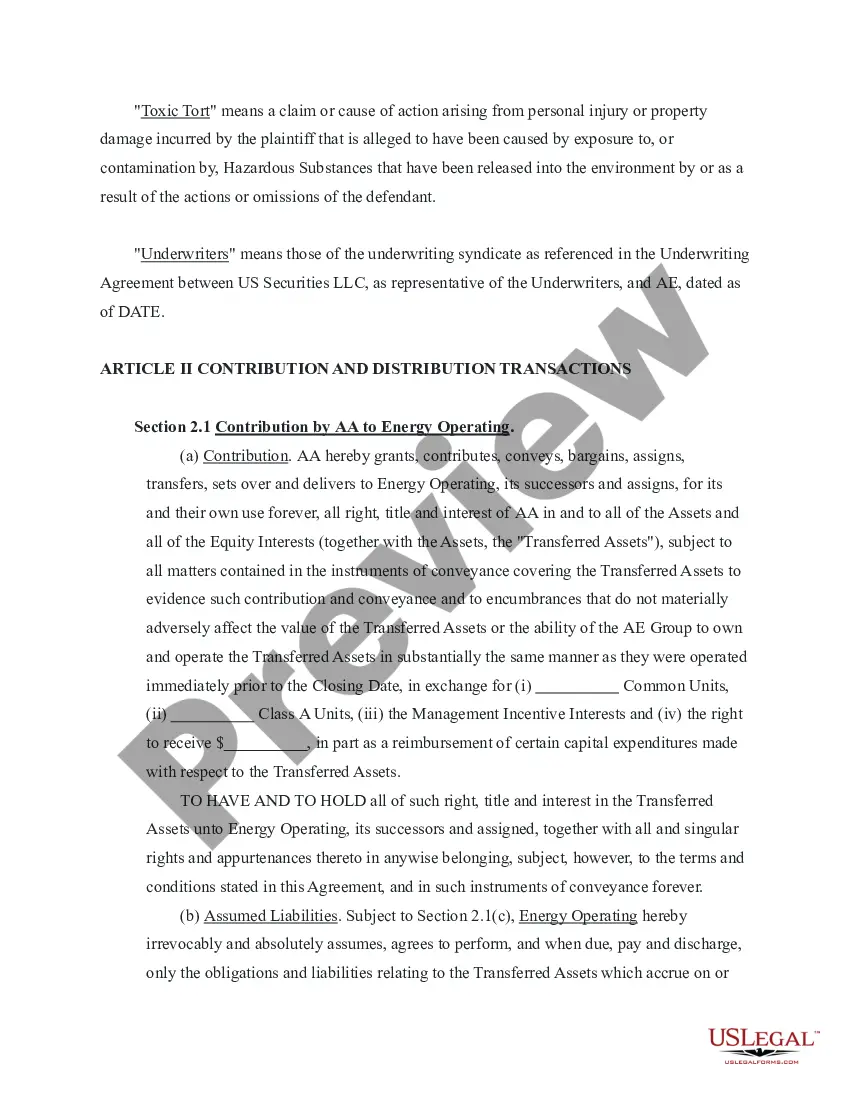
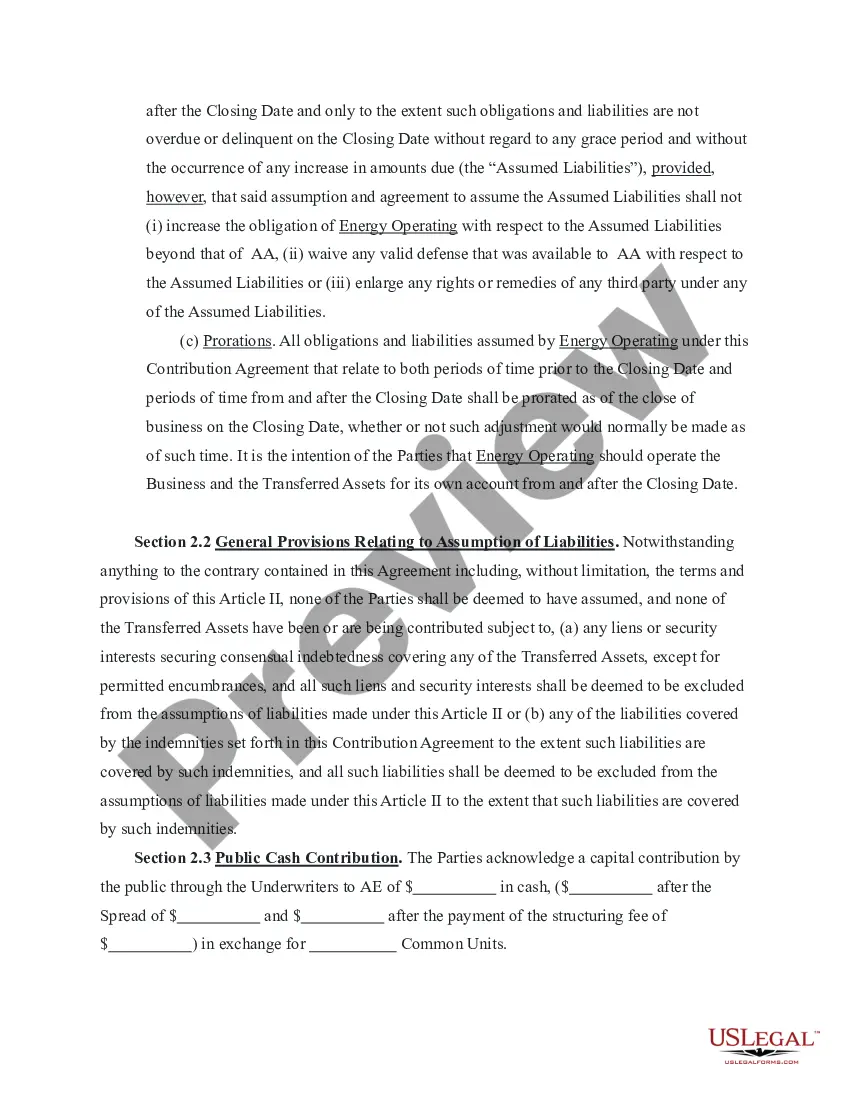
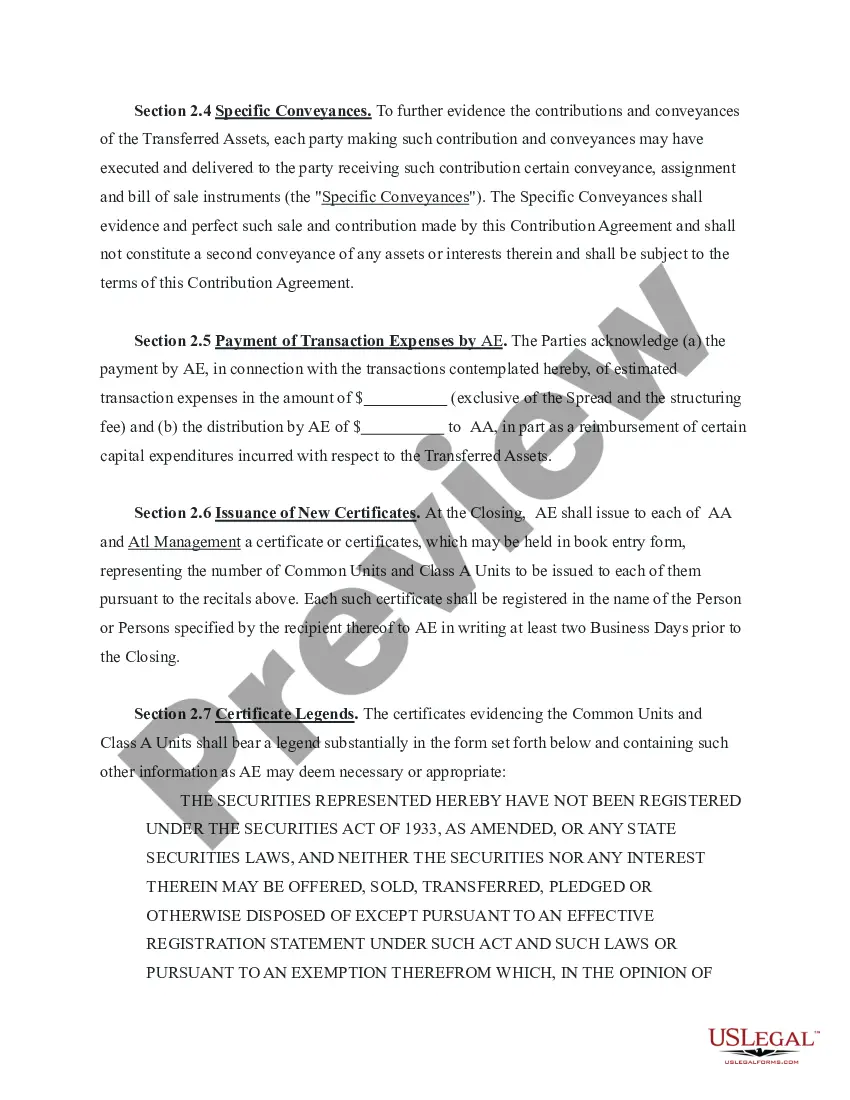
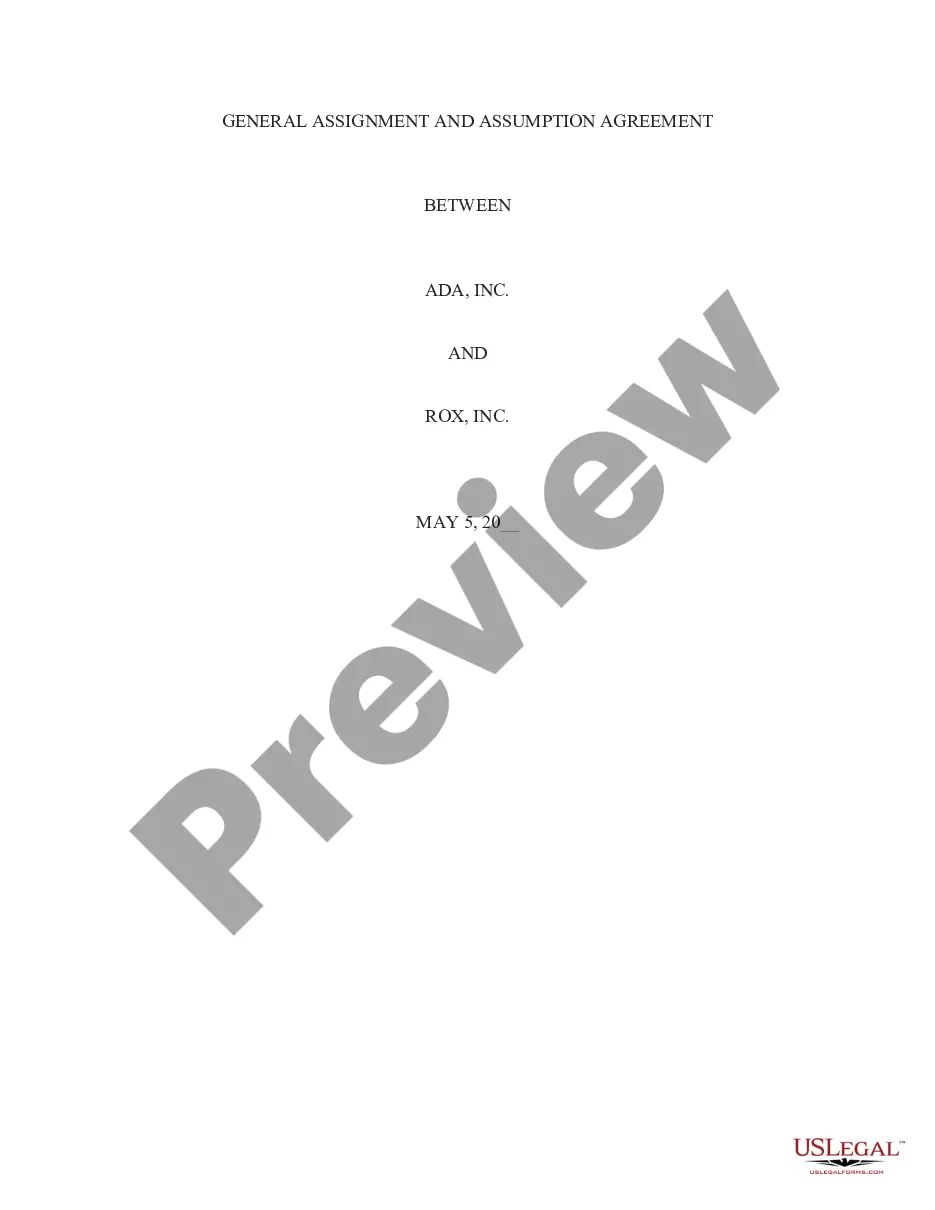
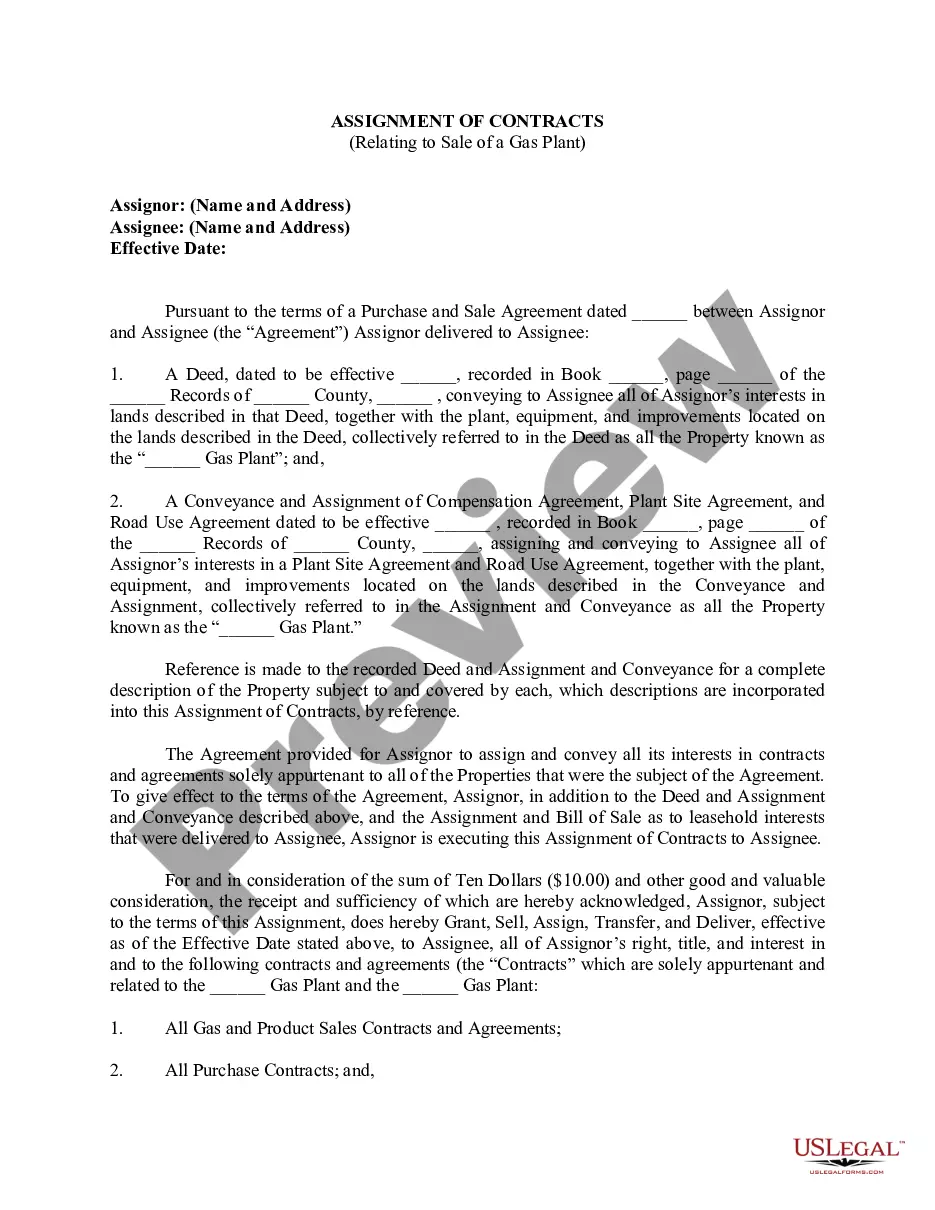
The Contribution, Conveyance, and Assumption Agreement is a legal document used in the context of natural gas and oil exploration and production. This form outlines the terms and conditions under which assets and liabilities are transferred between parties involved in mergers and acquisitions within the oil and gas industry. It provides detailed provisions regarding contributions of assets, assumptions of liabilities, and the execution of transactions relevant to the involved parties. This agreement is essential for managing complex corporate structures and ensuring compliance with legal standards in natural gas and oil dealings.
What’s included in this form
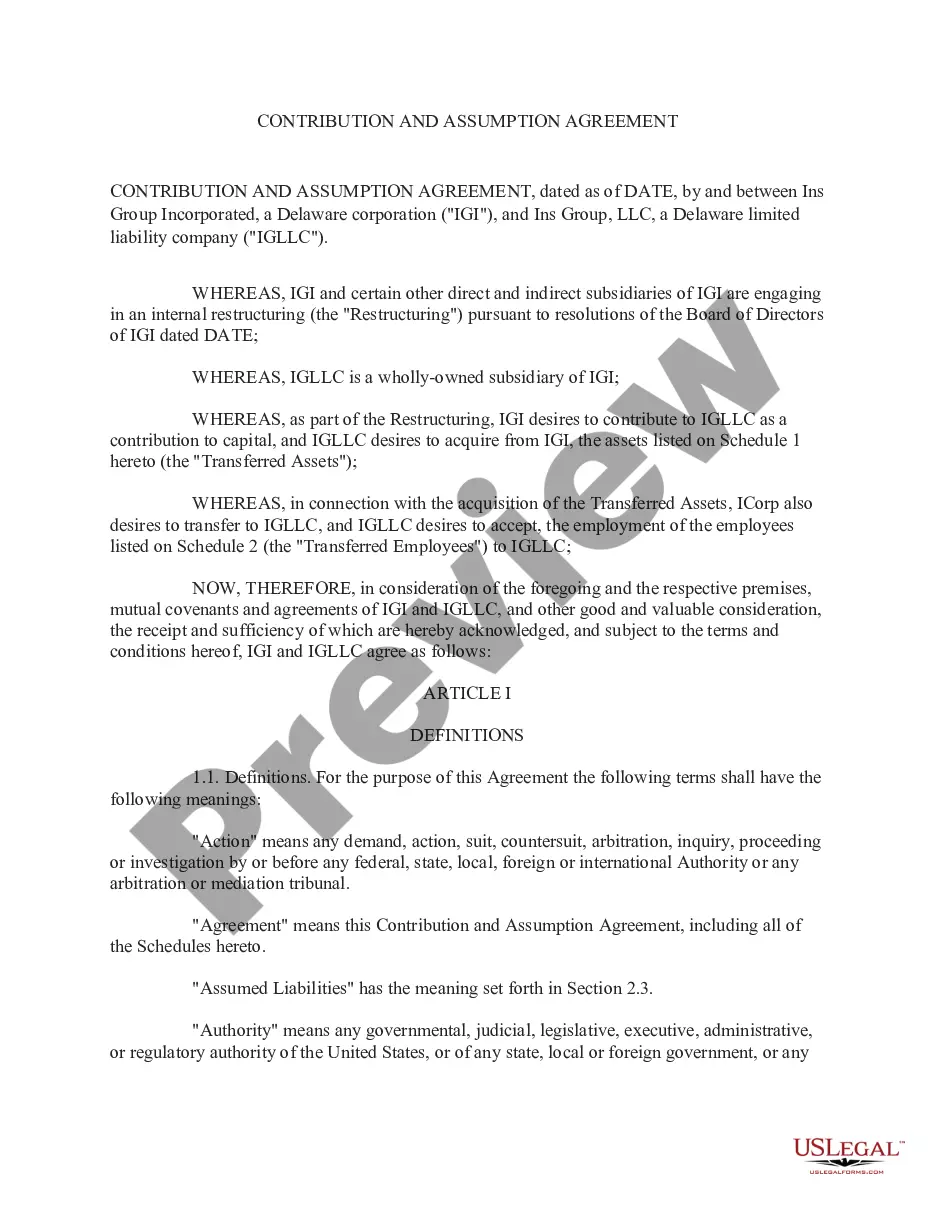
- Article I: Definitions - Clarifies specific terms and conditions relevant to the transaction.
- Article II: Contribution and Distribution Transactions - Details how assets and interests are contributed and exchanged.
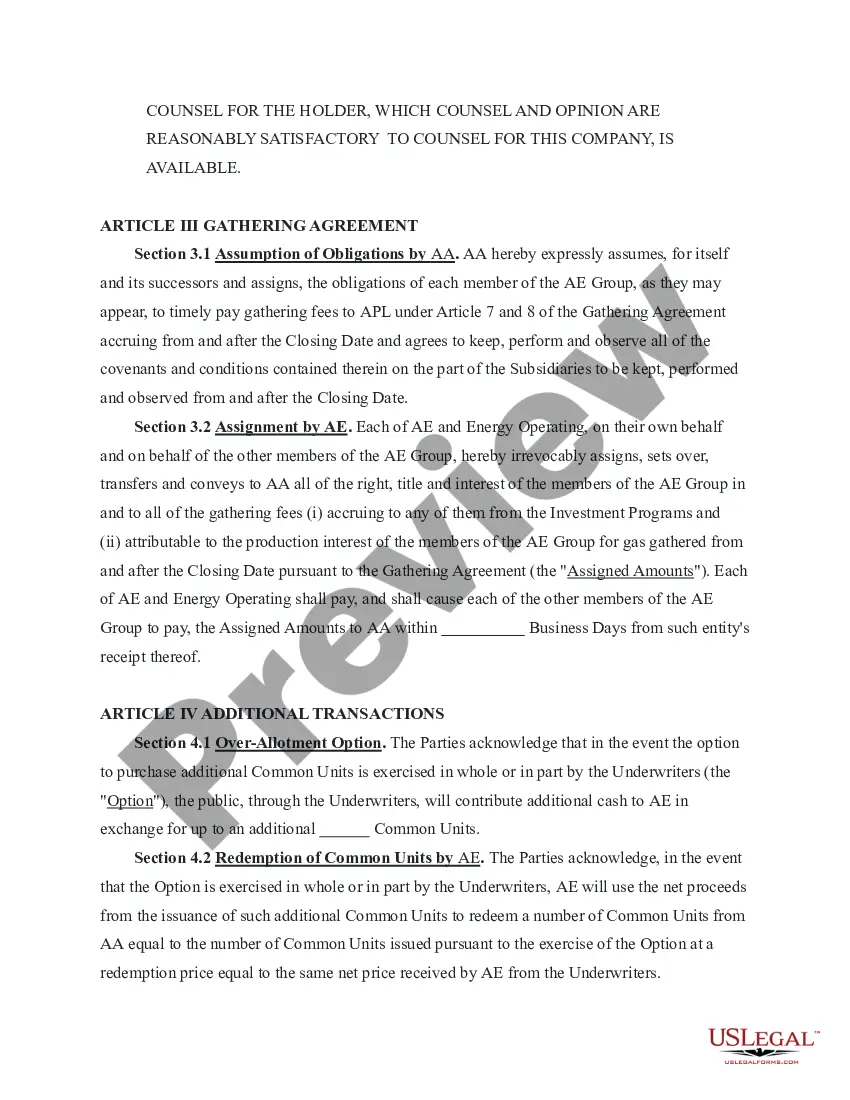
- Article III: Gathering Agreement - Specifies obligations regarding gathering fees associated with natural gas and oil production.
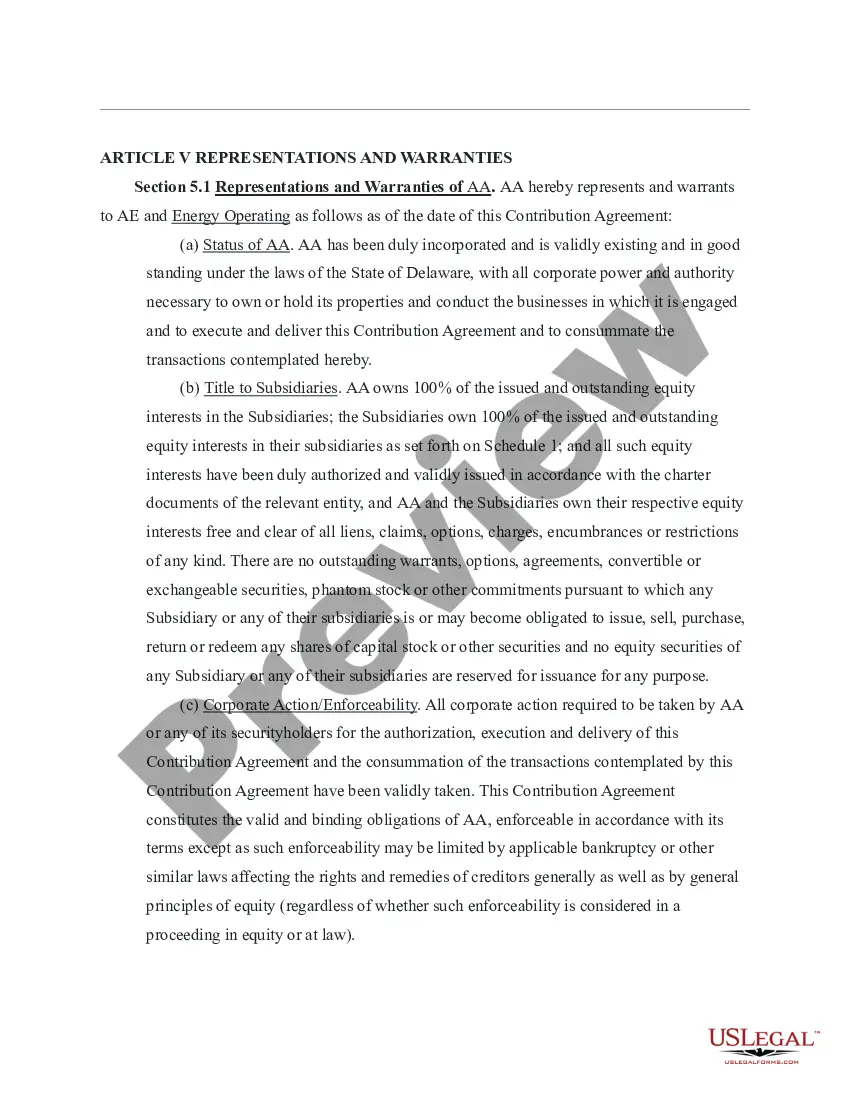
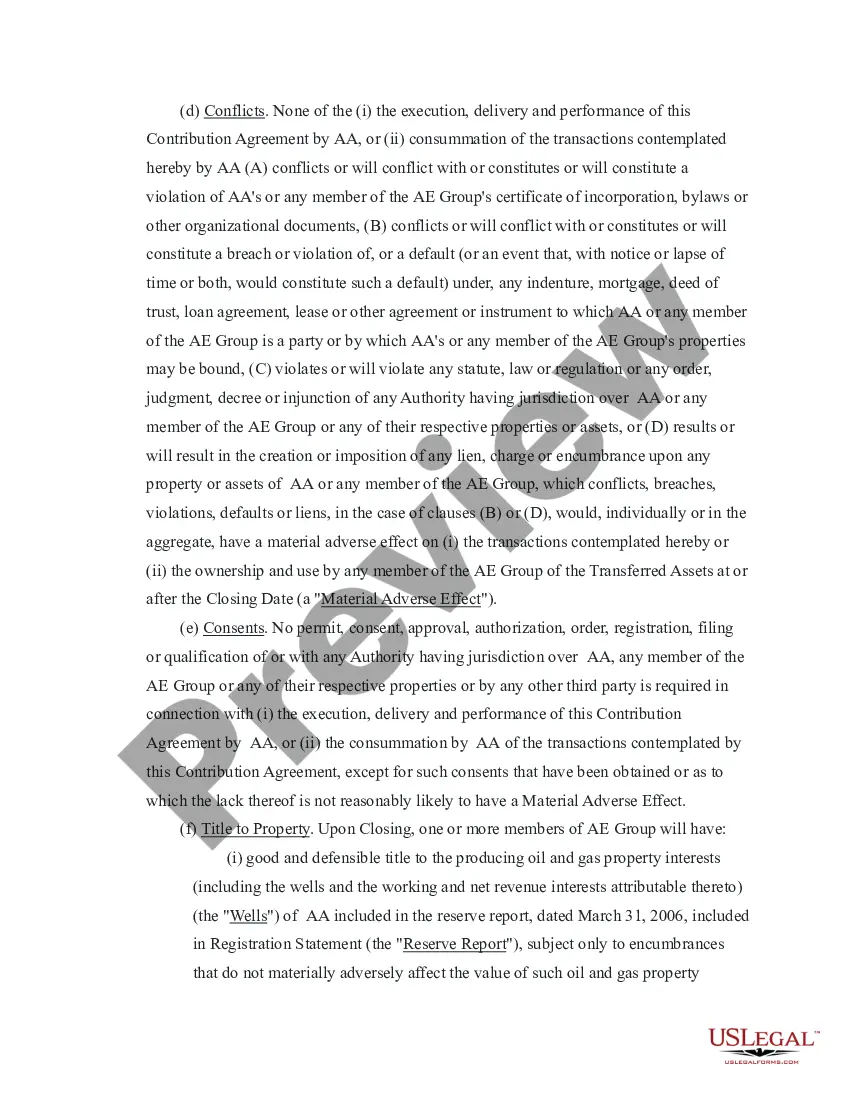
- Article V: Representations and Warranties - Outlines the assurances made by the parties regarding their legal standing and ownership of assets.
- Article VII: Indemnification - Specifies how parties shall protect each other from losses arising from breaches or liabilities.

When to use this form
This form should be used when companies involved in natural gas and oil exploration are merging or acquiring assets and need to clarify their responsibilities and rights concerning contributed assets and assumed liabilities. It is particularly relevant during complex transactions where multiple parties are involved and when local regulations necessitate a clear allocation of ownership and obligations.
Who needs this form
This agreement is intended for:
- Corporate entities engaging in oil and gas mergers and acquisitions.
- Legal representatives tasked with preparing contracts in the energy sector.
- Investors seeking to formalize contributions and asset transfers among partnerships.
- Subsidiaries of larger corporations wishing to delineate responsibilities clearly.
Steps to complete this form
To complete this form, follow these steps:
- Identify the parties involved in the agreement, including their legal names and business structures.
- Specify the assets being contributed and detail their respective value and ownership.
- Outline any liabilities that will be assumed by the acquiring party.
- Indicate the effective date of the agreement.
- Ensure all parties sign and date the document to validate the agreement.
Notarization guidance
This form does not typically require notarization unless specified by local law. However, check with local regulations to ensure compliance, as requirements can vary by jurisdiction.
Get your form ready online
Our built-in tools help you complete, sign, share, and store your documents in one place.
Make edits, fill in missing information, and update formatting in US Legal Forms—just like you would in MS Word.
Download a copy, print it, send it by email, or mail it via USPS—whatever works best for your next step.
Sign and collect signatures with our SignNow integration. Send to multiple recipients, set reminders, and more. Go Premium to unlock E-Sign.
If this form requires notarization, complete it online through a secure video call—no need to meet a notary in person or wait for an appointment.
We protect your documents and personal data by following strict security and privacy standards.

Make edits, fill in missing information, and update formatting in US Legal Forms—just like you would in MS Word.

Download a copy, print it, send it by email, or mail it via USPS—whatever works best for your next step.

Sign and collect signatures with our SignNow integration. Send to multiple recipients, set reminders, and more. Go Premium to unlock E-Sign.

If this form requires notarization, complete it online through a secure video call—no need to meet a notary in person or wait for an appointment.

We protect your documents and personal data by following strict security and privacy standards.
Typical mistakes to avoid
- Failing to accurately identify all parties involved.
- Omitting essential terms related to liabilities and assets being transferred.
- Neglecting to specify the effective date, which can lead to disputes.
- Not securing proper signatures from all necessary parties.
Why complete this form online
- Convenience of accessing and completing the form online, saving time.
- Easy customization options to fit specific needs and state regulations.
- Access to templates drafted by licensed attorneys for reliability.
- Quick downloads enabling prompt execution of transactions.
Looking for another form?
Form popularity
FAQ
The assignor must agree to assign their rights and duties under the contract to the assignee. The assignee must agree to accept, or "assume," those contractual rights and duties. The other party to the initial contract must consent to the transfer of rights and obligations to the assignee.
Third Party Assumption Agreement means any indemnity agreement, assumption agreement or any other agreement that may provide for the indemnity and/or assumption by a third party of Losses of any sort whatsoever (including Asbestos-Related Liabilities and Product Liabilities).
An assumption clause is a provision in a mortgage contract that allows the seller of a home to pass responsibility for the existing mortgage to the buyer of the property. In other words, the new homeowner assumes the existing mortgage and?along with it?ownership of the property that secures the loan.
What is an Assumption Agreement? An assumption agreement, sometimes called an assignment and assumption agreement, is a legal document that allows one party to transfer rights and/or obligations to another party. It allows one party to "assume" the rights and responsibilities of the other party.
An executed original of this Assumption Agreement will be recorded in the Land Records as a modification to the Security Instrument.
Also called an assignment and assumption. An agreement in which one party transfers its contractual rights and obligations to another party.
Assignments involve at least three parties. These parties are the assignee, the assignor, and the obligor. The assignee is the party that receives the rights and obligations under the contract, but wasn't an original party to the contract.