Assignment of Trademark and Trade Dress
Overview of this form
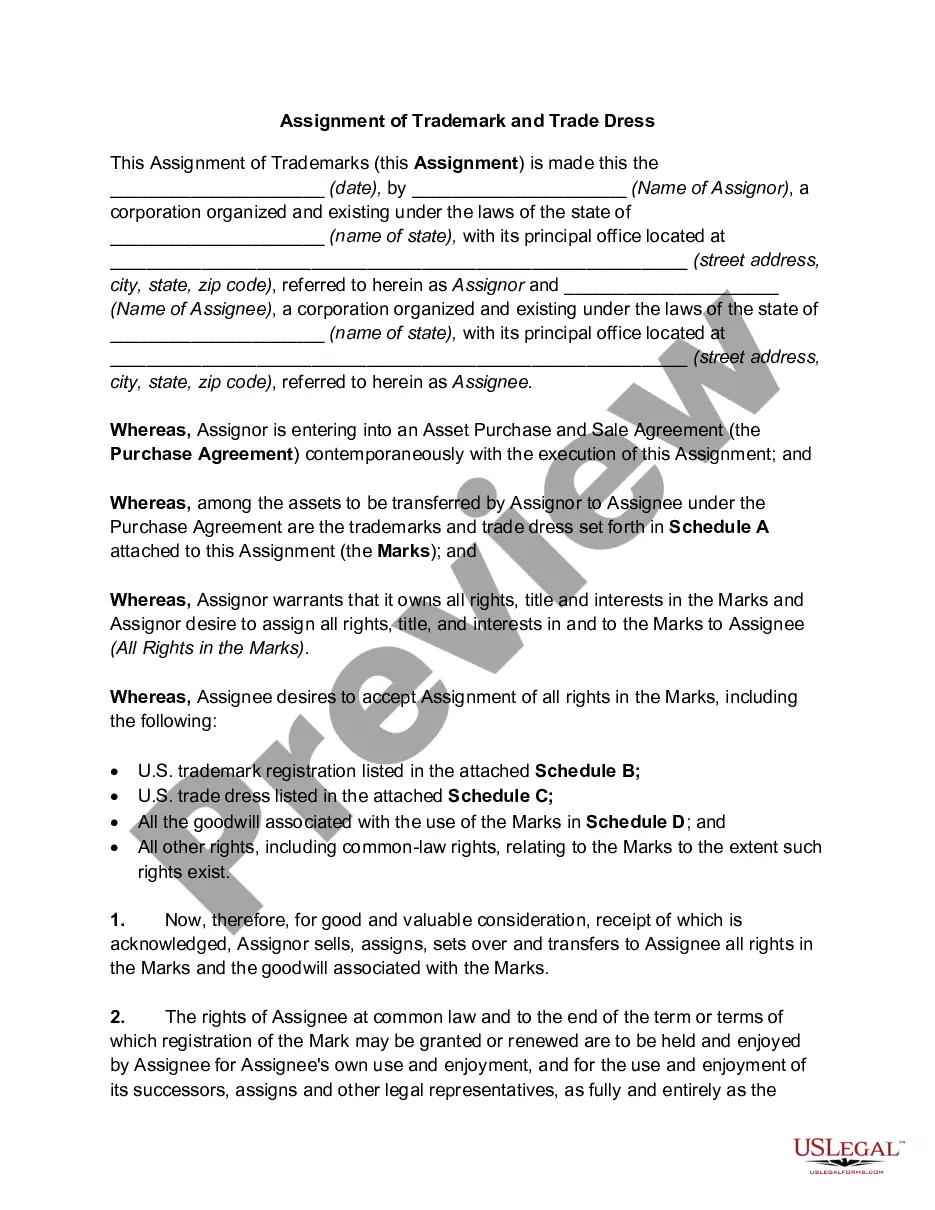
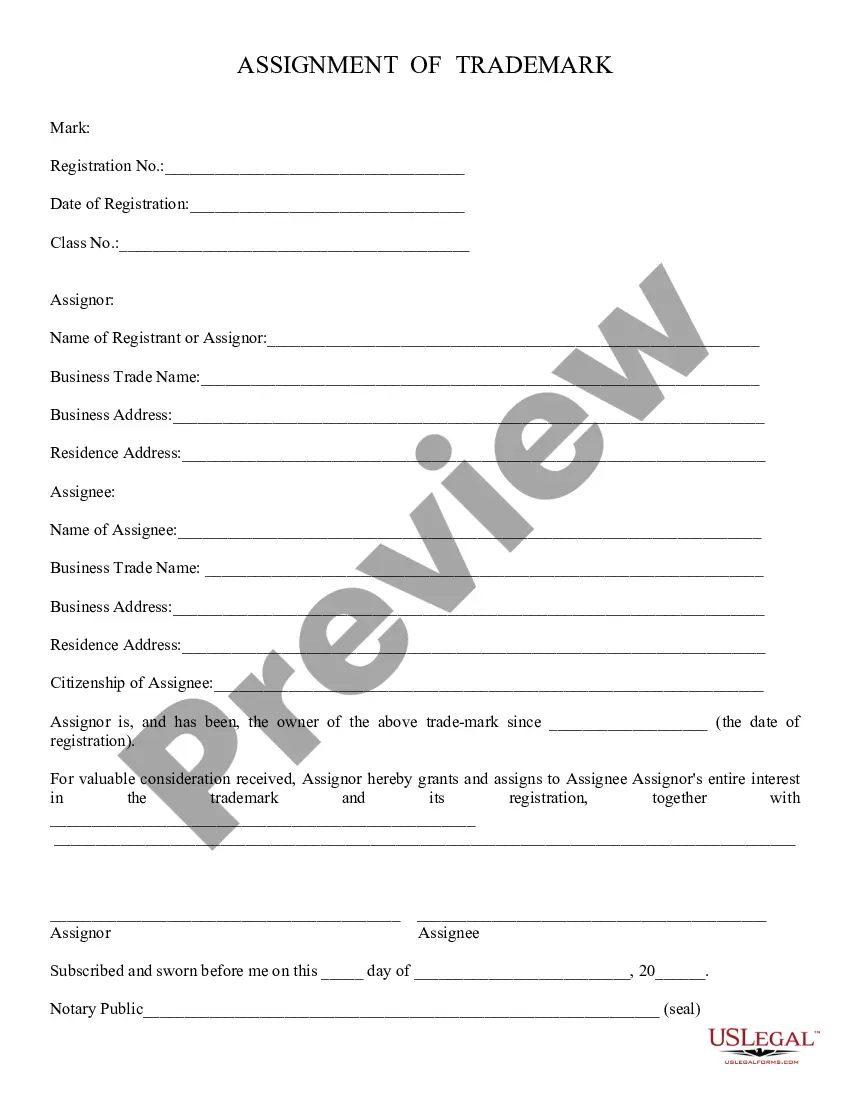
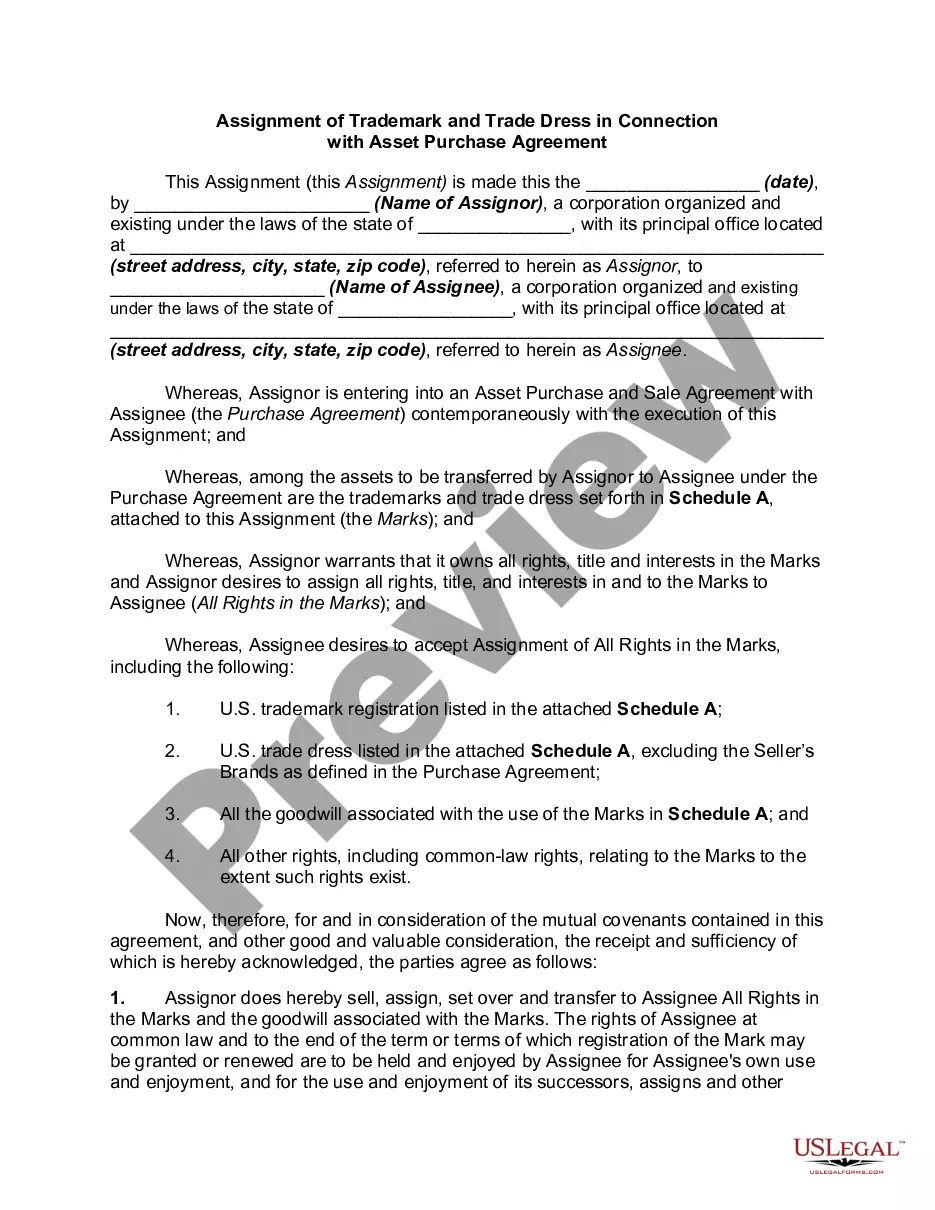
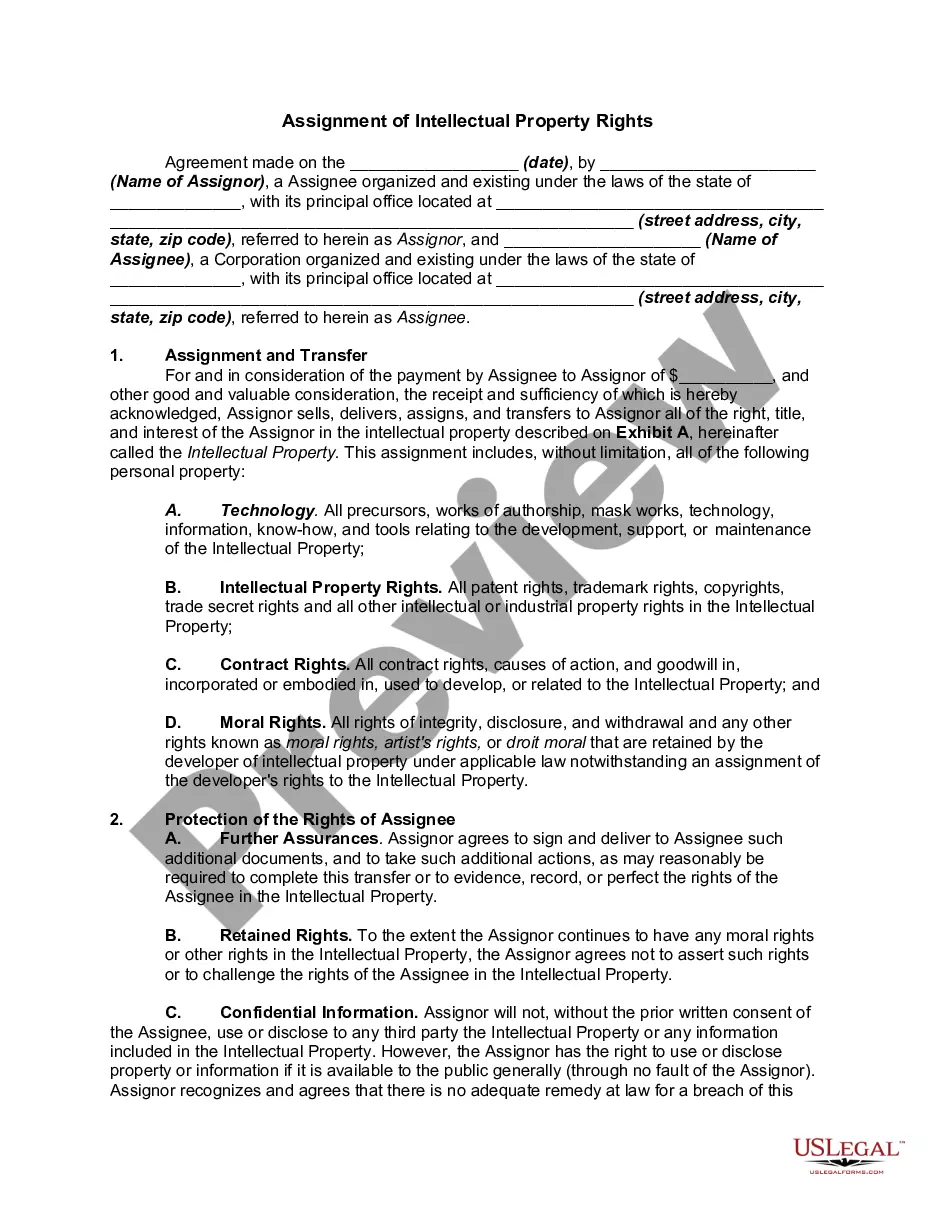
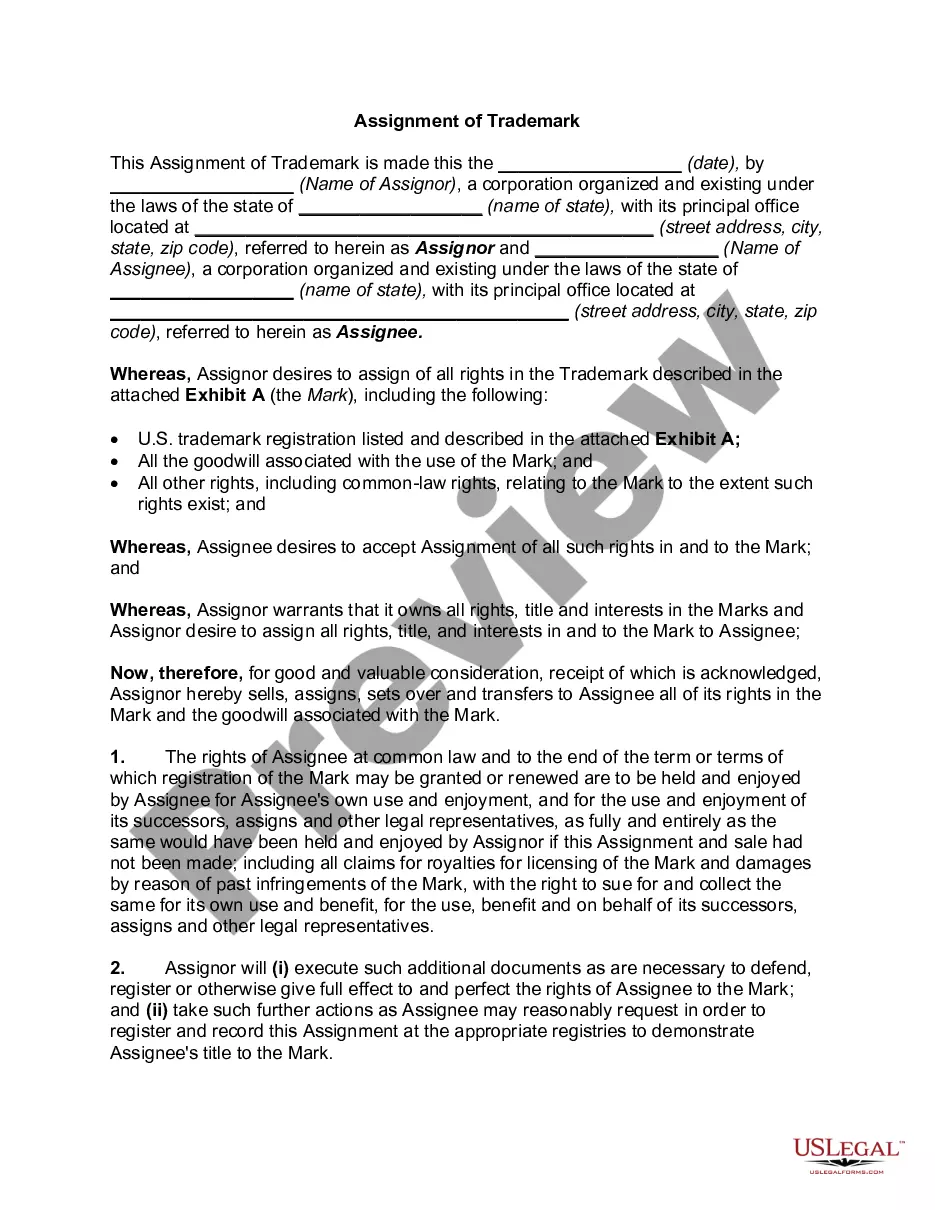
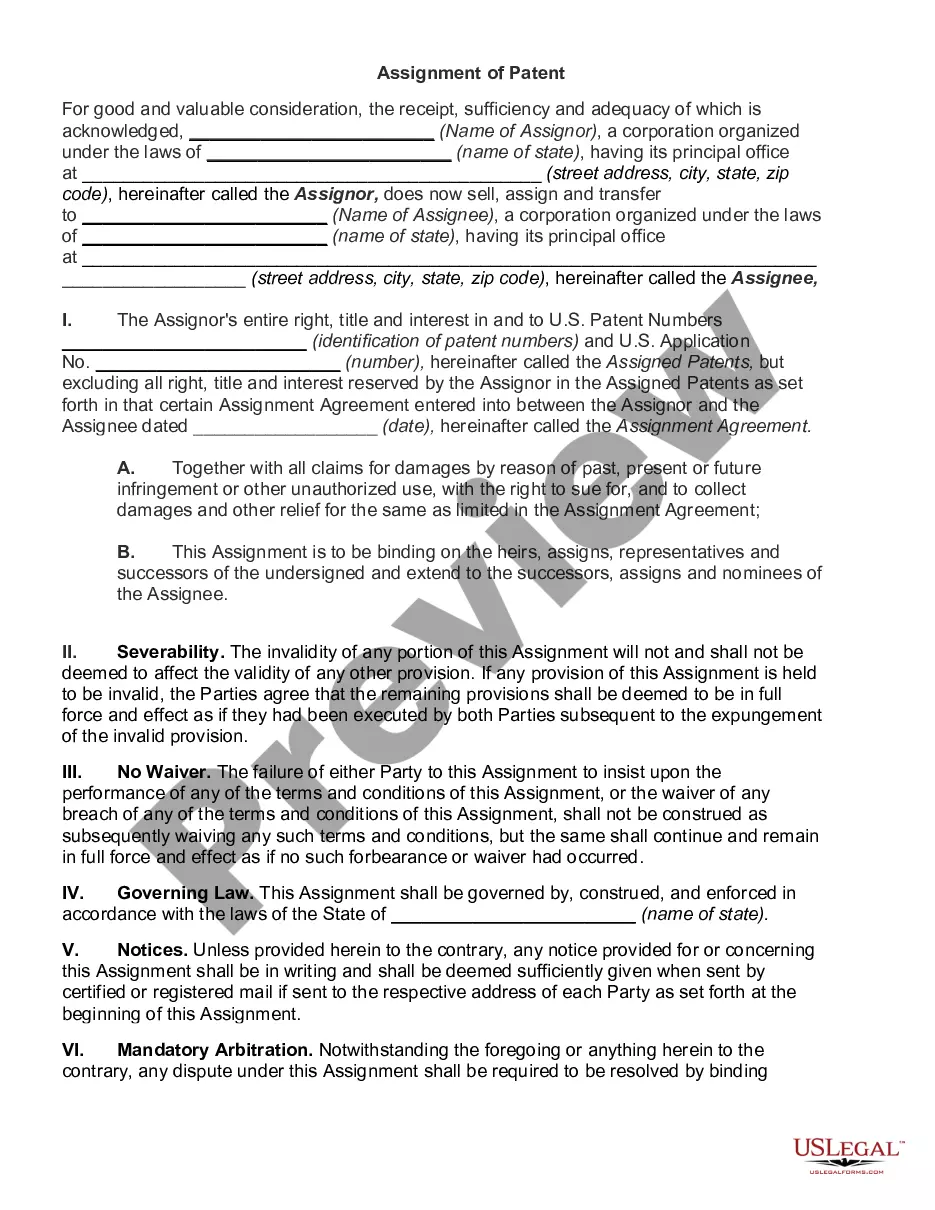
The Assignment of Trademark and Trade Dress is a legal document that facilitates the transfer of ownership of a registered trademark and its associated trade dress from one party (the Assignor) to another (the Assignee). This form is essential for businesses looking to formalize a sale or transfer of their trademark rights and ensure proper legal protection of their brand identity. Unlike general transfer agreements, this specific form addresses both trademark and trade dress, providing clarity on the rights being transferred.
What’s included in this form
- Date of the assignment.
- Names and addresses of the Assignor and Assignee.
- Details of the trademarks and trade dress being assigned.
- Warranties regarding ownership of the Marks.
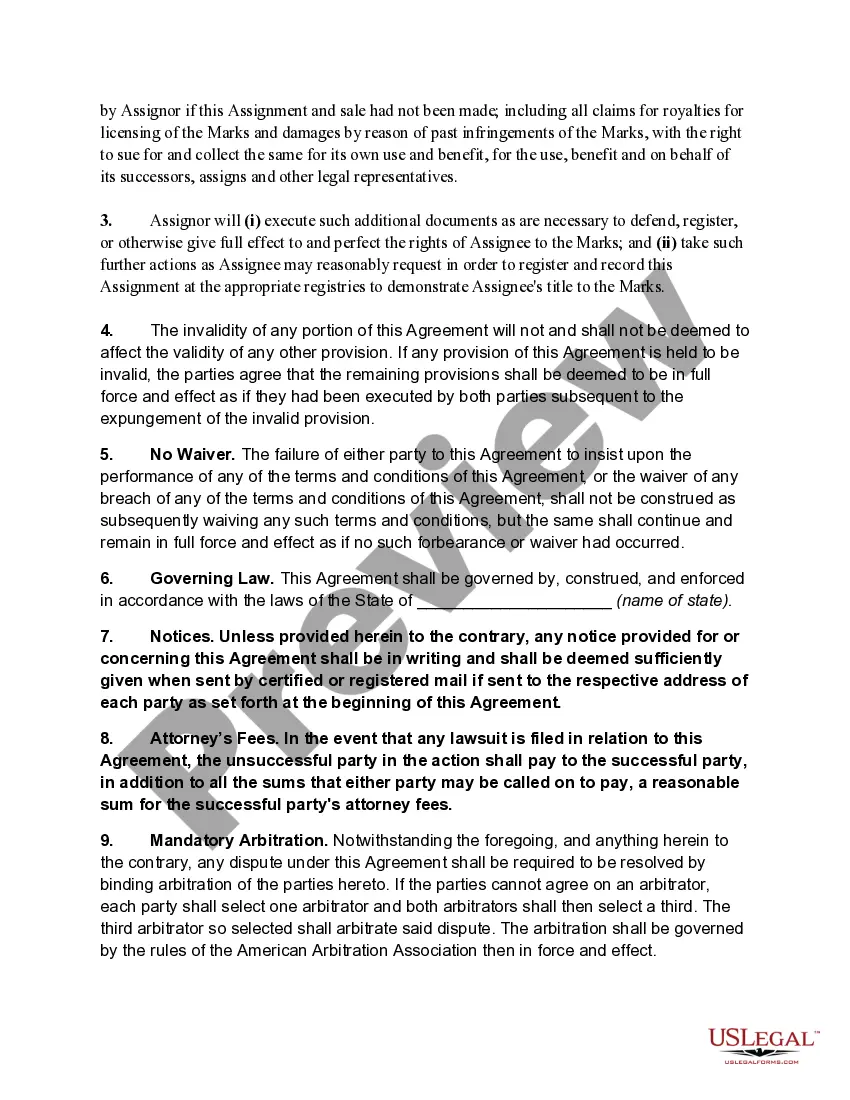
- Terms regarding the rights and goodwill associated with the Marks.
- Governing law and notice provisions.
When to use this form
This form is used when a business or individual wants to formally transfer ownership of a trademark or trade dress to another entity. Common scenarios include when a business is sold, when a new partner is brought on board, or when a trademark is licensed out. It ensures that the rights related to trademark usage, associated goodwill, and any registered marks are clearly defined and legally enforceable.
Who can use this document
- Business owners transferring their trademark to another entity.
- Companies merging or acquiring another business.
- Entrepreneurs licensing their trademarks.
- Attorneys and legal representatives handling trademark assignments.
How to complete this form
- Enter the date of the assignment.
- Provide names and addresses for both the Assignor and Assignee.
- List all trademarks and trade dress included in the assignment in the designated schedules.
- Specify the governing law that will apply to the agreement.
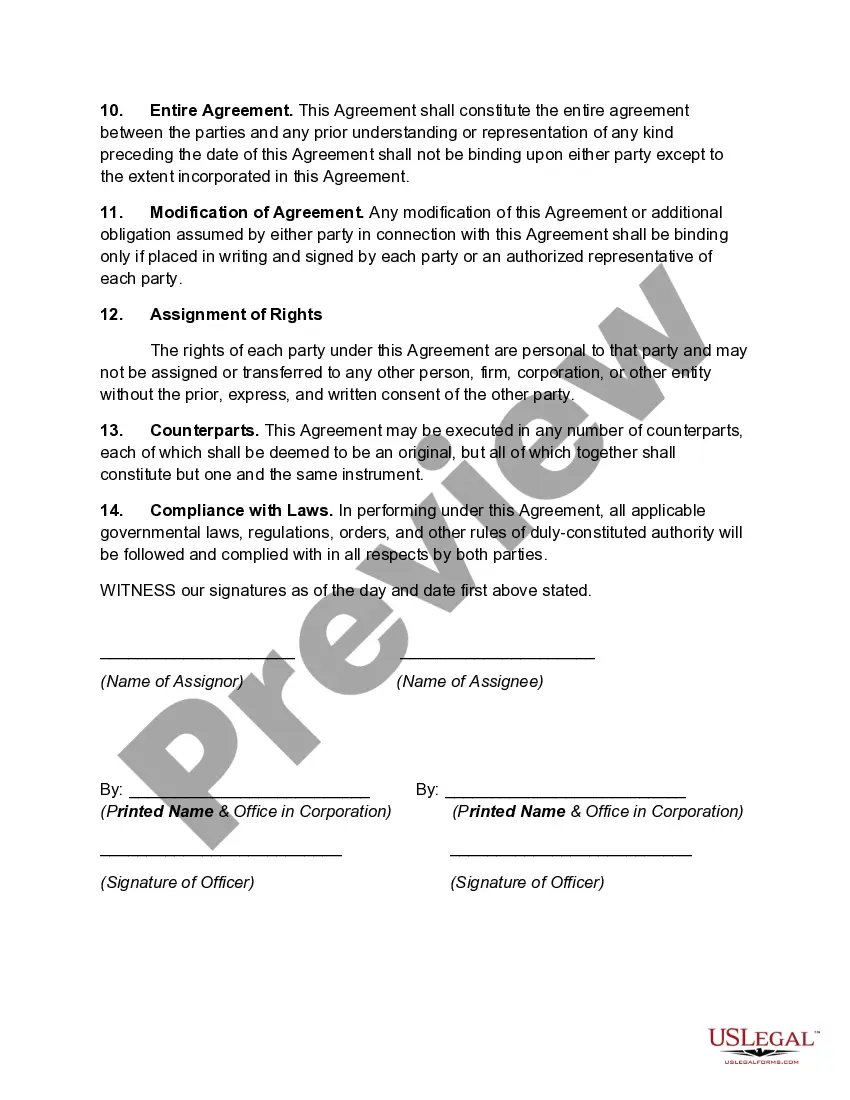
- Have both parties sign and date the document, ensuring it is witnessed if required.
Notarization requirements for this form
This form usually doesn’t need to be notarized. However, local laws or specific transactions may require it. Our online notarization service, powered by Notarize, lets you complete it remotely through a secure video session, available 24/7.
Get your form ready online
Our built-in tools help you complete, sign, share, and store your documents in one place.
Make edits, fill in missing information, and update formatting in US Legal Forms—just like you would in MS Word.
Download a copy, print it, send it by email, or mail it via USPS—whatever works best for your next step.
Sign and collect signatures with our SignNow integration. Send to multiple recipients, set reminders, and more. Go Premium to unlock E-Sign.
If this form requires notarization, complete it online through a secure video call—no need to meet a notary in person or wait for an appointment.
We protect your documents and personal data by following strict security and privacy standards.

Make edits, fill in missing information, and update formatting in US Legal Forms—just like you would in MS Word.

Download a copy, print it, send it by email, or mail it via USPS—whatever works best for your next step.

Sign and collect signatures with our SignNow integration. Send to multiple recipients, set reminders, and more. Go Premium to unlock E-Sign.

If this form requires notarization, complete it online through a secure video call—no need to meet a notary in person or wait for an appointment.

We protect your documents and personal data by following strict security and privacy standards.
Common mistakes to avoid
- Failing to list all relevant trademarks and trade dress.
- Not signing or dating the document properly.
- Using incorrect or outdated legal names for the parties involved.
- Neglecting to specify the governing state law.
Benefits of using this form online
- Immediate access to a professionally drafted legal template.
- Ability to edit and customize the form to meet specific needs.
- Secure storage and easy retrieval of the completed documents.
- Convenient downloading options for offline use.
Quick recap
- The Assignment of Trademark and Trade Dress is essential for transferring trademark rights.
- Complete the form accurately to ensure all trademarks and trade dress are included.
- Both parties must sign the document for it to be legally binding.
Looking for another form?
Form popularity
FAQ
Use EPAS to create and submit a Patent Assignment Recordation Coversheet by completing on-line web forms and attaching the supporting legal documentation as black and white TIFF or PDF for submission via the internet. You may email questions about filing electronic patent assignments to EPAS@uspto.gov .
The USPTO fee is $40 for the first mark, and $25 for the second and subsequent marks. So, the total cost for preparing and filing a trademark assignment for a single mark would be $805.
A trademark offers legal protection for a logo, symbol, phrase, word, name, or design used to show the manufacturer of a product. Trade dress protects all elements used to promote a specific service or product. Examples of trade dress include packaging and the atmosphere or decor within a place of business.
Typically only the party assigning the intellectual property must sign the assignment, and while notarization is strongly preferred it is not strictly required.Failure to record an intellectual property transfer, or failure to make a timely recordation, can impact a startup's rights in a patent or patent application.
Trade dress can be protected through common law rights. However, the Lanham Act also protects trade dress and allows it to be registered with the U.S. Patent and Trademark Office (USPTO) as a trademark. Generally, an application to register trade dress must include all the same content as a trademark application.
Trade dress consists of all the various elements that are used to promote a product or service. For a product, trade dress may be the packaging, the attendant displays, and even the configuration of the product itself.The trade dress must be inherently distinctive, unless it has acquired secondary meaning.
Once a trademark is registered, its owner should monitor its use.It is certainly possible for entrepreneurs to file applications and successfully register trademarks on their own.
The classic example of trade dress is the distinctive Coca-Cola bottle: . Trade dress is generally divided into two categories: product packaging and product configuration.Design patents are similar to trade dress, as they protect the ornamental appearance of an otherwise functional item.
Trademark assignments should also be filed electronically on the USPTO website. The Electronic Trademark Assignment System (ETAS) allows the parties to create and submit an Assignment Recordation Coversheet online by completing a form and attaching an image of the legal documentation (assignment agreement).