Illinois Last Will and Testament Package

About this form package
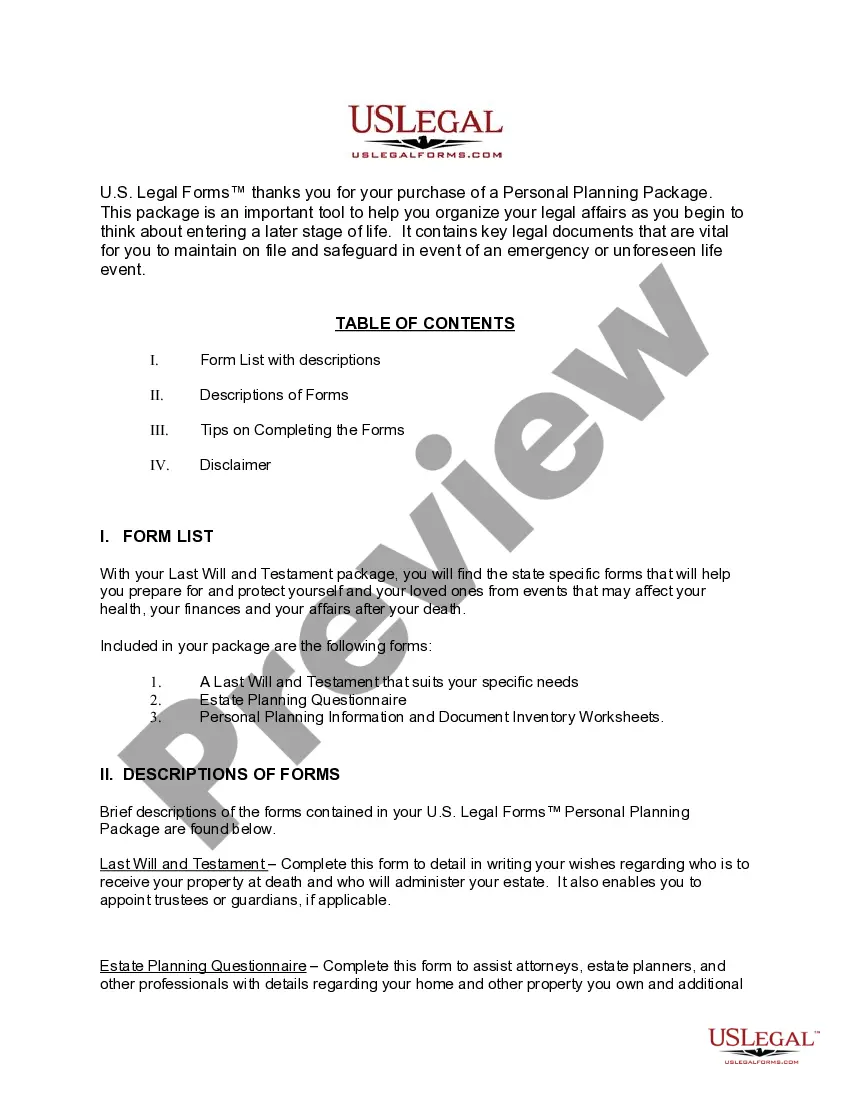
The Illinois Last Will and Testament Package provides vital legal documents designed to help you articulate your wishes regarding asset distribution after your passing. Unlike generic will forms, this package includes state-specific content drafted by licensed attorneys, ensuring compliance with Illinois laws. You will also receive a completed sample of your chosen Last Will and Testament form at no extra charge, which can serve as a helpful reference throughout the preparation process.
Forms included in this package

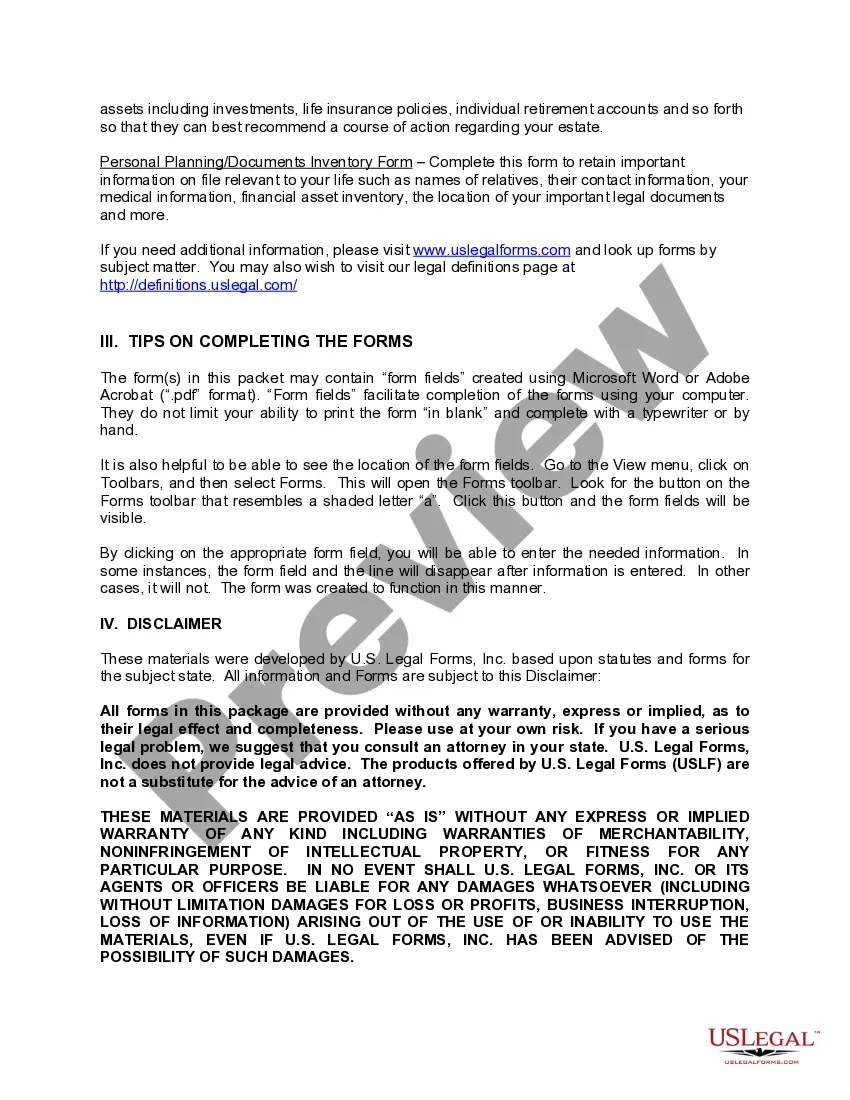
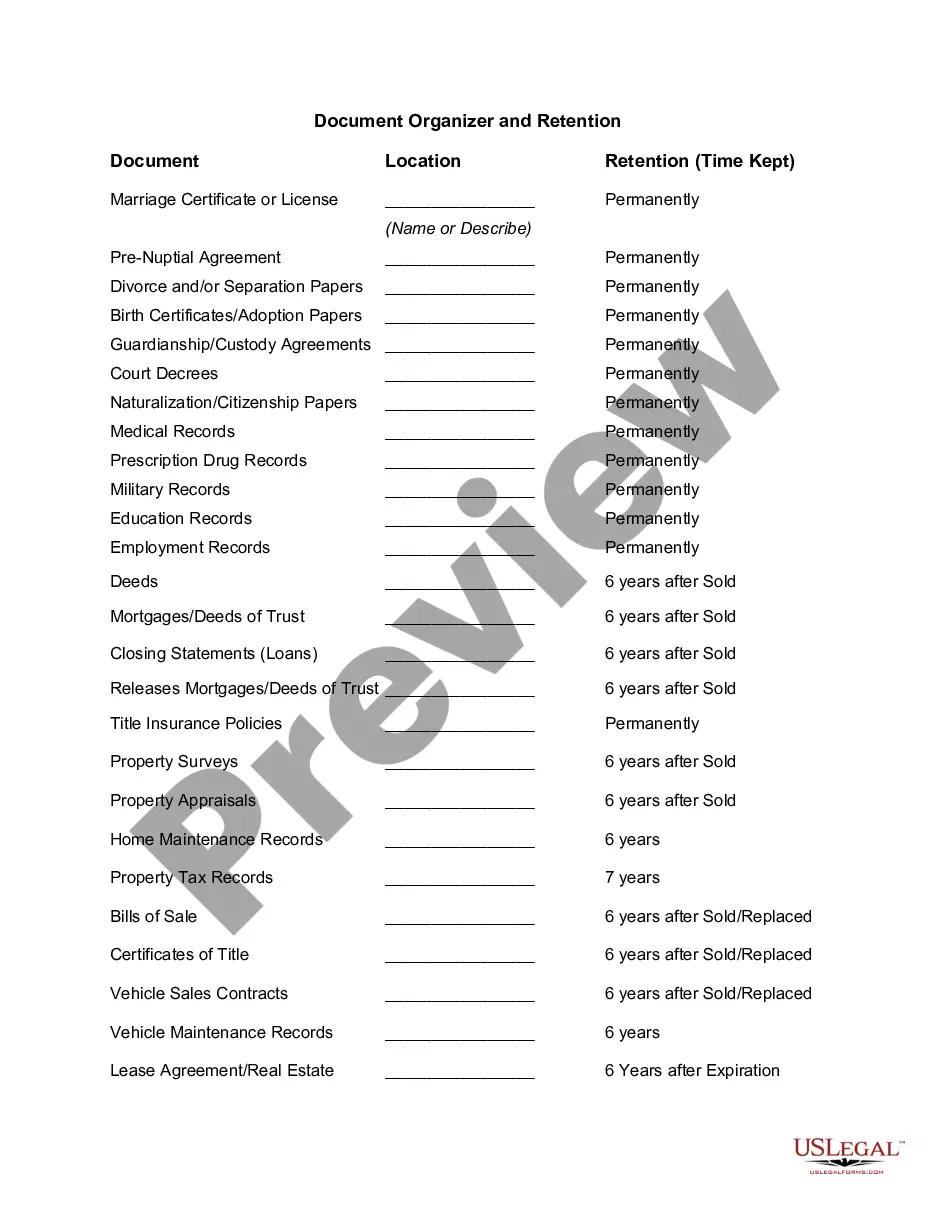
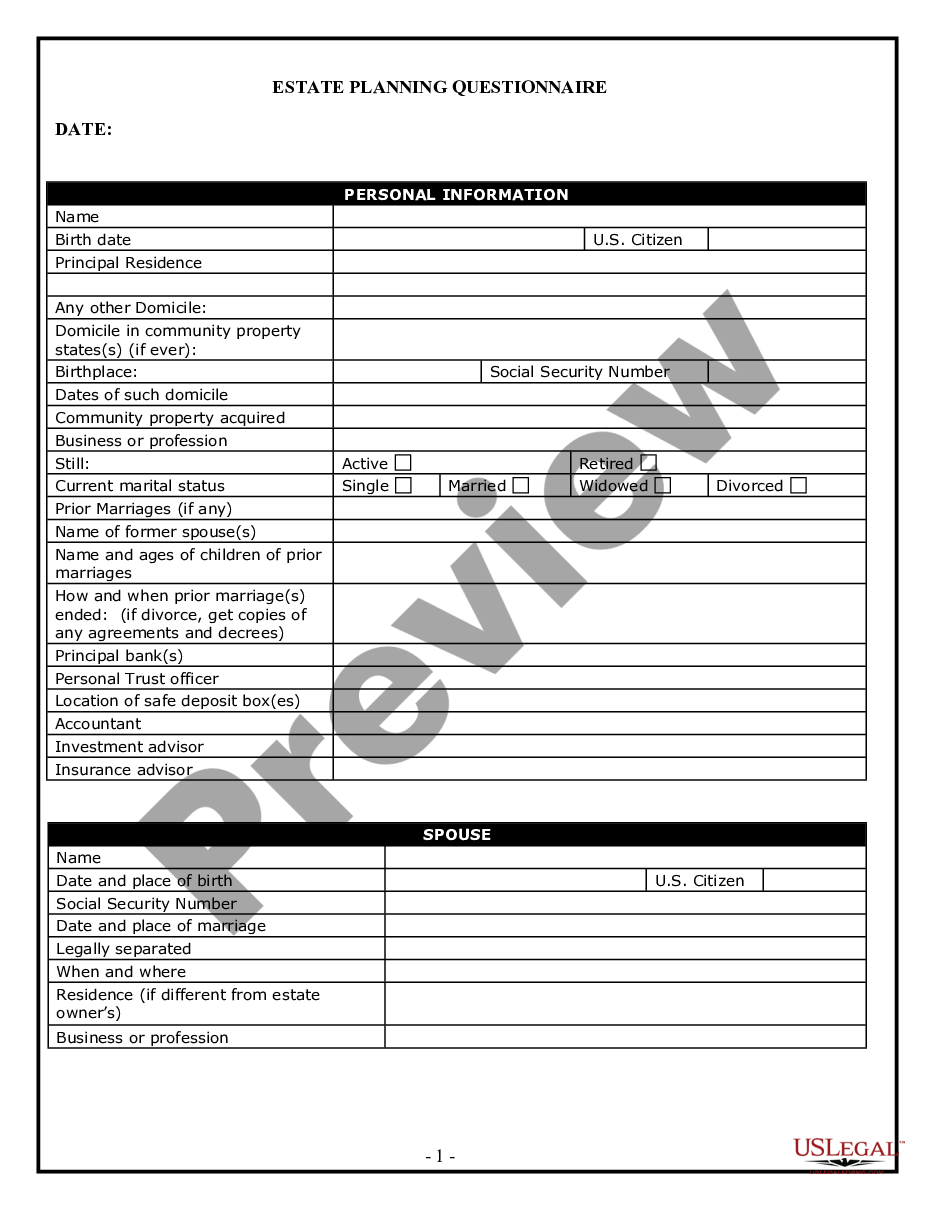

Common use cases
This form package is useful in several scenarios, including:
- When you want to ensure that your assets are distributed according to your wishes after your death.
- If you have recently experienced significant life changes, such as marriage, divorce, or the birth of a child.
- When you are seeking to appoint guardians for your minor children.
- If you need to establish a clear legal framework for your estate to avoid disputes among heirs.
Who this form package is for
- Individuals planning their estates in Illinois.
- Married couples wanting to create joint wills or individual wills.
- Divorced individuals needing to update existing wills.
- Single individuals without children wishing to specify beneficiary designations.
How to prepare this document
- Review the included forms to understand their purpose and requirements.
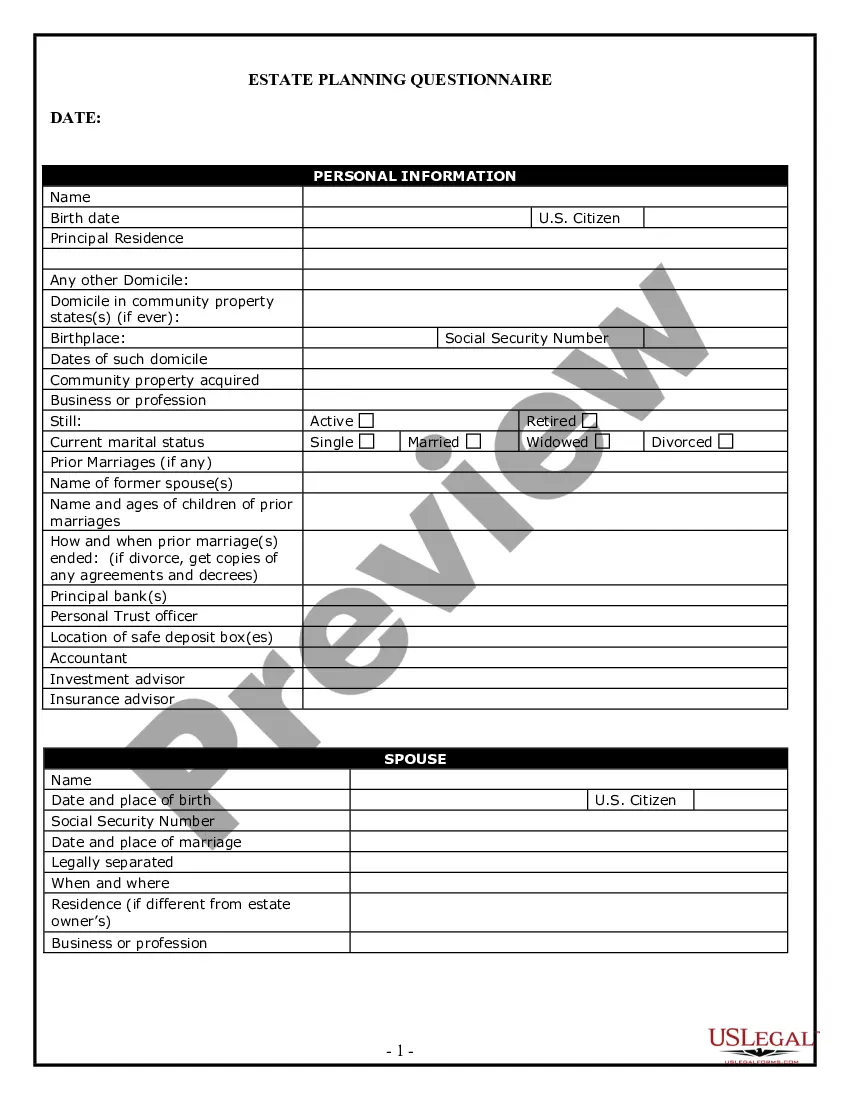
- Complete the Estate Planning Questionnaire to provide necessary details about your assets and wishes.
- Fill out the Personal Planning Information and Document Inventory Worksheets to organize your important information.
- Select your preferred Last Will and Testament form and customize it to reflect your wishes.
- Sign the completed forms in the presence of the required witnesses.
Notarization guidance for this package
Notarization is required for one or more forms in this package. US Legal Forms provides secure online notarization powered by Notarize, allowing you to complete the process through a verified video call.
Get your form ready online
Our built-in tools help you complete, sign, share, and store your documents in one place.
Make edits, fill in missing information, and update formatting in US Legal Forms—just like you would in MS Word.
Download a copy, print it, send it by email, or mail it via USPS—whatever works best for your next step.
Sign and collect signatures with our SignNow integration. Send to multiple recipients, set reminders, and more. Go Premium to unlock E-Sign.
If this form requires notarization, complete it online through a secure video call—no need to meet a notary in person or wait for an appointment.
We protect your documents and personal data by following strict security and privacy standards.

Make edits, fill in missing information, and update formatting in US Legal Forms—just like you would in MS Word.

Download a copy, print it, send it by email, or mail it via USPS—whatever works best for your next step.

Sign and collect signatures with our SignNow integration. Send to multiple recipients, set reminders, and more. Go Premium to unlock E-Sign.

If this form requires notarization, complete it online through a secure video call—no need to meet a notary in person or wait for an appointment.

We protect your documents and personal data by following strict security and privacy standards.
Common mistakes
- Failing to sign the will in front of witnesses, which can invalidate it.
- Not updating the will after significant life changes, such as marriage or divorce.
- Omitting important assets or not being clear about intentions.
Why complete this package online
- Convenience of downloading documents from home at any time.
- Editability allows you to customize documents to suit your specific needs.
- Reliability of using attorney-drafted forms ensures compliance with state laws.
Legal use & context
- The Last Will and Testament legally dictates how your assets are distributed after death.
- Failure to have a valid will may result in state laws dictating asset distribution, which may not align with your wishes.
Key takeaways
- This package is essential for Illinois residents seeking to create a legally binding will.
- It includes templates and worksheets that facilitate comprehensive estate planning.
- Utilizing professional resources increases the likelihood that your wishes will be honored after your passing.
Looking for another form?






Form popularity
FAQ
A person's last will and testament outlines what to do with possessions, whether the deceased will leave them to another person, a group or donate them to charity, and what happens to other things that they are responsible for, such as custody of dependents and management of accounts and financial interests.
In Illinois, to have a valid will it is required that two or more credible witnesses validate or attest the will. This means each witness must watch the testator (person making his or her will) sign or acknowledge the will, determine the testator is of sound mind, and sign the will in front of the testator.
Bank accounts. Brokerage or investment accounts. Retirement accounts and pension plans. A life insurance policy.
It's very common for a lawyer to charge a flat fee to write a will and other basic estate planning documents. The low end for a simple lawyer-drafted will is around $300. A price of closer to $1,000 is more common, and it's not unusual to find a $1,200 price tag. Lawyers like flat fees for several reasons.
In Illinois, a will must be filed within thirty (30) days of a person's death. Failure to file a will in your possession is a felony under Illinois law.
No, all Wills do not automatically go through the Probate Court system in Illinois after the death of the Testator (the maker of the Will). To the contrary, a majority of estates in Illinois never need a Probate proceeding to be properly administered.
Illinois law requires that upon the death of a Testator his/her Will must be filed with the local Clerk of Court within 30 days of the date of the Testator's death.Once the Executor is able to locate the original Will, he/she can then properly file it with the Clerk of Court of the proper county.
Illinois law states that the will must become public record upon the death of the person. As such, it must be filed with their local county clerk within 30 days of discovery.For instance, your will generally appoints a legal representative, called an executor, to carry out your wishes and oversee the probate process.
Decide what property to include in your will. Decide who will inherit your property. Choose an executor to handle your estate. Choose a guardian for your children. Choose someone to manage children's property. Make your will. Sign your will in front of witnesses.