Illinois Estoppel and Mechanics Lien Affidavit
What this document covers
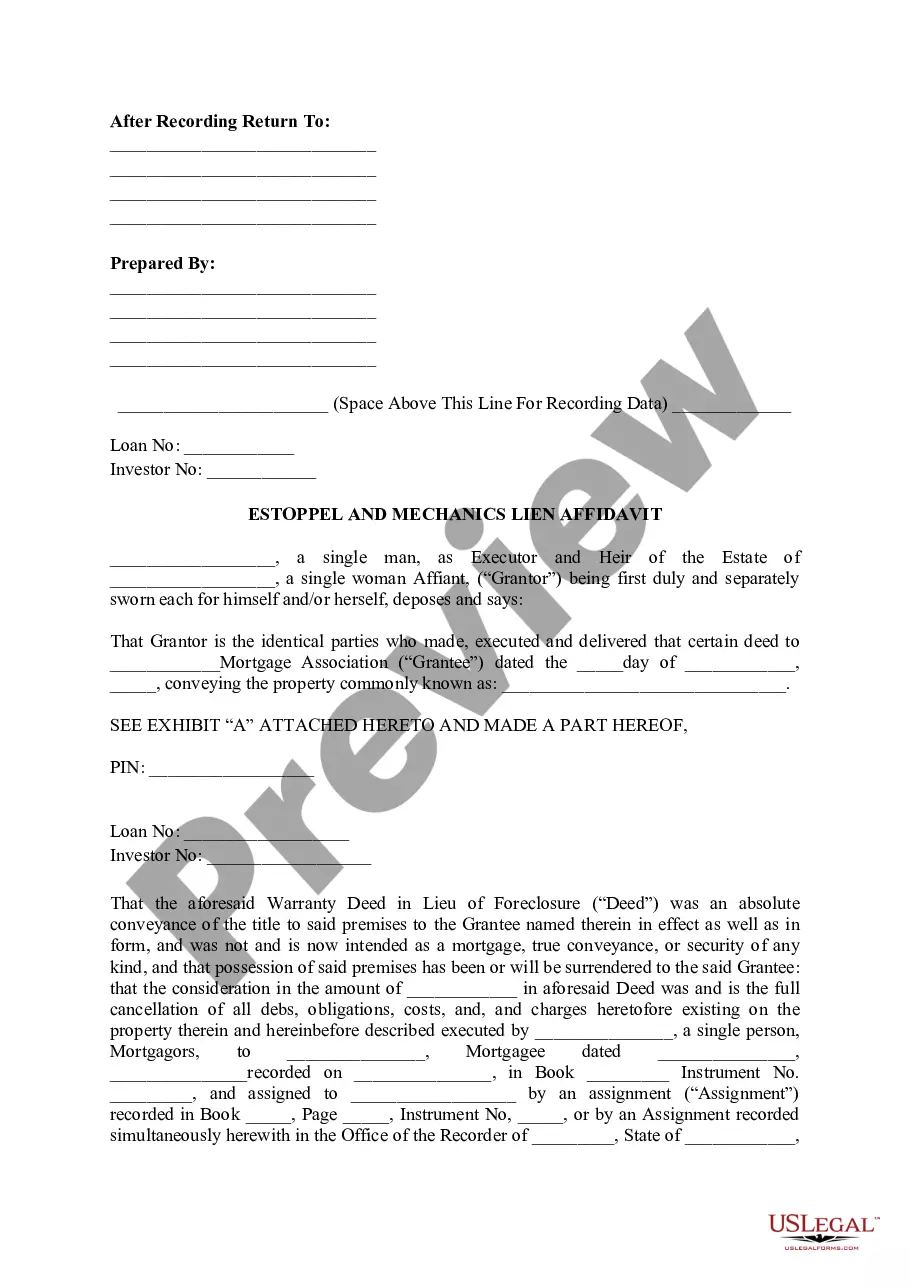
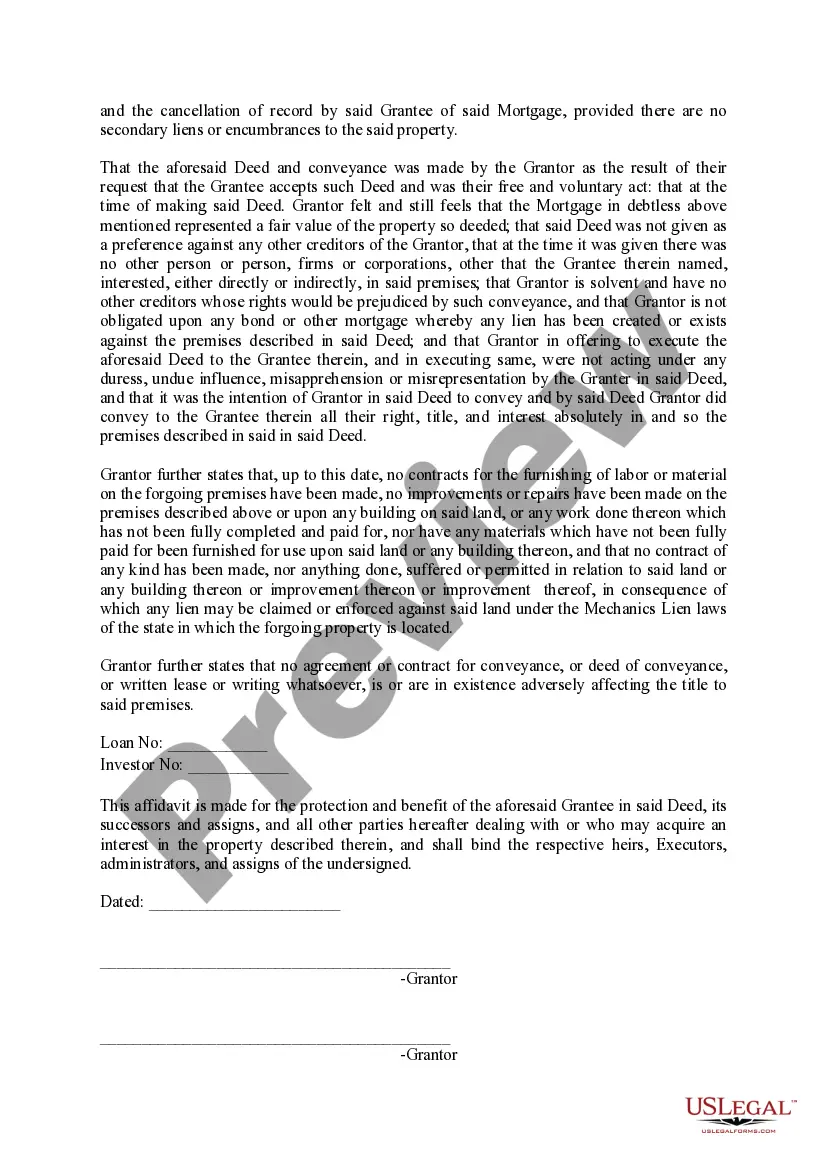
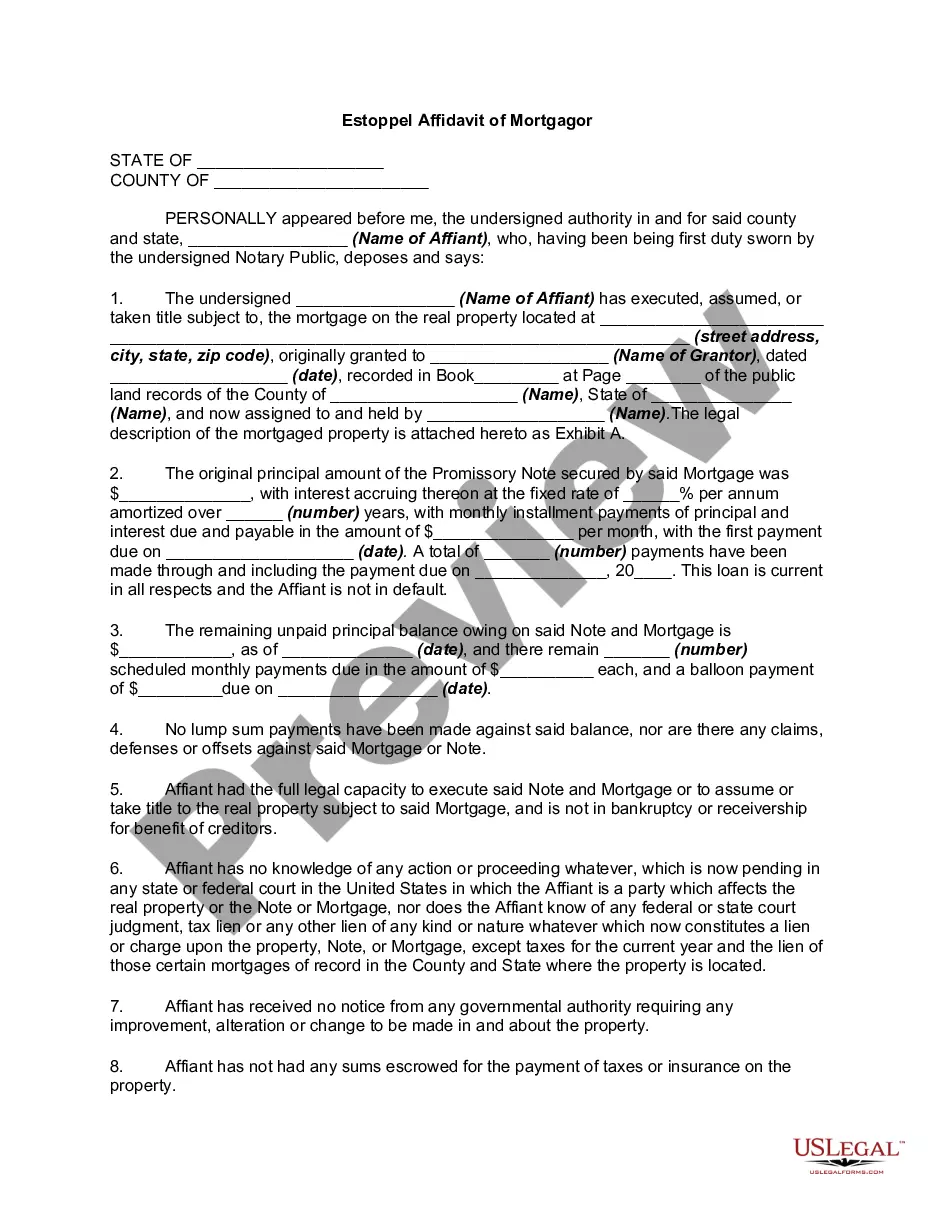
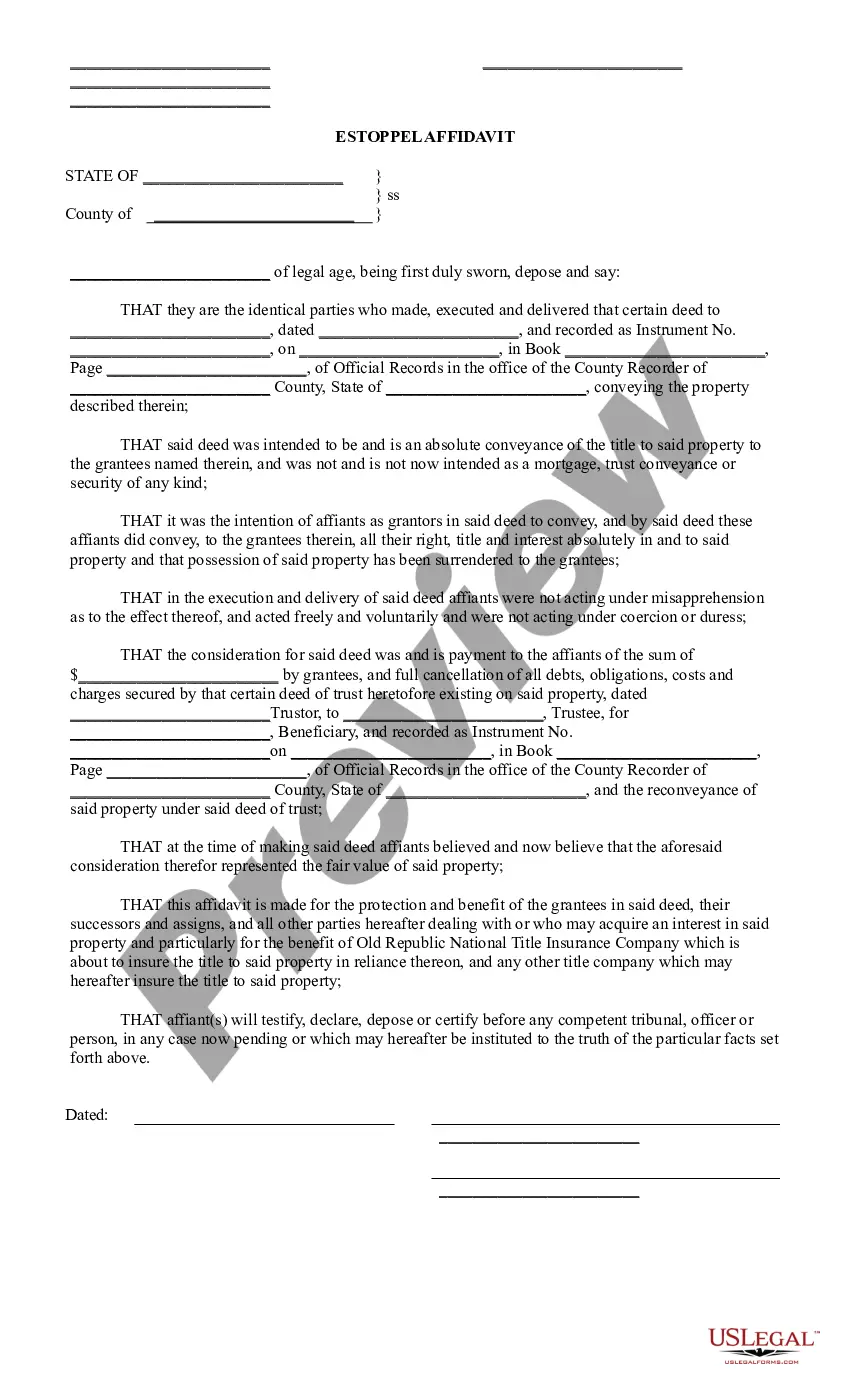
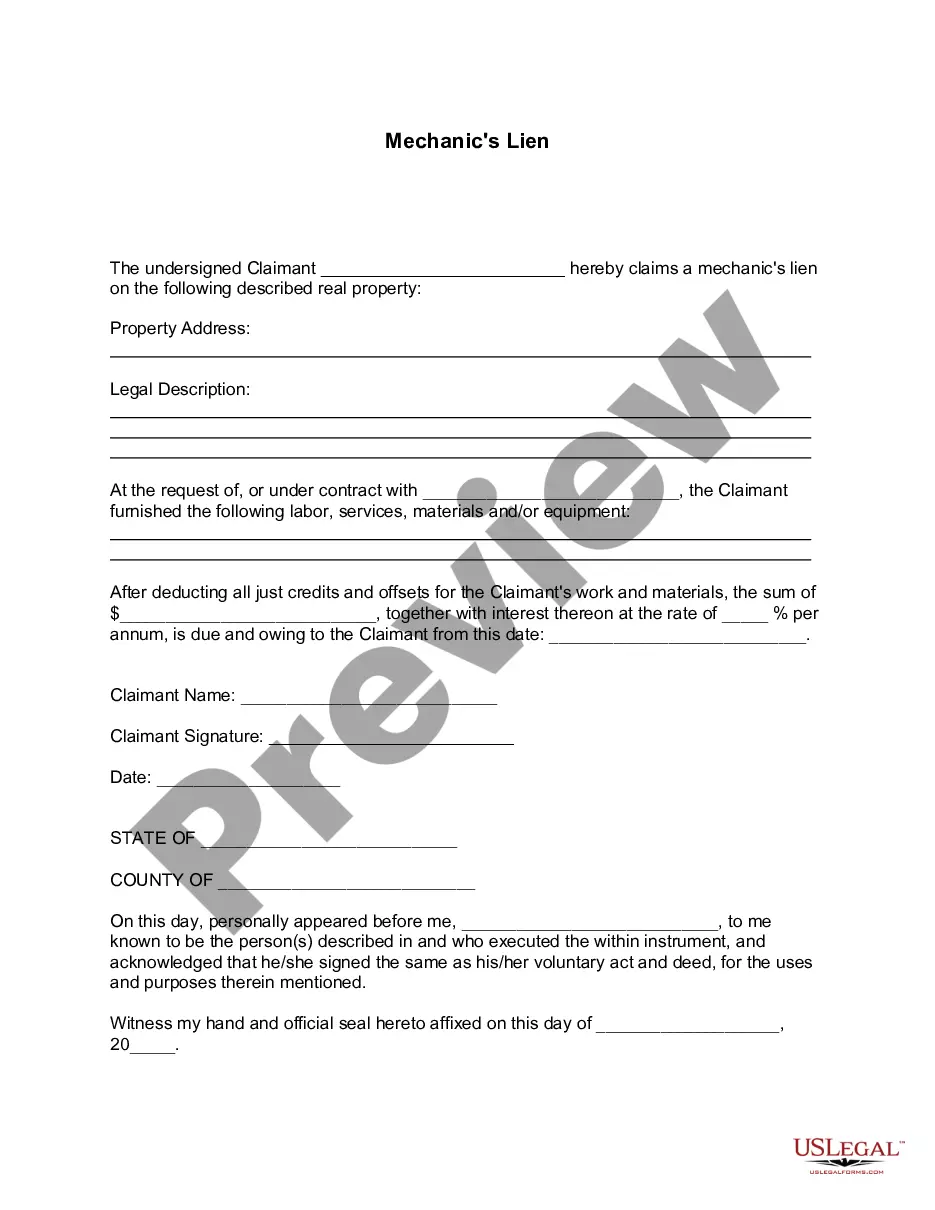
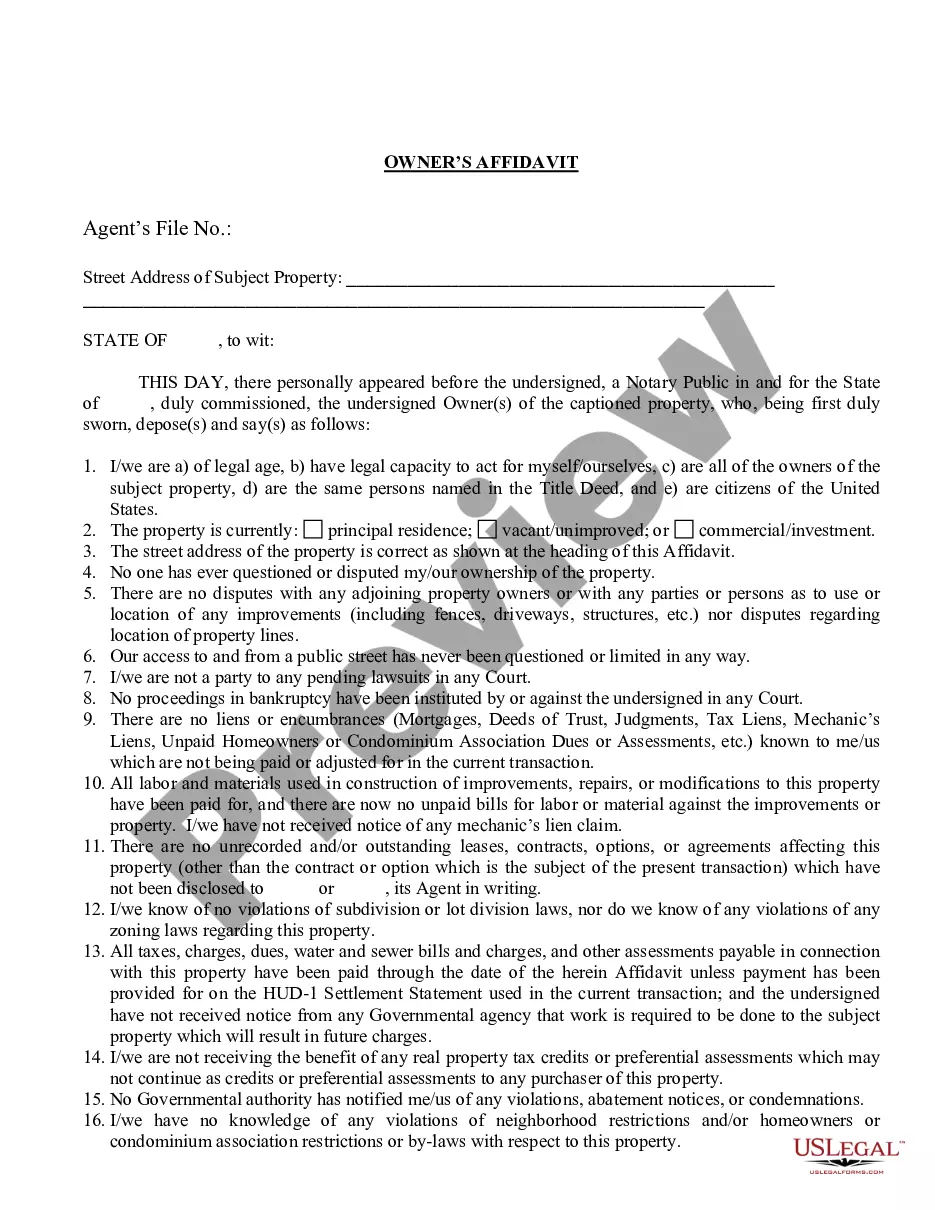
The Estoppel and Mechanics Lien Affidavit is a legal document that affirms the ownership of a property and clears any potential claims that could inhibit the grantee's title. This form is unique in its dual-functionality, addressing both the confirmation of ownership through an estoppel affidavit and ensuring that no mechanics liens are pending, which could jeopardize the property title. It is essential for property transactions to provide security for the grantee against future claims by contractors or suppliers who may have worked on the property.
Key parts of this document
- Identification of the grantor and grantee, including their legal responsibilities.
- A detailed description of the property being conveyed.
- Confirmation that no unpaid debts or liens exist against the property.
- Affidavit statements regarding the voluntary nature of the conveyance.
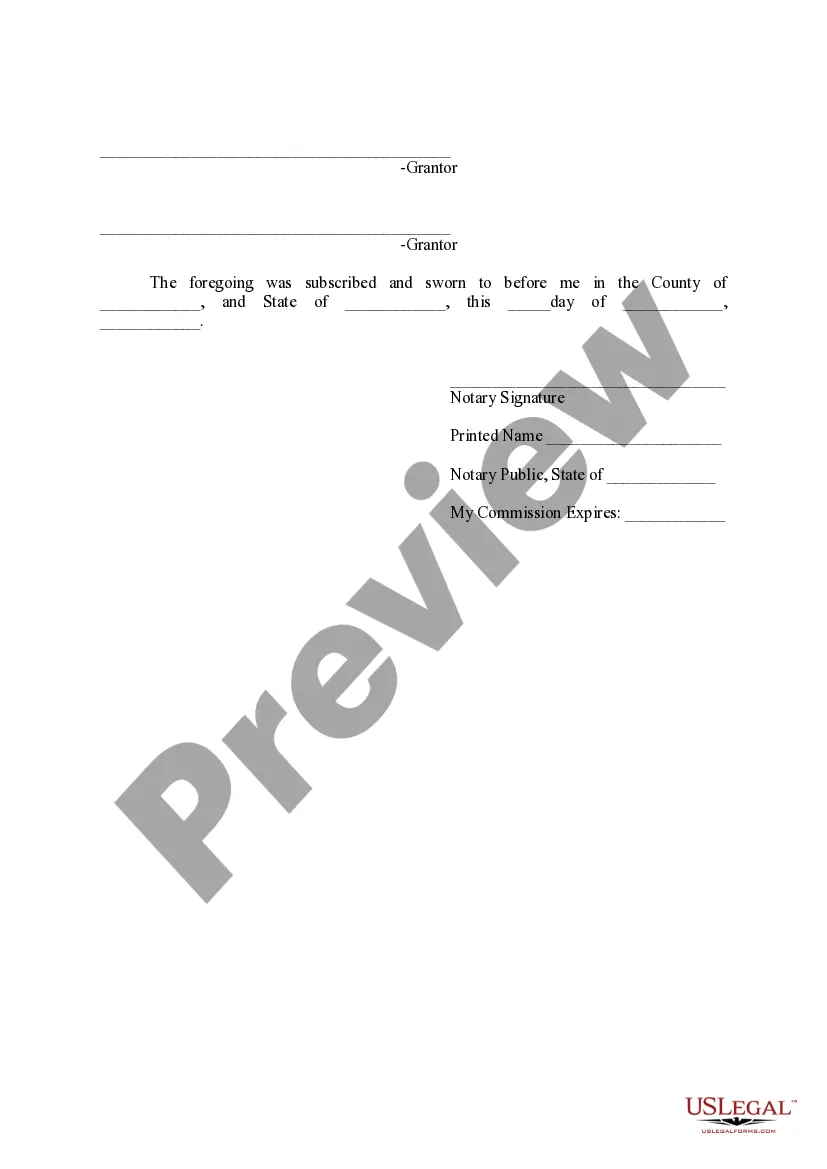
- Signature lines for the grantor(s) and a notary public for verification.
When this form is needed
This form is typically used when a property owner is transferring title to the property to another party and wants to ensure that they are not subject to future liens based on work previously performed on the property. It is commonly used in real estate transactions, especially those involving properties that may have ongoing construction or repair work. If you are a property owner executing a warranty deed, this affidavit helps facilitate a smooth transfer without encumbrances.
Who this form is for
- Property owners transferring their property to a new owner.
- Executors of an estate handling the sale or transfer of real estate.
- Individuals involved in real estate transactions seeking clarity and protection against potential claims.
How to complete this form
- Identify the parties involved by entering the names of the grantor and grantee.
- Specify the property being conveyed, including its legal description.
- Complete information regarding any loan or investor numbers, if applicable.
- Fill in the date the deed was executed and ensure no liens or debt exist on the property.
- Sign the affidavit in the presence of a notary public, who will verify the signatures.
Notarization requirements for this form
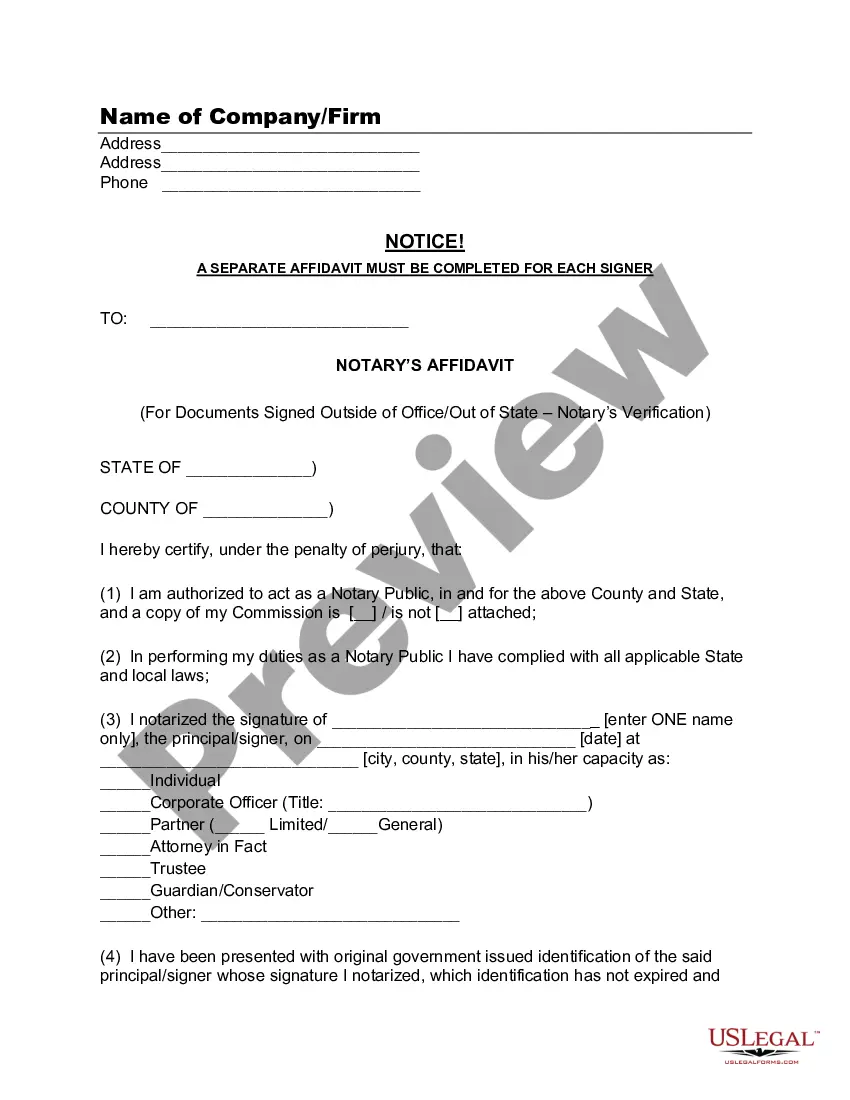
Yes, this form must be notarized to be legally valid. The notarization process confirms the identities of the individuals signing the affidavit and ensures the affidavit's integrity. US Legal Forms provides integrated online notarization, allowing you to handle this requirement securely via a video call at any time.
Get your form ready online
Our built-in tools help you complete, sign, share, and store your documents in one place.
Make edits, fill in missing information, and update formatting in US Legal Forms—just like you would in MS Word.
Download a copy, print it, send it by email, or mail it via USPS—whatever works best for your next step.
Sign and collect signatures with our SignNow integration. Send to multiple recipients, set reminders, and more. Go Premium to unlock E-Sign.
If this form requires notarization, complete it online through a secure video call—no need to meet a notary in person or wait for an appointment.
We protect your documents and personal data by following strict security and privacy standards.

Make edits, fill in missing information, and update formatting in US Legal Forms—just like you would in MS Word.

Download a copy, print it, send it by email, or mail it via USPS—whatever works best for your next step.

Sign and collect signatures with our SignNow integration. Send to multiple recipients, set reminders, and more. Go Premium to unlock E-Sign.

If this form requires notarization, complete it online through a secure video call—no need to meet a notary in person or wait for an appointment.

We protect your documents and personal data by following strict security and privacy standards.
Avoid these common issues
- Failing to provide an accurate legal description of the property.
- Not including all necessary signatures from the grantor(s).
- Omitting information regarding existing liens or debts.
- Not having the affidavit notarized, if required by state law.
Why use this form online
- Convenience of filling out the form from home without needing to visit a lawyer.
- Editability of the document allows for customization as per specific requirements.
- Reliable access to attorney-drafted templates ensures legal compliance.
Legal use & context
- This affidavit serves to protect the grantee from future claims against the property.
- A clear statement regarding existing debts provides assurance to the new owner.
- By using this form, property owners can facilitate smoother sales and transfers, minimizing legal disputes.
Main things to remember
- The Estoppel and Mechanics Lien Affidavit confirms ownership and eliminates potential claims against the property.
- Proper completion and notarization of this form are essential for its validity.
- This form is crucial for ensuring a smooth title transfer in real estate transactions.
Looking for another form?

Form popularity
FAQ
For a lien to be valid, certain conditions must be met, including proving that the work or materials provided improved the property. Additionally, the lien must be filed within the statutory timeframe and comply with local laws. If disputes arise, understanding the role of the Illinois Estoppel and Mechanics Lien Affidavit can be crucial in resolving them effectively. Legal resources can provide necessary guidance.
In order to enforce a lien, the contractor, subcontractor or supplier must file a lawsuit. The deadline to file a lawsuit is two years from the last date work was performed or materials were supplied. A recorded lien is valid for these two years, but a failure to sue within that time frame voids the lien.
The deadline for contractors and subcontractors to file their statement of mechanic's lien is four months (not 120 days) from the last date of work (exclusive of warranty work or other work performed free of charge), or from the last date that materials were supplied to the project.
The process of bonding off a mechanics lien starts after a claimant has filed a mechanics lien. After the claim is made, a general contractor or a property owner can contact a surety bond company to purchase a surety bond that replaces the value of the lien that was filed against the property.
Negotiate with the contractor who placed the lien (the "lienor" to remove it. Obtain a lien bond to discharge the lien, or. File a lawsuit to vacate the lien.
LIen waivers are not required to be notarized. The primary times that a document needs to be notarized is if it is going to be filed with the county recorder or it is an affidavit. There are some other documents that often use notarization, but lien...
While they don't require lien filings to be notarized, they do require a lien filer to jump through various other hoops that, if not done properly, might cause your filing to be rejected or invalidated: Delaware.
Must Illinois lien waivers be notarized?Illinois does not require mechanics lien waivers to be notarized in order to be effective.
Formalize a defense for disputing the amount of the lien. Gather supporting documentation for your rebuttal, depending on the type of lien. Contact the agent representing the creditor to dispute the amount of the claim. Negotiate a payment settlement with the creditor if you cannot pay the amount you owe in full.