Connecticut Application for Appointment of Conservator of a Person or Business
What this document covers
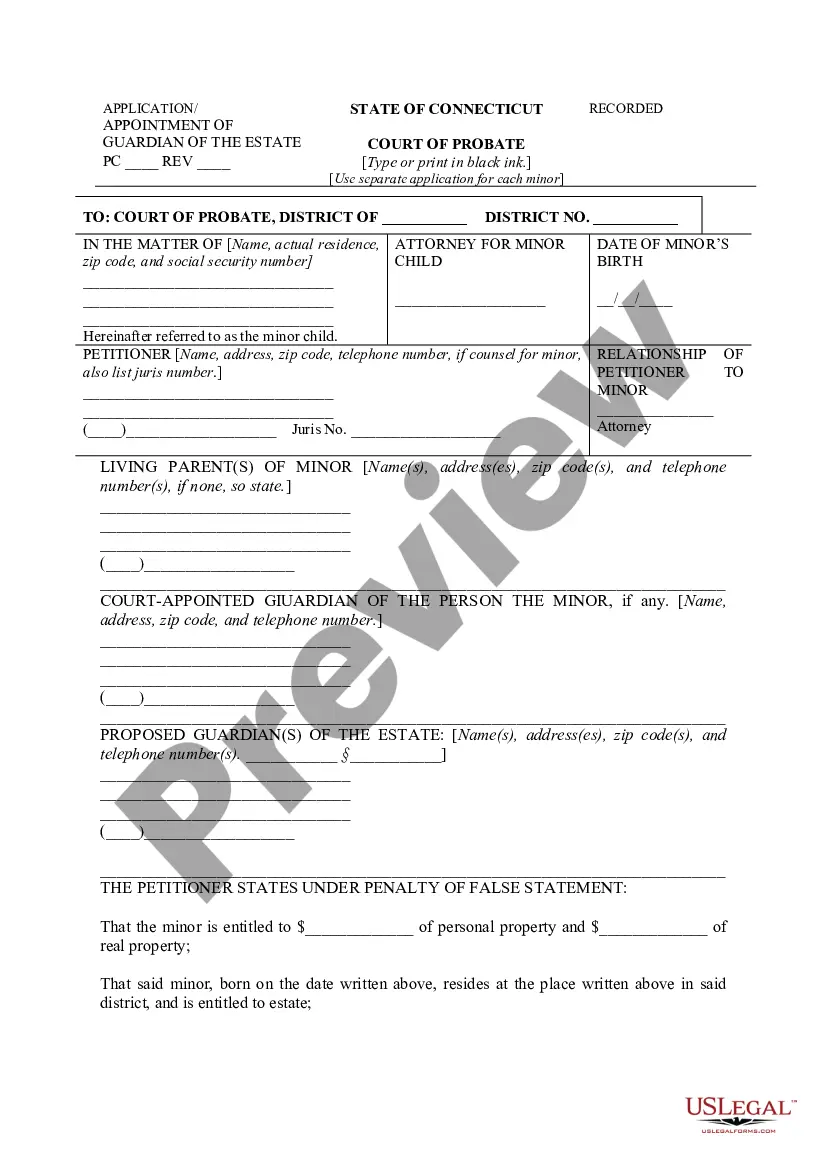
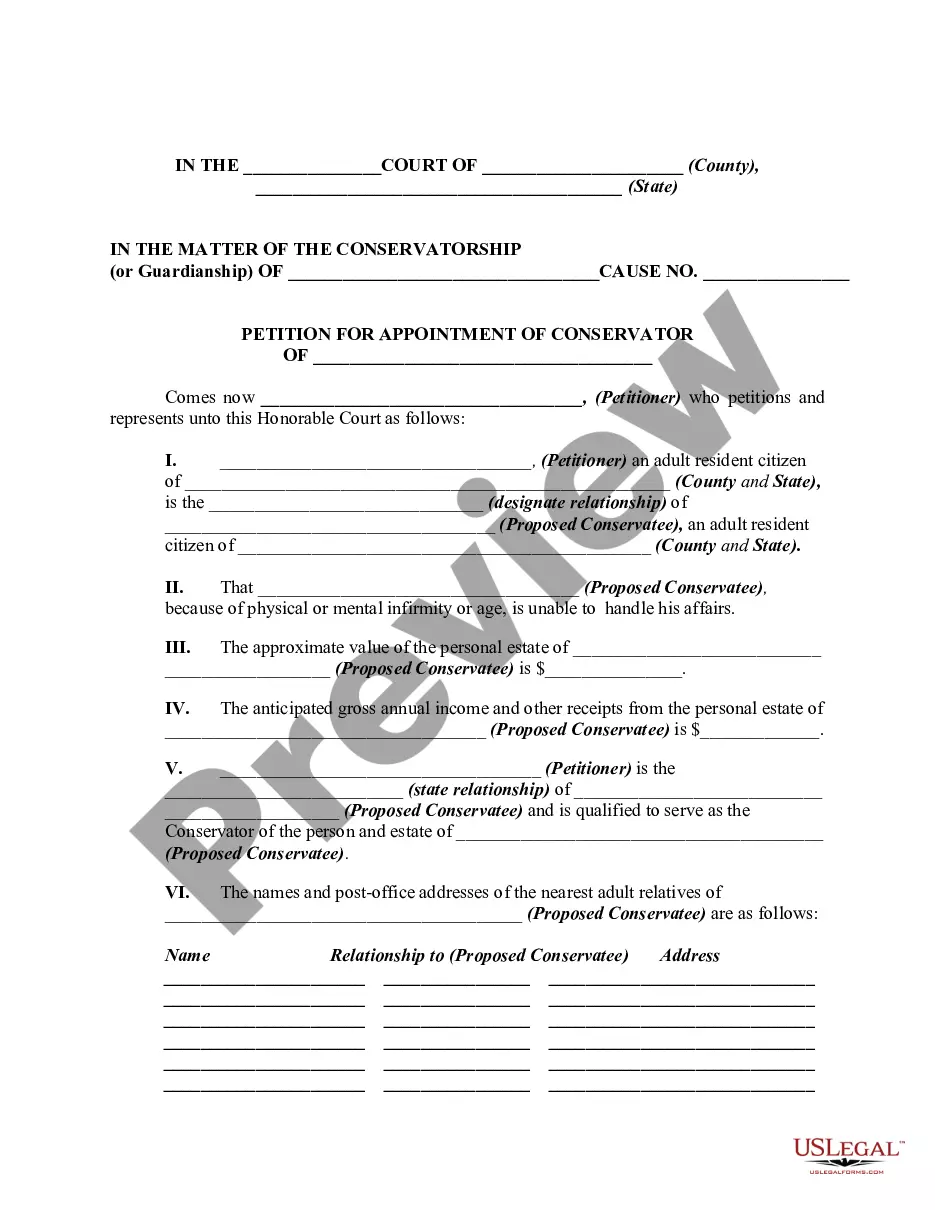
The Application for Appointment of Conservator of a Person or Business is a legal document used to request the appointment of a conservator to manage the affairs of someone who is unable to do so due to mental, emotional, or physical conditions. This form is essential for individuals seeking to protect the interests of a person or business in need of assistance. It differs from other forms, such as a Power of Attorney, because it involves court intervention and is intended for situations where individuals cannot make decisions for themselves.
Main sections of this form
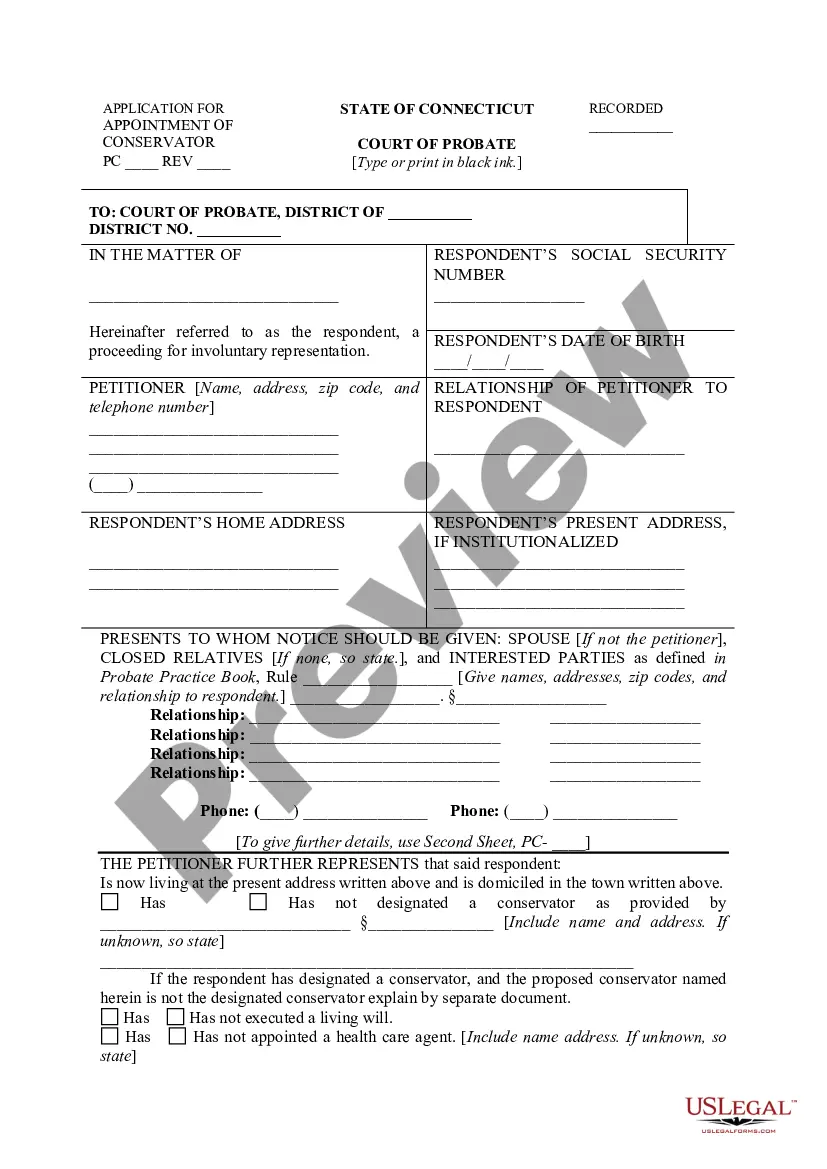
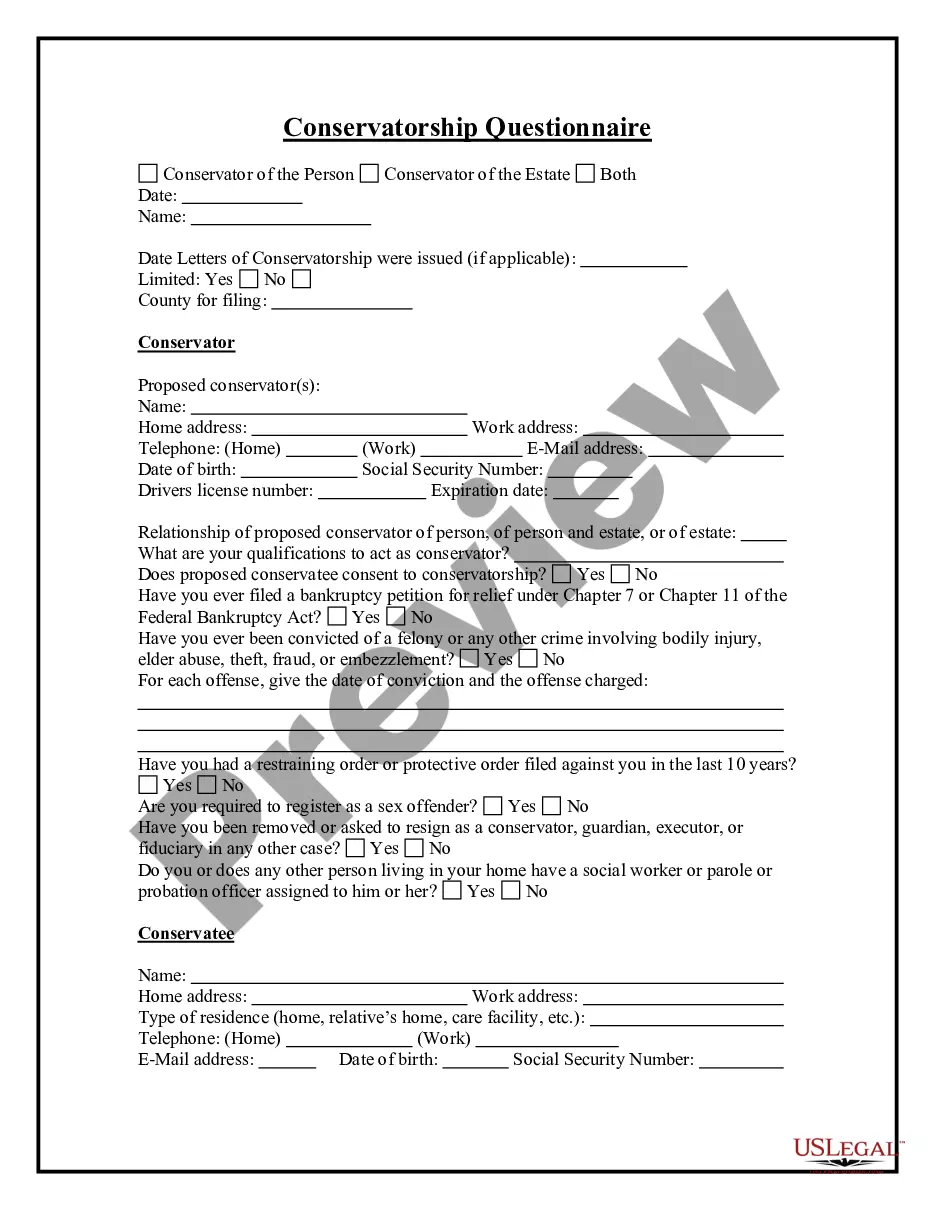
- Petitioner information: Details about the person filing the application.
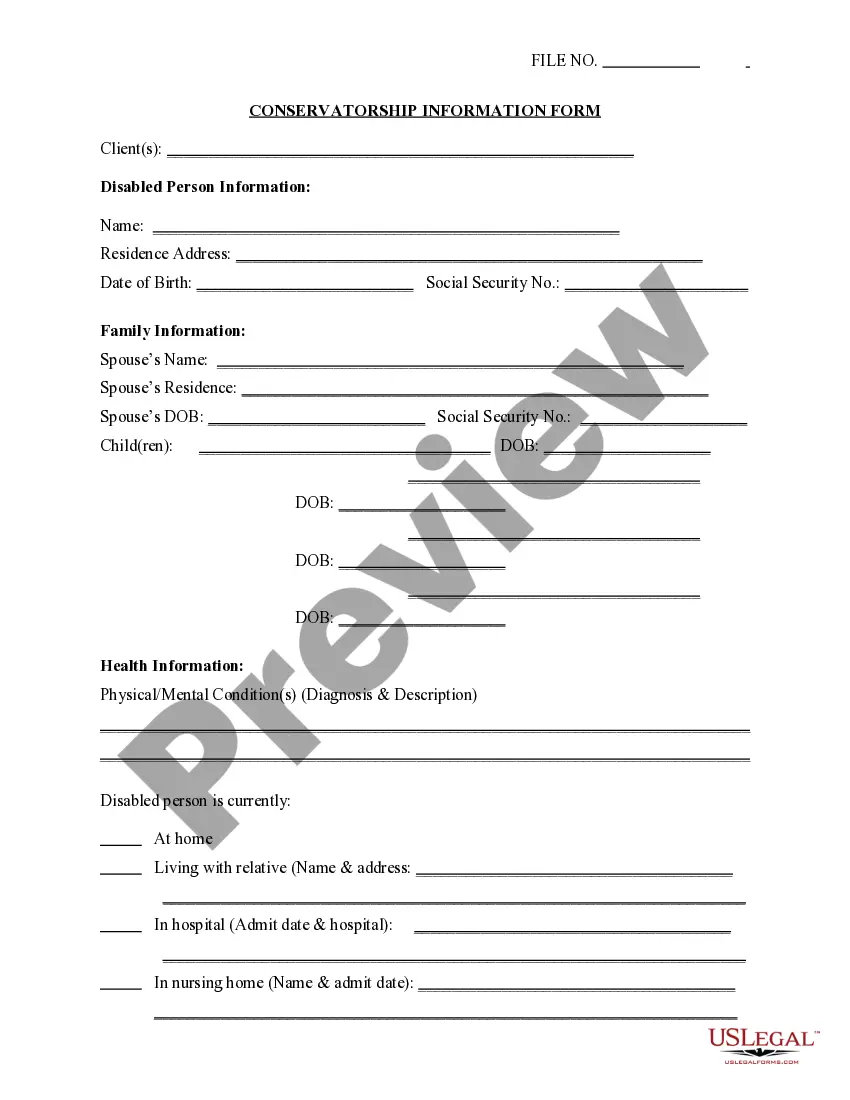
- Respondent information: Information about the individual or business needing a conservator.
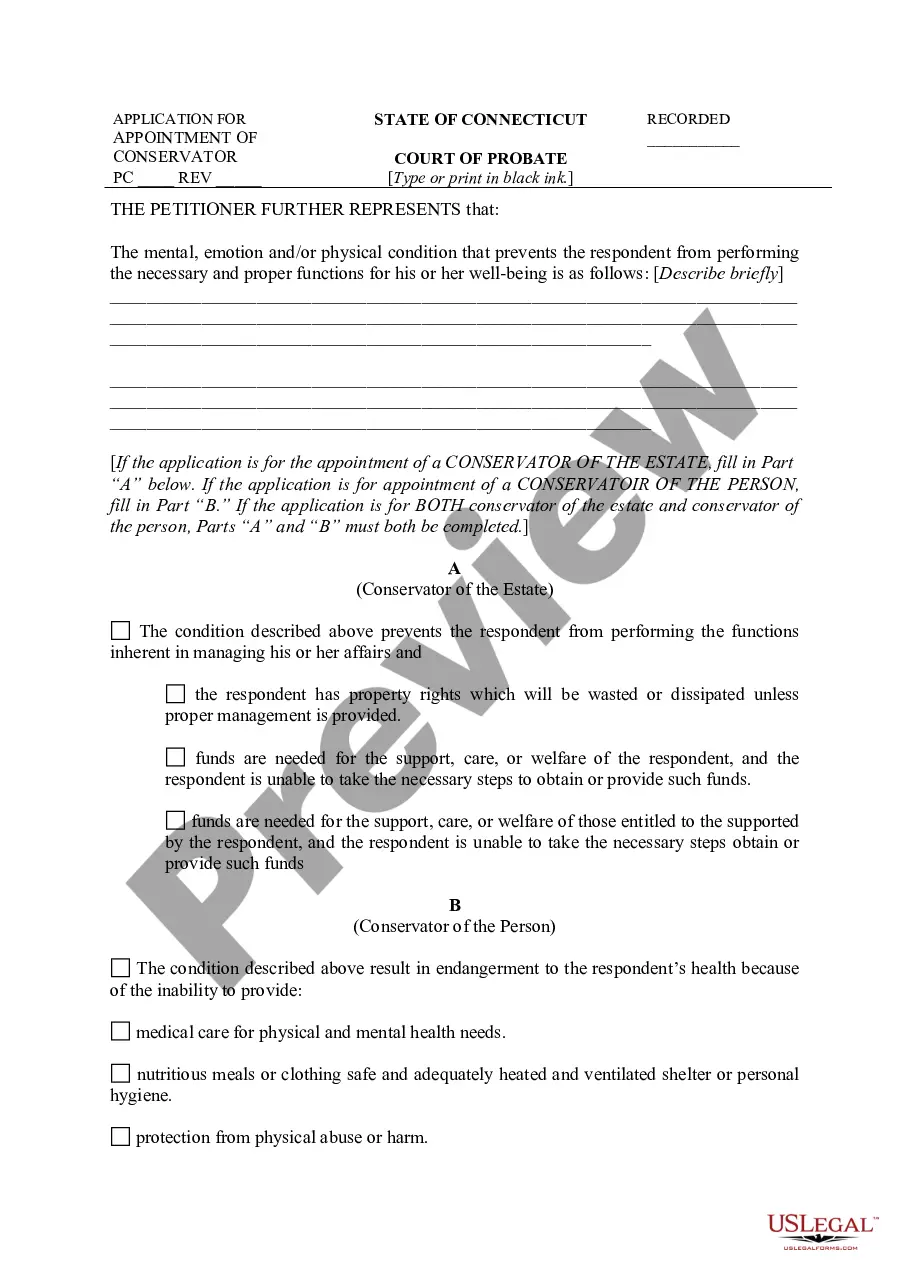
- Description of the condition: An explanation of the mental, emotional, or physical issues preventing the respondent from managing their own affairs.
- Parts A and B: Sections to specify whether the application is for conservatorship of the estate, the person, or both.
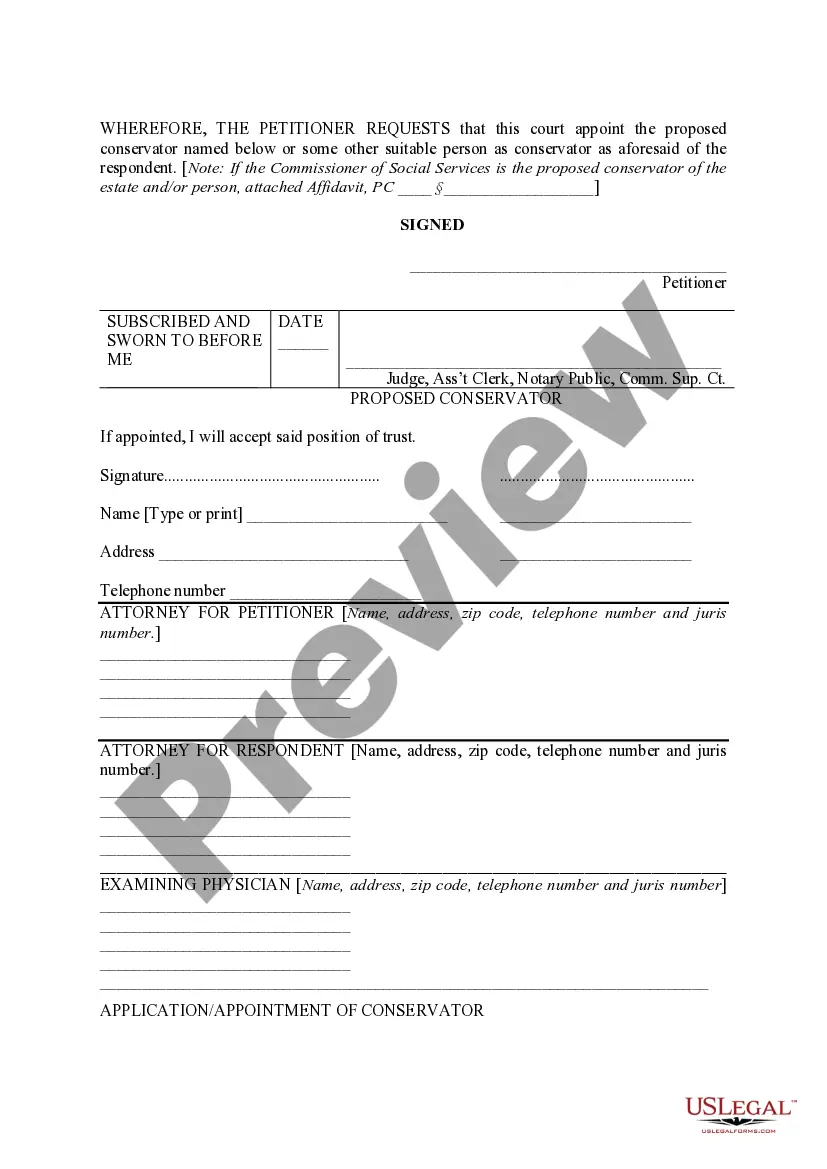
- Signature section: Signed agreement of the proposed conservator and necessary witnesses.
When to use this form
This form should be used when an individual or business is unable to manage their own affairs due to mental, emotional, or physical challenges. Common scenarios include cases where an elderly person is suffering from dementia, someone has suffered a severe injury affecting decision-making capabilities, or a business faces incapacity due to a critical management issue. The form is submitted to the relevant probate court to seek judicial approval for a conservator.
Intended users of this form
- Individuals seeking to appoint a conservator for a family member or close friend.
- Companies needing to protect their interests and appoint a conservator for a business entity.
- Attorneys representing clients in conservatorship cases.
- Advocates or caregivers for individuals unable to act on their own behalf.
How to prepare this document
- Identify the petitioner: Fill in your personal information as the person filing the application.
- Provide respondent details: Enter the name and address of the individual or business requiring conservatorship.
- Describe the condition: Clearly outline the mental, emotional, or physical condition that justifies the need for a conservator.
- Complete Parts A and B: Indicate if you are applying for conservatorship of the estate, the person, or both, and fill in corresponding details.
- Gather signatures: Obtain signatures from the proposed conservator and any witnesses as required.
Notarization guidance
This form does not typically require notarization unless specified by local law. However, local court rules may vary, so it is essential to consult with the probate court where you are filing the application to verify any notarization requirements.
Get your form ready online
Our built-in tools help you complete, sign, share, and store your documents in one place.
Make edits, fill in missing information, and update formatting in US Legal Forms—just like you would in MS Word.
Download a copy, print it, send it by email, or mail it via USPS—whatever works best for your next step.
Sign and collect signatures with our SignNow integration. Send to multiple recipients, set reminders, and more. Go Premium to unlock E-Sign.
If this form requires notarization, complete it online through a secure video call—no need to meet a notary in person or wait for an appointment.
We protect your documents and personal data by following strict security and privacy standards.

Make edits, fill in missing information, and update formatting in US Legal Forms—just like you would in MS Word.

Download a copy, print it, send it by email, or mail it via USPS—whatever works best for your next step.

Sign and collect signatures with our SignNow integration. Send to multiple recipients, set reminders, and more. Go Premium to unlock E-Sign.

If this form requires notarization, complete it online through a secure video call—no need to meet a notary in person or wait for an appointment.

We protect your documents and personal data by following strict security and privacy standards.
Mistakes to watch out for
- Failing to provide a clear and detailed description of the respondent's condition.
- Incorrectly filling out Parts A and B based on the type of conservatorship being requested.
- Not including required signatures or missing other necessary documentation.
- Submitting the application in the wrong probate district.
Benefits of using this form online
- Convenience of downloading and printing the form at any time.
- Editability allows users to fill in information at their own pace.
- Access to templates drafted by licensed attorneys ensures compliance with legal standards.
Legal use & context
- This form has legal authority once filed and approved by the probate court.
- It serves to legally appoint a conservator to manage the affairs of a respondent unable to do so.
- Financial and personal decisions made by a conservator are legally binding and must adhere to the fiduciary duties established by the court.
Quick recap
- The Application for Appointment of Conservator is vital for protecting individuals or businesses unable to manage their affairs.
- Ensure accurate completion of the form to prevent delays in the court process.
- Consult local statutes regarding specific requirements and potential notarization needs.
Looking for another form?

Form popularity
FAQ
Connecticut recognizes two primary types of conservatorship: conservatorship of the person and conservatorship of the estate. Conservatorship of the person focuses on making decisions for individuals who cannot do so themselves, while conservatorship of the estate involves overseeing financial matters. Understanding these categories will assist you during the Connecticut Application for Appointment of Conservator of a Person or Business.
To apply for a conservatorship in Connecticut, begin by filling out the necessary forms, including the Connecticut Application for Appointment of Conservator of a Person or Business. After gathering required documentation, file your application with the probate court in your district. Seeking guidance from legal professionals can help ensure your application is completed accurately and submitted correctly.
Probate conservatorship is typically used for individuals who cannot manage their personal and financial affairs, while LPS conservatorship applies to individuals deemed mentally ill or disabled, requiring treatment. The processes and regulations surrounding these conservatorships differ significantly, so it's crucial to consult legal resources. Utilizing a service like US Legal Forms can simplify your Connecticut Application for Appointment of Conservator of a Person or Business.
A general conservatorship grants broad authority over a person’s personal and financial decisions, while a limited conservatorship provides specific powers outlined by the court. Limited conservatorships are often suited for individuals who can manage some aspects of their life but need assistance with particular areas. When completing your Connecticut Application for Appointment of Conservator of a Person or Business, ensure you clearly define the scope of authority needed.
In Connecticut, there are two primary types of conservatorships: conservatorship of the person and conservatorship of the estate. The conservatorship of the person involves decisions related to healthcare and living arrangements, while conservatorship of the estate pertains to financial matters. Understanding these distinctions is essential as you navigate the Connecticut Application for Appointment of Conservator of a Person or Business.
The duration to obtain conservatorship in Connecticut varies based on several factors, including the complexity of your case and the court's schedule. Generally, it may take several months from the time you submit your Connecticut Application for Appointment of Conservator of a Person or Business until you secure a decision. It is advisable to be prepared for a potential waiting period, so start your application as soon as possible.
Appointing a conservator means that you designate an individual to make decisions on behalf of someone who is unable to do so due to incapacity. This process ensures that the person's needs are met, whether related to their health or finances. The Connecticut Application for Appointment of Conservator of a Person or Business is the formal step to initiate this process. Utilizing resources like uslegalforms can simplify and expedite your appointment journey.
In Connecticut, the conservator is typically compensated for their services, and the costs are usually taken from the assets or income of the individual under conservatorship. It is vital to discuss payment arrangements upfront to ensure transparency. Additionally, the Connecticut Application for Appointment of Conservator of a Person or Business outlines these aspects, helping you understand what financial responsibilities may arise. Engaging with legal resources can clarify any uncertainties.
In Connecticut, guardianship typically refers to the care of minors, while conservatorship relates to adults who cannot manage their own affairs. The Connecticut Application for Appointment of Conservator of a Person or Business is specifically designed for adults. Understanding this difference helps clarify responsibilities and rights in care management. For tailored guidance, consulting legal resources can simplify your choices.
To file for a conservatorship in Connecticut, you need to complete the Connecticut Application for Appointment of Conservator of a Person or Business. This involves gathering necessary documents, such as medical evaluations of the person needing assistance. Once completed, you file your application with the appropriate court. It's a good idea to consult with a legal expert or use platforms like uslegalforms to ensure accuracy in your application process.