Illinois Quit Claim Deed in Trust
Overview of this form
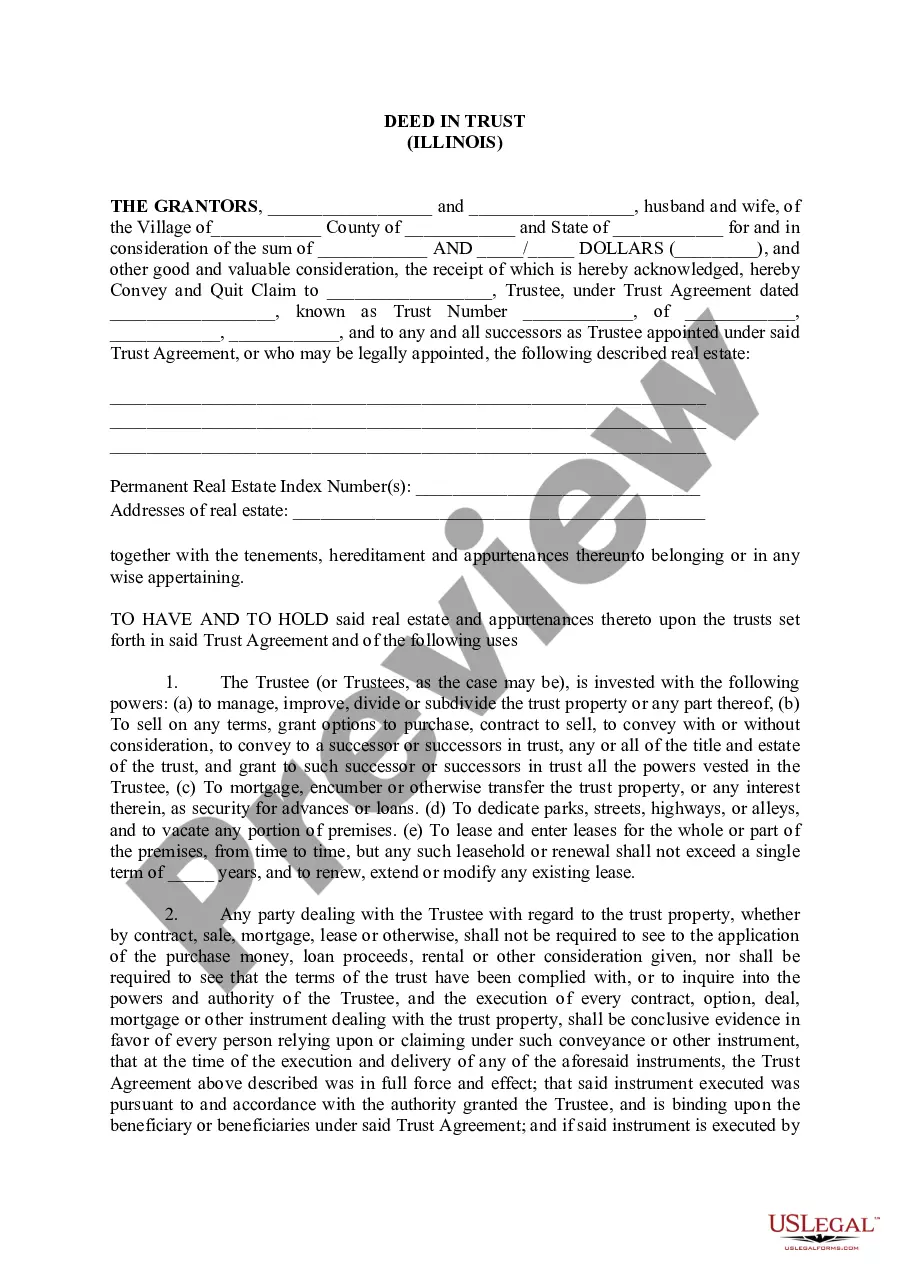
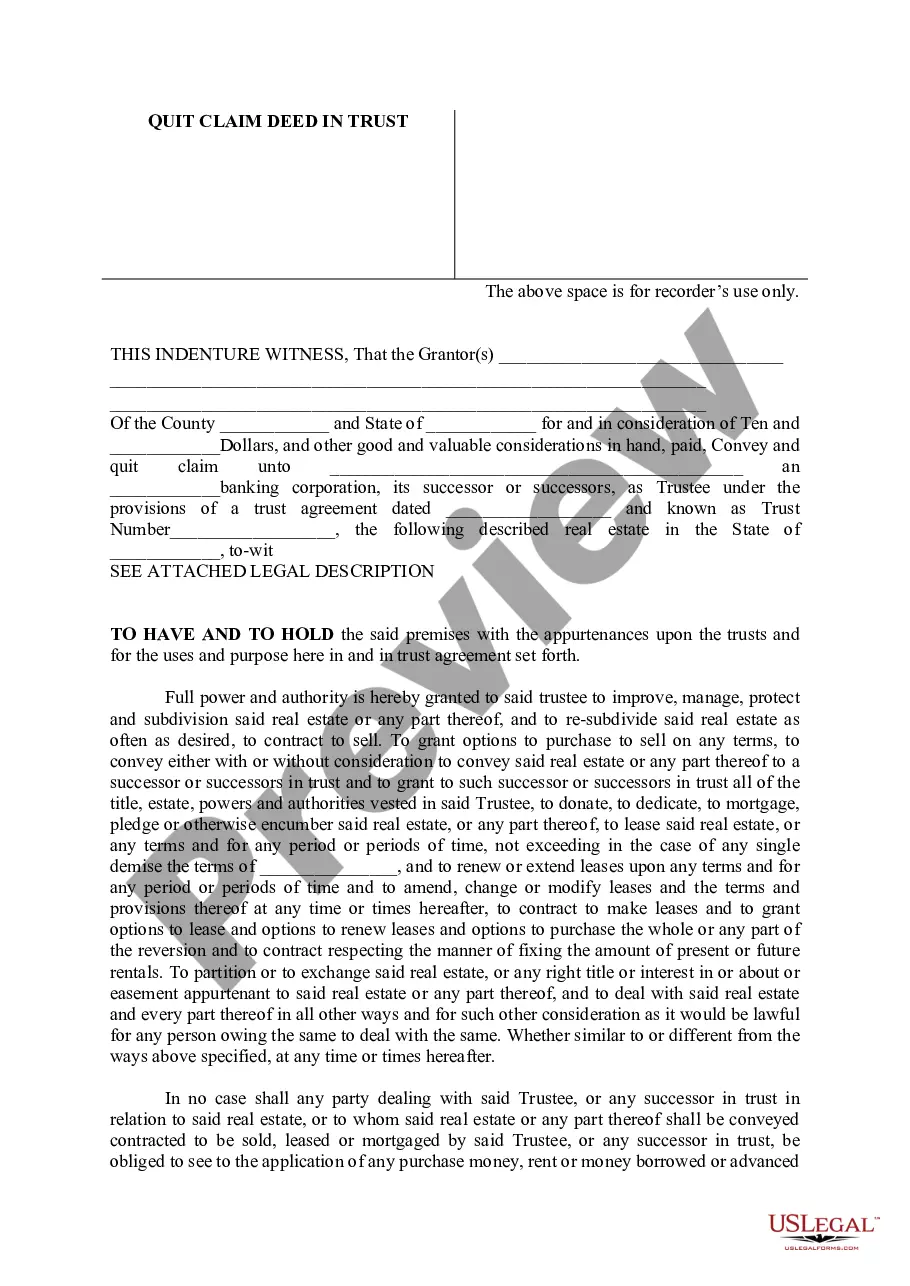
The Quit Claim Deed in Trust is a legal document used to transfer property from one or more individuals, typically a married couple, to a trust. This form effectively conveys ownership of real estate without any guarantees about the title, distinguishing it from other types of deeds, such as warranty deeds, which do provide such assurances. The primary purpose of this form is to simplify the process of transferring property into a trust for estate planning or asset protection purposes.
Key parts of this document
- Identifies the grantors (husband and wife) and the grantee (trustee).
- Details the property being transferred, including a legal description and Permanent Real Estate Index Number.
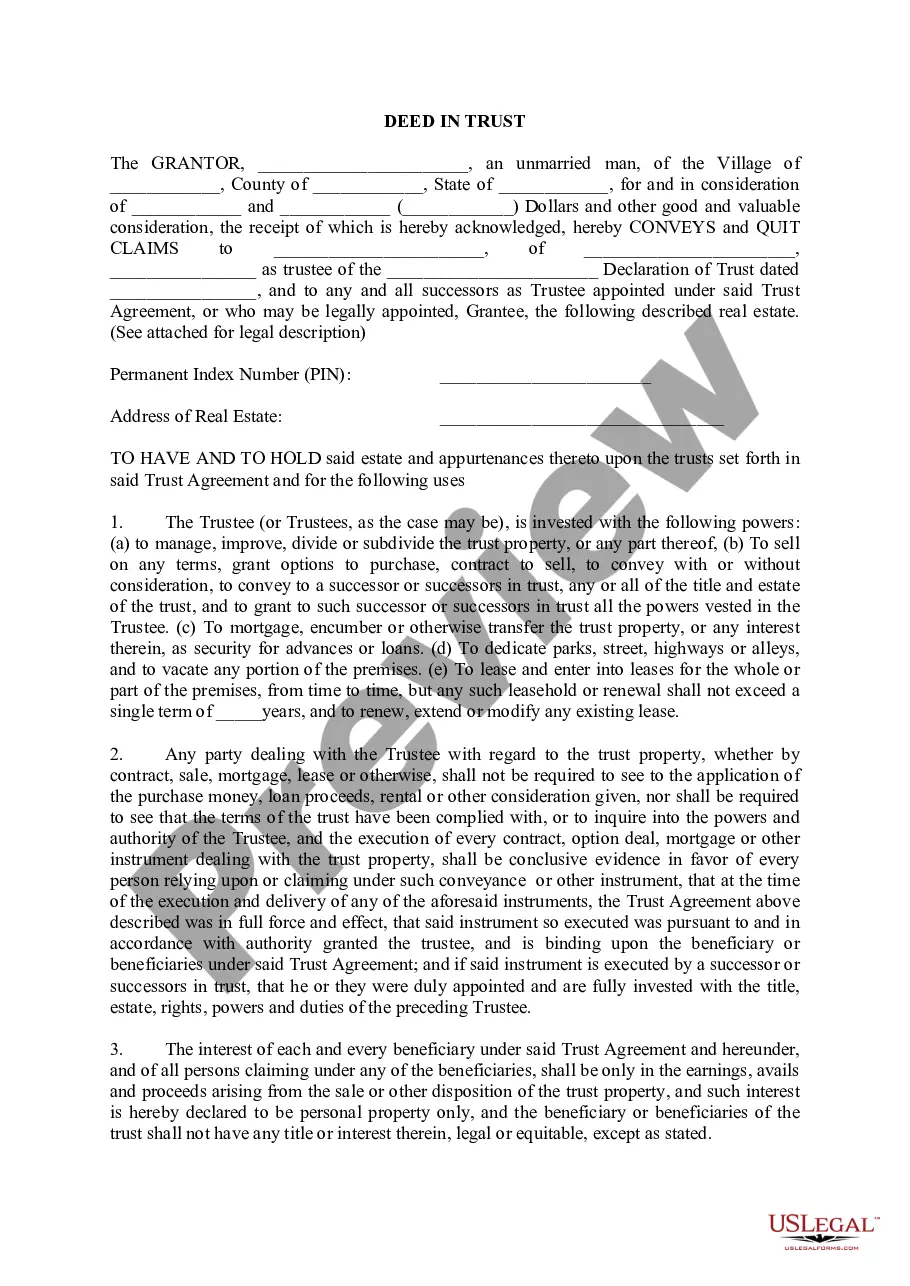
- Outlines the powers granted to the trustee regarding property management and disposition.
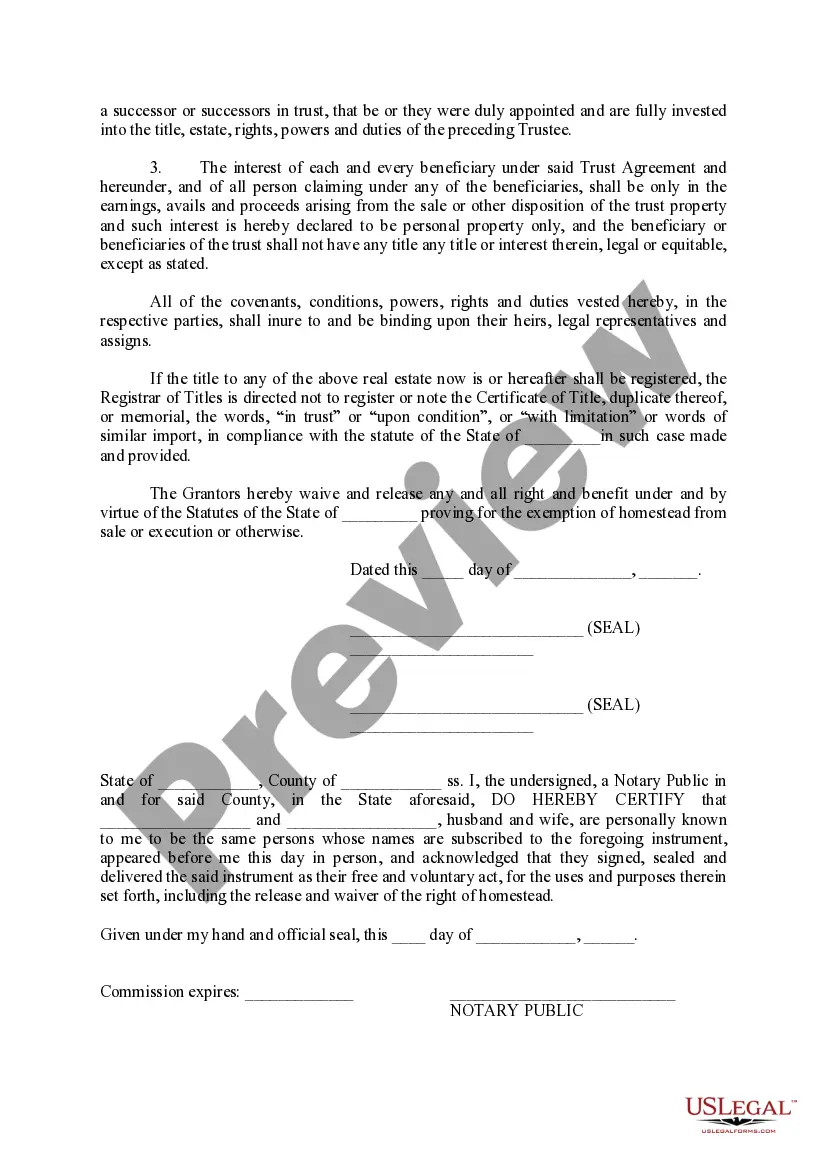
- Includes provisions for beneficiaries and their interests in the trust property.
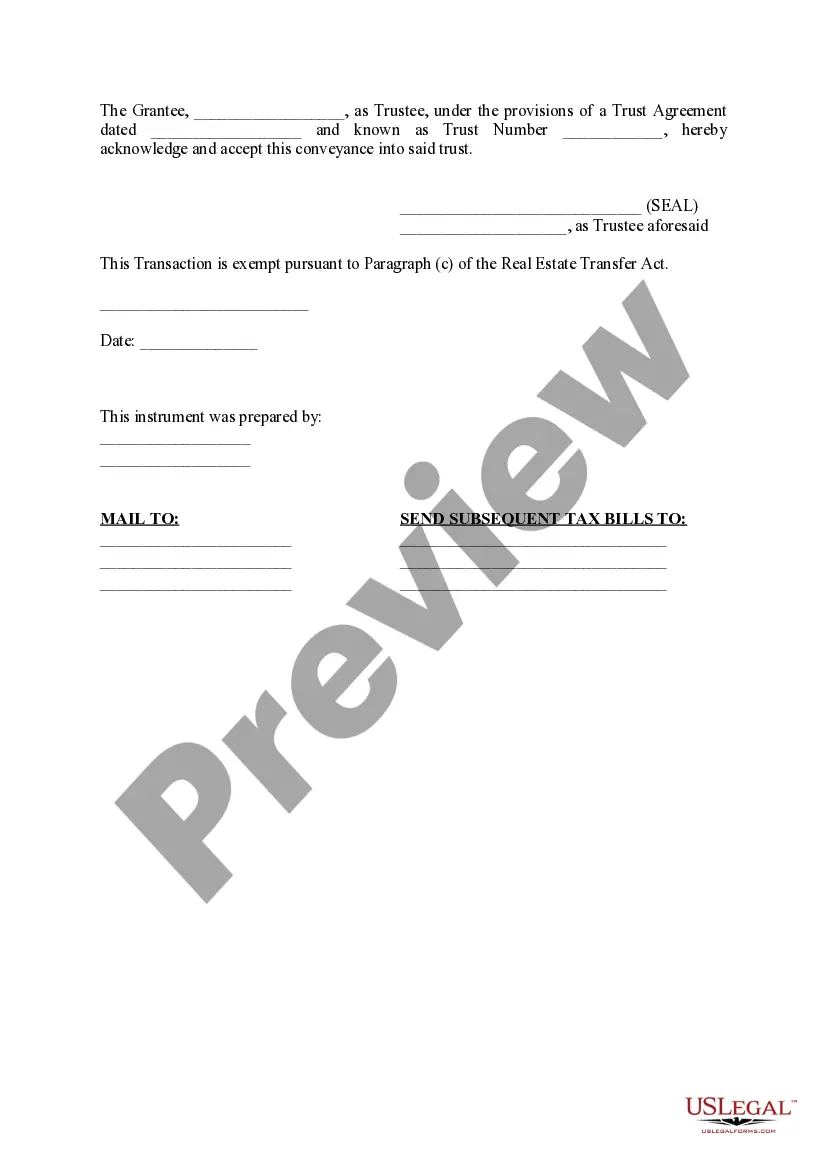
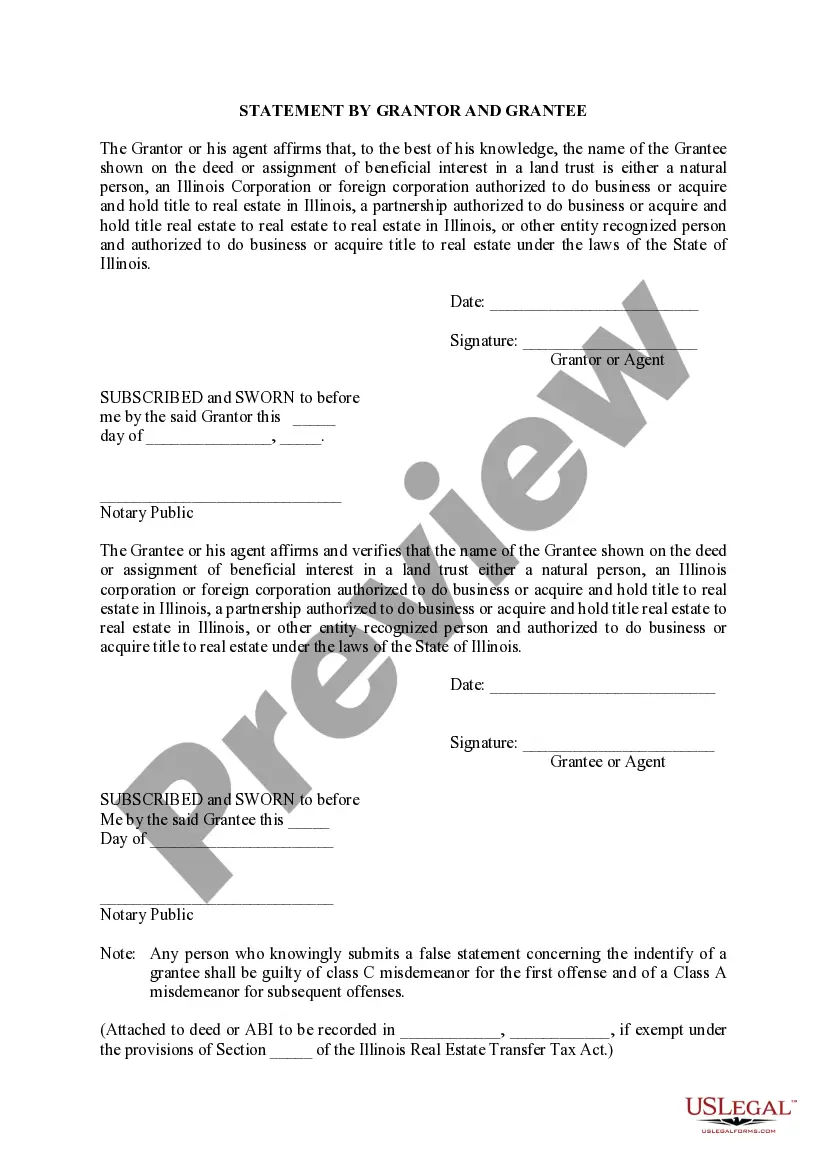
- Contains notary acknowledgment requirements for validating the signatures of the grantors and trustee.


When to use this document
This form is necessary when a husband and wife wish to transfer ownership of their property into a trust, often for estate planning purposes. It is commonly used in scenarios where the couple seeks to manage their assets, protect their wealth, or streamline the process of passing property to heirs upon death.
Who can use this document
- Married couples who want to place their property into a trust.
- Individuals seeking to facilitate estate planning and transfer of assets to beneficiaries.
- Trustees who require documentation to manage trust property on behalf of beneficiaries.
Completing this form step by step
- Identify the grantors by providing their full names and residence information.
- State the name of the trust and identify the trustee, including the trust agreement date.
- Specify the property being transferred, including its legal description and index number.
- Enter the consideration amount for the property being transferred.
- Provide necessary signatures and contact information, including notary public details.
Notarization guidance
Yes, this form must be notarized to be legally valid. The requirements for notarization ensure that the identities of the grantors are verified and prevent potential legal disputes in the future. US Legal Forms offers integrated online notarization services, allowing you to securely notarize your documents through video call, available 24/7.
Get your form ready online
Our built-in tools help you complete, sign, share, and store your documents in one place.
Make edits, fill in missing information, and update formatting in US Legal Forms—just like you would in MS Word.
Download a copy, print it, send it by email, or mail it via USPS—whatever works best for your next step.
Sign and collect signatures with our SignNow integration. Send to multiple recipients, set reminders, and more. Go Premium to unlock E-Sign.
If this form requires notarization, complete it online through a secure video call—no need to meet a notary in person or wait for an appointment.
We protect your documents and personal data by following strict security and privacy standards.

Make edits, fill in missing information, and update formatting in US Legal Forms—just like you would in MS Word.

Download a copy, print it, send it by email, or mail it via USPS—whatever works best for your next step.

Sign and collect signatures with our SignNow integration. Send to multiple recipients, set reminders, and more. Go Premium to unlock E-Sign.

If this form requires notarization, complete it online through a secure video call—no need to meet a notary in person or wait for an appointment.

We protect your documents and personal data by following strict security and privacy standards.
Avoid these common issues
- Failing to accurately describe the property being transferred.
- Not including the necessary signatures from all parties involved.
- Neglecting to have the form notarized when required.
- Omitting important details, such as the trust agreement date or trustee's name.
Benefits of completing this form online
- Convenience of accessing the form anytime and anywhere without the need for in-person meetings.
- Editable templates allow for modifications to fit specific needs.
- Reliable documents prepared according to current legal standards.
Looking for another form?

Form popularity
FAQ
A quitclaim deed in Illinois is often used to transfer property between close family members or trusted friends.A quitclaim deed requires trust on the part of the person receiving the deed, because the person transferring it, also known as the grantor, isn't guaranteeing they actually own the property.
A quitclaim deed can be used to transfer property from a trust, but a Special Warranty Deed seems to be a more common way to do this.
Yes, a quit claim deed supercedes the trust. The only thing that can be done is to file a suit in court challenging the deed as the product of fraud and undue influence. A court action like that will cost thousands of dollars, but might be worth it if the house was owned free and clear.
To preserve legal chain of title, real estate transfers in Illinois must be recorded with the appropriate county recorder of deeds office. Additionally, it is well-settled law that a transfer to a trust is valid without recording a deed if one later uses a pour-over will via probate.
If the quitclaim deed requires the signature of all co-owners, the deed is invalid unless all co-owners have signed it and the deed is then delivered to the grantee.If one individual owns real estate and desires to add a co-owner such as a spouse, a quitclaim deed might be used.