Minnesota Transfer on Death Deed - Individual to Individual

Overview of this form
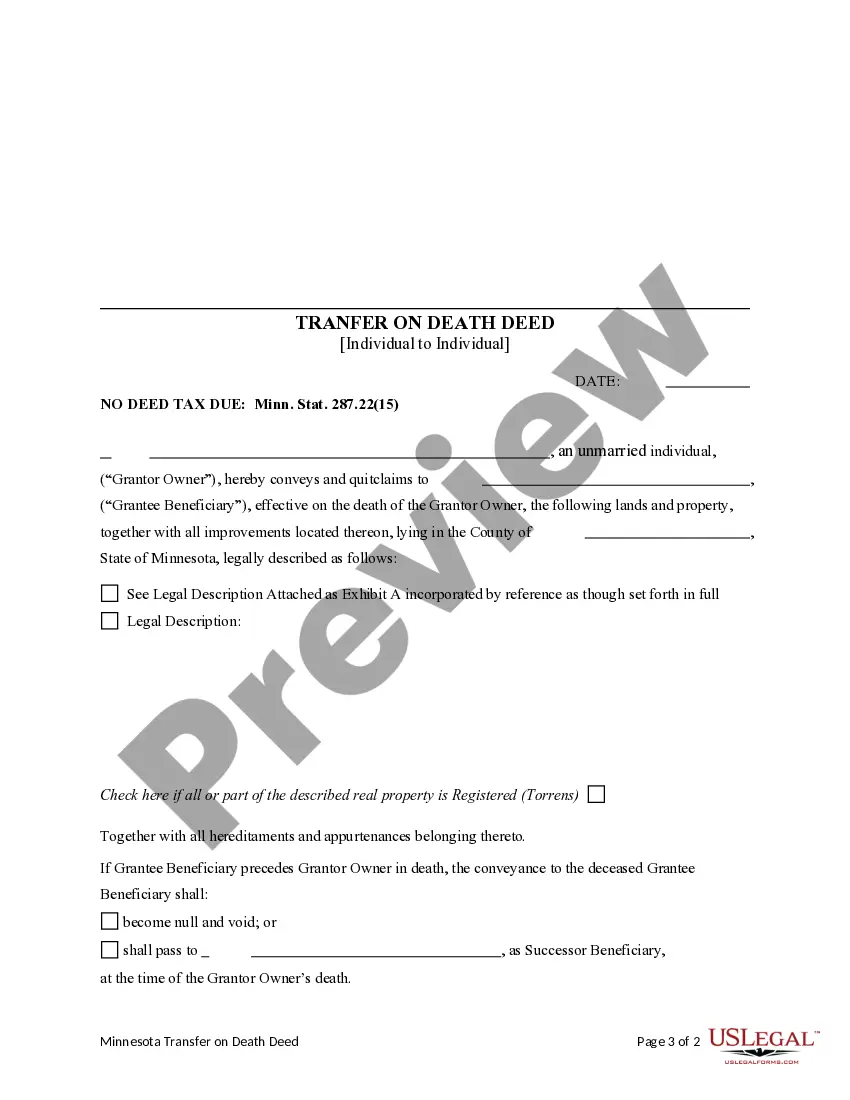
The Transfer on Death Deed - Individual to Individual is a legal document that allows an individual (Grantor Owner) to designate another individual (Grantee Beneficiary) to receive property upon their death. This deed is unique as it allows the Grantor Owner to retain full rights to the property while they are alive, including the ability to sell or encumber it without notifying the Grantee Beneficiary. This form is specific to Minnesota law and ensures a smooth transfer of ownership after the Grantor Owner passes away, provided the deed is properly recorded and the property is not transferred to others prior to death.
Main sections of this form
- Identification of the Grantor Owner and Grantee Beneficiary.
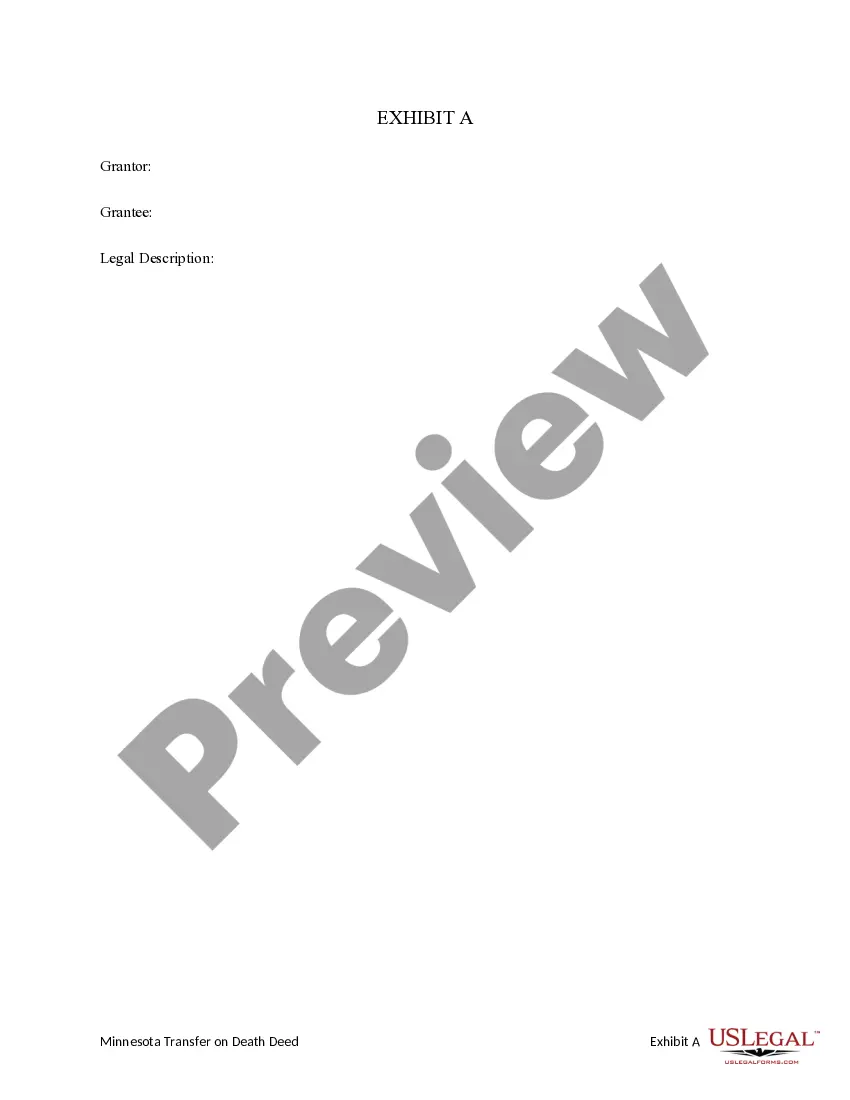
- Legal description of the property being transferred.
- Provisions for a successor beneficiary if the Grantee Beneficiary predeceases the Grantor Owner.
- Retention of rights by the Grantor Owner to manage the property during their lifetime.
- Compliance statement with Minnesota statutes.




When to use this form
This form should be used when an individual wishes to plan for the transfer of real estate to a specific person upon their death. It is particularly useful for homeowners who want to ensure that their property is passed directly to a chosen beneficiary without the complexities of probate, facilitating a smoother transition of ownership. Situations may include estate planning for elderly individuals or anyone wanting to secure their assets for family or friends after their passing.
Who should use this form
This form is intended for:
- Individuals who own property in Minnesota and want to designate a beneficiary.
- Homeowners seeking to avoid probate for their real estate assets.
- Individuals looking to control the future distribution of their property in a straightforward manner.
Completing this form step by step
- Identify the parties involved by entering the full name and address of the Grantor Owner and Grantee Beneficiary.
- Provide a detailed legal description of the property being transferred.
- If applicable, enter the name of a successor beneficiary in case the Grantee Beneficiary dies before the Grantor Owner.
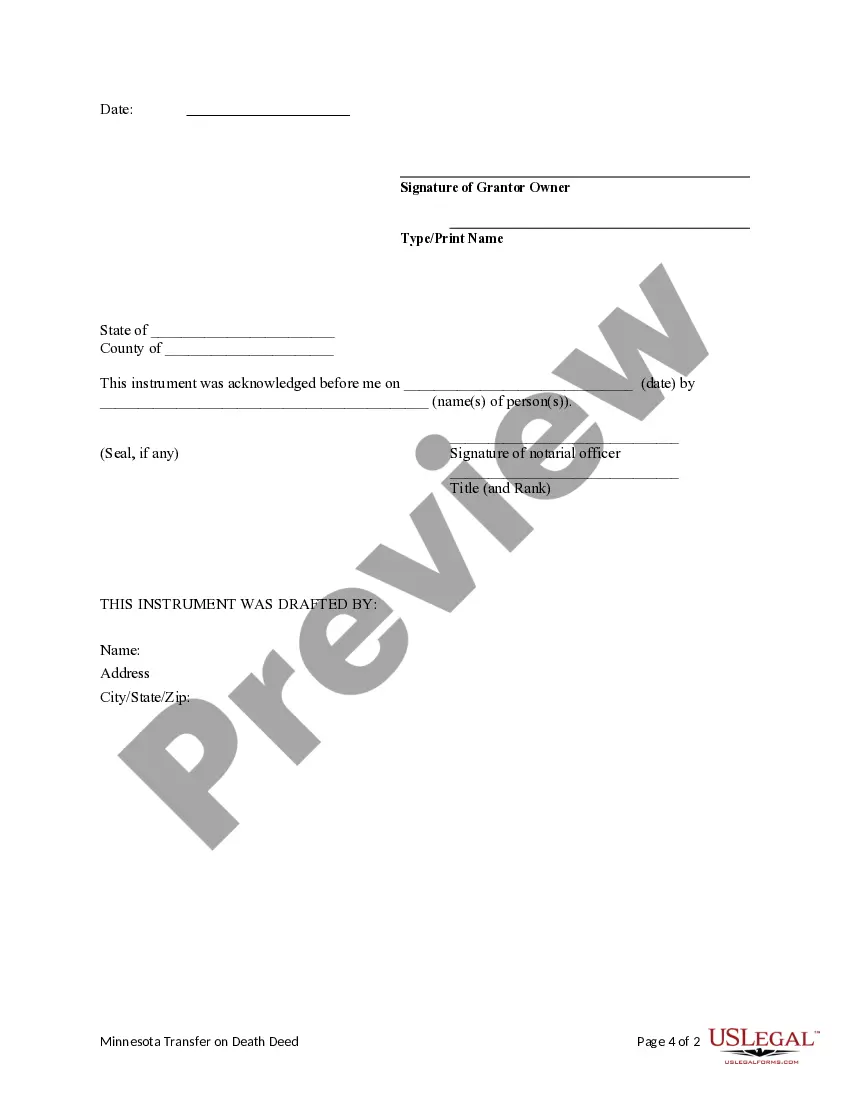
- Sign the deed in front of a notary public to ensure its validity.
- Record the completed deed with the appropriate local government office to formalize the transfer.
Notarization guidance
Yes, this form must be notarized to be legally valid. Notarization ensures that the signatures are verified and the document is executed properly. U.S. Legal Forms offers integrated online notarization, allowing you to complete this process through secure video calls at any time, providing legal equivalence without the need for travel.
Get your form ready online
Our built-in tools help you complete, sign, share, and store your documents in one place.
Make edits, fill in missing information, and update formatting in US Legal Forms—just like you would in MS Word.
Download a copy, print it, send it by email, or mail it via USPS—whatever works best for your next step.
Sign and collect signatures with our SignNow integration. Send to multiple recipients, set reminders, and more. Go Premium to unlock E-Sign.
If this form requires notarization, complete it online through a secure video call—no need to meet a notary in person or wait for an appointment.
We protect your documents and personal data by following strict security and privacy standards.

Make edits, fill in missing information, and update formatting in US Legal Forms—just like you would in MS Word.

Download a copy, print it, send it by email, or mail it via USPS—whatever works best for your next step.

Sign and collect signatures with our SignNow integration. Send to multiple recipients, set reminders, and more. Go Premium to unlock E-Sign.

If this form requires notarization, complete it online through a secure video call—no need to meet a notary in person or wait for an appointment.

We protect your documents and personal data by following strict security and privacy standards.
Mistakes to watch out for
- Failing to properly record the deed after completion.
- Not specifying a successor beneficiary, which may complicate transfers.
- Leaving out critical property details, leading to ambiguity in the deed.
- Not signing the form in the presence of a notary, which may invalidate the deed.
Benefits of using this form online
- Convenient access to legal forms from any device at any time.
- Editable fields that simplify the completion process.
- Reliable templates drafted by licensed attorneys, ensuring compliance with state laws.
Legal use & context
- This form legally facilitates the transfer of property outside of probate.
- It is enforceable as long as the deed is recorded properly before the Grantor Ownerâs death.
- It adheres to Minnesota state law, making it compliant and valid for use in this jurisdiction.
Looking for another form?
Form popularity
FAQ
You do not necessarily need a lawyer to file a Minnesota Transfer on Death Deed - Individual to Individual. This process can often be completed by individuals who understand the requirements and documentation involved. However, consulting a legal expert can provide clarity and ensure that all legal standards are met. Using platforms like US Legal Forms can simplify the process, offering templates and guidance tailored for the Minnesota Transfer on Death Deed - Individual to Individual.
Yes, Minnesota allows a transfer on death deed, specifically designed for individuals to transfer property to another individual upon their passing. This legal document facilitates a smooth transition of property ownership without the need for probate. By using the Minnesota Transfer on Death Deed - Individual to Individual, you can ensure that your loved ones receive your property directly, which can save time and reduce costs. To create a transfer on death deed, consider utilizing platforms like USLegalForms, which provide easy-to-follow templates and guidance.
Filling out a Minnesota Transfer on Death Deed - Individual to Individual involves several steps. Start by obtaining the correct form from a trusted source like US Legal Forms. Enter the necessary details, including the property description and the beneficiary's information. Don’t forget to sign the deed in front of a notary to make it legally binding.
To transfer ownership of a deceased person's property, you typically need to go through the probate process unless a Minnesota Transfer on Death Deed - Individual to Individual is in place. If a transfer on death deed exists, you can file it with the county recorder to transfer ownership directly to the beneficiary. This process helps avoid lengthy probate and simplifies property transfer.
You do not necessarily need a lawyer to file a Minnesota Transfer on Death Deed - Individual to Individual. However, if you want to avoid mistakes and ensure compliance with state laws, consulting an attorney can be a wise choice. US Legal Forms also offers resources and templates that can simplify the process.
While hiring a lawyer is not required to file a Minnesota Transfer on Death Deed - Individual to Individual, it can be beneficial. A lawyer can help ensure the deed is filled out correctly and meets all legal requirements. If you feel uncertain about the process, seeking legal guidance can provide peace of mind.
To fill out a Minnesota Transfer on Death Deed - Individual to Individual, begin by obtaining the form from a reliable source, like US Legal Forms. Clearly enter the names of the property owner and the beneficiary. Make sure to include a legal description of the property. Finally, sign and date the deed in front of a notary public to ensure it is valid.
You can file a Minnesota Transfer on Death Deed - Individual to Individual at your local county recorder's office. Each Minnesota county has its own office dedicated to property records, making it convenient to submit your deed. It’s important to check with your specific county for any local filing requirements or fees.
While you do not strictly need an attorney to complete a Minnesota Transfer on Death Deed - Individual to Individual, consulting one can provide valuable guidance. An attorney can help ensure that the deed is filled out correctly and complies with state laws. If you prefer, you can also use online platforms like US Legal Forms to access forms and instructions.
Yes, a Minnesota Transfer on Death Deed - Individual to Individual allows the property to transfer directly to the designated beneficiary upon your death, thus avoiding probate. This means your heirs can inherit the property without the lengthy and often costly probate process. It simplifies the transfer of property and provides peace of mind.