NQO Agreement
What is this form?
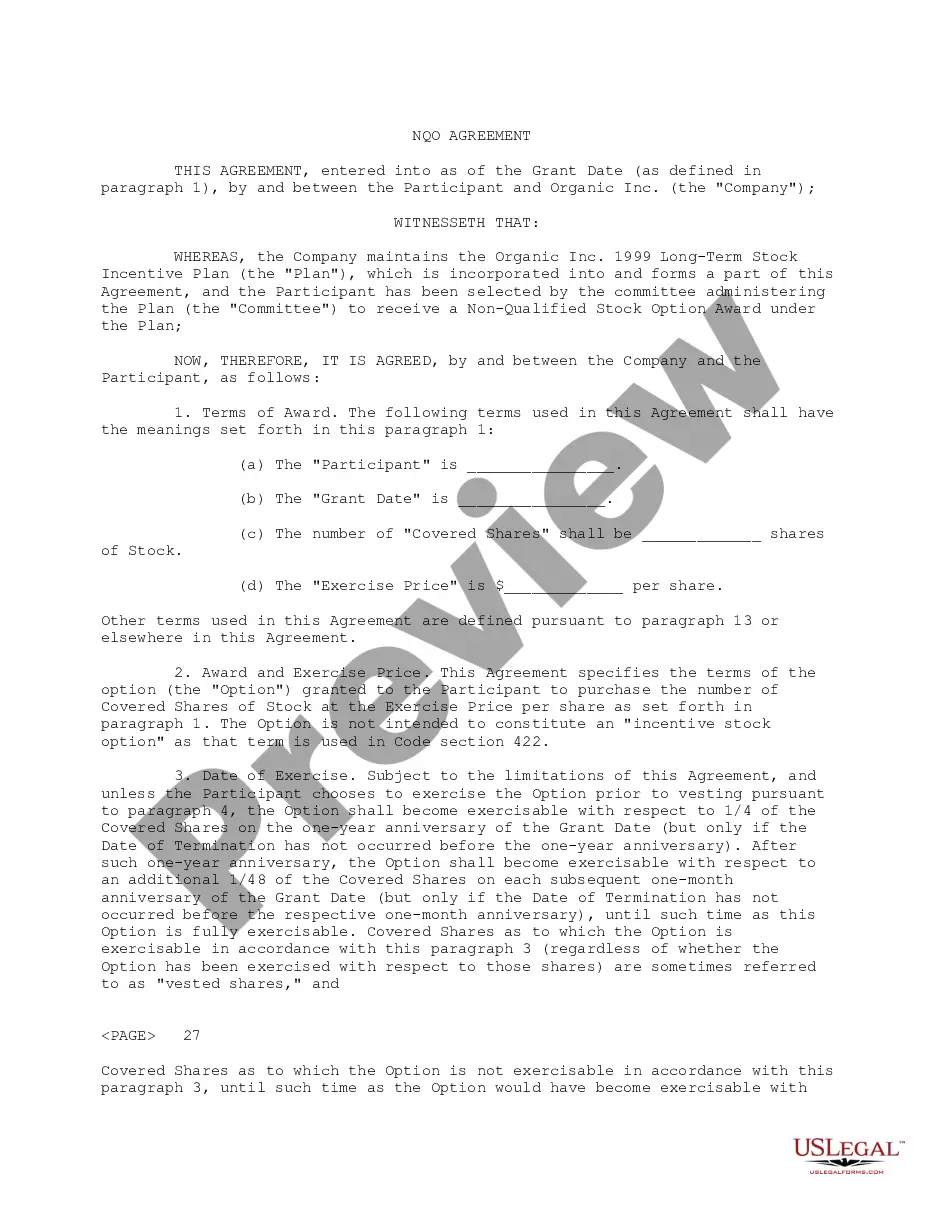
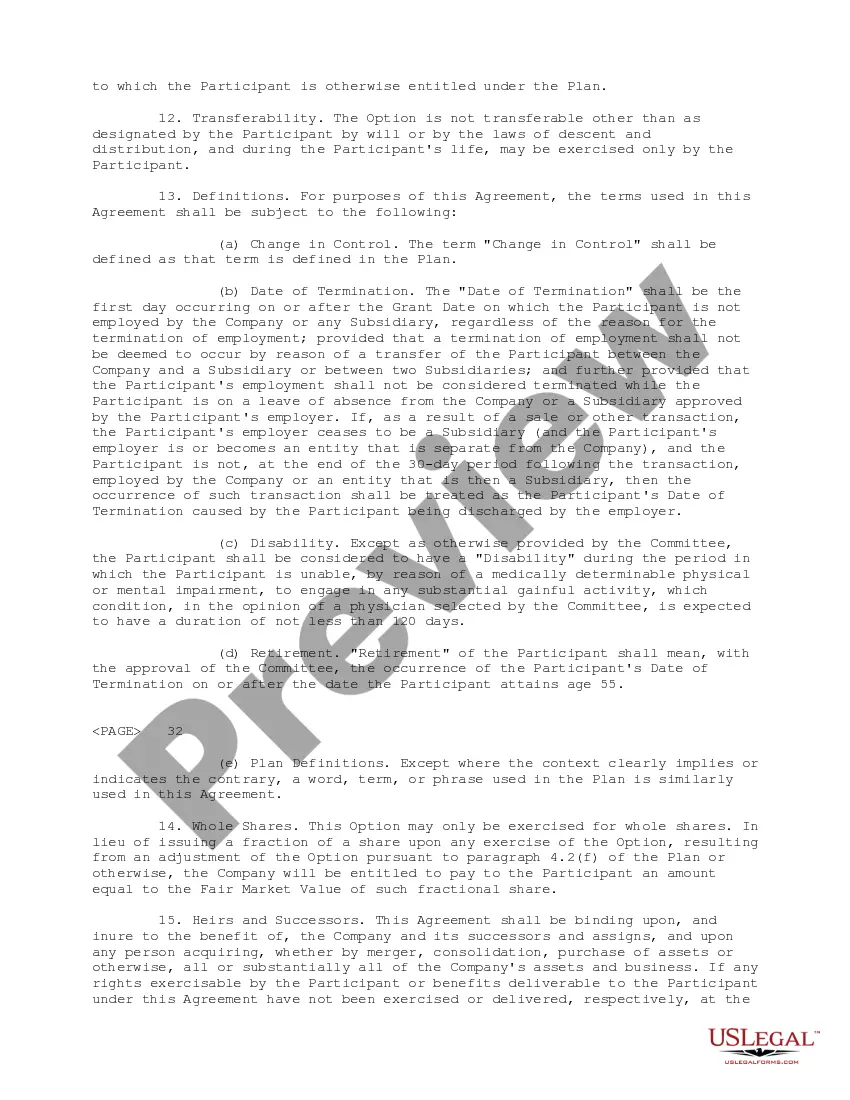
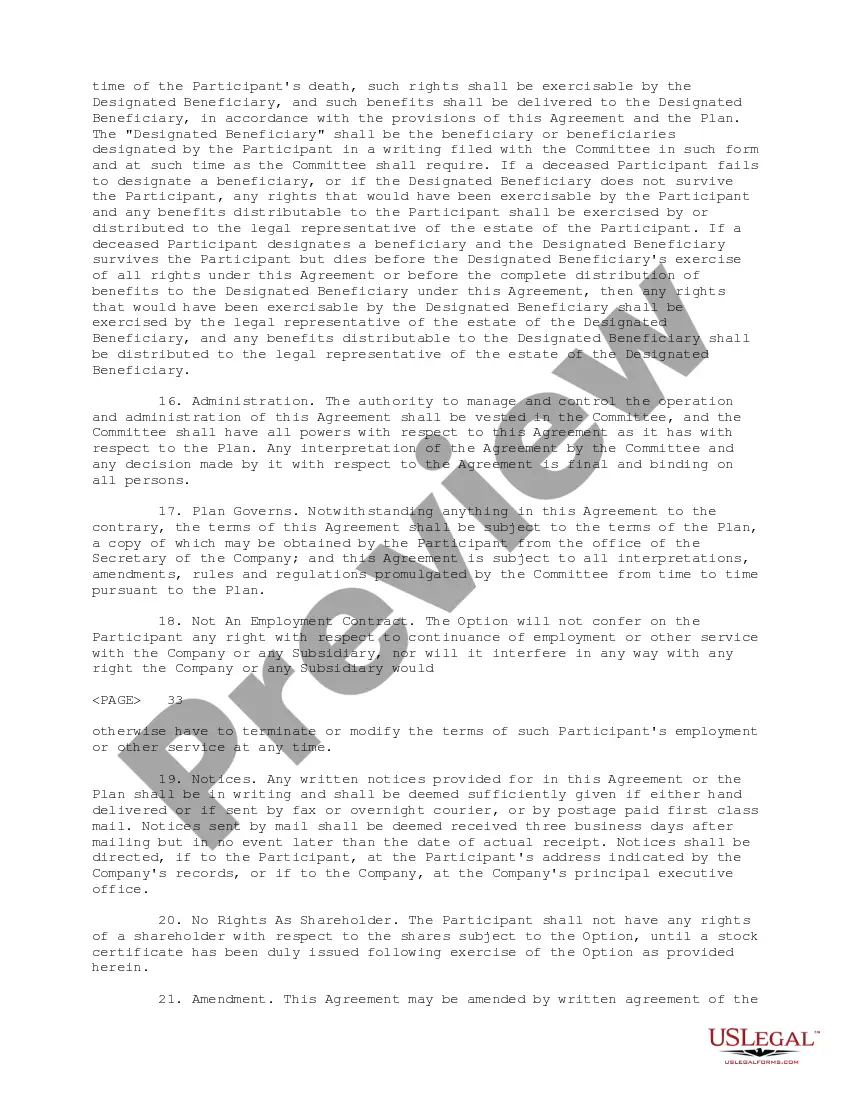
The NQO Agreement, or Non-Qualified Stock Option Agreement, is a legal document between a participant and a company, in this case, Organic, Inc. It sets forth the terms under which the participant is granted non-qualified stock options as part of their compensation. Unlike incentive stock options, the tax treatment for non-qualified options is different, making this agreement important for understanding tax implications and the mechanics of exercising these options. This agreement includes specific provisions regarding vesting, exercise price, and how the options may be transferred or sold.
Key components of this form
- Terms of Award: Includes the participant's name, grant date, number of covered shares, and exercise price.
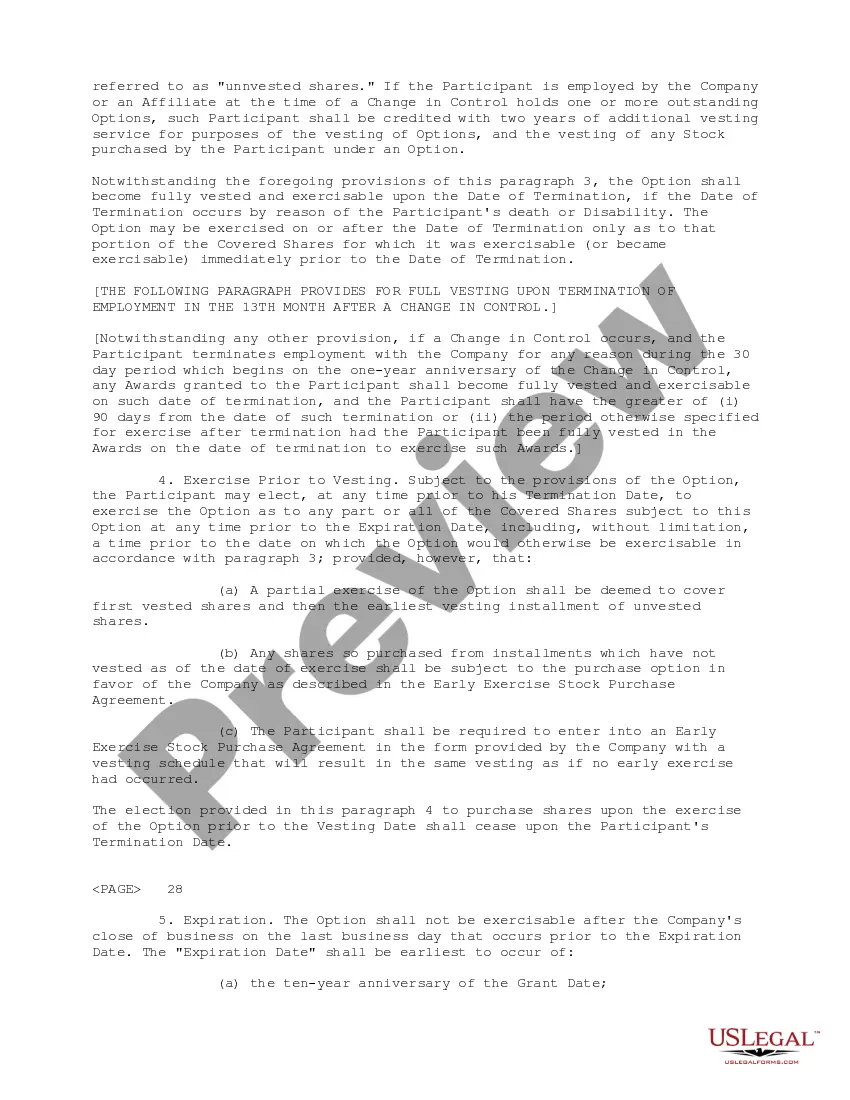
- Awards and Exercise Conditions: Specifies how and when the options can be exercised.
- Expiration: Defines the timeframe in which the options must be exercised.
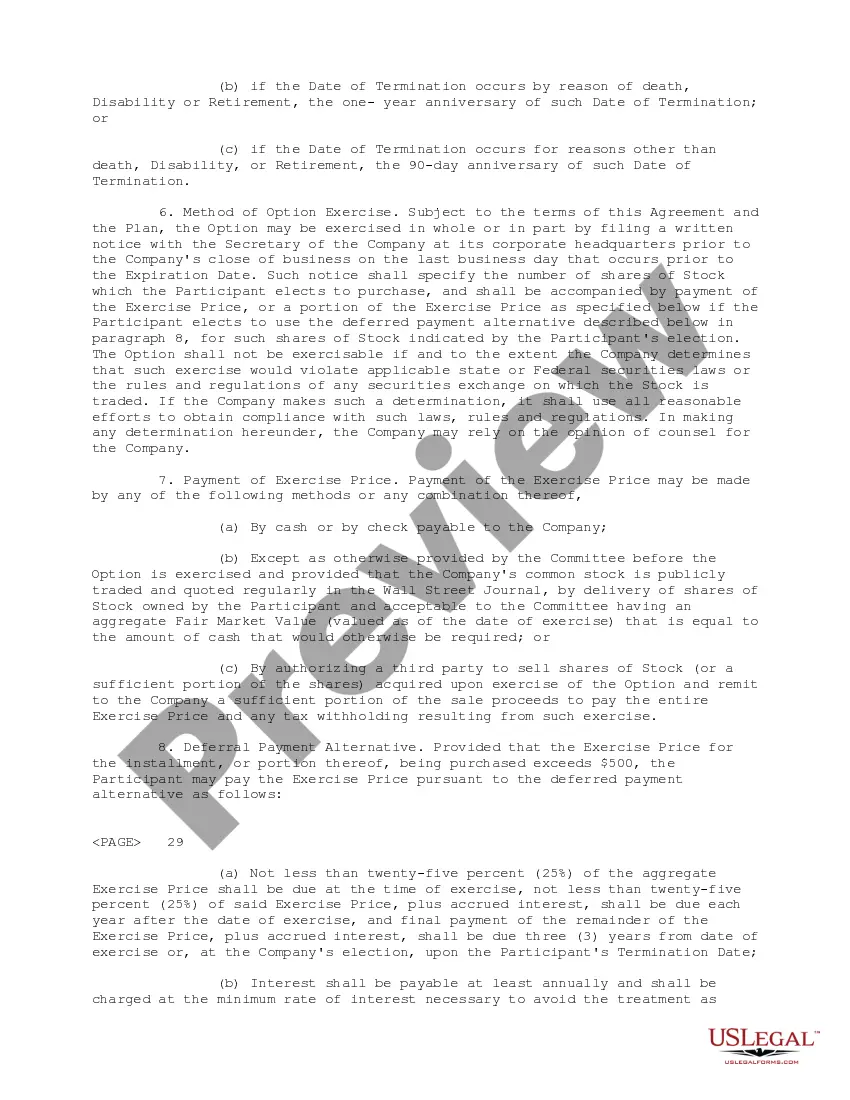
- Payment Methods: Describes how the exercise price can be paid, including cash or stock.
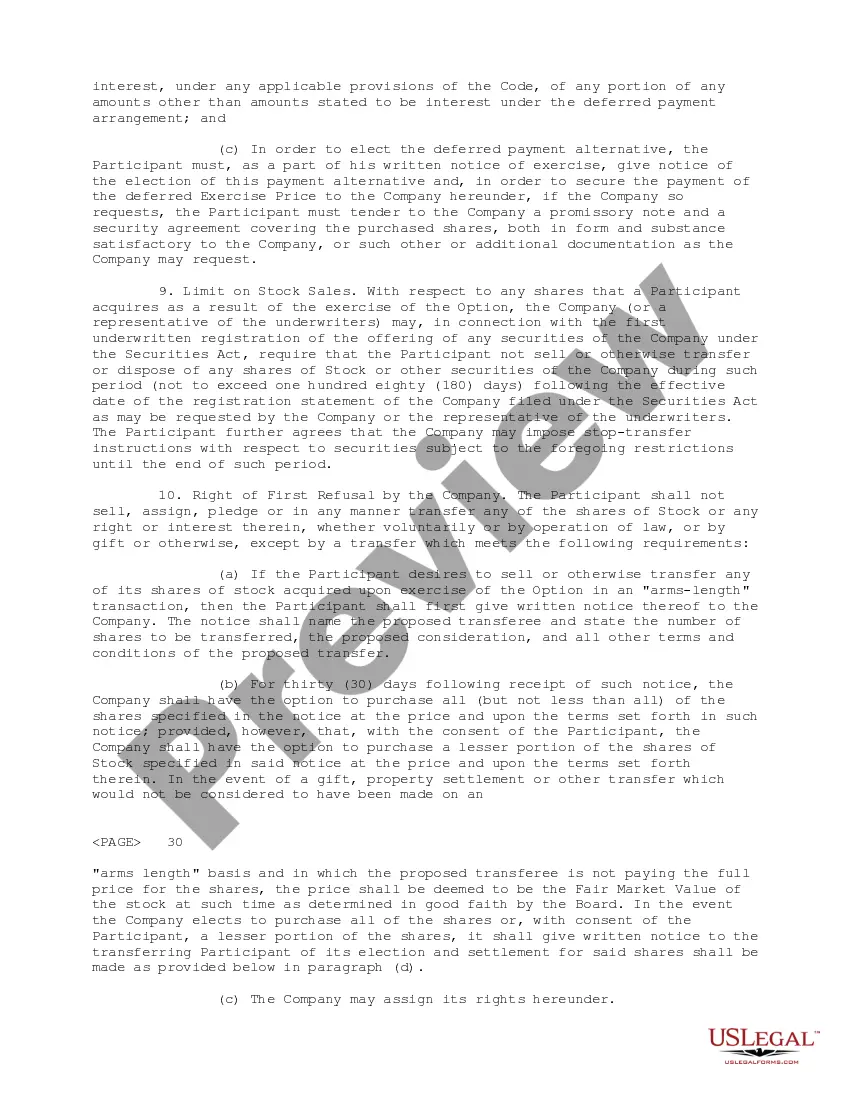
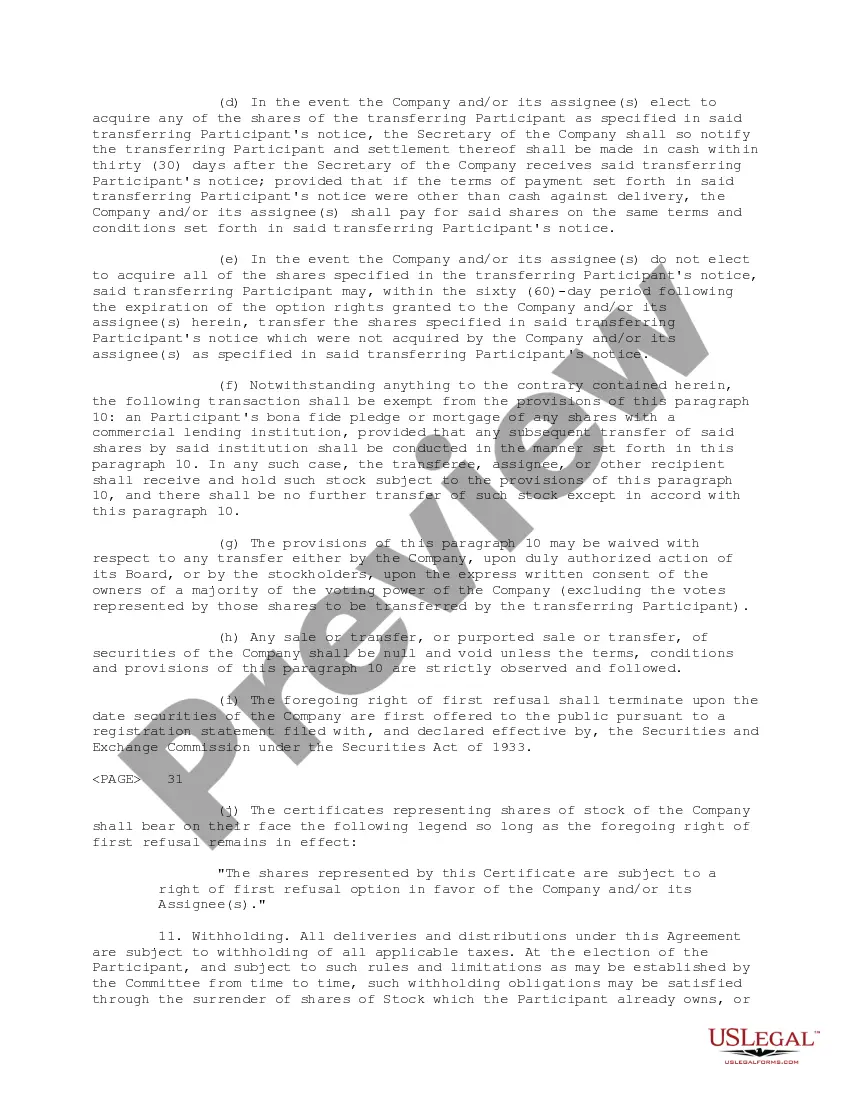
- Right of First Refusal: Outlines the process when a participant wishes to sell shares acquired through the agreement.

When to use this form
This form is used when a company intends to grant non-qualified stock options to an employee or participant. Situations that may necessitate this agreement include incentivizing key employees, retaining talent through long-term incentives, or compensating for performance. It is vital for both employees and employers to understand the terms to ensure compliance and maximize benefits.
Who this form is for
- Employees of Organic, Inc. who are selected to receive non-qualified stock options.
- Human resource professionals managing the stock option programs in companies.
- Legal representatives drafting stock option agreements.
- Investors or stakeholders interested in understanding the terms of employee compensation.
How to complete this form
- Identify the parties involved: Clearly state the participant's name and the company's name.
- Specify the grant date: Fill in the date on which the options are granted.
- Enter the number of shares: Indicate how many shares are included in the award.
- Set the exercise price: Input the price per share for exercising the options.
- Sign and date the agreement: Both the participant and an authorized company representative need to sign the document.
Does this document require notarization?
This form does not typically require notarization unless specified by local law.
Get your form ready online
Our built-in tools help you complete, sign, share, and store your documents in one place.
Make edits, fill in missing information, and update formatting in US Legal Forms—just like you would in MS Word.
Download a copy, print it, send it by email, or mail it via USPS—whatever works best for your next step.
Sign and collect signatures with our SignNow integration. Send to multiple recipients, set reminders, and more. Go Premium to unlock E-Sign.
If this form requires notarization, complete it online through a secure video call—no need to meet a notary in person or wait for an appointment.
We protect your documents and personal data by following strict security and privacy standards.

Make edits, fill in missing information, and update formatting in US Legal Forms—just like you would in MS Word.

Download a copy, print it, send it by email, or mail it via USPS—whatever works best for your next step.

Sign and collect signatures with our SignNow integration. Send to multiple recipients, set reminders, and more. Go Premium to unlock E-Sign.

If this form requires notarization, complete it online through a secure video call—no need to meet a notary in person or wait for an appointment.

We protect your documents and personal data by following strict security and privacy standards.
Typical mistakes to avoid
- Leaving fields blank, such as the participant's name or grant date.
- Failing to understand the tax implications of exercising options.
- Not consulting the companyâs stock option plan or policies before signing.
- Ignoring vesting schedules and exercising options prematurely.
Why use this form online
- Convenience: Access and complete the form from anywhere with an internet connection.
- Editability: Easily customize the agreement to meet the specific needs of participants.
- Reliability: Obtain a legally vetted document drafted by licensed attorneys.
- Time-saving: Download and print the form immediately after completion.
- The NQO Agreement provides the legal framework for participants to acquire stock options and stipulates the terms under which these options may be exercised.
- It is important for participants to understand the obligations and rights established in this document to avoid any legal issues regarding their stock options.
Key takeaways
- The NQO Agreement details the terms and conditions of stock options granted by Organic, Inc. to participants.
- Key aspects include the vesting schedule, exercise price, and procedures for exercising the options.
- Understanding this agreement is crucial for compliant and effective stock option usage.
Looking for another form?



Form popularity
FAQ
Non-qualified stock options may go to employees, company partners, vendors, or others that aren't on the company payroll. These stocks function much like ISOs, except you pay taxes on the spread between the grant price and exercise price at your standard income tax rate.
An NSO, or non-statutory stock option is a type of compensatory stock that is not meant to be an ISO, or incentive stock option within the Internal Revenue Code. These are employee stock options that are offered without any restrictions. Non-statutory stock options are also known as a non-qualified stock options.
Incentive stock options, or ISOs, are options that are entitled to potentially favorable federal tax treatment. Stock options that are not ISOs are usually referred to as nonqualified stock options or NQOs.These do not qualify for special tax treatment.
Report the option on your 1040 as income at the appropriate time -- after you receive it or after you exercise it. You'll see the amount listed on your W-2 if you're an employee, or on a 1099 form for non-employees. Add the original purchase price to the taxable income you reported on the option.
Once you exercise your non-qualified stock option, the difference between the stock price and the strike price is taxed as ordinary income. This income is usually reported on your paystub.If you hold the shares for less than one year, any gain is taxed at your ordinary income tax rates, which are usually higher.
Incentive stock options (ISOs) can only be granted to employees. Non-qualified stock options (NSOs) can be granted to anyone, including employees, consultants and directors.
There are two types of stock options: Options granted under an employee stock purchase plan or an incentive stock option (ISO) plan are statutory stock options. Stock options that are granted neither under an employee stock purchase plan nor an ISO plan are nonstatutory stock options.
NSOs are subject to ordinary income tax and reported as W-2 wages for employees. They are also subject to federal and state income taxes, as well as Social Security and Medicare taxes.
You have taxable income or deductible loss when you sell the stock you bought by exercising the option. You generally treat this amount as a capital gain or loss. However, if you don't meet special holding period requirements, you'll have to treat income from the sale as ordinary income.