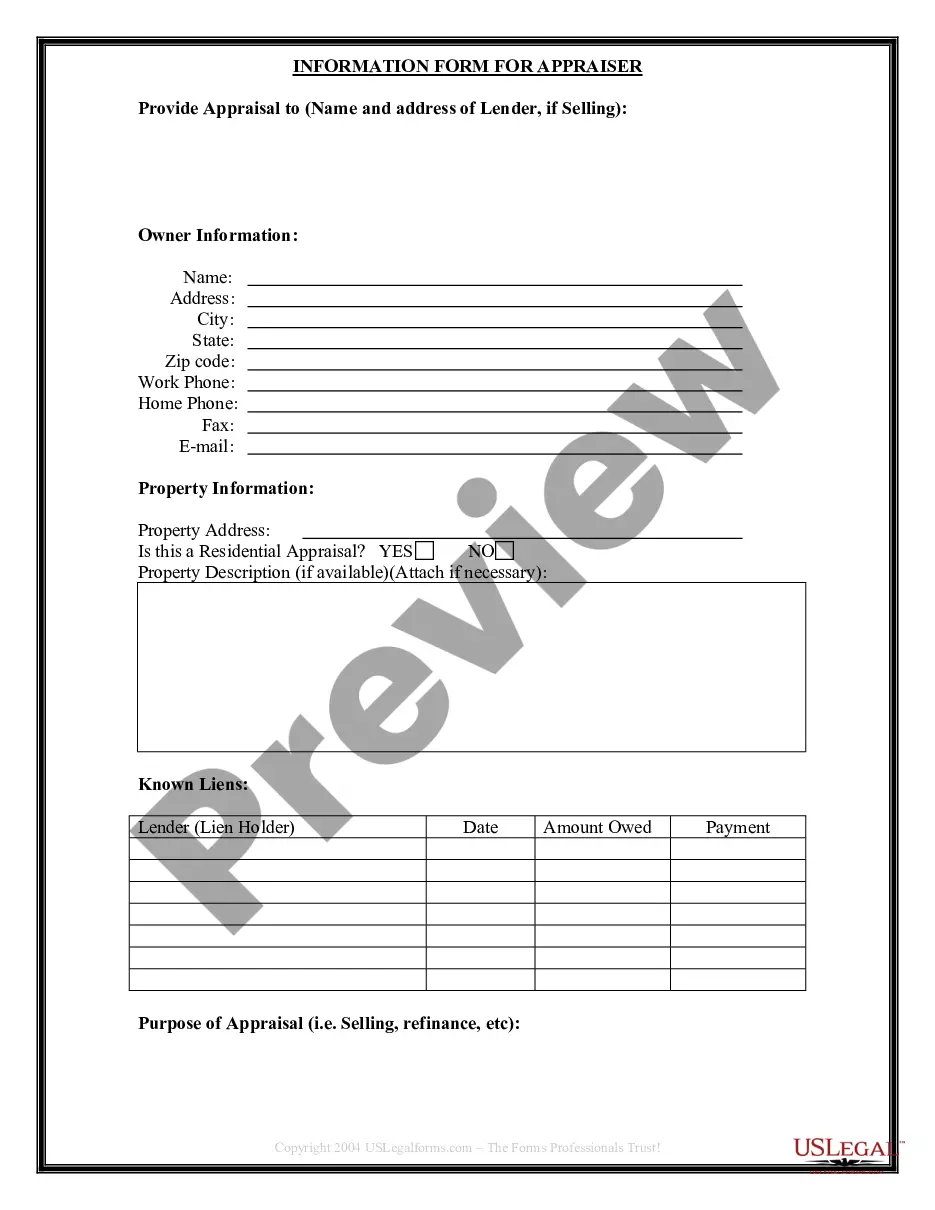
Illinois Excavator Contract for Contractor
About this form
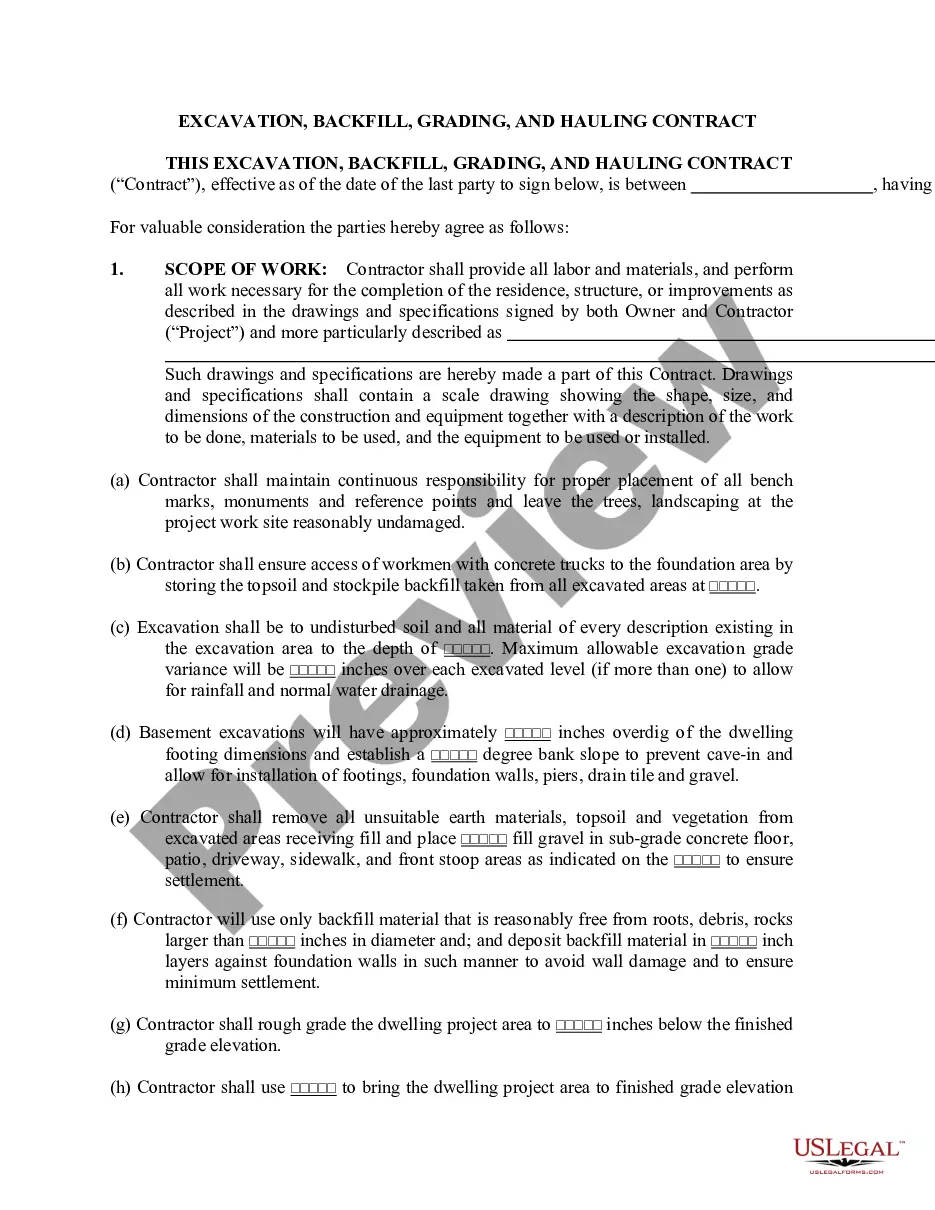
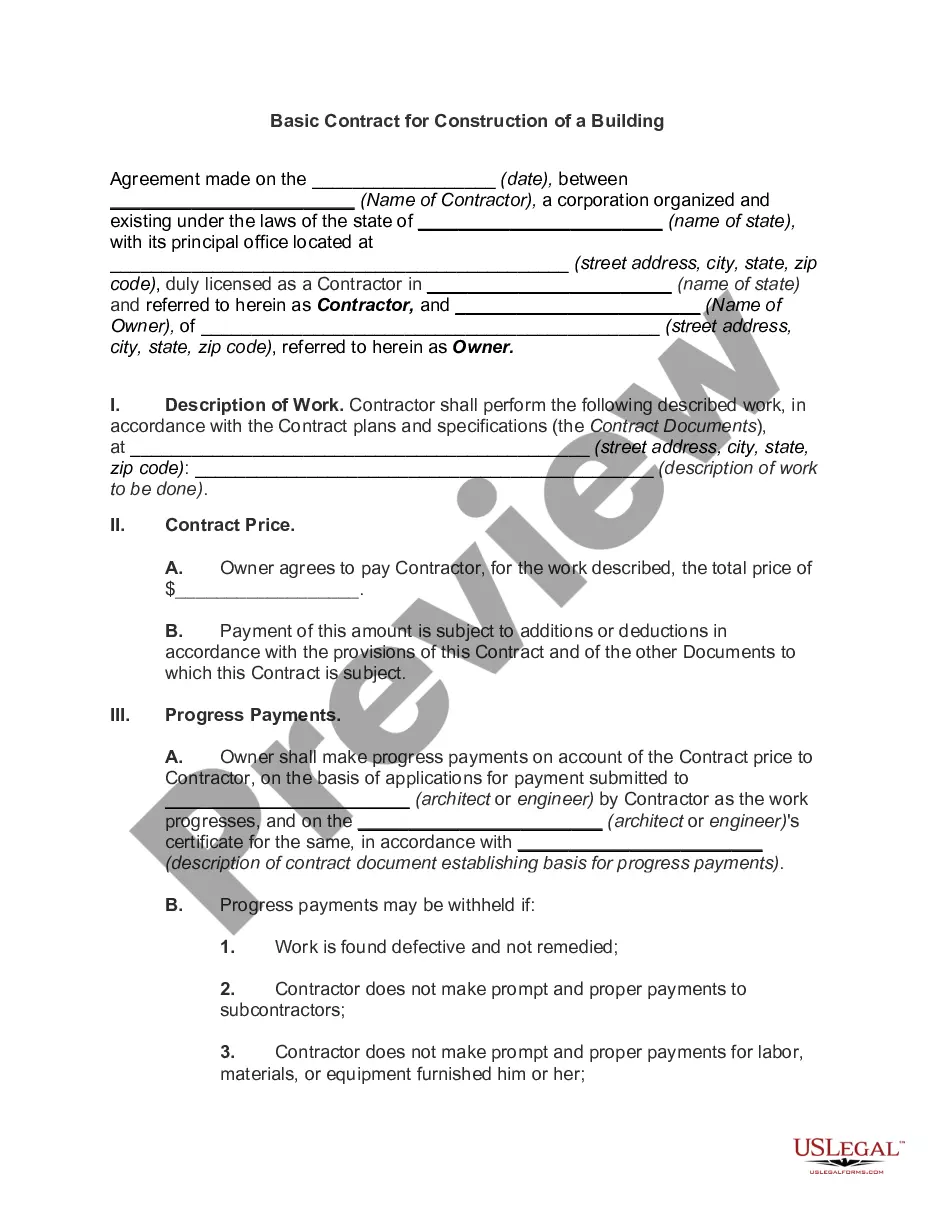
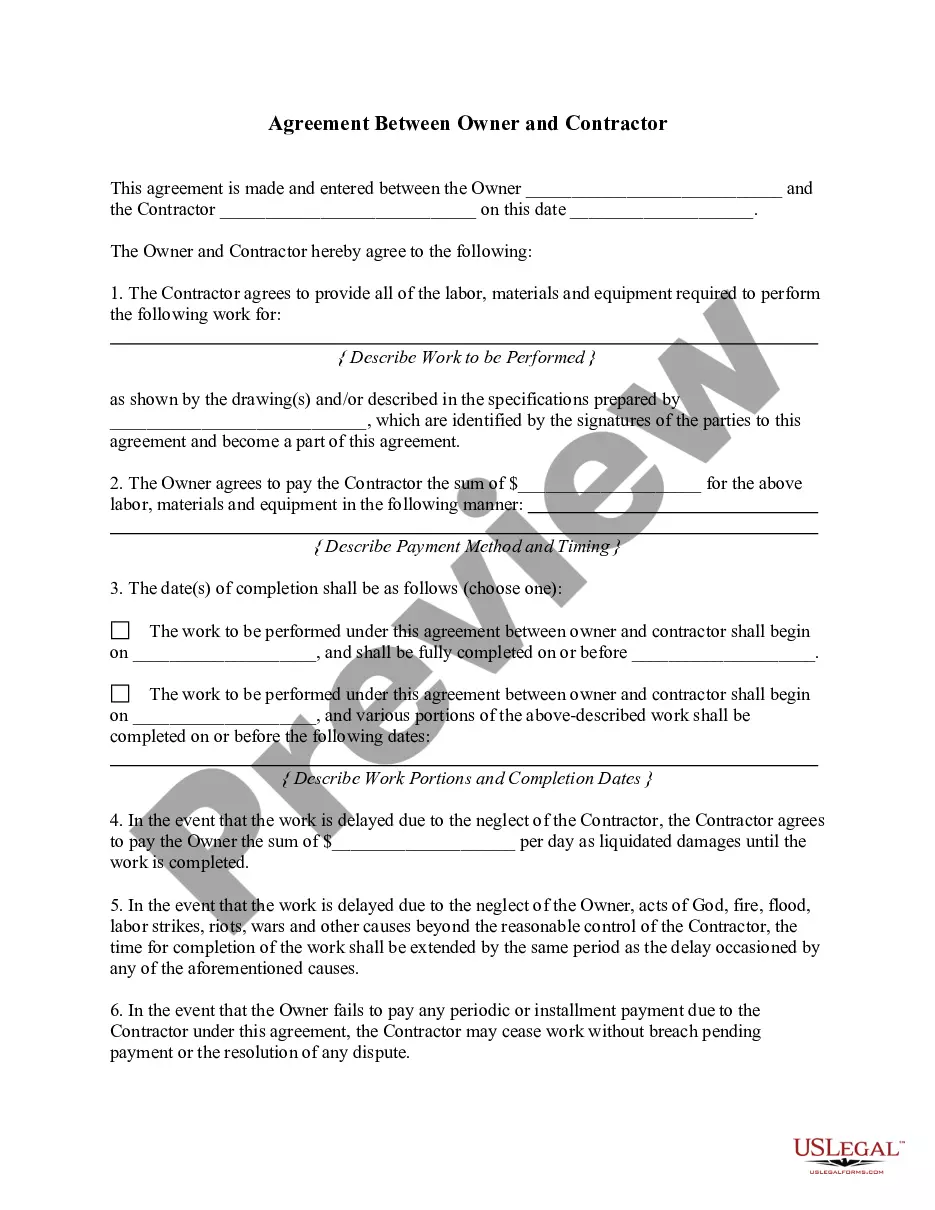
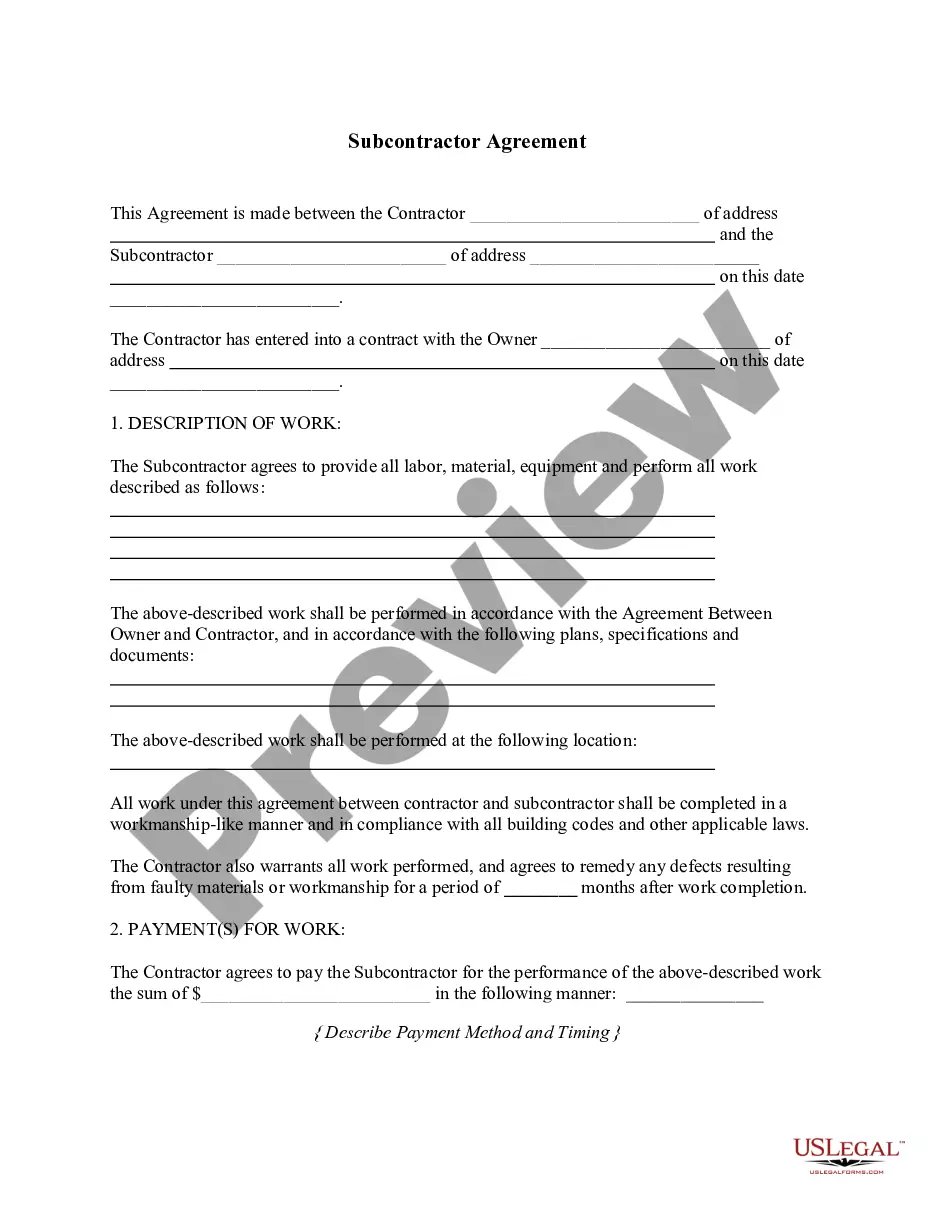
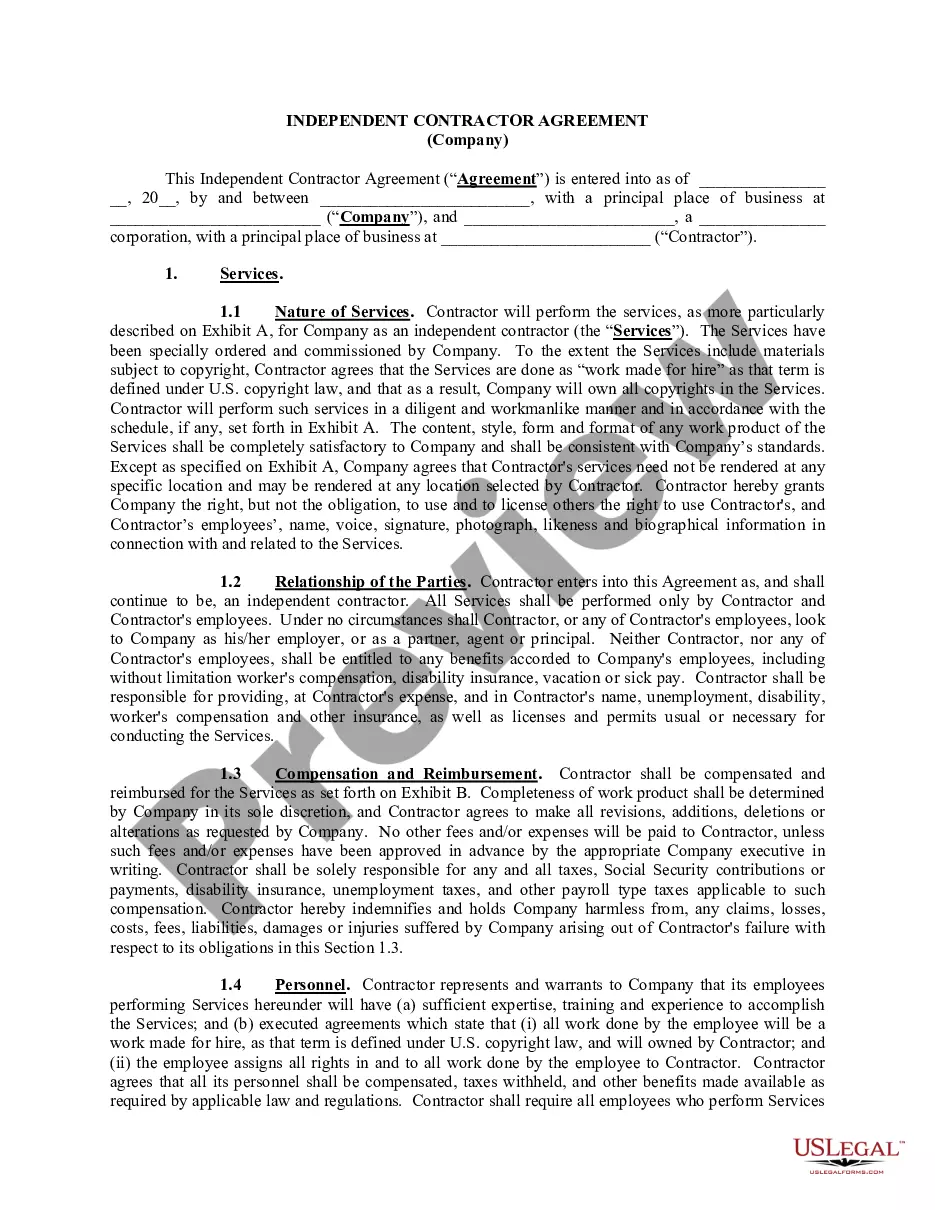
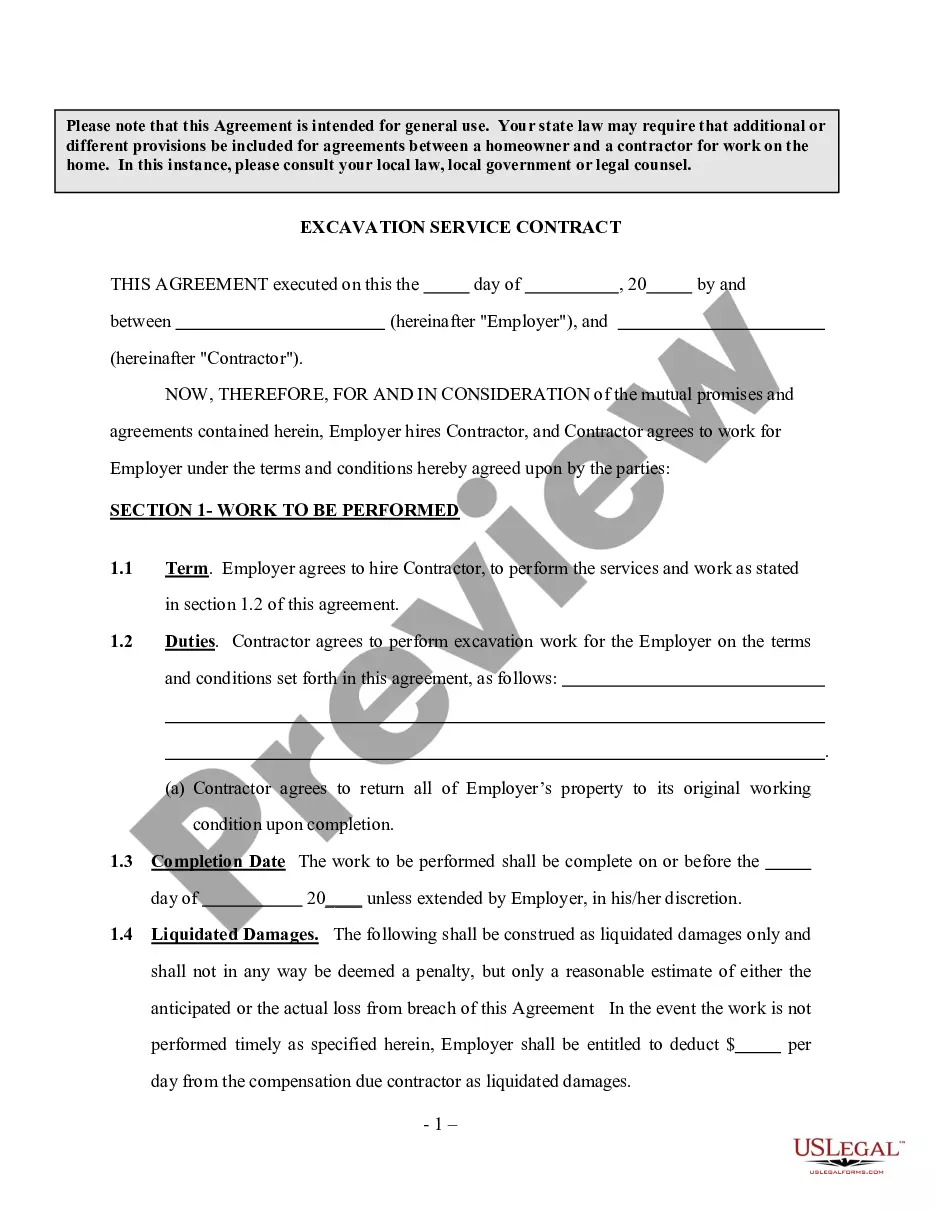
The Excavator Contract for Contractor is a legal document designed specifically for agreements between excavator contractors and property owners. This form is essential for outlining the responsibilities and expectations of both parties in a construction project, including payment arrangements, change orders, site information, and warranty provisions. Unlike general construction contracts, this form focuses on the unique aspects of excavation work and complies with the laws of Illinois.
Key components of this form
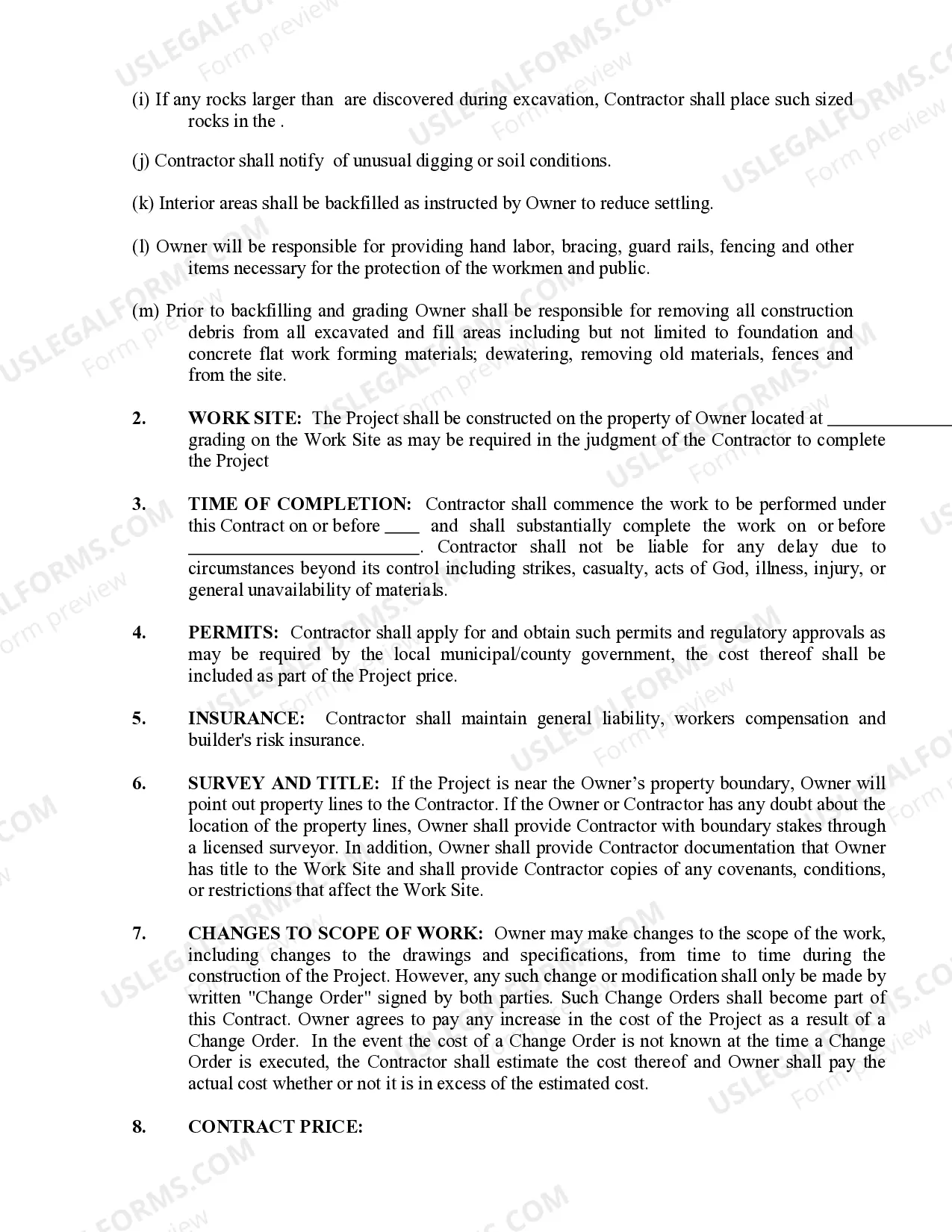
- Owner responsibilities for site protection, including hand labor and fencing.
- Requirements for permits and regulatory approvals as part of the project cost.
- Insurance obligations for general liability, workers' compensation, and builder's risk.
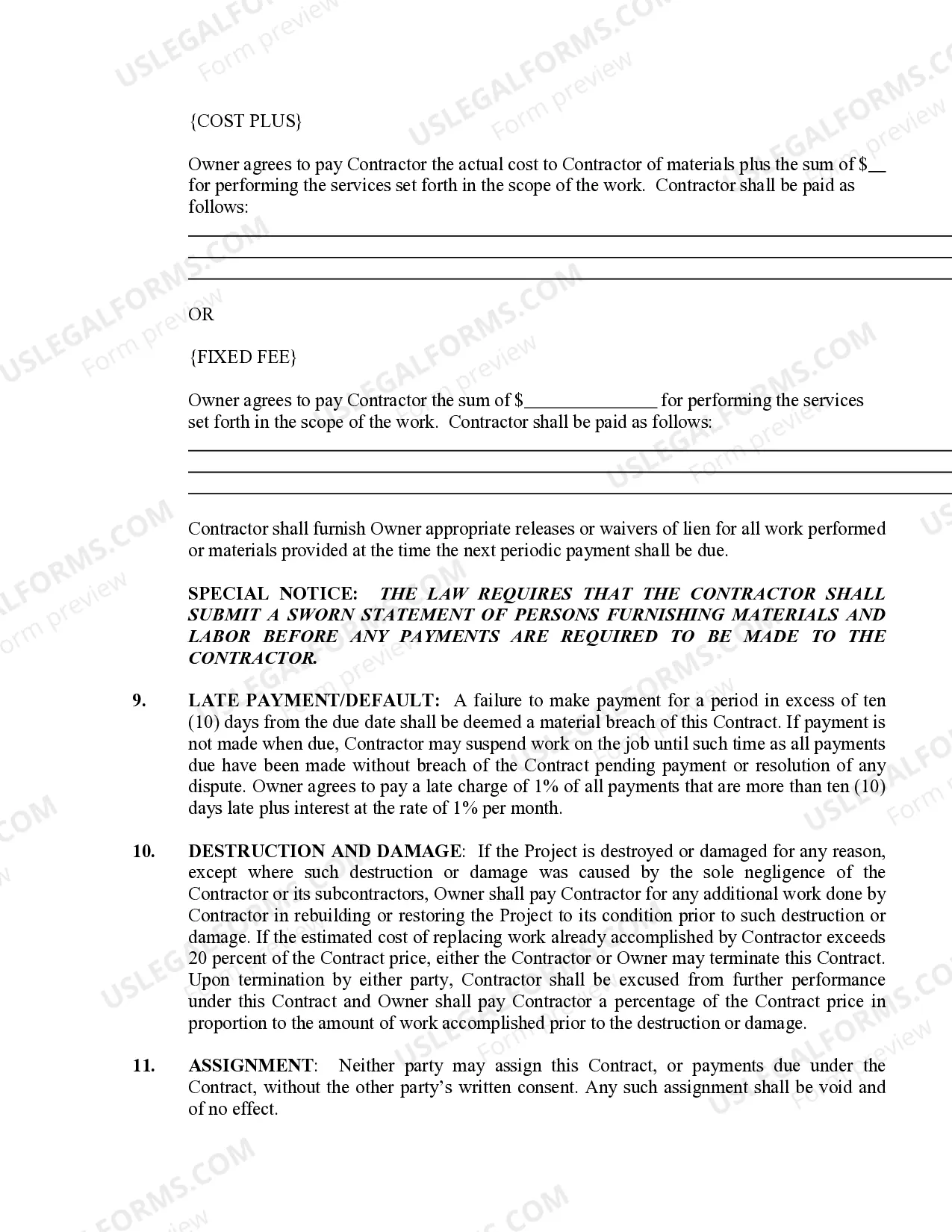
- Terms for changes to the scope of work, requiring formal written Change Orders.
- Provisions for late payments and their consequences, including project suspension.
- Clauses addressing potential project destruction or damage and how it affects compensation.

When to use this document
This form should be used when a property owner hires an excavator contractor for a construction project involving site excavation. It is appropriate in scenarios such as new construction, land clearing, site grading, and any project requiring excavation services. The contract helps ensure that both parties understand their responsibilities and provides a clear framework for changes and payments during the project.
Intended users of this form
- Excavator contractors looking to formalize agreements with property owners.
- Property owners planning a construction project that requires excavation services.
- Individuals or businesses in Illinois needing a clear written contract to outline the terms of excavation work.
How to complete this form
- Identify and enter the names and contact information of both the property owner and the contractor.
- Specify the work site details, including the property boundaries and any relevant surveys.
- Outline the project scope, including any drawings or specifications involved.
- Clearly state the payment terms, including whether it is a cost-plus or fixed fee arrangement.
- Include any insurance details and required permits that will be obtained for the project.
- Have both parties sign and date the contract to make it legally binding.
Does this form need to be notarized?
This form usually doesn’t need to be notarized. However, local laws or specific transactions may require it. Our online notarization service, powered by Notarize, lets you complete it remotely through a secure video session, available 24/7.
Get your form ready online
Our built-in tools help you complete, sign, share, and store your documents in one place.
Make edits, fill in missing information, and update formatting in US Legal Forms—just like you would in MS Word.
Download a copy, print it, send it by email, or mail it via USPS—whatever works best for your next step.
Sign and collect signatures with our SignNow integration. Send to multiple recipients, set reminders, and more. Go Premium to unlock E-Sign.
If this form requires notarization, complete it online through a secure video call—no need to meet a notary in person or wait for an appointment.
We protect your documents and personal data by following strict security and privacy standards.

Make edits, fill in missing information, and update formatting in US Legal Forms—just like you would in MS Word.

Download a copy, print it, send it by email, or mail it via USPS—whatever works best for your next step.

Sign and collect signatures with our SignNow integration. Send to multiple recipients, set reminders, and more. Go Premium to unlock E-Sign.

If this form requires notarization, complete it online through a secure video call—no need to meet a notary in person or wait for an appointment.

We protect your documents and personal data by following strict security and privacy standards.
Common mistakes
- Failing to provide complete project details, leading to confusion or disputes later.
- Not obtaining necessary permits before starting excavation work.
- Neglecting to include clauses for change orders, which can lead to unexpected costs.
- Forgetting to clarify payment terms, which may result in late payment issues.
Why use this form online
- Instant access to a professionally drafted contract specific to excavation work.
- Easy customization options to fit individual project needs.
- Secure and legally compliant document that minimizes the risk of disputes.
- Convenience of downloading, printing, and signing from the comfort of your home or office.
Main things to remember
- The Excavator Contract for Contractor is vital for defining the relationship between contractors and property owners.
- It outlines important terms such as scope of work, payment, and insurance details.
- This contract is compliant with Illinois laws, providing legal protection for both parties.
- Completing the form accurately and understanding all clauses helps avoid future disputes.
Looking for another form?



Form popularity
FAQ
An excavation contract is a legal agreement between a contractor and a client outlining the terms of excavation work. This document specifies project details, responsibilities, timelines, and payment terms. Having an Illinois Excavator Contract for Contractor ensures clarity and sets expectations for both parties involved in the excavation process.
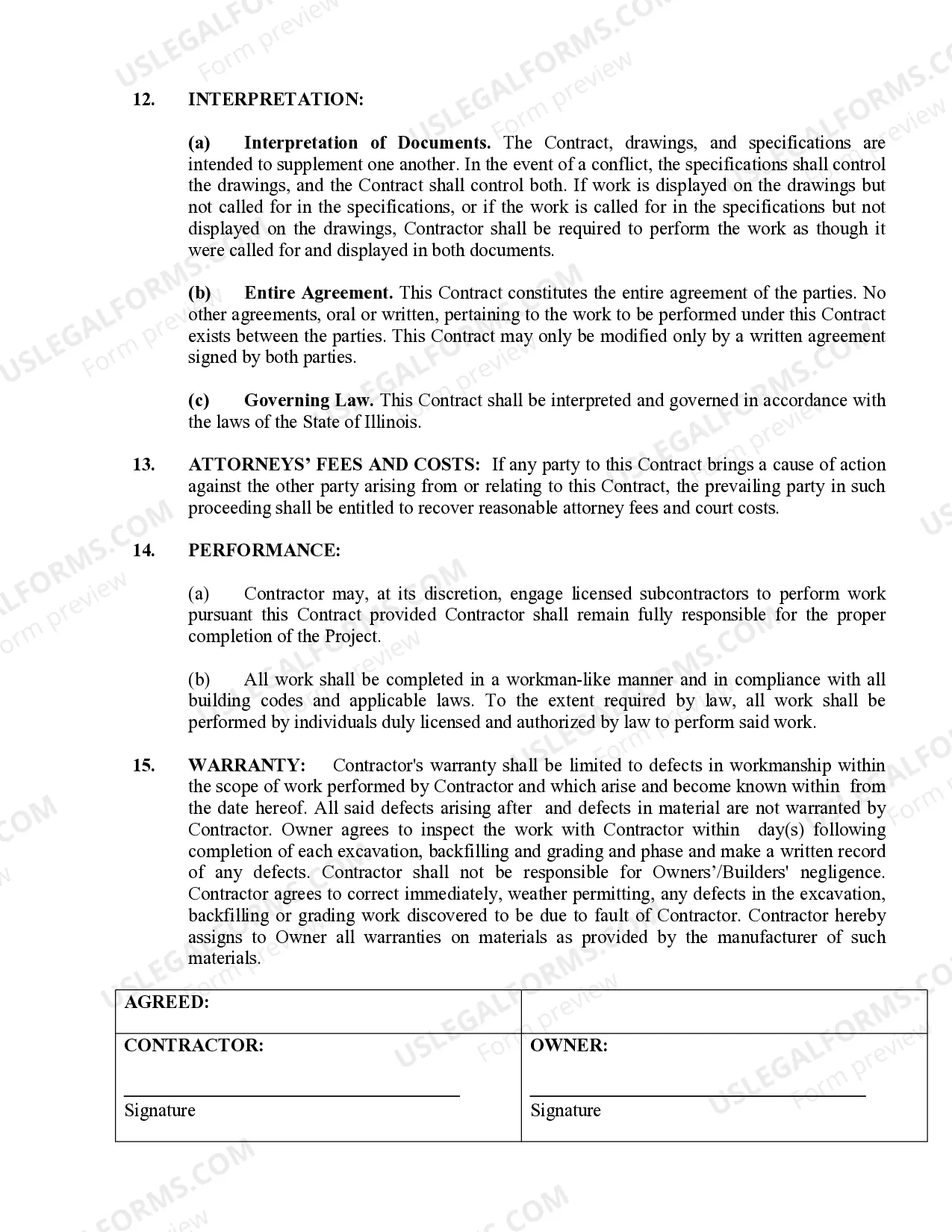
Identifying/Contact Information. Title and Description of the Project. Projected Timeline and Completion Date. Cost Estimate and Payment Schedule. Stop Work Clause and Stop Payment Clause. Act of God Clause. Change Order Agreement. Warranty.
#1: Review Your Bid. #2: Review Complete Plans. #3: Review All Specifications. #4: Visit the Job Site. #5: Review the Job Schedule. #6: Complete a Project Checklist. #7: Verify Project Funding. #8: Read Complete Contract.
A rule of thumb for independent contractors is that the vendor should be allowed to mark up your pay rate by about 15 percent when billing the client. This allows the vendor a respectable profit without making the bill rate outrageous.
Contract Types Overview. Express and Implied Contracts. Unilateral and Bilateral Contracts. Unconscionable Contracts. Adhesion Contracts. Aleatory Contracts. Option Contracts. Fixed Price Contracts.
In California, contractors are required to provide warranties on work done for home and business owners for between one and 10 years. The warranties California law provides are a minimum, and longer warranties can be agreed to between the parties.
The California statute of limitations for breach of contract and breach of implied warranty is two years for oral agreements and four years for written ones.
Begin with the Date and the Address of the Other Party. Start with the Basic Details of the Planned Work. Include Special Stipulations. State Whether There Will be a Further Agreement. Create an Area for Signatures. Sign and Date the Contract Letter.
Name of contractor and contact information. Name of homeowner and contact information. Describe property in legal terms. List attachments to the contract. The cost. Failure of homeowner to obtain financing. Description of the work and the completion date. Right to stop the project.
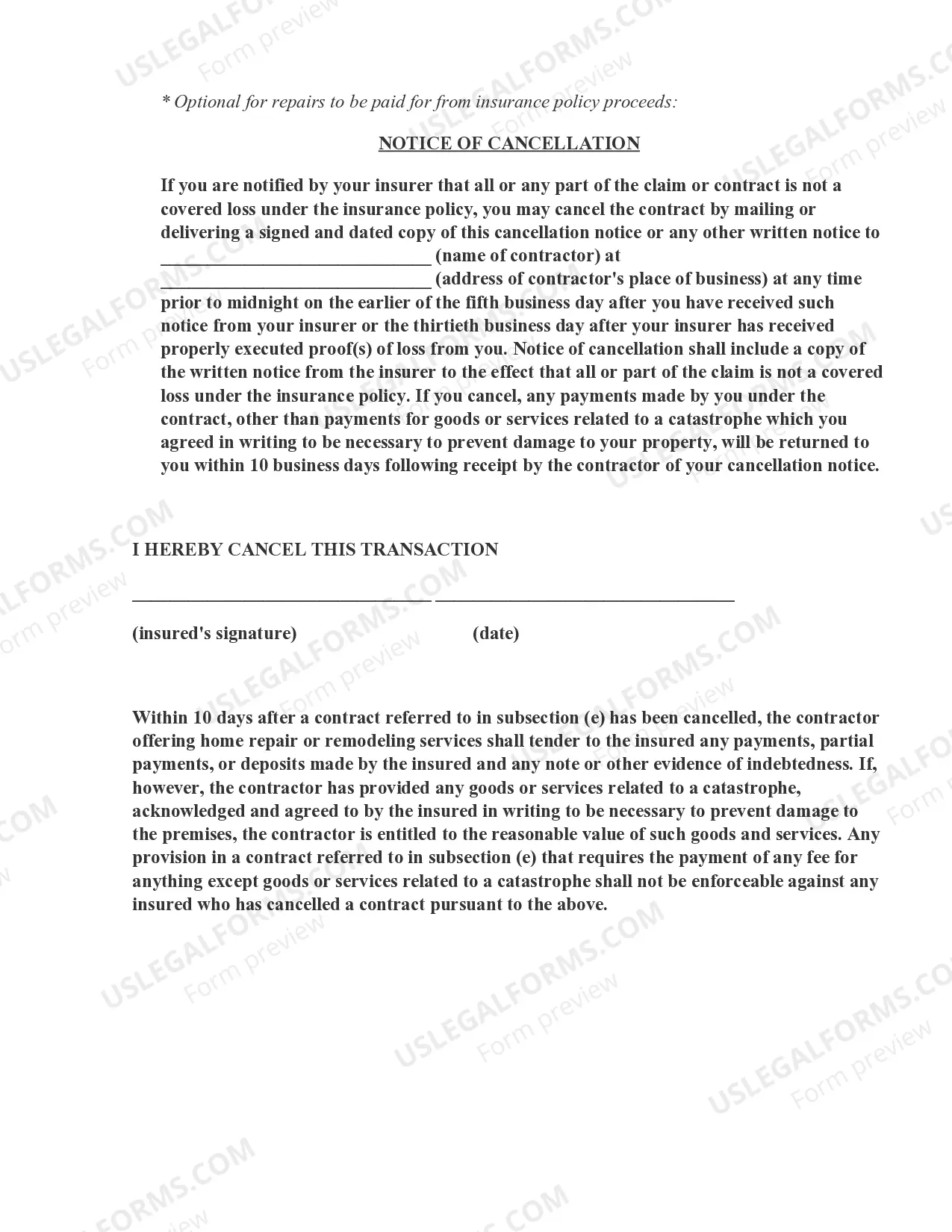
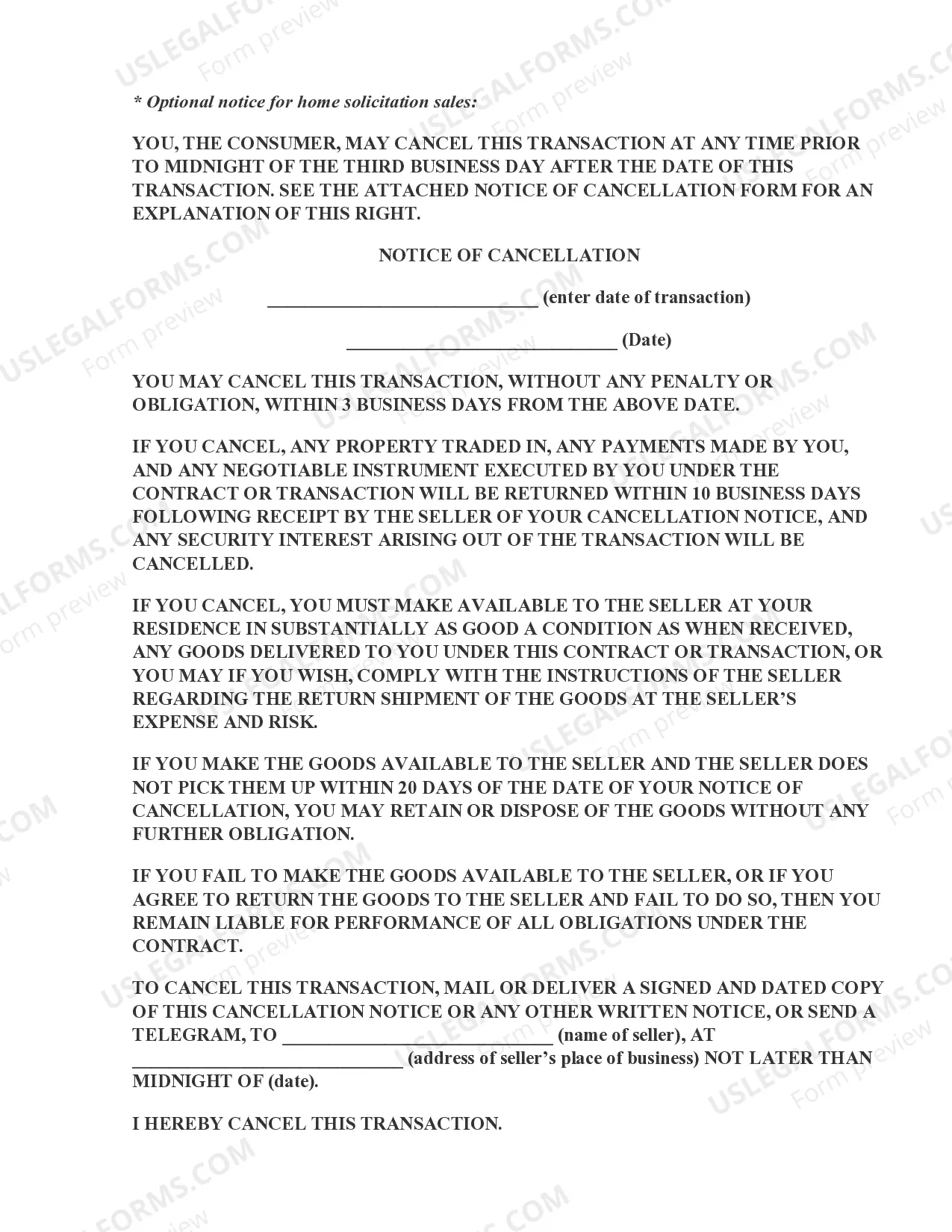
In order to cancel the transaction, the consumer must send the notice of cancellation form, or some other written statement indicating the intent to cancel the contract, to the creditor at the address stated on the notice. This notice need only state the consumer's intention to cancel the transaction.