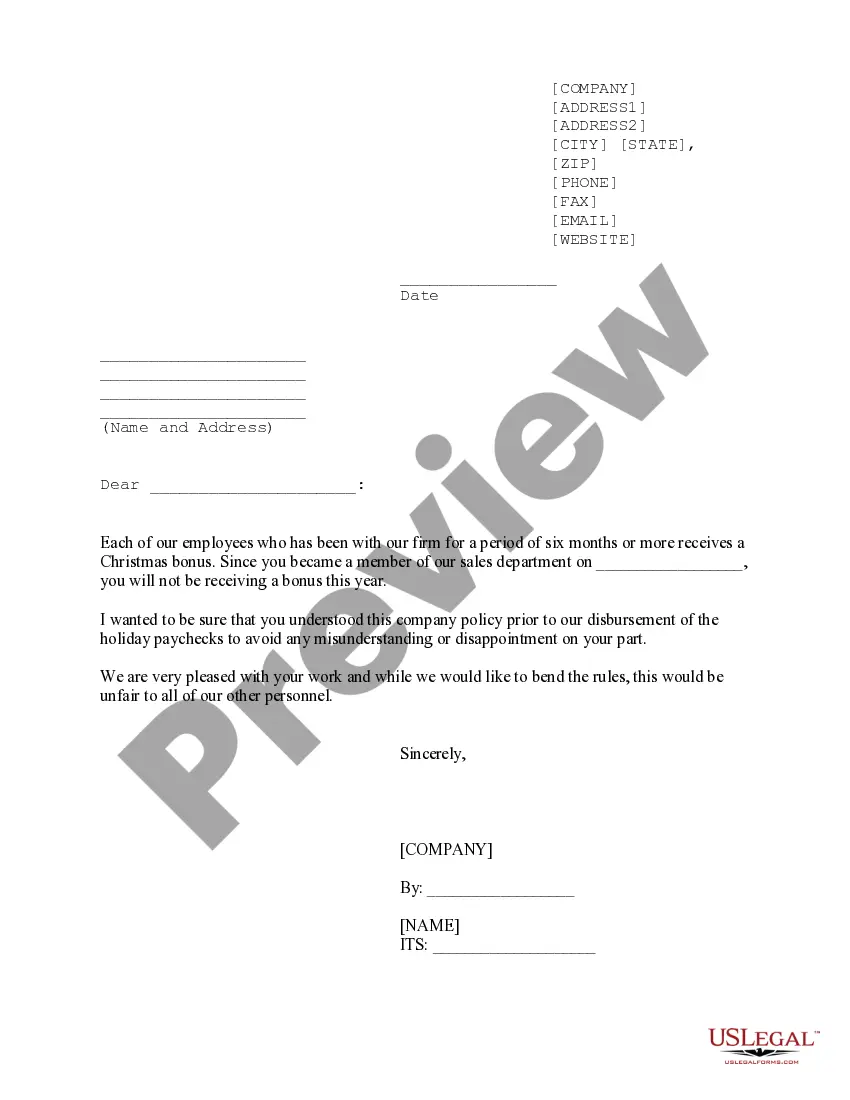
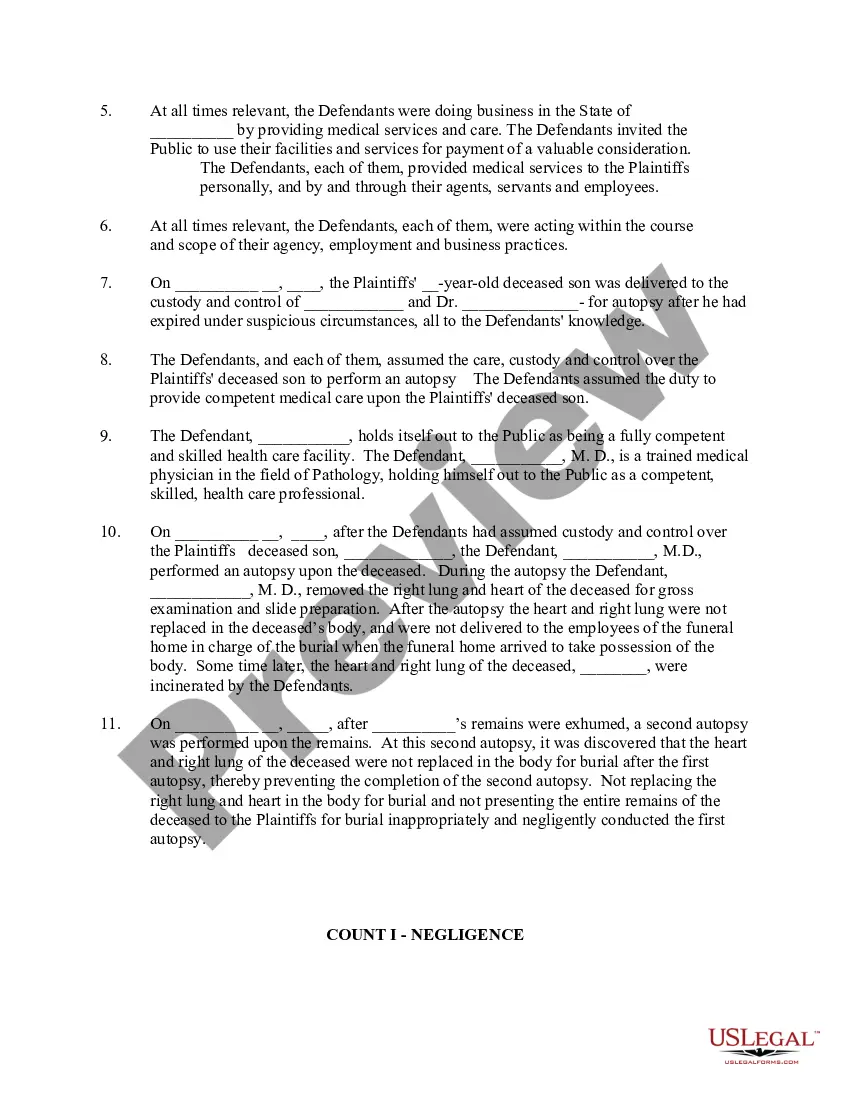
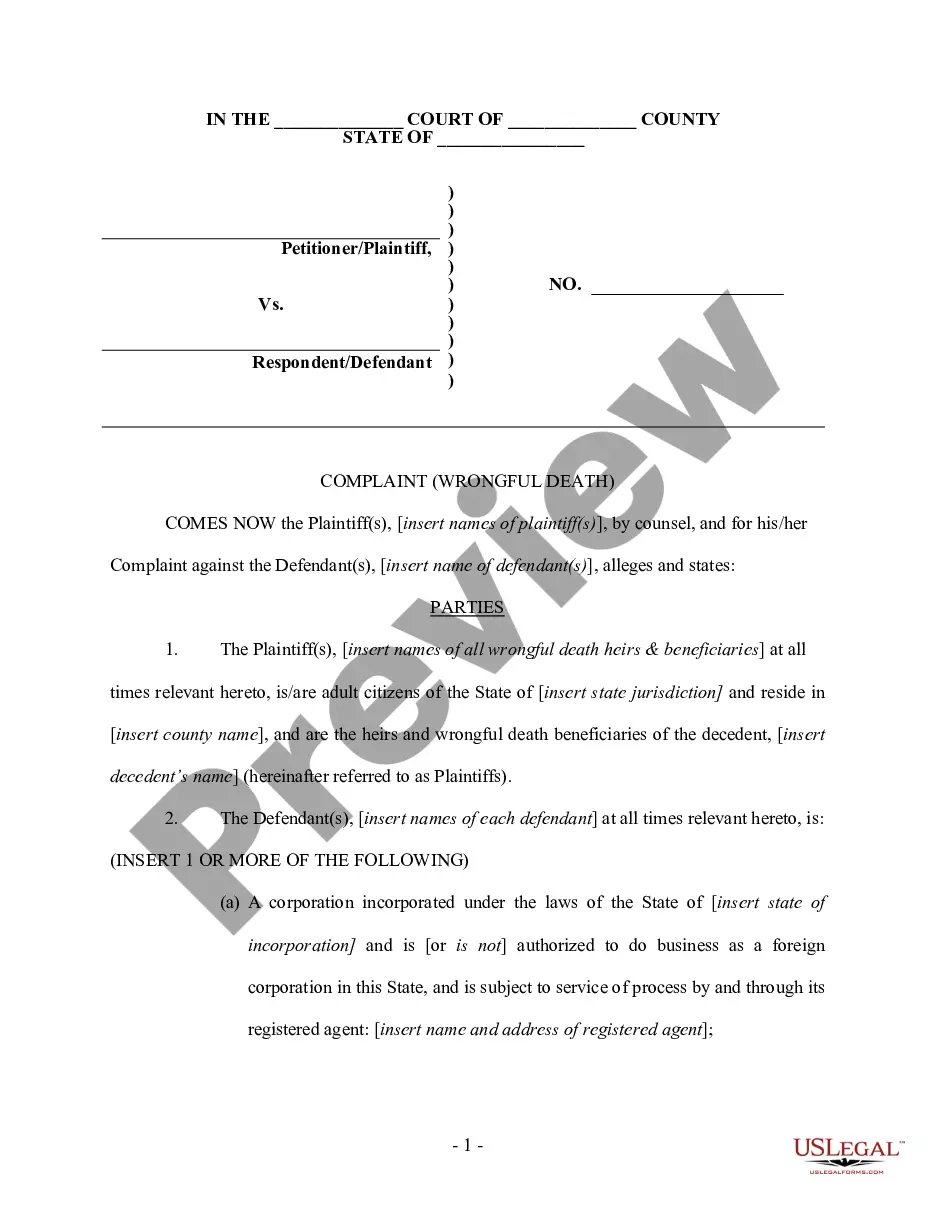
This is a Complaint pleading for use in litigation of the title matter. Adapt this form to comply with your facts and circumstances, and with your specific state law. Not recommended for use by non-attorneys.
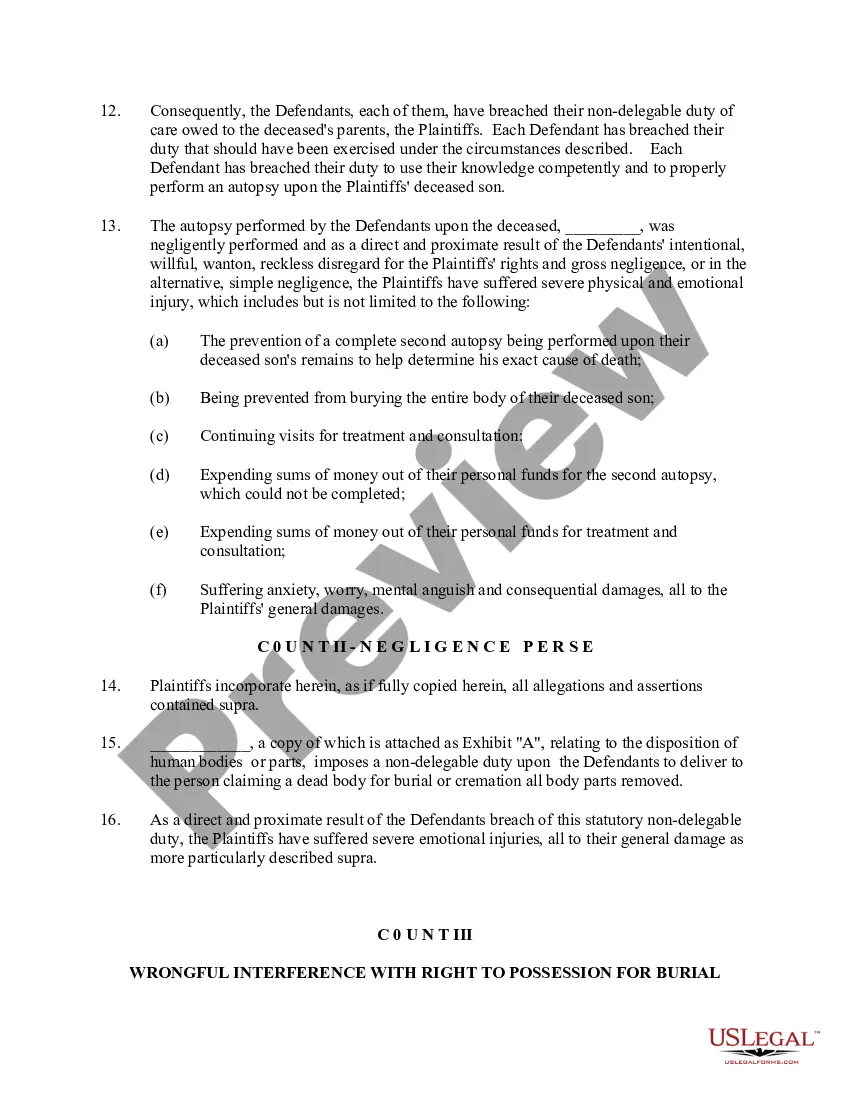
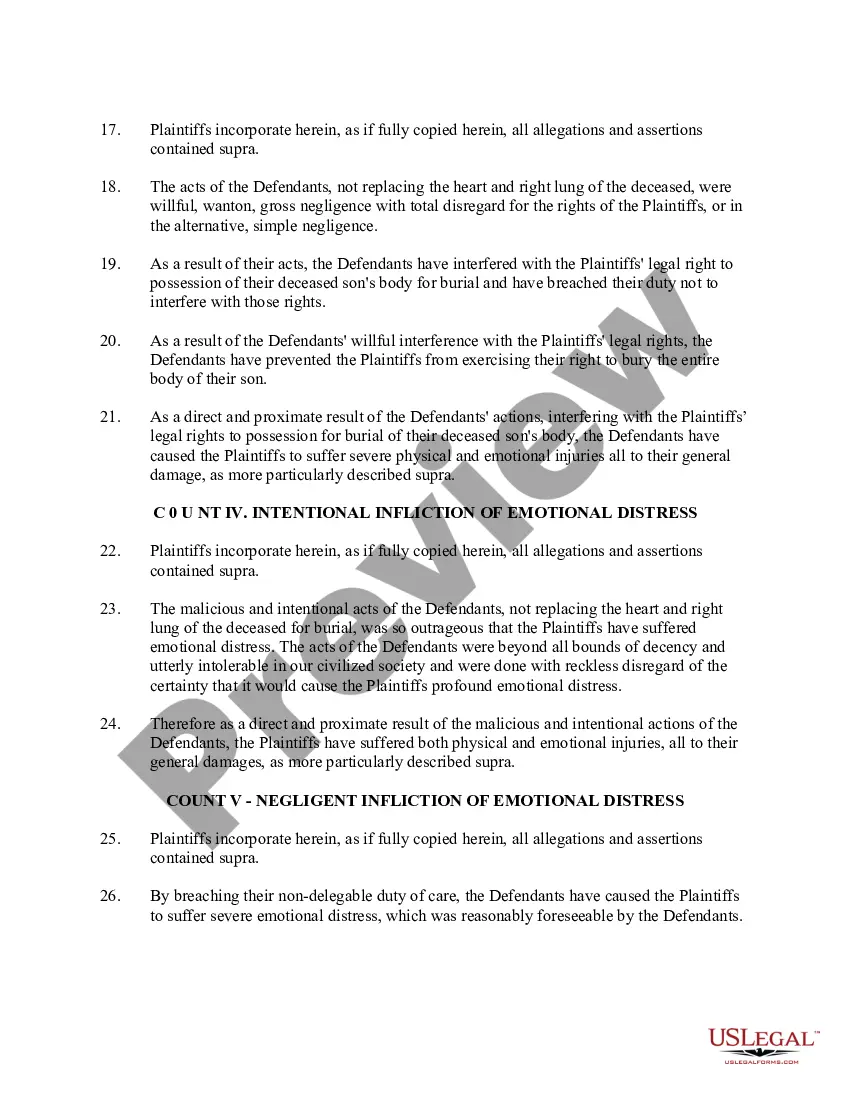
Iowa Complaint For Wrongful Interference With Right To Possession For Burial
Category:
State:
Multi-State
Control #:
US-000303
Format:
Word;
Rich Text
Instant download
Description
Free preview

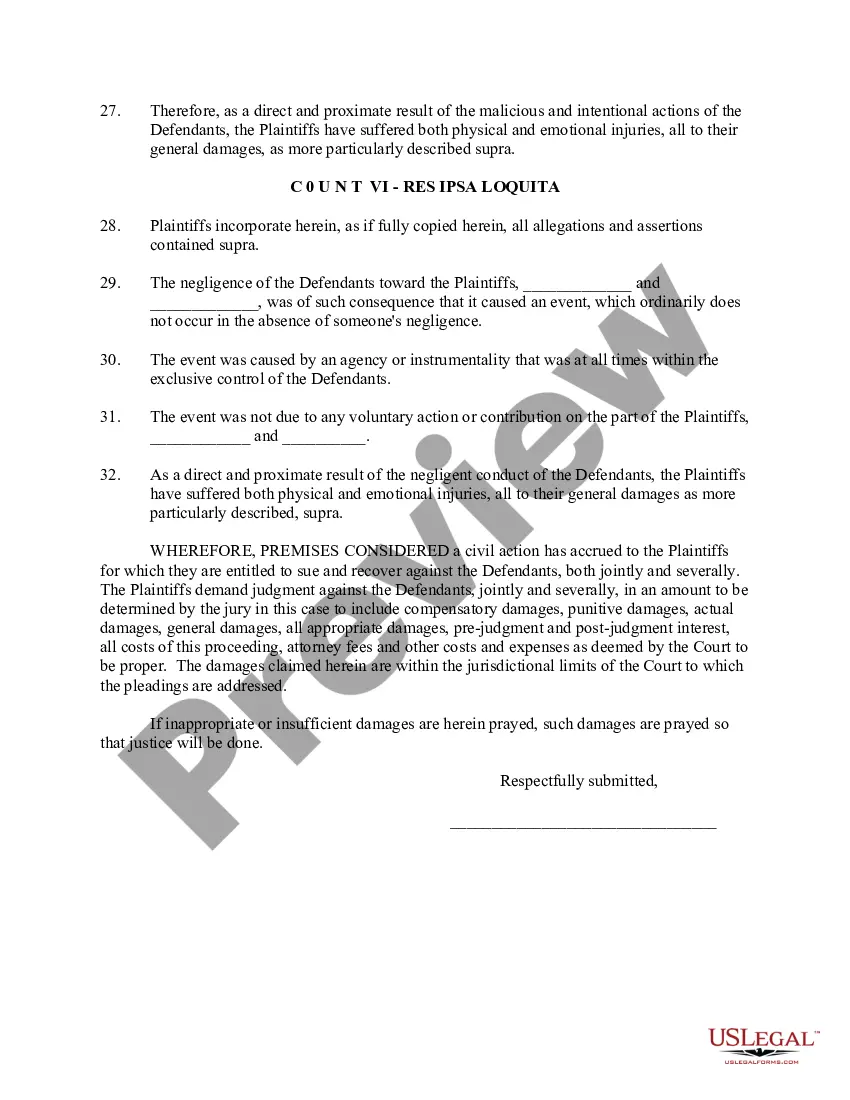

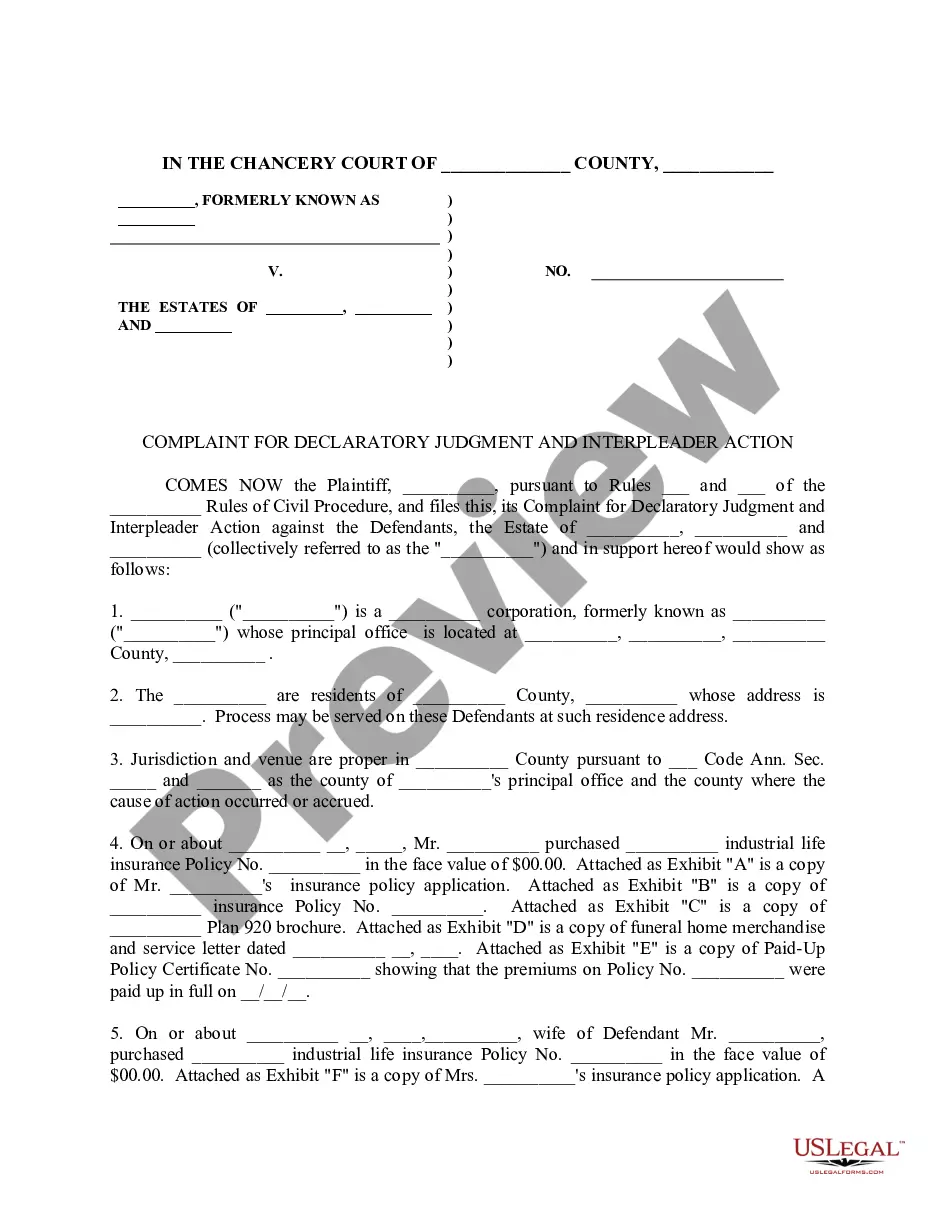
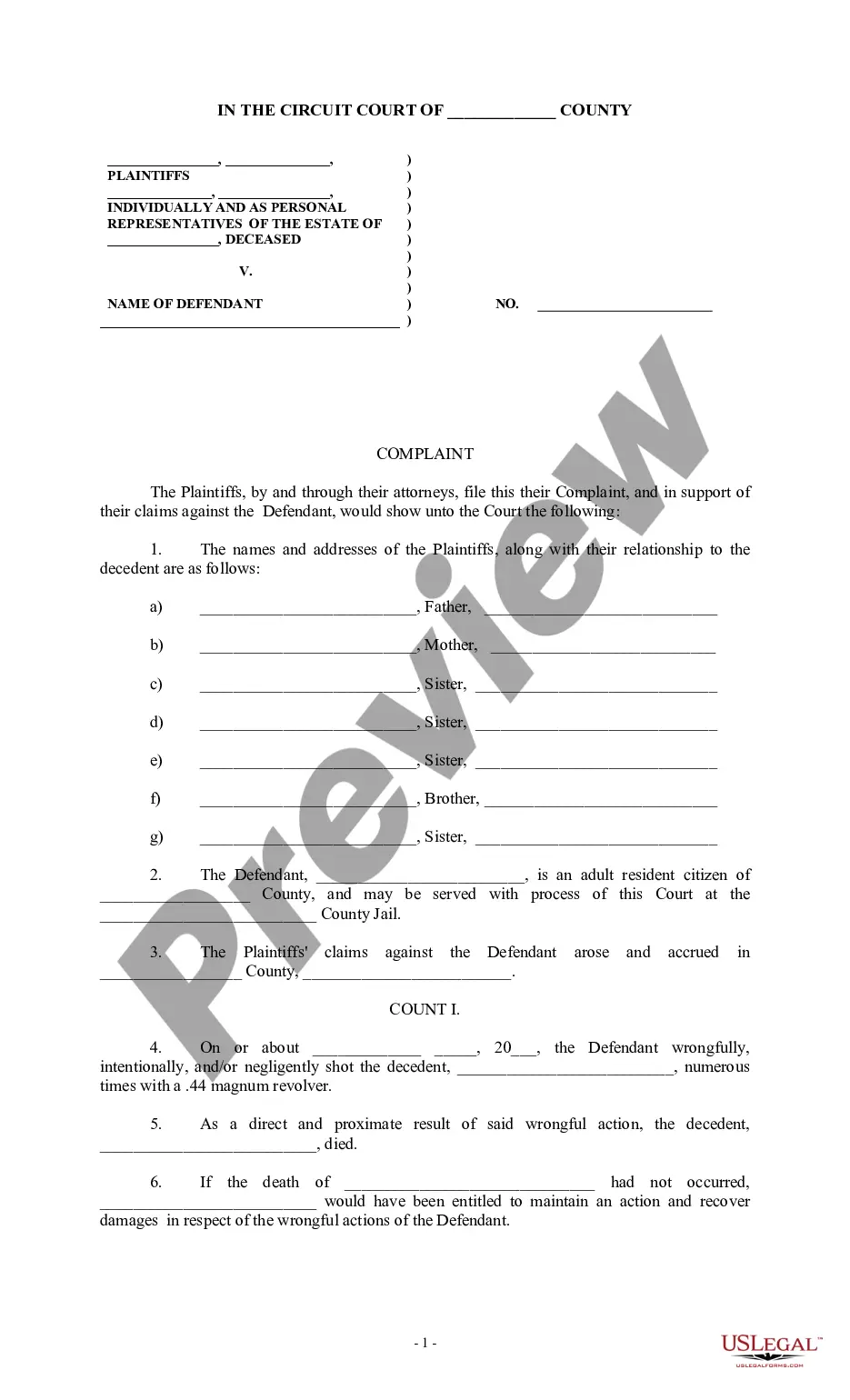
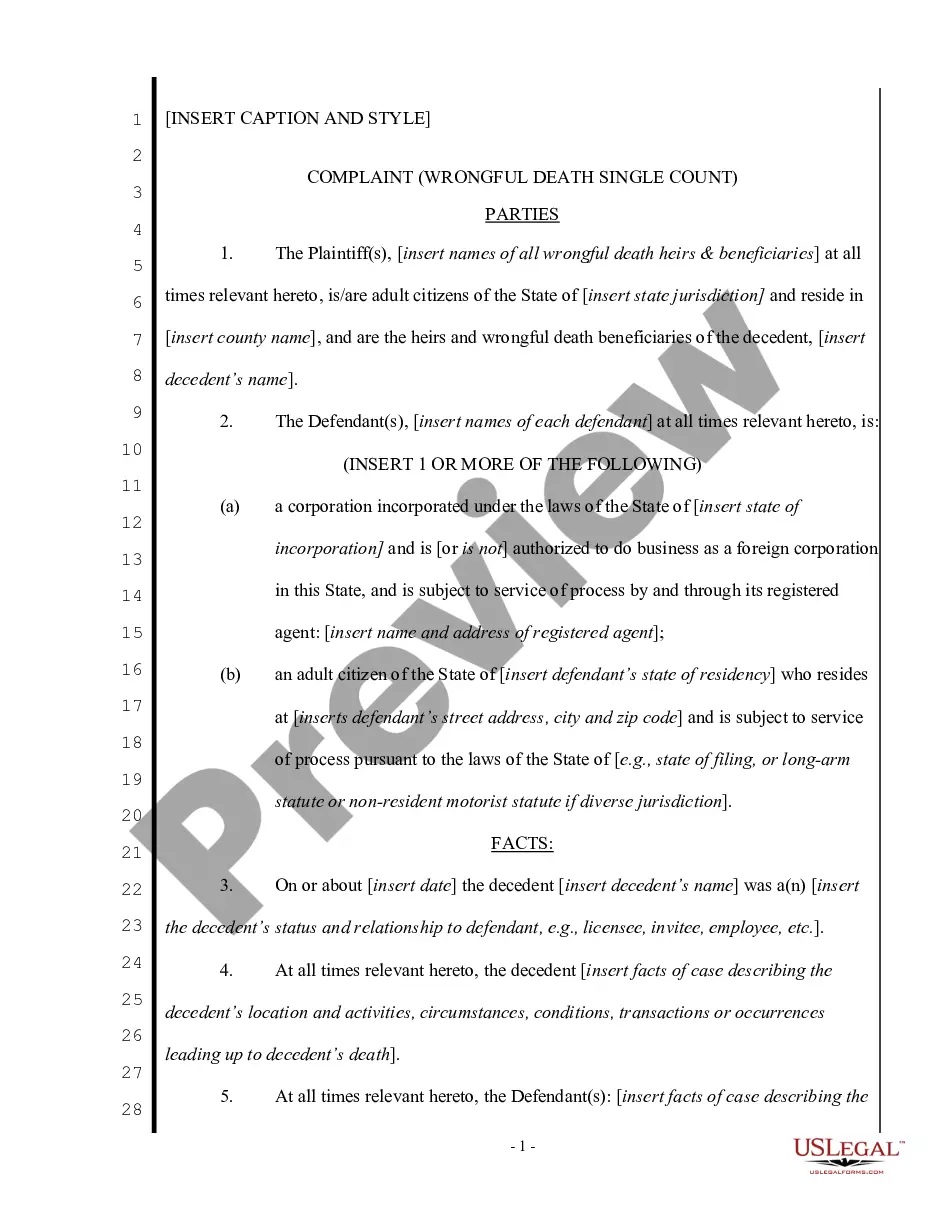
Get your form ready online
Our built-in tools help you complete, sign, share, and store your documents in one place.
Built-in online Word editor
Make edits, fill in missing information, and update formatting in US Legal Forms—just like you would in MS Word.
Export easily
Download a copy, print it, send it by email, or mail it via USPS—whatever works best for your next step.
E-sign your document
Sign and collect signatures with our SignNow integration. Send to multiple recipients, set reminders, and more. Go Premium to unlock E-Sign.
Notarize online 24/7
If this form requires notarization, complete it online through a secure video call—no need to meet a notary in person or wait for an appointment.
Store your document securely
We protect your documents and personal data by following strict security and privacy standards.

Make edits, fill in missing information, and update formatting in US Legal Forms—just like you would in MS Word.

Download a copy, print it, send it by email, or mail it via USPS—whatever works best for your next step.

Sign and collect signatures with our SignNow integration. Send to multiple recipients, set reminders, and more. Go Premium to unlock E-Sign.

If this form requires notarization, complete it online through a secure video call—no need to meet a notary in person or wait for an appointment.

We protect your documents and personal data by following strict security and privacy standards.
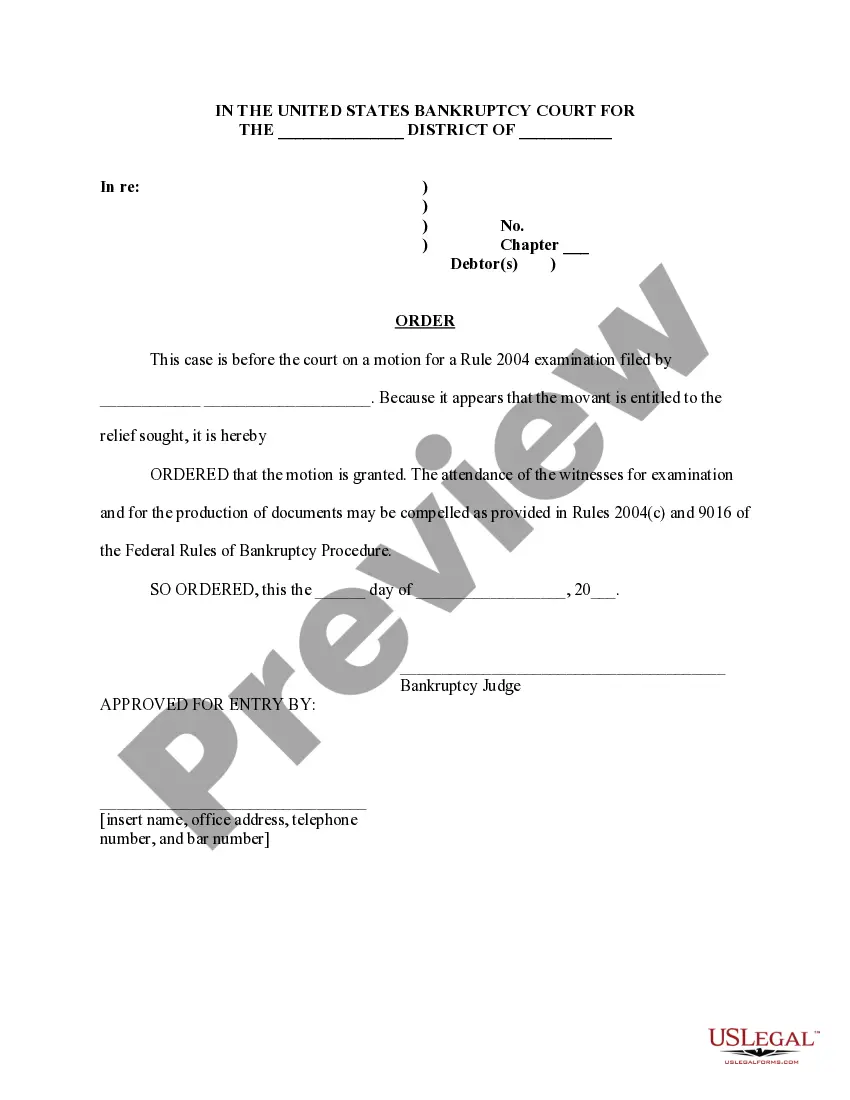
Looking for another form?




How to fill out Complaint For Wrongful Interference With Right To Possession For Burial?
Are you presently in the position where you require documents for potentially business or personal reasons almost every day.
There are numerous legal document templates accessible online, but locating ones you can trust is not straightforward.
US Legal Forms provides a vast array of form templates, such as the Iowa Complaint For Wrongful Interference With Right To Possession For Burial, which are crafted to comply with federal and state regulations.
Utilize US Legal Forms, the most extensive collection of legal forms, to save time and prevent mistakes.
The service offers properly designed legal document templates that you can use for a variety of purposes. Create an account on US Legal Forms and start simplifying your life.
- If you are already familiar with the US Legal Forms website and possess an account, simply Log In.
- After that, you can download the Iowa Complaint For Wrongful Interference With Right To Possession For Burial template.
- If you do not have an account and wish to start using US Legal Forms, follow these instructions.
- Obtain the form you need and ensure it is for the appropriate area/jurisdiction.
- Utilize the Review feature to evaluate the form.
- Check the details to confirm you have selected the correct form.
- If the form is not what you seek, use the Search section to find the form that fits your needs and requirements.
- Once you find the correct form, just click Get now.
- Select the pricing plan you prefer, complete the necessary information to create your account, and purchase the order using your PayPal or credit card.
- Choose a convenient file format and download your copy.
- Access all the document templates you have purchased in the My documents list. You can obtain an additional copy of the Iowa Complaint For Wrongful Interference With Right To Possession For Burial at any time if needed. Just click the desired form to download or print the document template.
Form popularity
FAQ
Yes, a hospital can be liable for negligent mishandling of a corpse if it is found to have acted negligently or improperly in the handling of a deceased person's body.
Mishandling a corpse refers to any inappropriate, disrespectful, or unlawful treatment of a dead person's body, including physical maltreatment, incorrect storage or disposal, or failure to properly prepare the body for burial or cremation.
? That human remains should always be treated with dignity and respect. ? Burials should not be disturbed without good reason. However it was noted that the demands of the modern world are such that it may be necessary to disturb burials in advance of development.
Human remains means a deceased human body or any portion of a deceased human body, except: Clean, dry bones or bone fragments; human hair; teeth; fingernails or toenails; or. A deceased human body and portions thereof that have already been fully cremated before import; or.
The tort of interference with a dead body applies to intentional acts, reckless acts, and negligent acts. An undertaker who negligently or recklessly embalms a deceased person's body is liable for the tort if he or she harms the body or if he or she prevents the body from being properly buried or cremated.