Iowa Heirship Affidavit - Descent

Overview of this form
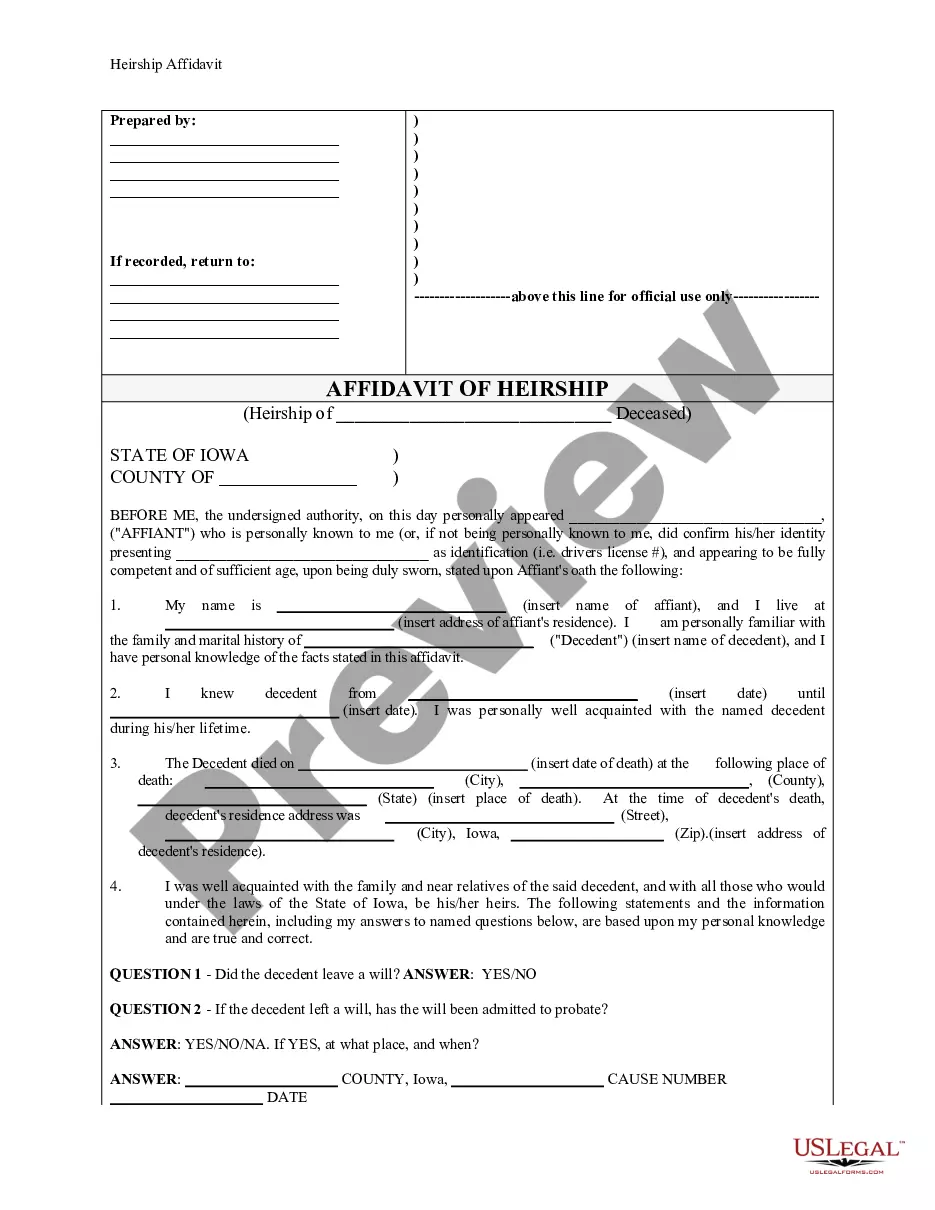
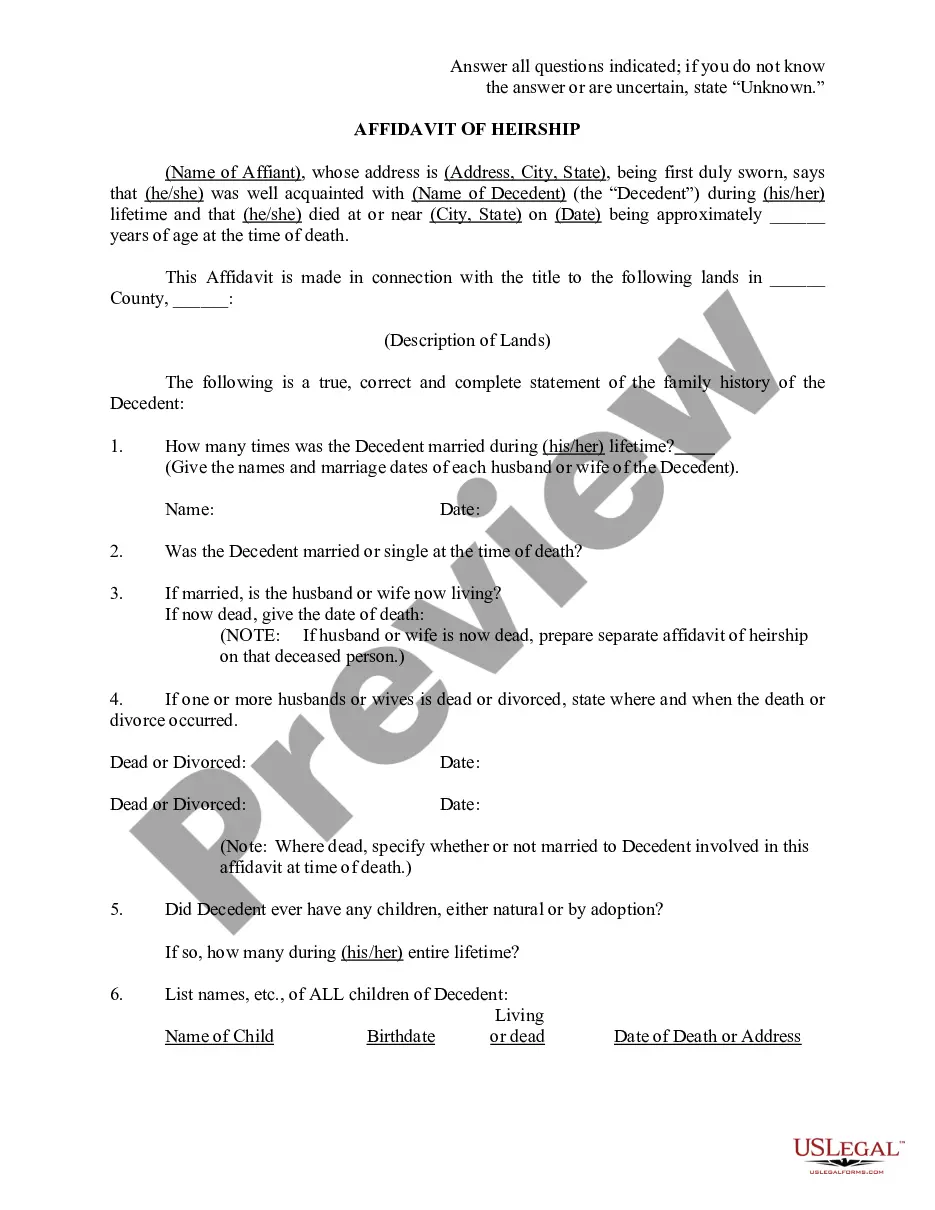
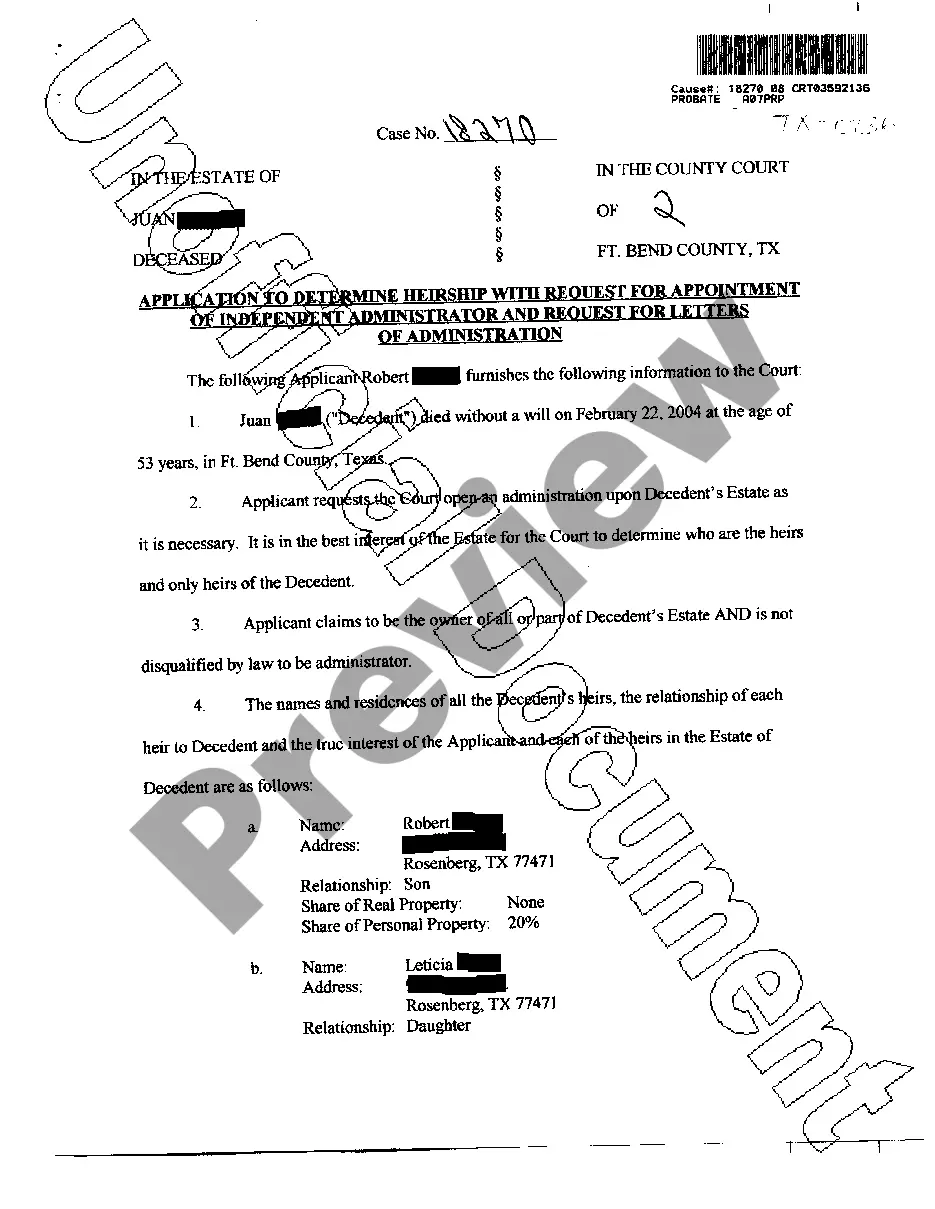
The Heirship Affidavit - Descent is a legal form used to declare the heirs of a deceased person. This document is essential for establishing ownership of both real and personal property, particularly when someone passes away without leaving a will. Unlike a Last Will and Testament, which specifies an individual's wishes, an heirship affidavit serves to identify and confirm rightful heirs, particularly useful when transferring property titles.
What’s included in this form
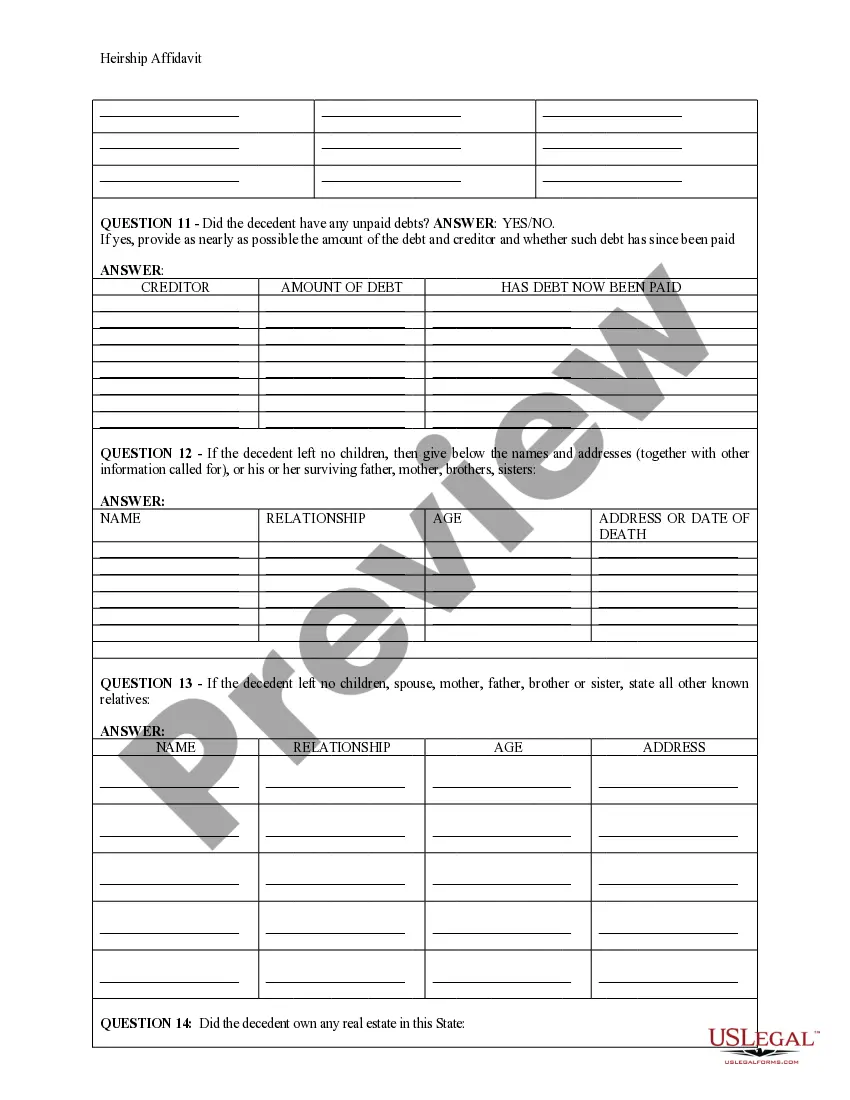
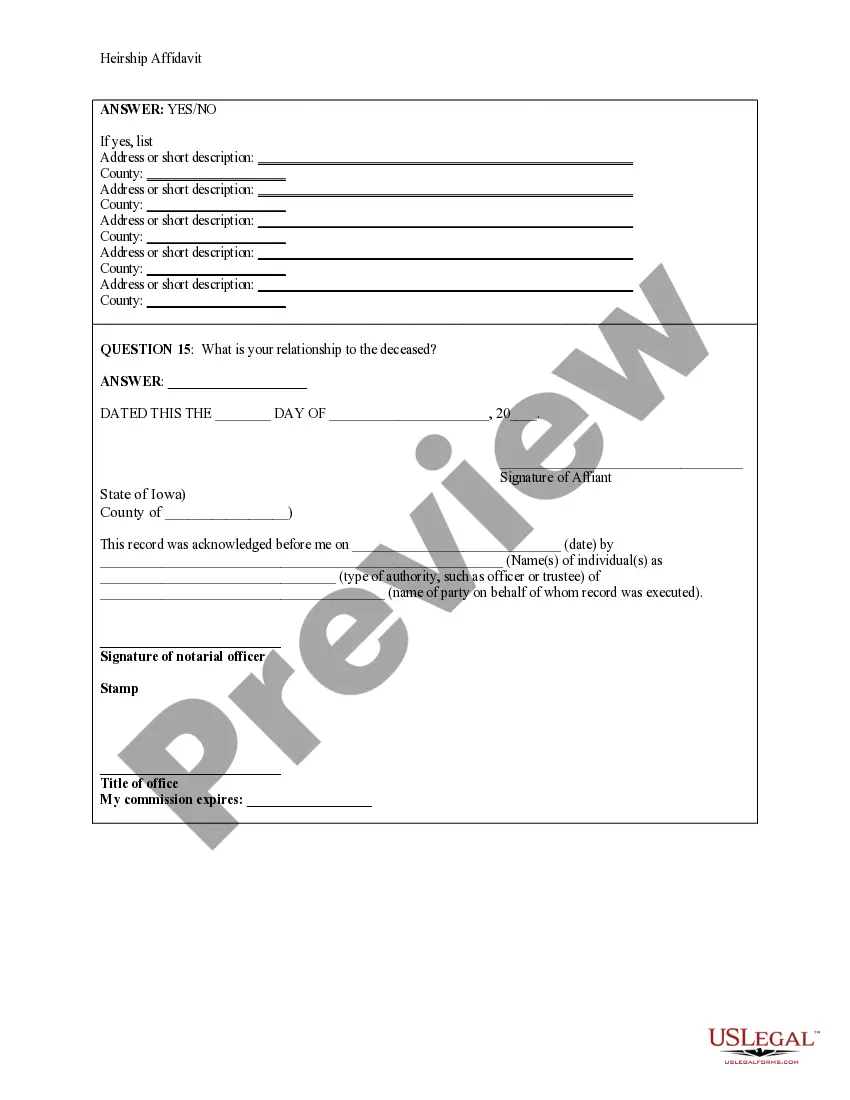
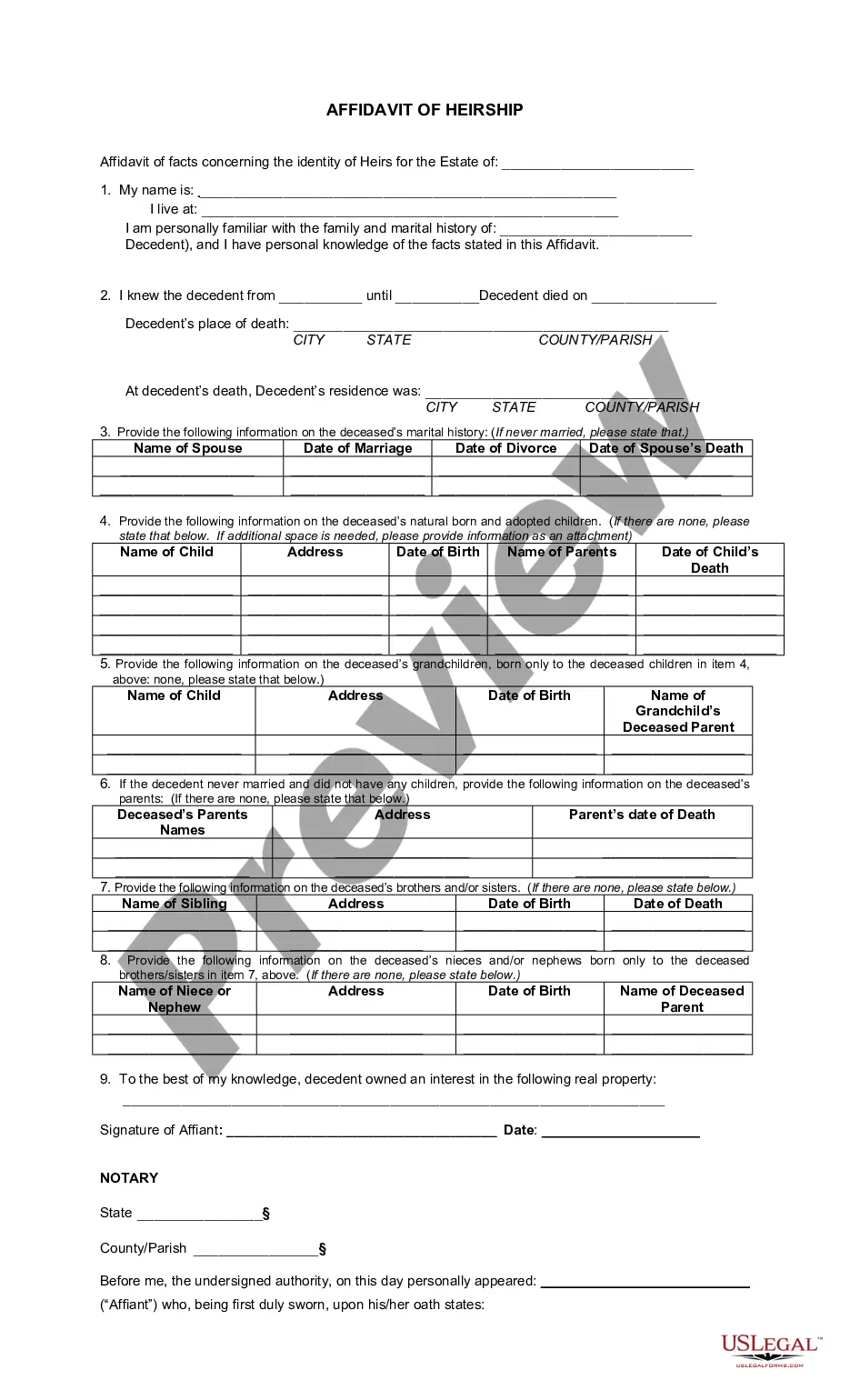
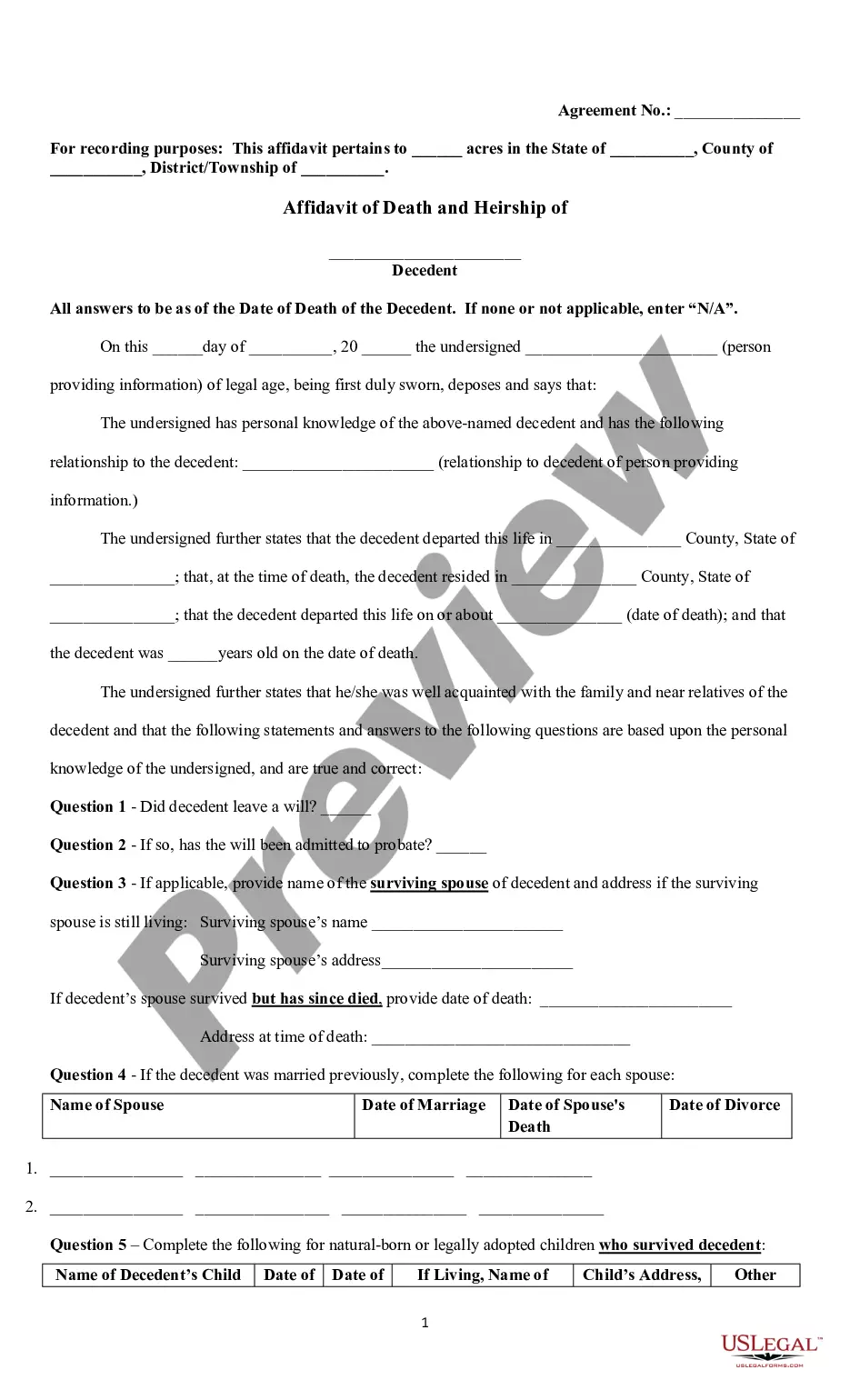
- Affiant identification: Information about the person completing the affidavit.
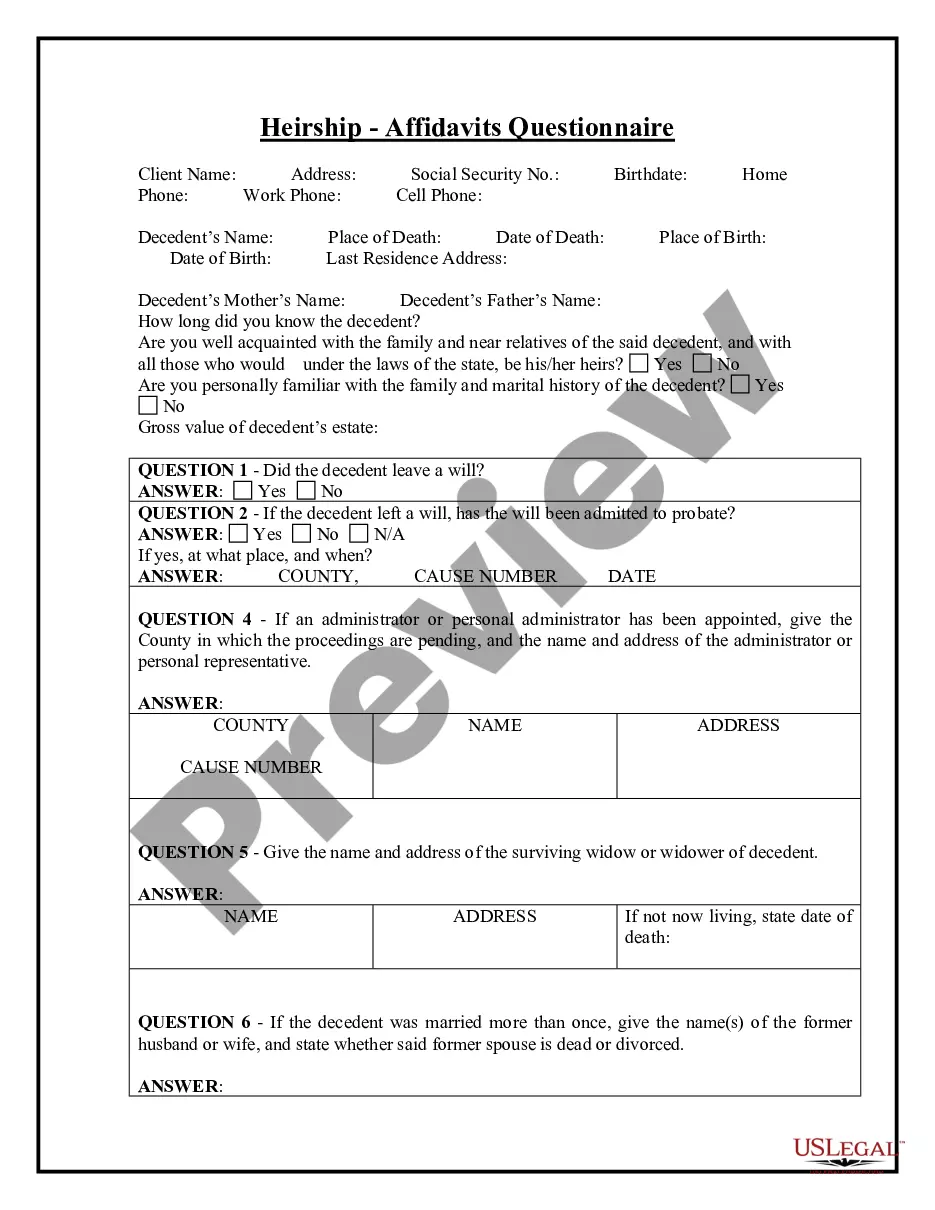
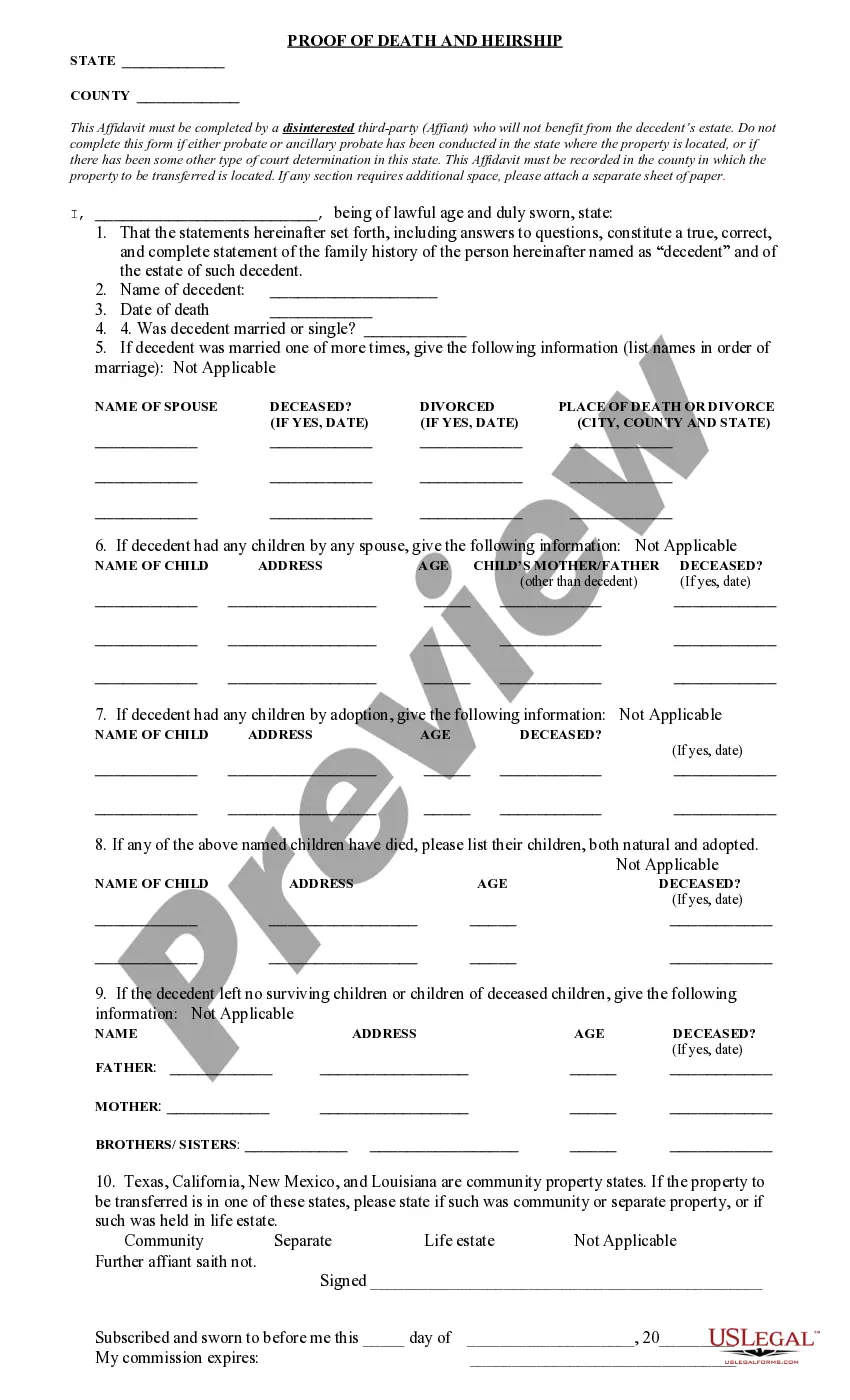
- Decedent's details: Name, date of death, and other relevant personal information about the deceased.
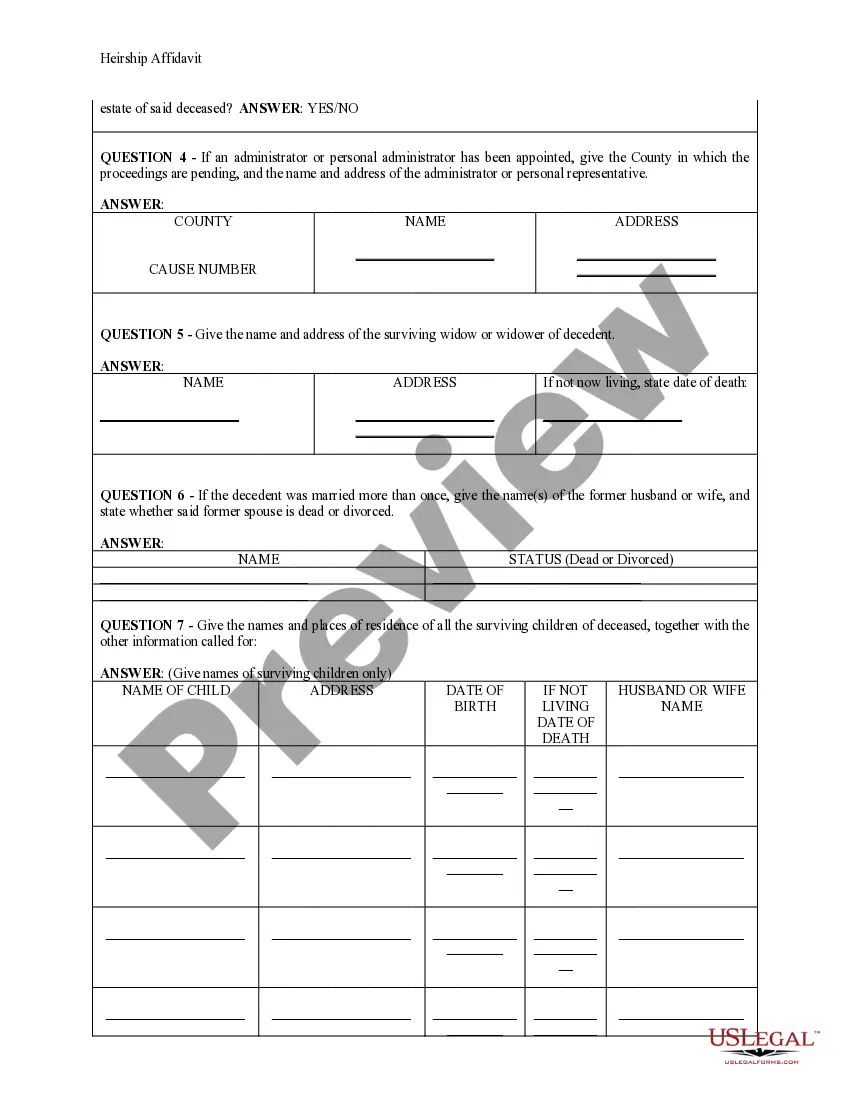
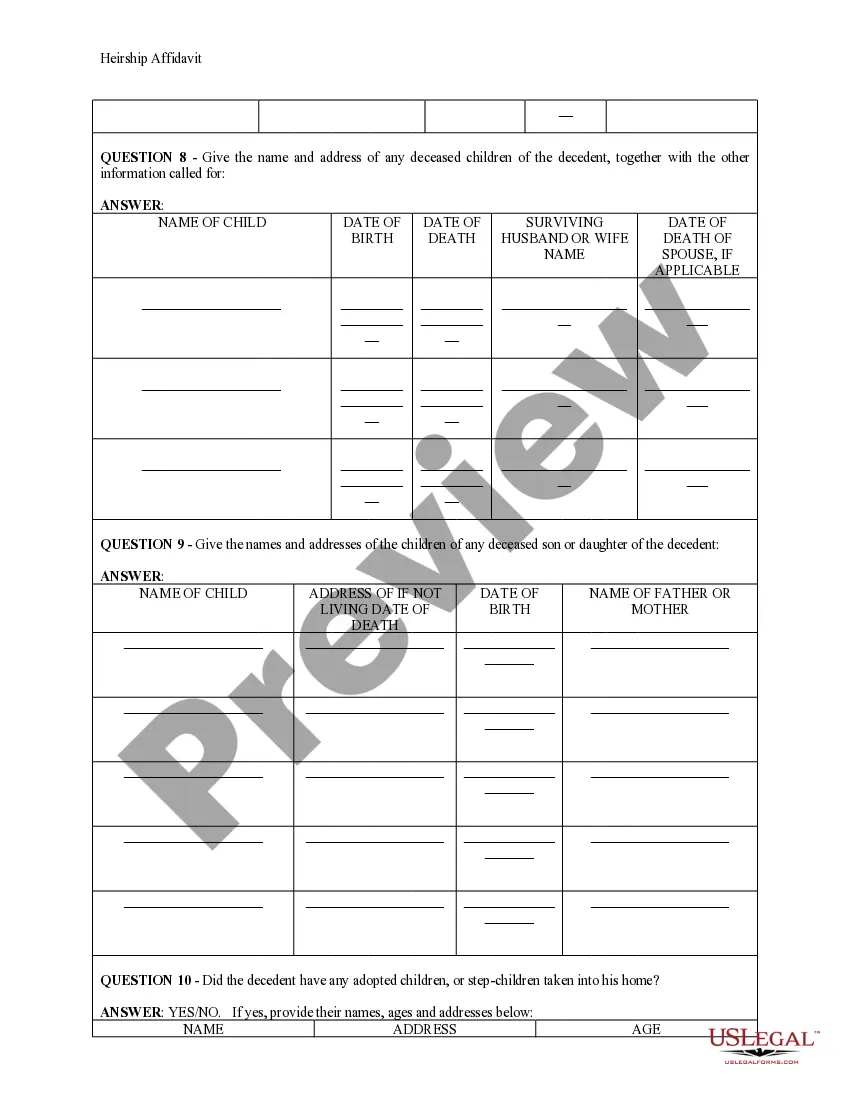
- Heir information: Names and addresses of surviving heirs, including spouses and children.
- Property details: Any real estate owned by the decedent at the time of death.
- Questions regarding wills and estate representatives to clarify the legal context.
When this form is needed
This form is typically used in scenarios where a person has died intestate (without a will) and there is a need to establish legal heirs for estate matters. For example, if an individual passes away leaving minor children or a surviving spouse, this affidavit assists in confirming their right to inherit property. It's particularly necessary when selling real estate owned by the deceased to ensure clear title transfer to the heirs.
Who this form is for
- Individuals who need to declare the heirs of a deceased person.
- Surviving family members looking to clarify inheritance rights.
- Executors or personal representatives of an estate who require confirmation of heirs.
How to complete this form
- Enter your personal information as the affiant, including your name and address.
- Provide details about the decedent, including their full name, date of death, and residence at the time of death.
- List all heirs, including names and current addresses, along with their relationships to the decedent.
- Answer relevant questions concerning any wills, probate proceedings, or potential debts of the deceased.
- Sign the affidavit in the presence of a notary to validate the document.
Does this document require notarization?
Yes, this form must be notarized to be legally valid. US Legal Forms offers integrated online notarization services, allowing you to securely notarize the document via video call, ensuring compliance without the need for in-person visits.
Get your form ready online
Our built-in tools help you complete, sign, share, and store your documents in one place.
Make edits, fill in missing information, and update formatting in US Legal Forms—just like you would in MS Word.
Download a copy, print it, send it by email, or mail it via USPS—whatever works best for your next step.
Sign and collect signatures with our SignNow integration. Send to multiple recipients, set reminders, and more. Go Premium to unlock E-Sign.
If this form requires notarization, complete it online through a secure video call—no need to meet a notary in person or wait for an appointment.
We protect your documents and personal data by following strict security and privacy standards.

Make edits, fill in missing information, and update formatting in US Legal Forms—just like you would in MS Word.

Download a copy, print it, send it by email, or mail it via USPS—whatever works best for your next step.

Sign and collect signatures with our SignNow integration. Send to multiple recipients, set reminders, and more. Go Premium to unlock E-Sign.

If this form requires notarization, complete it online through a secure video call—no need to meet a notary in person or wait for an appointment.

We protect your documents and personal data by following strict security and privacy standards.
Mistakes to watch out for
- Failing to include all surviving heirs, which can lead to legal complications.
- Not having the affidavit notarized, if required by local law.
- Providing incorrect information about the decedent's debts or estate status.
Benefits of completing this form online
- Convenience: Download and complete the form at your own pace from the comfort of your home.
- Editability: Easily make corrections or updates as necessary before finalizing the document.
- Reliability: Access a form drafted by licensed attorneys to ensure compliance with legal standards.
- The form serves as an official declaration of heirship and can help resolve property ownership disputes.
- It is important to ensure that all information provided is accurate to avoid legal challenges later on.
- The completed form may need to be filed with local probate courts or land records offices, depending on the situation.
Main things to remember
- The Heirship Affidavit - Descent is crucial for establishing legal heirs when a person dies intestate.
- Completing this form accurately is vital to avoid complications in property transfers.
- Notarization is a key step to ensure the affidavit's legality.
Looking for another form?
Form popularity
FAQ
The Iowa Heirship Affidavit - Descent is a legal document used to establish and declare the heirs of a deceased person when there is no will. It facilitates the transfer of ownership of assets, including real and personal property, to rightful heirs and is particularly helpful when an estate has not been opened or probated.
Yes. The form includes a signature and a notarization section, and Iowa practice generally requires notarization for sworn statements used to establish heirship when there is no will.
In Iowa, this form can be prepared and used without an attorney, but the process involves questions about heirs, the decedent, and assets that can affect rights and debts. Consider consulting a licensed attorney if you’re unsure how to complete the affidavit's components.
Fill out the affiant’s name and address, the decedent’s full name and death details, indicate whether a will exists, list surviving family members and their relationships, describe the property and any debts, and finish with the affiant’s signature and the notarization section.
This form is designed for cases where the decedent died without a will and an estate has not been opened or probated, helping heirs establish their right to inherit property. It may allow transfers without formal probate in some situations, but outcomes vary; consult a licensed attorney.
This Descent version specifically targets estates where the decedent died intestate and the estate has not been opened or probated, focusing on proving heirs and transferring assets accordingly. Other heirship affidavits may address different probate scenarios or procedures.