Hawaii Interrogatories to Defendant for Motor Vehicle Accident
What this document covers
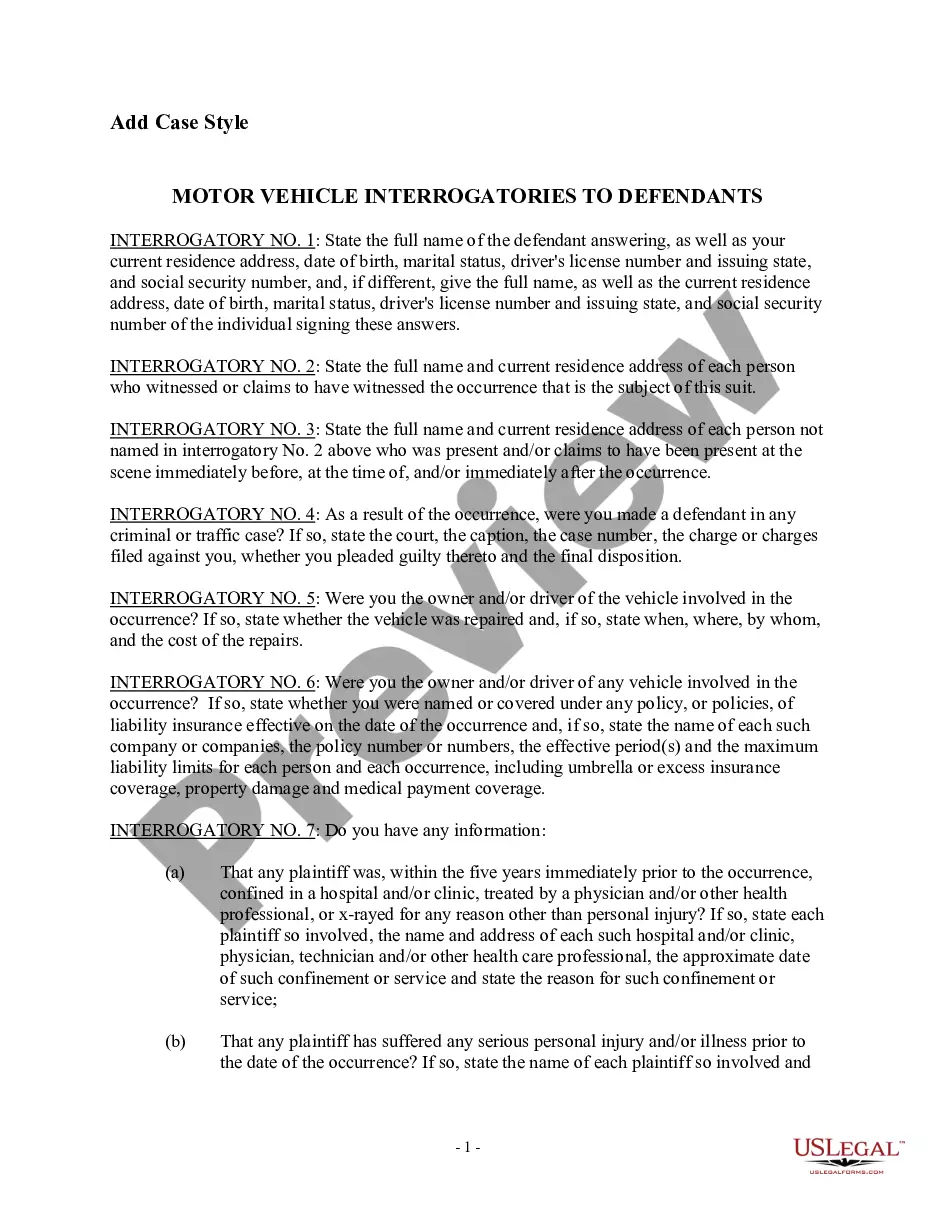
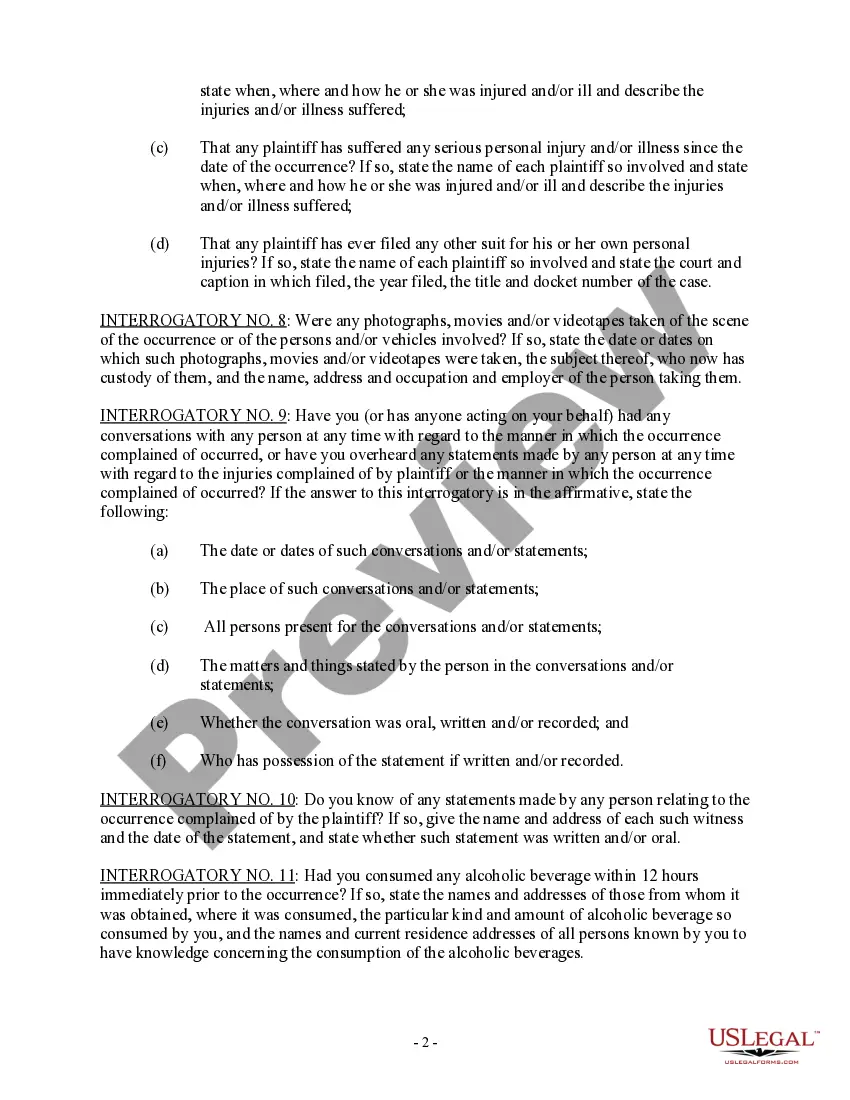
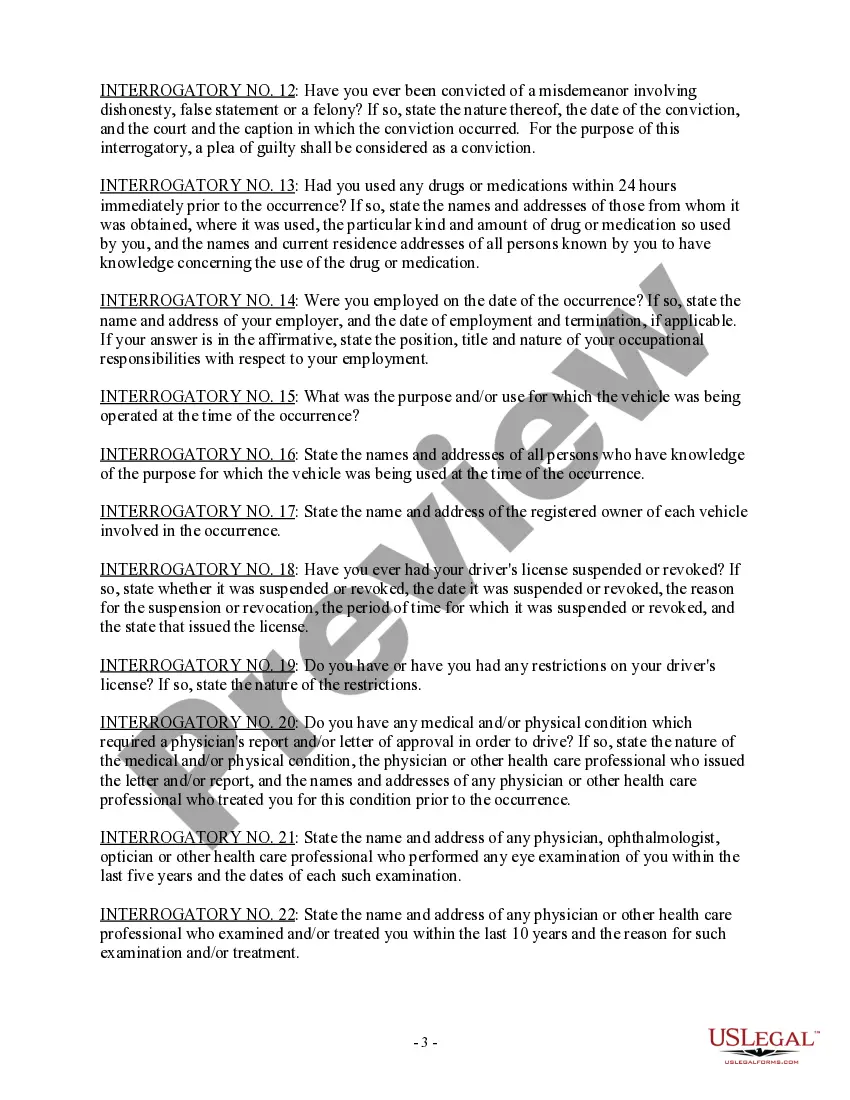
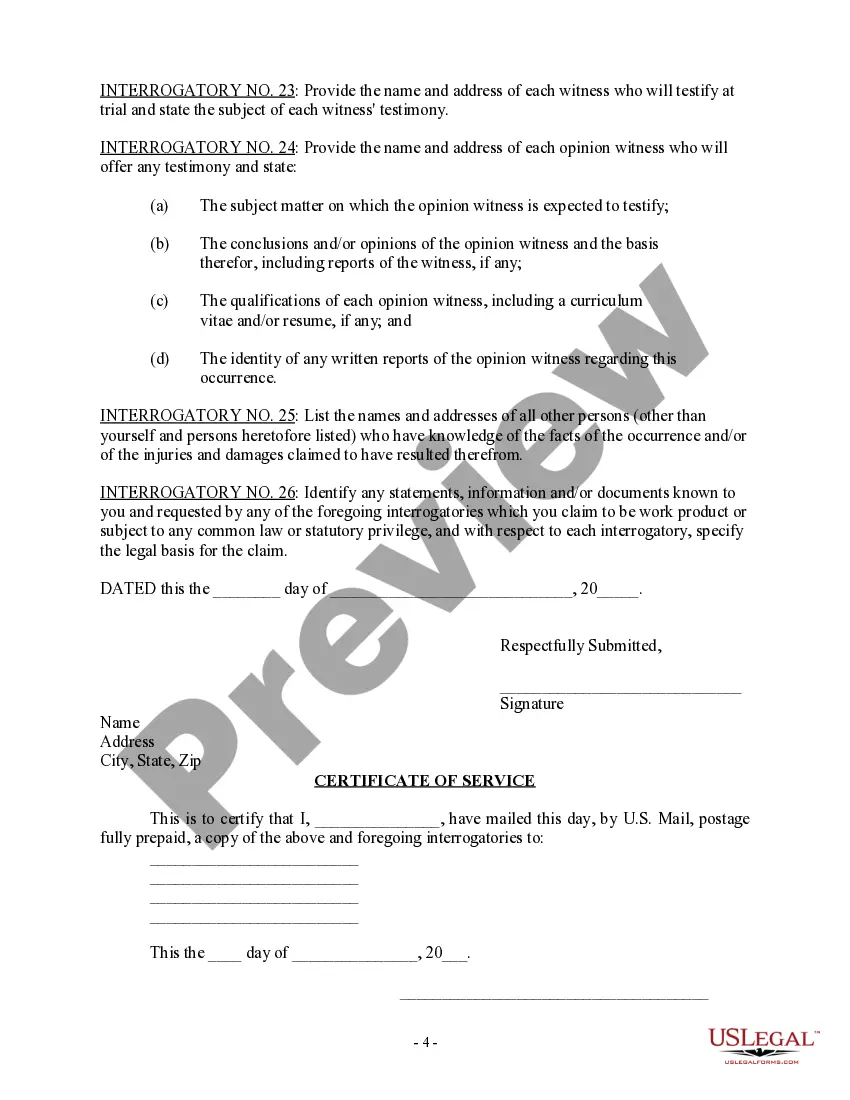
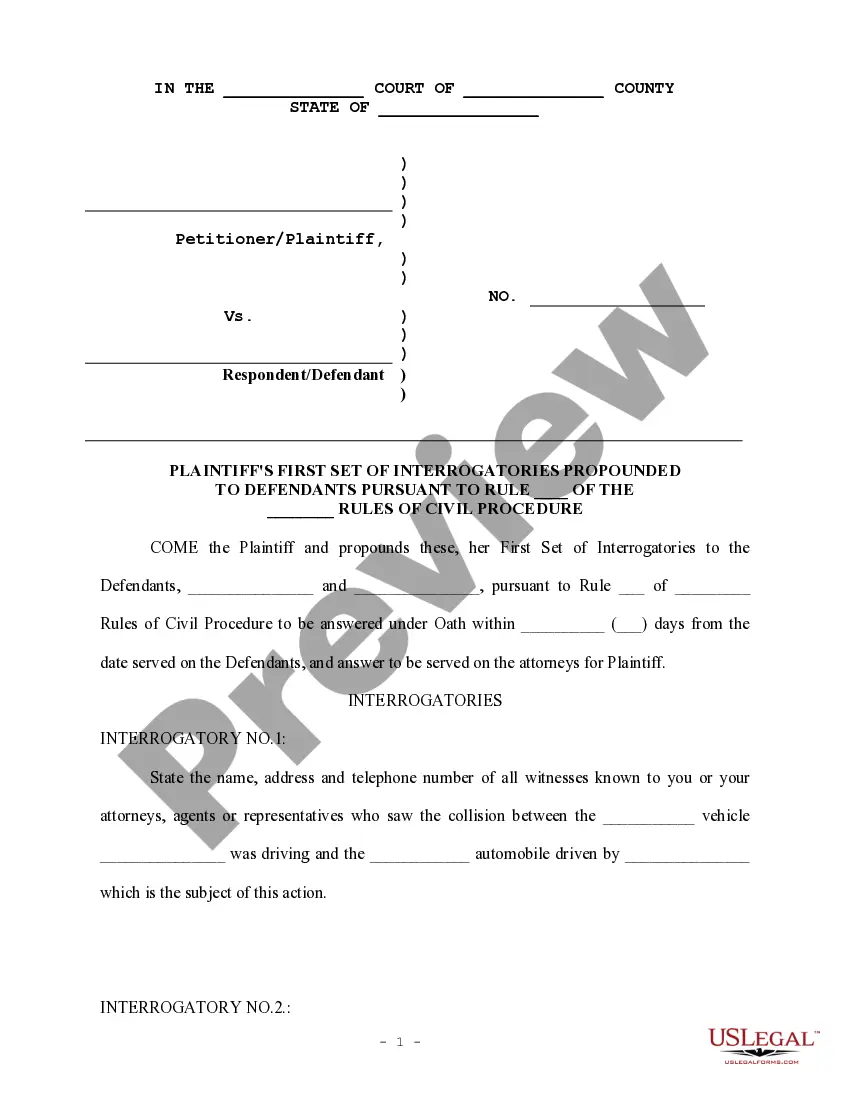
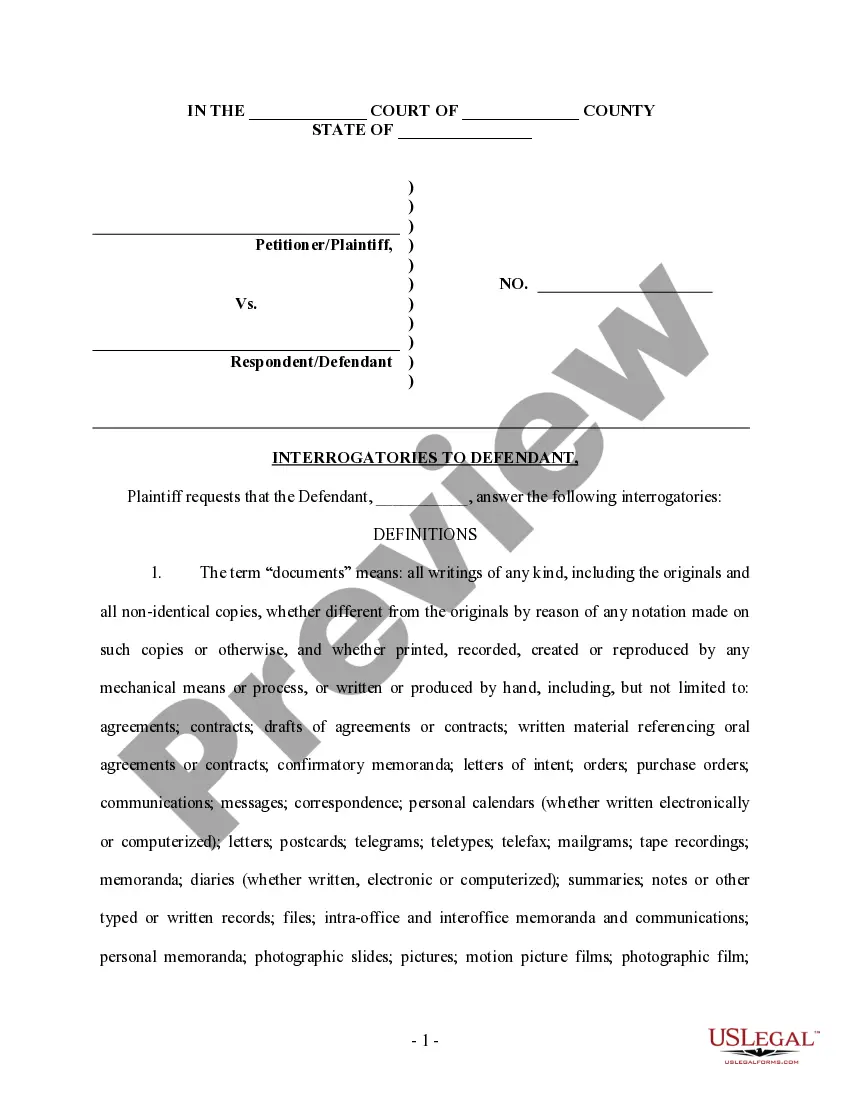
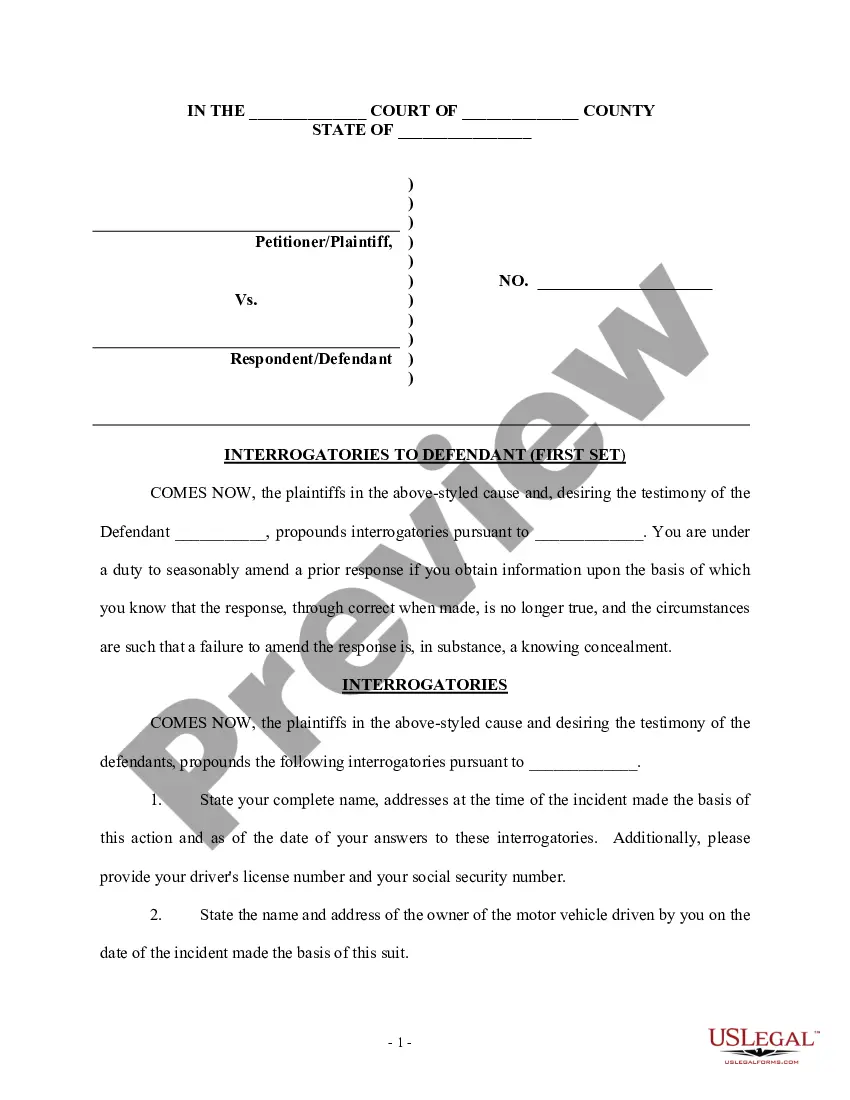
The Interrogatories to Defendant for Motor Vehicle Accident is a legal document consisting of a set of 28 questions directed from a plaintiff to a defendant involved in a vehicle accident case. This form is designed to gather crucial information regarding the details of the incident, the parties involved, and any witnesses present. Unlike other legal forms, this one specifically targets defendants to clarify their accounts and gather evidence pertinent to the plaintiff's claims.
Key components of this form
- Full identification details of the defendant, including personal and driver's license information.
- List of witnesses and other individuals present at the scene of the accident.
- Details of any criminal or traffic cases resulting from the incident.
- Information regarding vehicle ownership and insurance coverage applicable at the time of the accident.
- Questions about the defendant's health and prior incidents that may affect the case.
- Requirement to disclose any evidence such as photographs or videos related to the accident.

Situations where this form applies
This form should be used when initiating a legal case involving a motor vehicle accident. It is particularly useful for plaintiffs seeking detailed information from the defendant that can help establish liability or damages. Additionally, it can be used during the discovery phase of a lawsuit to gather evidence and evaluate the defendant's perspective of the incident.
Who can use this document
This form is intended for individuals involved in a motor vehicle accident lawsuit, including:
- Plaintiffs seeking compensation for damages from the defendant.
- Legal representatives of plaintiffs in vehicle accident cases.
- Defendants responding to claims related to a motor vehicle accident.
Steps to complete this form
- Identify the parties involved, including full legal names and addresses.
- Answer the questions listed in the form accurately and completely.
- Provide any necessary documentation or evidence referenced in the interrogatories.
- Ensure that the form is signed and dated by the respondent, affirming the truthfulness of the answers.
- File the completed form with the appropriate court and serve a copy to the plaintiff.
Notarization guidance
This form does not typically require notarization unless specified by local law. Always check the jurisdiction's requirements to ensure compliance.
Get your form ready online
Our built-in tools help you complete, sign, share, and store your documents in one place.
Make edits, fill in missing information, and update formatting in US Legal Forms—just like you would in MS Word.
Download a copy, print it, send it by email, or mail it via USPS—whatever works best for your next step.
Sign and collect signatures with our SignNow integration. Send to multiple recipients, set reminders, and more. Go Premium to unlock E-Sign.
If this form requires notarization, complete it online through a secure video call—no need to meet a notary in person or wait for an appointment.
We protect your documents and personal data by following strict security and privacy standards.

Make edits, fill in missing information, and update formatting in US Legal Forms—just like you would in MS Word.

Download a copy, print it, send it by email, or mail it via USPS—whatever works best for your next step.

Sign and collect signatures with our SignNow integration. Send to multiple recipients, set reminders, and more. Go Premium to unlock E-Sign.

If this form requires notarization, complete it online through a secure video call—no need to meet a notary in person or wait for an appointment.

We protect your documents and personal data by following strict security and privacy standards.
Typical mistakes to avoid
- Failing to answer all questions, which could lead to incomplete responses.
- Not providing accurate or updated personal information, such as current addresses.
- Missing the filing deadlines or improper service of the form.
- Neglecting to sign and date the document, which may invalidate the submission.
Benefits of using this form online
- Convenience of downloading and completing the form at your own pace.
- Editability allows customization of questions to fit specific circumstances.
- Access to forms drafted by licensed attorneys ensures legal accuracy and compliance.
- Reduced costs compared to hiring an attorney for simple filing procedures.
Legal use & context
- The interrogatories are used in the discovery phase of litigation to gather information from the defendant.
- Responses to these interrogatories can be used in court as evidence if properly addressed.
- Failure to respond adequately may result in legal penalties or limitations in the plaintiff's case.
What to keep in mind
- The Interrogatories to Defendant for Motor Vehicle Accident is essential for gathering information from the defendant.
- Filling out the form accurately can play a significant role in the outcome of a personal injury case.
- Use this form to clarify details about the accident, vehicle ownership, and insurance coverage.
Looking for another form?
Form popularity
FAQ
An improper interrogatory refers to questions that do not comply with legal standards, such as those that invade privacy or seek irrelevant information. In the context of Hawaii Interrogatories to Defendant for Motor Vehicle Accident, an interrogatory may be deemed improper if it does not pertain directly to the incident or related claims. Recognizing these issues early on can save time and resources. USLegalForms can assist in identifying and drafting appropriate queries.
If a party does not answer interrogatories in a case involving Hawaii Interrogatories to Defendant for Motor Vehicle Accident, the opposing party may file a motion to compel an answer. Failing to respond can result in delays and negative implications for the case. It's crucial to maintain communication with your legal counsel to avoid these situations. Addressing issues promptly can lead to more favorable outcomes.
Valid objections to interrogatories include assertions that the questions are vague, confusing, or request privileged information. Additionally, you may object if the interrogatories seek information outside the scope of the case. It is essential to provide a clear rationale for your objections. Utilizing the USLegalForms platform can help streamline this process effectively.
When faced with Hawaii Interrogatories to Defendant for Motor Vehicle Accident, there are several valid grounds for objecting. Common reasons include irrelevance to the case, overbroad questioning, or the request being unduly burdensome. A formal objection must outline the basis for the refusal to answer. Engaging with legal professionals can help you craft appropriate responses.
When you decide not to answer interrogatories, it is important to communicate this decision clearly. In the context of Hawaii Interrogatories to Defendant for Motor Vehicle Accident, you should consult with your attorney about the appropriate steps. Not providing a response can lead to legal consequences, including potential sanctions. Therefore, ensure you are following proper legal procedures.
If someone doesn't answer interrogatories, the party affected can file a motion to compel a response. This situation is significant in Hawaii Interrogatories to Defendant for Motor Vehicle Accident, as it can lead to the court ordering the respondent to answer the questions. Additionally, failure to respond can result in adverse rulings or a loss of the chance to present a full defense. It's essential to take interrogatories seriously and provide complete answers.
Ignoring a discovery request, including interrogatories, can have serious consequences. In the context of Hawaii Interrogatories to Defendant for Motor Vehicle Accident, neglecting to respond may result in penalties set by the court. Moreover, your case could be adversely affected, as the court might assume the information you withheld is unfavorable to your position. Always treat discovery requests with the importance they deserve.
Yes, interrogatories must be answered unless a valid objection is raised. In Hawaii, recipients of Hawaii Interrogatories to Defendant for Motor Vehicle Accident are legally obligated to respond within a specified timeframe. Failing to answer can impact your case and may lead to court sanctions. Therefore, it is crucial to respond promptly and accurately to any interrogatories you receive.
When drafting Hawaii Interrogatories to Defendant for Motor Vehicle Accident, focus on questions that clarify the facts and gather necessary details. You might ask about the events leading to the accident, the conditions of the road, or any witnesses present. These questions help establish a comprehensive understanding of the case. By targeting specific aspects of the incident, you can strengthen your position during the legal process.
In Hawaii Interrogatories to Defendant for Motor Vehicle Accident, it is important to avoid questions that are privileged, leading, or speculative. Do not request information that is irrelevant to the case or questions that are meant to harass the opposing party. Being mindful of these boundaries helps maintain a professional tone and ensures compliance with legal standards. For clarity, consulting a legal expert can provide additional insights.