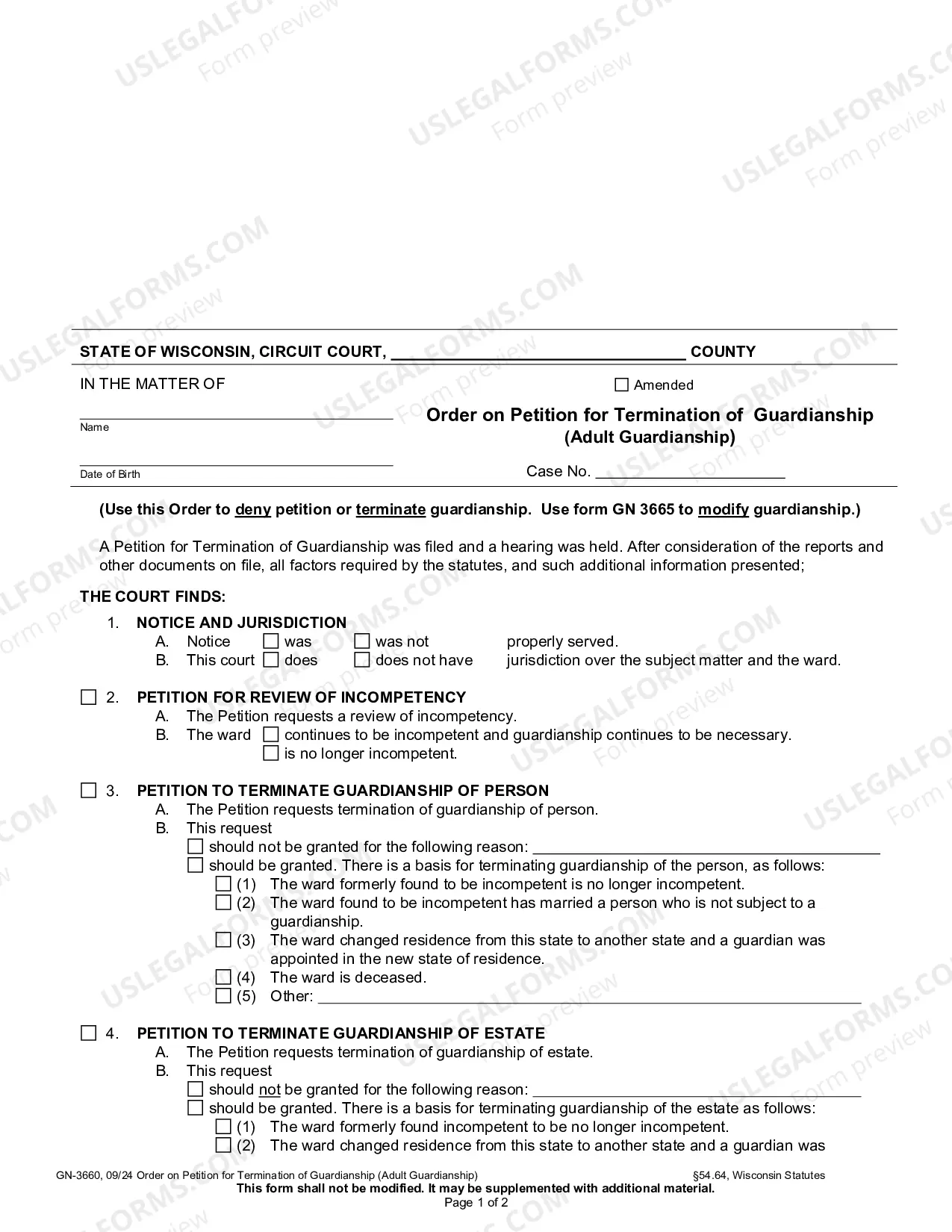
Notice of Removal to Federal Court
What is this form?
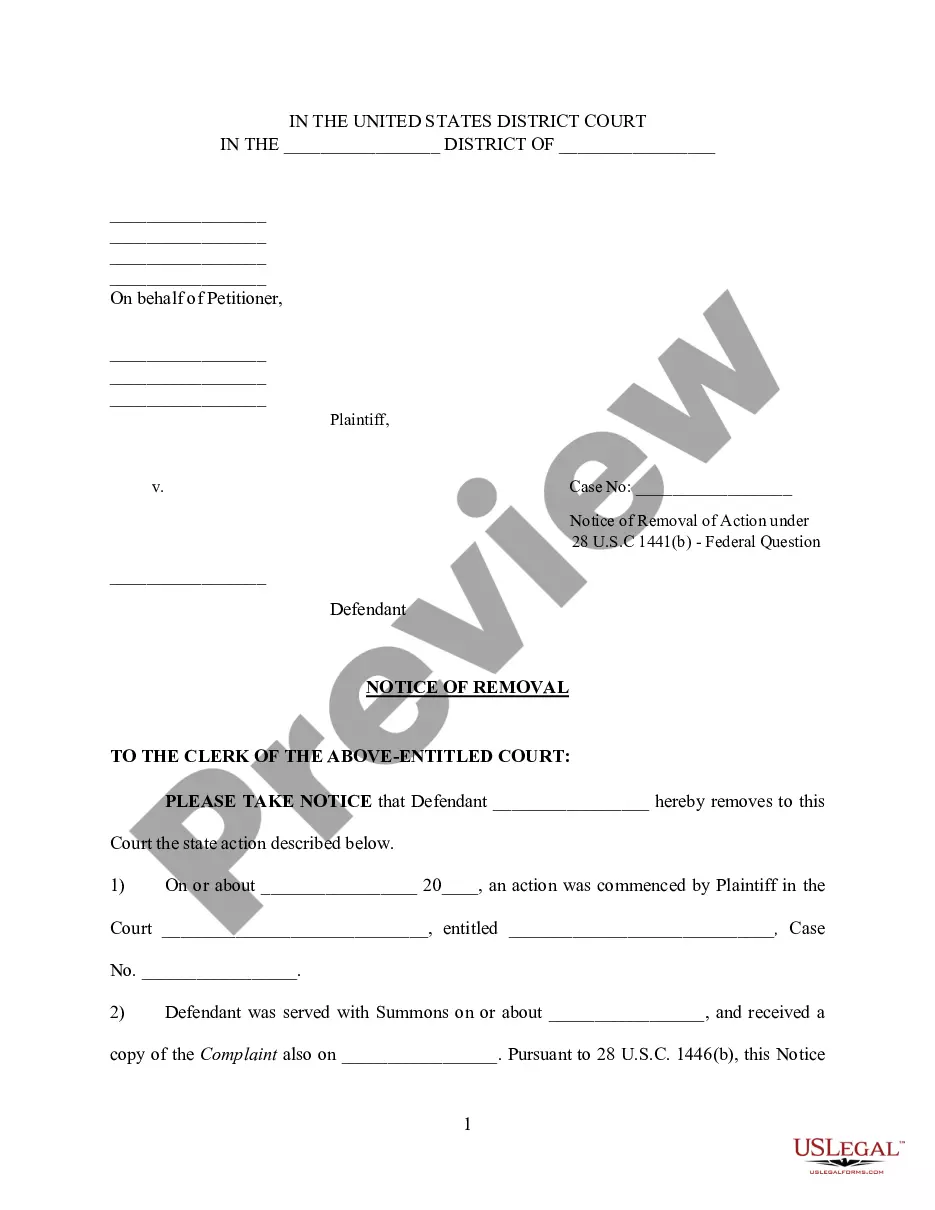
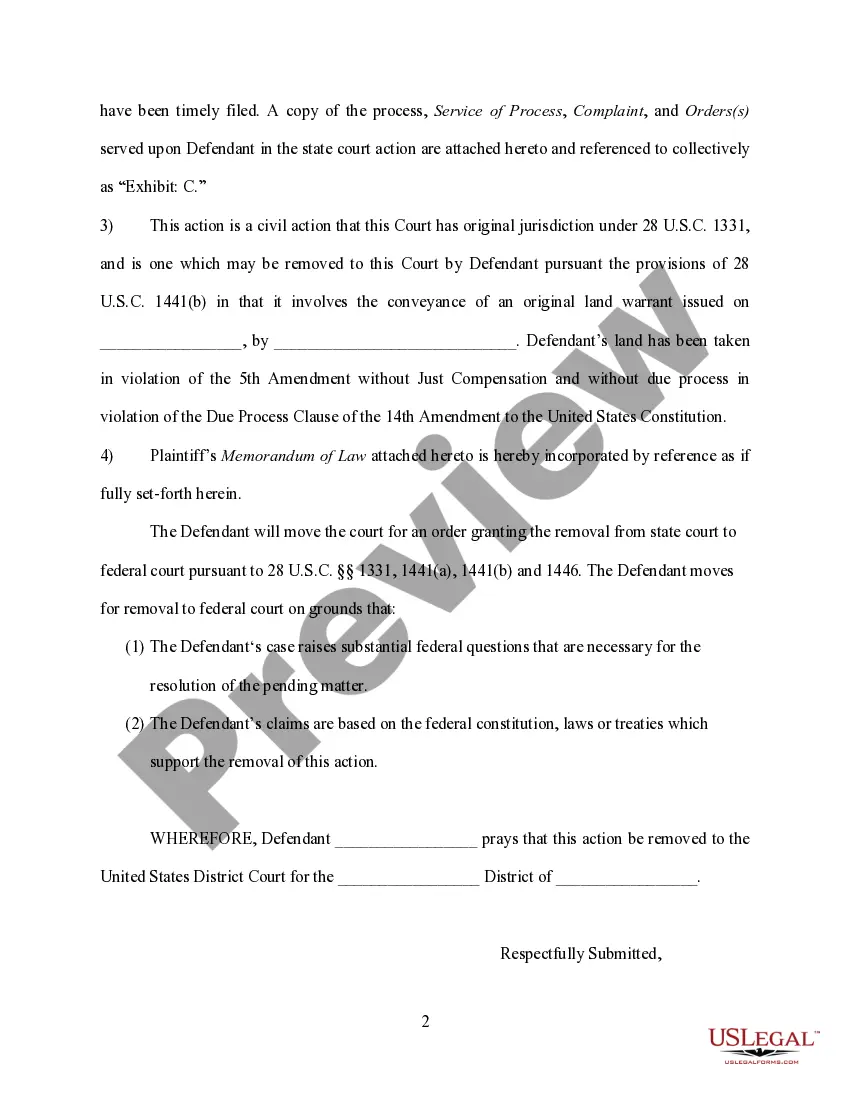
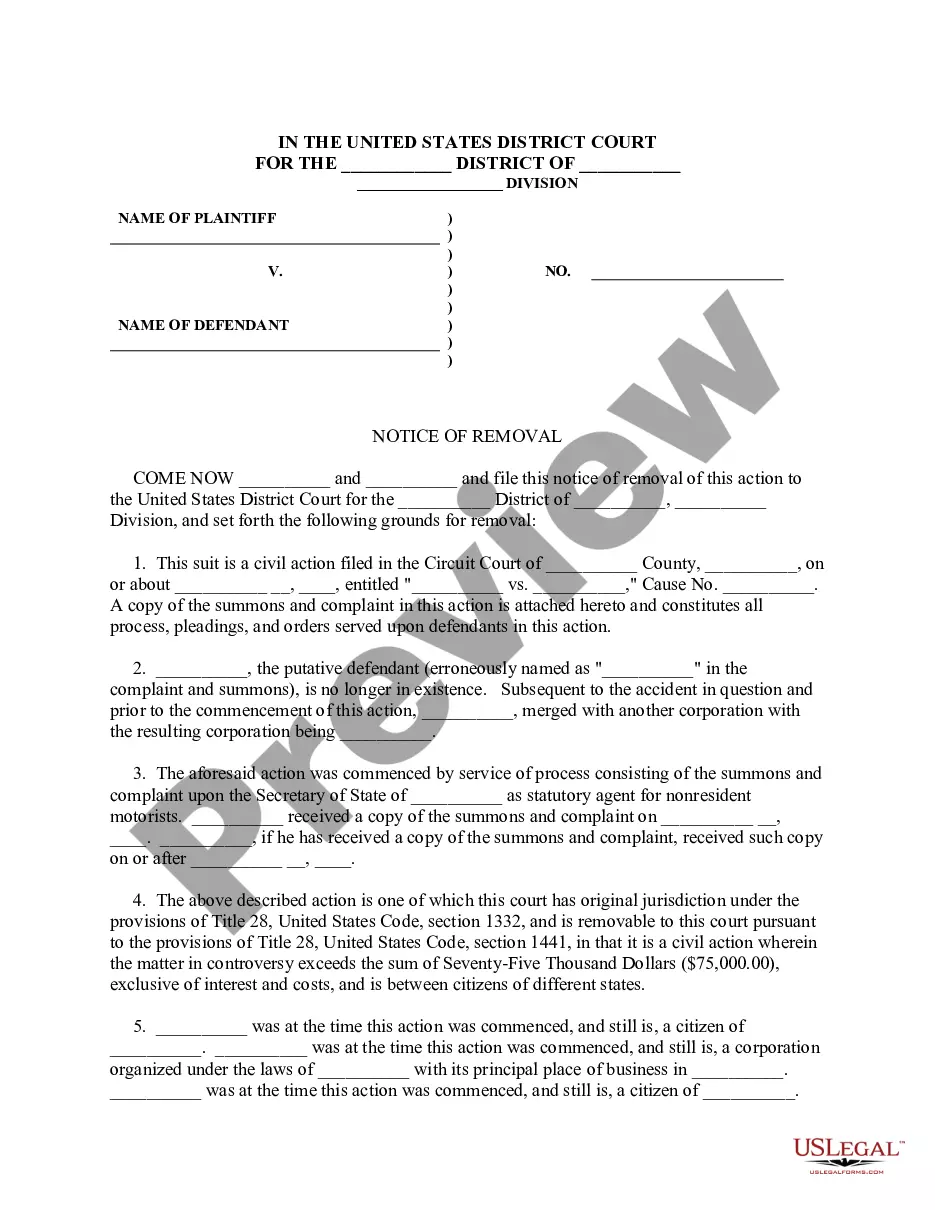
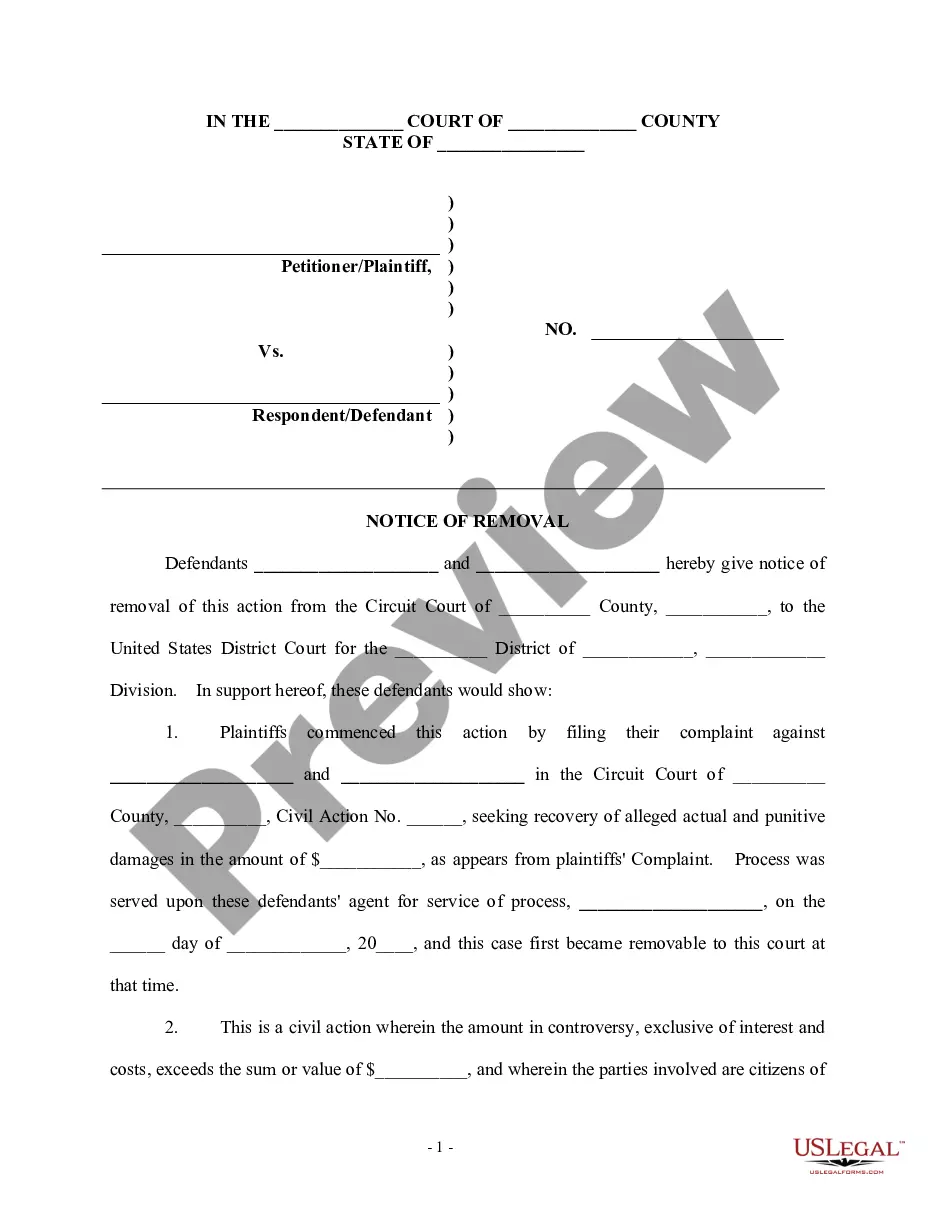
The Notice of Removal to Federal Court is a legal document that allows a defendant in a civil action filed in state court to transfer the case to a U.S. District Court. This form is specifically used when the defendant believes that the case involves significant federal issues, such as a violation of constitutional rights under the 5th and 14th Amendments. This differs from other legal notices, as it specifically outlines the grounds for federal jurisdiction and the basis for removal from state to federal court.
Main sections of this form
- Identifying information of the defendant and plaintiff, including names and case number.
- Date the action was commenced in state court.
- Details about the service of summons and complaint to the defendant.
- Legal justification for removal based on federal jurisdiction and constitutional claims.
- Incorporation of a Memorandum of Law that supports the removal.
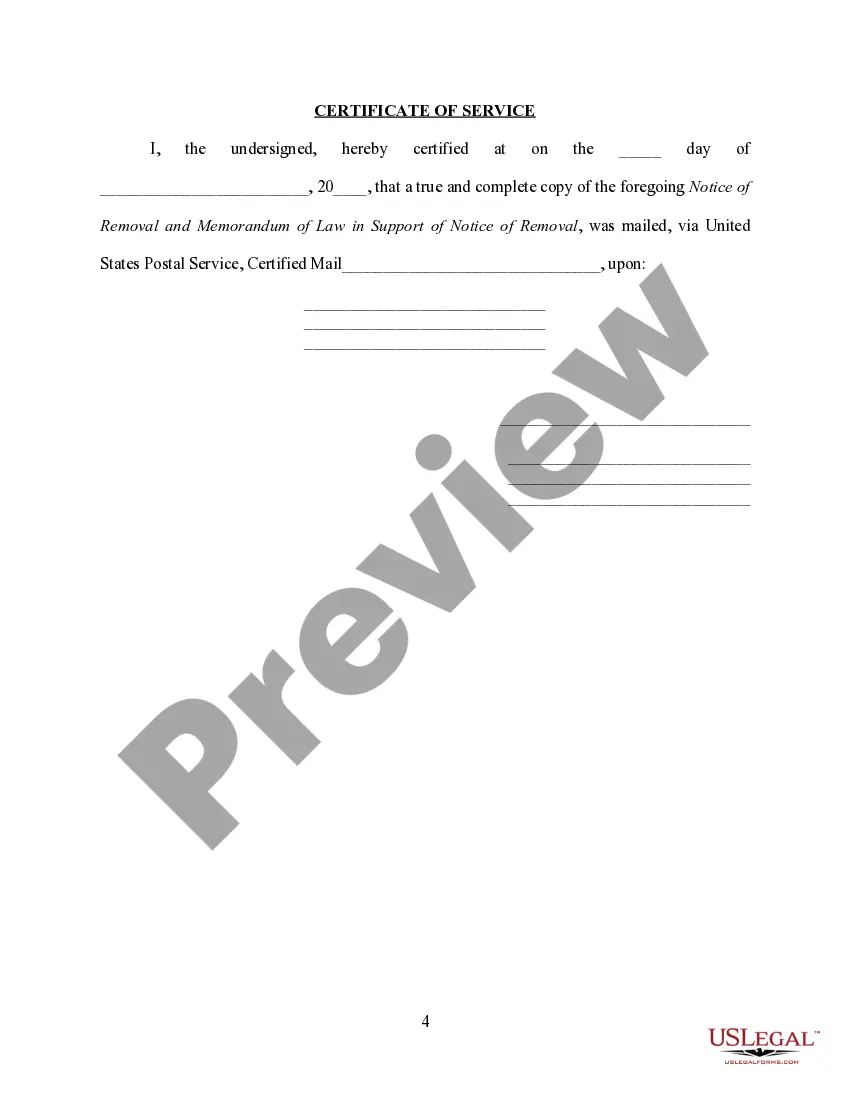
- Certificate of Service to verify that the notice has been properly delivered.


When to use this document
This form should be used when a defendant needs to move a civil case from state court to federal court due to substantial questions of federal law. Common scenarios include cases involving constitutional violations, specifically those related to property rights, or other federal statutes that may apply. This is crucial when the defense believes the state court lacks jurisdiction over federal issues raised in the case.
Who needs this form
- Defendants in civil actions filed in state courts who want to transfer their case to federal court.
- Individuals or entities facing claims involving constitutional issues, particularly regarding property rights.
- Legal representatives of defendants seeking to protect federal rights that may not be adequately addressed in state court.
Completing this form step by step
- Fill in the names of the petitioner and the plaintiff, along with the respective court information.
- Provide the case number and details including the date the action commenced and date of service.
- Clearly state the grounds for removal under federal jurisdiction and outline the constitutional claims involved.
- Attach and reference the necessary exhibits, such as the Memorandum of Law supporting the notice.
- Complete the Certificate of Service section, confirming the notice has been delivered to the relevant parties.
Is notarization required?
This form does not typically require notarization unless specified by local law. It is essential to review state requirements to confirm if notarization is needed for the specific case.
Get your form ready online
Our built-in tools help you complete, sign, share, and store your documents in one place.
Make edits, fill in missing information, and update formatting in US Legal Forms—just like you would in MS Word.
Download a copy, print it, send it by email, or mail it via USPS—whatever works best for your next step.
Sign and collect signatures with our SignNow integration. Send to multiple recipients, set reminders, and more. Go Premium to unlock E-Sign.
If this form requires notarization, complete it online through a secure video call—no need to meet a notary in person or wait for an appointment.
We protect your documents and personal data by following strict security and privacy standards.
Make edits, fill in missing information, and update formatting in US Legal Forms—just like you would in MS Word.
Download a copy, print it, send it by email, or mail it via USPS—whatever works best for your next step.
Sign and collect signatures with our SignNow integration. Send to multiple recipients, set reminders, and more. Go Premium to unlock E-Sign.

If this form requires notarization, complete it online through a secure video call—no need to meet a notary in person or wait for an appointment.
We protect your documents and personal data by following strict security and privacy standards.
Avoid these common issues
- Failing to file the notice within the statutory time frame set by federal law.
- Incomplete or inaccurate details regarding the parties involved or the case number.
- Neglecting to attach essential documents that support the removal, such as the Memorandum of Law.
- Misunderstanding the grounds for federal jurisdiction, leading to improper reasoning in the notice.
Why use this form online
- Convenience of downloading and completing the form at any time.
- Editability allows users to customize the form to their specific case details.
- Access to templates drafted by licensed attorneys ensures legal accuracy and reliability.
Legal use & context
- This form serves as a formal declaration to remove a case to federal court, which can have strategic advantages for the defense.
- Proper completion and filing of this notice are critical for maintaining the right to a federal forum.
- Failure to correctly utilize this form may result in the court refusing the removal or delays in the proceedings.
Quick recap
- The Notice of Removal to Federal Court is key for defendants wishing to transfer cases to federal jurisdiction.
- Accurate completion of the form prevents delays and ensures proper legal procedures are followed.
- Understanding the grounds for removal is crucial to its successful filing and acceptance by the federal court.
Looking for another form?
Form popularity
FAQ
Deadlines. Once a case is served, the defendant has 30 days to remove it to federal court. If a case is not initially removable, but becomes removable later?due to amendment, joinder, or otherwise?this typically triggers the 30-day deadline from the date of the operative event.
There is no reverse "removal". That is, if a case originates in a federal court, there is no ability for a defendant to remove a case from federal court into state court. If the federal court lacks jurisdiction, the case is dismissed.
Once a case is served, the defendant has 30 days to remove it to federal court. If a case is not initially removable, but becomes removable later?due to amendment, joinder, or otherwise?this typically triggers the 30-day deadline from the date of the operative event.
Once a case is removed to Federal court, the Federal Rules of Civil Procedure apply, and discovery may not begin until after a Rule 26(f) conference has been held. Riley v. Walgreen Co., 233 F.R.D. 496 (S.D.
Well, removing a case may alleviate certain concerns about prejudice or bias against an out-of-state defendant. Removal also allows the parties to use federal procedural rules instead of state rules. Federal rules may allow more leeway for the defendant.
WHY REMOVE A CASE TO FEDERAL COURT. Possible Advantages. A plaintiff generally gets to pick the forum and venue and this is one way to disrupt his/her possibly well-planned approach and to level the playing field. The removing party may have better familiarity with federal rules and procedural requirements.
(a) Procedure. A defendant or defendants desiring to remove any civil action or criminal prosecution from a state court shall file a Notice of Removal, signed pursuant to Rule 11 of the Federal Rules of Civil Procedure.