Florida Complaint For Eviction for failure to pay and recover (past due rent)
What this document covers
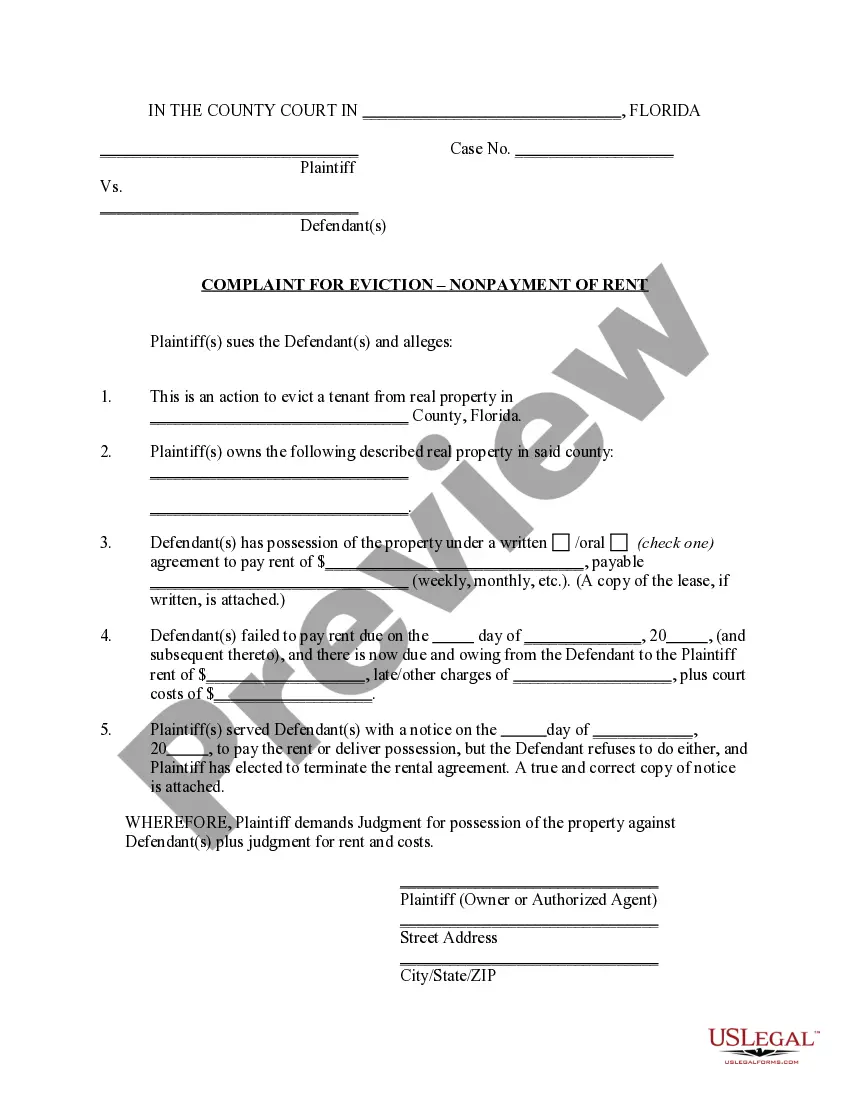
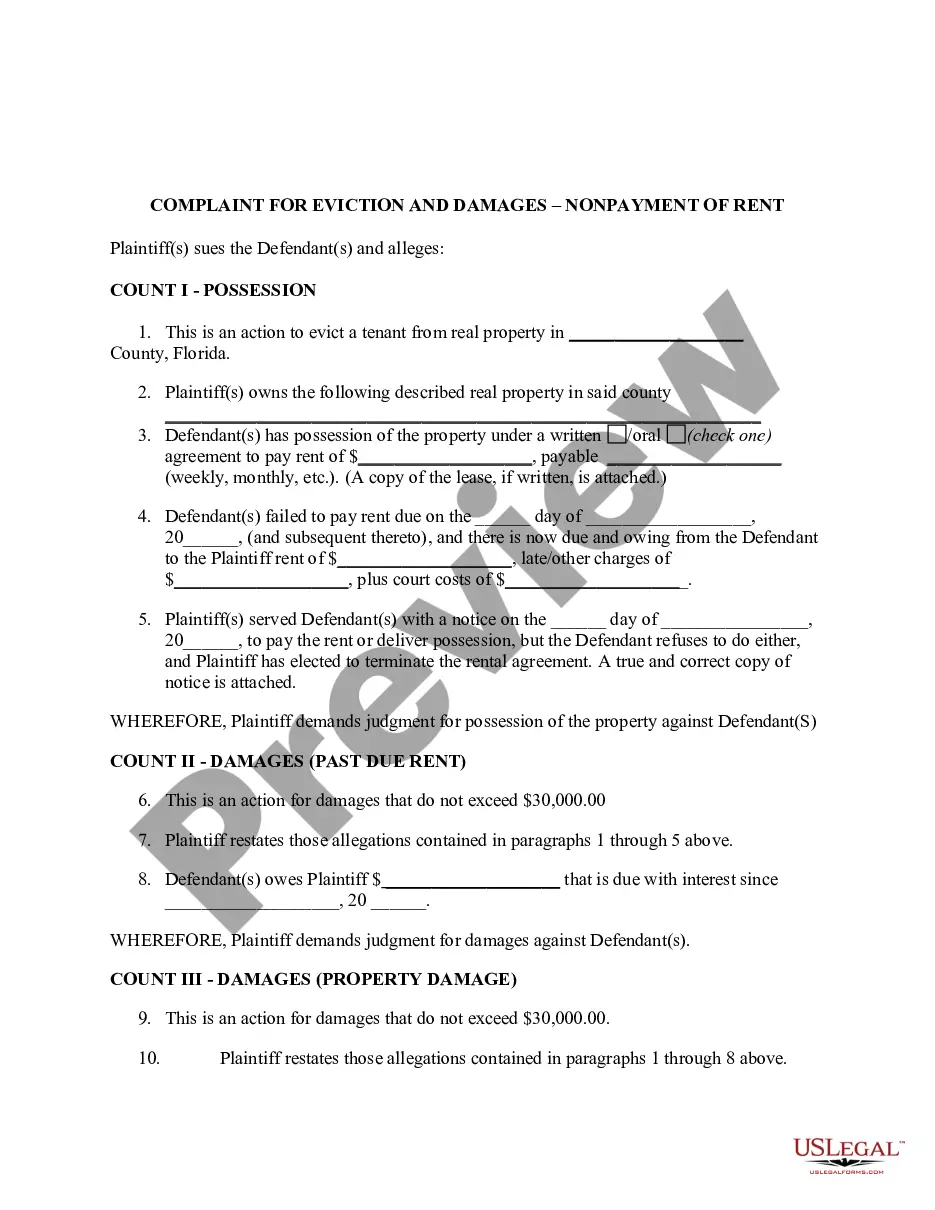
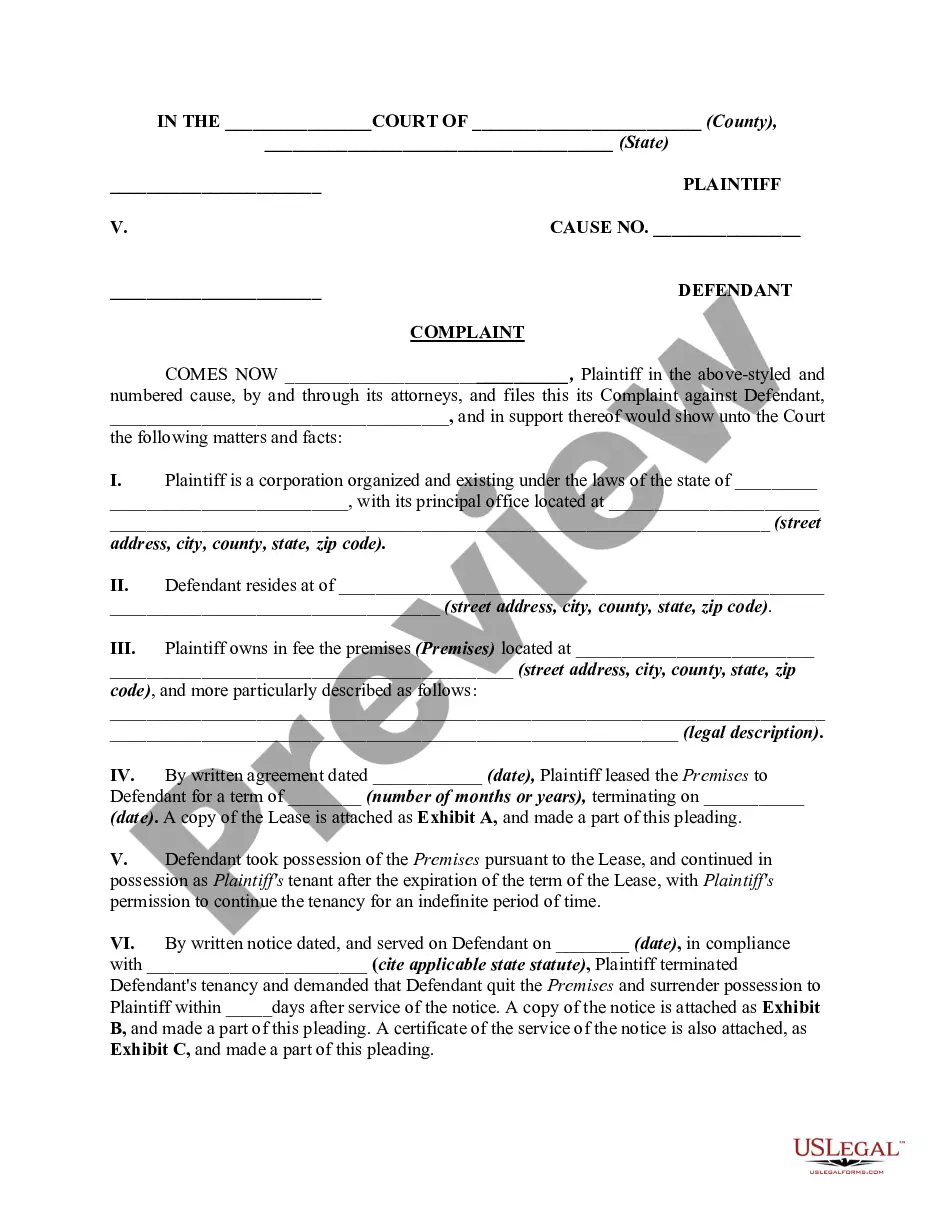
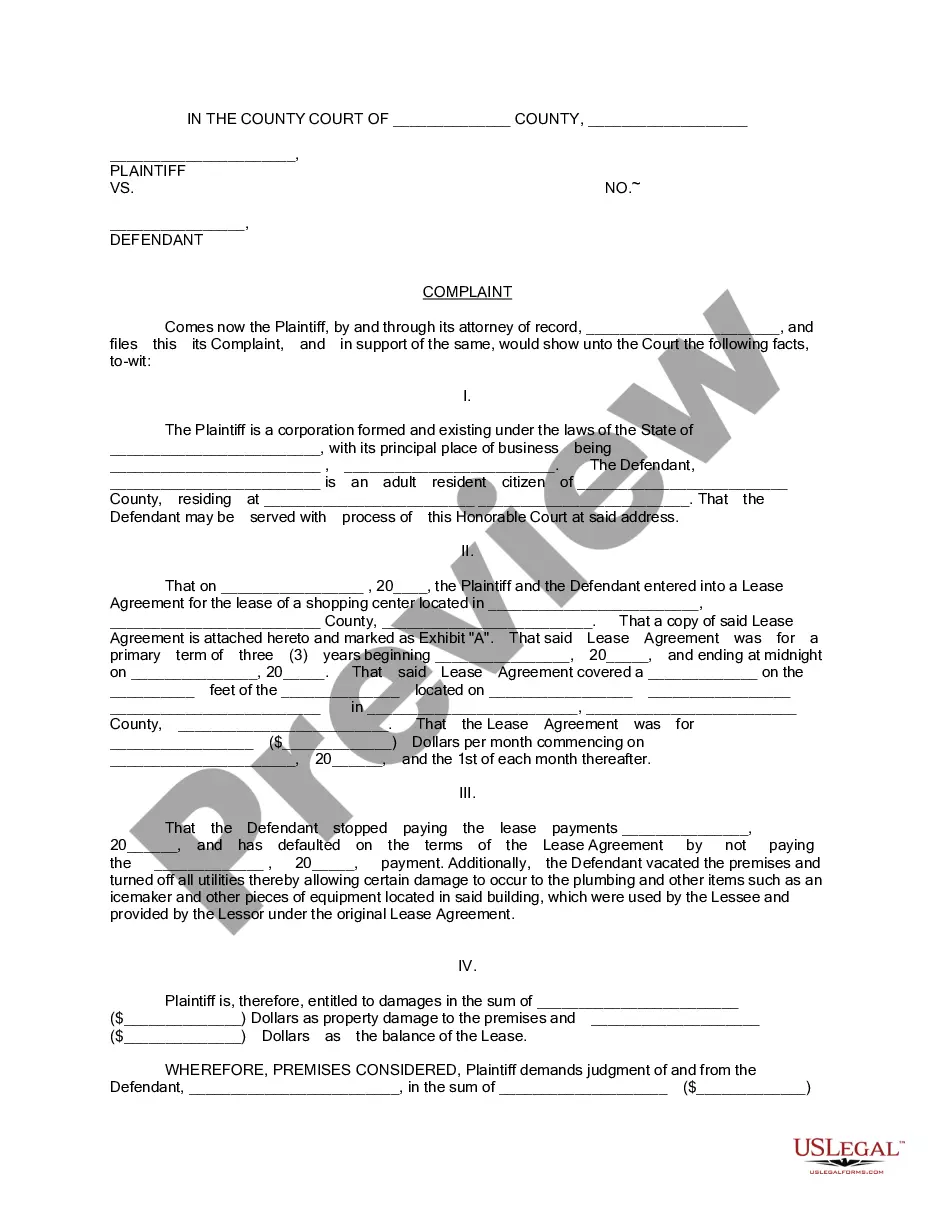
This Complaint for Eviction for failure to pay rent is a legal document used by landlords to initiate eviction proceedings against tenants who have not paid their rent. In addition to seeking possession of the property, this complaint allows the landlord to recover any past due rent. Unlike other eviction forms that may not address monetary recovery, this complaint specifically requests both eviction and damages, making it a comprehensive solution for landlords facing tenant non-payment issues.
Form components explained
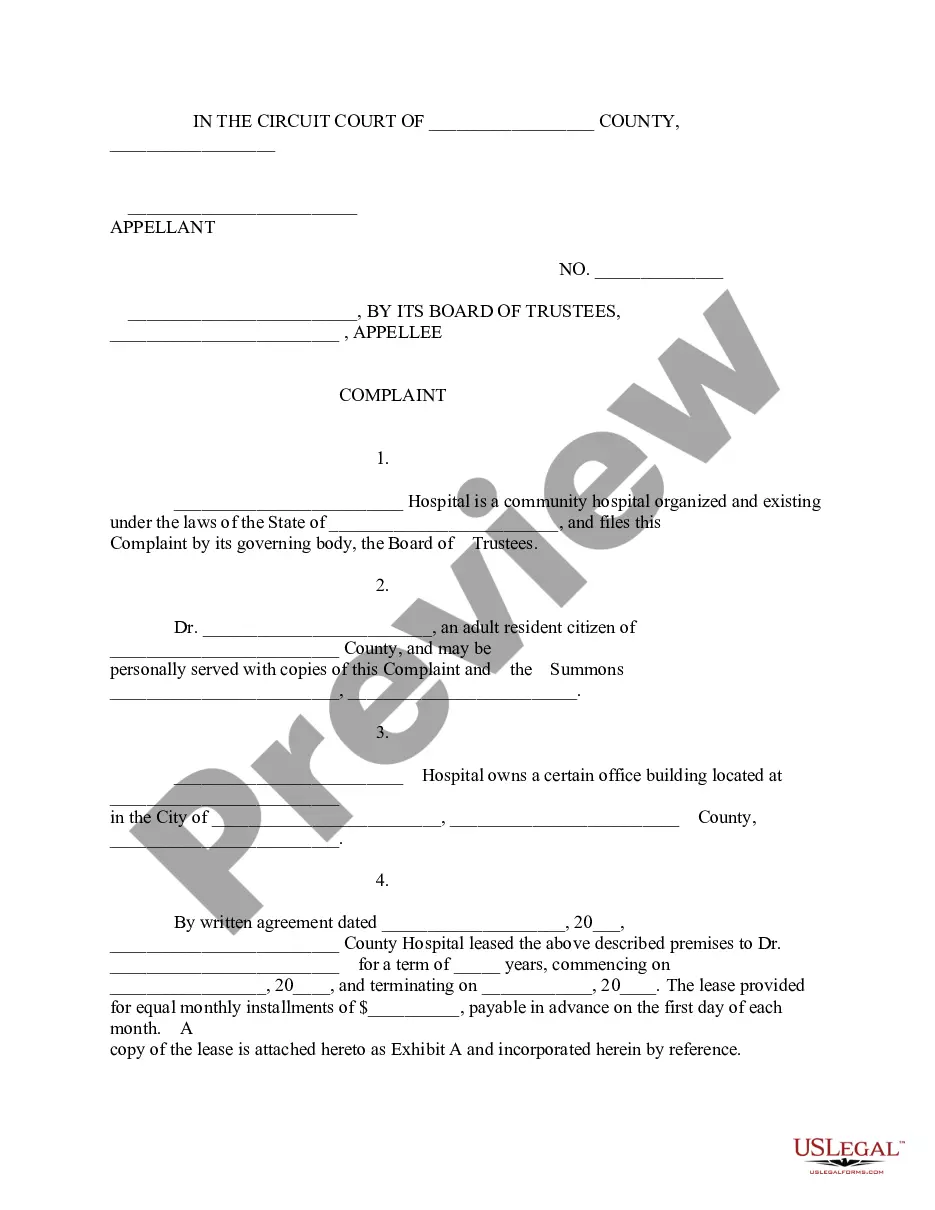
- Identification of parties involved: Landlord (Plaintiff) and Tenant (Defendant).
- Details of the property being rented, including location and description.
- Statement of rental agreement and payment terms.
- History of non-payment with specific dates.
- Evidence of notice served to the tenant regarding the overdue rent.
- Request for judgment for possession and recovery of past due rent.


When this form is needed
This form should be used when a landlord needs to evict a tenant for failing to pay rent and also seeks to recover unpaid rent. It is applicable in situations where the tenant has not adhered to the payment schedule, and after due notice has been given, they continue to occupy the property without paying. This form is helpful in ensuring that the landlord can efficiently pursue both eviction and monetary compensation.
Who this form is for
- Landlords seeking to evict tenants for non-payment of rent.
- Property owners needing to recover past due rent as part of eviction proceedings.
- Real estate investors managing rental properties.
Completing this form step by step
- Identify and insert the names of the landlord and tenant involved in the dispute.
- Provide the complete address and legal description of the rental property.
- Enter the rental amount due and the terms of the rental agreement.
- Specify the date of the last payment that was not made by the tenant.
- Attach copies of the rental agreement and any notice served to the tenant.
- Sign and date the complaint before submitting it to the appropriate court.
Does this document require notarization?
This form does not typically require notarization unless specified by local law. However, it's always good practice to check specific jurisdictional requirements or consult with an attorney to ensure validity and enforceability before filing.
Get your form ready online
Our built-in tools help you complete, sign, share, and store your documents in one place.
Make edits, fill in missing information, and update formatting in US Legal Forms—just like you would in MS Word.
Download a copy, print it, send it by email, or mail it via USPS—whatever works best for your next step.
Sign and collect signatures with our SignNow integration. Send to multiple recipients, set reminders, and more. Go Premium to unlock E-Sign.
If this form requires notarization, complete it online through a secure video call—no need to meet a notary in person or wait for an appointment.
We protect your documents and personal data by following strict security and privacy standards.

Make edits, fill in missing information, and update formatting in US Legal Forms—just like you would in MS Word.

Download a copy, print it, send it by email, or mail it via USPS—whatever works best for your next step.

Sign and collect signatures with our SignNow integration. Send to multiple recipients, set reminders, and more. Go Premium to unlock E-Sign.

If this form requires notarization, complete it online through a secure video call—no need to meet a notary in person or wait for an appointment.

We protect your documents and personal data by following strict security and privacy standards.
Common mistakes to avoid
- Failing to provide the correct legal description of the property.
- Not attaching necessary documents, such as the rental agreement or notice served.
- Omitting important dates related to payment and notice delivery.
- Not signing the form before submission.
Why use this form online
- Convenience of downloading the form at any time without requiring a visit to a law office.
- Editability to tailor the form specific to individual lease agreements and circumstances.
- Reliability of legal language drafted by licensed attorneys, ensuring compliance with local laws.
Looking for another form?

Form popularity
FAQ
The timeline for evicting a tenant in Florida varies, but it typically takes about three weeks to several months. After the Florida Complaint For Eviction is filed, the court schedules a hearing. If you win, the court will issue a judgment, allowing you to recover past due rent and proceed with eviction. Delays can occur due to court backlogs or tenant responses.
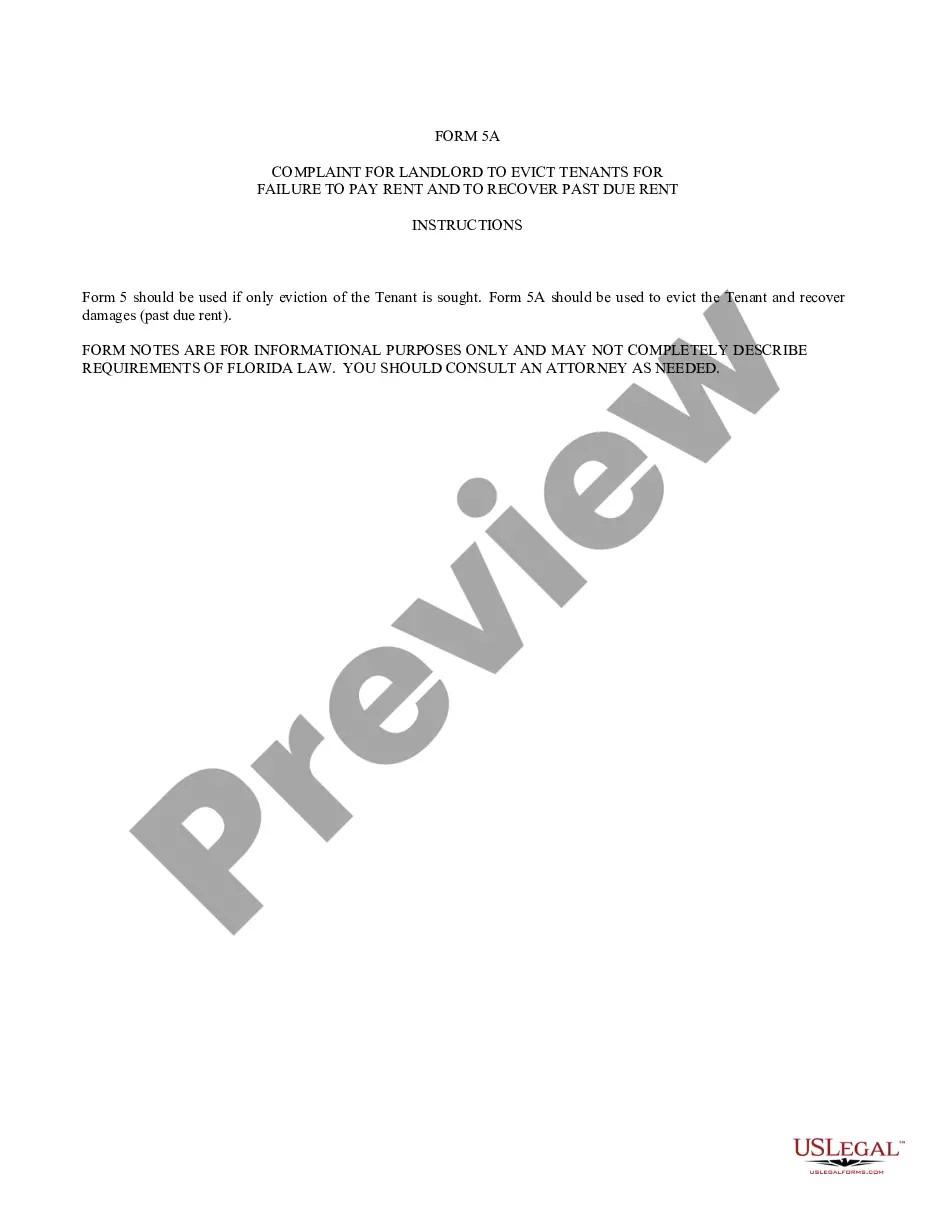
Form 5A contains a complaint for both eviction and for damages for unpaid rent. If the amount of damages exceeds $15,000, you should not use this form. If a landlord wants to evict a tenant for breaches of the lease other than failure to pay rent, the suit may be for eviction only.
For tenants that pay rent quarterly, you must give them a 30 day written notice. For tenants who have a yearly tenancy, you are required to provide them with a 60-day written notice. In the notice, you must state the date by which the tenant must move out of their rented premises.
How Long Does the Eviction Process Take in Florida? The Florida eviction process usually takes about 2-3 weeks to be finalized. Evictions can be served for many reasons, including failure to pay rent, violating the terms of the lease or rental agreement, or for criminal activity.
Legal Services of Greater Miami, Inc. WHAT HAPPENS IF I OWE MY FORMER LANDLORD RENT? Your former landlord may sue you in Small Claims Court or County Court if you owe rent. If you are living in the unit and owe rent, most landlords will file an eviction lawsuit asking the court to remove you.
It is not necessary that this notice be delivered by a Sheriff. Usually the landlord will post the notice on your door. If mailed, however, the landlord must add five (5) days for mailing. If you pay the full amount of rent due within the three day time period, your landlord cannot evict you for nonpayment of rent.
3-day notice The notice must say that their tenancy is terminated if the tenant doesn't pay within three days. If the tenant fails to pay after the 3-day notice and doesn't move out, Fla. Stat. § 83.56(3) allows a landlord to start a lawsuit for the eviction process.
How Tenants Can Fight (or Delay) an Eviction in Florida Talk to Your Landlord. The best way to delay an eviction is to talk to your landlord.Fight (Raise a Defense)Ask for a Continuance.Talk to the Judge.File For Bankruptcy to Delay Your Eviction.Should I Ignore an Eviction Notice?
Give the tenant a 3-days notice to either pay the outstanding rent or vacate the premises. Write down a complaint and file for eviction. Eviction can be filed with any county clerk serving at a court in a particular county. The landlord must mention ?Plaintiff? and his/her contact details on the complaint.