Florida Complaint for Evictions and Damages for Nonpayment of Rent
Understanding this form
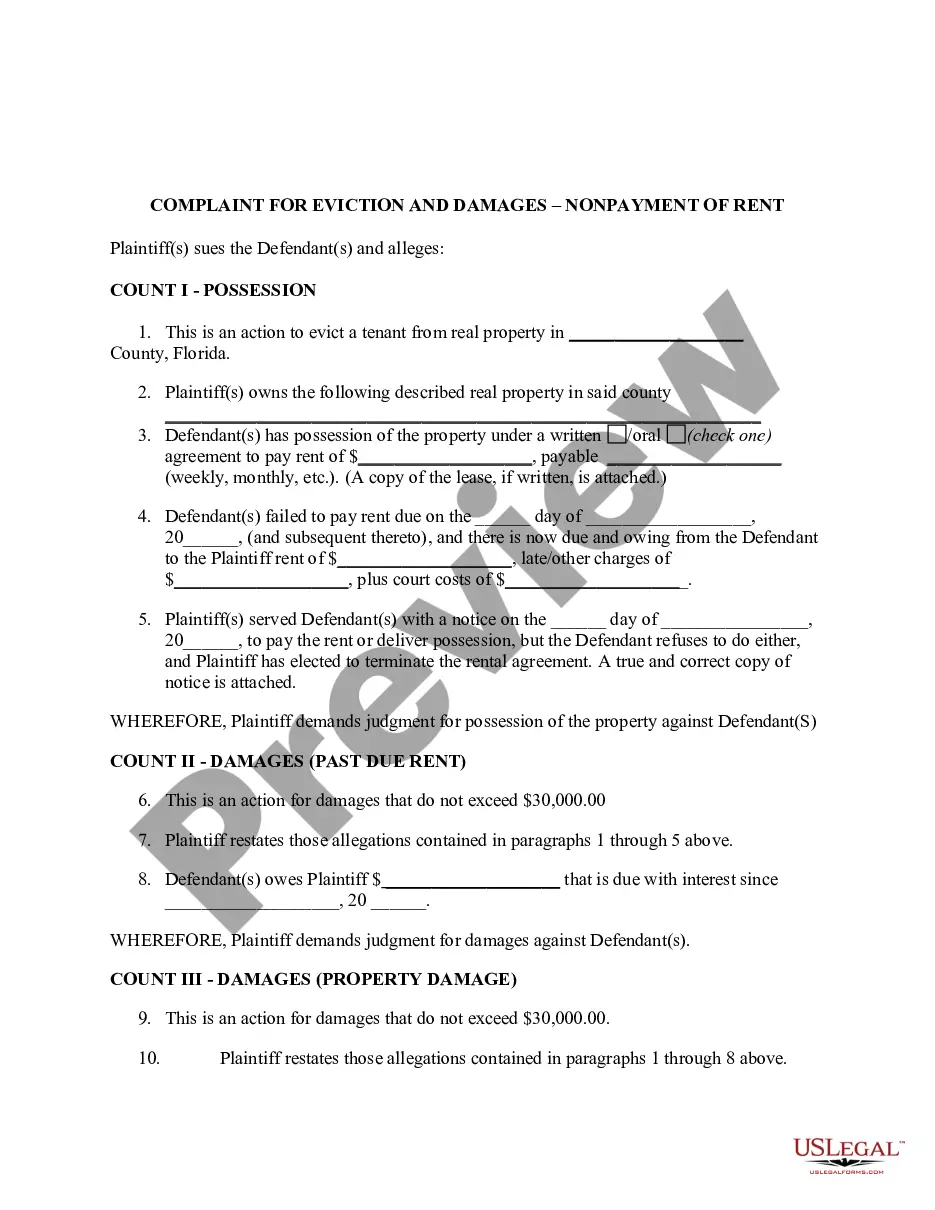
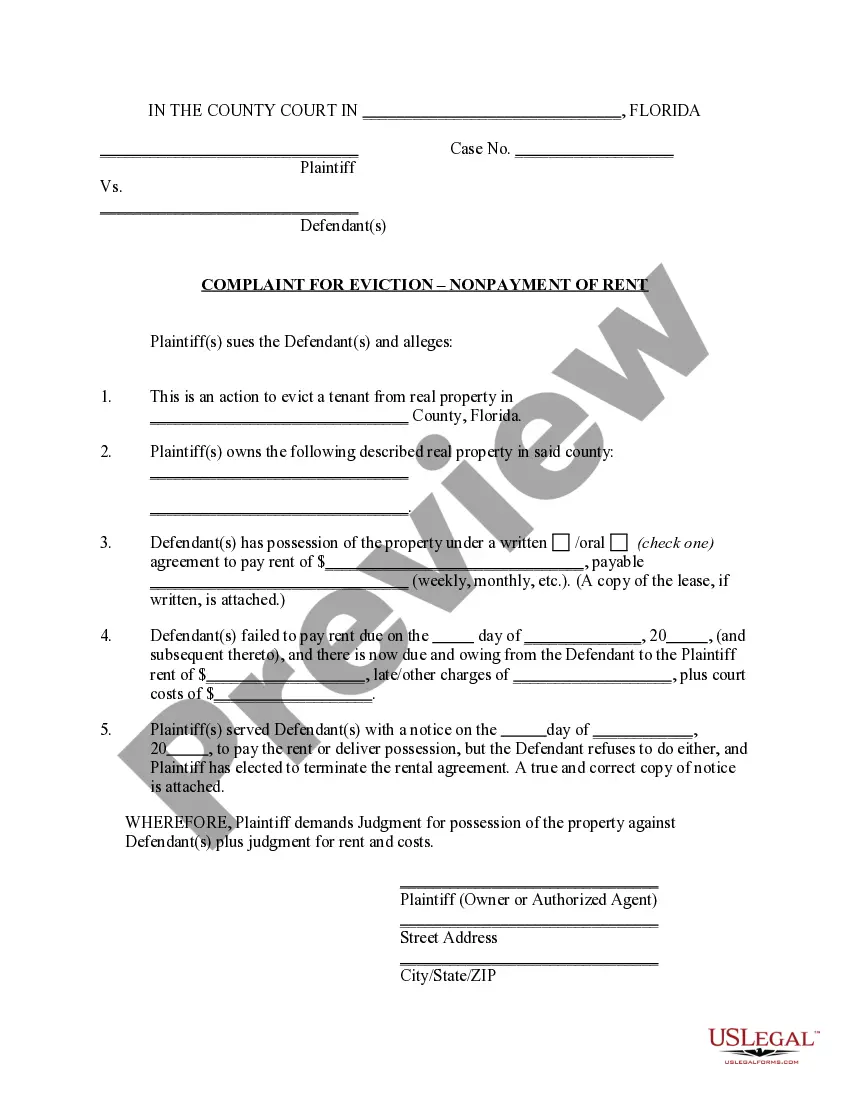
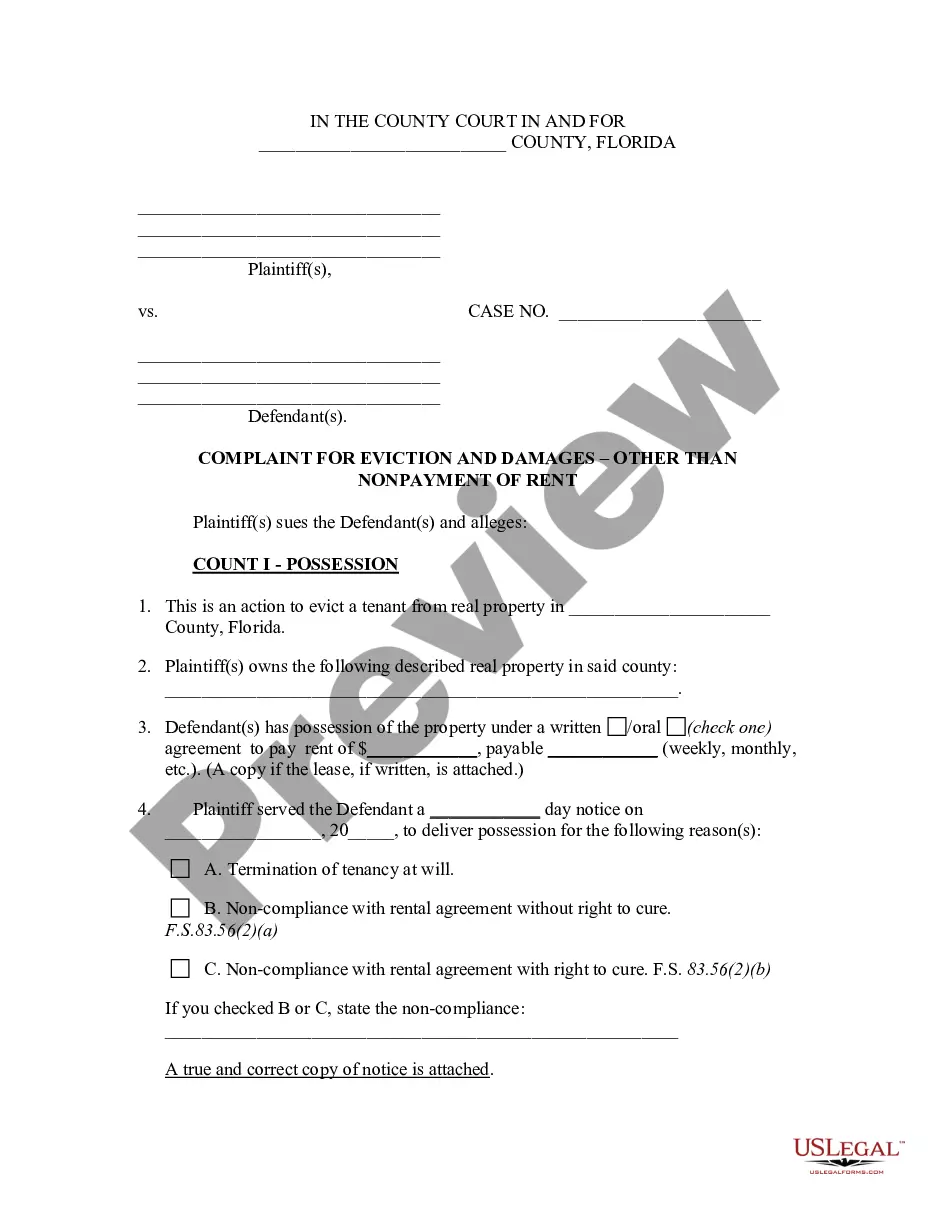
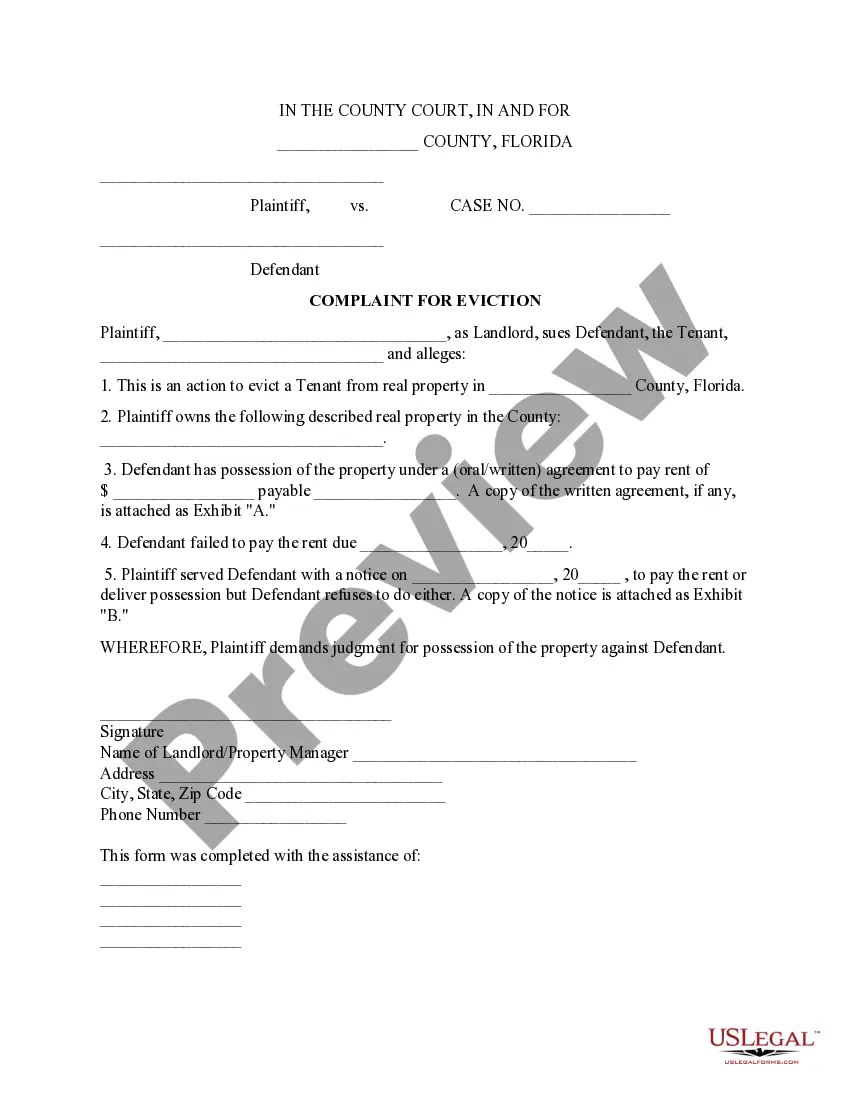
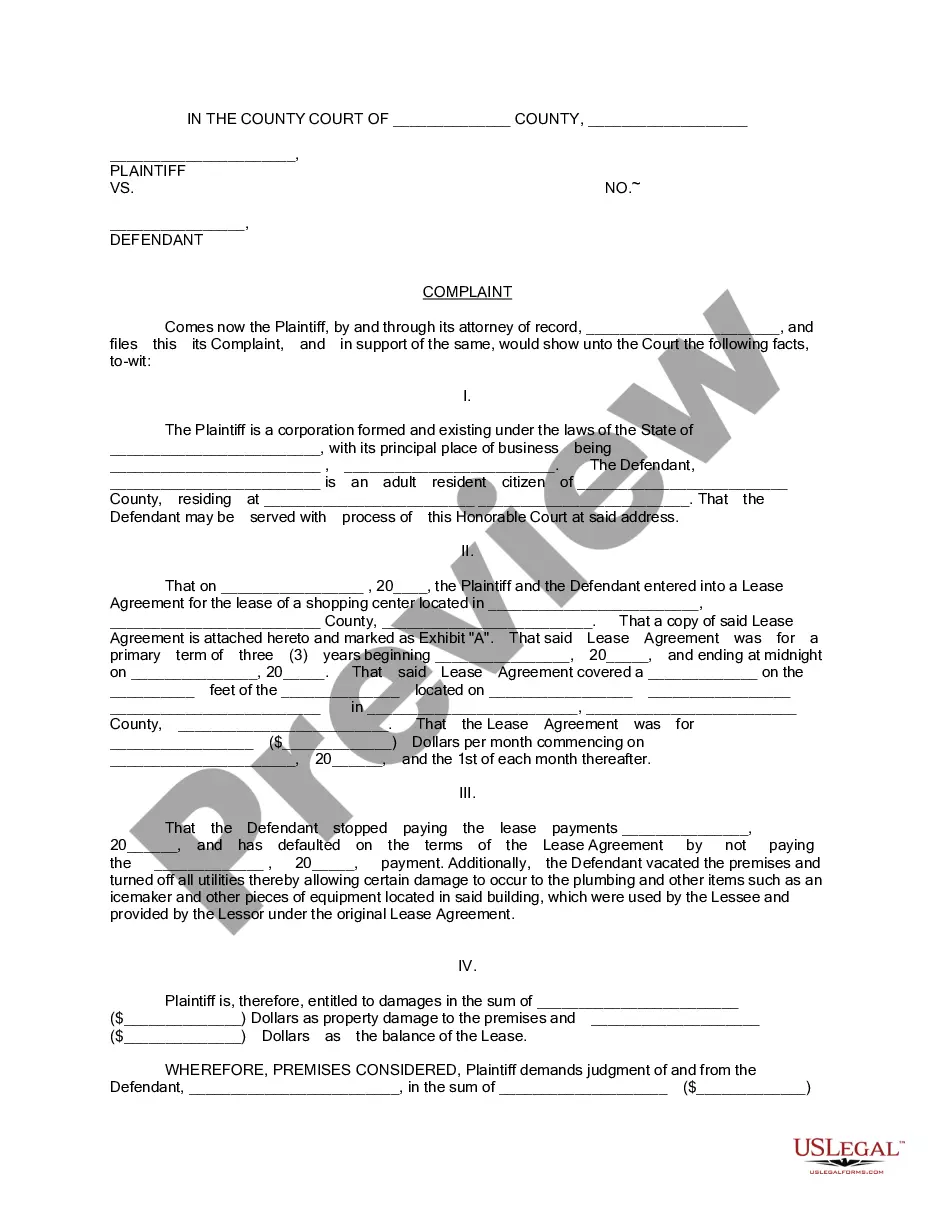
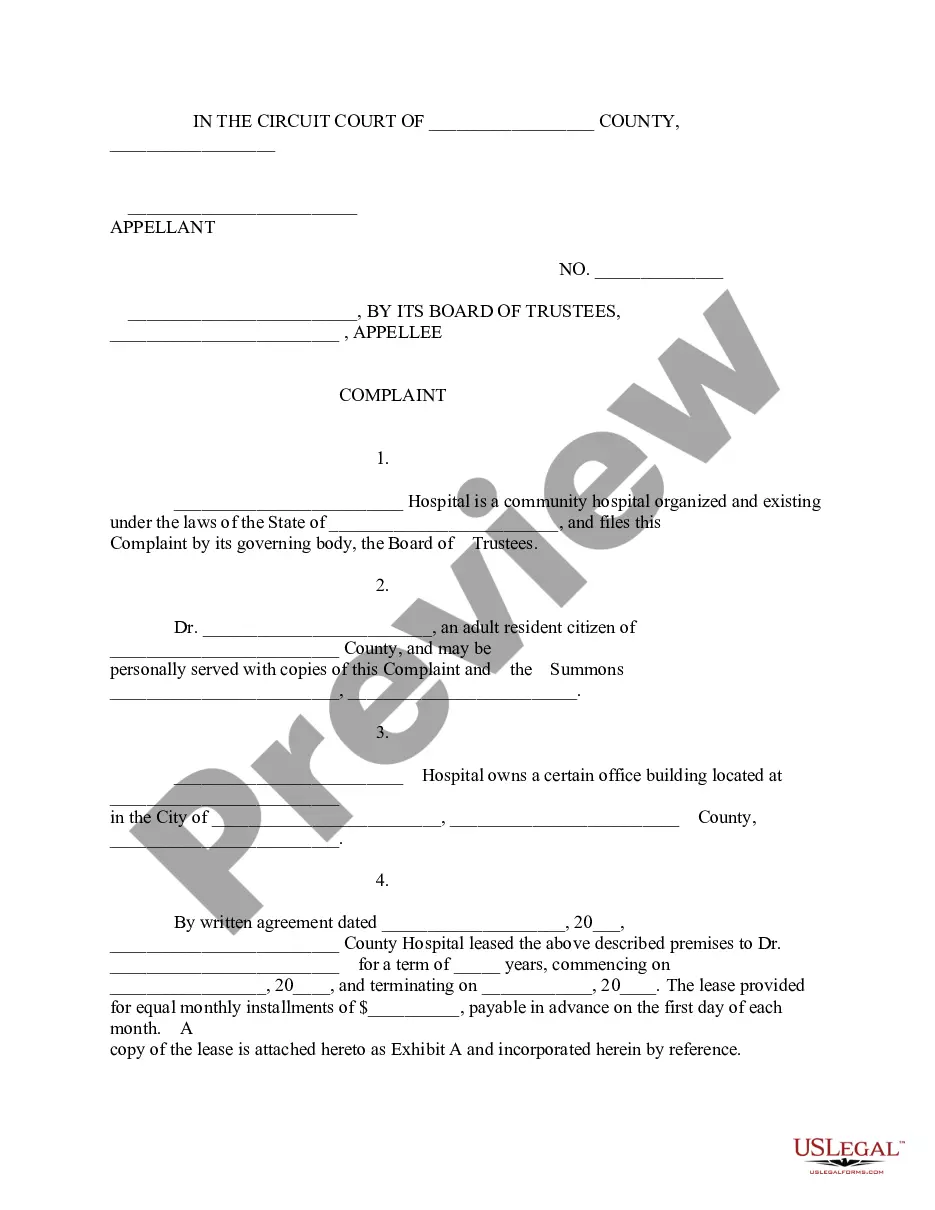
The Complaint for Eviction and Damages for Nonpayment of Rent is a legal document through which a landlord initiates an action to evict a tenant who has failed to pay rent. This form allows the landlord not only to seek possession of their property but also to claim monetary damages for unpaid rent, late fees, and court costs. It is essential for landlords to understand this form's purpose, as it effectively differs from other tenant-related forms like notices to pay rent or lease agreements.
What’s included in this form
- Action for possession of real property.
- Details regarding the rental agreement and payment terms.
- Allegations of overdue rent and applicable charges.
- Notice served to the tenant regarding nonpayment.
- Claims for damages, including past due rent and property damages.
- Request for reasonable attorney fees if applicable.

Common use cases
This form is necessary when a tenant fails to pay their rent on time, and the landlord wishes to legally terminate the rental agreement. It is appropriate to file this complaint after the landlord has provided the tenant with a notice to pay rent or vacate the premises. If the tenant does not comply, the landlord can proceed with this form to seek both possession of the property and damages incurred due to nonpayment.
Who needs this form
- Landlords who have tenants that are behind on rent payments.
- Property managers managing rental properties on behalf of owners.
- Real estate investors who own rental properties and need to enforce lease agreements.
How to complete this form
- Identify the plaintiff (landlord) and defendant (tenant) by entering their names and contact details.
- Specify the property address and describe the rental agreement terms.
- List the date the rent was due and calculate the total amount owed, including late fees and court costs.
- Attach a copy of the eviction notice served to the tenant.
- Sign the form and provide the printed name and address of the plaintiff.
Does this form need to be notarized?
This form does not typically require notarization unless specified by local law.
Get your form ready online
Our built-in tools help you complete, sign, share, and store your documents in one place.
Make edits, fill in missing information, and update formatting in US Legal Forms—just like you would in MS Word.
Download a copy, print it, send it by email, or mail it via USPS—whatever works best for your next step.
Sign and collect signatures with our SignNow integration. Send to multiple recipients, set reminders, and more. Go Premium to unlock E-Sign.
If this form requires notarization, complete it online through a secure video call—no need to meet a notary in person or wait for an appointment.
We protect your documents and personal data by following strict security and privacy standards.

Make edits, fill in missing information, and update formatting in US Legal Forms—just like you would in MS Word.

Download a copy, print it, send it by email, or mail it via USPS—whatever works best for your next step.

Sign and collect signatures with our SignNow integration. Send to multiple recipients, set reminders, and more. Go Premium to unlock E-Sign.

If this form requires notarization, complete it online through a secure video call—no need to meet a notary in person or wait for an appointment.

We protect your documents and personal data by following strict security and privacy standards.
Avoid these common issues
- Failing to provide correct and complete information about the rental property.
- Not attaching required notices served to the tenant.
- Neglecting to properly calculate the total amount due, including late fees.
- Omitting the signature of the plaintiff or failing to print their name and address.
Benefits of completing this form online
- Convenience of immediate download and access from anywhere.
- Editability allows customization to fit specific situations.
- Reliability of forms drafted by licensed attorneys ensuring legal compliance.
- Time-saving as it eliminates the need for in-person visits to legal offices.
Looking for another form?
Form popularity
FAQ
Deciding whether to sue a tenant for damages can depend on various factors, such as the amount owed and the likelihood of recovery. Landlords often consider the associated legal costs and the chances of success when making this decision. If you are facing a situation involving a Florida Complaint for Evictions and Damages for Nonpayment of Rent, our platform offers practical tools to assess your case and proceed effectively. Many landlords find that having the right resources makes the process worthwhile.
A landlord has the right to sue for damages in Florida related to unpaid rent and other breaches of the rental agreement. To do so, the landlord must provide evidence of the damages sustained due to the tenant's noncompliance. A Florida Complaint for Evictions and Damages for Nonpayment of Rent can serve as a critical tool in this process. Utilizing our service can provide the necessary resources and forms to facilitate your claim quickly.
Certainly, a landlord can sue a tenant for damages in Florida if the tenant fails to fulfill their obligations under the rental agreement. These damages may include unpaid rent, property damage, or any other financial losses stemming from the tenant's actions. When filing a lawsuit, landlords should incorporate the Florida Complaint for Evictions and Damages for Nonpayment of Rent as part of their legal strategy. Our platform can guide you in putting together the necessary documentation.
Yes, a landlord can sue for damages even if there is no written lease in place, as long as there is an implied or verbal agreement between the parties. In Florida, tenants are still responsible for their obligations, such as paying rent or maintaining the property. When pursuing a Florida Complaint for Evictions and Damages for Nonpayment of Rent, including any additional damages incurred can strengthen the case. Our solutions help landlords prepare and file these complaints effectively.
To report a tenant for not paying rent, you should first check your rental agreement and review state laws regarding nonpayment. You may need to serve a written notice to the tenant regarding their overdue rent before taking further action. If the situation does not resolve, you can proceed by filing a Florida Complaint for Evictions and Damages for Nonpayment of Rent in court. USLegalForms can assist you in preparing the necessary documentation to ensure you take the right steps.
To serve an eviction complaint in Florida, you need to file the complaint at your local court and get a summons issued. After that, the summons must be delivered to the tenant, which can be done through personal service or by mail, depending on the situation. Following proper protocols ensures that your Florida Complaint for Evictions and Damages for Nonpayment of Rent is legally binding. This process can seem complicated; however, platforms like USLegalForms can guide you through each step.
Renters in South Carolina have several key rights under state law. They are entitled to a safe and habitable living environment, which includes basic maintenance and repairs. If you face issues such as evictions or nonpayment of rent, understanding these rights is vital. For cases related to Florida Complaint for Evictions and Damages for Nonpayment of Rent, knowing your rights can help you navigate the legal landscape effectively.
To answer an eviction complaint in Florida, you should write a formal document responding to the claims. Include your reasons for contesting the eviction, if applicable, and submit this to the court within the allotted time. It's crucial to follow the legal format for your answer, which can be found through resources like U.S. Legal Forms. Understanding the Florida Complaint for Evictions and Damages for Nonpayment of Rent process can make your response clearer and more effective.
After receiving a 5-day eviction summons from your landlord, you must respond promptly. If you do not reply within those five days, the court may issue a default judgment against you. This can lead to immediate eviction. Knowing the Florida Complaint for Evictions and Damages for Nonpayment of Rent can empower you to respond effectively and protect your rights.
In Florida, the eviction process can take anywhere from a few weeks to several months, depending on various factors. After filing a Florida Complaint for Evictions and Damages for Nonpayment of Rent, a hearing is scheduled, which can extend the timeline. If the tenant contests the eviction, this may further delay the process. Understanding these timelines can help both landlords and tenants prepare accordingly.