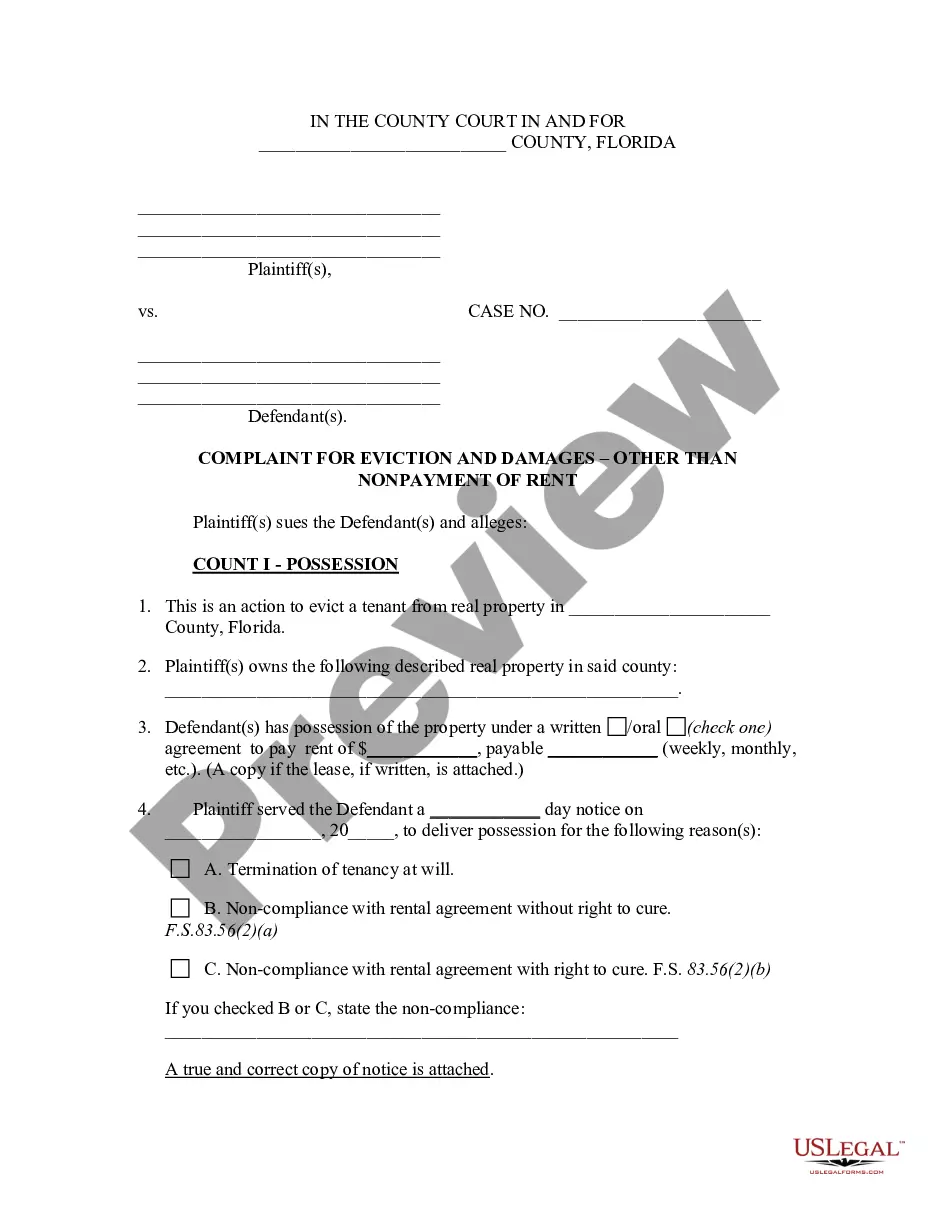
Florida Complaint for Eviction and Damages other than nonpayment of rent
What is this form?
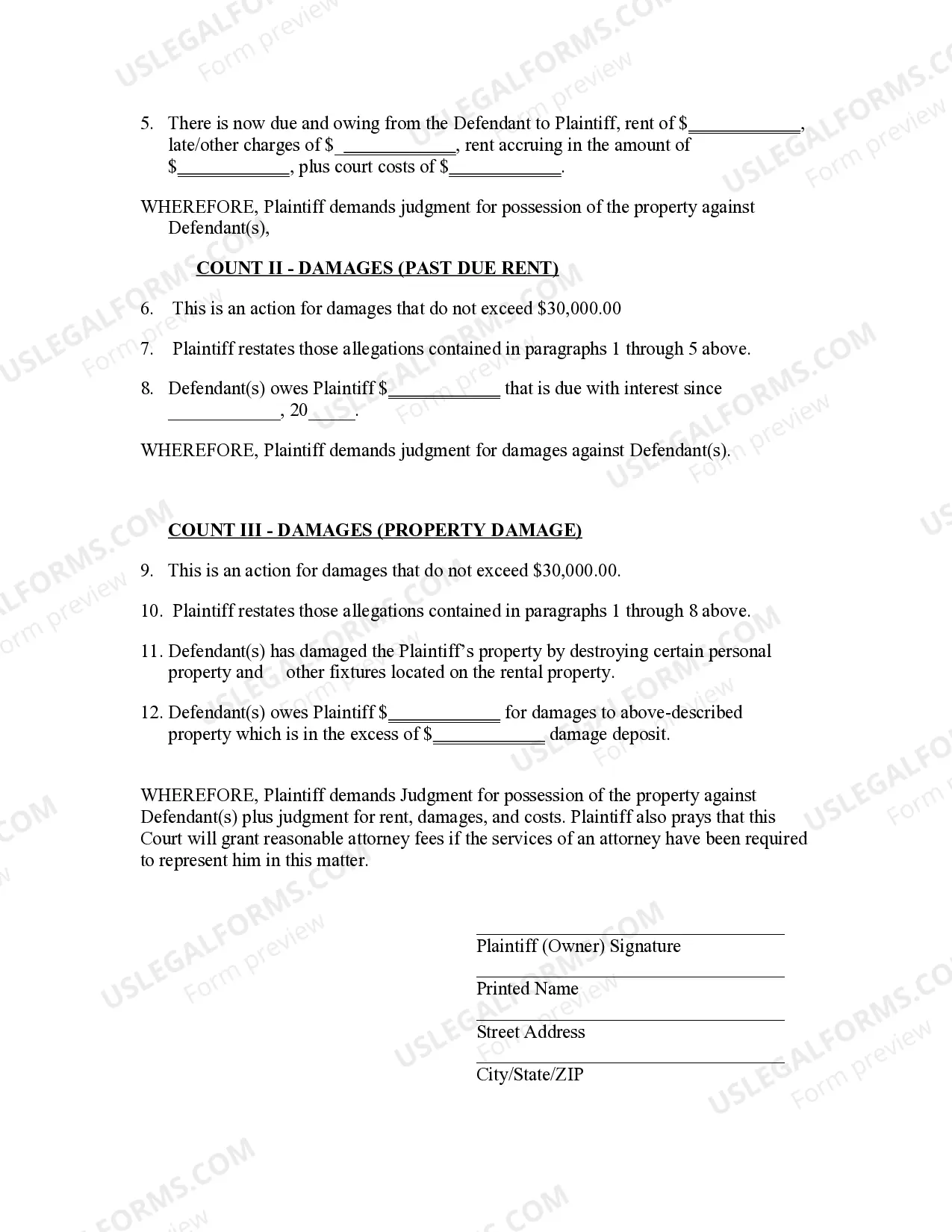
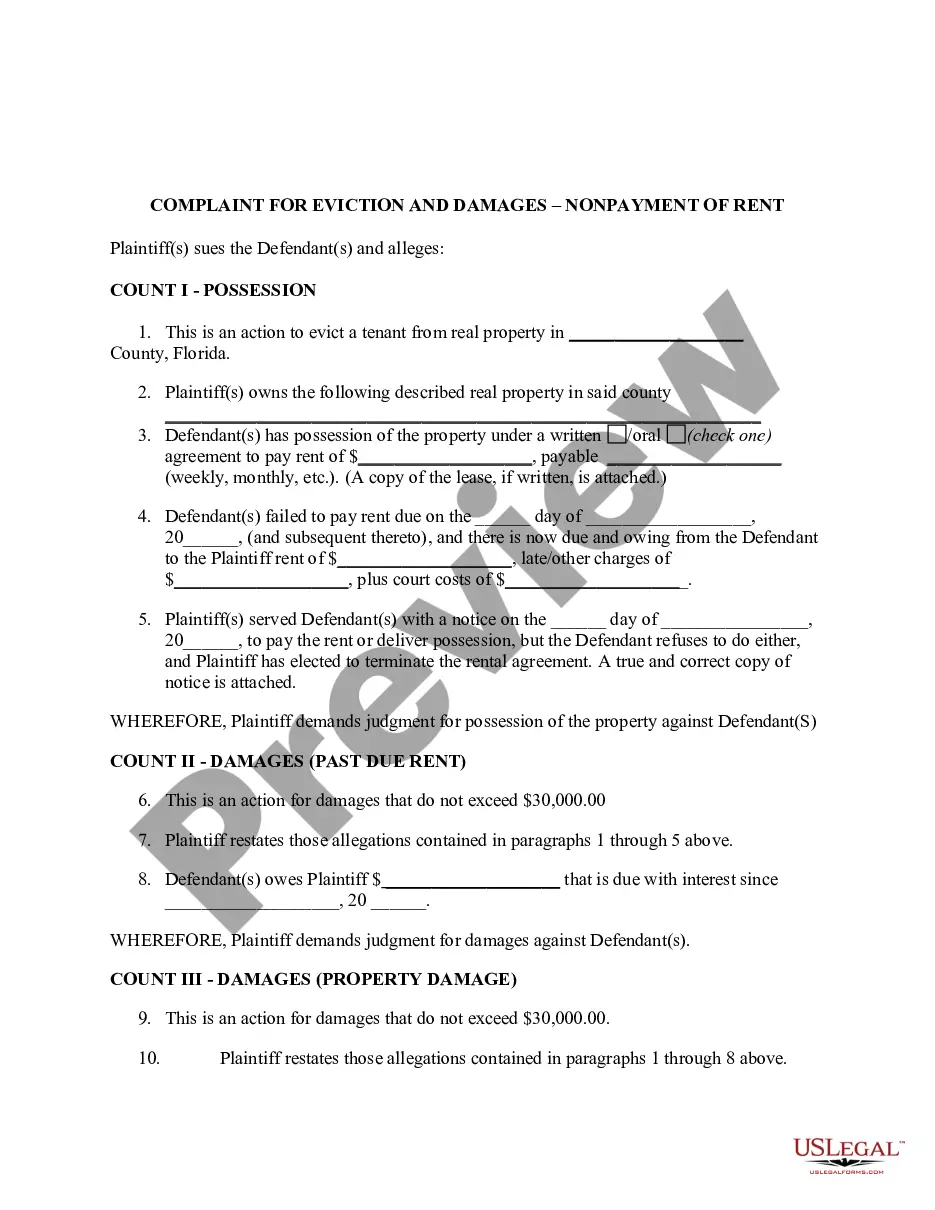
The Complaint for Eviction and Damages other than nonpayment of rent is a legal document used by landlords to initiate eviction proceedings against tenants who have breached their lease agreements. This form is specifically designed for cases where a landlord seeks to recover possession of their property and seek damages for any harm caused to the property, beyond just a failure to pay rent. It is essential for landlords to follow the appropriate legal channels when evicting a tenant and seeking damages.
Main sections of this form
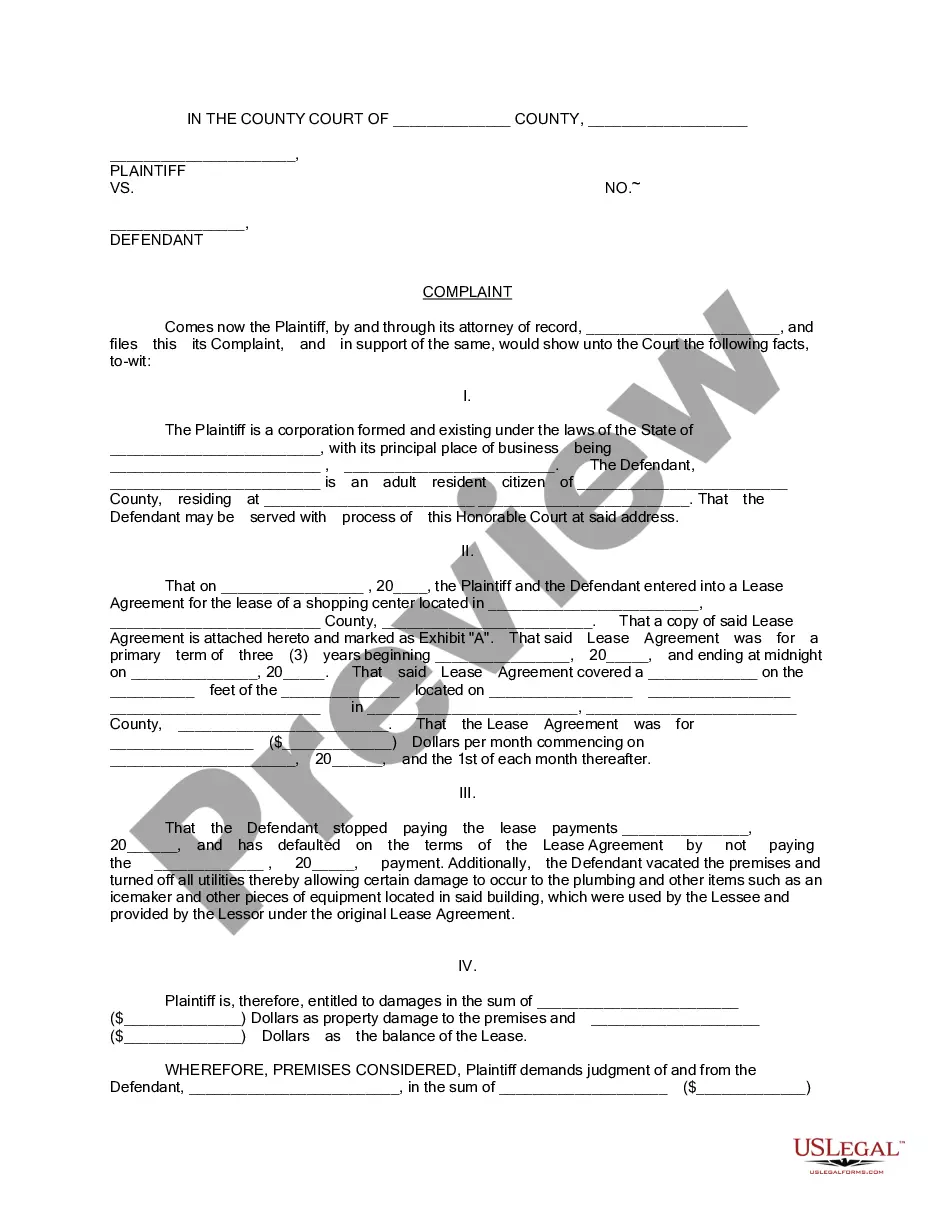
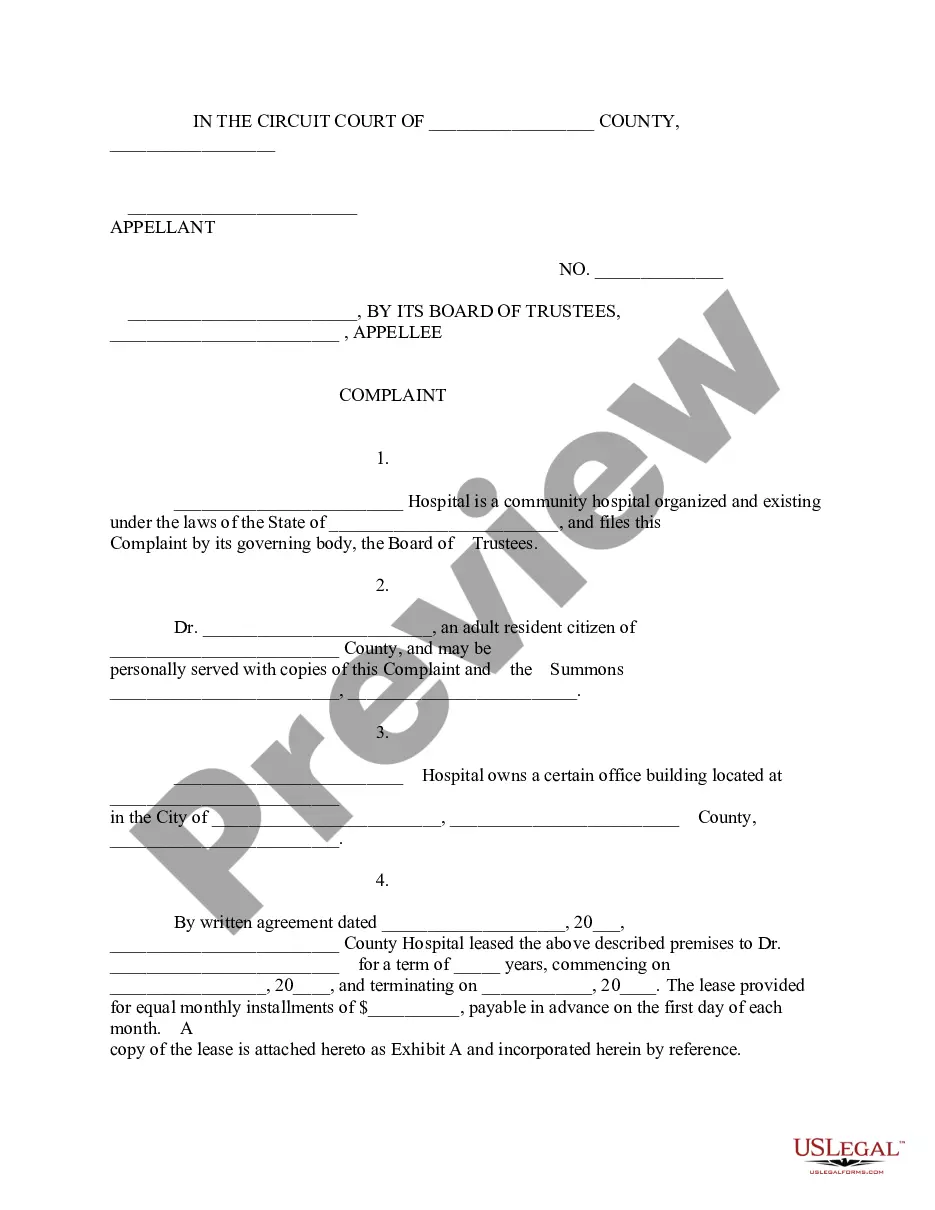
- Identification of the parties involved, including the landlord (plaintiff) and tenant (defendant).
- Details of the property in question.
- Statement of the legal reason for eviction, such as lease violations or non-compliance with rental agreements.
- Account of any due rent or charges owed by the tenant.
- Separate counts for recovery of past due rent and damages to the property.
Common use cases
This form should be used when a landlord wishes to evict a tenant who has violated lease terms but is not solely delinquent in rent payments. Situations can include damage to property, termination of a lease without adherence to notice periods, or failure to comply with other lease obligations. Filing this complaint helps landlords remedy the situation legally and efficiently.
Who needs this form
- Landlords who are looking to evict tenants for reasons other than nonpayment of rent.
- Property owners who need to recover damages caused by a tenant beyond normal wear and tear.
- Real estate managers acting on behalf of property owners facing similar issues.
Completing this form step by step
- Identify the parties involved by filling in the landlord's and tenant's names.
- Describe the property that is the subject of the eviction.
- Specify the nature of the lease agreement and the rent details.
- Document the reasons for eviction, including any notices that have been served.
- Complete the sections regarding damages and any financial claims.
- Sign and date the form, ensuring all required information is provided.
Notarization requirements for this form
This form does not typically require notarization unless specified by local law. However, it is advisable to check with your jurisdiction's regulations to ensure compliance.
Get your form ready online
Our built-in tools help you complete, sign, share, and store your documents in one place.
Make edits, fill in missing information, and update formatting in US Legal Forms—just like you would in MS Word.
Download a copy, print it, send it by email, or mail it via USPS—whatever works best for your next step.
Sign and collect signatures with our SignNow integration. Send to multiple recipients, set reminders, and more. Go Premium to unlock E-Sign.
If this form requires notarization, complete it online through a secure video call—no need to meet a notary in person or wait for an appointment.
We protect your documents and personal data by following strict security and privacy standards.

Make edits, fill in missing information, and update formatting in US Legal Forms—just like you would in MS Word.

Download a copy, print it, send it by email, or mail it via USPS—whatever works best for your next step.

Sign and collect signatures with our SignNow integration. Send to multiple recipients, set reminders, and more. Go Premium to unlock E-Sign.

If this form requires notarization, complete it online through a secure video call—no need to meet a notary in person or wait for an appointment.

We protect your documents and personal data by following strict security and privacy standards.
Avoid these common issues
- Failing to serve proper notice to the tenant before filing.
- Not including accurate details of the lease agreement.
- Leaving out any claims for damages or outstanding rent.
Why use this form online
- Convenience of downloading and completing the form at your own pace.
- Editability allows for easy updates as needed before submission.
- Access to a reliable template drafted by licensed attorneys, ensuring legal compliance.
Looking for another form?

Form popularity
FAQ
After a 5-day eviction summons in Florida, the tenant must respond to the complaint. If they do not respond, the landlord may obtain a default judgment, allowing for eviction. If a response is made, a hearing will be scheduled. This process emphasizes the importance of responding promptly to a Florida Complaint for Eviction and Damages other than nonpayment of rent.
To answer an eviction complaint in Florida, you must file a written response with the court within five days. In your answer, address each claim raised in the Florida Complaint for Eviction and Damages other than nonpayment of rent. A clear and detailed response can significantly impact the outcome of your case. Seeking assistance from legal resources can be beneficial during this critical step.
Legally evicting a tenant in Florida can take several weeks, depending on various factors. After filing a Florida Complaint for Eviction and Damages other than nonpayment of rent, it typically takes about 14 days to receive a judgment. However, if the tenant contests the eviction, the process may extend further. Being aware of these timelines can help you navigate the situation effectively.
The new law in Florida regarding eviction tightens certain processes. It includes specific guidelines that both landlords and tenants must follow. Notably, it emphasizes the need for proper notice and transparency in eviction proceedings. Familiarizing yourself with this law is crucial, especially if you receive a Florida Complaint for Eviction and Damages other than nonpayment of rent.
When the marshal arrives to carry out an eviction in Florida, they will enforce the court's order. This means they will give you a specific time to leave the property. If you do not vacate, the marshal will remove you and your belongings. Understanding this process can help you prepare if facing a Florida Complaint for Eviction and Damages other than nonpayment of rent.
In Florida, landlords generally have four years from the date of the damage to file a lawsuit for damages. This period is crucial when preparing a Florida Complaint for Eviction and Damages other than nonpayment of rent. Being aware of this timeline can help you take timely action if needed.
A Form 5A eviction complaint is a legal document used by landlords in Florida to initiate eviction proceedings. This form can address various reasons for eviction, including damages other than nonpayment of rent. Understanding this process can empower landlords to act confidently in reinstating their property rights.
Whether it is worth suing a tenant for damages depends on the extent of the damages and potential recovery. Legal expenses should be weighed against possible compensation from the tenant. Filing a Florida Complaint for Eviction and Damages other than nonpayment of rent can help you assess the financial viability of your claim.
Yes, in Florida, landlords can sue tenants for damages using a Florida Complaint for Eviction and Damages other than nonpayment of rent. This legal action is typically taken when tenants cause damage beyond normal wear and tear. Understanding your rights as a tenant can help you navigate these situations more effectively.
Absolutely, a landlord can file a lawsuit for damages following an eviction. Using a Florida Complaint for Eviction and Damages other than nonpayment of rent, they can claim costs for repairs or losses incurred. This process ensures that landlords can protect their property and recover any financial losses.