Complaint for Double Damages Rent
About this form
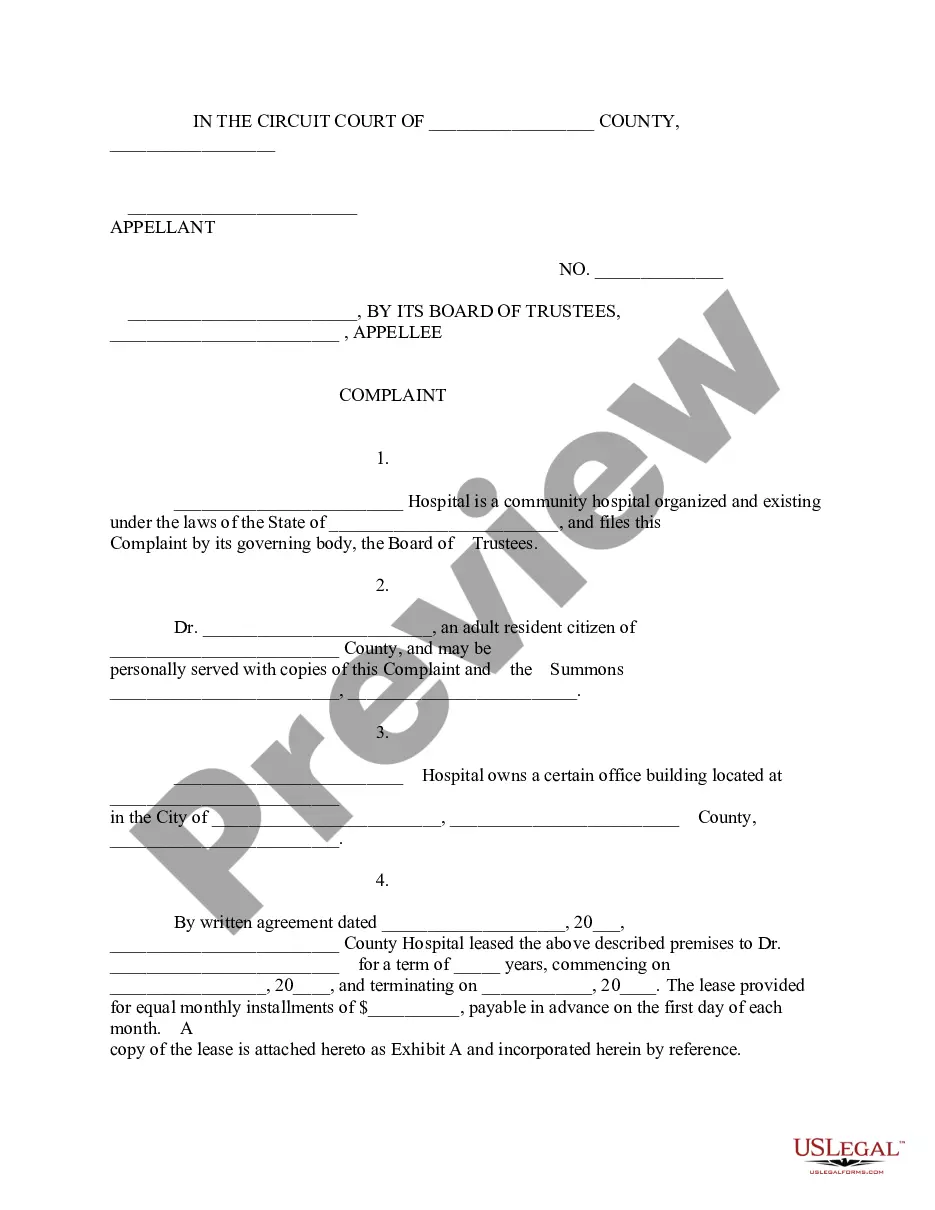
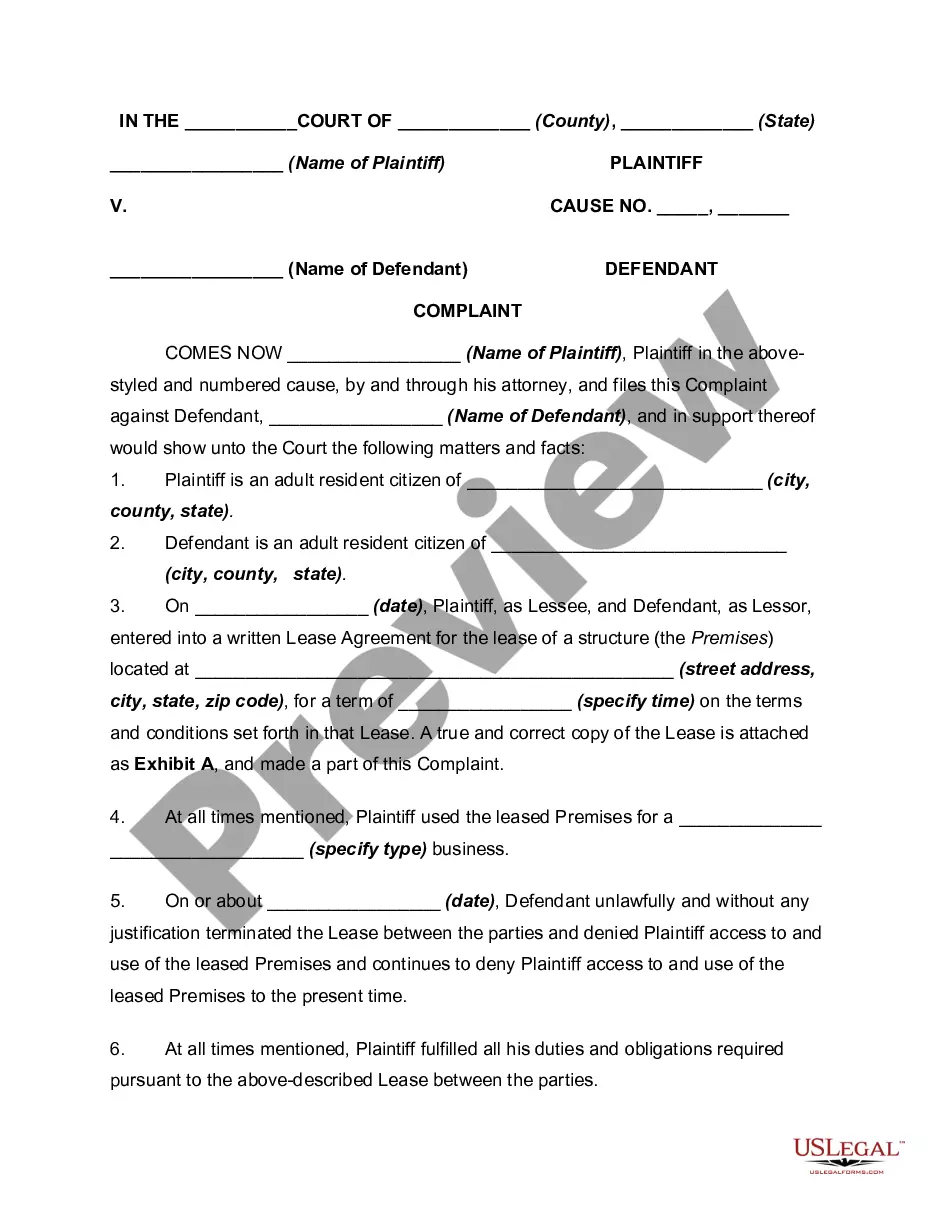
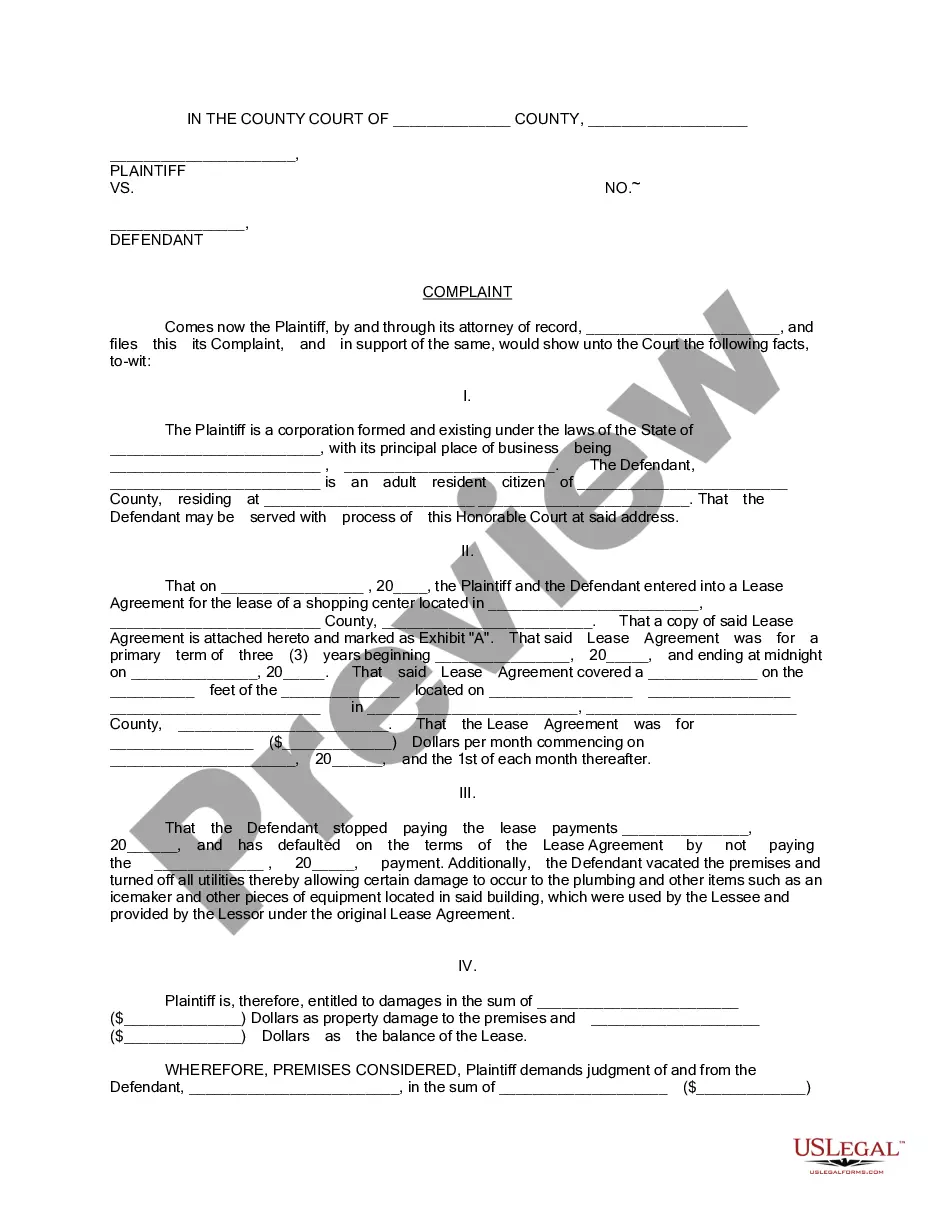
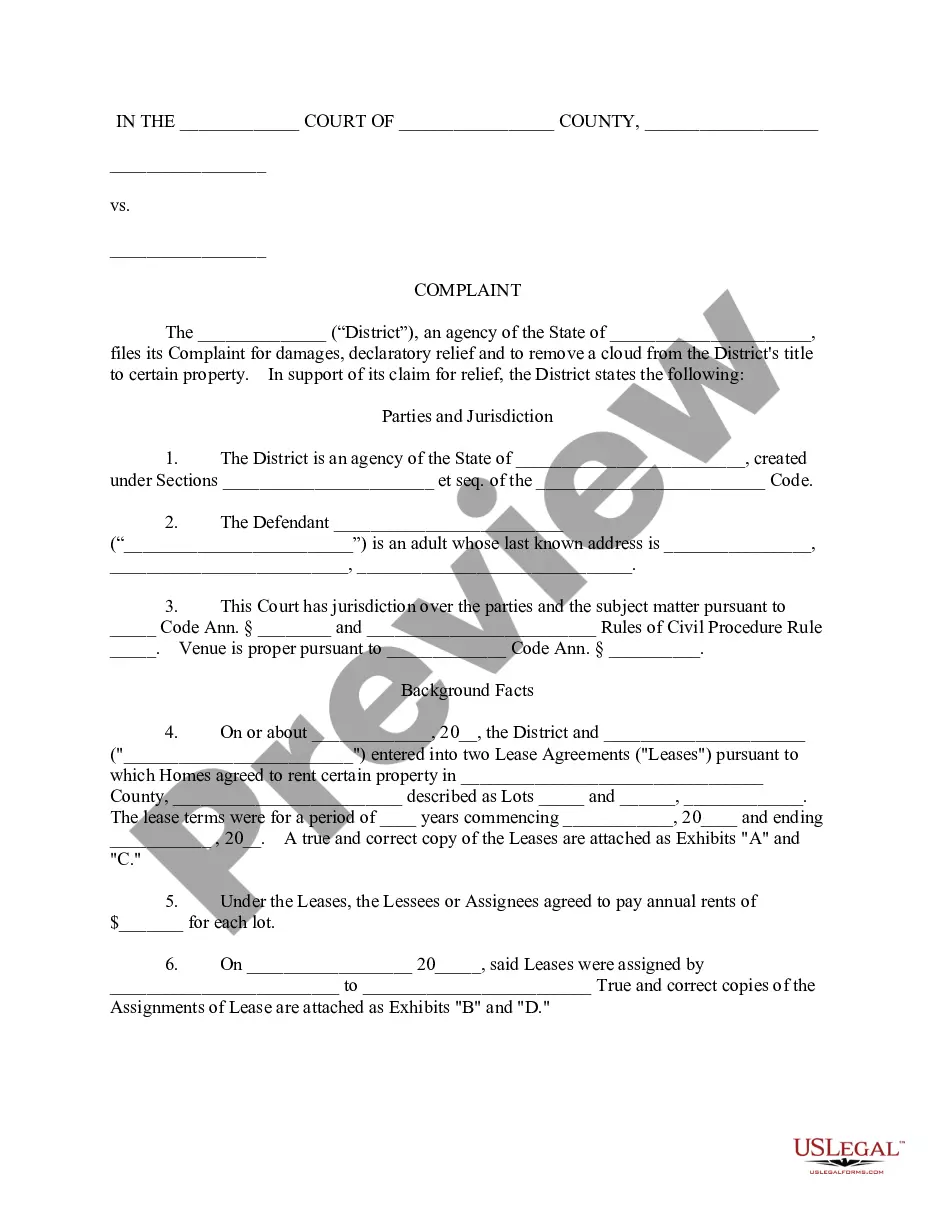
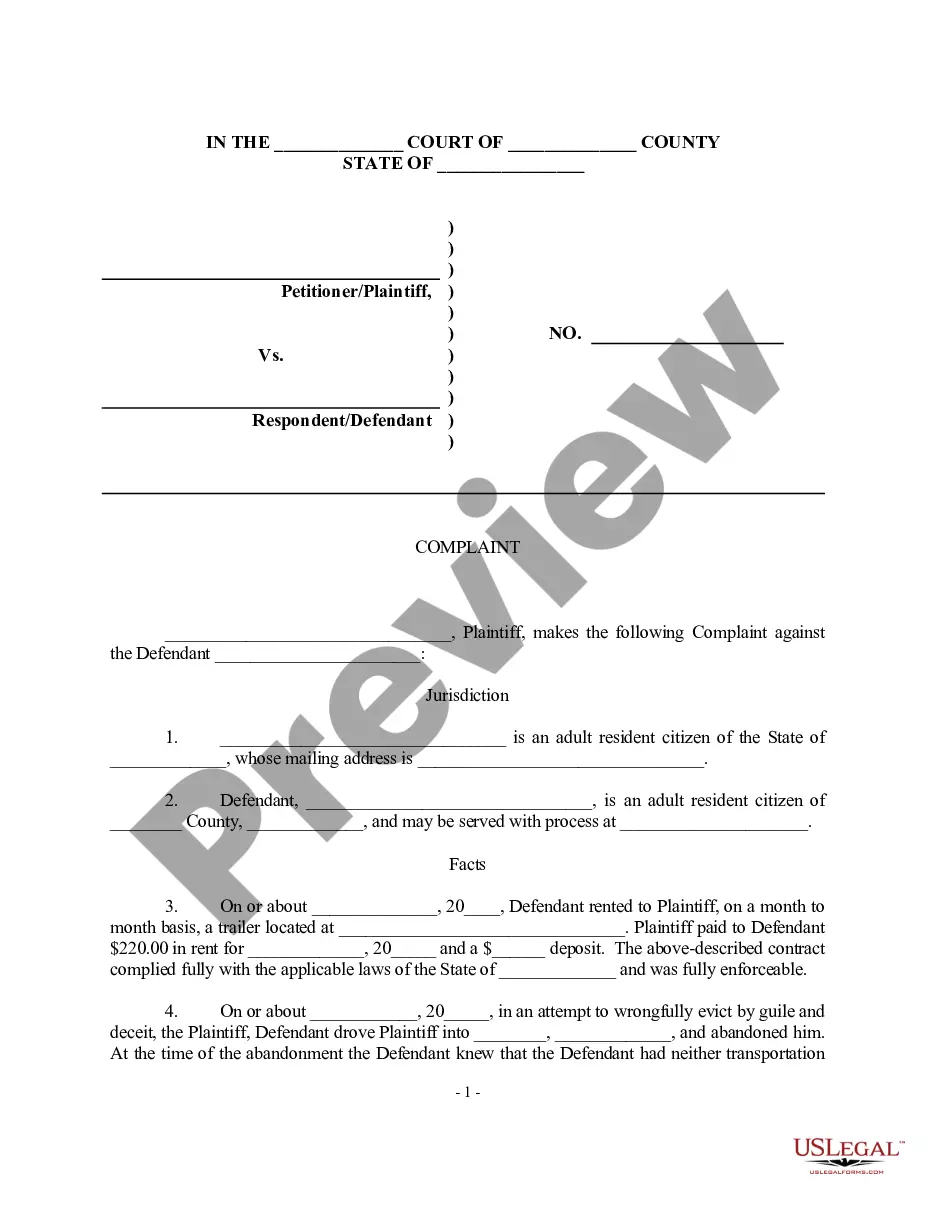
The Complaint for Double Damages Rent is a legal document used by landlords, specifically hospitals in this context, to seek double rent from a tenant who has failed to vacate leased premises after being given notice. This form is designed for cases where the landlord is entitled to collect additional rent due to the tenant's refusal to leave, and it differs from regular lease disputes as it specifically addresses the issue of double damages under applicable laws.
What’s included in this form
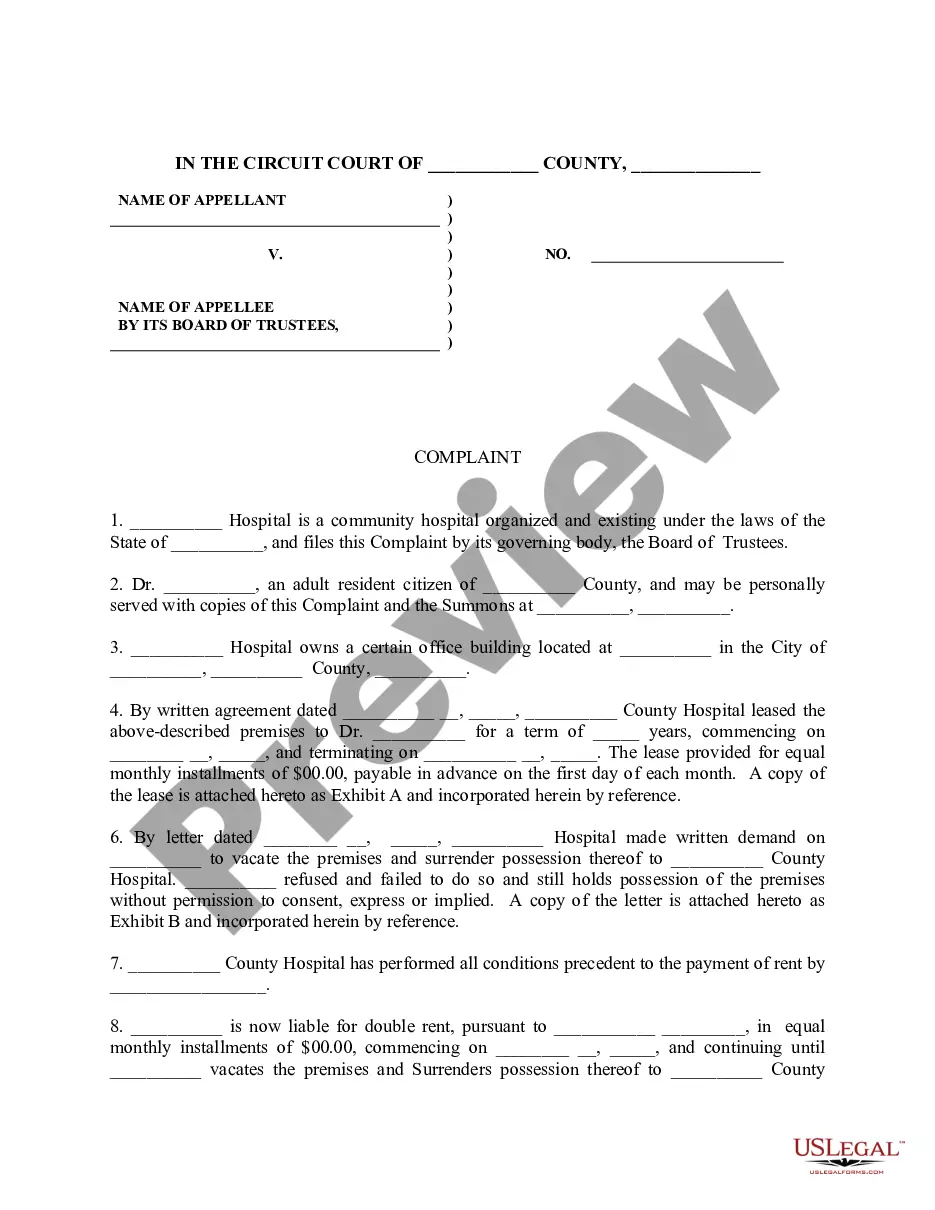
- Identification of the parties involved: Defines the hospital and tenant.
- Description of the leased property: Details the location and specifics of the office building.
- Lease agreement reference: Incorporates the original lease terms and conditions.
- Demand for vacation: States the notice given to the tenant to leave the premises.
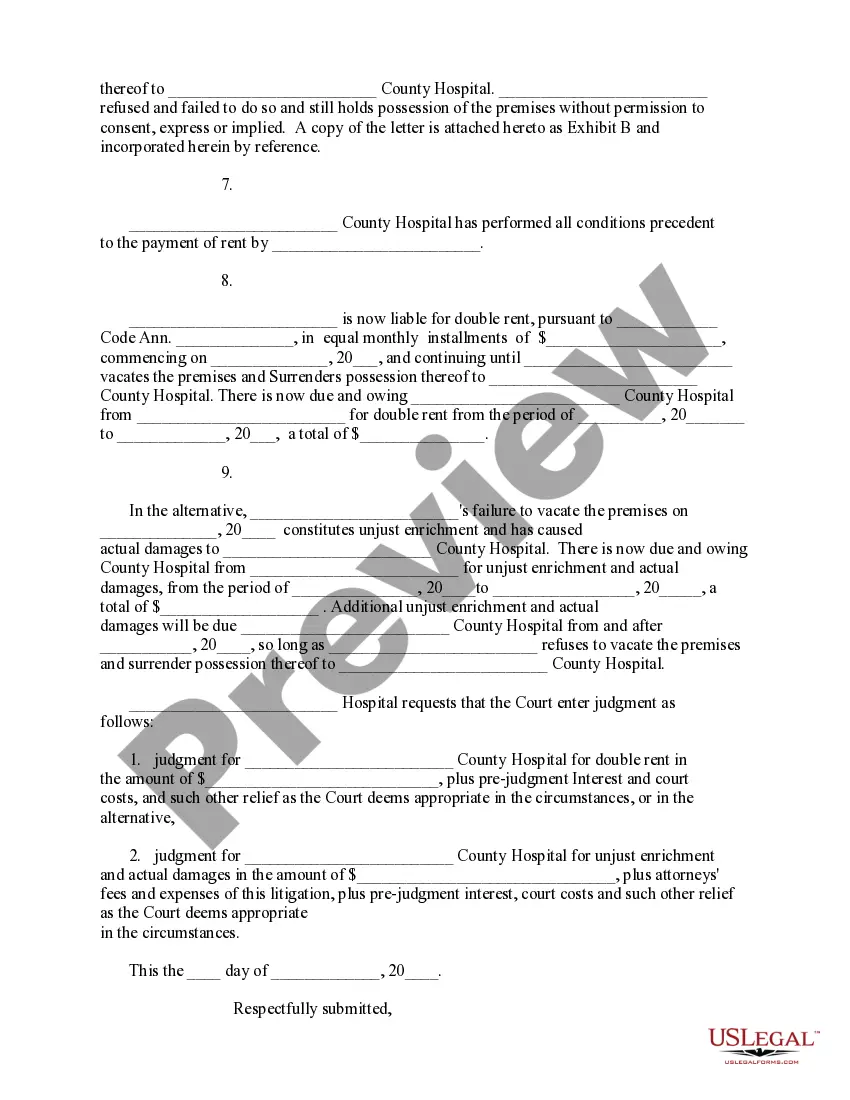
- Claims for damages: Outlines the basis for seeking double rent and any claims for unjust enrichment.
- Judgment request: Specifies what relief the hospital seeks from the court.
When this form is needed
This form is applicable when a tenant, such as a doctor or business, refuses to vacate a property after the lease has ended or after being served with a notice to leave. It is particularly useful for landlords requiring compensation beyond normal rent due to the tenant's failure to relinquish the premises, which can seriously impact their operations and finances.
Who this form is for
- Community hospitals seeking to reclaim leased space from tenants.
- Landlords managing commercial properties facing issues with non-compliant tenants.
- Legal representatives acting on behalf of landlords in eviction or damage claims.
How to prepare this document
- Identify the hospital as the appellant and the tenant as the appellee.
- Provide the full names and addresses of both parties involved in the lease.
- Detail the specifics of the lease agreement, including dates and amounts due for rent.
- Clearly state the demand made and the date it was issued to the tenant.
- Fill in the total amount of double rent being claimed and any additional damages.
- Sign and date the complaint to validate the document.
Does this document require notarization?
Notarization is not commonly needed for this form. However, certain documents or local rules may make it necessary. Our notarization service, powered by Notarize, allows you to finalize it securely online anytime, day or night.
Get your form ready online
Our built-in tools help you complete, sign, share, and store your documents in one place.
Make edits, fill in missing information, and update formatting in US Legal Forms—just like you would in MS Word.
Download a copy, print it, send it by email, or mail it via USPS—whatever works best for your next step.
Sign and collect signatures with our SignNow integration. Send to multiple recipients, set reminders, and more. Go Premium to unlock E-Sign.
If this form requires notarization, complete it online through a secure video call—no need to meet a notary in person or wait for an appointment.
We protect your documents and personal data by following strict security and privacy standards.

Make edits, fill in missing information, and update formatting in US Legal Forms—just like you would in MS Word.

Download a copy, print it, send it by email, or mail it via USPS—whatever works best for your next step.

Sign and collect signatures with our SignNow integration. Send to multiple recipients, set reminders, and more. Go Premium to unlock E-Sign.

If this form requires notarization, complete it online through a secure video call—no need to meet a notary in person or wait for an appointment.

We protect your documents and personal data by following strict security and privacy standards.
Mistakes to watch out for
- Failing to provide accurate details regarding the lease agreement.
- Not including all necessary documentation, such as the original lease or demand letters.
- Missing signatures or dates on the complaint.
- Not adhering to state-specific requirements for filing.
Why complete this form online
- Easy access to legal templates created by licensed attorneys.
- Convenient download and edit capabilities from the comfort of your home.
- Directly tailored to meet your needs without excessive legal jargon.
Looking for another form?
Form popularity
FAQ
A: You may certainly sue the landlord for overcharging you rent since this is a breach of contract claim. The rent amount that you are obligated to pay is reflected in your new lease contract. Anything over that amount is an overcharge.
In most cases when a rental property is damaged, you have the right to keep all or part of the security deposit to offset the repair costs. But again, security deposits are heavily regulated by the landlord-tenant laws in your location.
Any malicious or accidental damage to the property caused by a tenant or their guests is the tenant's responsibility. However, it should still be reported to the property manager or landlord. Malicious damage could be a hole punched in a wall or even nails hammered into the wall without a landlord's permission.
Common repairs tenants should pay for include: Damages cause by a pet, such as chewed blinds or soiled carpet. Burnt-out lightbulbs (an easy, quick fix you tenants can do themselves without contacting the landlord) Any damage caused by the tenant or their guests (broken windows, doors, or appliances)
1If you do call witnesses, you will ask them questions to draw out their testimony regarding the dispute.2Keep your evidence and your statements focused on the facts regarding the dispute.3When you speak in court, speak directly to the judge not to your landlord.How to Dispute Unfair Landlord Charges: 3 Ways to Protect Your\nwww.wikihow.com >> Real Estate > Renting > Dealing With Landlords
When damages or issues affect a rental unit's liveability, it is the landlord's responsibility to fix these damages at no cost to the tenant. Landlords are also responsible for repairing (and sometimes replacing) damaged items or appliances that are in the lease agreement.
Identify. The first step is to identify the situation. Categorize. Eliminate. Leave us a message for the RentPrep Podcast: Take Pictures and Video. Gather Bids for Repairs. Deduct from the Security Deposit. Call Your Local Police.
Instead, it is harm that's committed on purpose, by accident or through neglect that affects the normal function or usefulness of the property. Examples of tenant damage can include anything from a broken toilet seat to a smashed mirror, missing door handles, holes or dents in walls, or carpets soaked with pet urine.
Your landlord discriminates against you.Your landlord takes your security deposit illegally.Your rental unit is inhabitable.The property owner interferes with your right to quiet enjoyment.Your landlord fails to make the necessary repairs.Can I Sue My Landlord? - \nwww..com > realestate > landlord-tenant-law > can-i-sue-my-landlo...