Maine Revocation of Transfer on Death Deed or TOD - Beneficiary Deed for Two Grantors
What this document covers
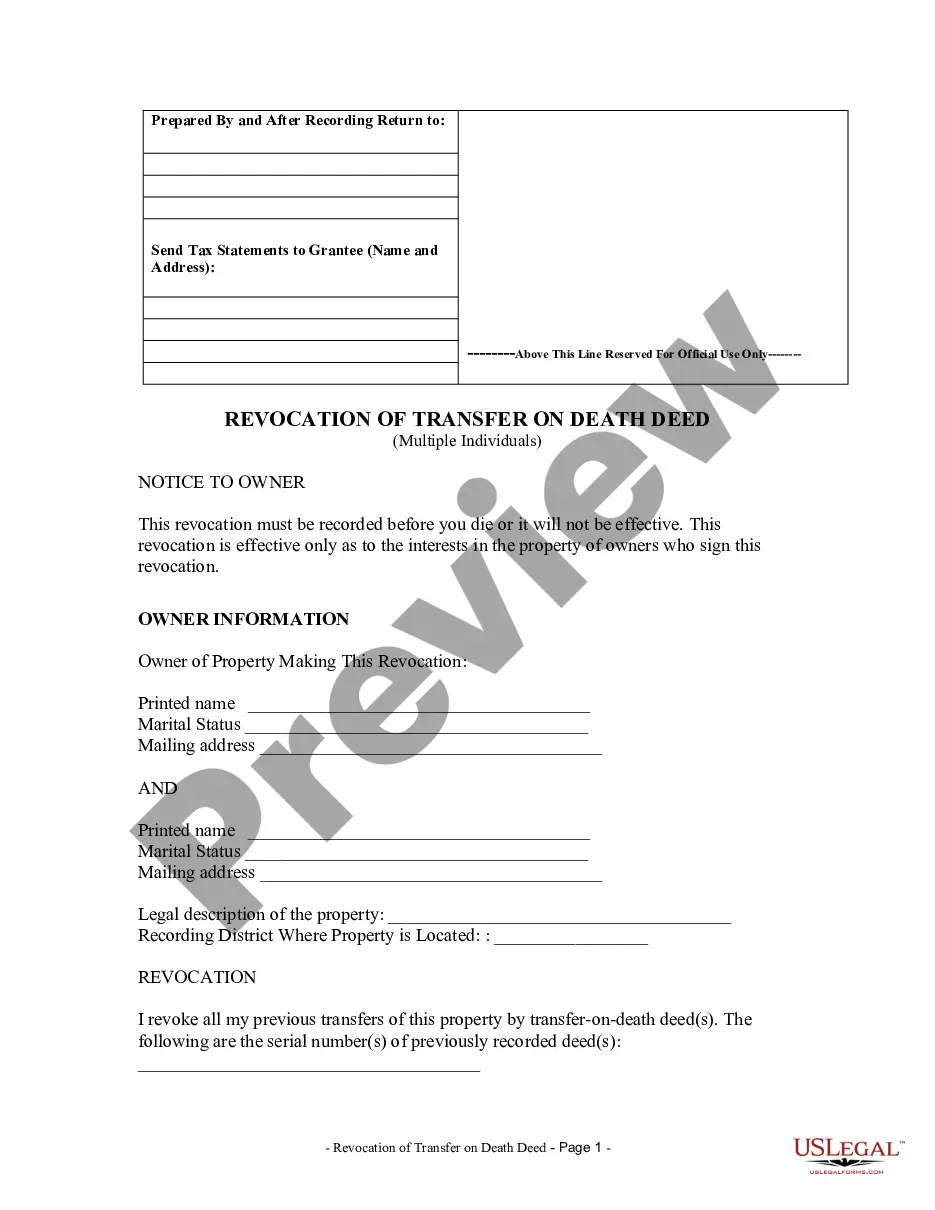
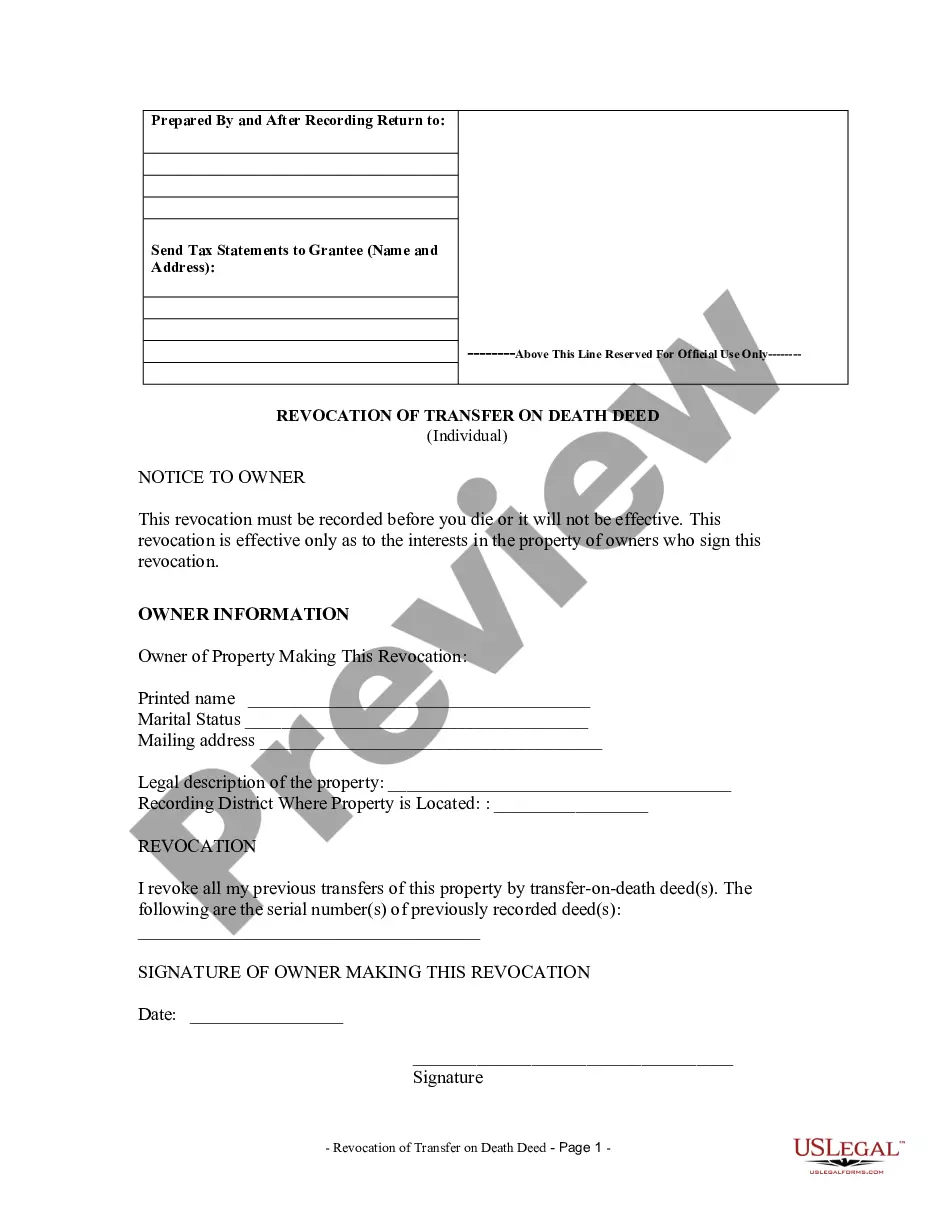
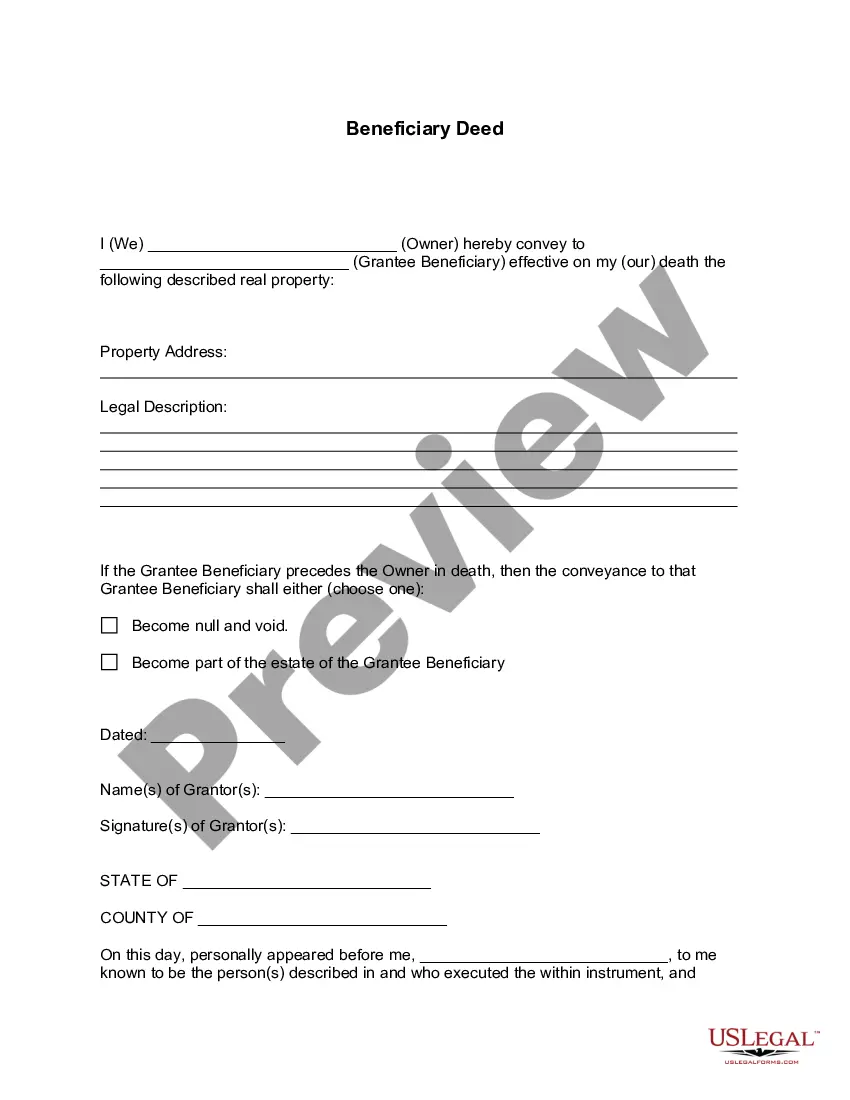
The Revocation of Transfer on Death Deed or TOD - Beneficiary Deed for Two Grantors is a legal document used to cancel a previously executed transfer-on-death deed. This form is crucial for individuals who wish to revoke their prior designation of beneficiaries for real property, ensuring that the interests in the property are clearly defined and legally recognized. Unlike a standard deed, this revocation specifically outlines the cancellation of beneficiary designations, adhering to local laws on property transfers following the owner's death.
Key components of this form
- Owner Information: Includes the names, marital statuses, and mailing addresses of both grantors.
- Legal Description: A detailed description of the real property being revoked.
- List of Previous Deeds: Serial numbers of any previously recorded transfer-on-death deeds that are being revoked.
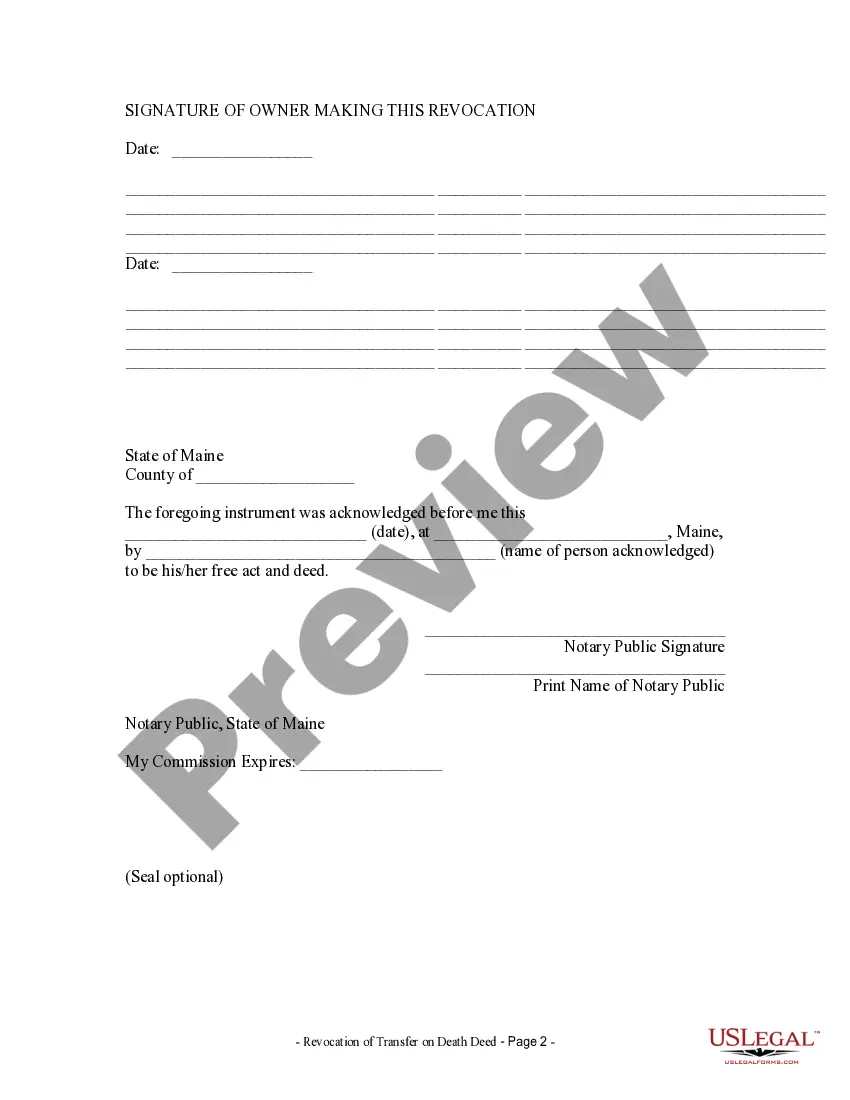
- Signature Section: Requires the signatures of both grantors along with the dates of signing.
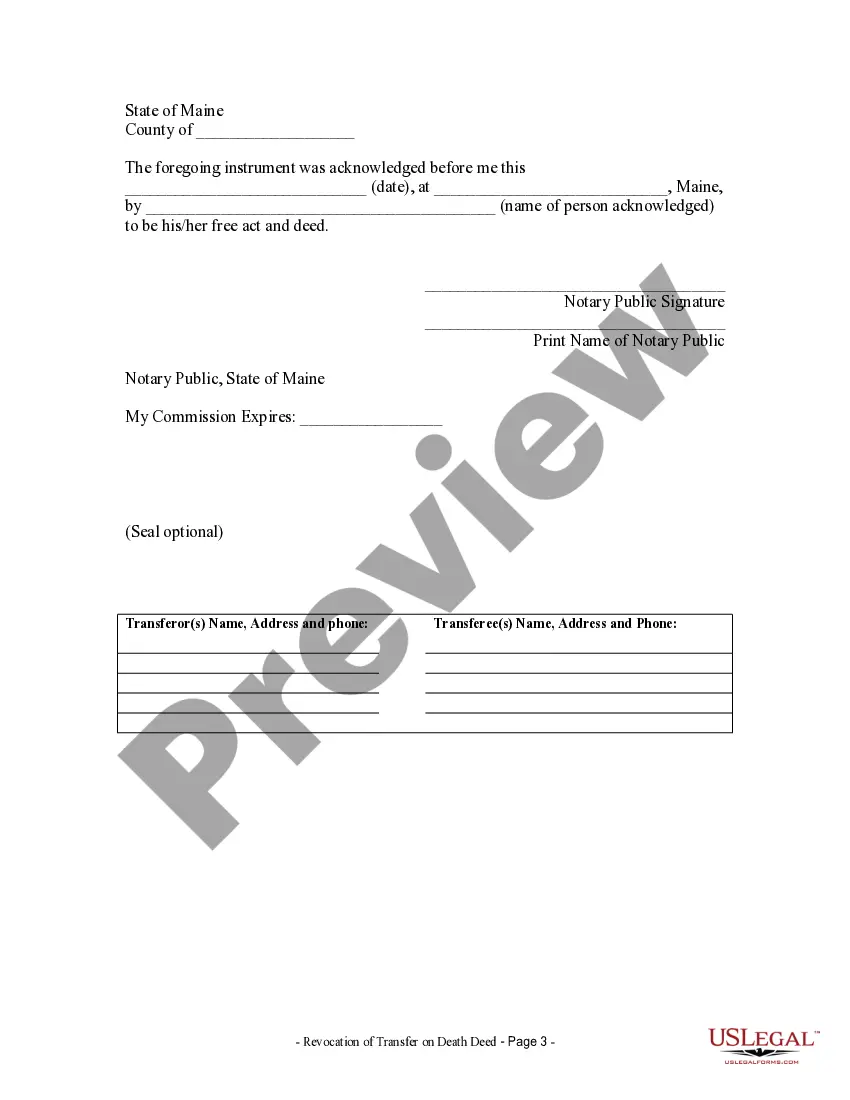
- Notary Acknowledgment: A section for notarization to validate the revocation.


When to use this form
This form should be used when two property owners decide to revoke a transfer-on-death deed they previously established. It is particularly relevant in situations where the owners have changed their minds about how their property should be distributed after their death. This includes circumstances such as changes in personal relationships, financial situations, or a desire to reassign beneficiaries.
Who can use this document
- Individuals who have previously established a transfer-on-death deed.
- Co-owners of a property seeking to revoke beneficiary designations.
- Property owners wishing to ensure their estate is handled according to their current wishes.
How to complete this form
- Identify the parties: Enter the names and mailing addresses of both grantors.
- Specify the property: Include the legal description of the property being revoked.
- List previous deeds: Provide the serial numbers of all previously recorded transfer-on-death deeds.
- Sign the document: Both grantors must sign and date the revocation.
- Obtain notarization: Ensure the document is acknowledged before a notary public.
Is notarization required?
Yes, this form must be notarized to be legally valid. Notarization is crucial as it provides a layer of authenticity and protects against fraud by confirming the identity of the signers. US Legal Forms also offers integrated online notarization services, allowing you to complete this process via secure video call without any need for travel.
Get your form ready online
Our built-in tools help you complete, sign, share, and store your documents in one place.
Make edits, fill in missing information, and update formatting in US Legal Forms—just like you would in MS Word.
Download a copy, print it, send it by email, or mail it via USPS—whatever works best for your next step.
Sign and collect signatures with our SignNow integration. Send to multiple recipients, set reminders, and more. Go Premium to unlock E-Sign.
If this form requires notarization, complete it online through a secure video call—no need to meet a notary in person or wait for an appointment.
We protect your documents and personal data by following strict security and privacy standards.

Make edits, fill in missing information, and update formatting in US Legal Forms—just like you would in MS Word.

Download a copy, print it, send it by email, or mail it via USPS—whatever works best for your next step.

Sign and collect signatures with our SignNow integration. Send to multiple recipients, set reminders, and more. Go Premium to unlock E-Sign.

If this form requires notarization, complete it online through a secure video call—no need to meet a notary in person or wait for an appointment.

We protect your documents and personal data by following strict security and privacy standards.
Common mistakes
- Failing to sign the form before a notary, which can void the revocation.
- Not recording the revocation before the death of an owner, rendering it ineffective.
- Leaving out the legal description of the property, which can lead to confusion about the property being revoked.
Benefits of using this form online
- Convenience: Download and complete the form from the comfort of your home.
- Editability: Easily modify your information before finalizing the document.
- Reliability: The form is drafted by licensed attorneys to ensure legal compliance.
Looking for another form?

Form popularity
FAQ
Choosing between a TOD and a beneficiary deed often depends on your individual situation and estate planning goals. A TOD deed allows for seamless transfers without the complications of probate, whereas a beneficiary deed may have specific implications depending on state laws. Assessing your unique needs is crucial for making the best choice. A Maine Revocation of Transfer on Death Deed - Beneficiary Deed for Two Grantors provides a valuable option for many, effectively catering to diverse estate planning requirements.
Revocation of a beneficiary deed refers to the legal process of cancelling or voiding the deed that designates heirs or beneficiaries for property transfer. This means the property will no longer automatically pass to the named beneficiaries upon the owner’s death. Understanding the nuances of revocation is essential for maintaining control over your estate. A Maine Revocation of Transfer on Death Deed - Beneficiary Deed for Two Grantors can offer you flexibility in managing your assets.
To transfer a TOD deed to two beneficiaries, you must include both names on the deed itself. You should specify how the property will be divided between them, whether equally or based on percentages. It is advisable to consult with a legal professional to ensure the deed is properly executed in compliance with Maine laws. Utilizing a Maine Revocation of Transfer on Death Deed - Beneficiary Deed for Two Grantors can simplify this process.