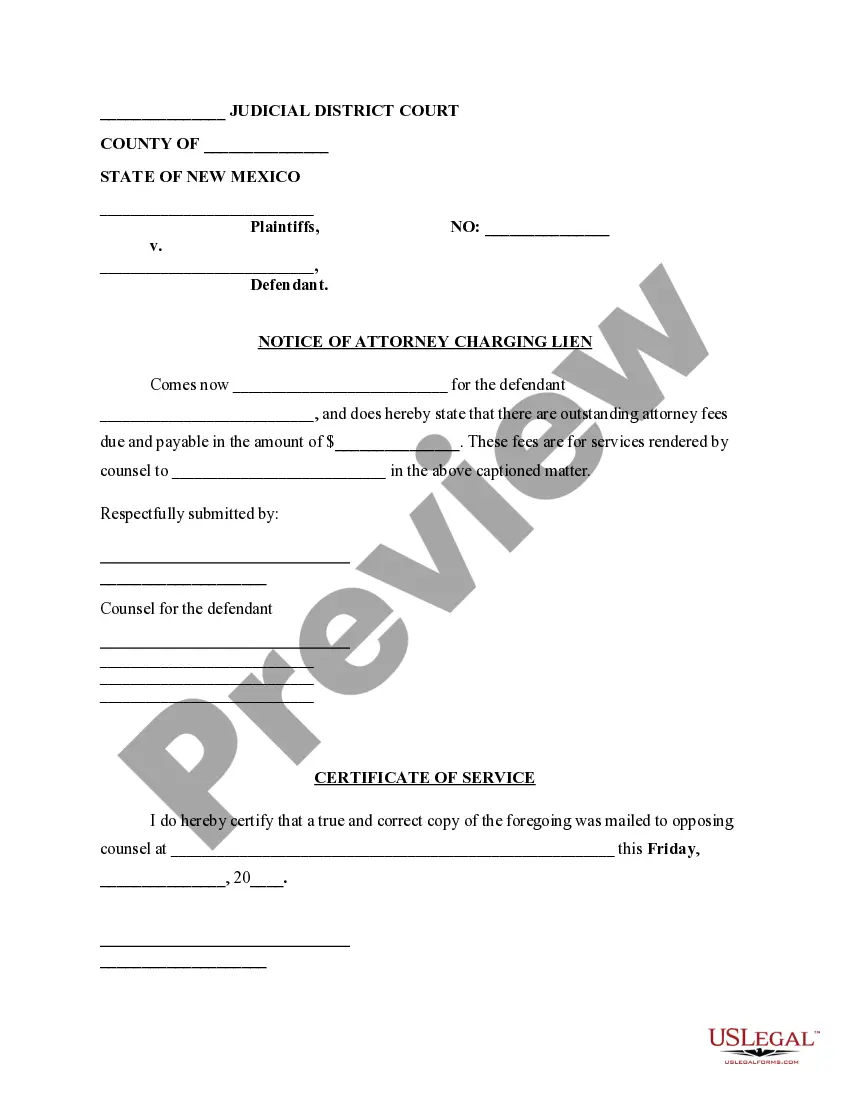
New Mexico Notice of Attorney Charging Lien
What this document covers
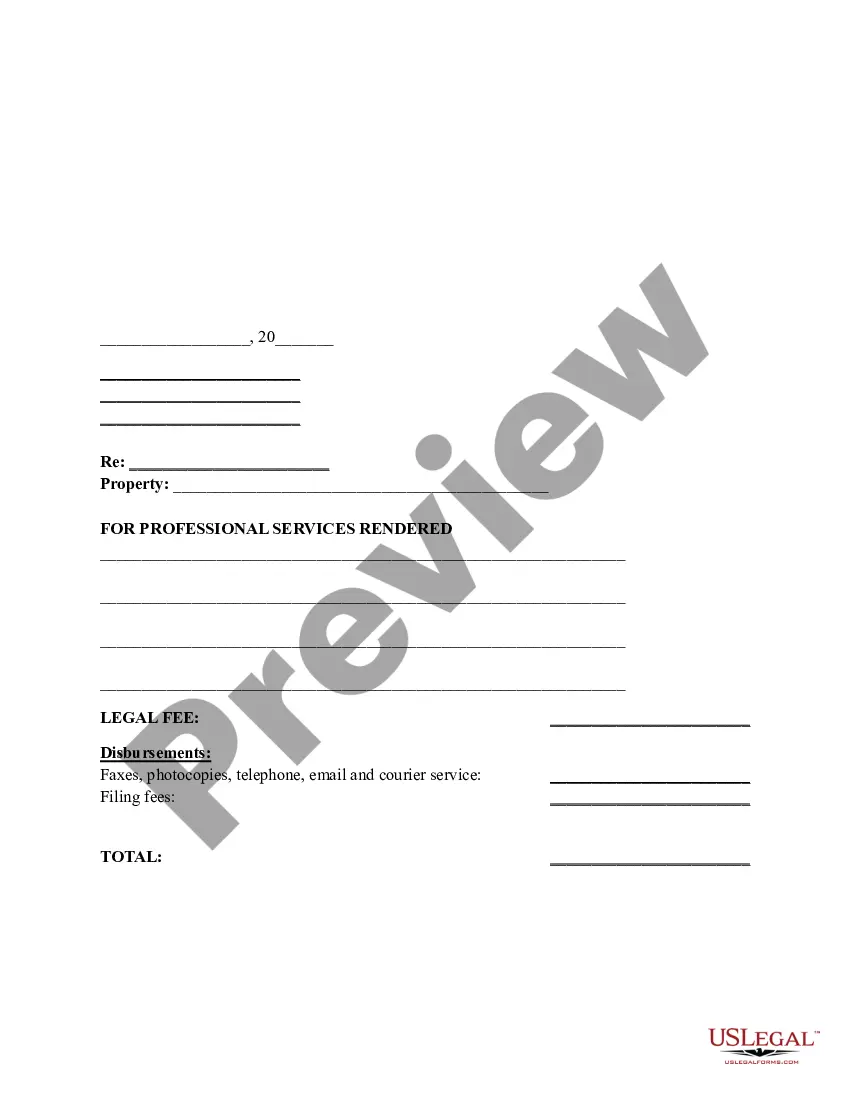
The Notice of Attorney Charging Lien is a legal document that allows an attorney to formally notify a party regarding outstanding fees owed for legal services rendered. This form is essential for ensuring that attorneys can secure payment for their work by establishing a lien against the proceeds of a case. It is different from other forms, as it specifically focuses on the attorney's right to claim fees from a client or third party involved in a legal matter.
Main sections of this form
- Identification of the judicial district court and relevant county and state.
- The names of the plaintiffs and defendant involved in the legal matter.
- The amount of outstanding attorney fees due for services rendered.
- Signature and contact information of the attorney representing the client.
- Certification of service to opposing counsel, including their address.
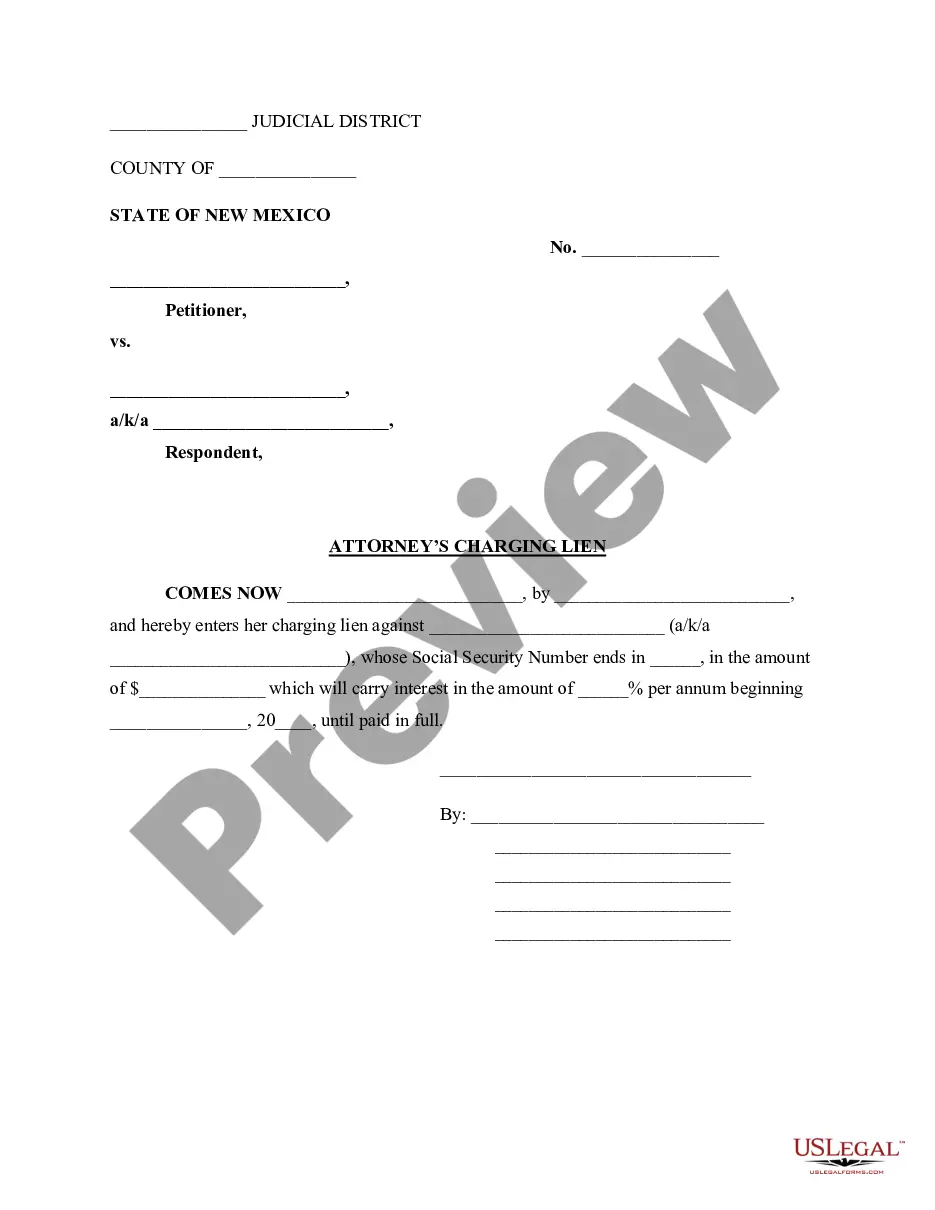
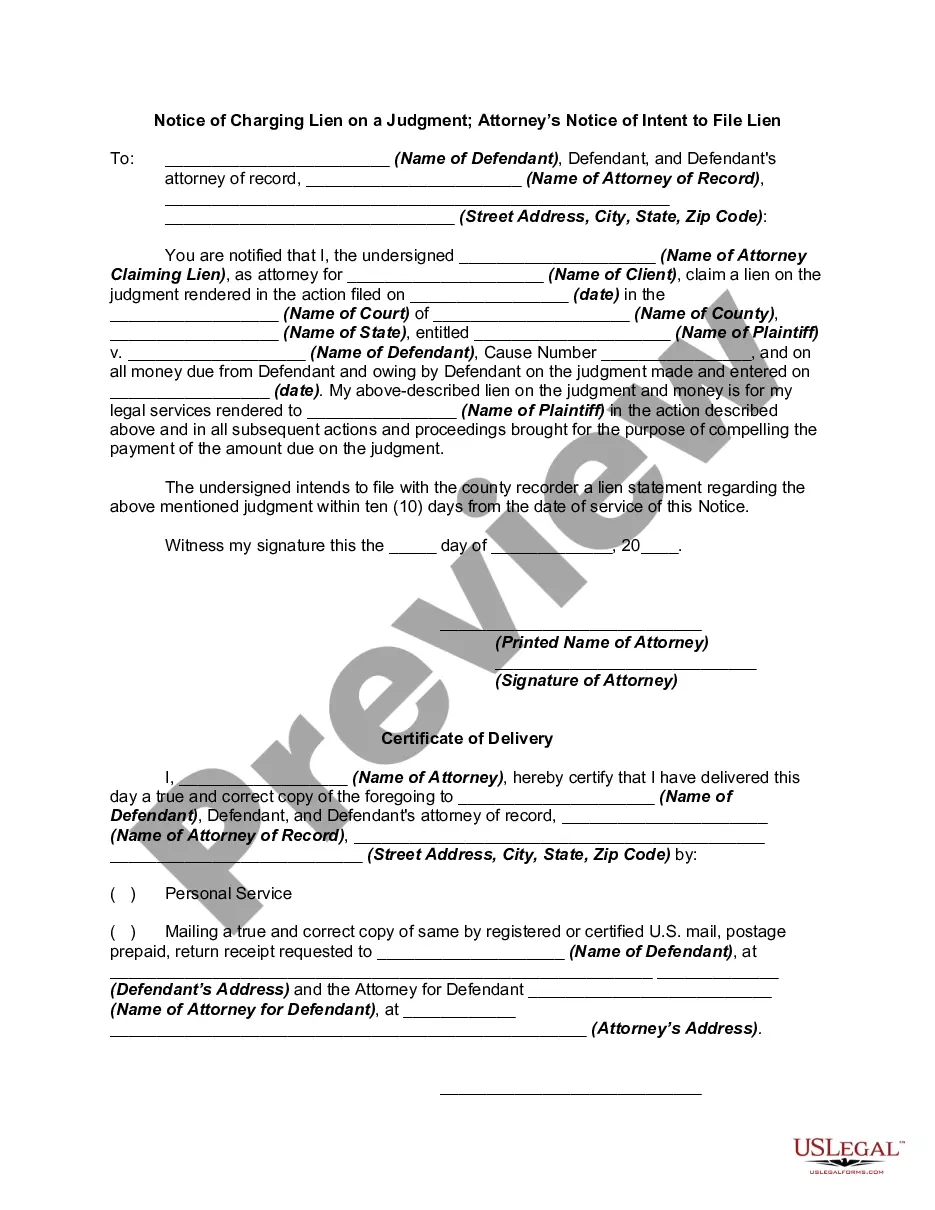
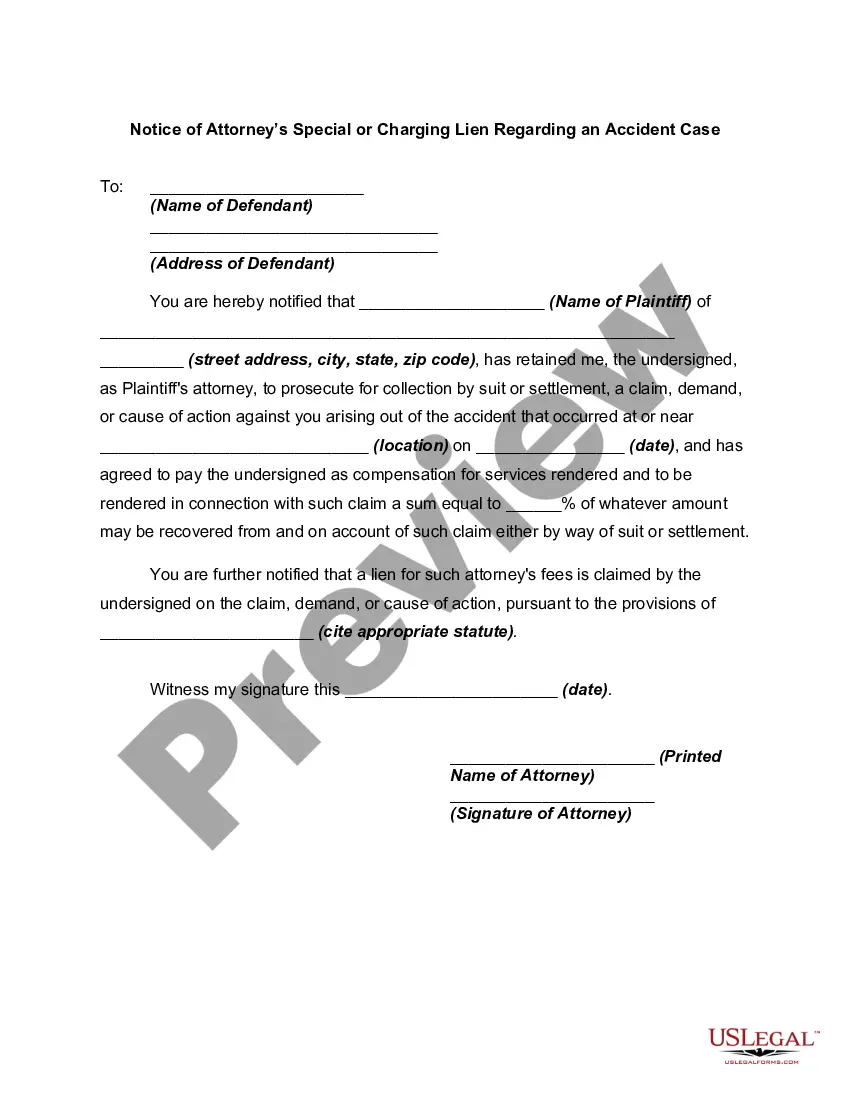
When to use this document
This form should be used when an attorney has provided services on behalf of a client or defendant and has not received the agreed-upon fees. It is typically filed in conjunction with a legal action to secure the attorney's right to collect any fees from settlements, verdicts, or other monetary awards resulting from the case.
Intended users of this form
- Attorneys seeking to enforce a lien for unpaid fees against clients.
- Law firms involved in litigation or legal matters requiring payment confirmation.
- Clients who owe fees and need to understand the consequences of outstanding payments.
Steps to complete this form
- Identify the judicial district court and fill in the county and state details.
- Clearly state the names of the plaintiffs and defendant.
- Enter the specific amount of outstanding attorney fees owed for services rendered.
- Provide your name and contact information as the attorney representing the defendant.
- Complete the certificate of service section to indicate that the notice has been sent to opposing counsel.
Does this document require notarization?
This form does not typically require notarization unless specified by local law. However, it's essential to check your jurisdiction's specific requirements to ensure compliance.
Get your form ready online
Our built-in tools help you complete, sign, share, and store your documents in one place.
Make edits, fill in missing information, and update formatting in US Legal Forms—just like you would in MS Word.
Download a copy, print it, send it by email, or mail it via USPS—whatever works best for your next step.
Sign and collect signatures with our SignNow integration. Send to multiple recipients, set reminders, and more. Go Premium to unlock E-Sign.
If this form requires notarization, complete it online through a secure video call—no need to meet a notary in person or wait for an appointment.
We protect your documents and personal data by following strict security and privacy standards.

Make edits, fill in missing information, and update formatting in US Legal Forms—just like you would in MS Word.

Download a copy, print it, send it by email, or mail it via USPS—whatever works best for your next step.

Sign and collect signatures with our SignNow integration. Send to multiple recipients, set reminders, and more. Go Premium to unlock E-Sign.

If this form requires notarization, complete it online through a secure video call—no need to meet a notary in person or wait for an appointment.

We protect your documents and personal data by following strict security and privacy standards.
Common mistakes to avoid
- Failing to accurately enter the amount of fees owed.
- Not including all required parties' names.
- Neglecting to provide the correct judicial district court information.
- Overlooking the certification of service to opposing counsel.
Benefits of using this form online
- Convenient access to downloadable and editable legal templates.
- Reliability of documents drafted by licensed attorneys.
- Time-saving process with immediate availability.
- Easy customization to fit individual legal situations.
Looking for another form?
Form popularity
FAQ
If you get sued, lose and don't pay, the claimant can file liens against your assets, including real estate. You won't be able to sell or borrow against the property without paying them first. And, if you fail to satisfy the lien, the lienholder can file for foreclosure.
If a creditor gets a judgment against you, it can then place a lien on your property. The lien gives the creditor an interest in your property so that it can get paid for the debt you owe.And in some cases, the lien gives the creditor the right to force a sale of your property in order to get paid.
Consensual liens are considered good liens and do not impact your credit. These include mortgages, vehicles, and business assets. Statutory liens are considered the bad kind and can will remain listed on your credit for seven years.These occur when a court grants a financial interest in your assets to a creditor.
Lien. n. any official claim or charge against property or funds for payment of a debt or an amount owed for services rendered. A lien is usually a formal document signed by the party to whom money is owed and sometimes by the debtor who agrees to the amount due.
How Liens Work. A lien provides a creditor with the legal right to seize and sell the collateral property or asset of a borrower who fails to meet the obligations of a loan or contract. The property that is the subject of a lien cannot be sold by the owner without the consent of the lien holder.
A type of attorney's lien under which a lawyer acquires an interest in a judgment awarded to the client. This may mean that the lawyer can eventually claim a portion of any money paid to the client due to the judgment. The lien arises because the client's failure to pay for legal services. See Retaining lien (compare).
The right of a lawyer to hold a client's property until the client pays for legal services provided. The property may include business files, official documents, and money awarded by a court.
A charging lien can be entered against a party in a Florida divorce case to secure attorneys' fees from property that is awarded to the party in a final judgment of divorce. Certain requirements must be met before the lien can be imposed, however, as seen in the case Szurant v. Aaronson, 2D18-2092 (Fla.