Crop-share Cash Farm Lease
What is this form?
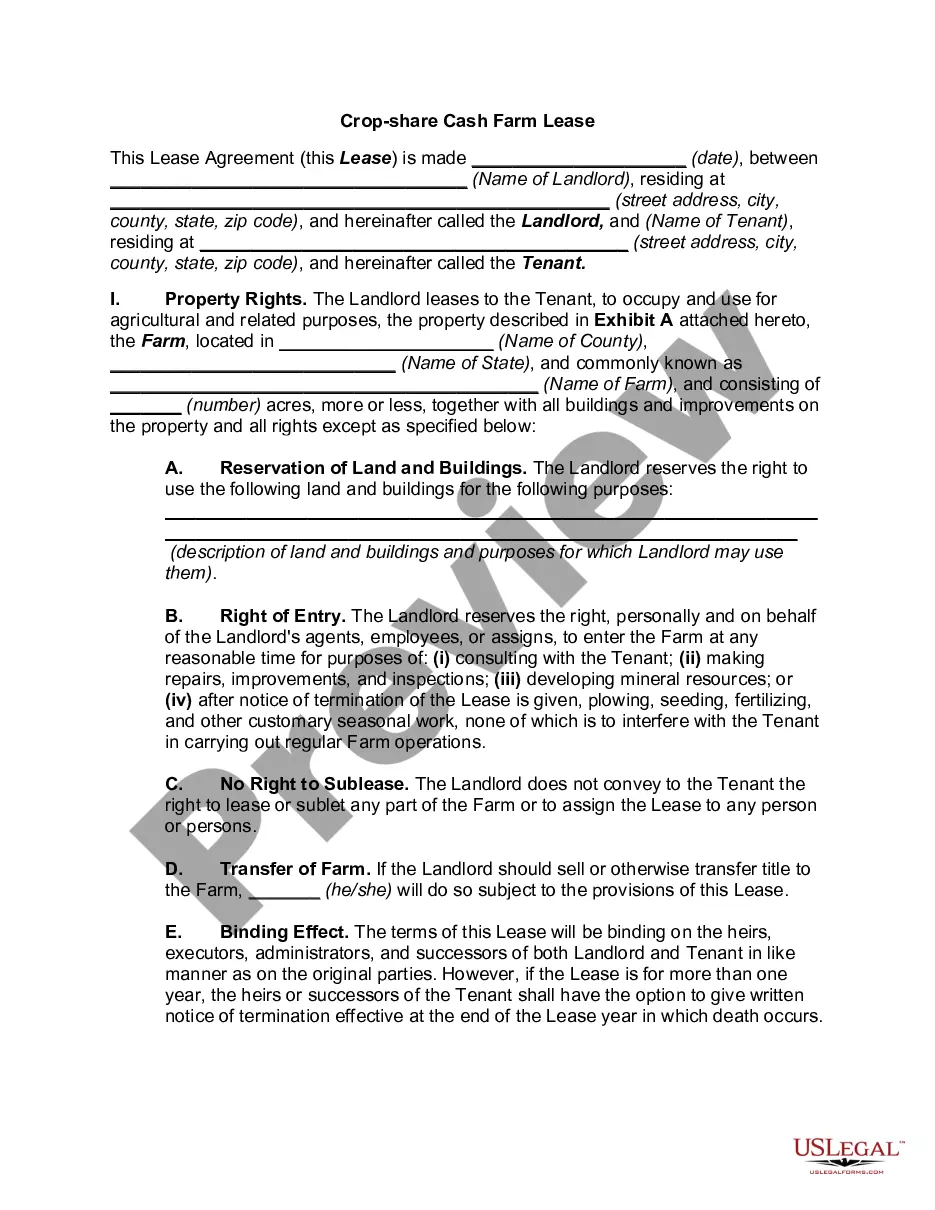
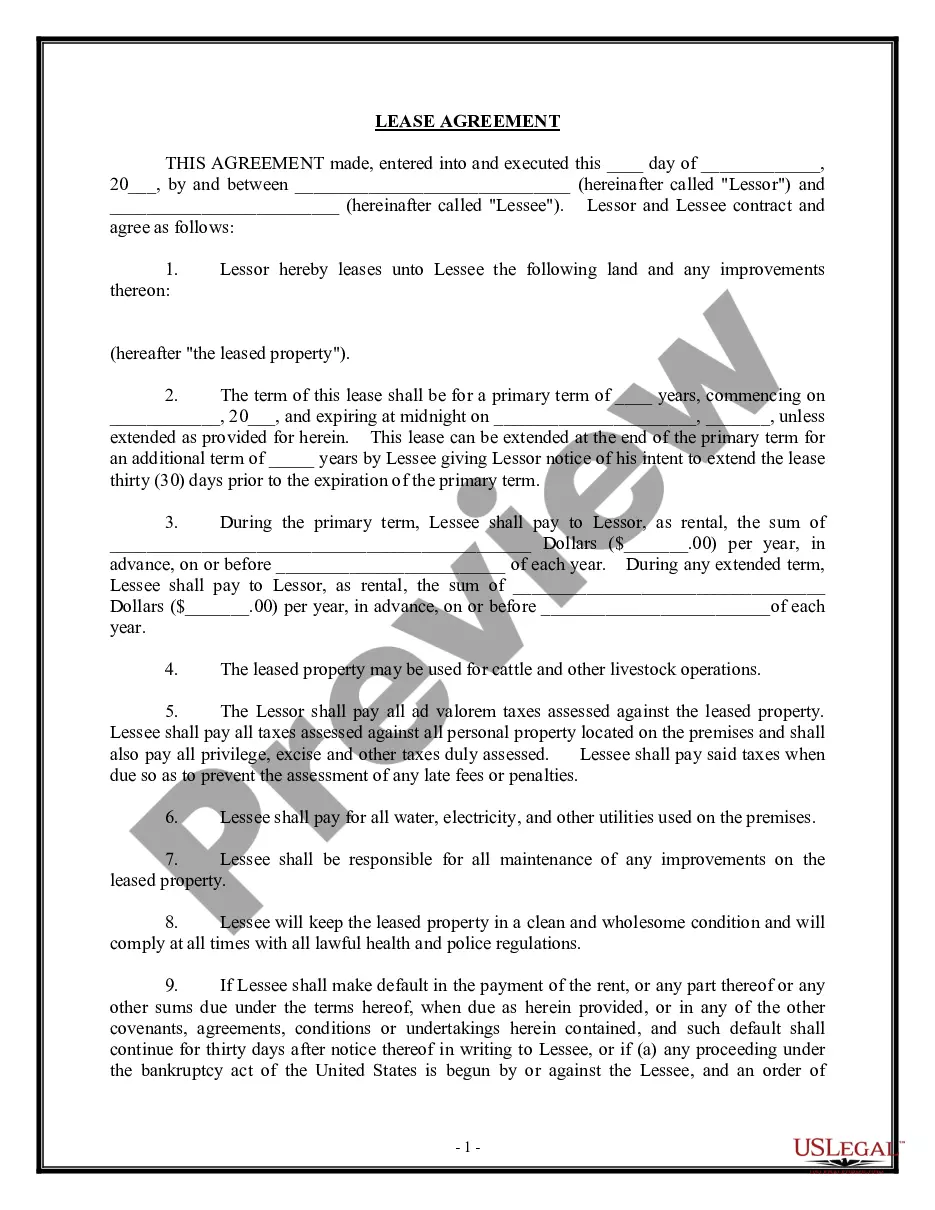
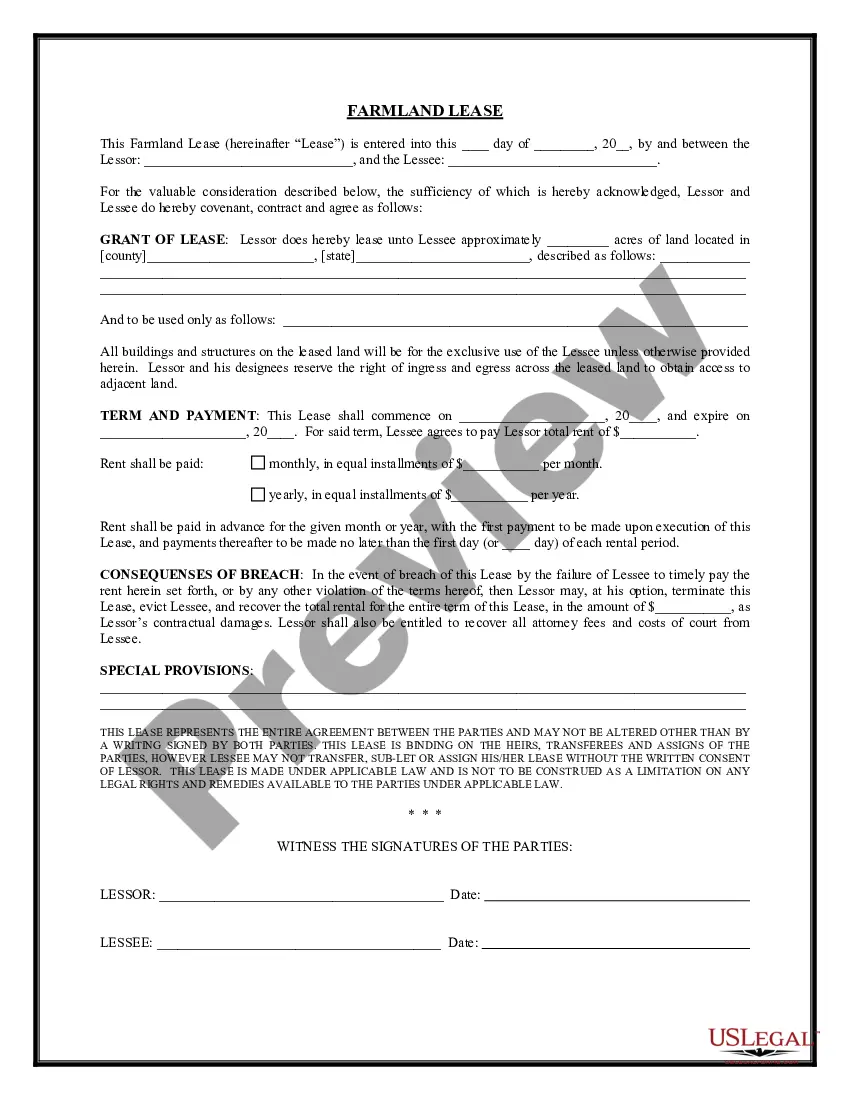
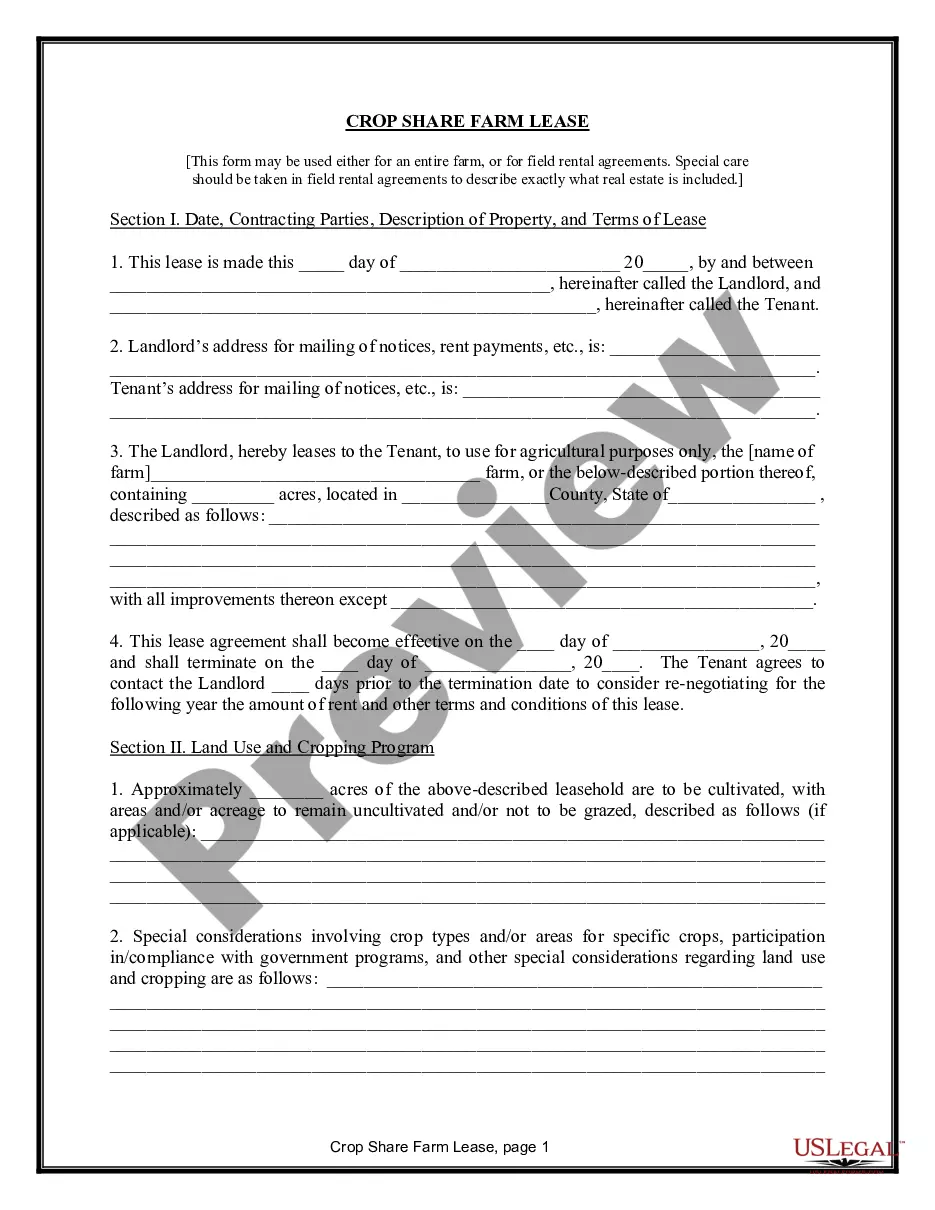
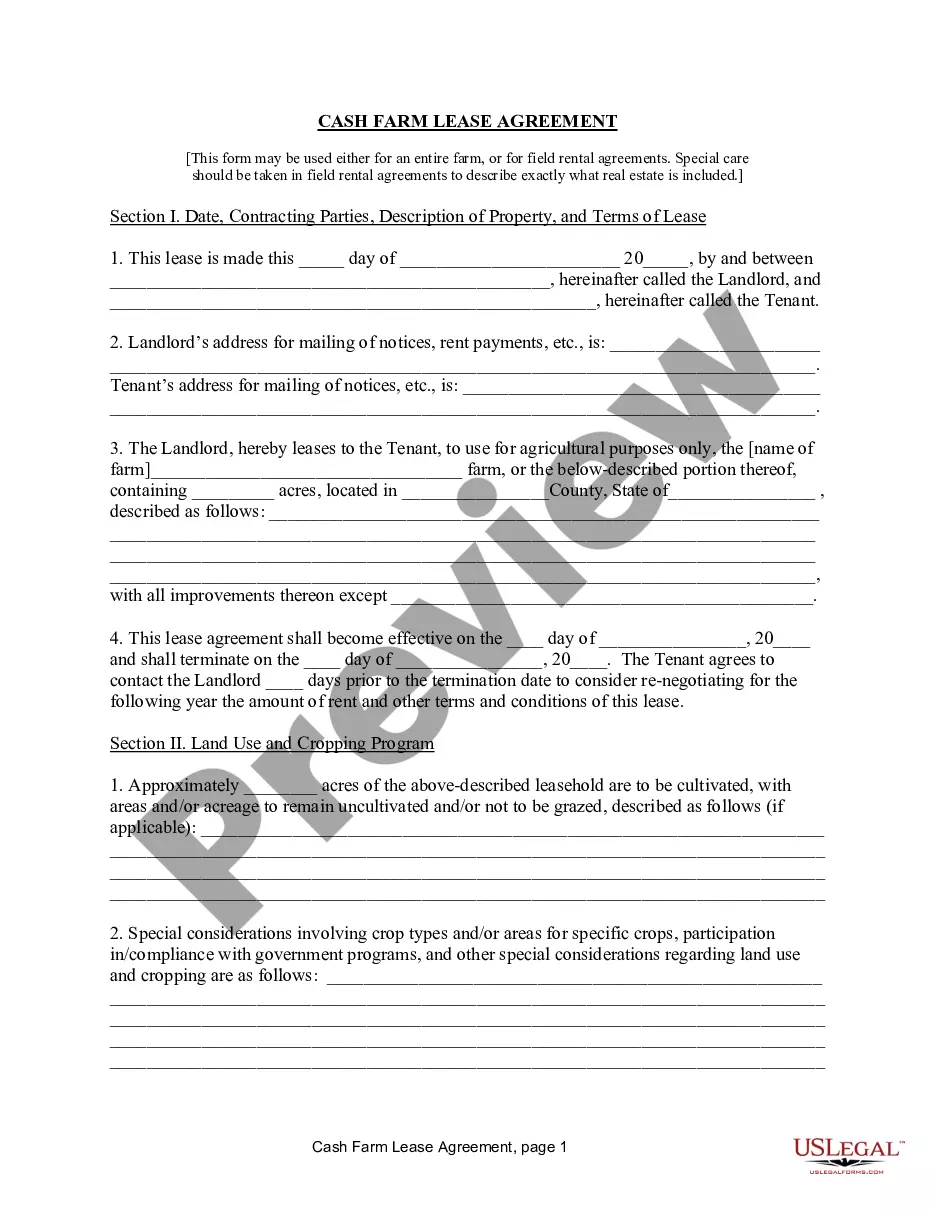
The Crop-share Cash Farm Lease is a legal agreement between a landlord and a tenant, outlining the terms under which the tenant farms the landlord's land in exchange for sharing the produce or financial returns of the farming operations. Unlike a cash rent lease, the landlord shares input costs while the tenant handles the labor and other expenses. This arrangement not only divides the risk between both parties but also often qualifies the landlord for federal farming programs. However, it may limit the tenant's decision-making autonomy regarding farm operations.
What’s included in this form
- Identification of the landlord and tenant, including addresses.
- Description of leased property, rights, and reserved areas by the landlord.
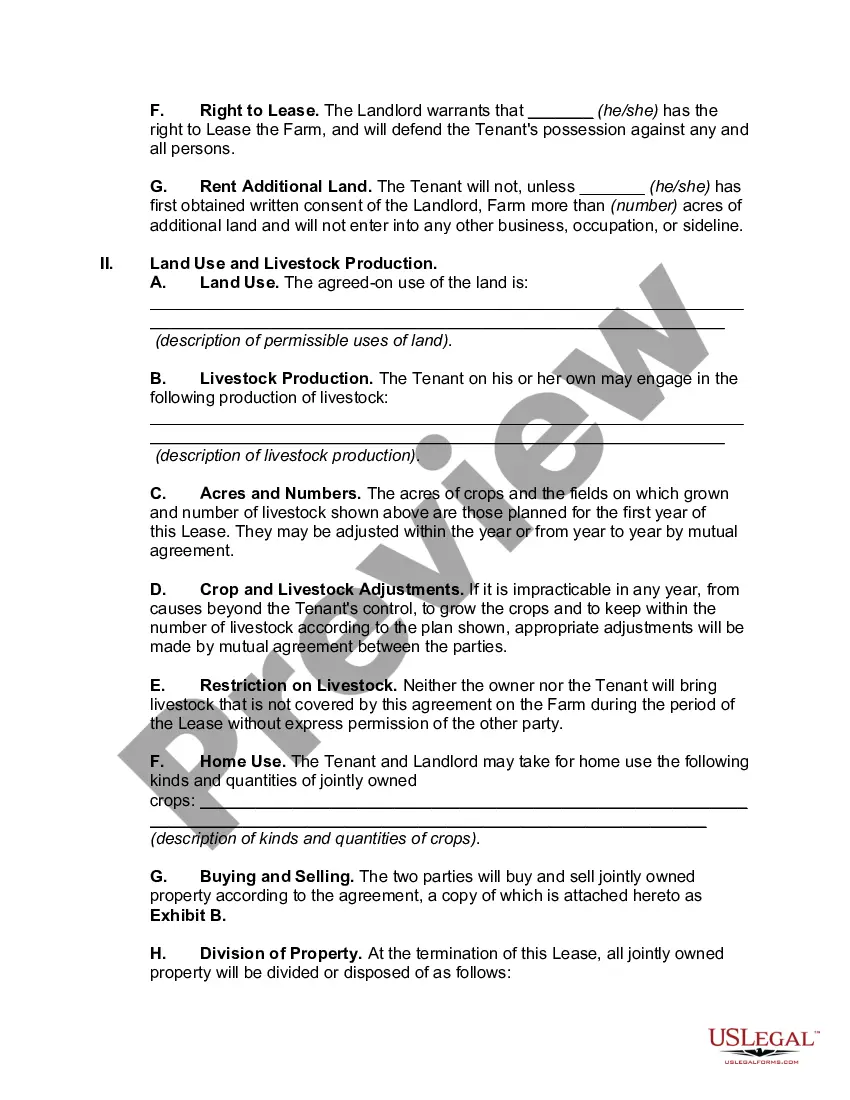
- Terms for land use, livestock production, and crop adjustments.
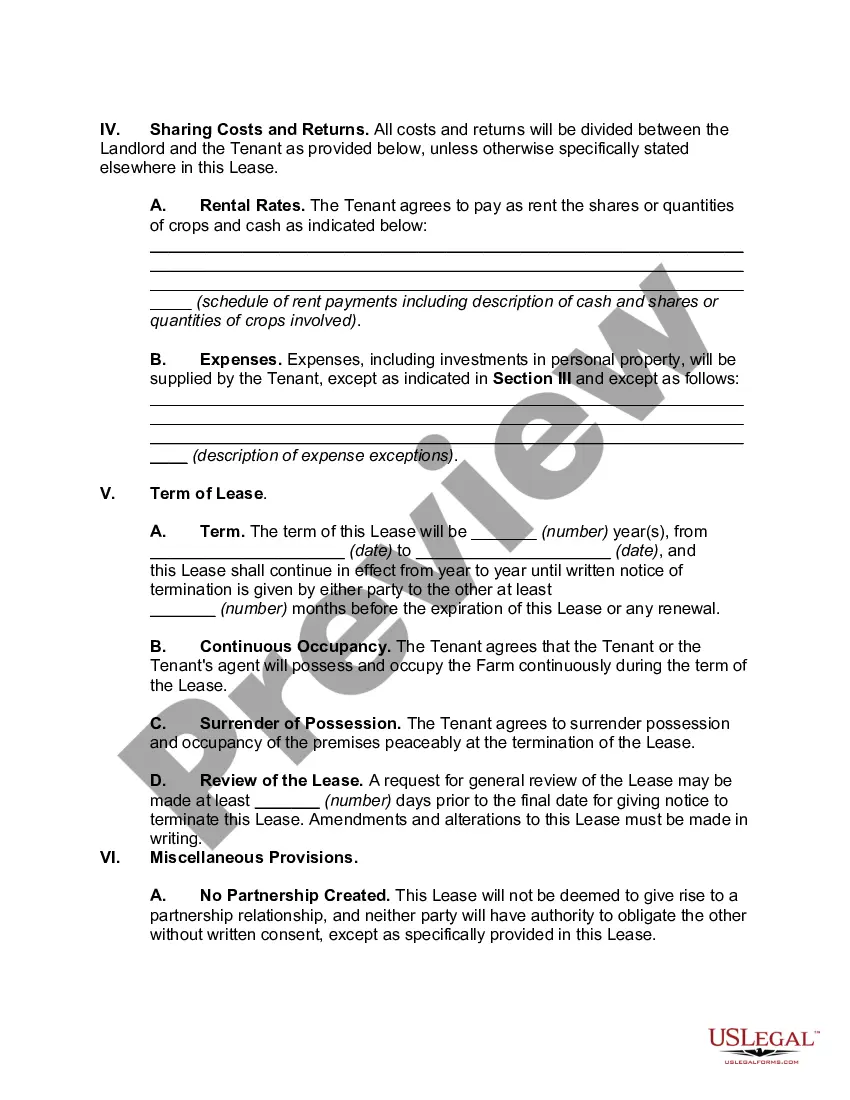
- Sharing costs and proceeds from farming operations.
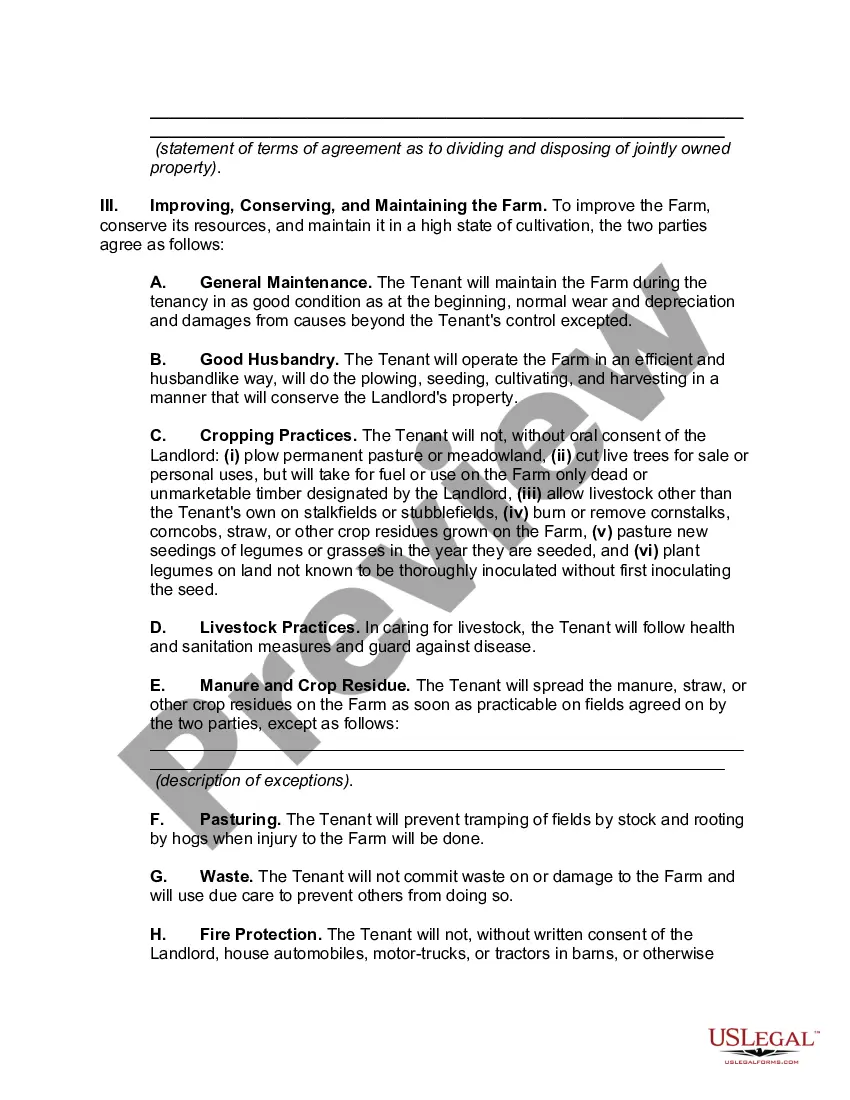
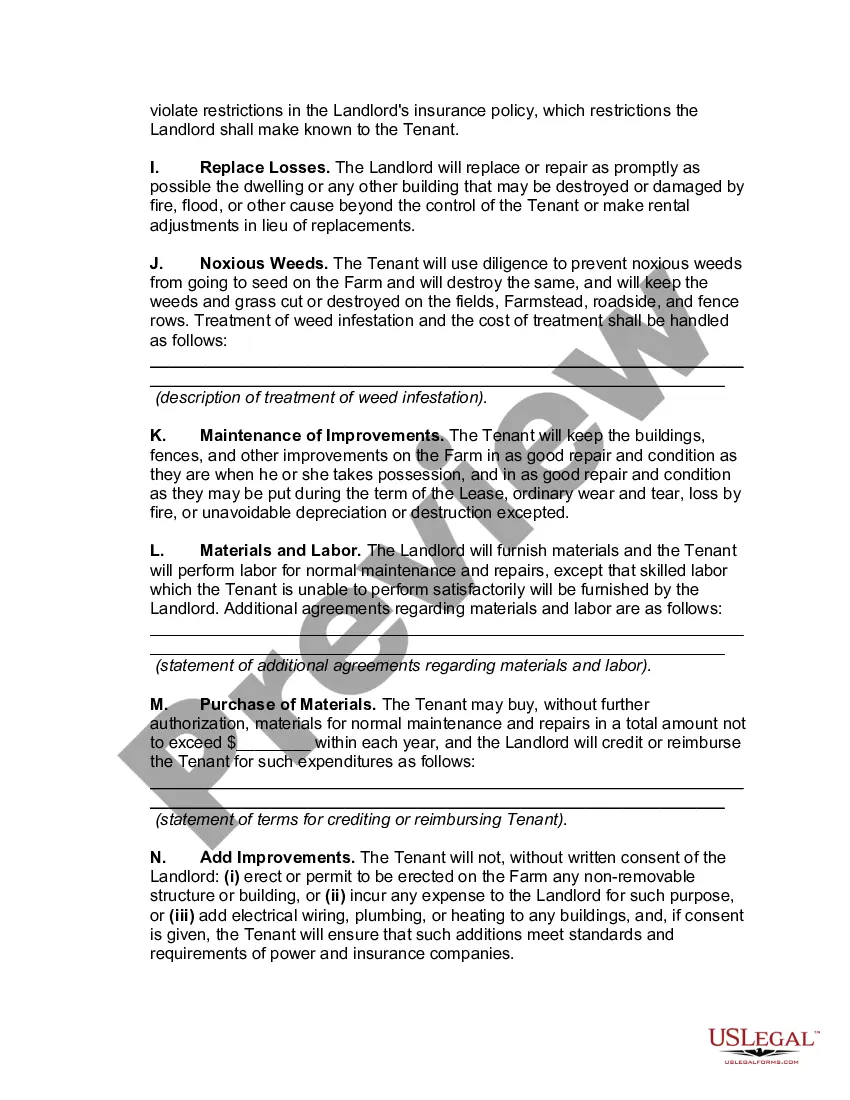
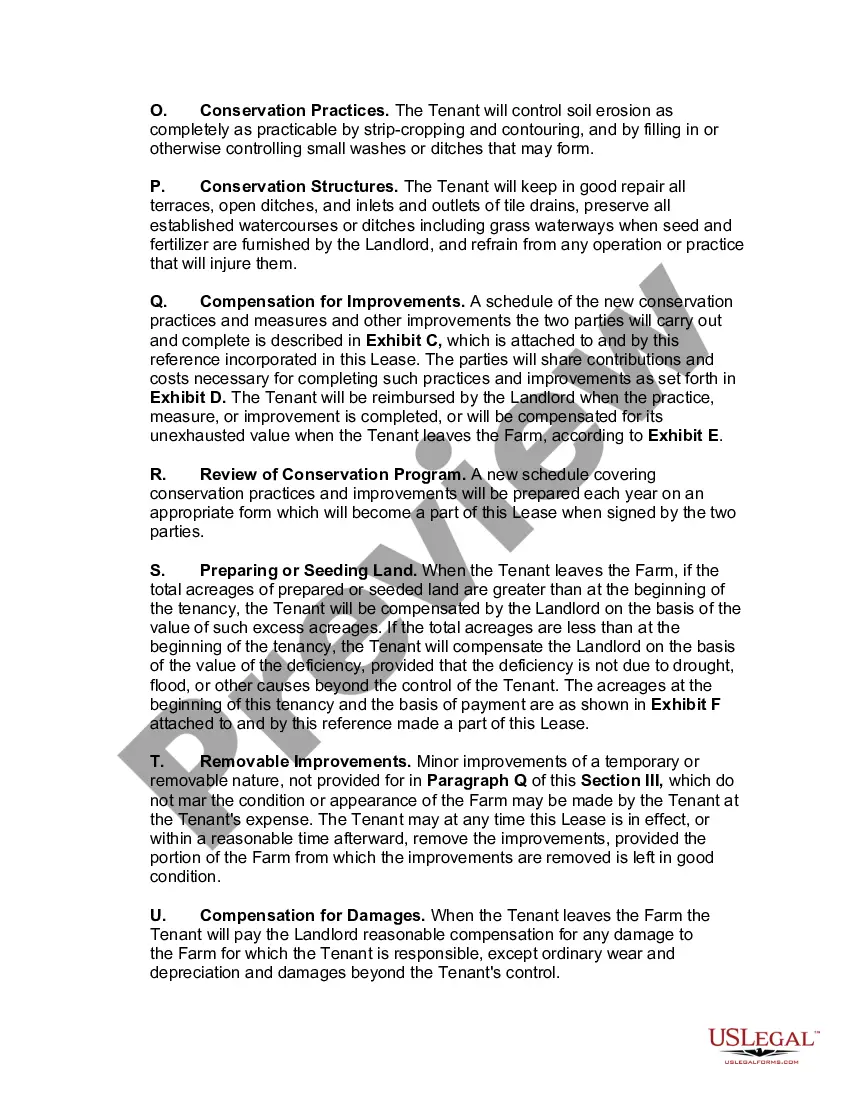
- Maintenance responsibilities and improvement obligations for both parties.
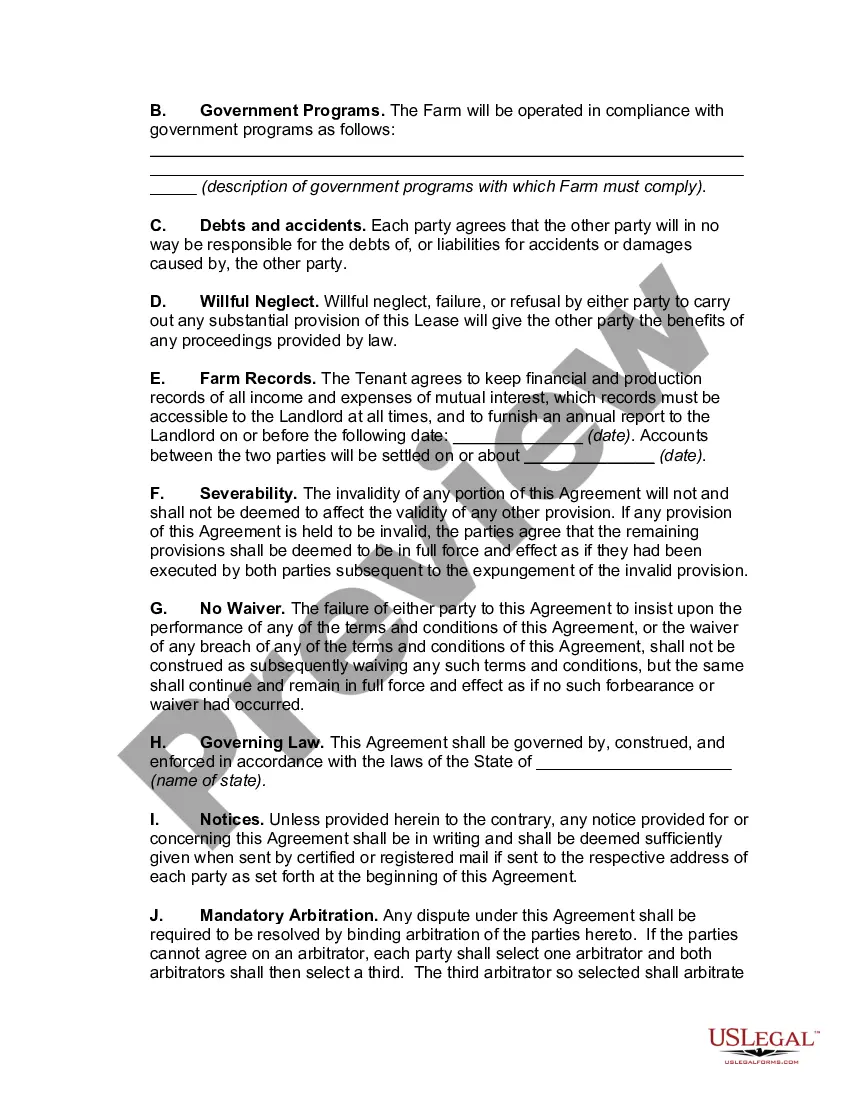
- Duration of the lease and conditions for termination.
Common use cases
This form is ideal when a landlord wants to lease their agricultural land to a tenant under a sharecropping arrangement. Use this lease if both parties agree on sharing not only the costs for inputs like seed and fertilizer but also the profits from the harvest. It is suitable for situations where the landlord seeks to maintain some involvement in agricultural decisions while providing support to the tenant.
Intended users of this form
This form is designed for:
- Farm owners or landlords who want to enter a crop-share agreement with a tenant.
- Tenant farmers looking to lease agricultural land with shared input and profit arrangements.
- Anyone seeking to formalize the financial and operational relationship between landlords and tenants in agricultural endeavors.
How to complete this form
- Identify and enter the names and addresses of both the landlord and tenant at the start of the lease.
- Clearly describe the agricultural property being leased, including its location and acreage.
- Outline the sections regarding land use, livestock production, and responsibilities clearly.
- Specify the terms for sharing both costs and benefits from crop production.
- Sign and date the lease by both parties to enforce the agreement legally.
Does this form need to be notarized?
Notarization is generally not required for this form. However, certain states or situations might demand it. You can complete notarization online through US Legal Forms, powered by Notarize, using a verified video call available anytime.
Get your form ready online
Our built-in tools help you complete, sign, share, and store your documents in one place.
Make edits, fill in missing information, and update formatting in US Legal Forms—just like you would in MS Word.
Download a copy, print it, send it by email, or mail it via USPS—whatever works best for your next step.
Sign and collect signatures with our SignNow integration. Send to multiple recipients, set reminders, and more. Go Premium to unlock E-Sign.
If this form requires notarization, complete it online through a secure video call—no need to meet a notary in person or wait for an appointment.
We protect your documents and personal data by following strict security and privacy standards.

Make edits, fill in missing information, and update formatting in US Legal Forms—just like you would in MS Word.

Download a copy, print it, send it by email, or mail it via USPS—whatever works best for your next step.

Sign and collect signatures with our SignNow integration. Send to multiple recipients, set reminders, and more. Go Premium to unlock E-Sign.

If this form requires notarization, complete it online through a secure video call—no need to meet a notary in person or wait for an appointment.

We protect your documents and personal data by following strict security and privacy standards.
Common mistakes
- Failing to specify the days required to provide notice for lease termination.
- Leaving out details of permissible land uses or livestock production.
- Not providing an exact description of shared expenses and income divisions.
- Neglecting to define maintenance responsibilities clearly.
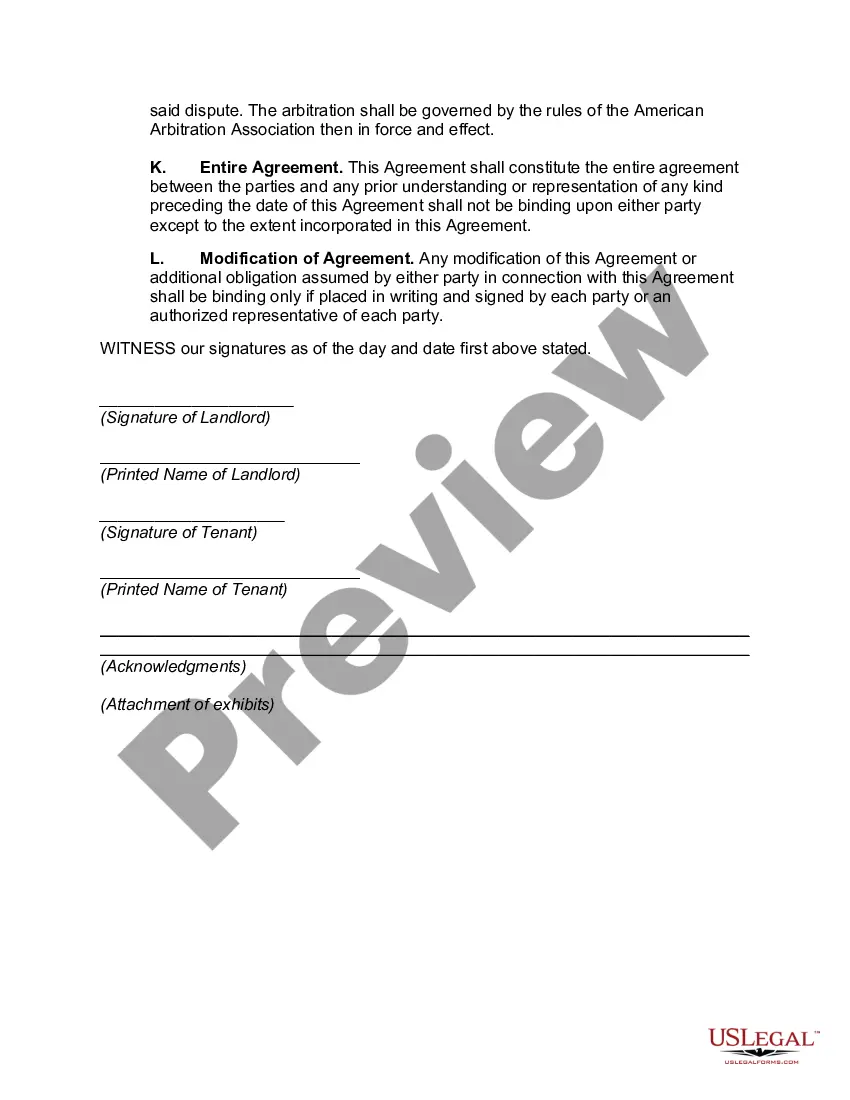
- Not signing the lease in the presence of a witness or notarizing if necessary.
Benefits of completing this form online
- Accessibility to legal language drafted by licensed attorneys, ensuring reliability.
- Instant download allows for immediate use and completion.
- Editability enables users to customize terms to meet specific needs.
- Reduces the potential for errors compared to incomplete or improvised agreements.
Looking for another form?
Form popularity
FAQ
Of Crop Share Arrangements In addition to crop share, the lease agreement can be a crop-share/cash, straight cash, or flexible cash arrangement. In addition to leasing, a landowner may hire custom operators to do the field work or ?direct operate? by hiring labor to operate the owner's machinery.
The traditional share arrangement for a grain crop like corn or wheat is one-third to the landowner and two-thirds to the tenant. Usually, the expenses paid, and crop received, are equal to the share ? i.e. the landowner would pay one-third of the expenses and receive one-third of the crop.
Crop share A common share agreement would be 25% to landowner and 75% to tenant of the harvested grain crop when the landowner does not share in any production costs.
The traditional share arrangement for a grain crop like corn or wheat is one-third to the landowner and two-thirds to the tenant. Usually, the expenses paid, and crop received, are equal to the share ? i.e. the landowner would pay one-third of the expenses and receive one-third of the crop.
In the typical 50-50 crop share lease, the tenant provides all the labor, owns the field machinery, pays for fuel, oil and repairs for machinery and 50 percent of other operating expenses.
These types of contracts typically specify a quantity to be delivered, product price, delivery time and location, and product specification. Price premiums are often paid for commodities that exceed quality standards. Most contract crop production takes the form of a marketing contract.
Tenant farmers usually received between two-thirds and three-quarters of the harvest, minus deductions for living expenses. Sharecroppers, however, received only half the crop, from which landowners deducted rent and any credit (with interest) for supplies provided for the family's subsistence.