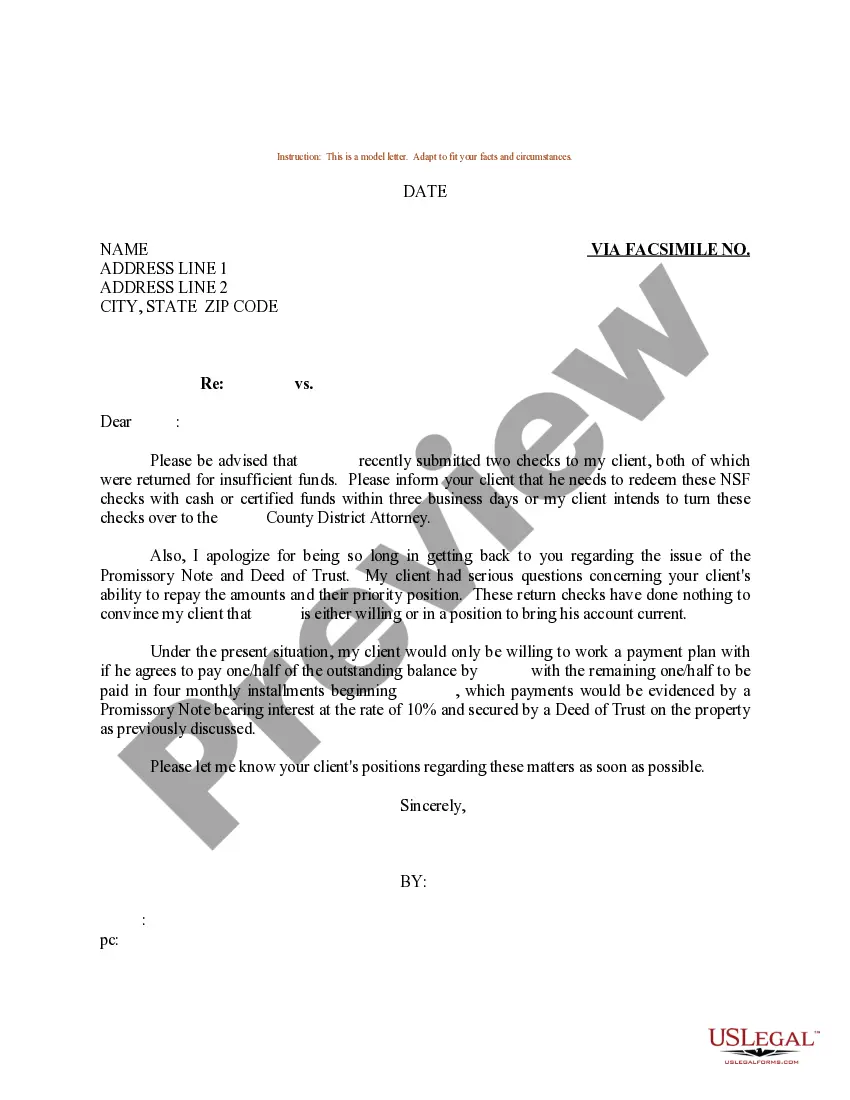
Sample Letter for Insufficient Funds
Overview of this form
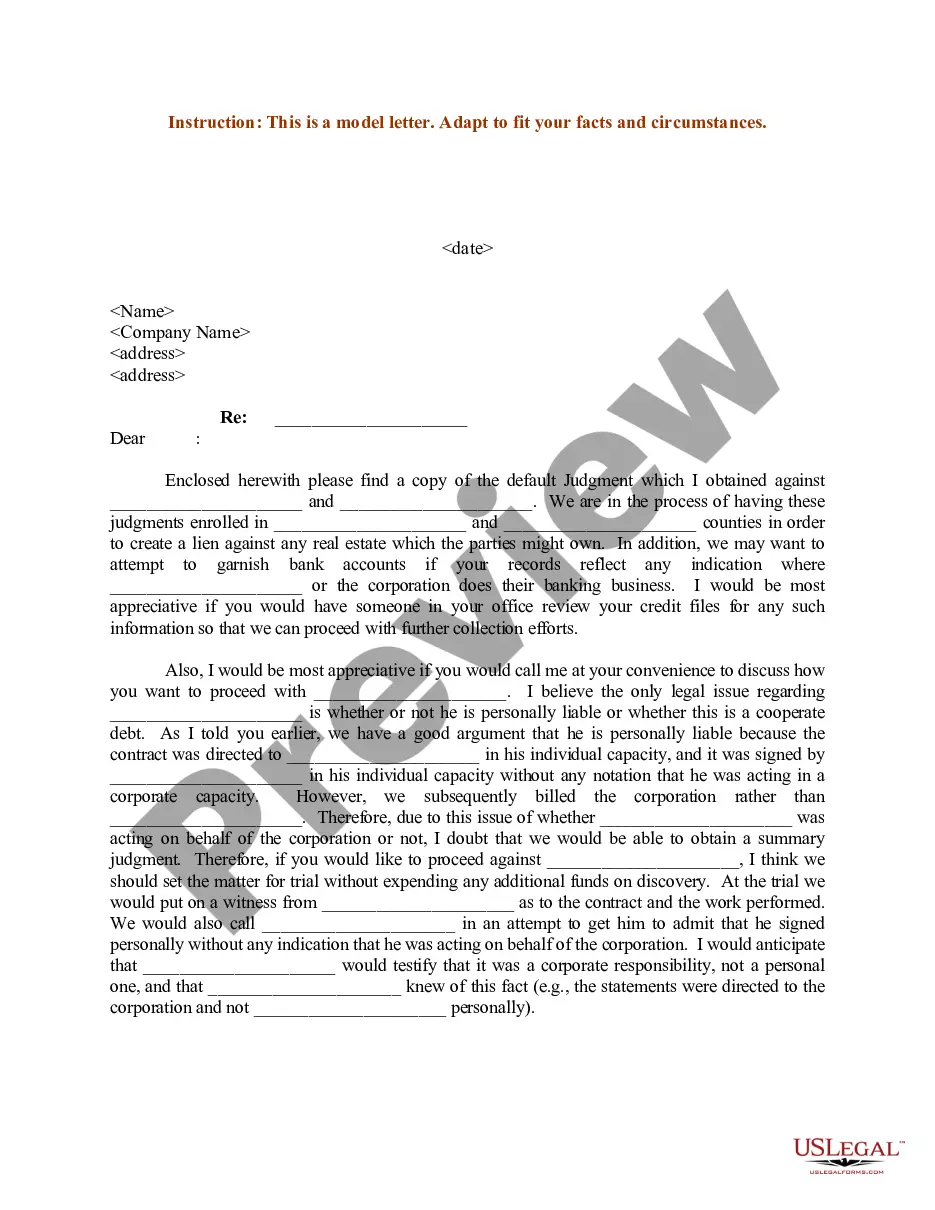
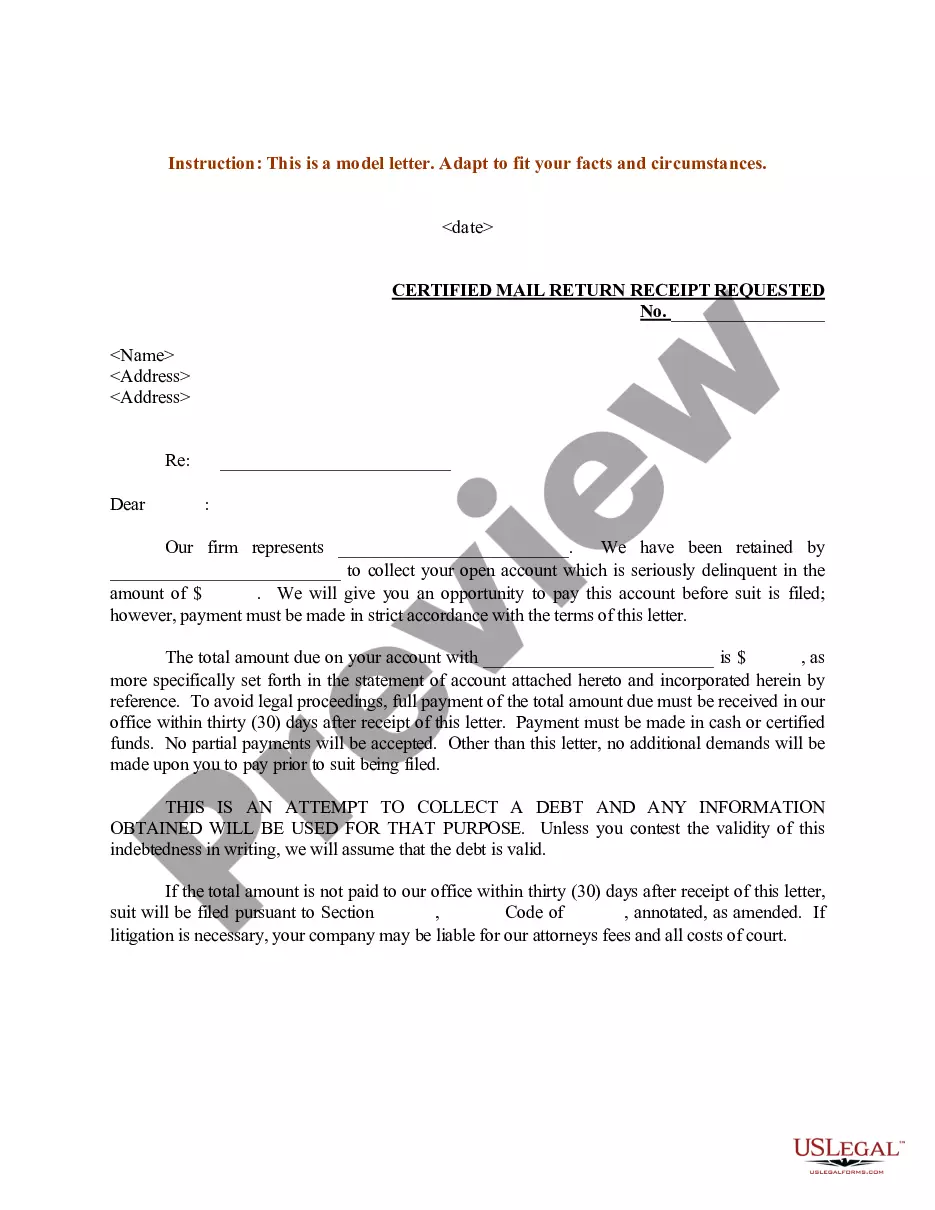
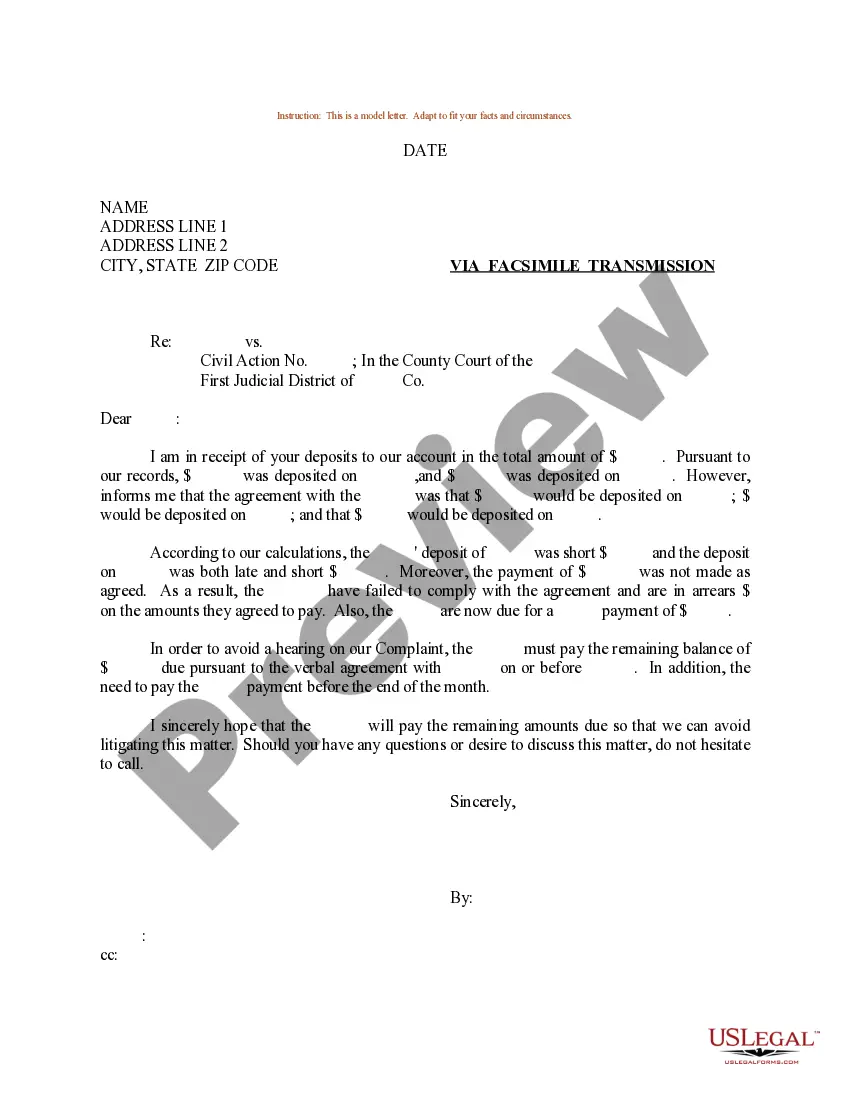
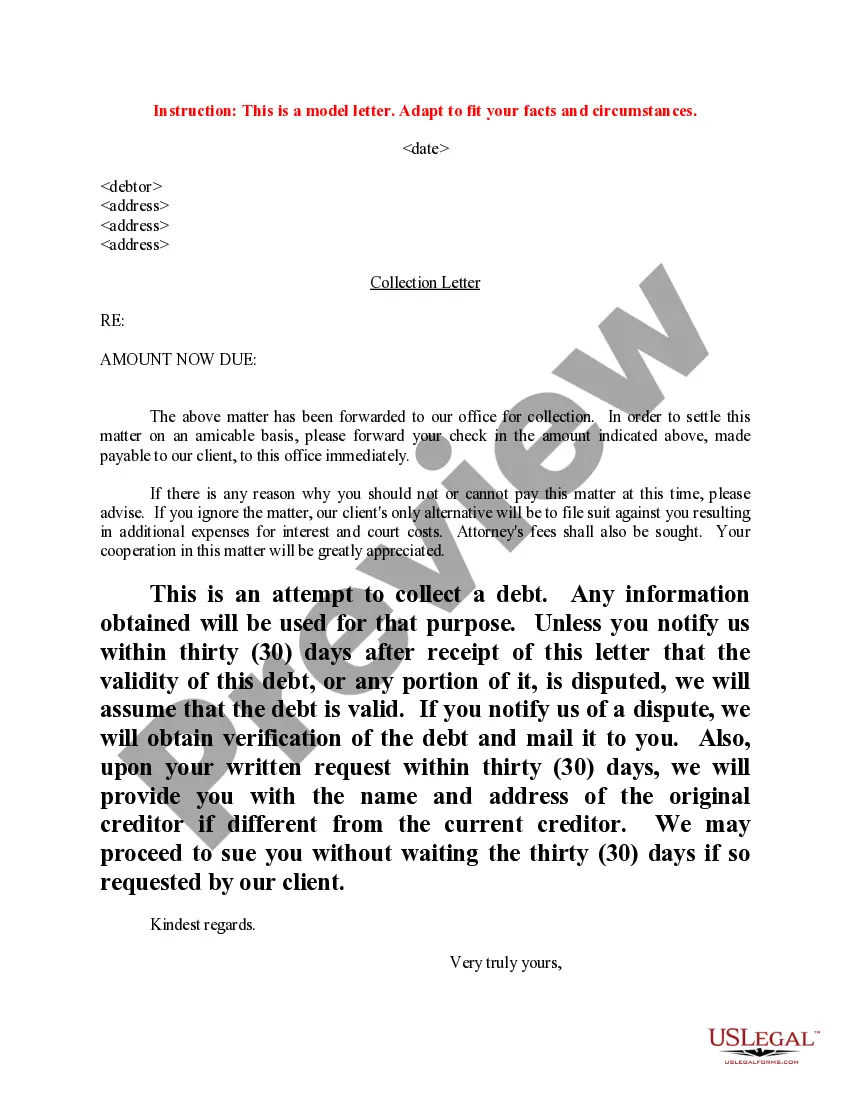
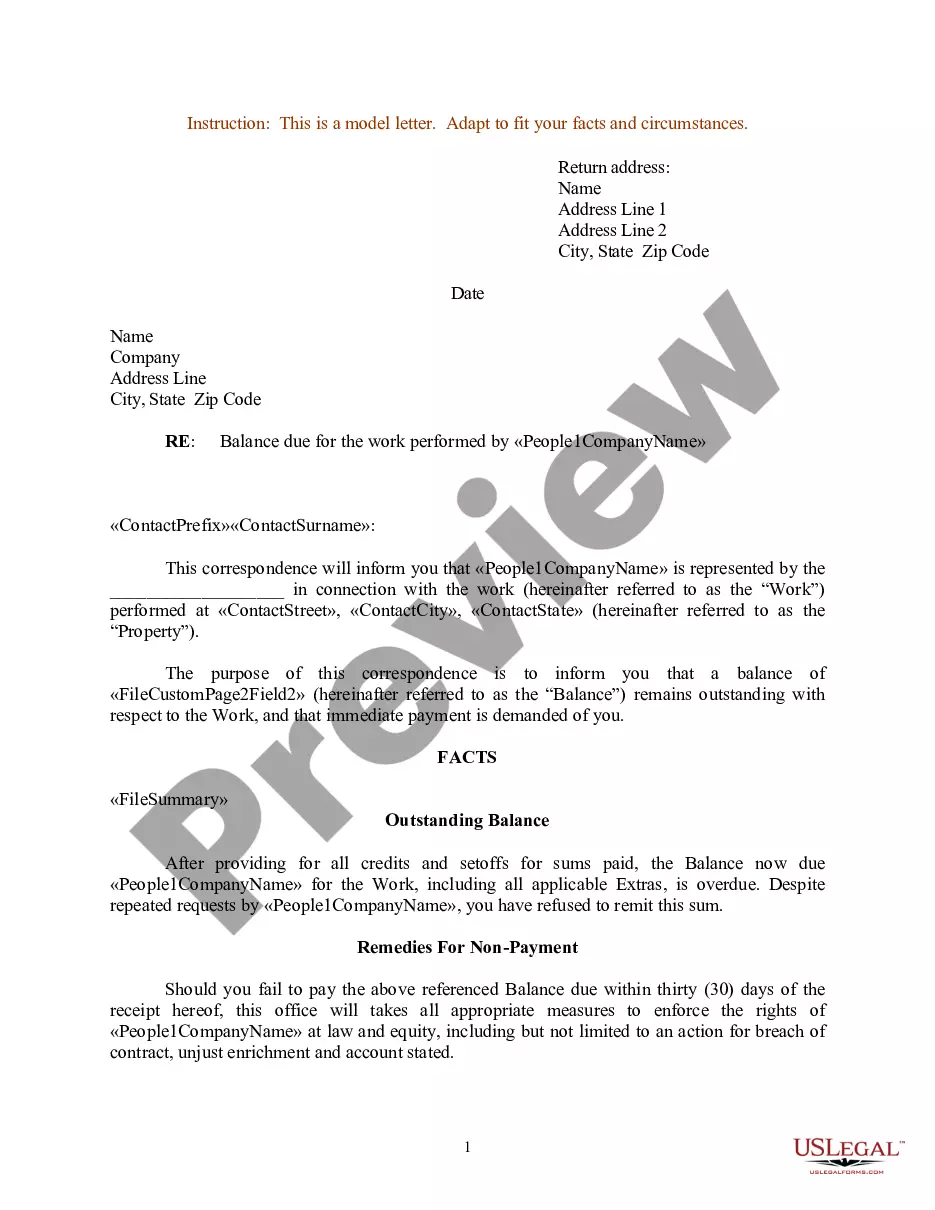
The Sample Letter for Insufficient Funds is a formal communication template designed to inform an individual or entity that their account has insufficient funds. This letter provides a clear record for both the sender and recipient, differing from other forms of communication by being an officially structured document that outlines any outstanding financial obligations in a professional manner.
Main sections of this form
- Sender's contact information
- Recipient's contact information
- Date of the correspondence
- Subject line indicating insufficient funds
- Details regarding the transaction or payment
- Clear statement of the account's insufficient funds
- Request for action or payment from the recipient
- Encouraging tone to resolve the issue amicably
Situations where this form applies
This letter should be used when an individual or business receives a check that cannot be cashed due to insufficient funds in the issuer's account. It is commonly utilized in scenarios involving bounced checks, missed payments, or when providing notice to a debtor about overdue payments that have not been fulfilled.
Intended users of this form
This form is ideal for:
- Businesses that accept checks as a form of payment
- Individuals managing personal loans or debts
- Professionals seeking formal methods to address payment issues
- Entities needing a documented approach to communicate financial discrepancies
Steps to complete this form
- Identify the sender and recipient's contact information.
- Enter the date at the top of the letter.
- Clearly state the subject, indicating insufficient funds.
- Provide details about the transaction or the payment that is outstanding.
- Convey the message about the insufficient funds in a professional manner.
- Sign the letter and ensure it's delivered to the recipient.
Is notarization required?
This form does not typically require notarization unless specified by local law.
Get your form ready online
Our built-in tools help you complete, sign, share, and store your documents in one place.
Make edits, fill in missing information, and update formatting in US Legal Forms—just like you would in MS Word.
Download a copy, print it, send it by email, or mail it via USPS—whatever works best for your next step.
Sign and collect signatures with our SignNow integration. Send to multiple recipients, set reminders, and more. Go Premium to unlock E-Sign.
If this form requires notarization, complete it online through a secure video call—no need to meet a notary in person or wait for an appointment.
We protect your documents and personal data by following strict security and privacy standards.

Make edits, fill in missing information, and update formatting in US Legal Forms—just like you would in MS Word.

Download a copy, print it, send it by email, or mail it via USPS—whatever works best for your next step.

Sign and collect signatures with our SignNow integration. Send to multiple recipients, set reminders, and more. Go Premium to unlock E-Sign.

If this form requires notarization, complete it online through a secure video call—no need to meet a notary in person or wait for an appointment.

We protect your documents and personal data by following strict security and privacy standards.
Mistakes to watch out for
- Failing to include all relevant dates and transaction details
- Using non-professional language or tone
- Not providing contact information for further communication
- Overlooking proofreading for clarity and errors
Advantages of online completion
- Conveniently downloadable in Word format for easy editing
- Professional template ensures proper legal language and format
- Quick access anytime, allowing for immediate action
- Reliable source backed by licensed attorneys
Legal use & context
- This letter serves as a formal request for payment, documenting the sender's attempt to collect a debt.
- It may be used as evidence in legal proceedings should further actions be necessary.
- Important to ensure clarity to avoid miscommunication or disputes.
What to keep in mind
- The Sample Letter for Insufficient Funds is a useful tool for formalizing communication about bounced payments.
- Clear and professional language increases the chances of a positive response from the debtor.
- Customizing the template can address specific situations or recipients effectively.
Looking for another form?
Form popularity
FAQ
Contact the Bank First. Call Your Customer. Send a Certified Letter. Call Your Local District Attorney's Office. Use a Check Recovery Service. Contact a Collection Agency.
Lack Of Funds Once you have opted in, your bank can choose to approve ATM withdrawals even if you have exhausted your line of credit or withdrawn all of the cash from your savings. When this happens, an ATM withdrawal could cause your account to go into the negative and your bank can assess an overdraft fee.
Contact person affected by NSF. First things first, make sure you contact the affected person as soon as possible if you have insufficient funds. Pay the outstanding balance. Pay the affected individual the amount that you owe them. Pay NSF fees. Keep receipts.
When there are not enough funds in your checking account to cover the payment written against it, then the check will bounce.
Dear name, I am writing in to apologize for the inconvenience caused to you because the check check no. was returned due to insufficient funds. I cannot tell you how embarrassed I am feeling because of this.
Many banks allow credit and debit card transactions to go through, even if the card user is over their credit limit or has insufficient funds in their checking account. The transaction would process, and the card user would get hit with an over-limit fee and possible additional penalty fees each day.
Visit the branch: You can also go to a branch of the bank the check draws on and try to cash it. The money you need (if it exists) will be at the check writer's bank, not yours. When you visit the bank in person, you may also be able to avoid a returned-check fee for depositing bad checks.
Whether you write or receive a bounced check also called a nonsufficient funds, or NSF, check it will cost you. Write one and you'll owe your bank an NSF fee of between $27 and $35, and the recipient of the check is permitted to charge a returned-check fee of between $20 and $40 or a percentage of the check amount.
Writing bad checks is a crime. Penalties for people who tender checks knowing there are insufficient funds in their accounts vary by state. Some states require an intent to fraud. But in the majority of states, the crime is considered a misdemeanor.