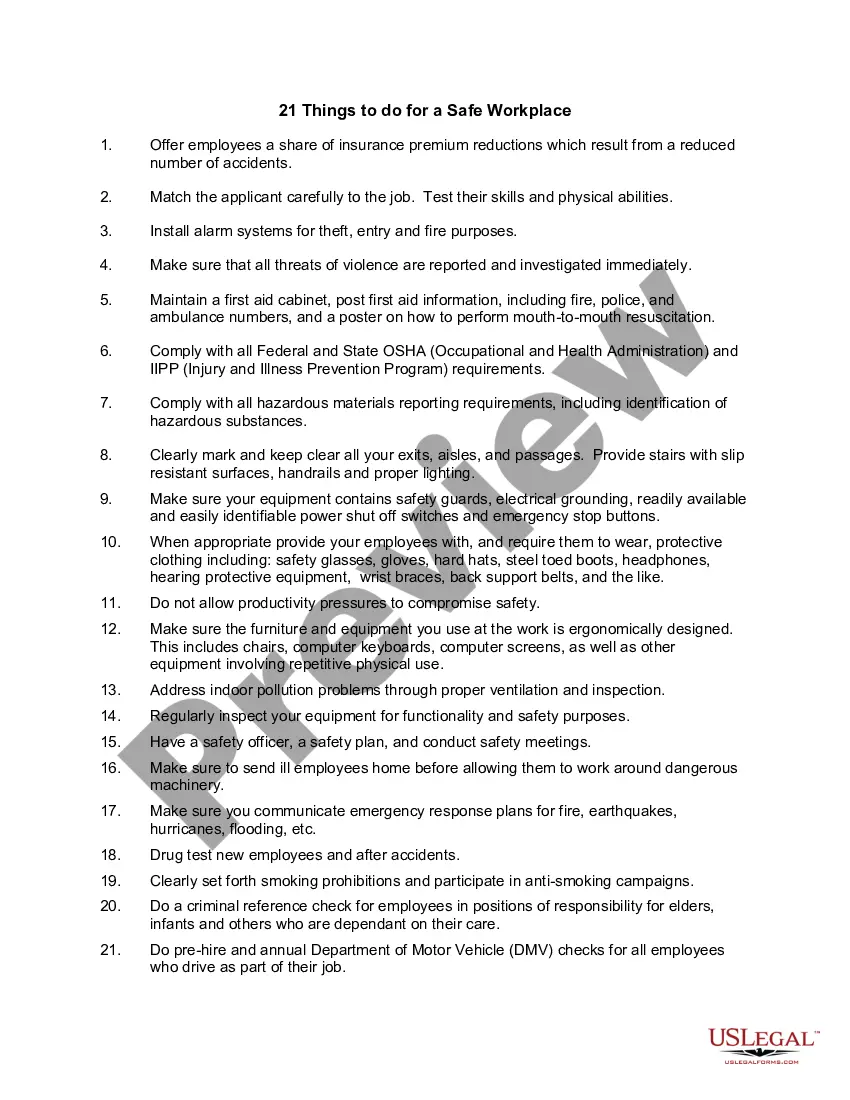
21 Things to do for a Safe Workplace
Overview of this form
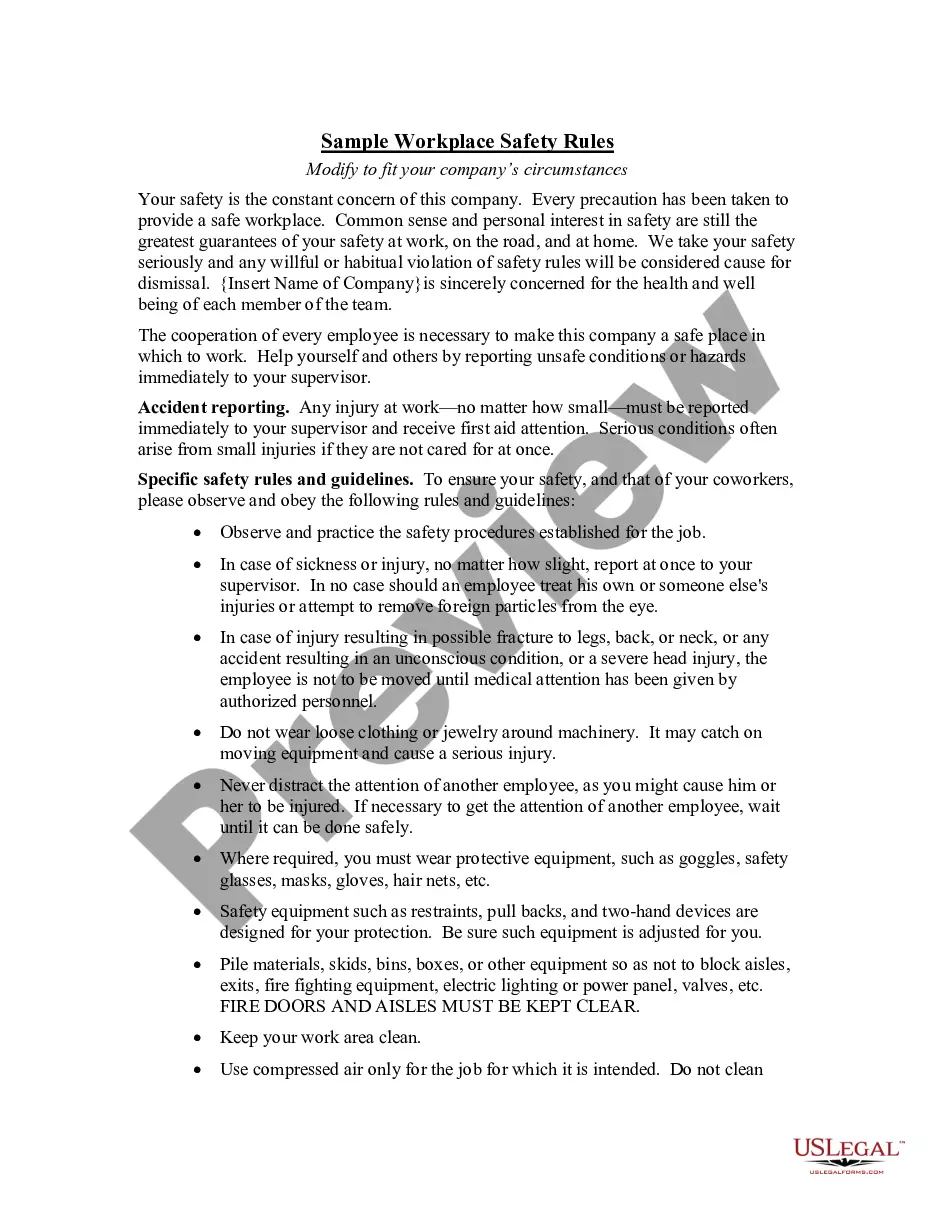
The 21 Things to Do for a Safe Workplace form serves as a comprehensive guide for employers to enhance workplace safety. It outlines essential practices and considerations mandated by the Occupational Safety and Health Act to ensure a safe environment for all employees. Unlike similar forms, this checklist focuses specifically on actionable steps that organizations can implement to comply with safety regulations and reduce workplace hazards effectively.
Main sections of this form
- Detailed recommendations for safety improvements
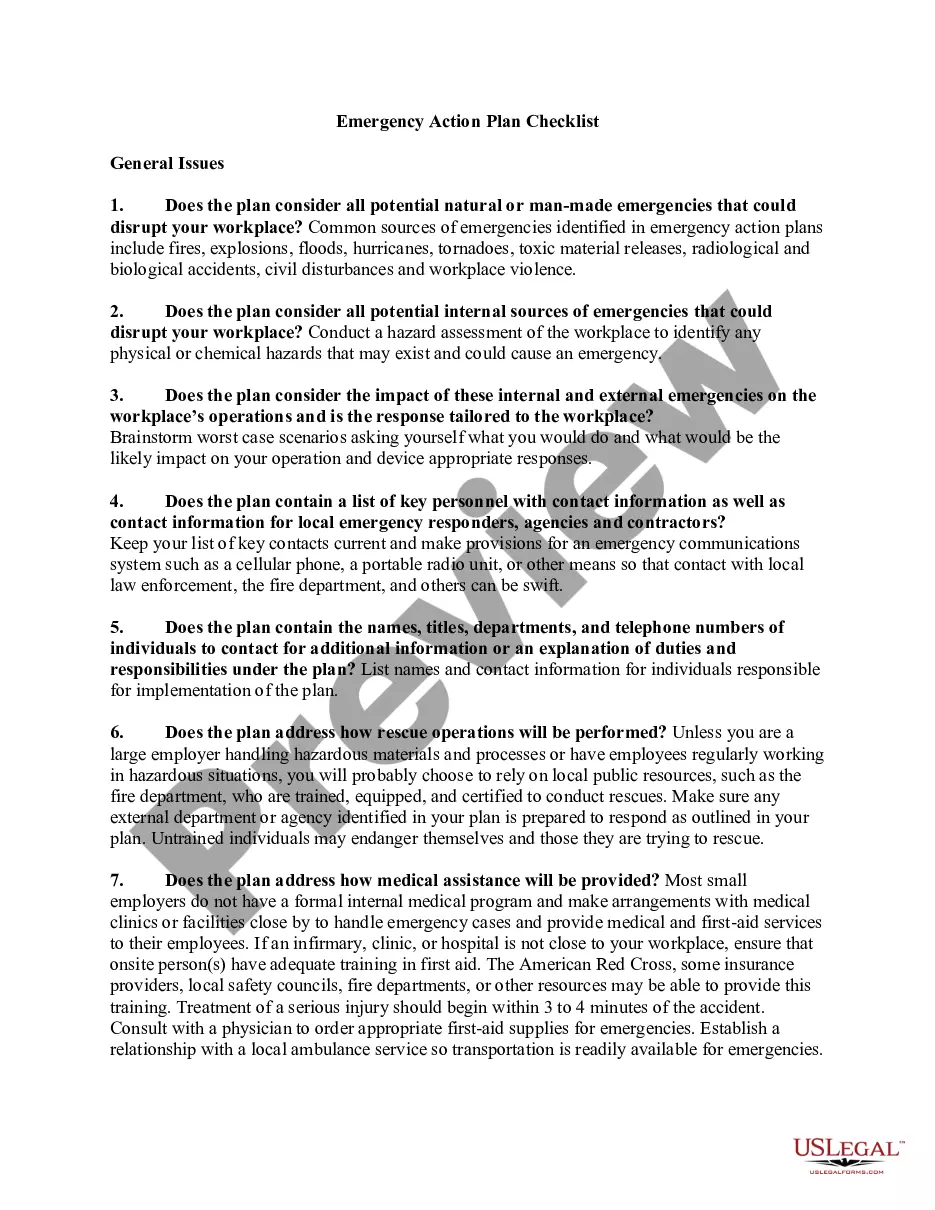
- Guidelines for emergency response plans
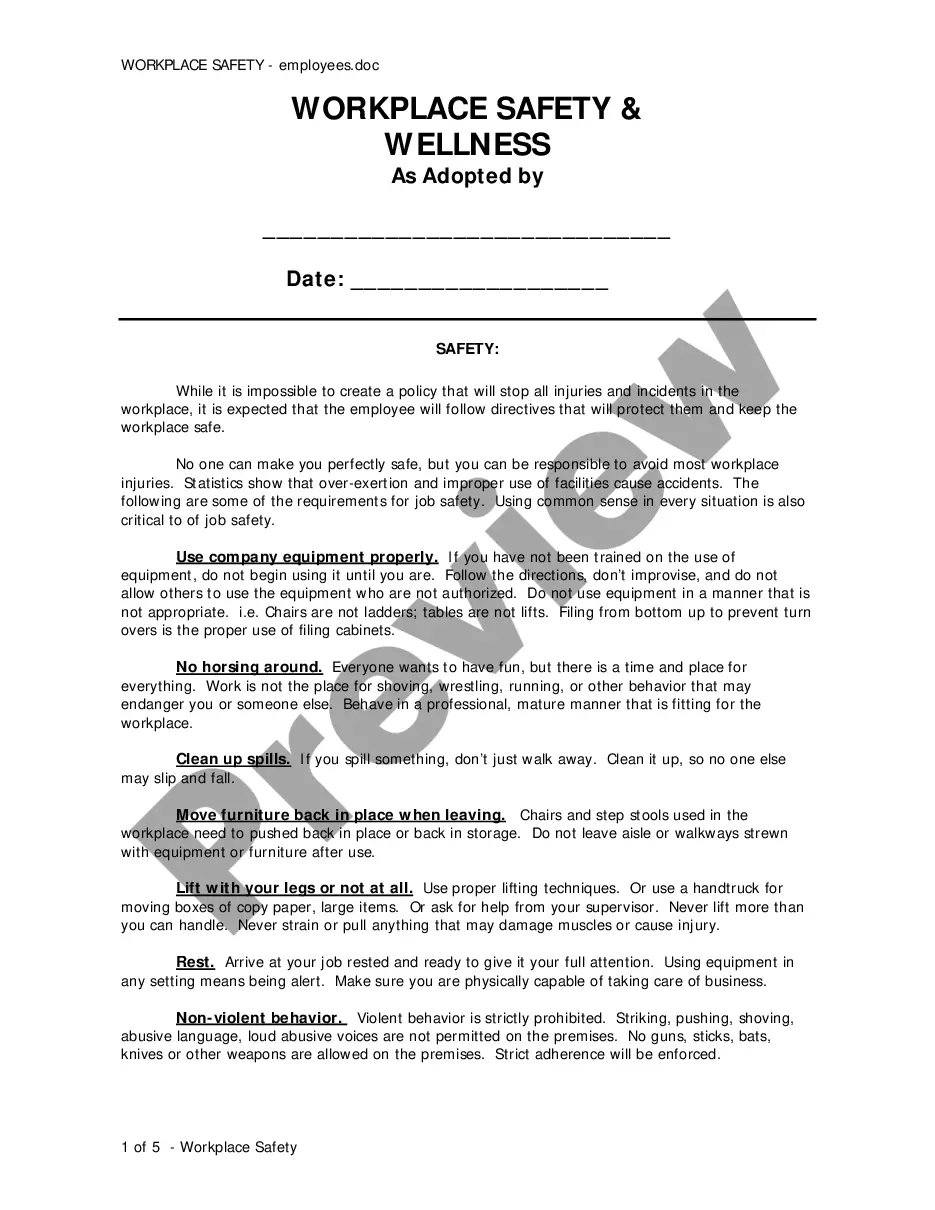
- Best practices for employee health and safety compliance
- Monitoring of hazardous materials and workplace ergonomics
- Procedures for addressing indoor pollution and equipment safety
- Requirements for proper employee training and protective gear
When this form is needed
This form is essential for employers seeking to create or improve their workplace safety protocols. It can be used during the development of safety plans, following workplace accidents, or when there is a need to train new employees. This checklist is also beneficial for ensuring ongoing compliance with OSHA regulations and prepares businesses for safety audits or inspections.
Who needs this form
This form is intended for:
- Business owners and employers responsible for workplace safety
- Human resources professionals managing employee health and safety
- Safety officers tasked with implementing safety procedures
- Managers overseeing workplace environments
- Organizations of all sizes looking to comply with safety regulations
Completing this form step by step
- Review each of the 21 safety measures and evaluate their current implementation in your workplace.
- Make notes on areas needing improvement and actions required to comply with each item.
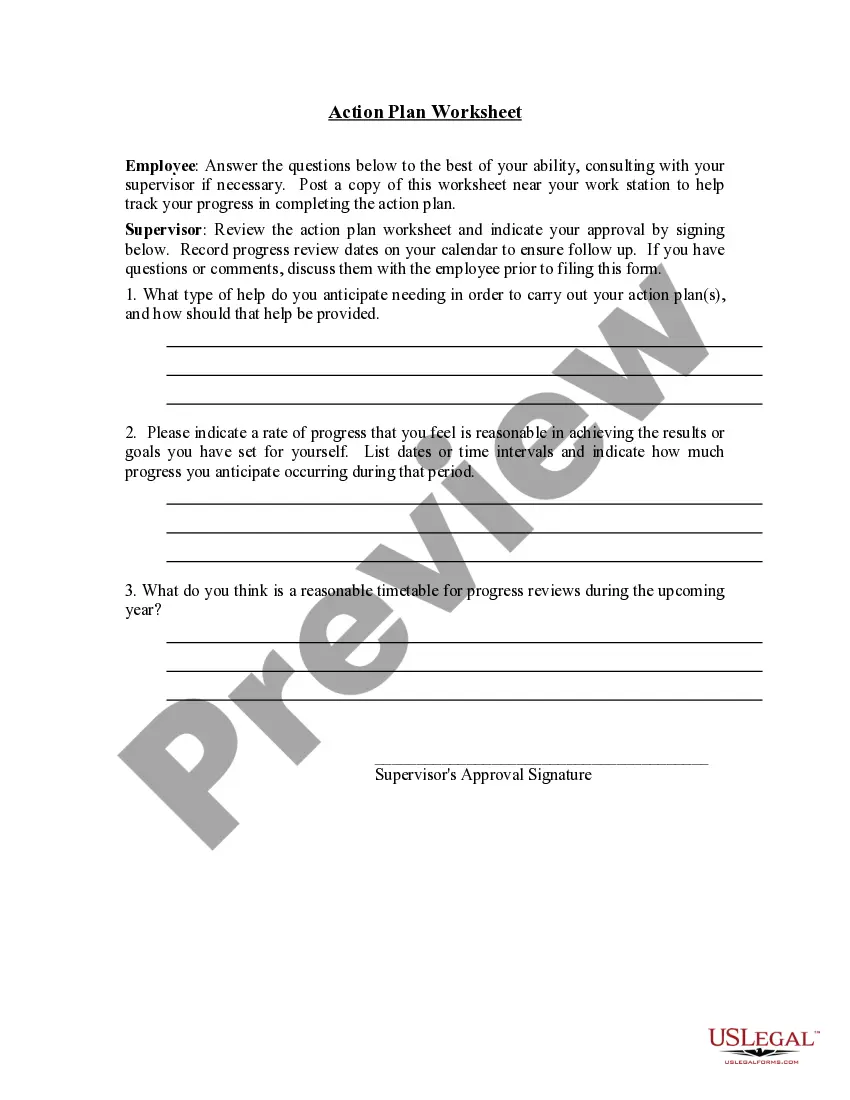
- Assign responsibilities to specific employees or teams for implementing each safety measure.
- Schedule regular safety meetings to discuss progress and any adjustments needed.
- Document compliance efforts to maintain records for audits and inspections.
Notarization guidance
This form does not typically require notarization to be legally valid. However, some jurisdictions or document types may still require it. US Legal Forms provides secure online notarization powered by Notarize, available 24/7 for added convenience.
Get your form ready online
Our built-in tools help you complete, sign, share, and store your documents in one place.
Make edits, fill in missing information, and update formatting in US Legal Forms—just like you would in MS Word.
Download a copy, print it, send it by email, or mail it via USPS—whatever works best for your next step.
Sign and collect signatures with our SignNow integration. Send to multiple recipients, set reminders, and more. Go Premium to unlock E-Sign.
If this form requires notarization, complete it online through a secure video call—no need to meet a notary in person or wait for an appointment.
We protect your documents and personal data by following strict security and privacy standards.

Make edits, fill in missing information, and update formatting in US Legal Forms—just like you would in MS Word.

Download a copy, print it, send it by email, or mail it via USPS—whatever works best for your next step.

Sign and collect signatures with our SignNow integration. Send to multiple recipients, set reminders, and more. Go Premium to unlock E-Sign.

If this form requires notarization, complete it online through a secure video call—no need to meet a notary in person or wait for an appointment.

We protect your documents and personal data by following strict security and privacy standards.
Avoid these common issues
- Failing to communicate safety measures to all employees.
- Neglecting to update safety protocols as new regulations emerge.
- Overlooking the need for regular safety training and drills.
- Ignoring employee feedback regarding safety concerns.
- Not documenting safety inspections and compliance measures properly.
Advantages of online completion
- Convenience of accessing the form anytime from any device.
- Editable fields allow customization for your specific workplace needs.
- Reliable and accurate information drafted by licensed attorneys.
- Easy download and printing options for physical use.
- Ensures compliance with current legal standards.
Summary of main points
- A safe workplace is essential for employee well-being and legal compliance.
- Employers are responsible for implementing safety standards outlined by OSHA.
- The checklist provides a practical framework for improving workplace safety.
- Regular audits and updates are crucial for maintaining safety standards.
- Employee involvement in safety discussions can enhance compliance efforts.
Looking for another form?

Form popularity
FAQ
General Safety Mistakes. Ergonomic and Workplace Stress. Drugs on The Job. Violence at The Workplace. Fire and Electrical Safety. Workplace Accidents: Reporting, Prevention, And Costs. Heat Exhaustion and Safety. Workplace Injuries.
Management Commitment and Employee Involvement. Worksite Analysis. Hazard Prevention and Control. Training for Employees, Supervisors, and Managers.
Keep work areas clean. Use the proper tool for the job. Always wear the proper PPE for the work task. Never work on live equipment. Make sure chemicals are properly labeled and stored. Communicate hazards to other personnel. Stop work when needed to address hazards.
Train employees well. Reward employees for safe behavior. Partner with occupational clinicians. Use labels and signs. Keep things clean. Make sure employees have the right tools and have regular equipment inspections. Encourage stretch breaks. Implement safety protocols from the start.
SAFETY CULTURE. EMPLOYEE TRAINING AND EMPOWERMENT. HAZARD IDENTIFICATION AND CONTROL SYSTEMS. FOCUS ON COMPLIANCE. CONTINUOUS IMPROVEMENT. LEADERSHIP AND ORGANIZATIONAL BUY-IN. THE SAFETY MANAGER ROLE. What is a safety manager's job role?
The workplace is where you go to work; the workspace is where you do your workplace vs. space. For the most part, workplaces are fixed physical locations like office buildings, schools, and hospitals where employees gather to work under the same roof.
Workplace is a mobile and web app that aims to keep your team members connected. The service, which used to be called Facebook Work, offers features like Facebook Groups, Facebook Messenger, built-in audio and video calling, and access to the social network's profiles, Events, and Live video tools.
Workplace Is More Than Just A Communication Tool. Workplace gives your teams the ability to connect with one another publicly, leading to more accountability, knowledge transfer, and collaboration. It's easy to make connections, reach out to fellow team members, and see what kind of conversations your team is having.
A workplace is a location where someone works for their employer, a place of employment. Such a place can range from a home office to a large office building or factory.