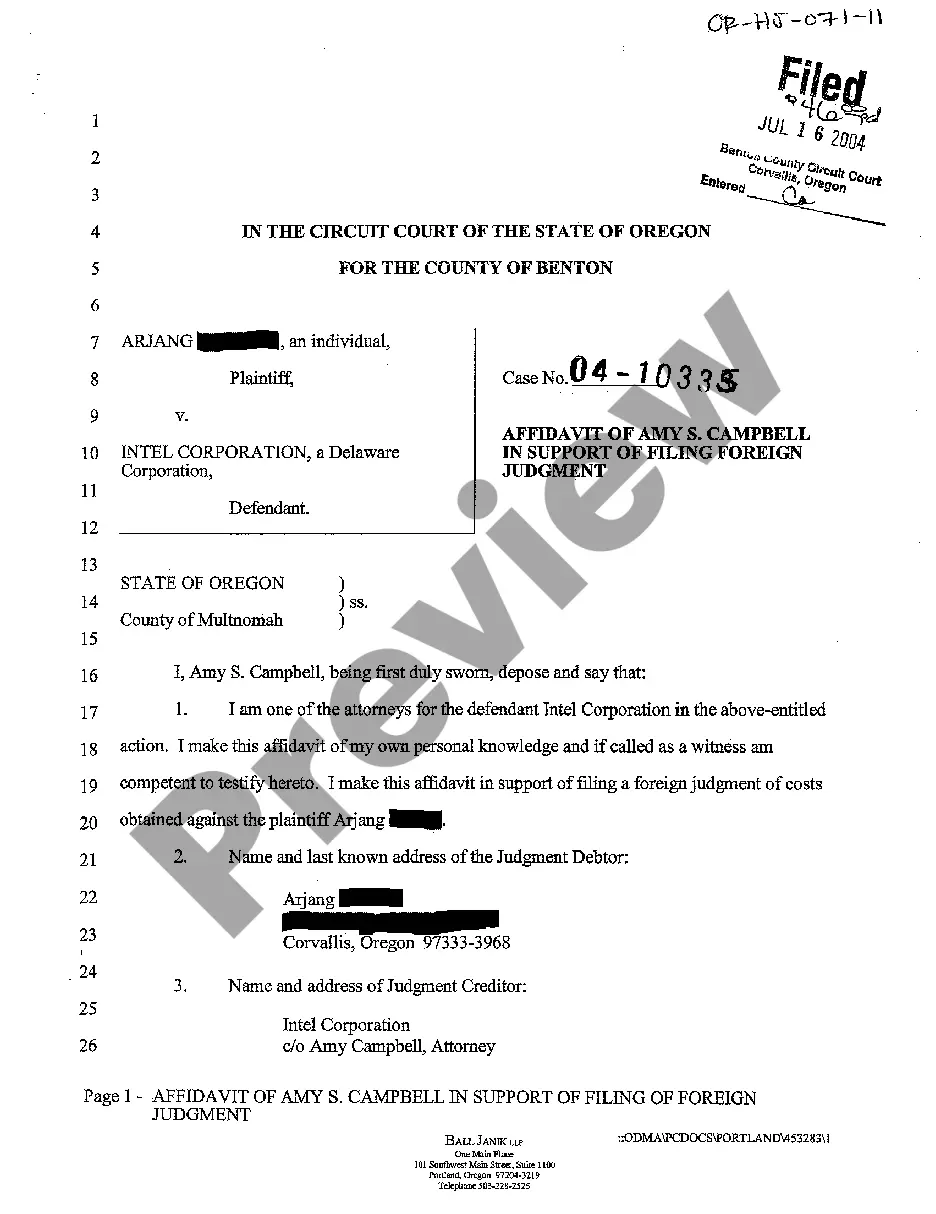
District of Columbia Discovery Interrogatories from Plaintiff to Defendant with Production Requests
About this form
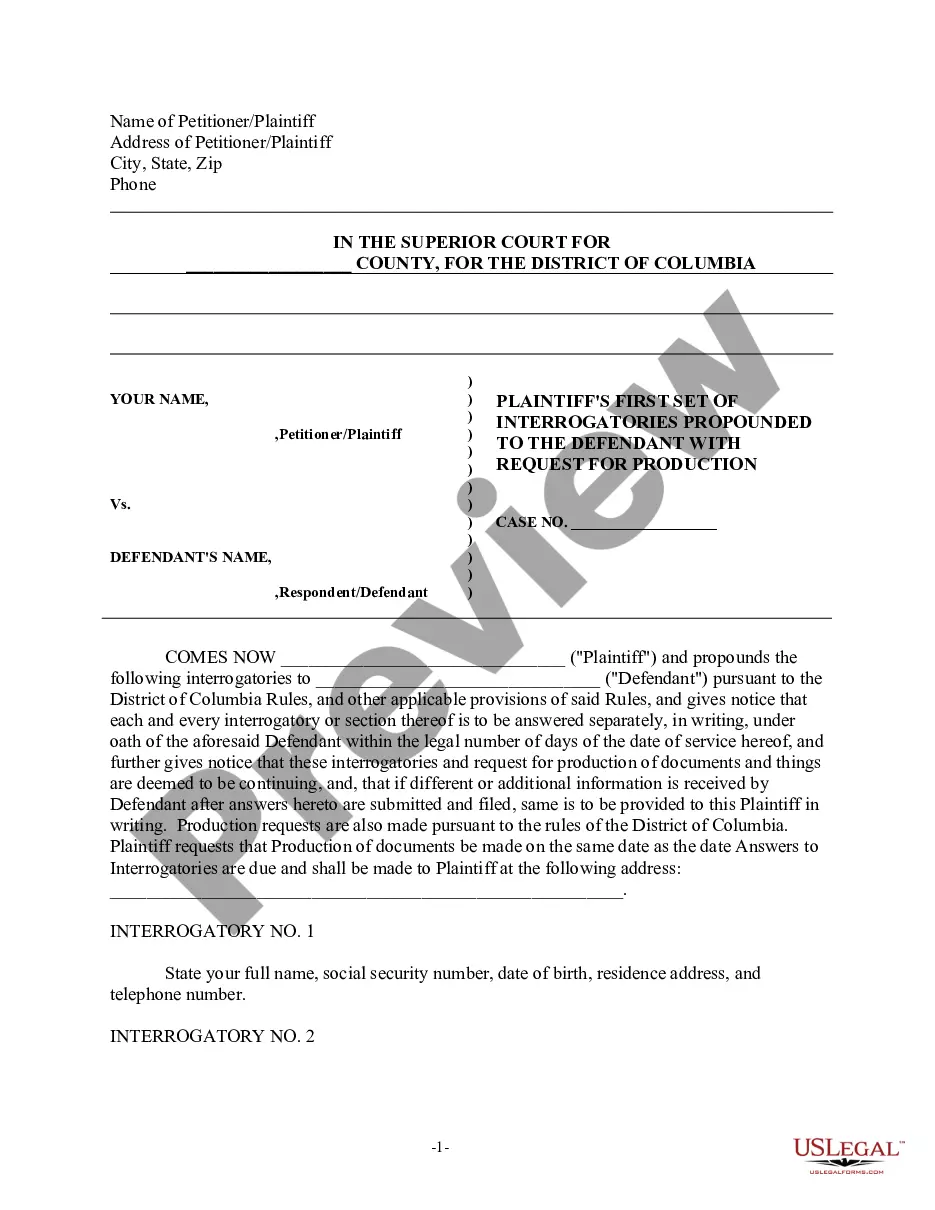
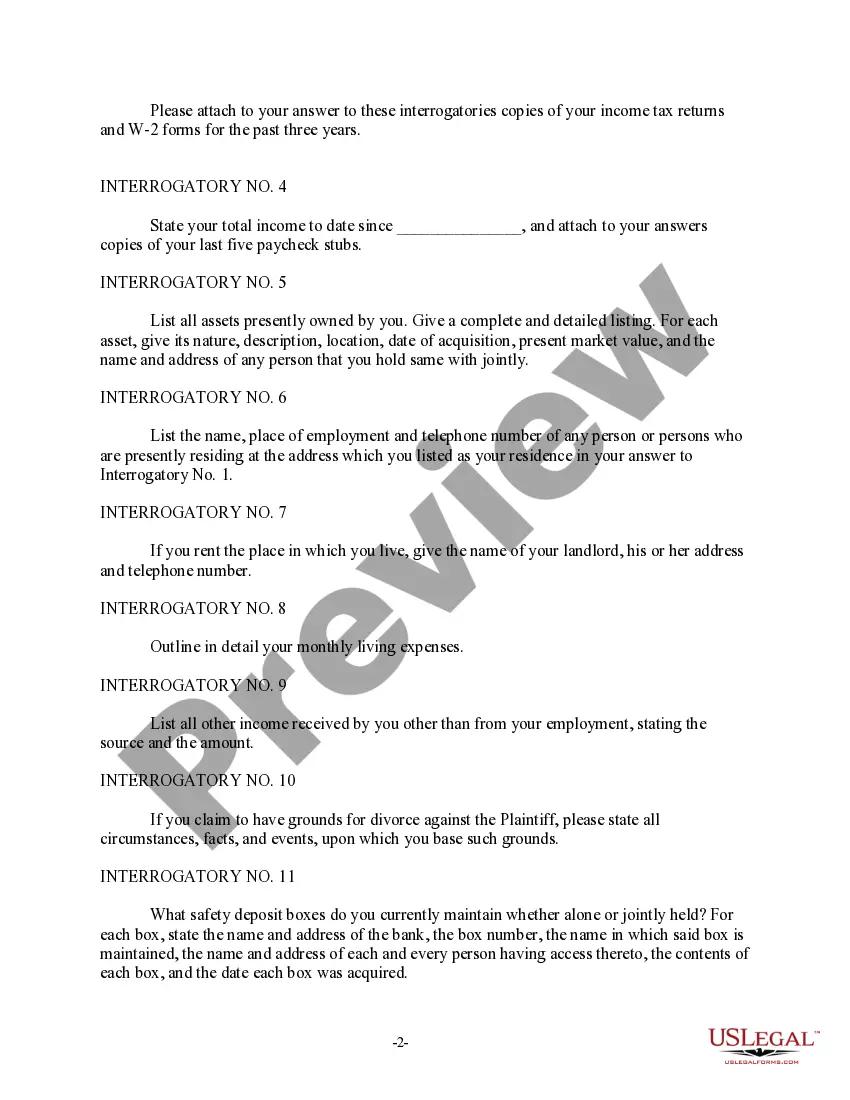
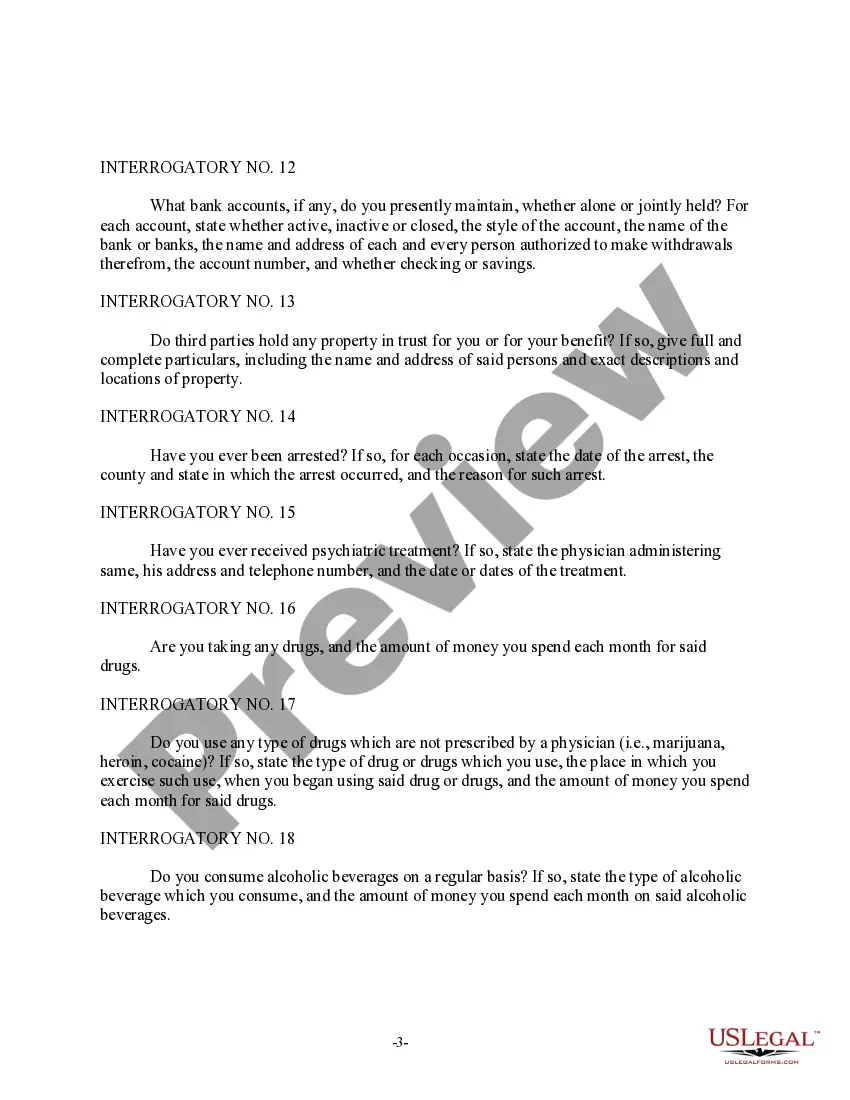
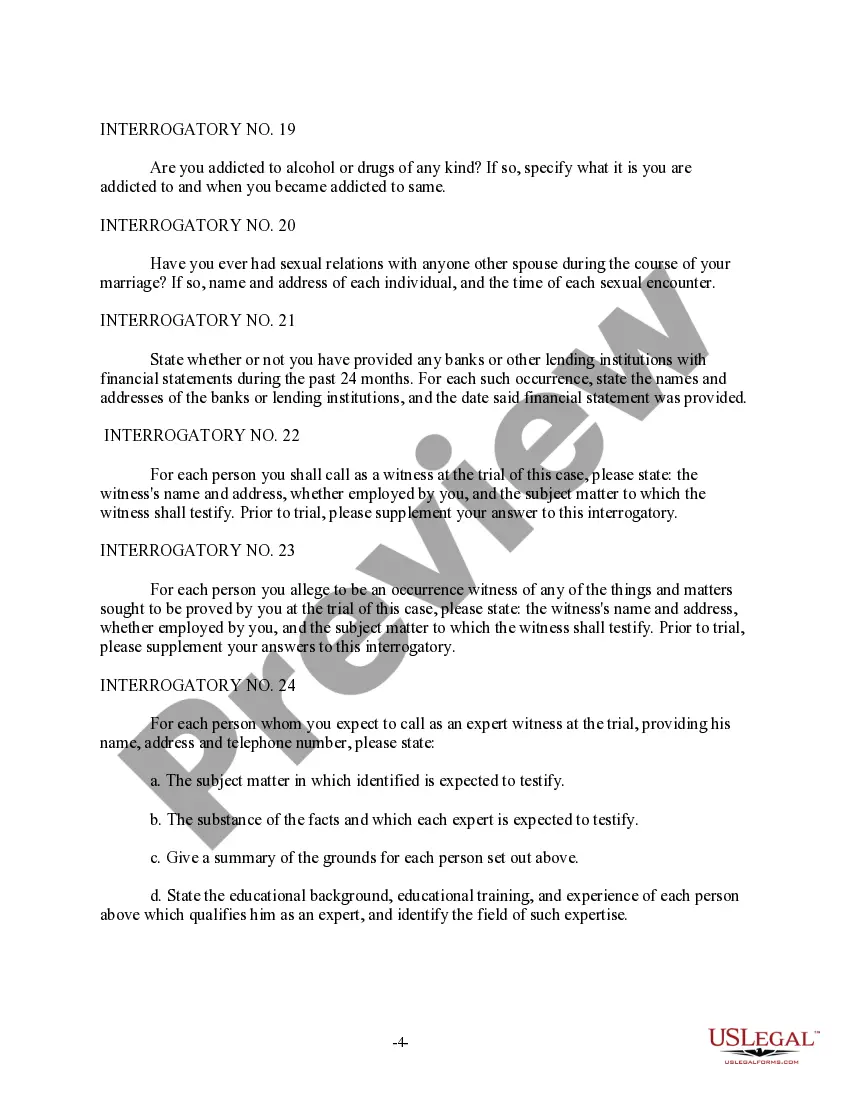
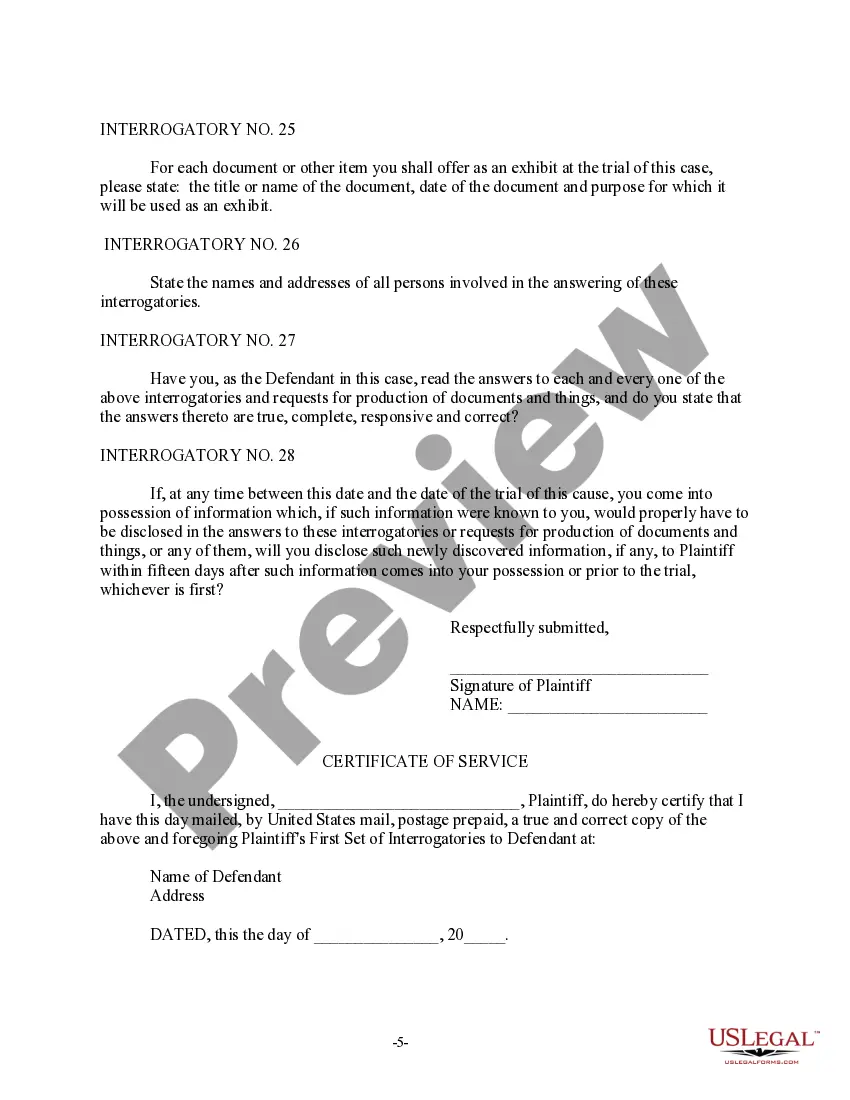
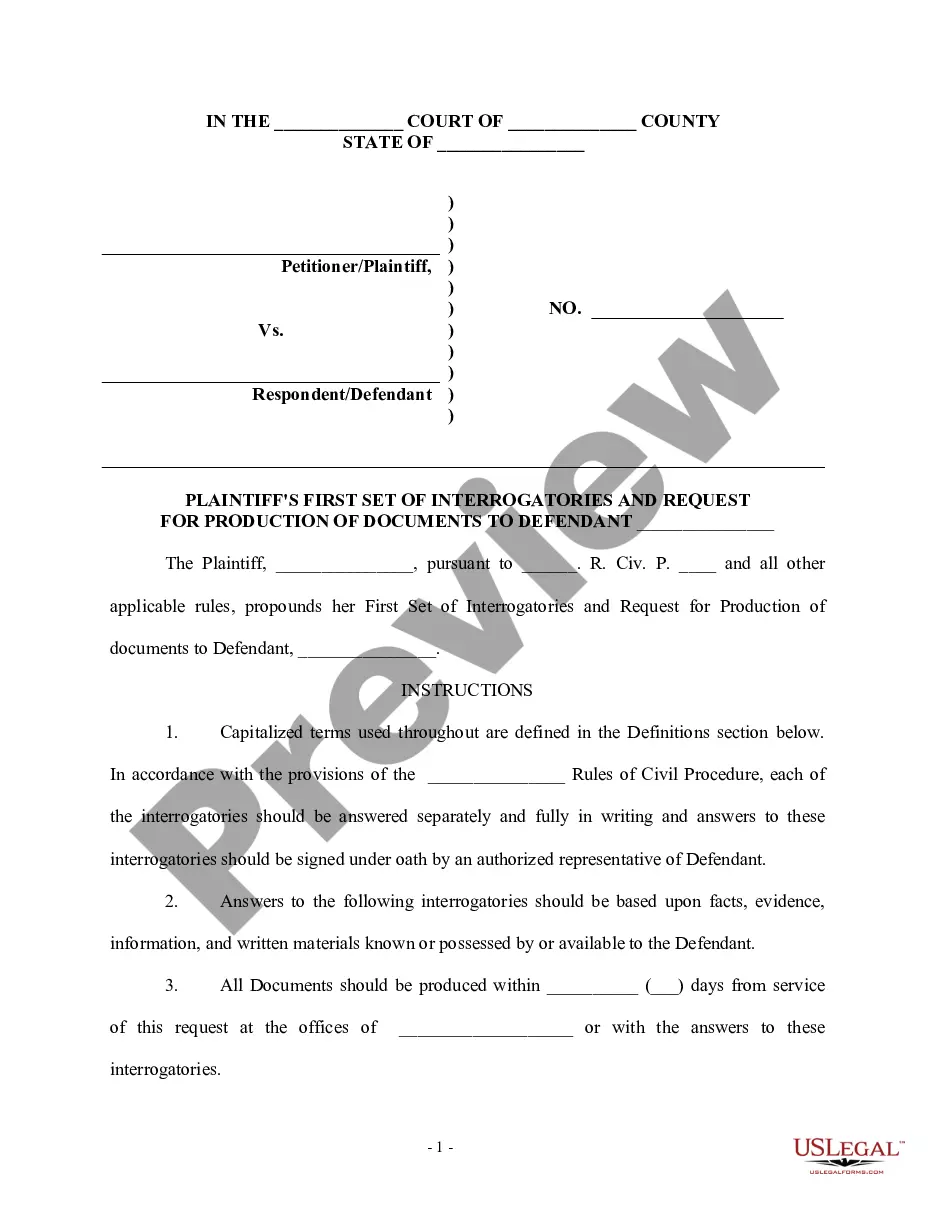
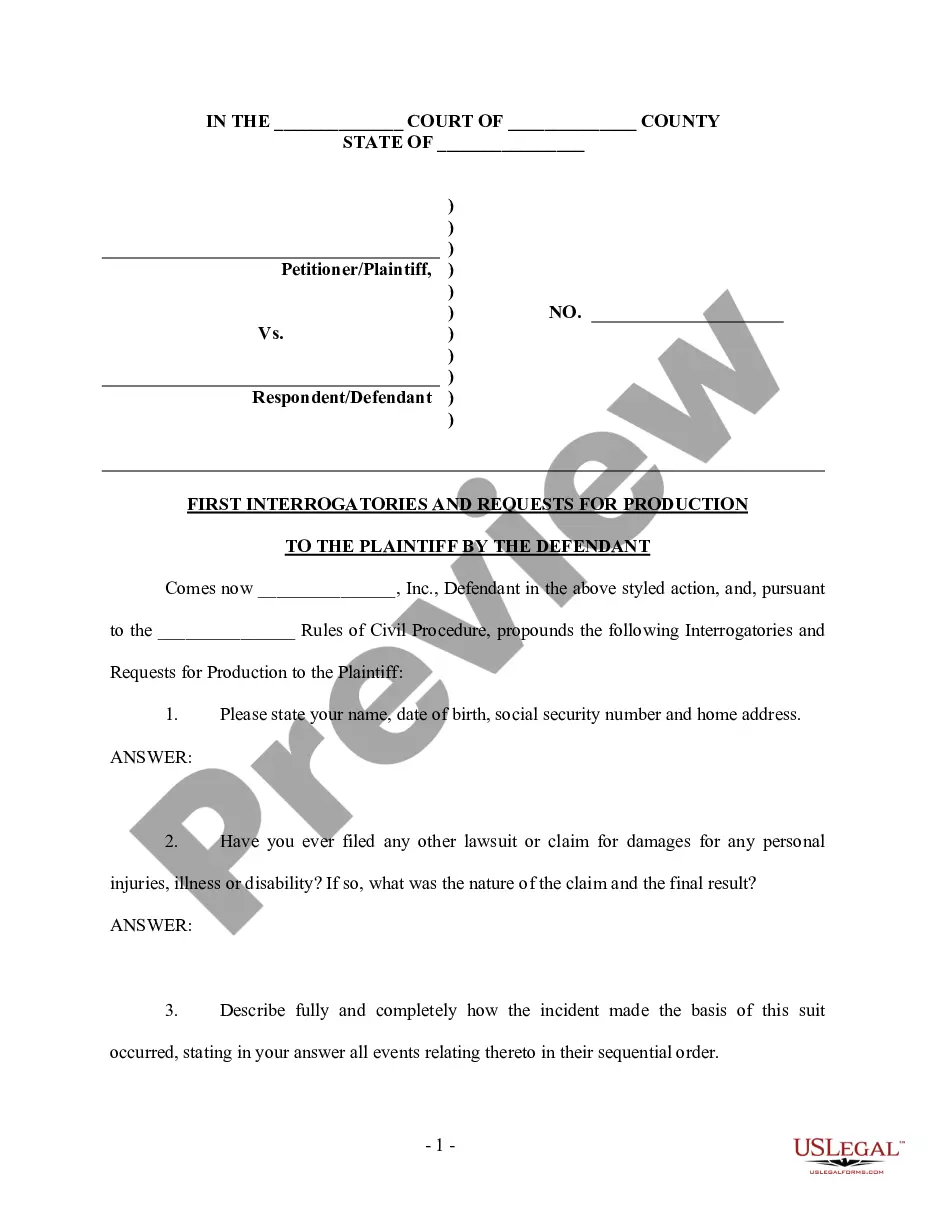
This Discovery Interrogatories from Plaintiff to Defendant with Production Requests form is designed to facilitate the legal process during a divorce action. It allows the plaintiff to ask the defendant a series of questions, known as interrogatories, while also requesting the production of relevant documents. This form is a critical part of discovery in a divorce case, allowing both parties to gather information to support their positions.
Form components explained
- Identification of the Plaintiff and Defendant, including contact details.
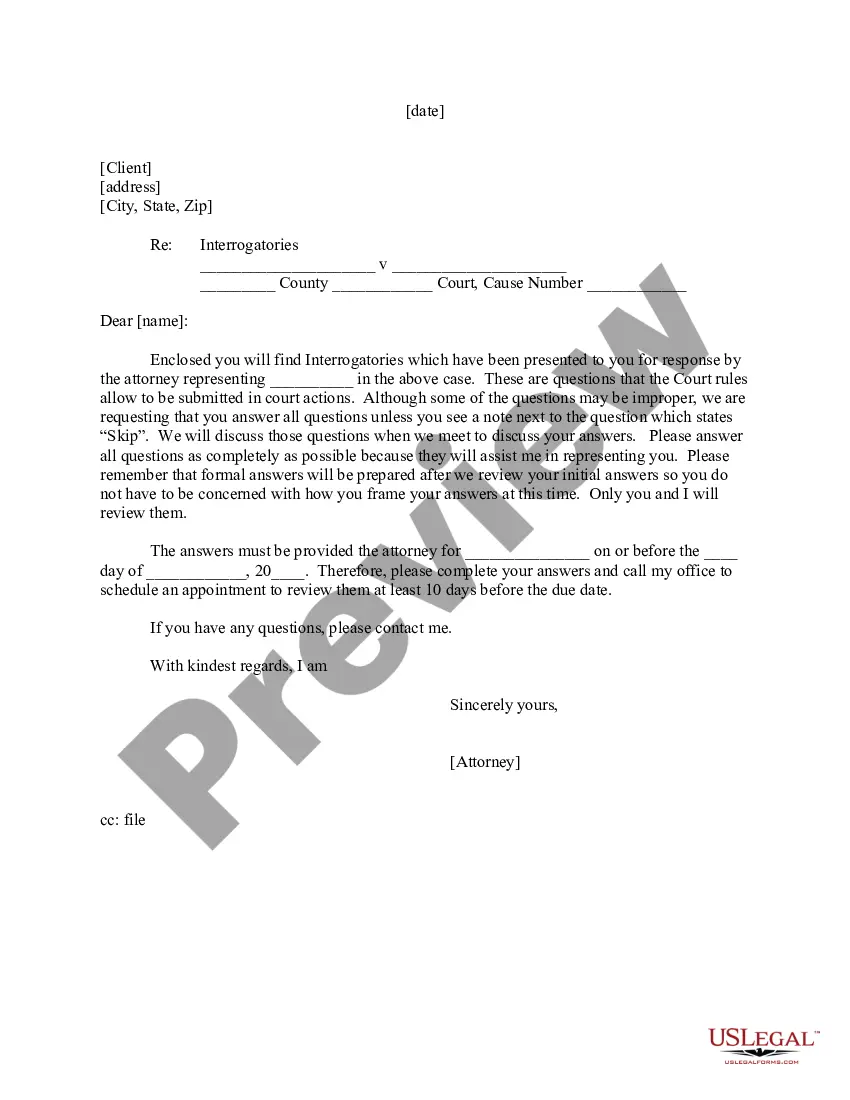
- List of interrogatories that ask for specific information and documentation.
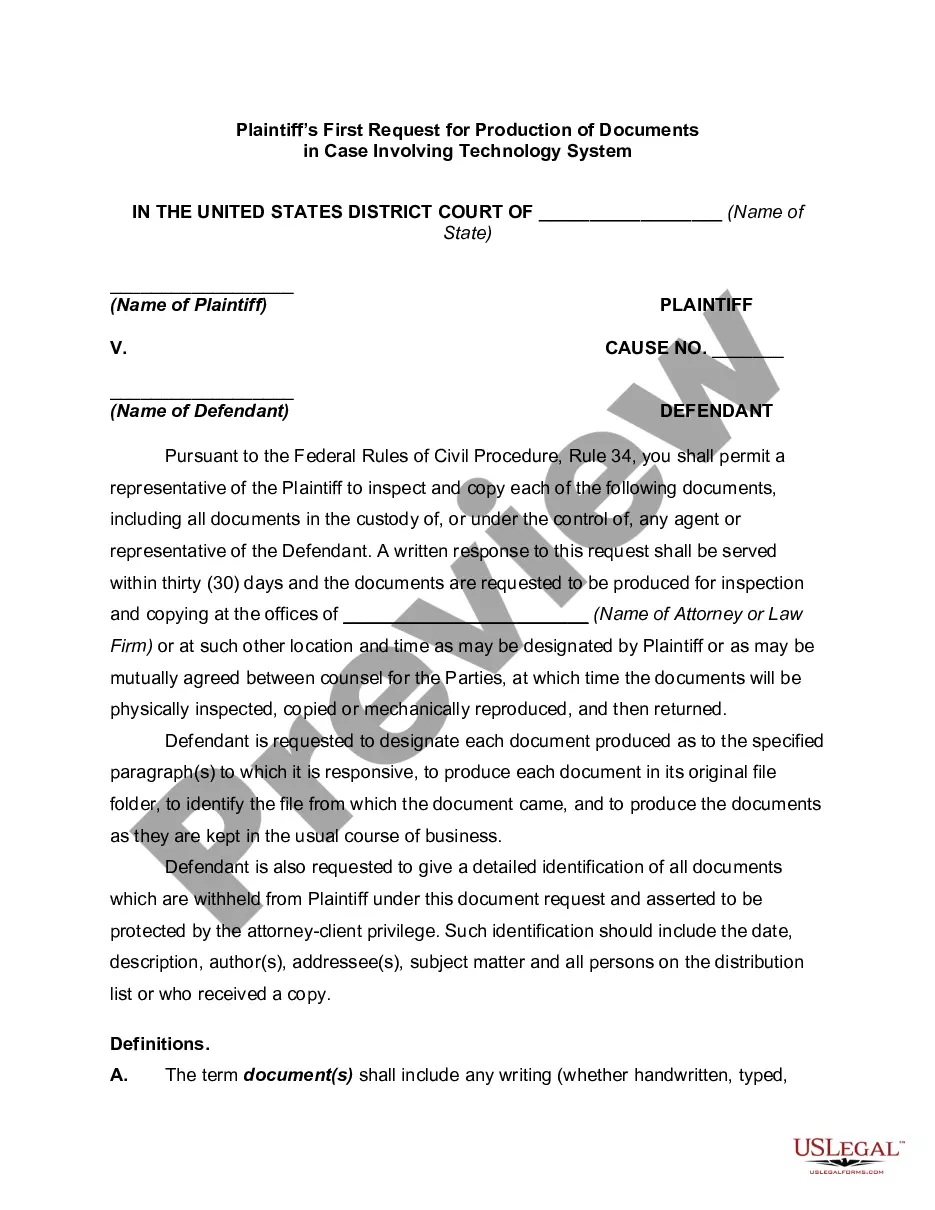
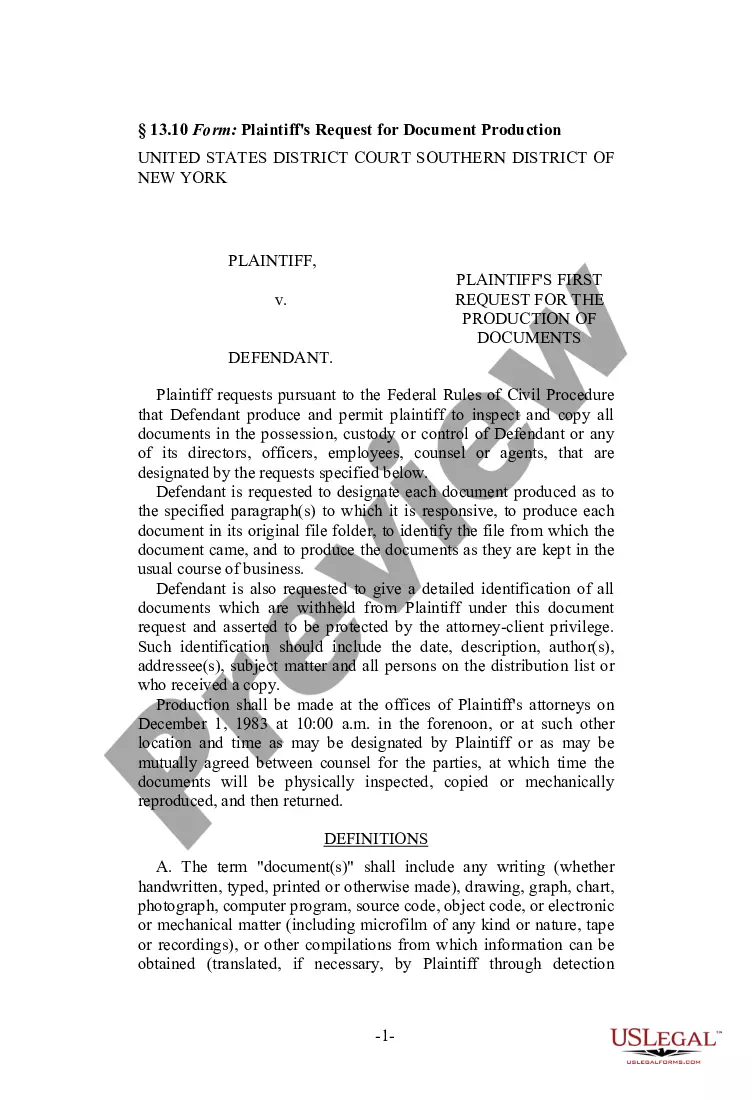
- Request for production of documents relevant to the divorce proceedings.
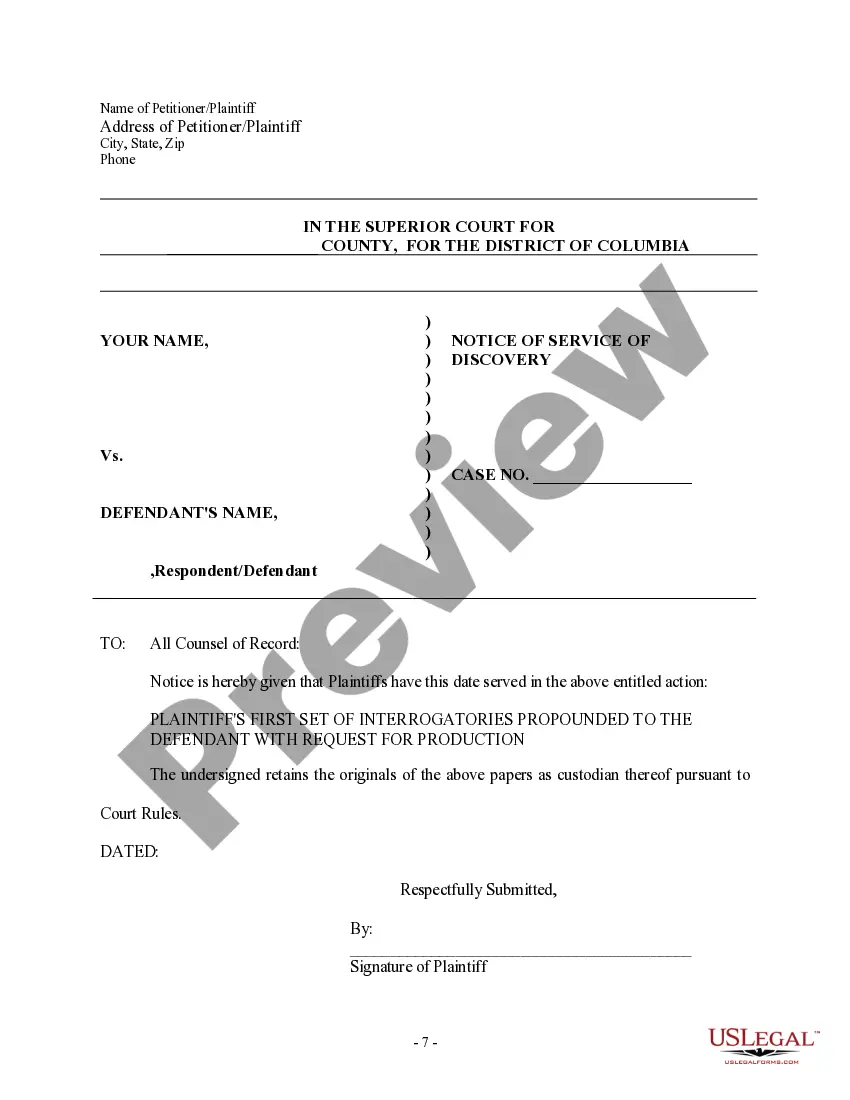
- Notice of Service of Interrogatories for court filing.
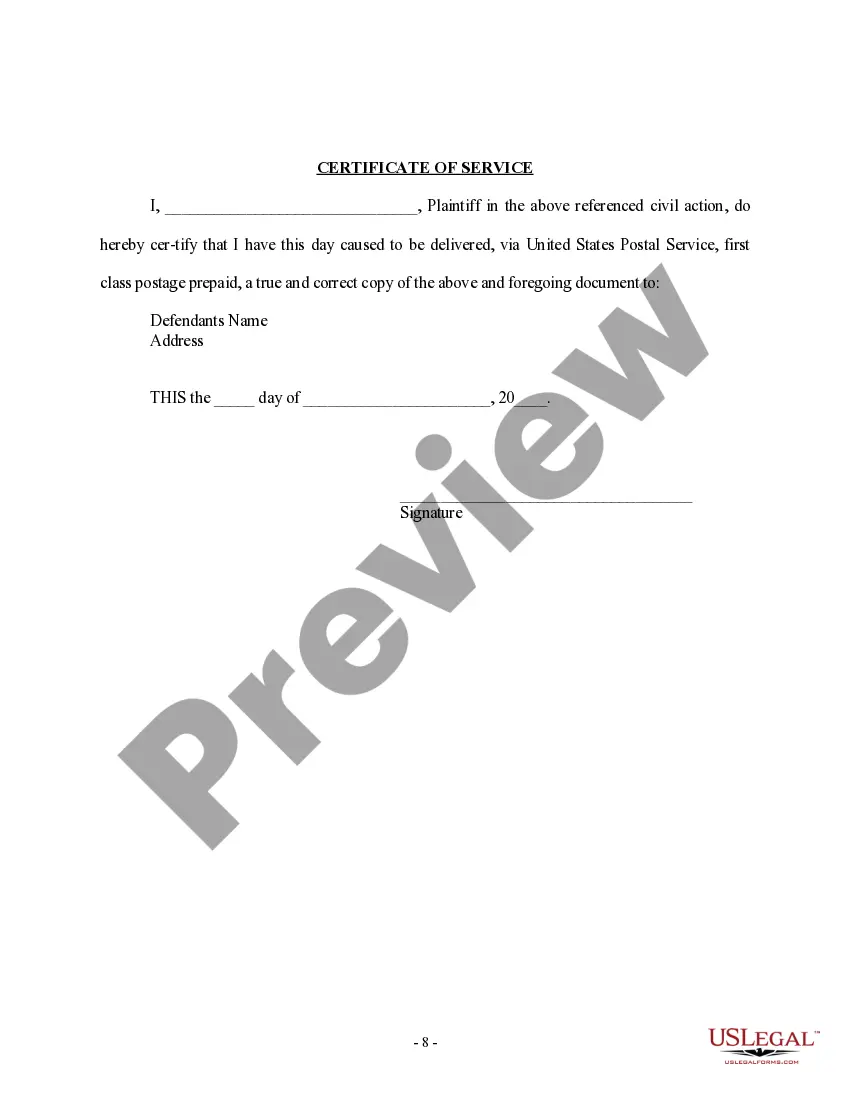
- Certificate of Service confirming that the documents have been sent to the Defendant.
When this form is needed
This form is used in divorce proceedings when the plaintiff seeks to obtain information from the defendant regarding financial matters, property ownership, and other relevant issues. It is particularly useful during the discovery phase to ensure that both parties have access to the necessary information to proceed with the case.
Who can use this document
- Plaintiffs who are initiating a divorce case.
- Attorneys representing plaintiffs in divorce actions.
- Individuals seeking to understand the legal process of gathering evidence in a divorce.
How to prepare this document
- Enter the names and contact information of the Plaintiff and Defendant at the top of the form.
- Fill out each interrogatory with clear and specific questions tailored to your case.
- Specify the documents you are requesting from the Defendant for production.
- Complete the Notice of Service of Interrogatories section to inform the Defendant of the service of these documents.
- Sign and date the form before submitting it to the court and the Defendant.
Notarization guidance
Notarization is generally not required for this form. However, certain states or situations might demand it. You can complete notarization online through US Legal Forms, powered by Notarize, using a verified video call available anytime.
Get your form ready online
Our built-in tools help you complete, sign, share, and store your documents in one place.
Make edits, fill in missing information, and update formatting in US Legal Forms—just like you would in MS Word.
Download a copy, print it, send it by email, or mail it via USPS—whatever works best for your next step.
Sign and collect signatures with our SignNow integration. Send to multiple recipients, set reminders, and more. Go Premium to unlock E-Sign.
If this form requires notarization, complete it online through a secure video call—no need to meet a notary in person or wait for an appointment.
We protect your documents and personal data by following strict security and privacy standards.

Make edits, fill in missing information, and update formatting in US Legal Forms—just like you would in MS Word.

Download a copy, print it, send it by email, or mail it via USPS—whatever works best for your next step.

Sign and collect signatures with our SignNow integration. Send to multiple recipients, set reminders, and more. Go Premium to unlock E-Sign.

If this form requires notarization, complete it online through a secure video call—no need to meet a notary in person or wait for an appointment.

We protect your documents and personal data by following strict security and privacy standards.
Common mistakes
- Failing to provide clear and specific questions in the interrogatories.
- Not including all required documents for production requests.
- Missing the deadline for serving the interrogatories to the Defendant.
- Neglecting to sign the certificate of service.
Benefits of completing this form online
- Convenience of downloading and editing the form at your own pace.
- Access to templates drafted by licensed attorneys, ensuring legal accuracy.
- Ability to tailor the interrogatories and production requests to specific case needs.
Looking for another form?

Form popularity
FAQ
If you encounter an interrogatory where you don't know the answer, it's best to be honest in your response. You can indicate that you lack the information and may even include a statement about your efforts to gather the necessary details. Adhering to this approach within the framework of District of Columbia Discovery Interrogatories from Plaintiff to Defendant with Production Requests maintains your credibility while complying with the discovery process.
To answer interrogatories and requests for production of documents efficiently, start by reviewing each interrogatory and request closely. Provide honest, complete answers and ensure that you support your responses with relevant documents when applicable. This approach aligns with the standards set in the District of Columbia Discovery Interrogatories from Plaintiff to Defendant with Production Requests, ensuring your responses are accurate and valuable.
The primary difference between interrogatories and requests for production lies in their formats. Interrogatories are written questions requiring written answers, while requests for production are formal requests asking for specific documents or evidence. Understanding this distinction is crucial when dealing with District of Columbia Discovery Interrogatories from Plaintiff to Defendant with Production Requests as they serve different purposes within the discovery process.
When writing a request for production of documents, begin with a clear title that identifies you as the requesting party. Specify what documents you wish to receive, being as detailed as possible to avoid ambiguities. Remember to reference the context of District of Columbia Discovery Interrogatories from Plaintiff to Defendant with Production Requests, which can help frame your requests effectively.
Responding to an interrogatories request requires clarity and precision. You'll need to read each interrogatory thoroughly, formulate clear, concise answers, and verify that your responses are truthful. Utilizing the framework of District of Columbia Discovery Interrogatories from Plaintiff to Defendant with Production Requests can help ensure your answers are compliant and well-structured.
To respond to a request for production of documents in the context of District of Columbia Discovery Interrogatories from Plaintiff to Defendant with Production Requests, you should first carefully review the request. Next, gather all relevant documents specified in the request and ensure they are organized. Finally, provide your responses in writing, stating whether you comply with the request, and if necessary, detail any objections to specific documents.
Interrogatories and requests for admission (RFA) differ significantly in their function. Interrogatories require the responding party to answer questions in detail, while RFAs ask parties to admit or deny the truth of specific statements. To effectively utilize the District of Columbia Discovery Interrogatories from Plaintiff to Defendant with Production Requests, it is essential to understand how each tool impacts the litigation process.
No, requests for admission are not classified as interrogatories. Instead, they are a separate discovery tool designed to establish facts that one party seeks to prove or disprove. When engaging in District of Columbia Discovery Interrogatories from Plaintiff to Defendant with Production Requests, it’s important to utilize each type of request appropriately to enhance your case.
Interrogatories and requests for production serve distinct purposes in the legal discovery phase. Specifically, interrogatories consist of written questions that the responding party must answer, while requests for production involve asking for specific documents or tangible evidence. Understanding the difference is crucial for effectively navigating the District of Columbia Discovery Interrogatories from Plaintiff to Defendant with Production Requests.
Yes, a Request for Production is indeed a key component of the discovery process in legal cases. In the context of District of Columbia Discovery Interrogatories from Plaintiff to Defendant with Production Requests, this procedure allows parties to request specific documents or evidence to support their claims. Engaging in this process can help clarify the facts and foster a more transparent exchange between parties.