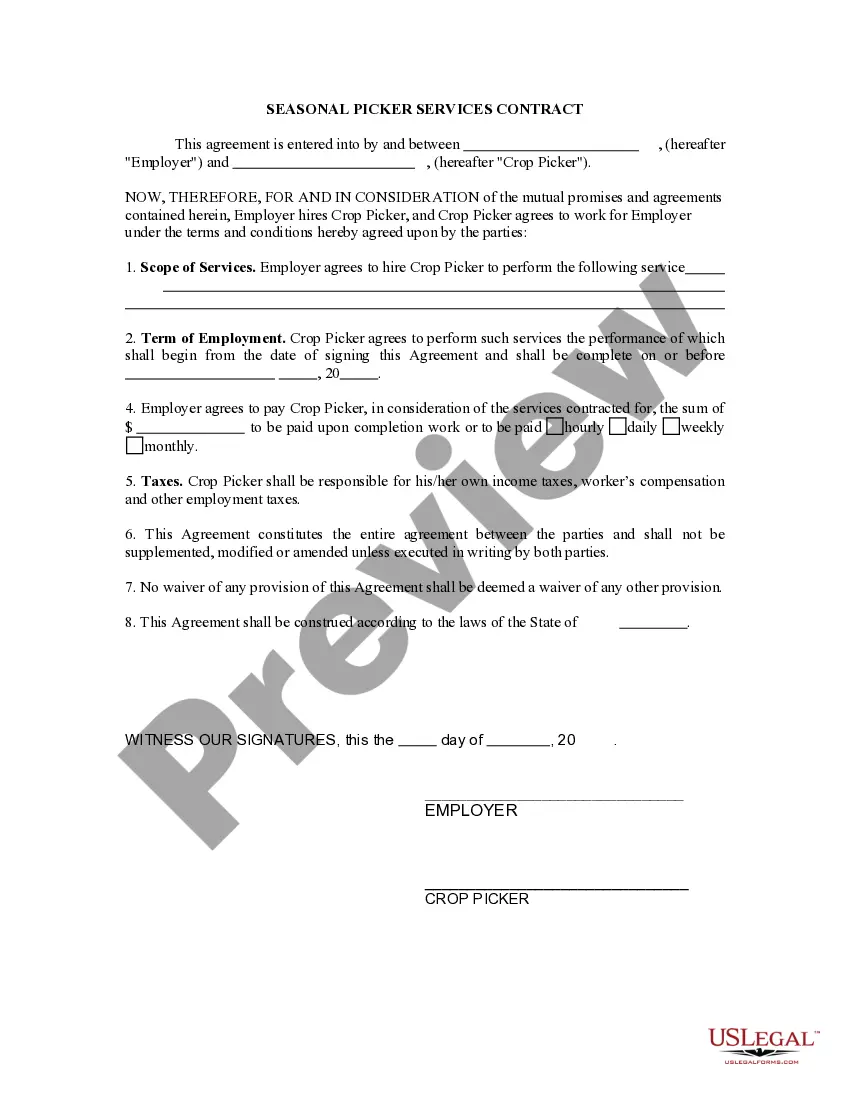
Self-Employed Seasonal Picker Services Contract
Overview of this form
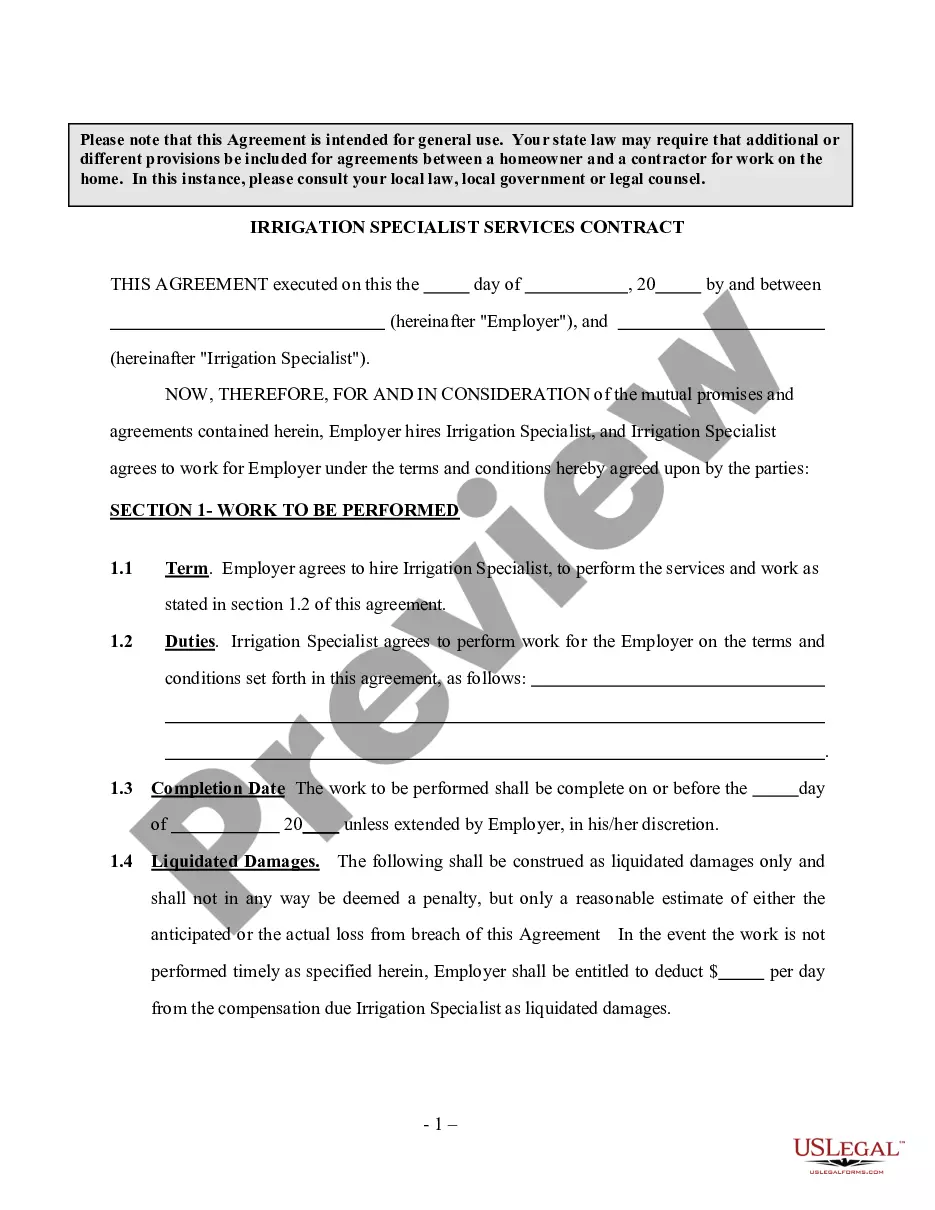
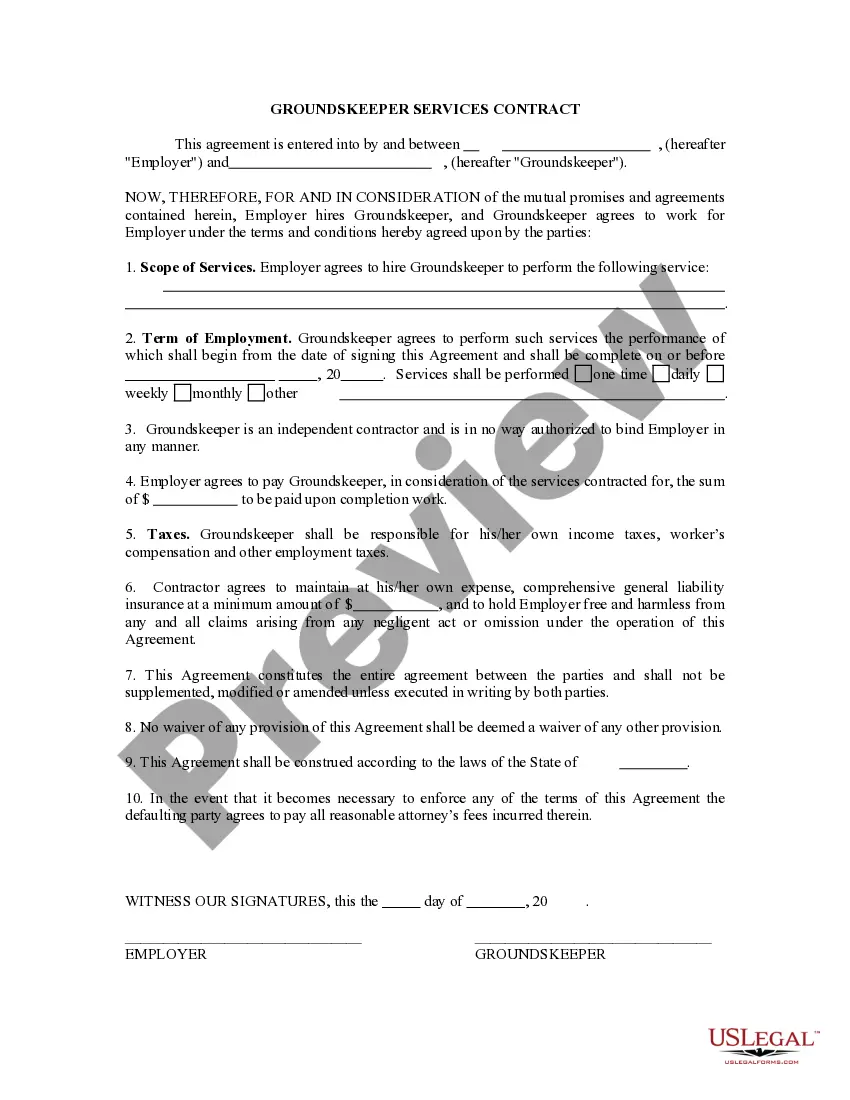
The Self-Employed Seasonal Picker Services Contract is a legal document that formalizes the agreement between a company and an independent contractor for seasonal crop picking services. This contract outlines the responsibilities of the crop picker, ensuring clarity and legal protection for both parties. It differentiates from other types of employment agreements by emphasizing the independent status of the worker and the seasonal nature of the job.
What’s included in this form
- Scope of services: Defines the specific tasks the crop picker is expected to complete.
- Payment terms: Outlines how and when the worker will be compensated for their services.
- Duration of the contract: States the period during which the services will be performed.
- Independence: Clarifies the contractor's status as an independent worker, not an employee.
- Liability and indemnification: Addresses responsibilities in case of any issues arising during the work.
When to use this document
This form should be used when a company hires an independent contractor to perform crop picking services that are seasonal in nature. It is ideal for agricultural businesses that require flexible labor for specific harvest periods, ensuring that both parties have a clear understanding of the terms of the engagement.
Intended users of this form
- Agricultural companies hiring seasonal labor.
- Independent contractors offering crop picking services.
- Business owners looking to formalize agreements with temporary workers.
- Farm operators needing to clarify the terms of employment without creating an employee-employer relationship.
How to complete this form
- Identify the parties: Enter the name of the company and the independent contractor.
- Define the scope of services: Clearly describe the picking tasks agreed upon.
- Specify payment terms: Include the rate of pay and payment schedule.
- Indicate the duration: Fill in the start and end date of the services.
- Review and sign: Have both parties review the contract and sign it to make it legally binding.
Does this form need to be notarized?
In most cases, this form does not require notarization. However, some jurisdictions or signing circumstances might. US Legal Forms offers online notarization powered by Notarize, accessible 24/7 for a quick, remote process.
Get your form ready online
Our built-in tools help you complete, sign, share, and store your documents in one place.
Make edits, fill in missing information, and update formatting in US Legal Forms—just like you would in MS Word.
Download a copy, print it, send it by email, or mail it via USPS—whatever works best for your next step.
Sign and collect signatures with our SignNow integration. Send to multiple recipients, set reminders, and more. Go Premium to unlock E-Sign.
If this form requires notarization, complete it online through a secure video call—no need to meet a notary in person or wait for an appointment.
We protect your documents and personal data by following strict security and privacy standards.

Make edits, fill in missing information, and update formatting in US Legal Forms—just like you would in MS Word.

Download a copy, print it, send it by email, or mail it via USPS—whatever works best for your next step.

Sign and collect signatures with our SignNow integration. Send to multiple recipients, set reminders, and more. Go Premium to unlock E-Sign.

If this form requires notarization, complete it online through a secure video call—no need to meet a notary in person or wait for an appointment.

We protect your documents and personal data by following strict security and privacy standards.
Avoid these common issues
- Failing to clearly outline the scope of services, leading to misunderstandings.
- Not specifying payment terms, causing disputes over wages.
- Omitting dates of service, which can lead to confusion about the time frame.
- Assuming the contractor's independence without proper classification.
Why use this form online
- Convenience: Easily download and complete the contract from anywhere.
- Editability: Customize the form according to specific needs without starting from scratch.
- Reliability: Use legally vetted templates created by licensed attorneys, ensuring compliance.
Looking for another form?
Form popularity
FAQ
The IRS requires contractors to fill out a Form W-9, request for Taxpayer Identification Number and Certification, which you should keep on file for at least four years after the hiring. This form is used to request the correct name and Taxpayer Identification Number, or TIN, of the worker or their entity.
Get it in writing. Keep it simple. Deal with the right person. Identify each party correctly. Spell out all of the details. Specify payment obligations. Agree on circumstances that terminate the contract. Agree on a way to resolve disputes.
Terms. This is the first section of any agreement or contract and states the names and locations of the parties involved. Responsibilities & Deliverables. Payment-Related Details. Confidentiality Clause. Contract Termination. Choice of Law.
Step 1: Ask your independent contractor to fill out Form W-9. Step 2: Fill out two 1099-NEC forms (Copy A and B) Ask your independent contractor for invoices. Add your freelancer to payroll. Keep records like a boss. Tools to check out:
Independent contractors report their income on Schedule C (Form 1040), Profit or Loss from Business (Sole Proprietorship). Also file Schedule SE (Form 1040), Self-Employment Tax if net earnings from self-employment are $400 or more. You may need to make estimated tax payments.
Name of contractor and contact information. Name of homeowner and contact information. Describe property in legal terms. List attachments to the contract. The cost. Failure of homeowner to obtain financing. Description of the work and the completion date. Right to stop the project.
For tax purposes, the IRS treats independent contractors as self-employed individuals. That means you're subject to a different set of tax payment and filing rules than employees. You'll need to file a tax return with the IRS if your net earnings from self-employment are $400 or more.
As an independent contractor, report your income on Schedule C of Form 1040, Profit or Loss from Business. You must pay self-employment taxes on net earnings exceeding $400. For those taxes, you must submit Schedule SE, Form 1040, the self-employment tax.
Form W-9. The IRS requires contractors to fill out a Form W-9, request for Taxpayer Identification Number and Certification, which you should keep on file for at least four years after the hiring. This form is used to request the correct name and Taxpayer Identification Number, or TIN, of the worker or their entity.