Use of Unauthorized Access Device
What is this form?
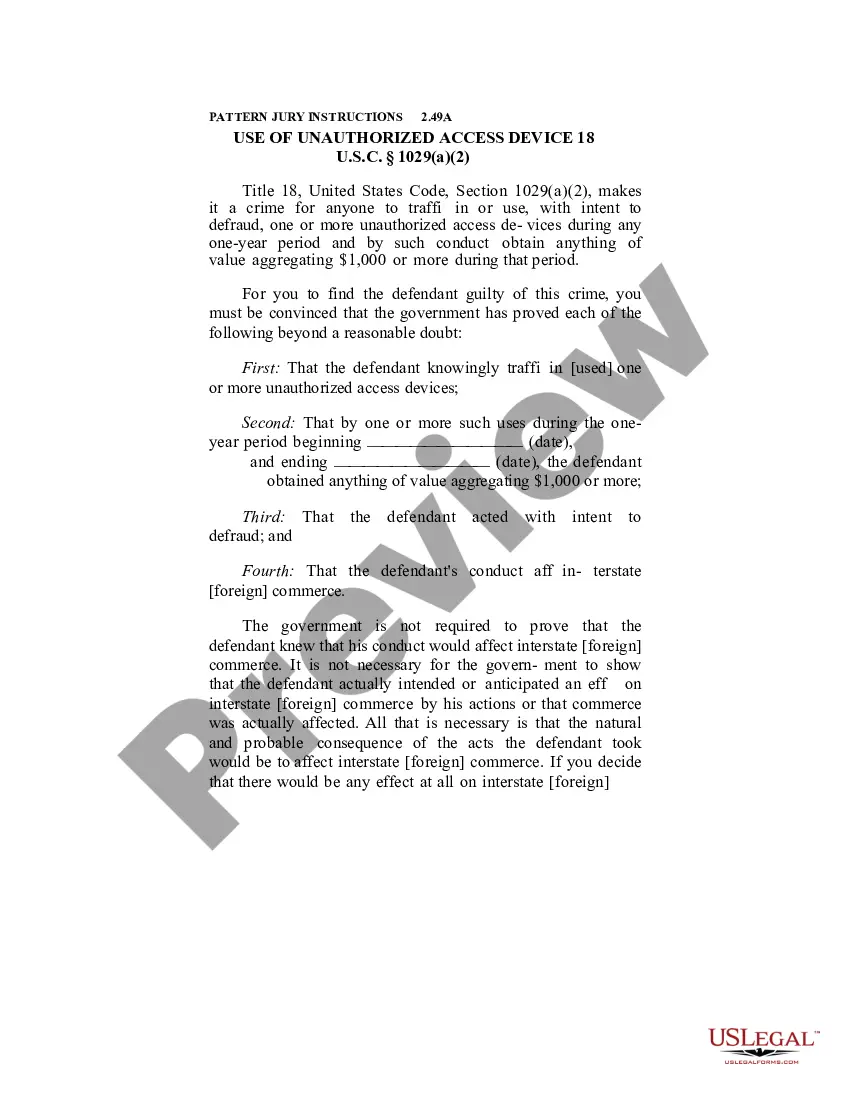
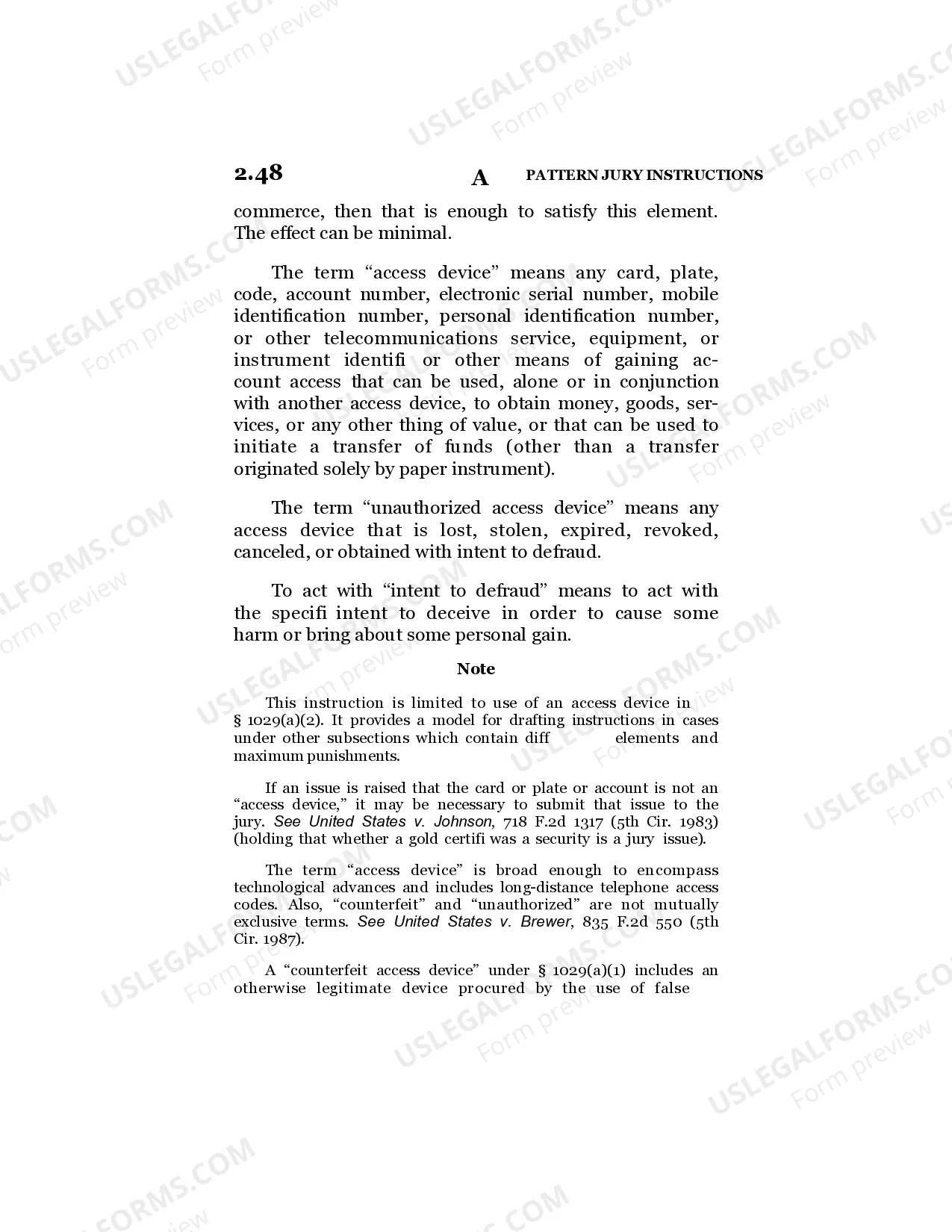
The Use of Unauthorized Access Device form is designed to document and articulate the legal implications of using an unauthorized access device as defined under Title 18, U.S. Code, Section 1029(a)(2). This form serves as a critical tool in legal proceedings, assisting in the prosecution of offenses related to fraudulent use of access devices, such as credit cards or account numbers. Its importance lies in establishing intent to defraud and the value involved, differentiating it from other fraud-related forms.
Key components of this form
- Definition of unauthorized access device
- Criteria for proving intent to defraud
- Required documentation for establishing value obtained
- Timeframe for the alleged offenses
- Jurisdictional elements regarding interstate commerce


When this form is needed
This form is used in circumstances where an individual is accused of using or trafficking unauthorized access devices with the intent to defraud. It is pertinent during legal cases that involve credit card fraud, stolen identity, or any situation where access devices are exploited unlawfully, particularly if the total value involved exceeds one thousand dollars.
Who can use this document
This form is intended for:
- Prosecutors handling fraud cases
- Legal professionals representing clients in related legal disputes
- Defendants seeking to understand the charges against them
How to prepare this document
- Identify and list the unauthorized access devices involved.
- Specify the dates of the alleged offenses.
- Provide a description of how the unauthorized access devices were used.
- Document the total value obtained through these devices, ensuring it meets the threshold of one thousand dollars.
- Sign and date the form as required by your jurisdiction.
Is notarization required?
This form usually doesn’t need to be notarized. However, local laws or specific transactions may require it. Our online notarization service, powered by Notarize, lets you complete it remotely through a secure video session, available 24/7.
Get your form ready online
Our built-in tools help you complete, sign, share, and store your documents in one place.
Make edits, fill in missing information, and update formatting in US Legal Forms—just like you would in MS Word.
Download a copy, print it, send it by email, or mail it via USPS—whatever works best for your next step.
Sign and collect signatures with our SignNow integration. Send to multiple recipients, set reminders, and more. Go Premium to unlock E-Sign.
If this form requires notarization, complete it online through a secure video call—no need to meet a notary in person or wait for an appointment.
We protect your documents and personal data by following strict security and privacy standards.

Make edits, fill in missing information, and update formatting in US Legal Forms—just like you would in MS Word.

Download a copy, print it, send it by email, or mail it via USPS—whatever works best for your next step.

Sign and collect signatures with our SignNow integration. Send to multiple recipients, set reminders, and more. Go Premium to unlock E-Sign.

If this form requires notarization, complete it online through a secure video call—no need to meet a notary in person or wait for an appointment.

We protect your documents and personal data by following strict security and privacy standards.
Mistakes to watch out for
- Failing to accurately define the access devices involved.
- Not specifying the time period in which the offenses occurred.
- Neglecting to include evidence of the value obtained.
- Underestimating the importance of demonstrating intent to defraud.
Advantages of online completion
- Convenient access to legal documents anytime, anywhere.
- Editable templates to customize according to specific cases.
- Reliable sources crafted by licensed attorneys.
Legal use & context
- This form outlines legal definitions and requirements necessary to substantiate a charge of fraudulent use of unauthorized access devices.
- It adheres to federal laws governing such offenses and can be critical in both prosecuting and defending against such allegations.
- Understanding the legal context helps all parties involved to navigate the complexities of fraud cases effectively.
Key takeaways
- The Use of Unauthorized Access Device form is essential for handling fraud cases involving access devices.
- This form lays out clear definitions and criteria necessary to prove fraud under federal law.
- Understanding how to accurately complete the form is crucial for all parties involved in related legal proceedings.
Looking for another form?
Form popularity
FAQ
Unauthorized access device means any access device that is lost; stolen; expired; revoked; canceled; or obtained with intent to defraud.
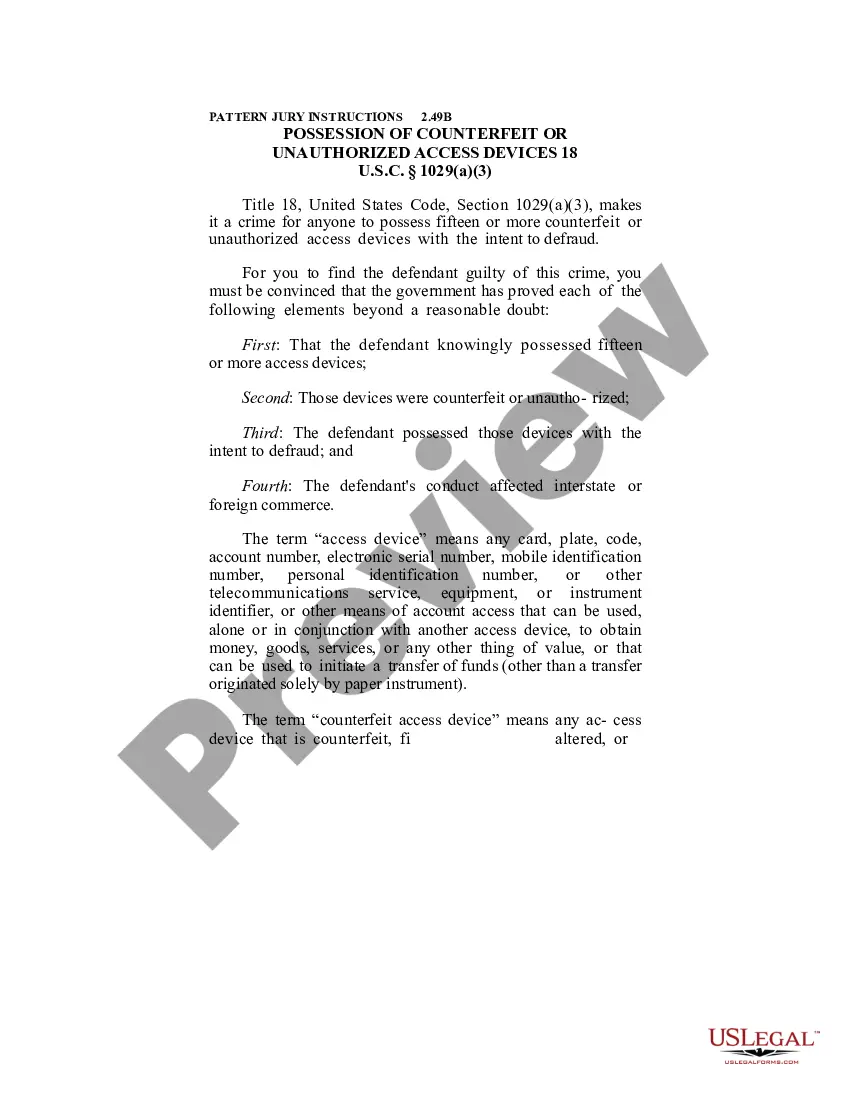
(1) the term ?access device? means any card, plate, code, account number, electronic serial number, mobile identification number, personal identification number, or other telecommunications service, equipment, or instrument identifier, or other means of account access that can be used, alone or in conjunction with
The term ?telecommunication identifying information? means electronic serial number or any other number or signal that identifies a specific telecommunications instrument or account, or a specific communication transmitted from a telecommunications instrument.
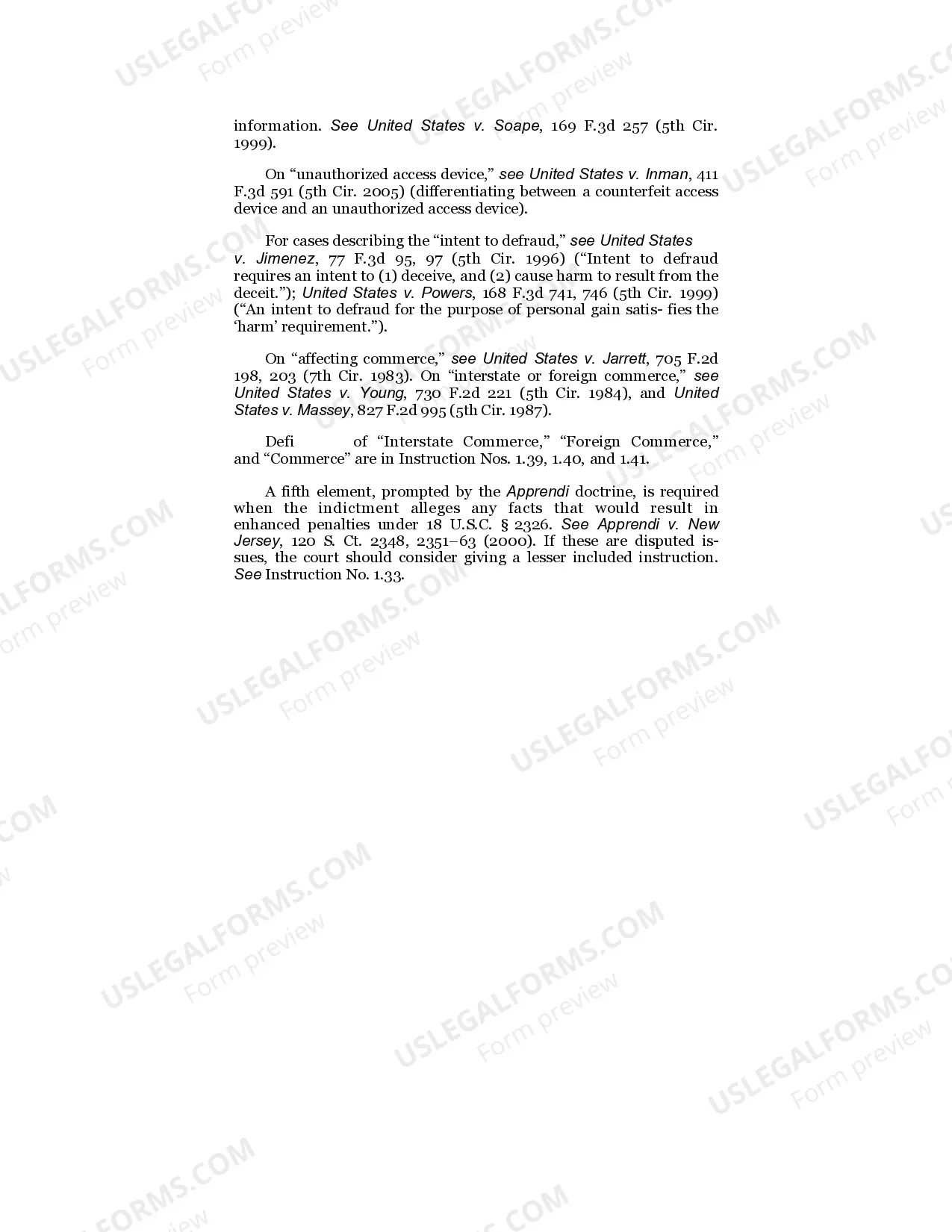
"Counterfeit access device" is defined at 18 U.S.C. § 1029(e)(2) as "any access device that is counterfeit, fictitious, altered, or forged, or an identifiable component of an access device or a counterfeit access device. See United States v. McCormick, 72 F.
Access Device means any electronic device you use to access your account and view electronic documents. This includes, but is not limited to: a traditional computer such as a desktop or laptop computer; or a mobile device such as a tablet computer or a smartphone.
Let's do it! Access Device means any electronic device you use to access your account and view electronic documents. This includes, but is not limited to: a traditional computer such as a desktop or laptop computer; or a mobile device such as a tablet computer or a smartphone.