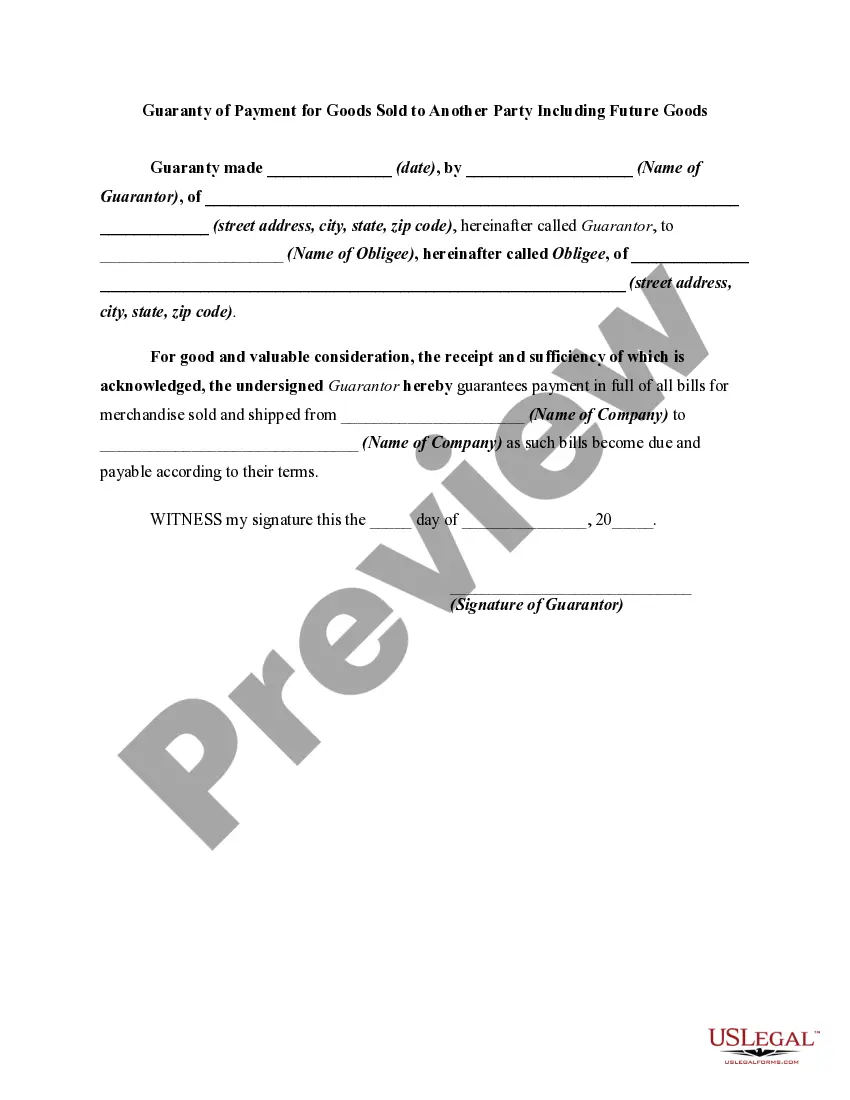
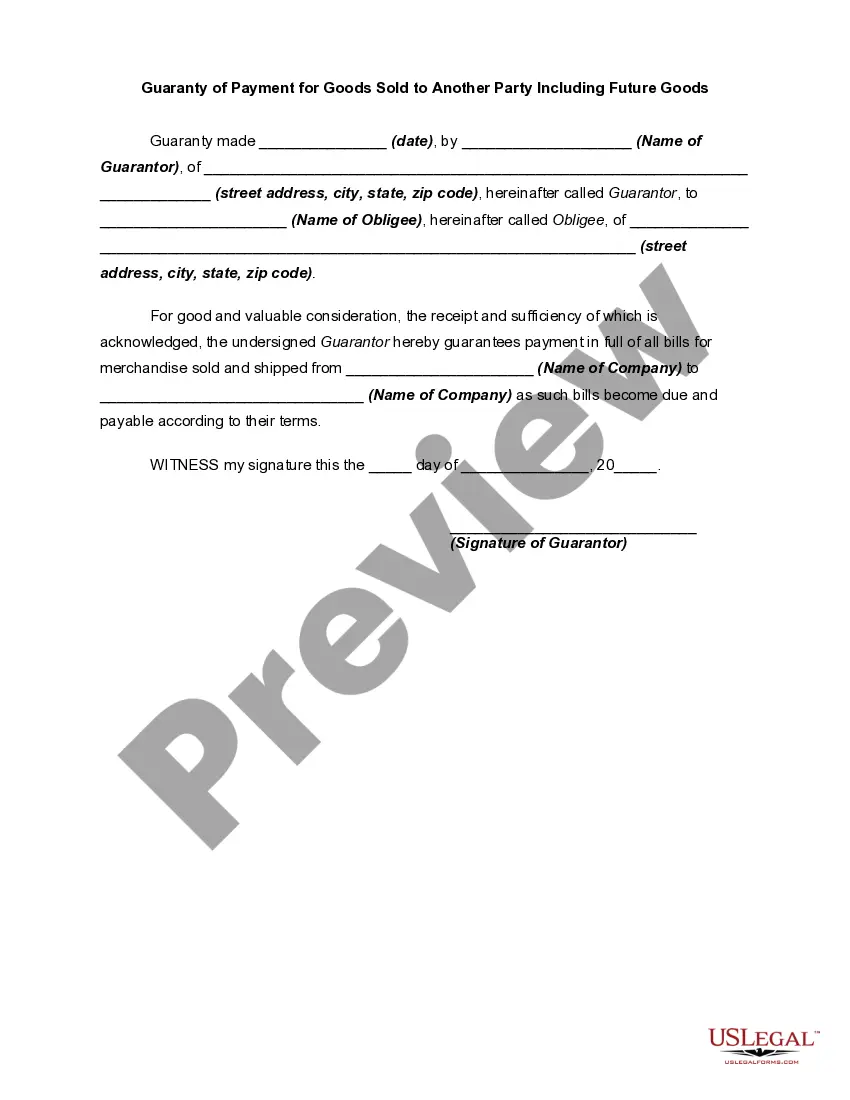
Connecticut Guaranty of Payment for Goods Sold to Another Party Including Future Goods

State:
Multi-State
Control #:
US-02358BG
Format:
Word; 
PDF; 
Rich Text
Instant download

Description

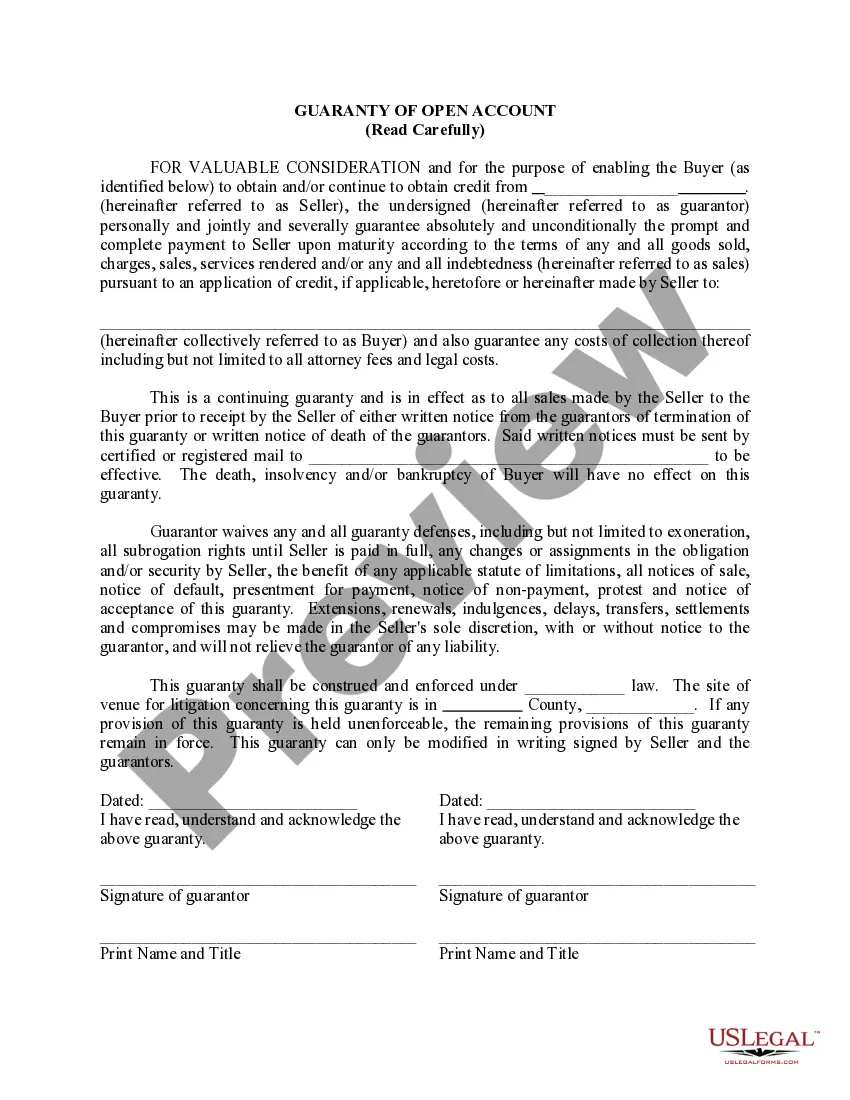
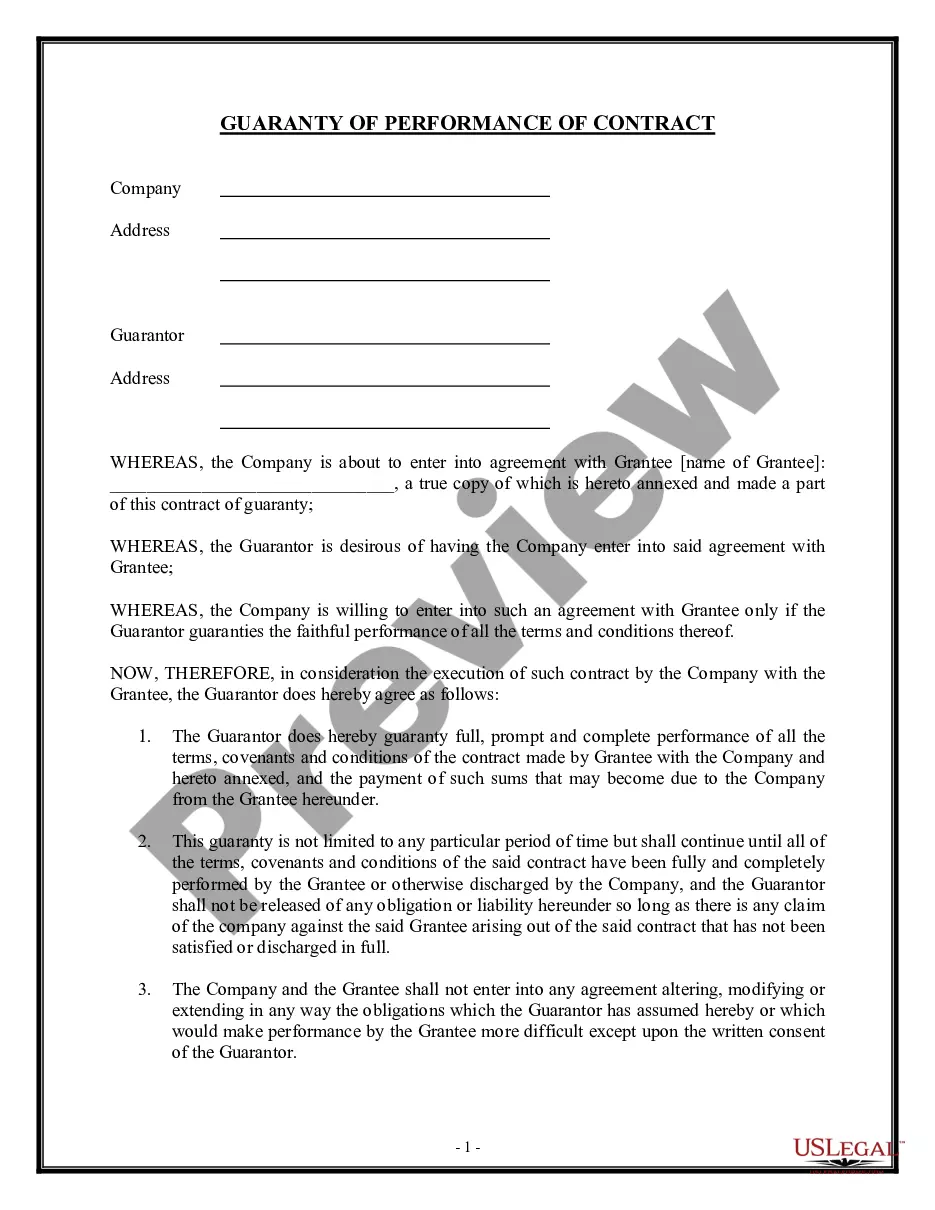
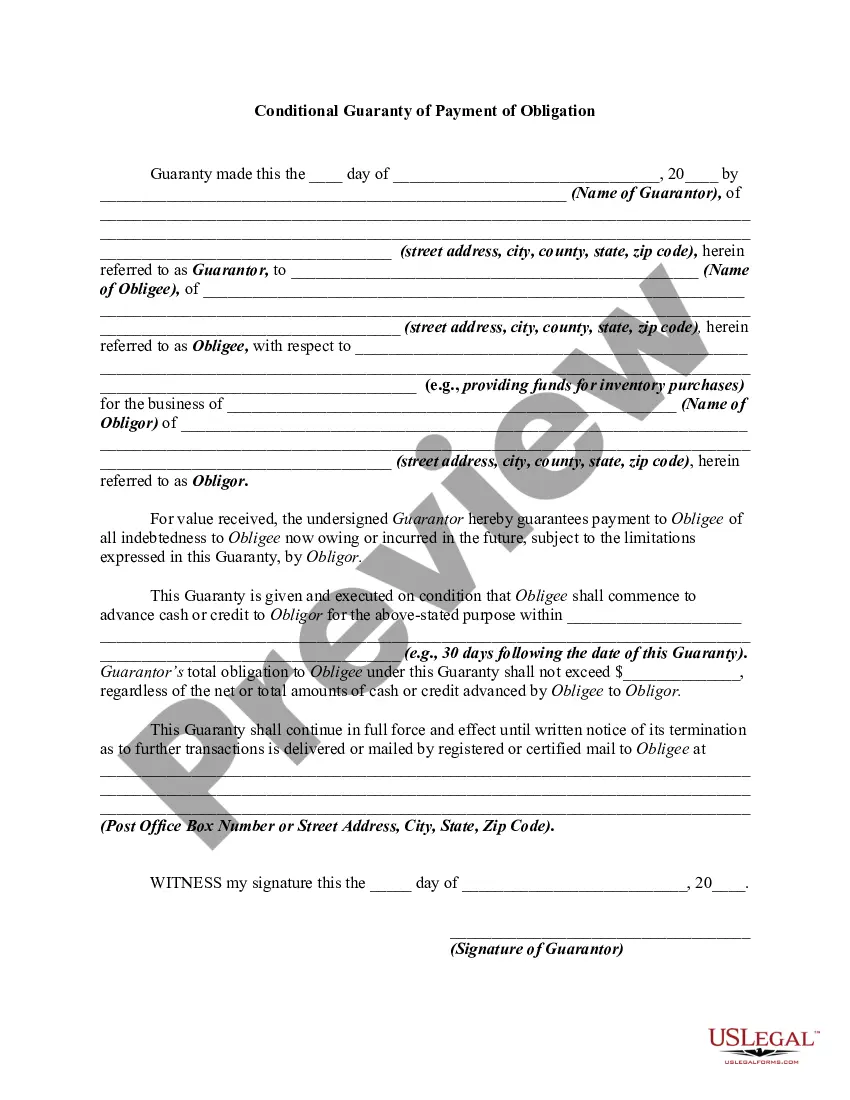
A guaranty is an undertaking on the part of one person (the guarantor) which binds the guarantor to performing the obligation of the debtor or obligor in the event of default by the debtor or obligor. The contract of guaranty may be absolute or it may be conditional. An absolute or unconditional guaranty is a contract by which the guarantor has promised that if the debtor does not perform the obligation or obligations, the guarantor will perform some act (such as the payment of money) to or for the benefit of the creditor.


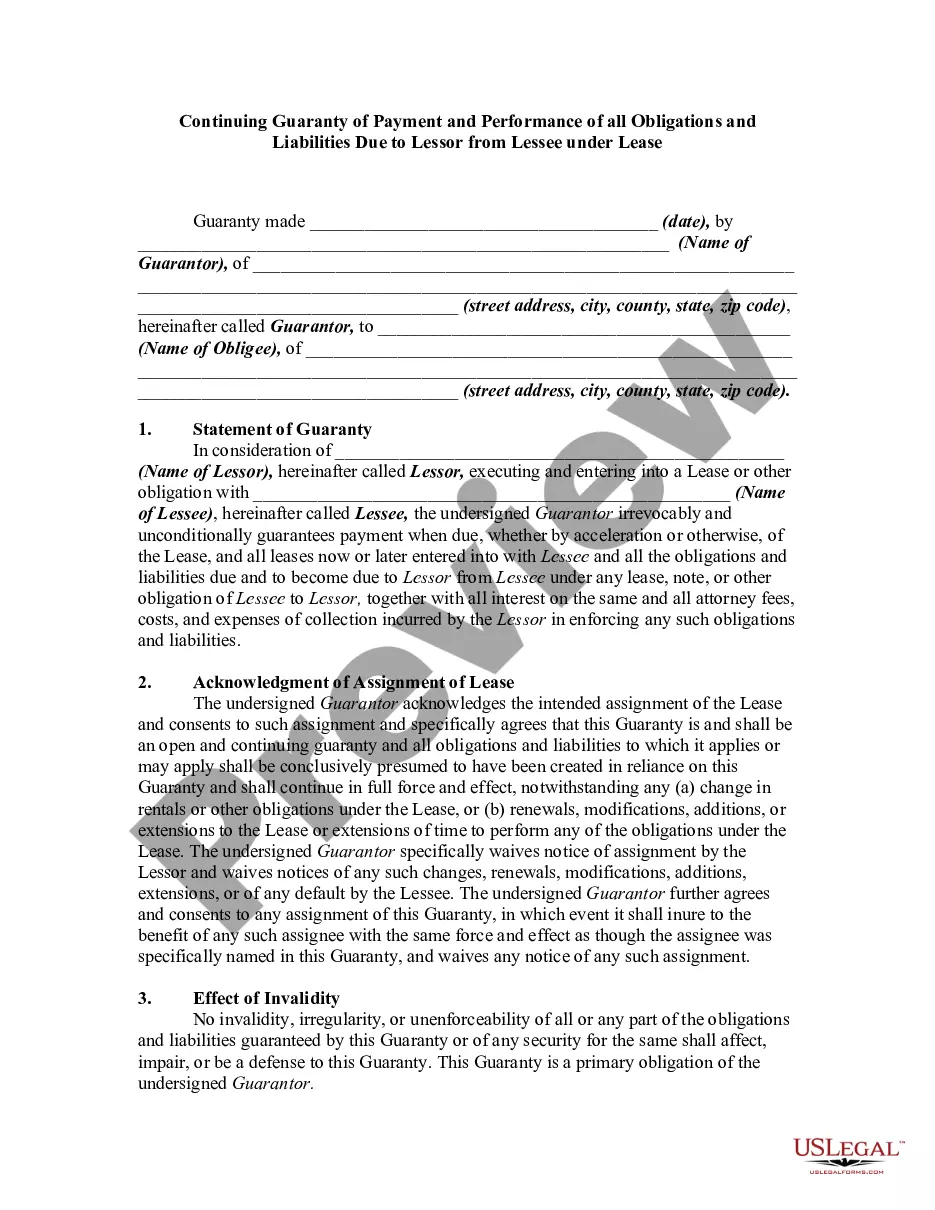
A guaranty may be either continuing or restricted. The contract is restricted if it is limited to the guaranty of a single transaction or to a limited number of specific transactions and is not effective as to transactions other than those guaranteed. The contract is continuing if it contemplates a future course of dealing during an indefinite period, or if it is intended to cover a series of transactions or a succession of credits, or if its purpose is to give to the principal debtor a standing credit to be used by him or her from time to time.
How to fill out Guaranty Of Payment For Goods Sold To Another Party Including Future Goods?

Selecting the optimal valid document format can be quite a challenge. Obviously, there are numerous templates accessible online, but how do you locate the valid version you require? Utilize the US Legal Forms website. This service offers a vast array of templates, including the Connecticut Guaranty of Payment for Goods Sold to Another Party Including Future Goods, suitable for both business and personal needs. Each document is verified by experts and complies with state and federal regulations.

If you are already registered, sign in to your account and click the Obtain button to retrieve the Connecticut Guaranty of Payment for Goods Sold to Another Party Including Future Goods. Use your account to browse the legal documents you may have previously acquired. Proceed to the My documents section of your account to get another copy of the documents you need.

If you are a new user of US Legal Forms, here are some simple instructions for you to follow.

Select the file format and download the legal document template to your device. Complete, modify, and print, then sign the obtained Connecticut Guaranty of Payment for Goods Sold to Another Party Including Future Goods. US Legal Forms is the largest library of legal documents where you can find various document templates. Take advantage of the service to download professionally crafted documents that adhere to state regulations.

  1. First, make sure you have selected the correct document for your city/state.
  2. You can review the form using the Review option and read the form description to ensure it is the right one for you.
  3. If the form does not meet your requirements, utilize the Search field to find the correct document.
  4. Once you are confident that the form is suitable, click the Buy now button to acquire the form.
  5. Choose the payment plan you want and fill in the necessary information. Create your account and complete the order using your PayPal account or credit card.

Form popularity

FAQ

Yes, a guaranty is considered an accessory contract, as it relies on the existence of a primary obligation. The guaranty supports the main contract by providing additional security related to payment. This is especially relevant in the context of the Connecticut Guaranty of Payment for Goods Sold to Another Party Including Future Goods, where it enhances the reliability of transactions.

The guarantee of payment clause is another way to describe a contractual obligation where a guarantor agrees to fulfill payment responsibilities of the debtor. This clause is vital for safeguarding sellers’ interests, allowing them to perform business confidently. When engaging in the Connecticut Guaranty of Payment for Goods Sold to Another Party Including Future Goods, this clause reassures sellers they will not face losses due to buyer defaults.

A guarantee of payment means that a third party commits to paying a debt or obligation if the primary party fails to do so. This ensures that sellers will receive what they are owed even in cases of default. In the framework of the Connecticut Guaranty of Payment for Goods Sold to Another Party Including Future Goods, this concept provides essential risk management for businesses.

In simple terms, a guarantee clause is a promise within a contract that one party will take responsibility for another party’s debt if needed. This clause is essential as it provides security and reassurance to lenders or sellers. Specifically, with the Connecticut Guaranty of Payment for Goods Sold to Another Party Including Future Goods, the guarantee clause strengthens financial transactions by ensuring payment protection.

The guaranty rule typically refers to legal principles that govern how and when a guaranty becomes enforceable. This rule emphasizes the need for written contracts and may outline the responsibilities of both the guarantor and the debtor. In the context of the Connecticut Guaranty of Payment for Goods Sold to Another Party Including Future Goods, understanding this rule can help entrepreneurs protect their rights during transactions.

An example of a guarantee clause might be a statement that a third party will cover all debts owed by the primary party in a transaction. For example, in a contract involving the Connecticut Guaranty of Payment for Goods Sold to Another Party Including Future Goods, a parent company might guarantee payment for its subsidiary's purchases, offering additional security to the seller.

A guarantee of future payment to a customer indicates that a party will cover payments for goods or services provided even if the customer fails to do so. This guarantee can provide peace of mind to sellers, assuring them they will receive compensation. Under the Connecticut Guaranty of Payment for Goods Sold to Another Party Including Future Goods, this provision is crucial for businesses looking to safeguard their financial interests.

An example of a payment clause is a provision in a contract that specifies the terms under which payment should be made. For instance, it may outline the payment amount, the payment schedule, and the method of payment. In the context of a Connecticut Guaranty of Payment for Goods Sold to Another Party Including Future Goods, this clause ensures the seller receives payment for goods shipped or services rendered.

The parties to a contract of guaranty typically include the guarantor, the creditor, and the debtor. The guarantor agrees to back the payment obligation of the debtor to the creditor under the Connecticut Guaranty of Payment for Goods Sold to Another Party Including Future Goods. The creditor expects the guarantor to fulfill the payment if the debtor defaults. This relationship is crucial, so using resources like uslegalforms helps clarify these roles and formalize the arrangement.

To fill out a personal guarantee effectively, you need to start by clearly identifying the parties involved and the specific obligation being guaranteed. Include key details of the agreement, such as payment terms and the connection to the Connecticut Guaranty of Payment for Goods Sold to Another Party Including Future Goods. Ensure you provide your personal information, sign the document, and date it to signify your agreement. Using the uslegalforms platform can guide you in creating a compliant and clear personal guarantee.

Trusted and secure by over 3 million people of the world’s leading companies

Connecticut Guaranty of Payment for Goods Sold to Another Party Including Future Goods