Attempt(s)
Understanding this form
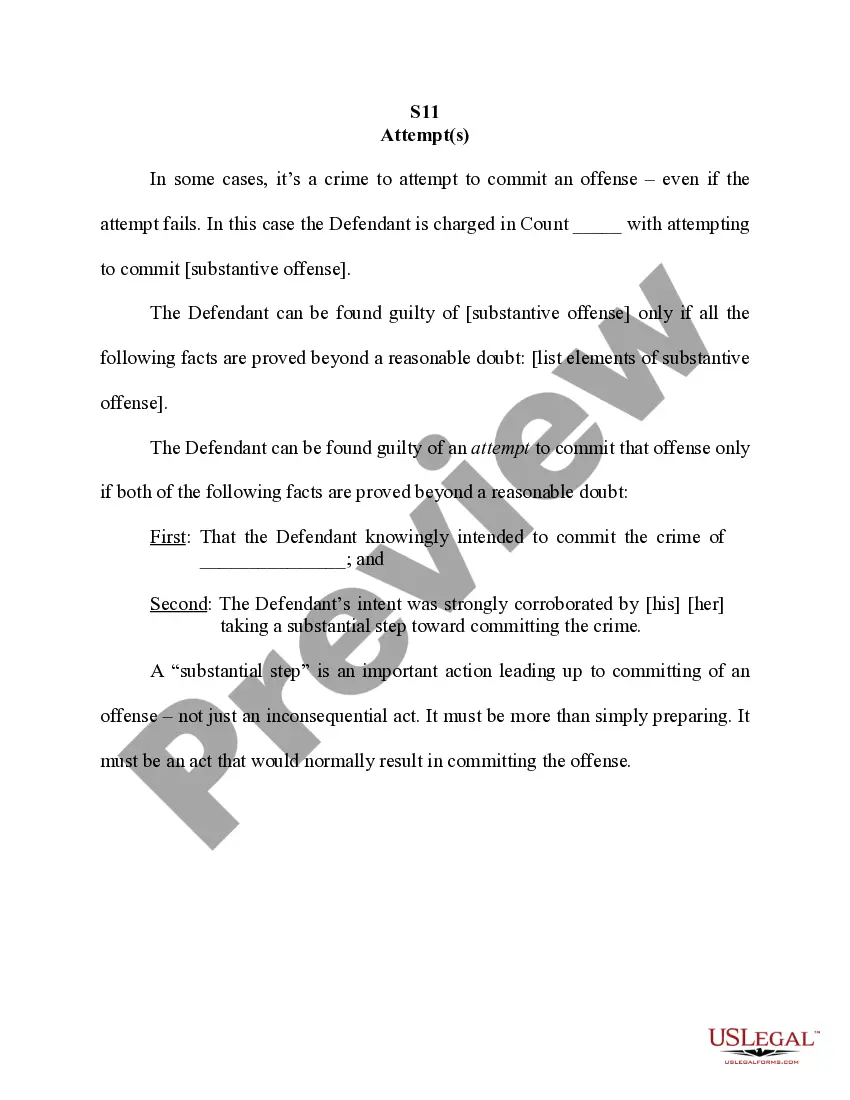
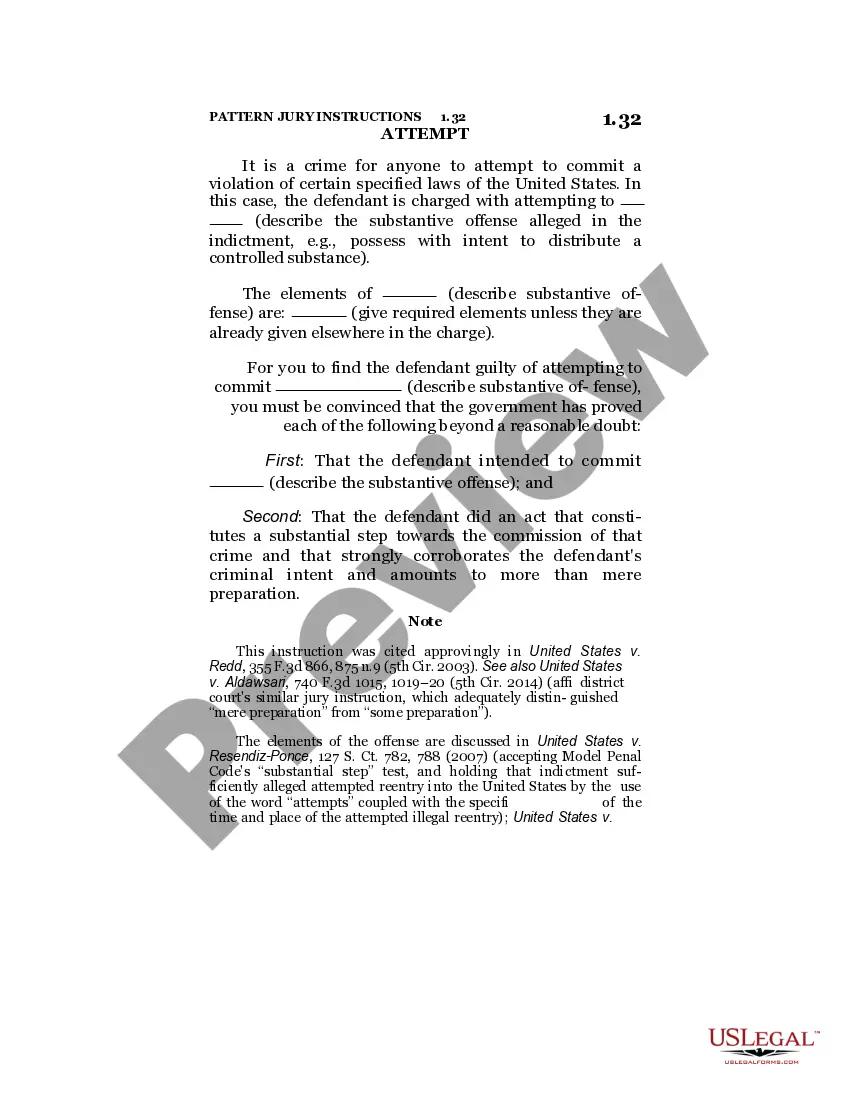
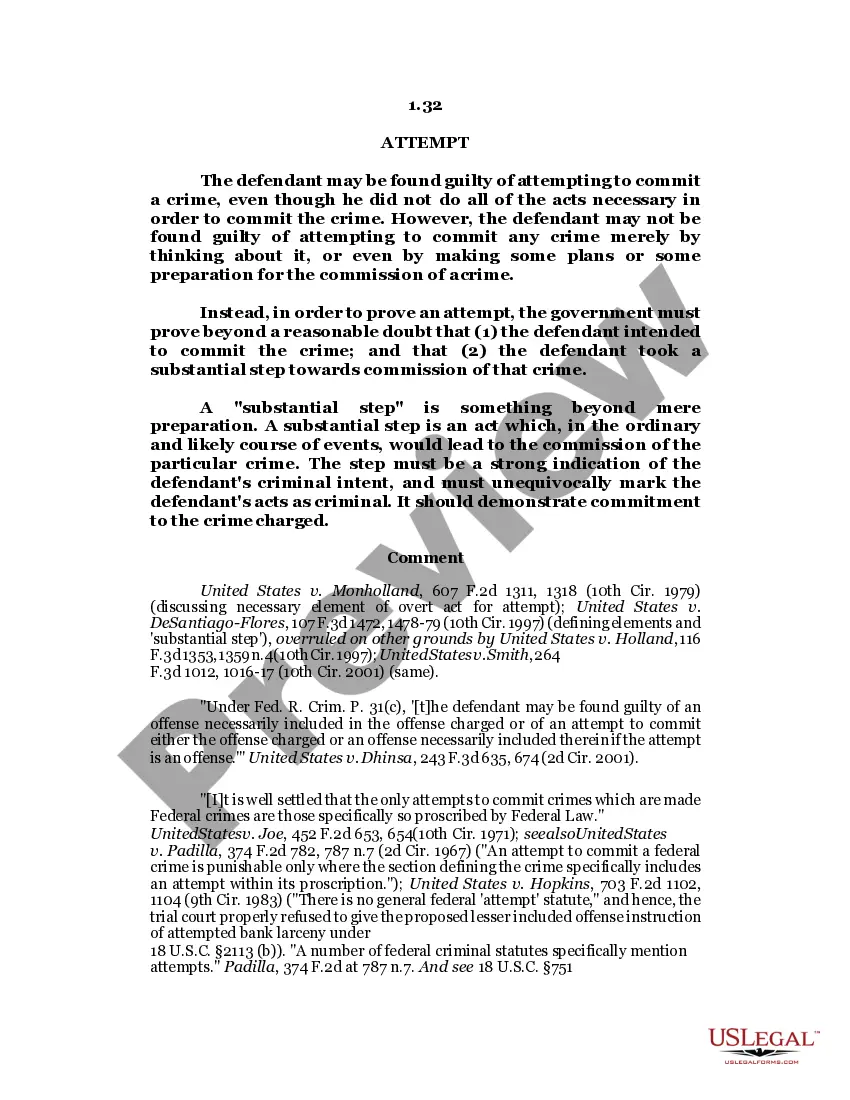
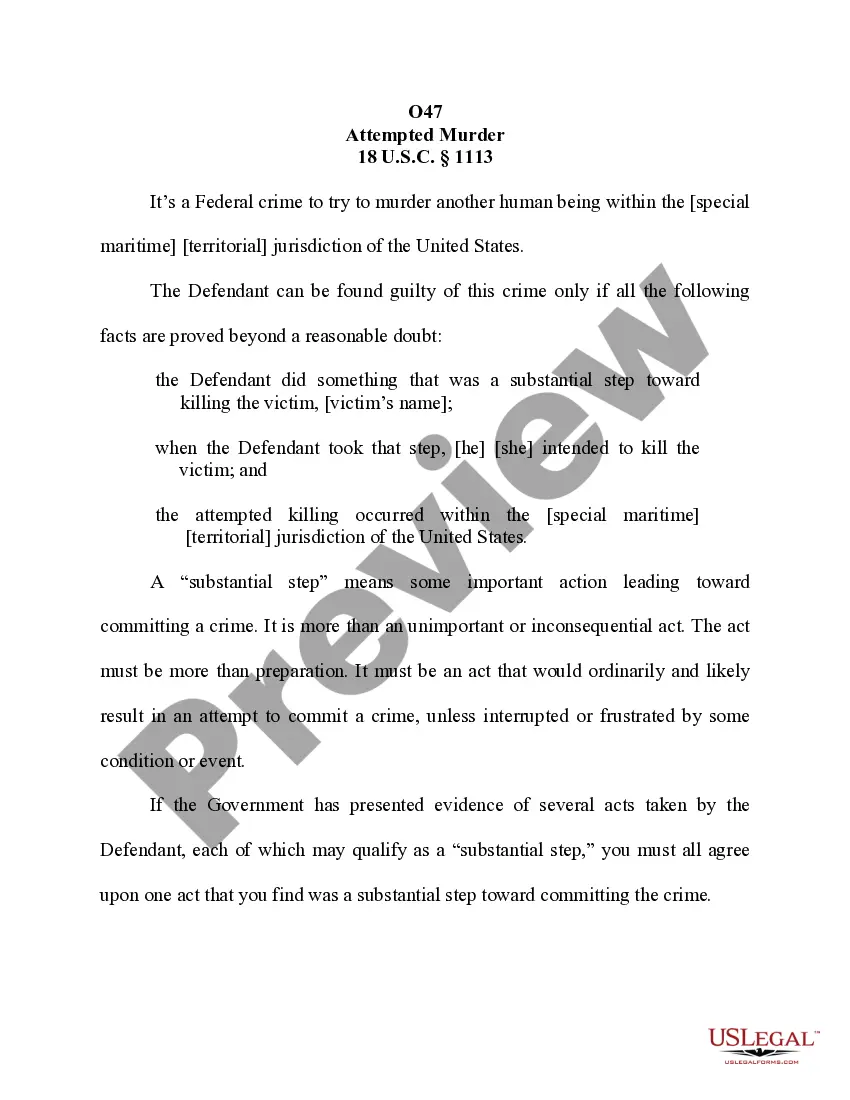
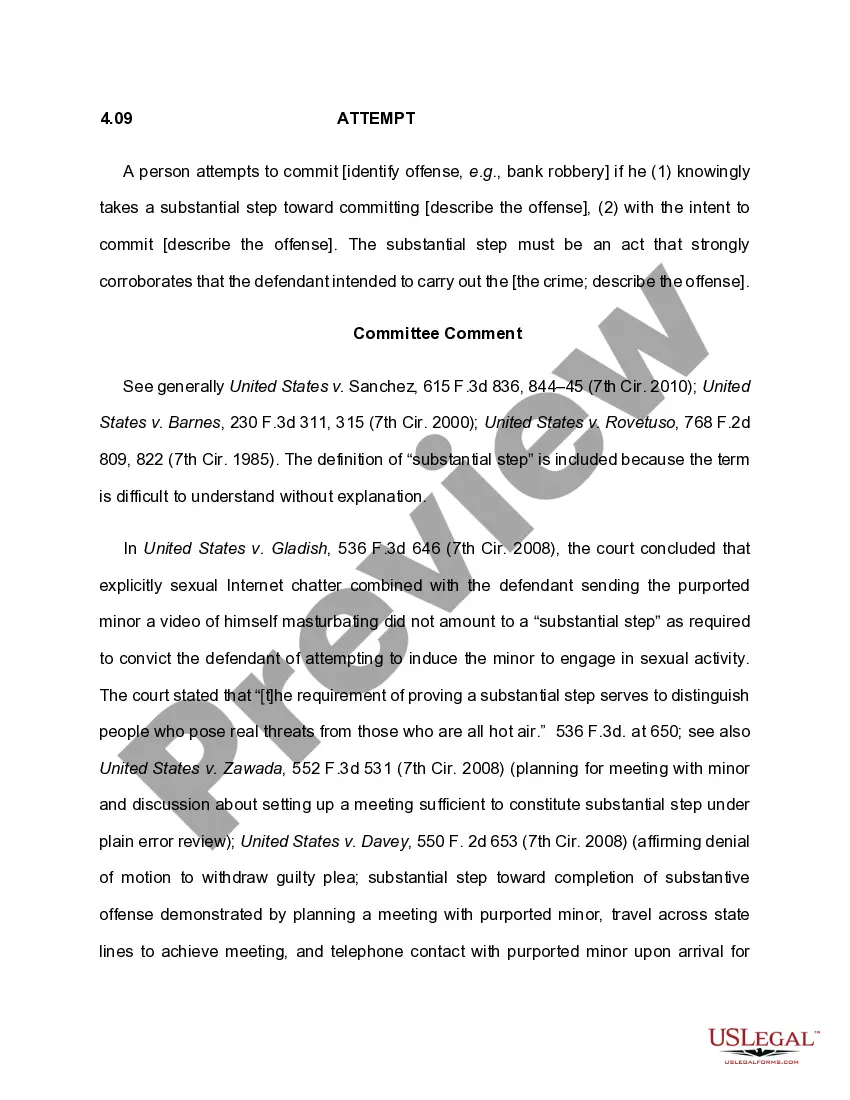
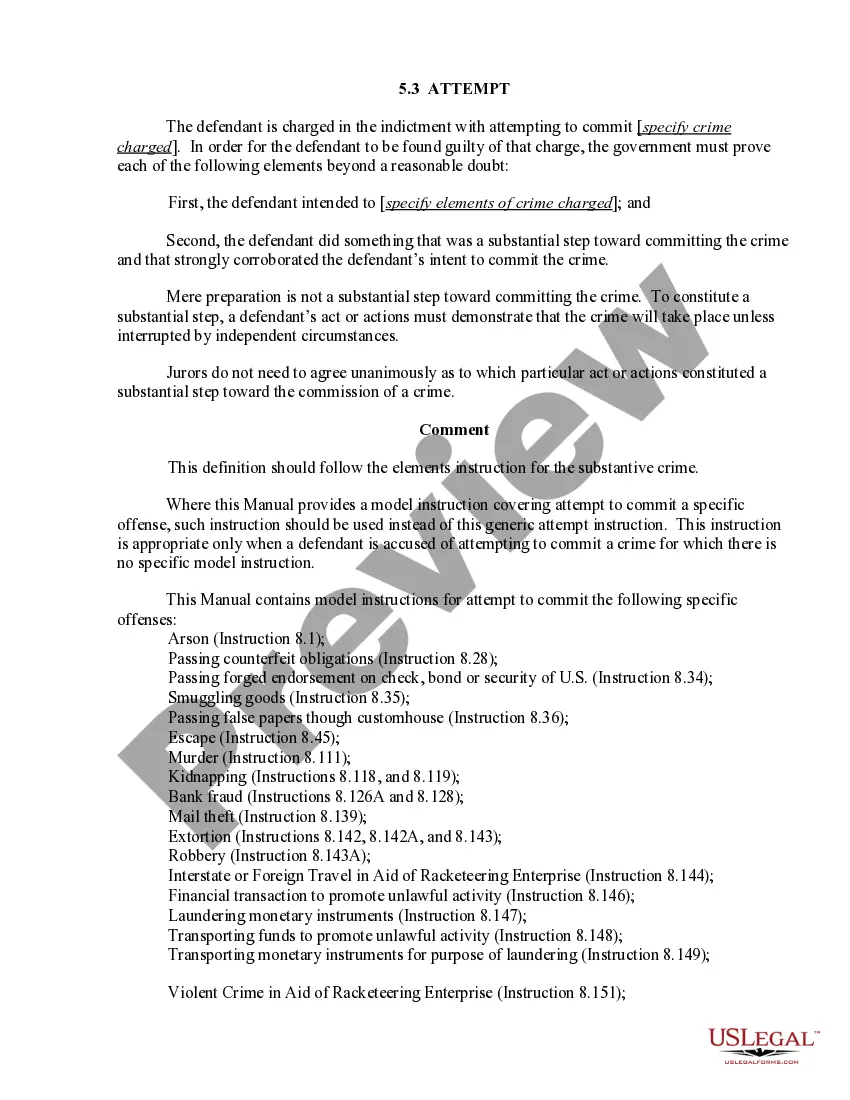
This form pertains to attempts in criminal law, specifically addressing the concept of attempting to commit a crime, even when the attempt is unsuccessful. The Attempt(s) form is designed to provide a legal foundation for understanding the circumstances under which an individual can be found guilty of attempting to commit a substantive offense. It clarifies the essential components that must be demonstrated to establish intent and action, distinguishing it from other forms related to completed offenses.
Main sections of this form
- Definition of a substantial step towards committing a crime.
- Requirements for proving the defendant's intent to commit the crime.
- Clarification of the substantive offense being attempted.
- Criteria for establishing guilt beyond a reasonable doubt.
- Instructions for charging the defendant in court.
Common use cases
This form is utilized in situations where an individual is accused of attempting to commit a crime, regardless of whether the crime was successfully carried out. It is relevant when there is substantial evidence that the individual not only intended to commit the crime but also took significant steps toward its commission. Common scenarios include preemptive arrests and cases where actions taken by an individual demonstrate a clear intent to engage in criminal behavior.
Who should use this form
- Defendants facing charges of attempted crimes.
- Defense attorneys preparing to argue case details in criminal proceedings.
- Prosecutors outlining the charges in court.
- Legal practitioners seeking to understand the implications of attempt laws.
How to prepare this document
- Identify the defendant and relevant case information.
- Specify the substantive offense that was attempted.
- Outline the elements of the substantive offense that must be proven.
- Detail the defendant's actions that constitute a substantial step.
- Document the intent of the defendant to commit the specified crime.
Notarization guidance
This form usually doesn’t need to be notarized. However, local laws or specific transactions may require it. Our online notarization service, powered by Notarize, lets you complete it remotely through a secure video session, available 24/7.
Get your form ready online
Our built-in tools help you complete, sign, share, and store your documents in one place.
Make edits, fill in missing information, and update formatting in US Legal Forms—just like you would in MS Word.
Download a copy, print it, send it by email, or mail it via USPS—whatever works best for your next step.
Sign and collect signatures with our SignNow integration. Send to multiple recipients, set reminders, and more. Go Premium to unlock E-Sign.
If this form requires notarization, complete it online through a secure video call—no need to meet a notary in person or wait for an appointment.
We protect your documents and personal data by following strict security and privacy standards.

Make edits, fill in missing information, and update formatting in US Legal Forms—just like you would in MS Word.

Download a copy, print it, send it by email, or mail it via USPS—whatever works best for your next step.

Sign and collect signatures with our SignNow integration. Send to multiple recipients, set reminders, and more. Go Premium to unlock E-Sign.

If this form requires notarization, complete it online through a secure video call—no need to meet a notary in person or wait for an appointment.

We protect your documents and personal data by following strict security and privacy standards.
Common mistakes
- Failing to clearly establish the defendant's intent.
- Not adequately demonstrating the substantial step taken towards the offense.
- Mixing up definitions of attempted crimes with completed crimes.
- Neglecting to list all required elements of the substantive offense.
Benefits of completing this form online
- Convenient access to legal templates anytime, ensuring you stay prepared.
- Editability allows for customization to fit specific case needs.
- Reliability derived from professionally drafted content by licensed attorneys.
Legal use & context
- This form is essential for prosecuting cases where individuals are charged with attempts rather than completed offenses.
- Understanding the criteria for an attempt is crucial for both defense and prosecution in criminal cases.
Main things to remember
- The Attempt(s) form is vital for legal cases involving attempted crimes.
- Proving intent and action is essential for establishing guilt.
- Utilizing this form accurately can impact the outcome of criminal cases.
Looking for another form?

Form popularity
FAQ
What does it mean to ?be served?? Being served usually means that you've been served notice of some legal proceedings against you. It is when someone hands you a piece of paper notifying you that you are being sued for something and may need to respond by filing paperwork with a court of law to defend yourself.
Some common synonyms of attempt are endeavor, essay, strive, and try. While all these words mean "to make an effort to accomplish an end," attempt stresses the initiation or beginning of an effort.
Attempt. plural. attempts. DEFINITIONS2. an effort to do something.
1. : the act or an instance of trying to do or accomplish something : an act or instance of attempting something. She failed the test on her first attempt but passed on her second attempt. They made an attempt =tried to be helpful. often : an unsuccessful effort.
Synonym Chooser Some common synonyms of try are attempt, endeavor, essay, and strive. While all these words mean "to make an effort to accomplish an end," try is often close to attempt but may stress effort or experiment made in the hope of testing or proving something.