Dancer Agreement - Self-Employed Independent Contractor
Overview of this form
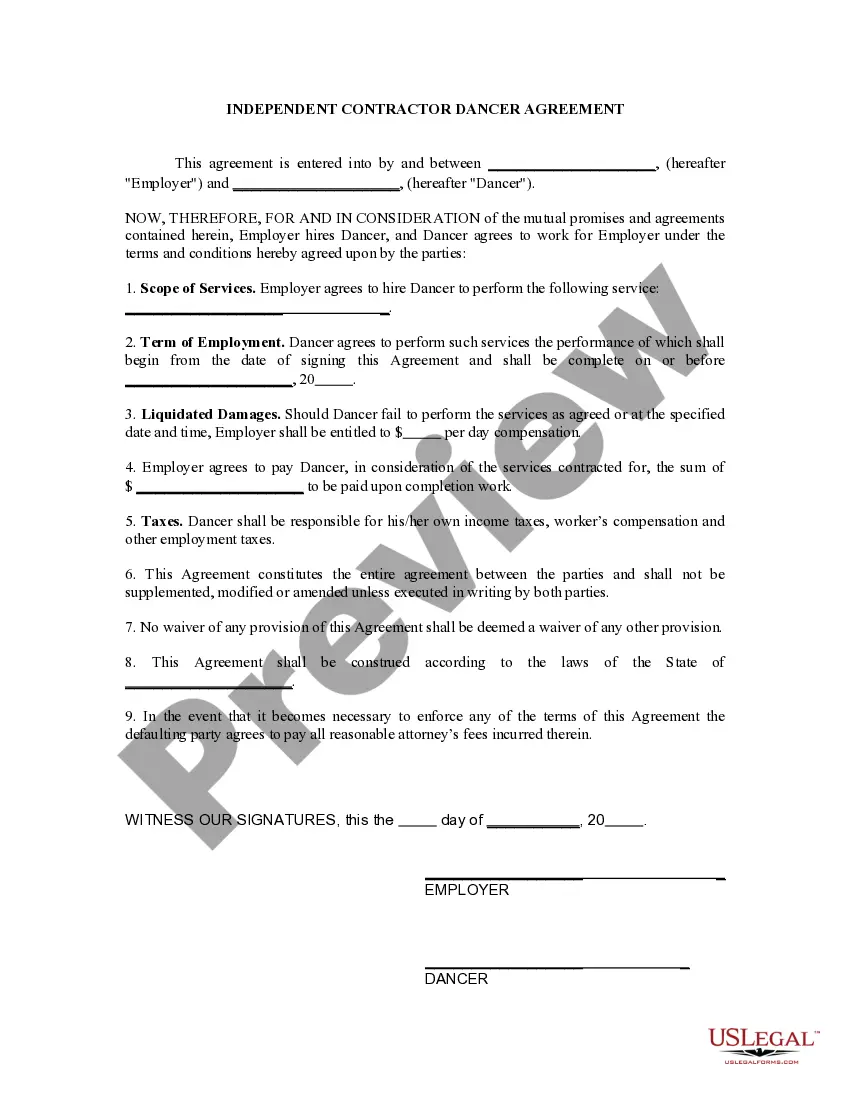
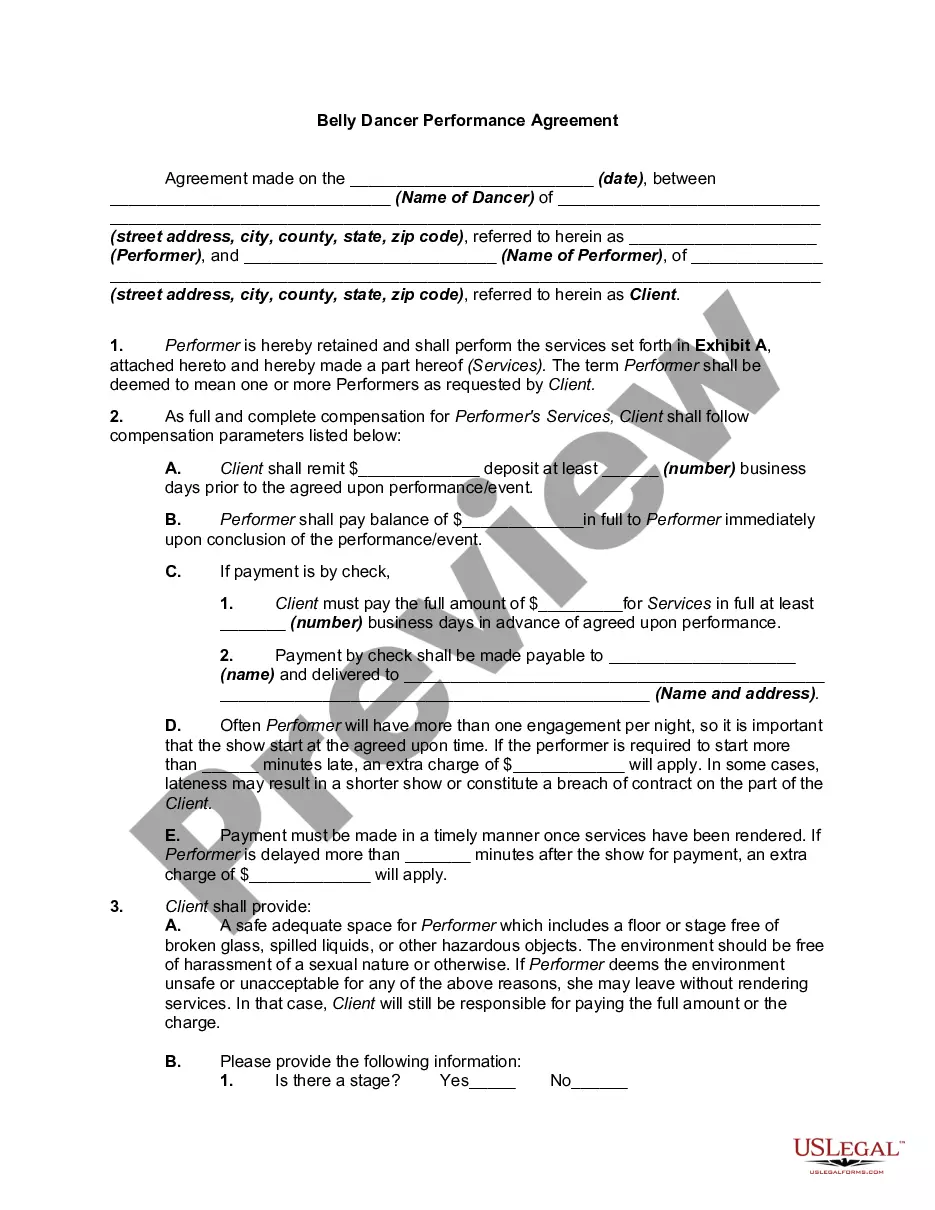
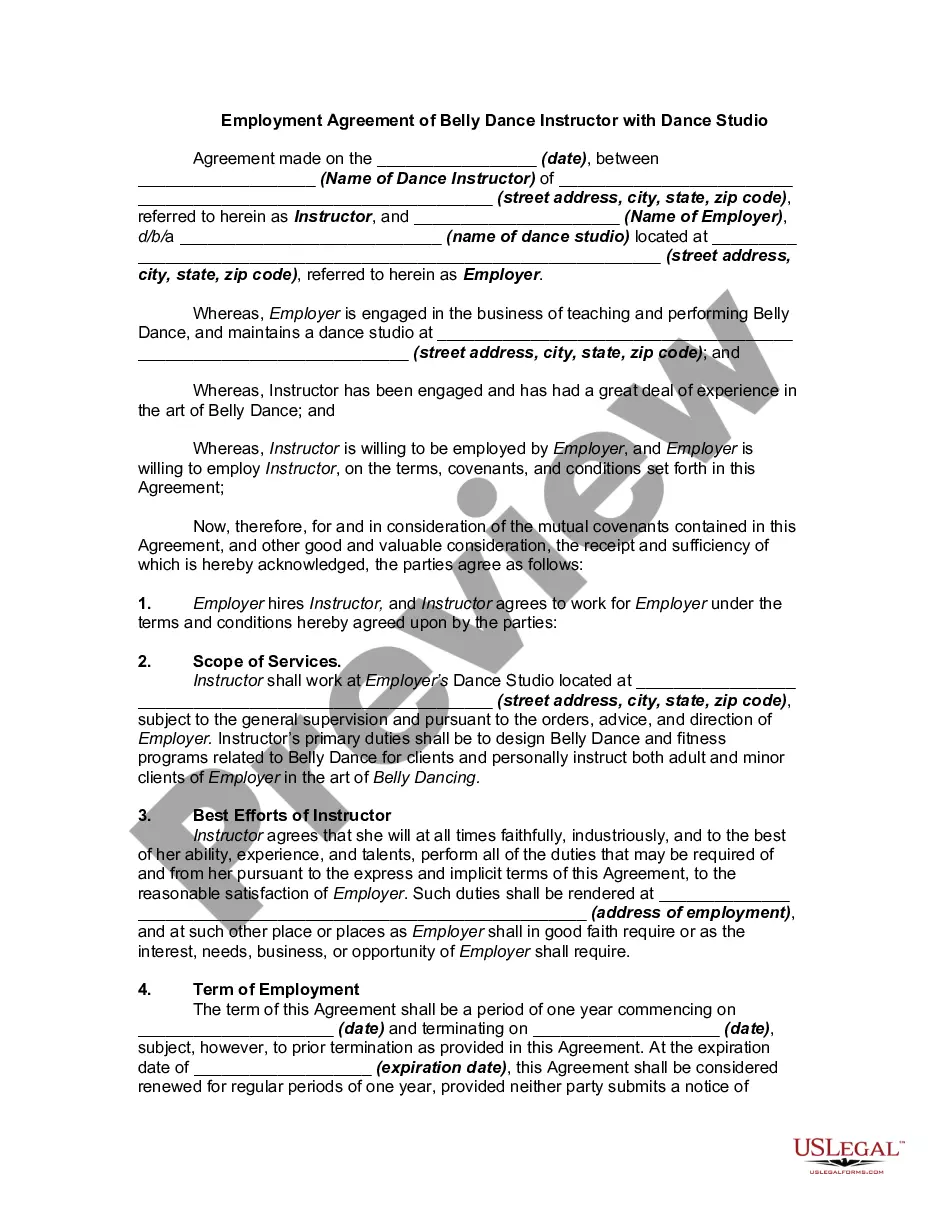
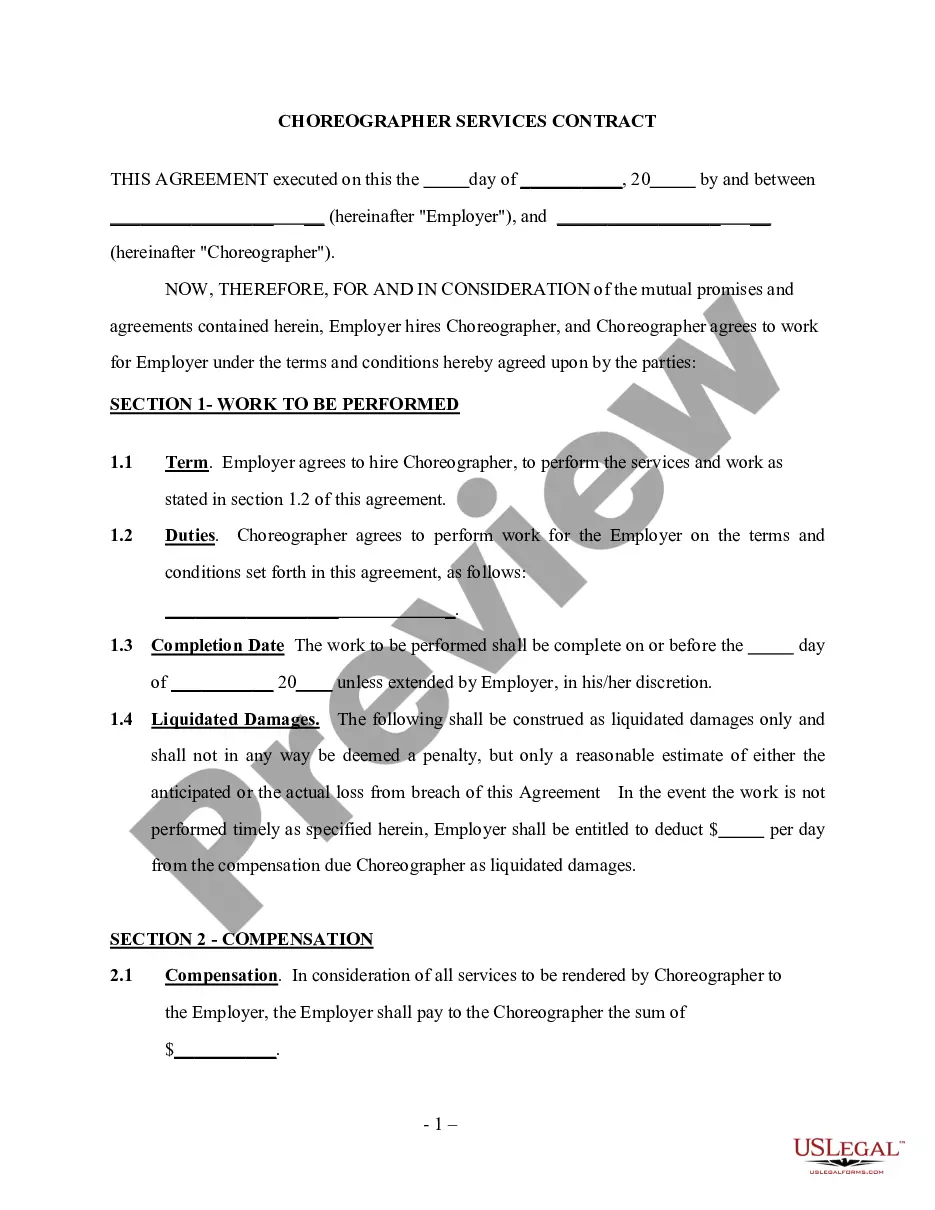
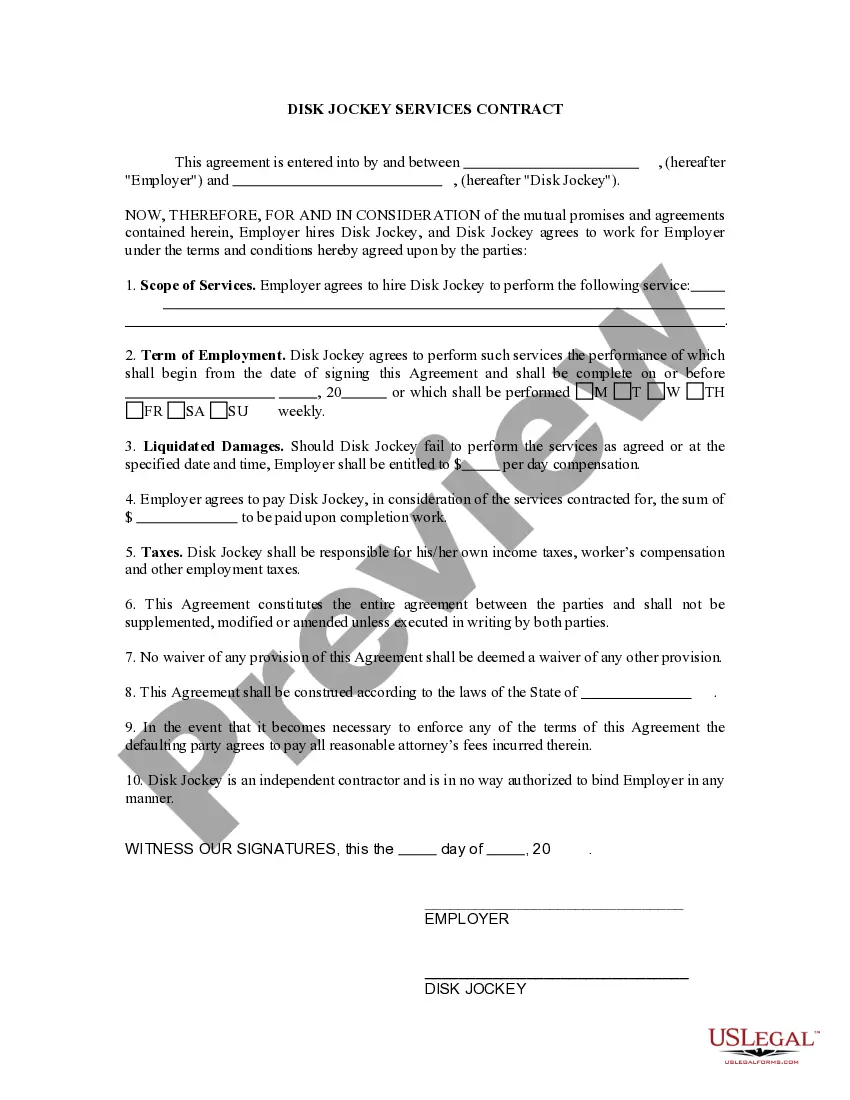
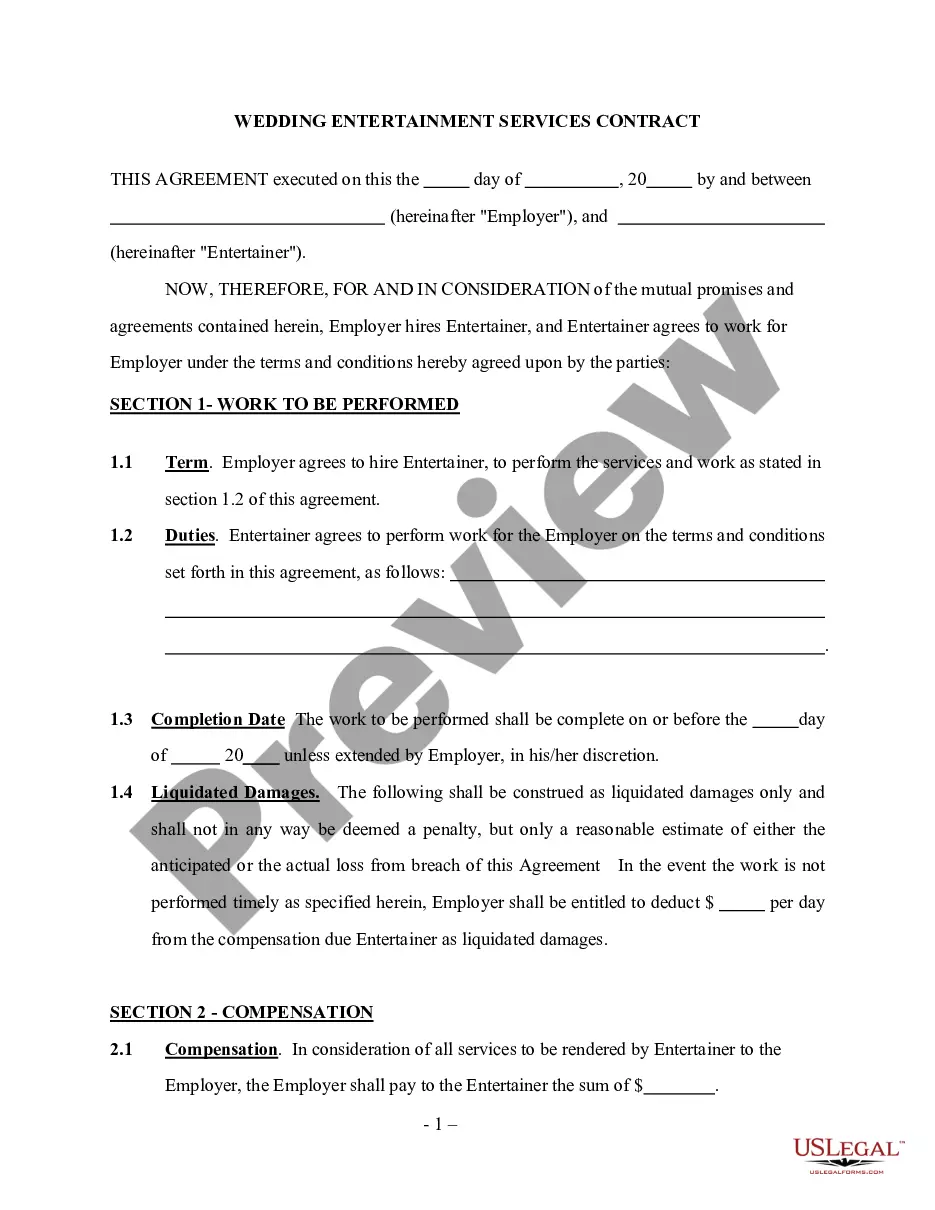
The Dancer Agreement - Self-Employed Independent Contractor is a legal document that formalizes the working relationship between an employer and a dancer as an independent contractor. It outlines the specific dance services to be provided, conditions for payment, and responsibilities regarding taxes. This agreement is essential for clarifying rights and obligations, distinguishing it from traditional employment contracts.
Key components of this form
- Parties Involved: Identification of both the employer and the dancer.
- Scope of Services: Detailed description of the dance services to be performed.
- Payment Terms: Conditions under which the dancer will be compensated.
- Tax Responsibilities: Explicit statement that the dancer is responsible for their own taxes.
- Governing Law: A clause specifying the state law that governs the agreement.
- Entire Agreement Clause: Confirmation that this document constitutes the complete agreement between the parties.
When this form is needed
This form should be used when an employer wishes to hire a dancer as an independent contractor for specific performances or services. It is suitable for one-time events, regular bookings, or special projects where formalizing the arrangement is necessary to ensure clarity around expectations and legal obligations.
Intended users of this form
- Employers looking to hire dancers for specific performances.
- Dancers seeking to establish their role as independent contractors.
- Event planners or entertainment companies organizing performances.
- Individuals who want to clarify their working relationship in dance-related services.
Instructions for completing this form
- Identify the parties by entering the names of the employer and dancer.
- Specify the scope of services the dancer will provide in the appropriate section.
- Outline payment terms, including rates and payment schedule.
- Include details such as the governing law state.
- Both parties should review the agreement and sign to formalize the contract.
Does this document require notarization?
This form does not typically require notarization unless specified by local law. However, having the agreement notarized can add an extra layer of authenticity and legal protection.
Get your form ready online
Our built-in tools help you complete, sign, share, and store your documents in one place.
Make edits, fill in missing information, and update formatting in US Legal Forms—just like you would in MS Word.
Download a copy, print it, send it by email, or mail it via USPS—whatever works best for your next step.
Sign and collect signatures with our SignNow integration. Send to multiple recipients, set reminders, and more. Go Premium to unlock E-Sign.
If this form requires notarization, complete it online through a secure video call—no need to meet a notary in person or wait for an appointment.
We protect your documents and personal data by following strict security and privacy standards.

Make edits, fill in missing information, and update formatting in US Legal Forms—just like you would in MS Word.

Download a copy, print it, send it by email, or mail it via USPS—whatever works best for your next step.

Sign and collect signatures with our SignNow integration. Send to multiple recipients, set reminders, and more. Go Premium to unlock E-Sign.

If this form requires notarization, complete it online through a secure video call—no need to meet a notary in person or wait for an appointment.

We protect your documents and personal data by following strict security and privacy standards.
Avoid these common issues
- Failing to specify the scope of services clearly.
- Not addressing tax responsibilities adequately.
- Leaving blank spaces in the agreement.
- Not signing the agreement or lacking both parties' signatures.
Why complete this form online
- Convenient access to a legally vetted template.
- Edit the form easily to suit your specific needs.
- Downloadable format allows for quick printing and sharing.
- Reduces the risk of legal issues by ensuring all essential clauses are included.
Legal use & context
- This agreement helps define the professional relationship between the dancer and employer.
- It ensures both parties understand their legal obligations, which is crucial for enforceability.
- Without a signed contract, disputes over terms and conditions may arise.
What to keep in mind
- A Dancer Agreement allows for a formalized working relationship as an independent contractor.
- Clearly detailing responsibilities and payment terms is essential for both parties.
- Using a reliable form helps prevent misunderstandings and legal disputes.
Looking for another form?


Form popularity
FAQ
The general rule is that an individual is an independent contractor if the payer has the right to control or direct only the result of the work and not what will be done and how it will be done. The earnings of a person who is working as an independent contractor are subject to Self-Employment Tax.
The glib answer is yes. Webster's defines tutor as a person employed to instruct another, esp. privately. California wage order 15 says a tutor may be considered a household employee, along with other staff such as maids.
If you're self-employed or a freelancer, you likely get paid as an independent contractor rather than an employee. The IRS defines an independent contractor as someone who performs work for someone else, while controlling the way in which the work is done.
In most cases of studio owners I've encountered, your teachers are considered employees, not independent contractors. However, the business of dance studios is a very diverse group when it comes to schedules and employee structures.
Simply put, being an independent contractor is one way to be self-employed. Being self-employed means that you earn money but don't work as an employee for someone else.An independent contractor is someone who provides a service on a contractual basis.
Teachers are independent contractors only if (a) you do not control or direct how they teach their classes, (b) if teaching yoga is outside of your yoga business, and (c) the teacher has an independent business that is the same as they work they do for you.
The earnings of a person who is working as an independent contractor are subject to Self-Employment Tax. If you are an independent contractor, you are self-employed. To find out what your tax obligations are, visit the Self-Employed Tax Center.
However, for the most part, under the Federal regulations (and most states including California), a crew member on a film or other similar type production should never be categorized as an independent contractor they are really employees and are subject to federal and state withholding (from their paychecks) as
For colleges and universities, the general rule is that instructors, adjunct faculty, and proctors are employees. Guest speakers and performers are independent contractors. Researchers and consultants must be determined on a case to case basis.