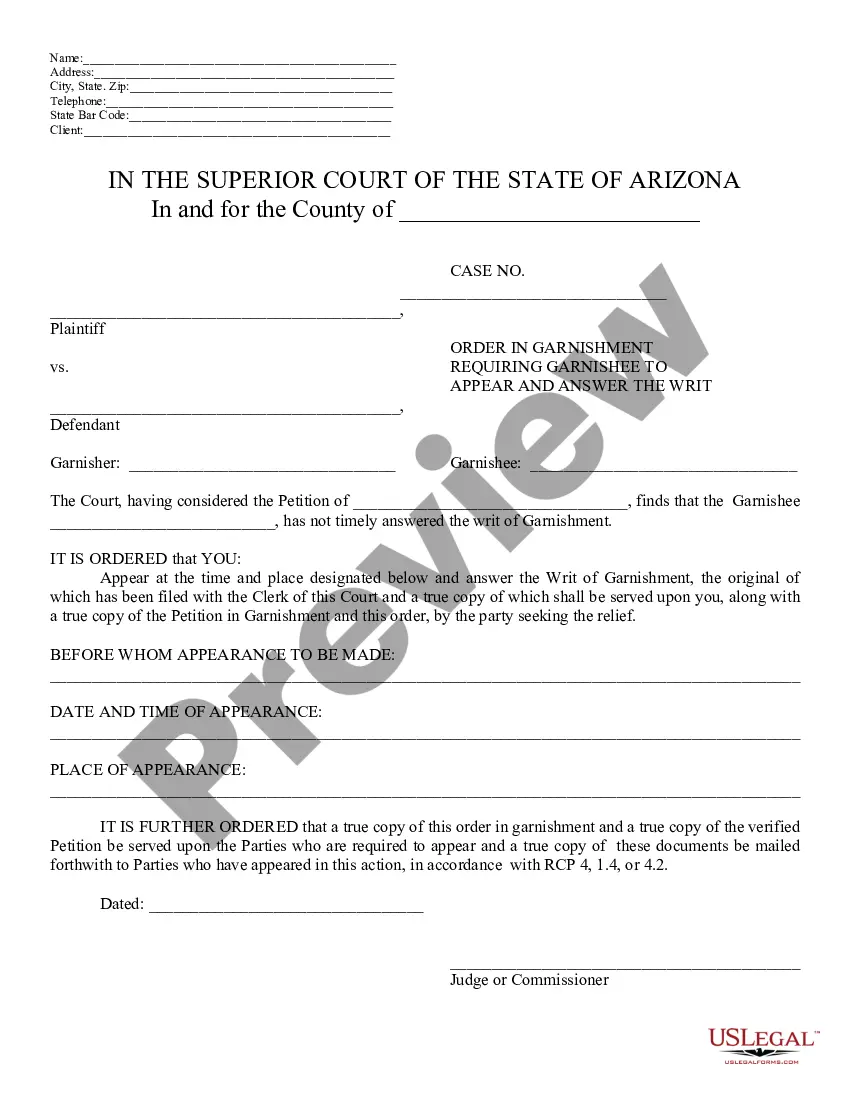
Arizona Order Requesting Garnishee to Appear and Answer
What is this form?
The Order Requesting Garnishee to Appear and Answer is a legal document issued by a court. It commands a garnisheeâthe third party holding funds or property of the defendantâto present themselves in court and respond to a writ of garnishment. This order is distinct from standard garnishment forms as it specifically compels attendance at a court hearing. It is typically drafted following a petition from the plaintiff and tailored to reflect the particulars of the case.
Main sections of this form
- Address and contact information of the applicant.
- Details of the court and case number.
- Identification of the parties involved, including plaintiff, defendant, and garnishee.
- Instructions for the garnishee on when and where to appear.
- Signature section for the judge or commissioner issuing the order.
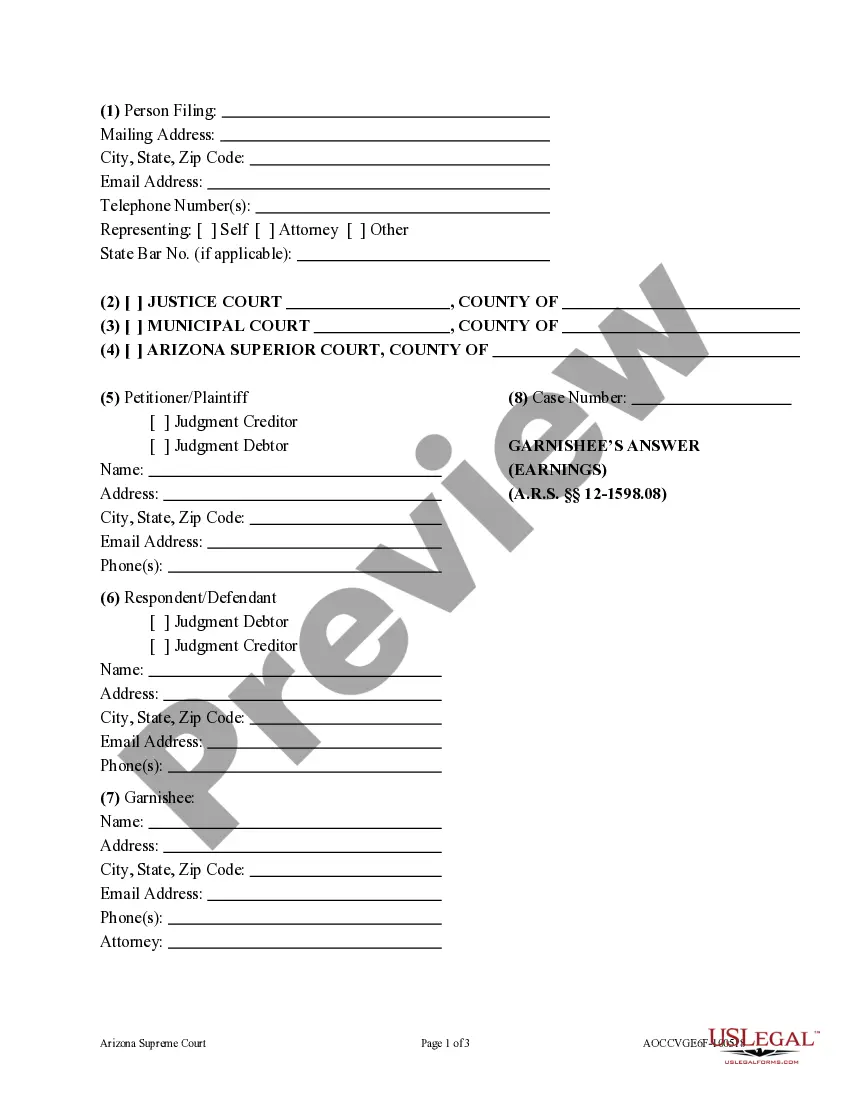
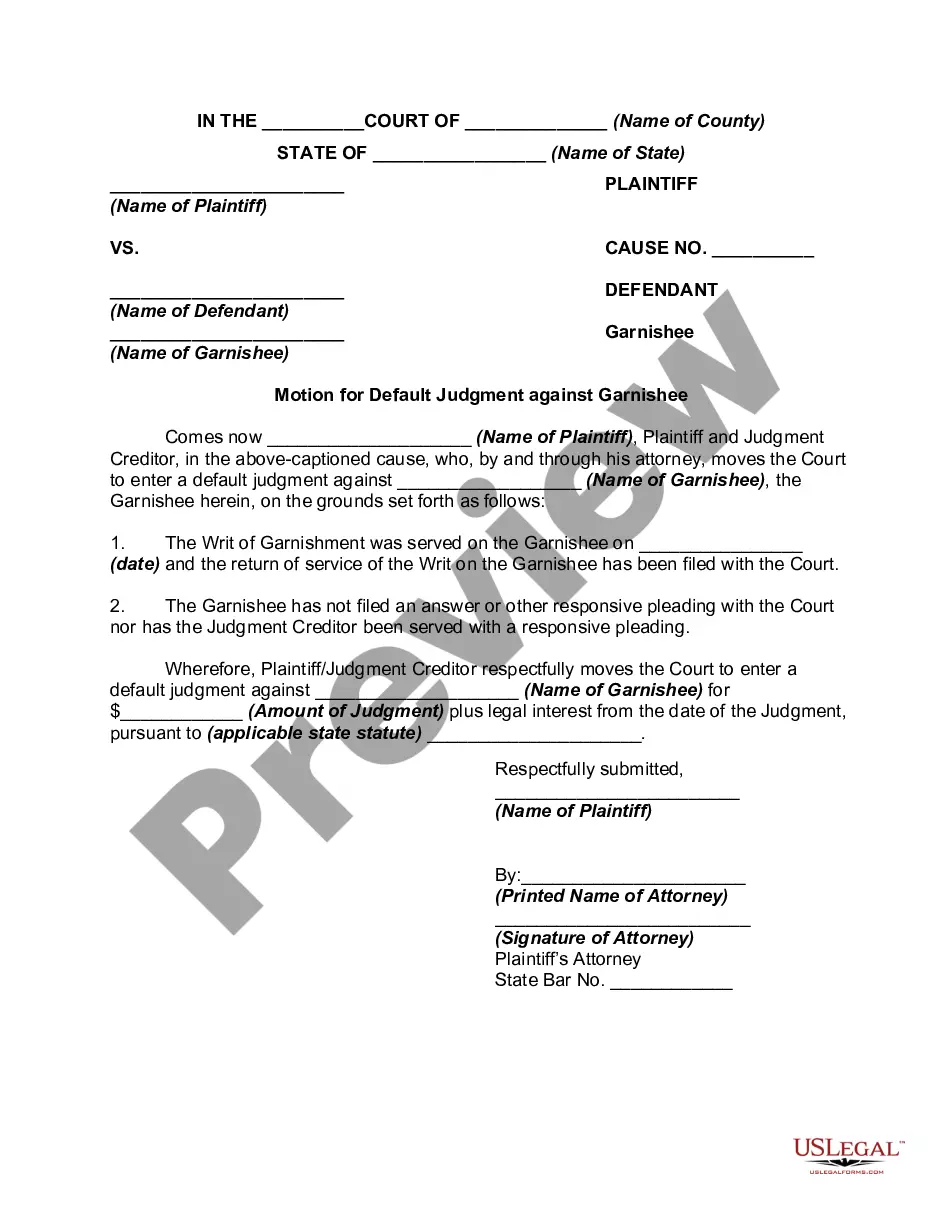
Situations where this form applies
This form should be used when a plaintiff has filed a writ of garnishment, and the garnishee has failed to respond in a timely manner. It is essential to ensure that the garnishee is legally compelled to come before the court and disclose any information related to the garnishment in order to facilitate appropriate collection actions.
Who can use this document
- Plaintiffs seeking to enforce a judgment against a defendant's assets held by a third party.
- Attorneys representing clients in garnishment proceedings.
- Any party who needs to ensure that a garnishee appears in court to answer a garnishment request.
Instructions for completing this form
- Enter the complete address, city, state, and zip code of the party requesting the order.
- Fill in the case number and names of the plaintiff and defendant.
- Specify the garnishee's name and provide details about their failure to respond to the writ.
- Indicate the date, time, and place where the garnishee must appear in court.
- Sign and date the order in the designated section for the judge or commissioner.
Does this form need to be notarized?
This form does not typically require notarization unless specified by local law. However, it's advisable to check local regulations to confirm any certification needs before submission.
Get your form ready online
Our built-in tools help you complete, sign, share, and store your documents in one place.
Make edits, fill in missing information, and update formatting in US Legal Forms—just like you would in MS Word.
Download a copy, print it, send it by email, or mail it via USPS—whatever works best for your next step.
Sign and collect signatures with our SignNow integration. Send to multiple recipients, set reminders, and more. Go Premium to unlock E-Sign.
If this form requires notarization, complete it online through a secure video call—no need to meet a notary in person or wait for an appointment.
We protect your documents and personal data by following strict security and privacy standards.

Make edits, fill in missing information, and update formatting in US Legal Forms—just like you would in MS Word.

Download a copy, print it, send it by email, or mail it via USPS—whatever works best for your next step.

Sign and collect signatures with our SignNow integration. Send to multiple recipients, set reminders, and more. Go Premium to unlock E-Sign.

If this form requires notarization, complete it online through a secure video call—no need to meet a notary in person or wait for an appointment.

We protect your documents and personal data by following strict security and privacy standards.
Typical mistakes to avoid
- Neglecting to provide accurate details about the garnishee, leading to service issues.
- Forgetting to sign the order before submission to the court.
- Ignoring local court rules regarding filing and serving the order.
- Failing to inform all parties involved about the court appearance, as required.
Advantages of online completion
- Convenience of downloading and filling the form at your own pace.
- Editable format allows customization to fit your specific case needs.
- Access to attorney-drafted templates ensures reliability and compliance with legal standards.
Looking for another form?





Form popularity
FAQ
An Arizona Order Requesting Garnishee to Appear and Answer is a court-issued order that commands the garnishee—the third party that holds funds or property belonging to the defendant—to appear in court and answer a writ of garnishment. It is drafted after a plaintiff files a petition and tailored to the case, and it directs the garnishee to attend a hearing.
It should be used after a plaintiff has filed a writ of garnishment and the garnishee has not responded within the required timeframe. The order compels attendance before the court and directs the garnishee to disclose information related to the garnishment to support appropriate collection actions. This helps move the process forward when the garnishee's prior response is missing or late.
The form’s main sections include: the applicant’s address and contact information; the court and case number; the identities of the plaintiff, defendant, and garnishee; instructions for when and where the garnishee must appear; and a signature line for the judge or commissioner issuing the order.
Plaintiffs seeking to enforce a judgment against assets held by a third party, attorneys representing clients in garnishment proceedings, or any party who needs to ensure the garnishee appears in court to answer a garnishment request. This form helps initiate the court appearance necessary to obtain disclosures needed to proceed with collection.
After service of the order, the garnishee must come to the specified court hearing with information about funds or property in their possession related to the judgment. The hearing allows the court to obtain needed disclosures to determine how to proceed with collection.
This order uniquely compels the garnishee’s attendance at a court hearing to answer the writ, rather than merely issuing a writ for funds, and it includes targeted instructions for showing up. It is tailored to the particular case after a petition, with a judge’s signature validating the order.