Self-Employed Route Sales Contractor Agreement
What this document covers
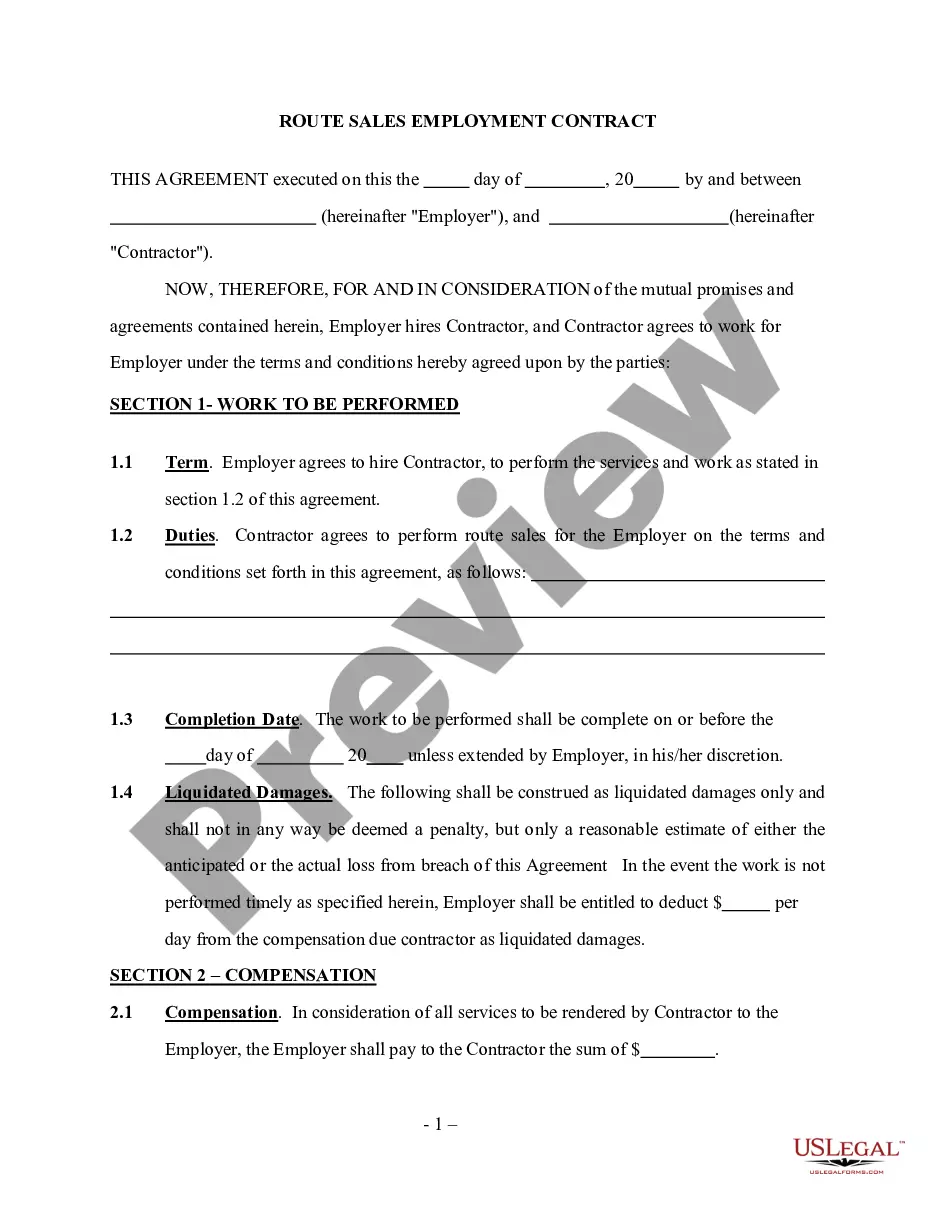
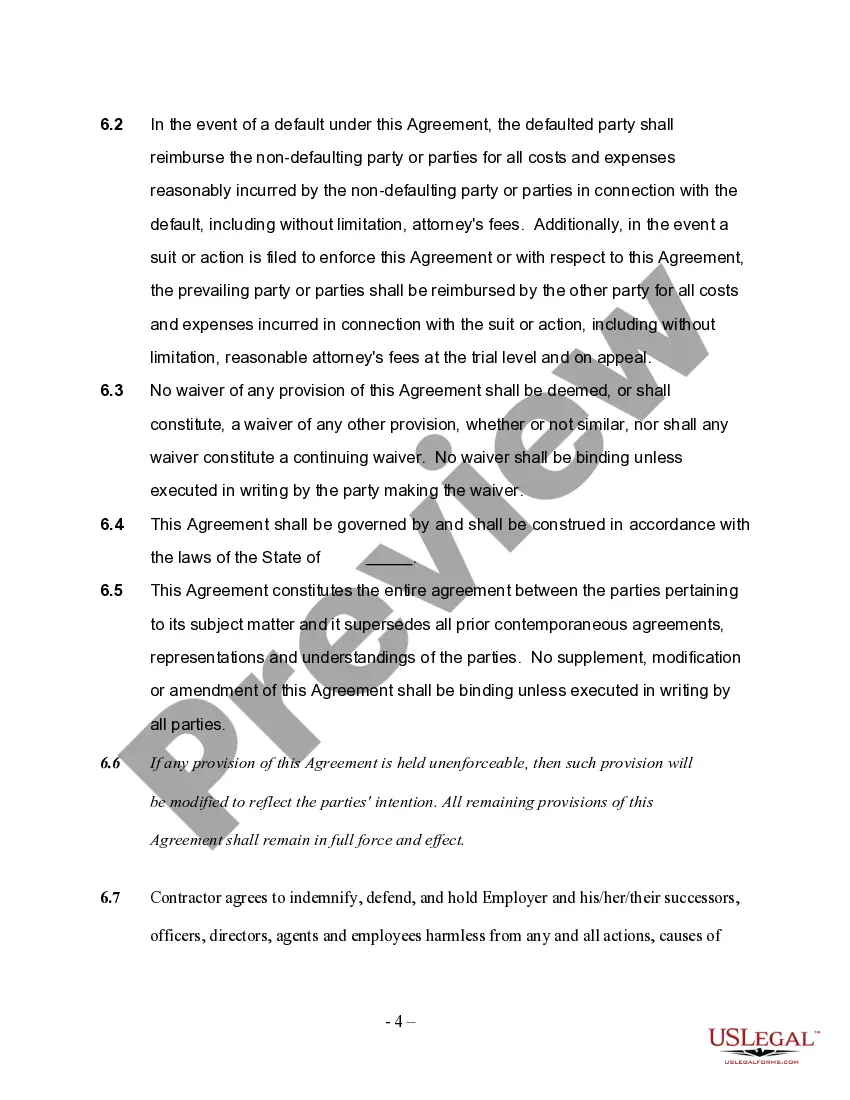
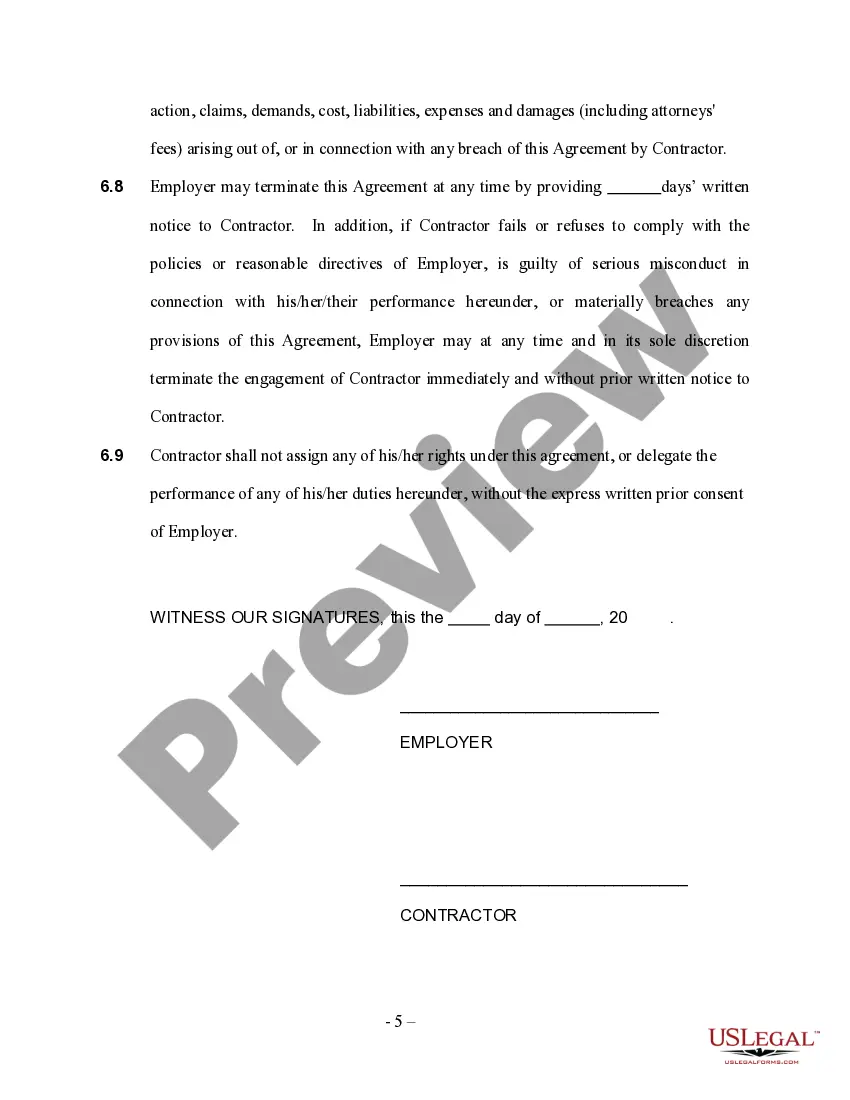
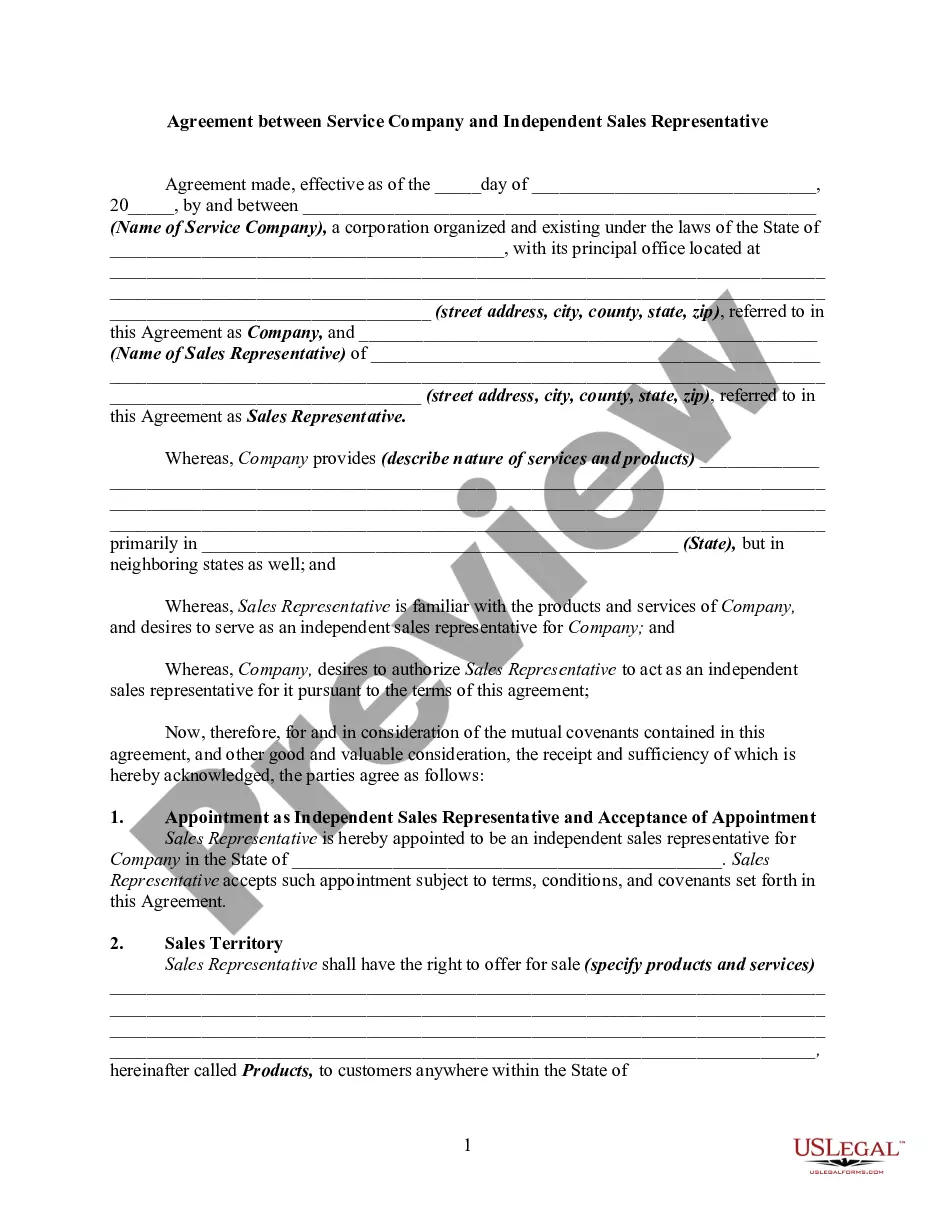
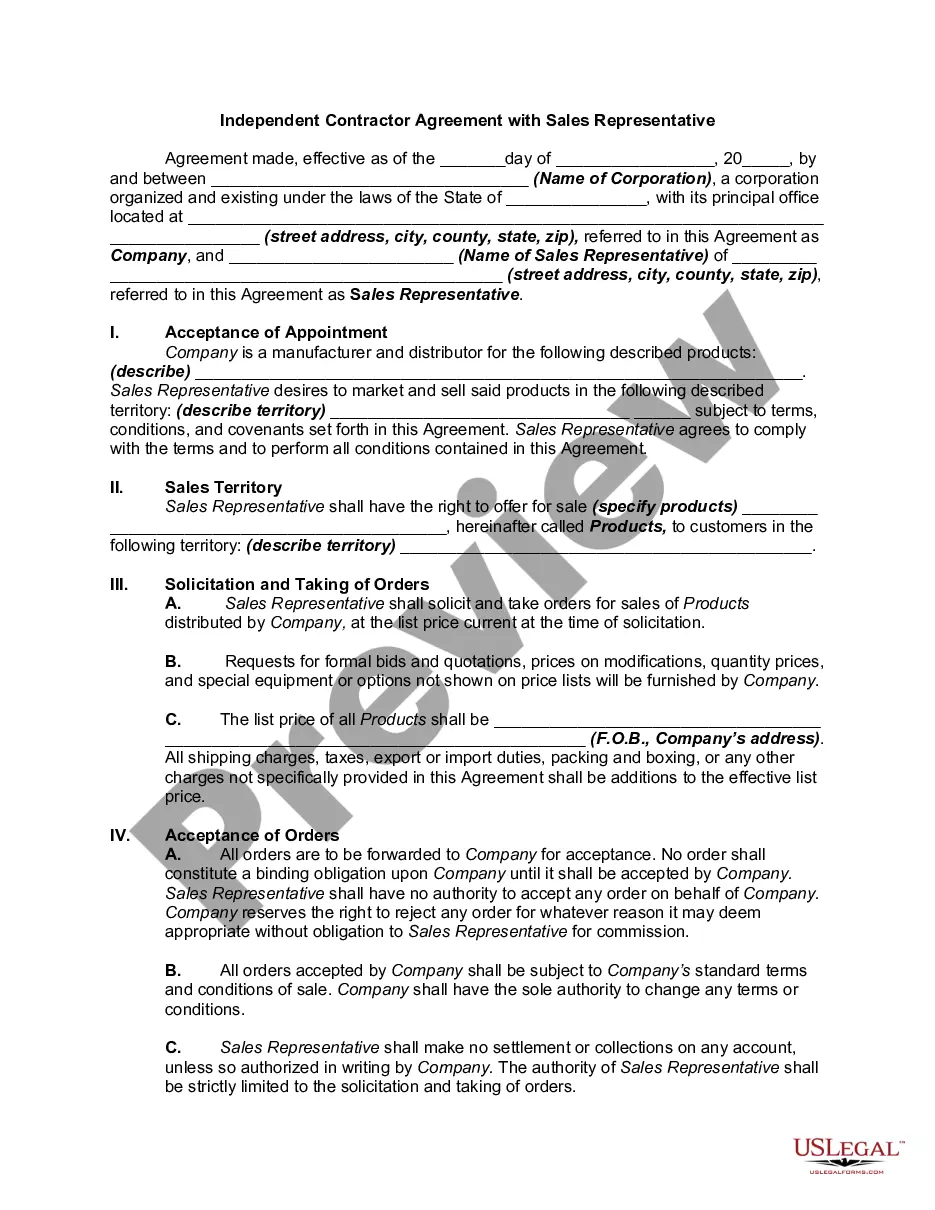
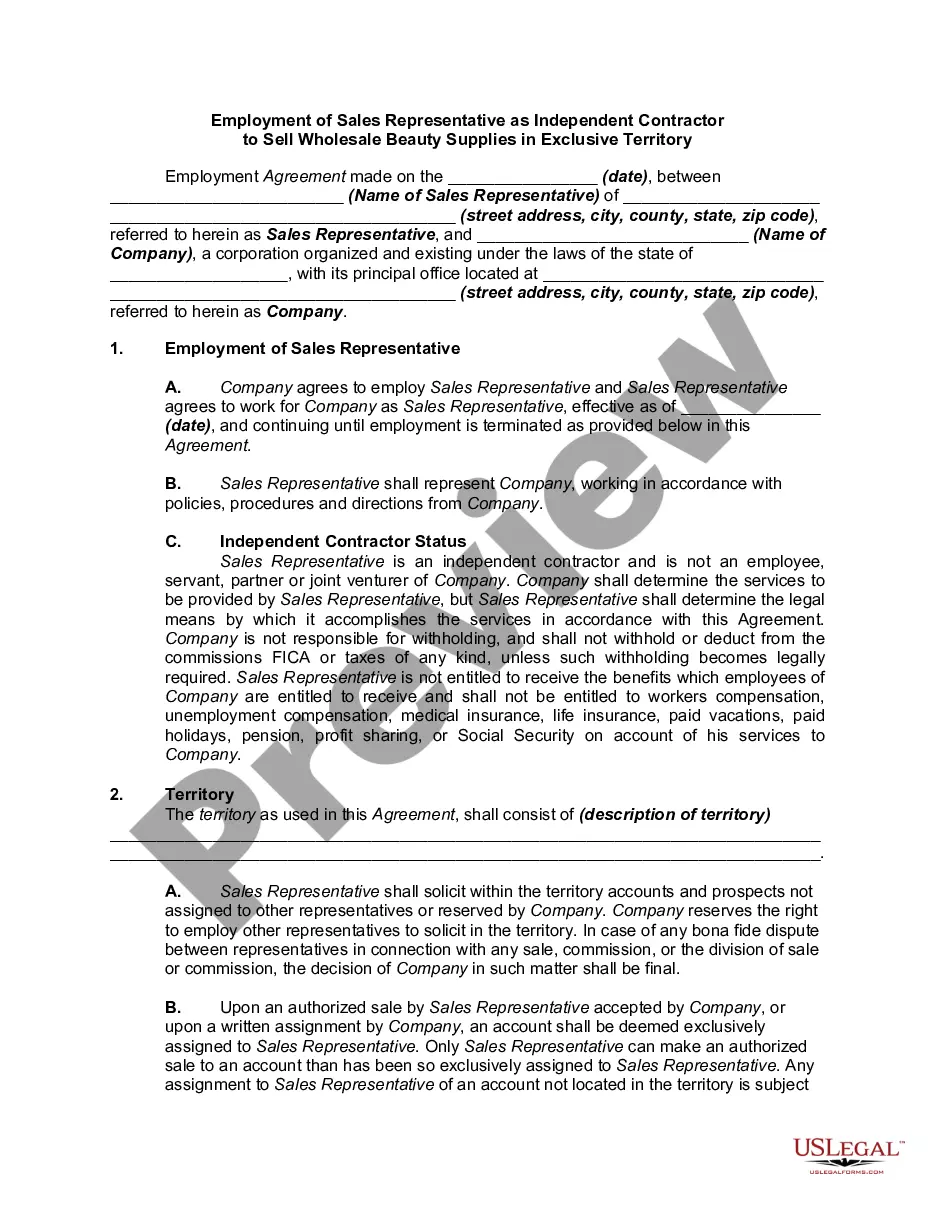
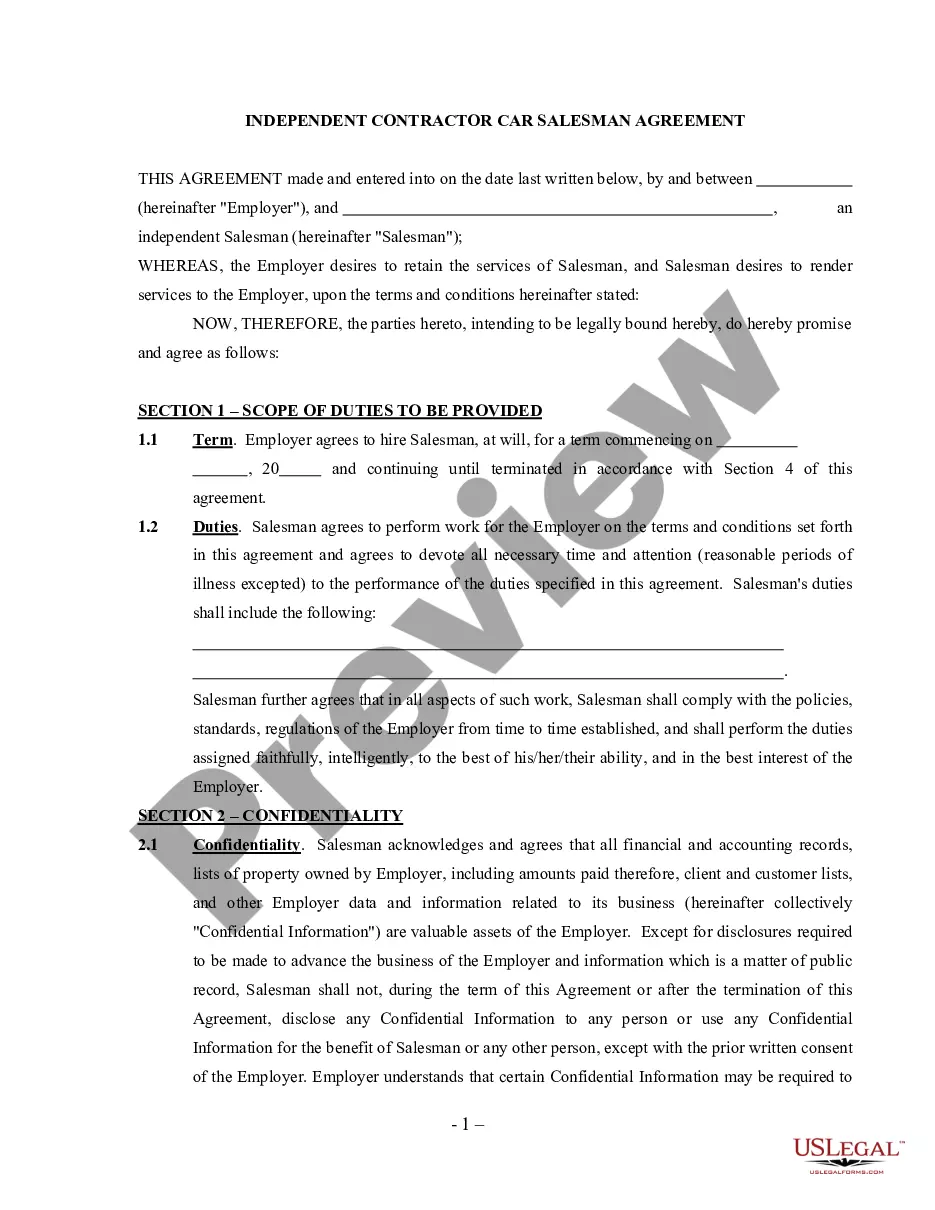
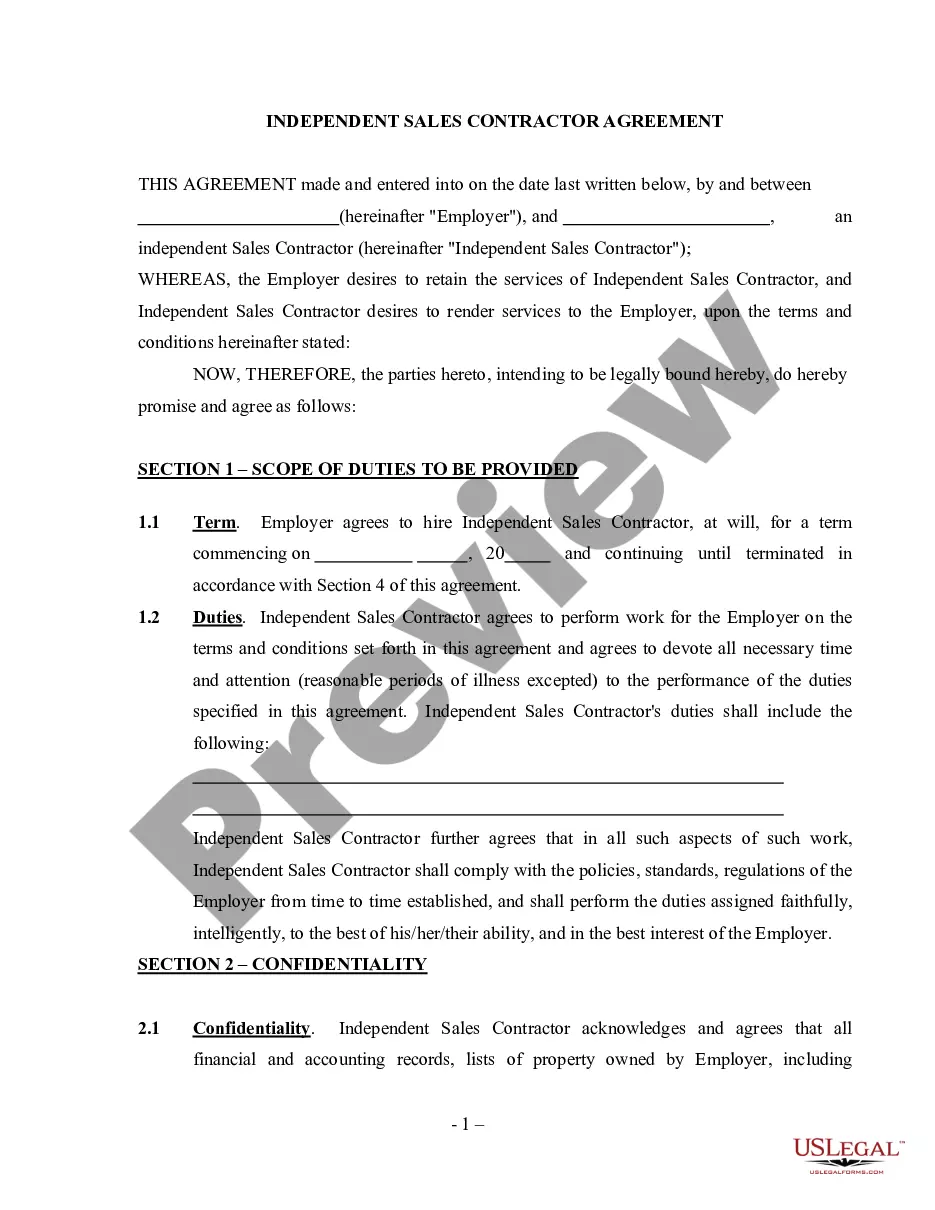
The Self-Employed Route Sales Contractor Agreement establishes a working relationship between a business, such as a newspaper or vending company, and an independent contractor responsible for route sales. This agreement outlines the terms of service, the independent contractor's status, and insurance responsibilities, differentiating it from other employment forms by emphasizing the contractor's autonomy and lack of employee benefits.
Key components of this form
- Work to be performed: Details the tasks and scope of work expected from the contractor.
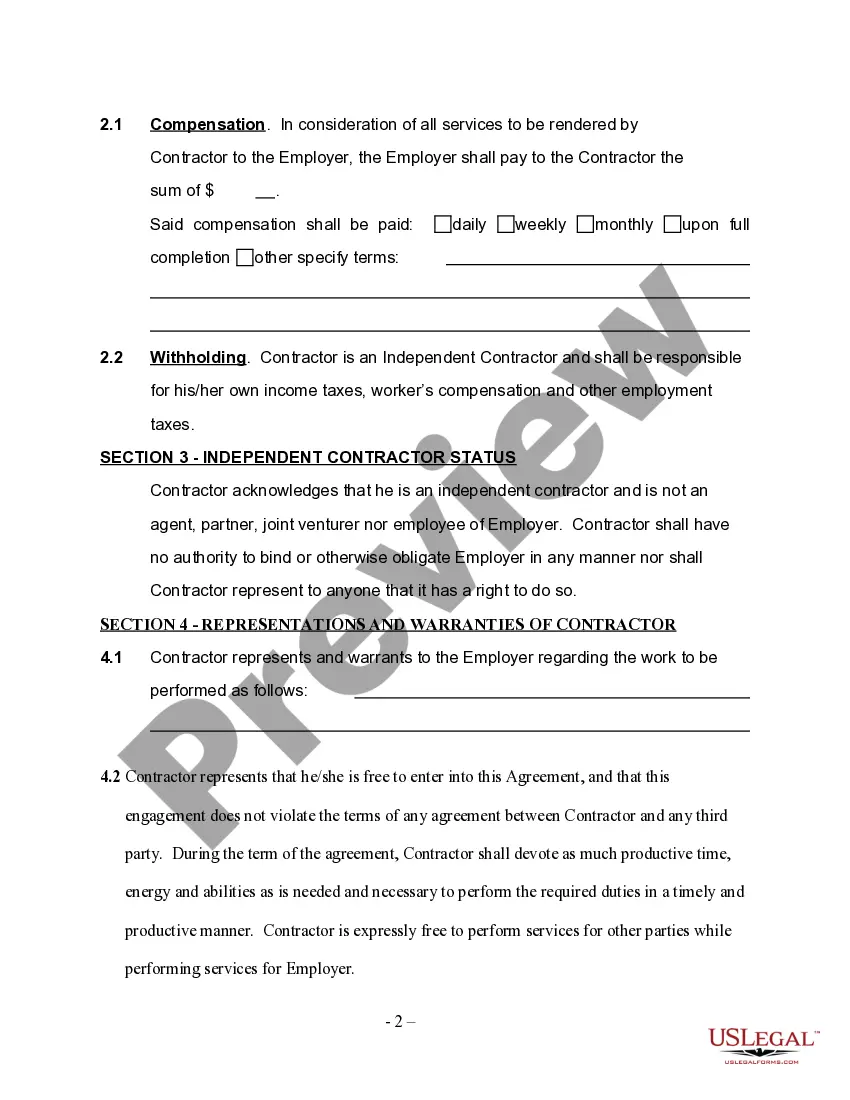
- Independent contractor status: Clarifies that the contractor is not an employee and has no authority to engage the company without permission.
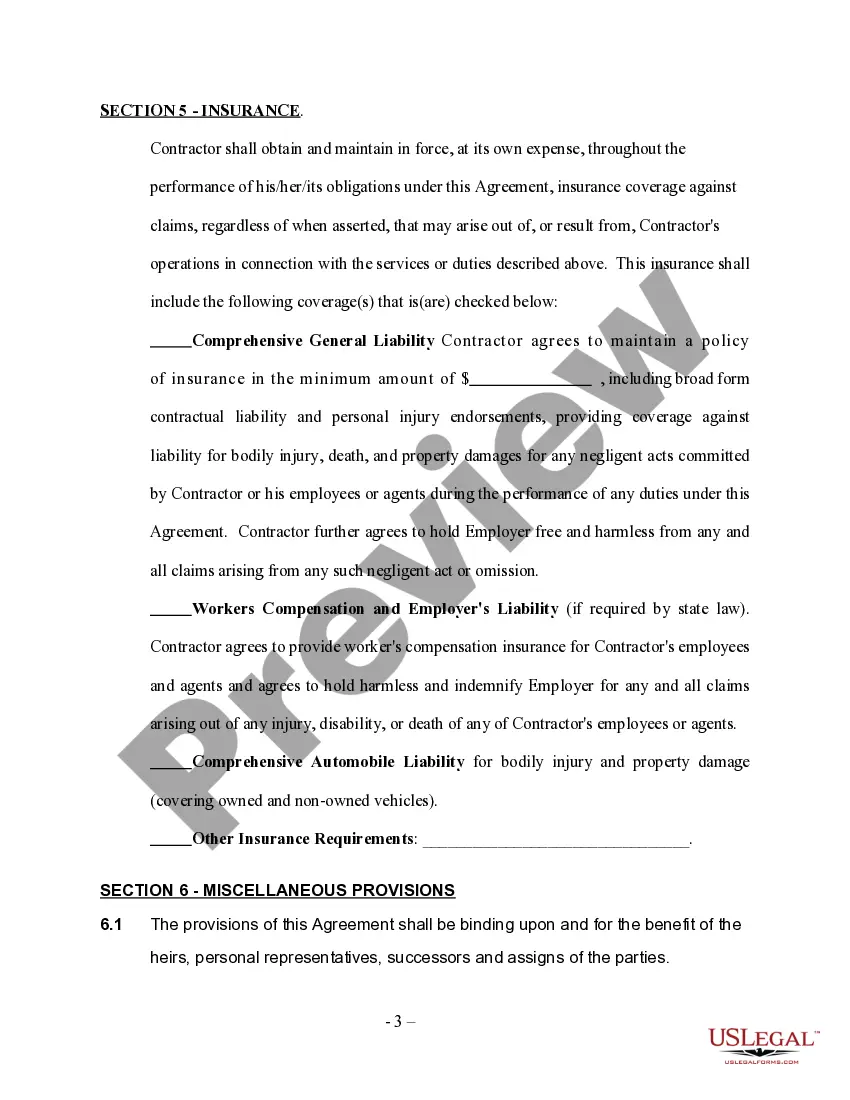
- Insurance requirements: Specifies that the contractor must obtain and maintain liability insurance to cover potential claims.
- Miscellaneous provisions: Includes clauses regarding the binding effect of the agreement and the handling of defaults and legal costs.
When this form is needed
This form should be used when a business wishes to hire an independent contractor for route sales. It is particularly useful when the nature of the work requires a clear delineation between contractor responsibilities and business liabilities, as well as ensuring proper insurance coverage and legal protections for both parties involved.
Who can use this document
- Businesses that need to contract independent sales representatives for route sales.
- Independent contractors seeking to formalize their relationship with businesses.
- Vending, distribution, or similar services that operate on a route basis.
How to complete this form
- Identify the parties involved: include names and addresses of the business and contractor.
- Define the scope of work: specify the services to be performed under the agreement.
- Enter the term of the agreement: state the duration of the contract.
- Select appropriate insurance coverage: check off the types of insurance the contractor will maintain.
- Sign and date the agreement: ensure both parties sign to make the agreement legally binding.
Notarization requirements for this form
Notarization is generally not required for this form. However, certain states or situations might demand it. You can complete notarization online through US Legal Forms, powered by Notarize, using a verified video call available anytime.
Get your form ready online
Our built-in tools help you complete, sign, share, and store your documents in one place.
Make edits, fill in missing information, and update formatting in US Legal Forms—just like you would in MS Word.
Download a copy, print it, send it by email, or mail it via USPS—whatever works best for your next step.
Sign and collect signatures with our SignNow integration. Send to multiple recipients, set reminders, and more. Go Premium to unlock E-Sign.
If this form requires notarization, complete it online through a secure video call—no need to meet a notary in person or wait for an appointment.
We protect your documents and personal data by following strict security and privacy standards.

Make edits, fill in missing information, and update formatting in US Legal Forms—just like you would in MS Word.

Download a copy, print it, send it by email, or mail it via USPS—whatever works best for your next step.

Sign and collect signatures with our SignNow integration. Send to multiple recipients, set reminders, and more. Go Premium to unlock E-Sign.

If this form requires notarization, complete it online through a secure video call—no need to meet a notary in person or wait for an appointment.

We protect your documents and personal data by following strict security and privacy standards.
Typical mistakes to avoid
- Failing to clearly outline the scope of work, leading to misunderstandings.
- Not specifying insurance coverage requirements, which can expose both parties to liability.
- Confusing independent contractor status with employee status, which may lead to legal complications.
Why use this form online
- Convenience: download and complete the form at your own pace.
- Editability: customize the agreement to suit specific business needs.
- Reliability: ensure you have a legally sound document drafted by licensed attorneys.
Looking for another form?






Form popularity
FAQ
Form W-9. The IRS requires contractors to fill out a Form W-9, request for Taxpayer Identification Number and Certification, which you should keep on file for at least four years after the hiring. This form is used to request the correct name and Taxpayer Identification Number, or TIN, of the worker or their entity.
Length of Contract. Each client contractor agreement should outline the length of the working relationship. Project Description. Payment Terms. Nondisclosure Terms. Rights and Responsibilities. Termination Clause. Disclaimers.
Terms. This is the first section of any agreement or contract and states the names and locations of the parties involved. Responsibilities & Deliverables. Payment-Related Details. Confidentiality Clause. Contract Termination. Choice of Law.
Independent contractors are self-employed workers who provide services for an organisation under a contract for services. Independent contractors are not employees and are typically highly skilled, providing their clients with specialist skills or additional capacity on an as needed basis.
Name of contractor and contact information. Name of homeowner and contact information. Describe property in legal terms. List attachments to the contract. The cost. Failure of homeowner to obtain financing. Description of the work and the completion date. Right to stop the project.
Get it in writing. Keep it simple. Deal with the right person. Identify each party correctly. Spell out all of the details. Specify payment obligations. Agree on circumstances that terminate the contract. Agree on a way to resolve disputes.
An Independent Contractor Agreement should contain all of these basic terms: Description of the services to be provided.Explanation of what the hiring party will provide or not provide, such as equipment, for the independent contractor to use. Ownership of work product if that is relevant to the work being performed.
Identifying/Contact Information. Title and Description of the Project. Projected Timeline and Completion Date. Cost Estimate and Payment Schedule. Stop Work Clause and Stop Payment Clause. Act of God Clause. Change Order Agreement. Warranty.
An independent contractor agreement, also known as a '1099 agreement', is a contract between a client willing to pay for the performance of services by a contractor.In most cases, the contractor is paid on a per-job basis and not by the hour, unless, the contractor is a lawyer, accountant, or equivalent.