Cooperative Lease Agreement
About this form
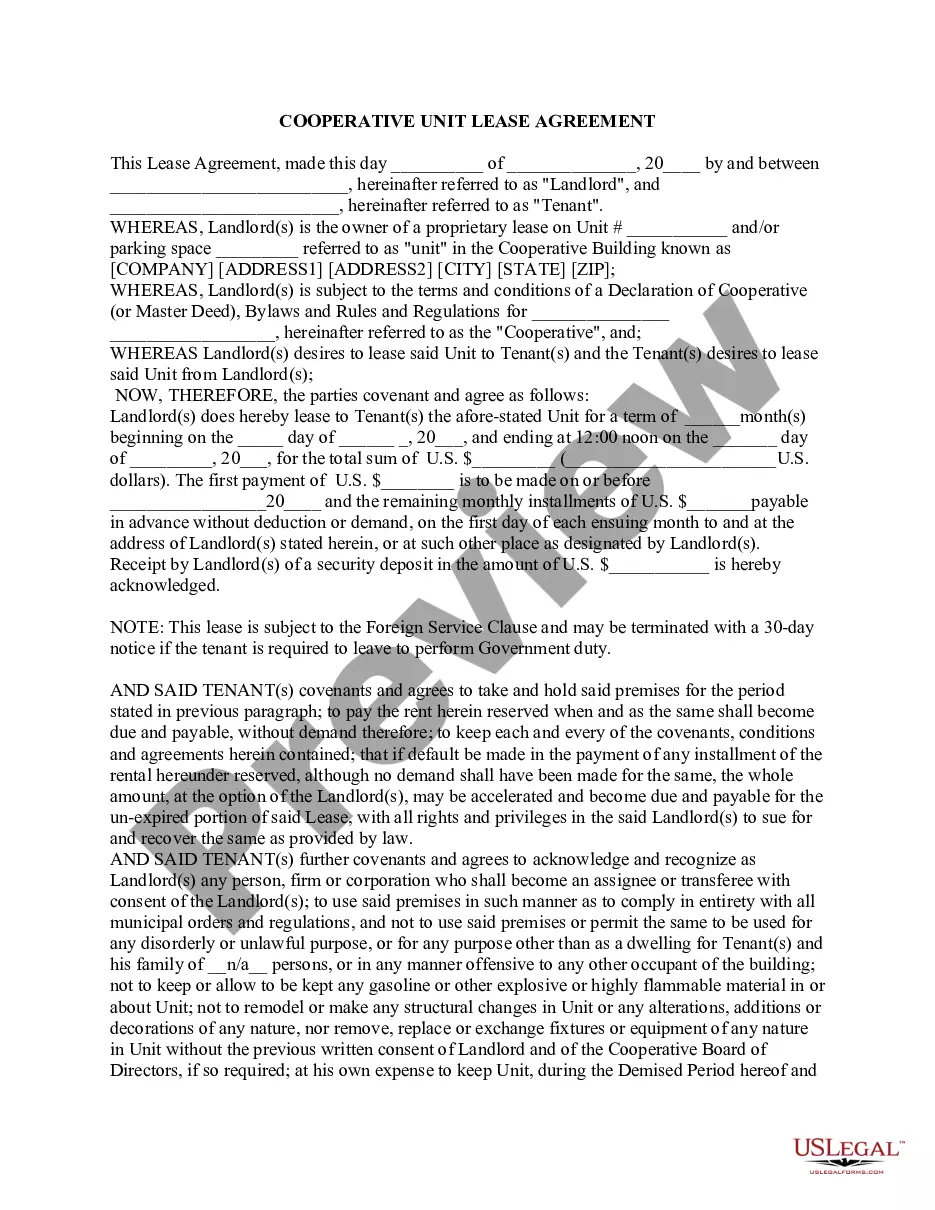
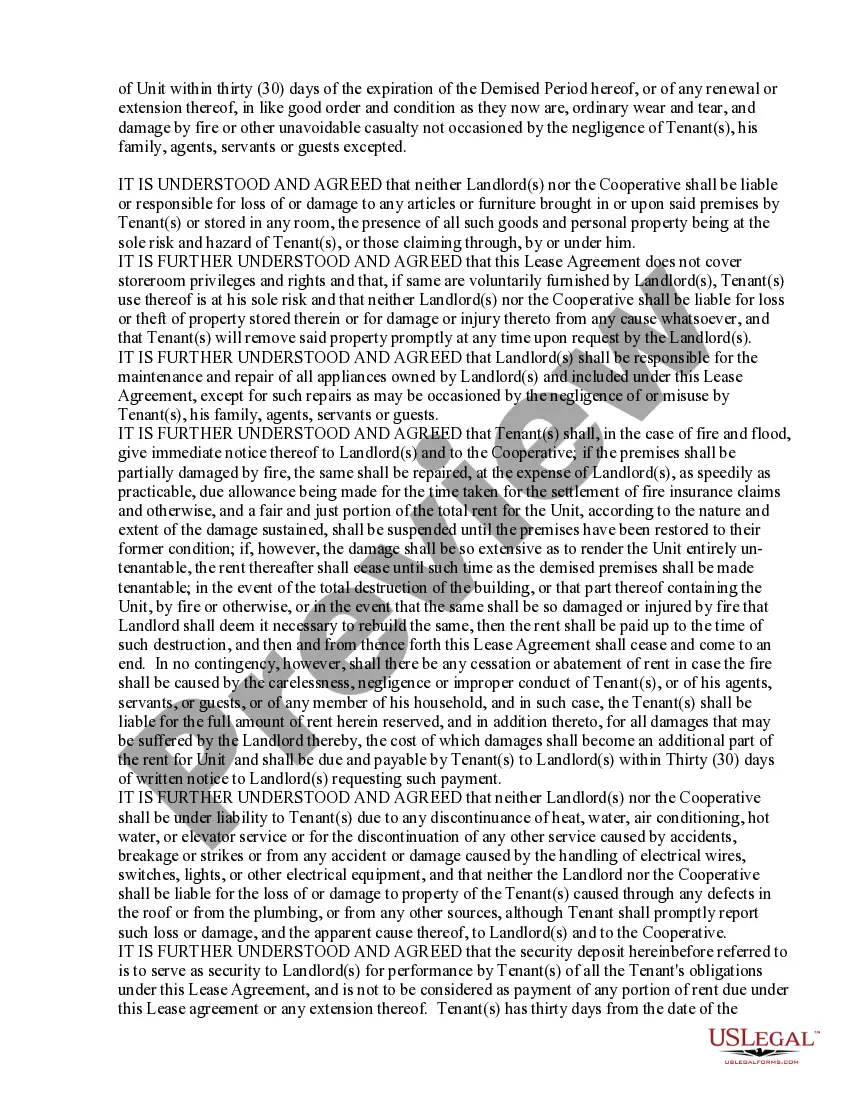
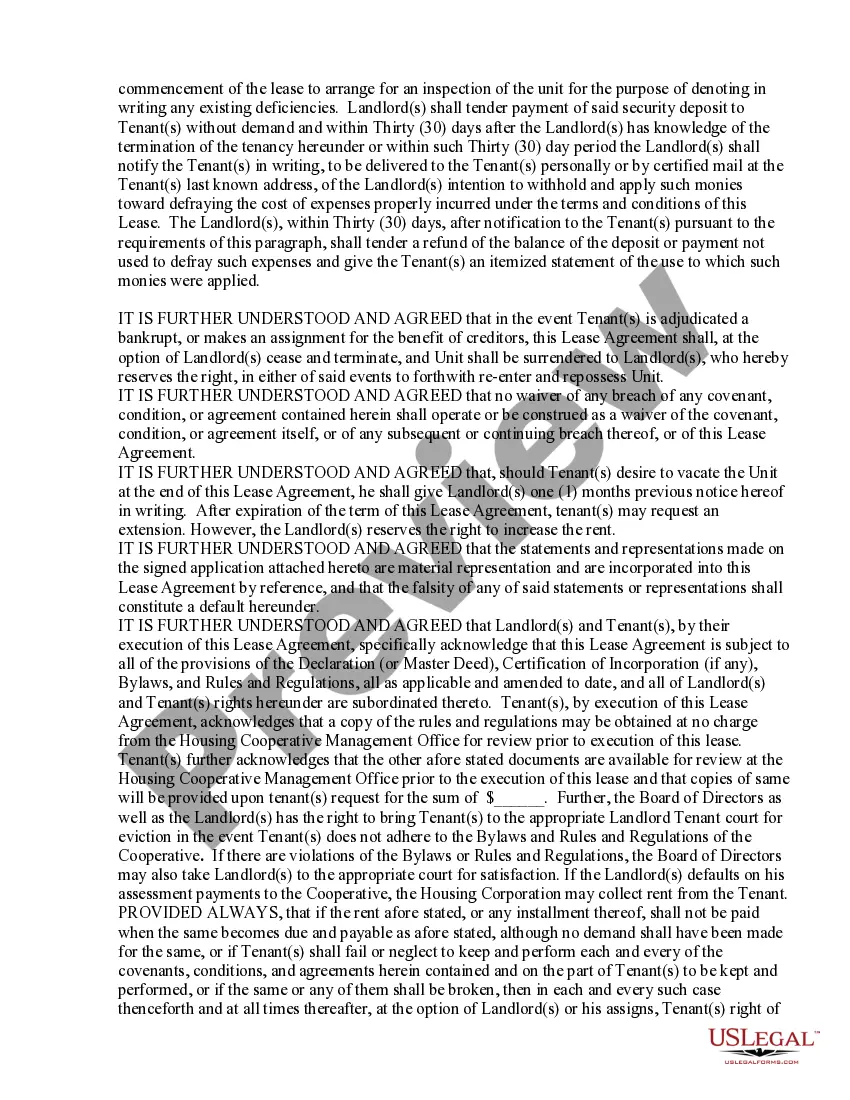
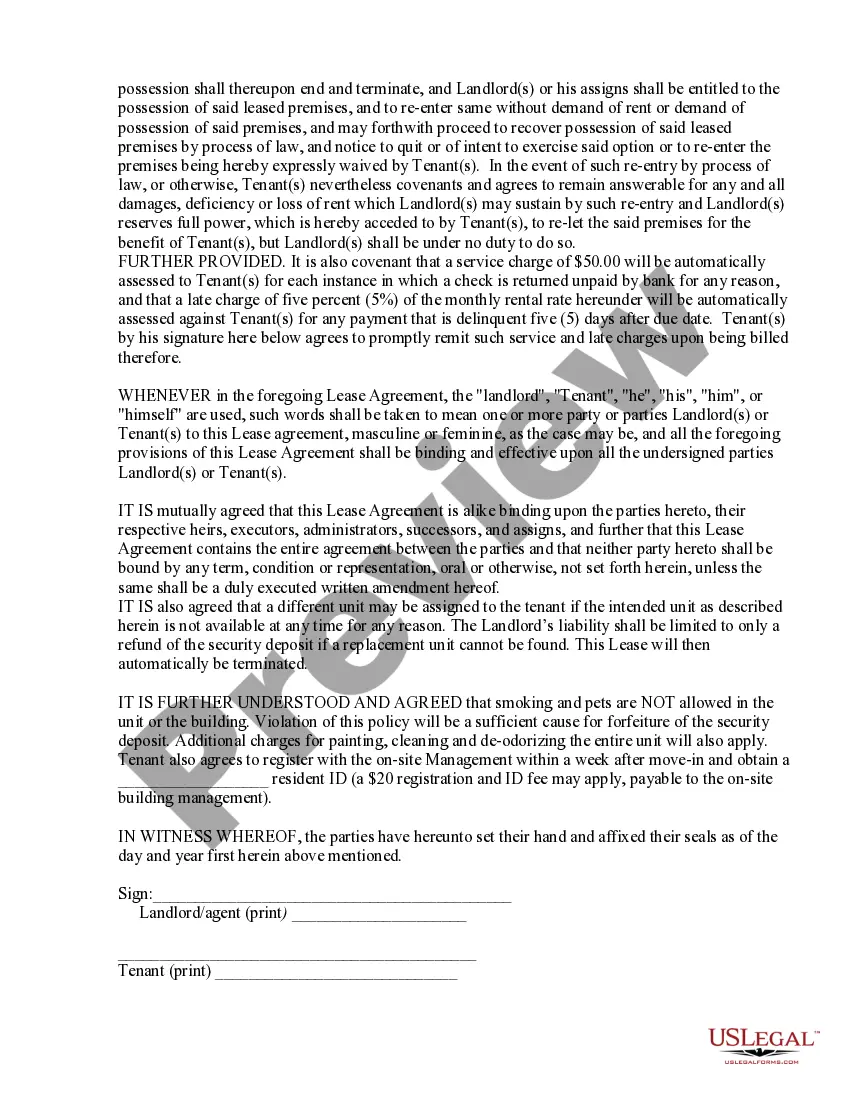
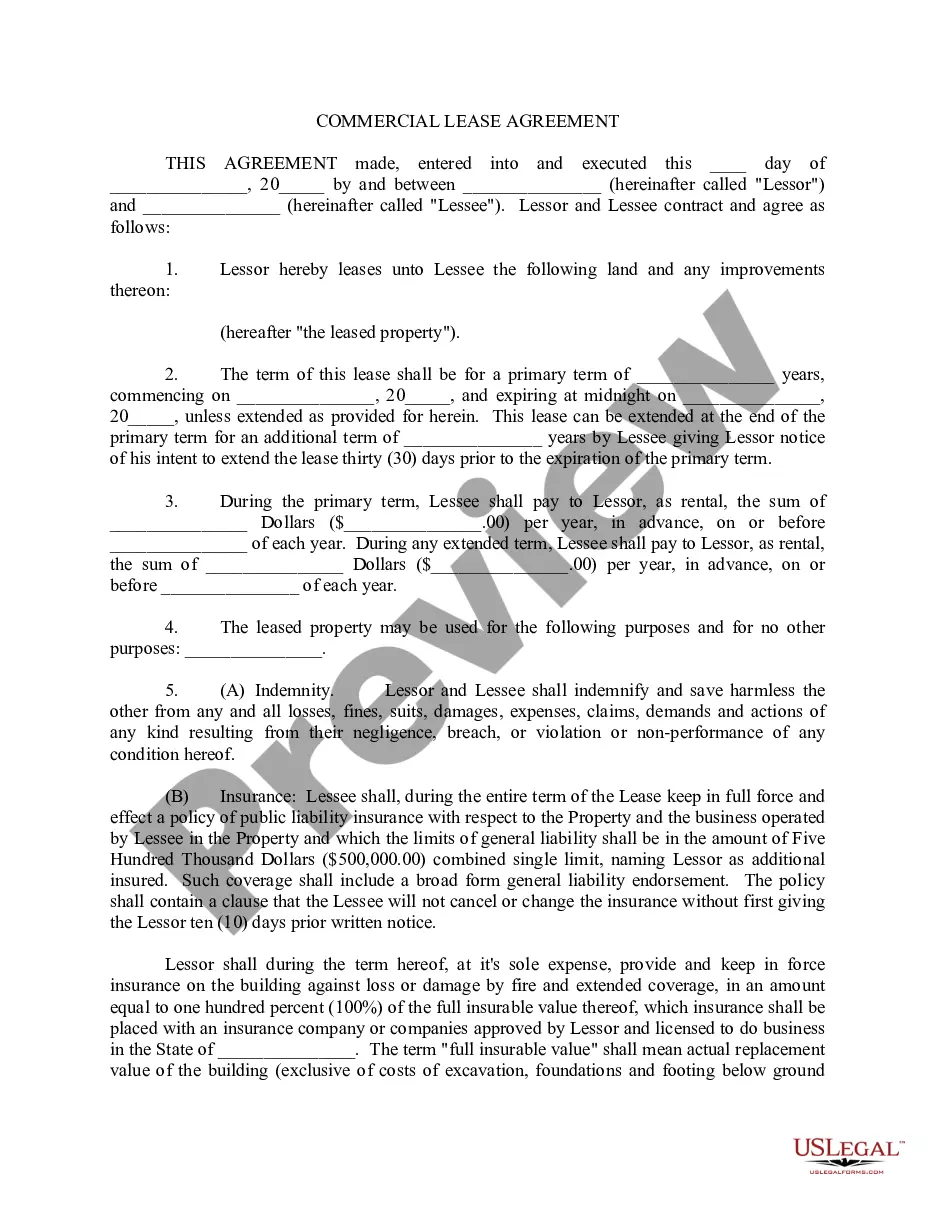
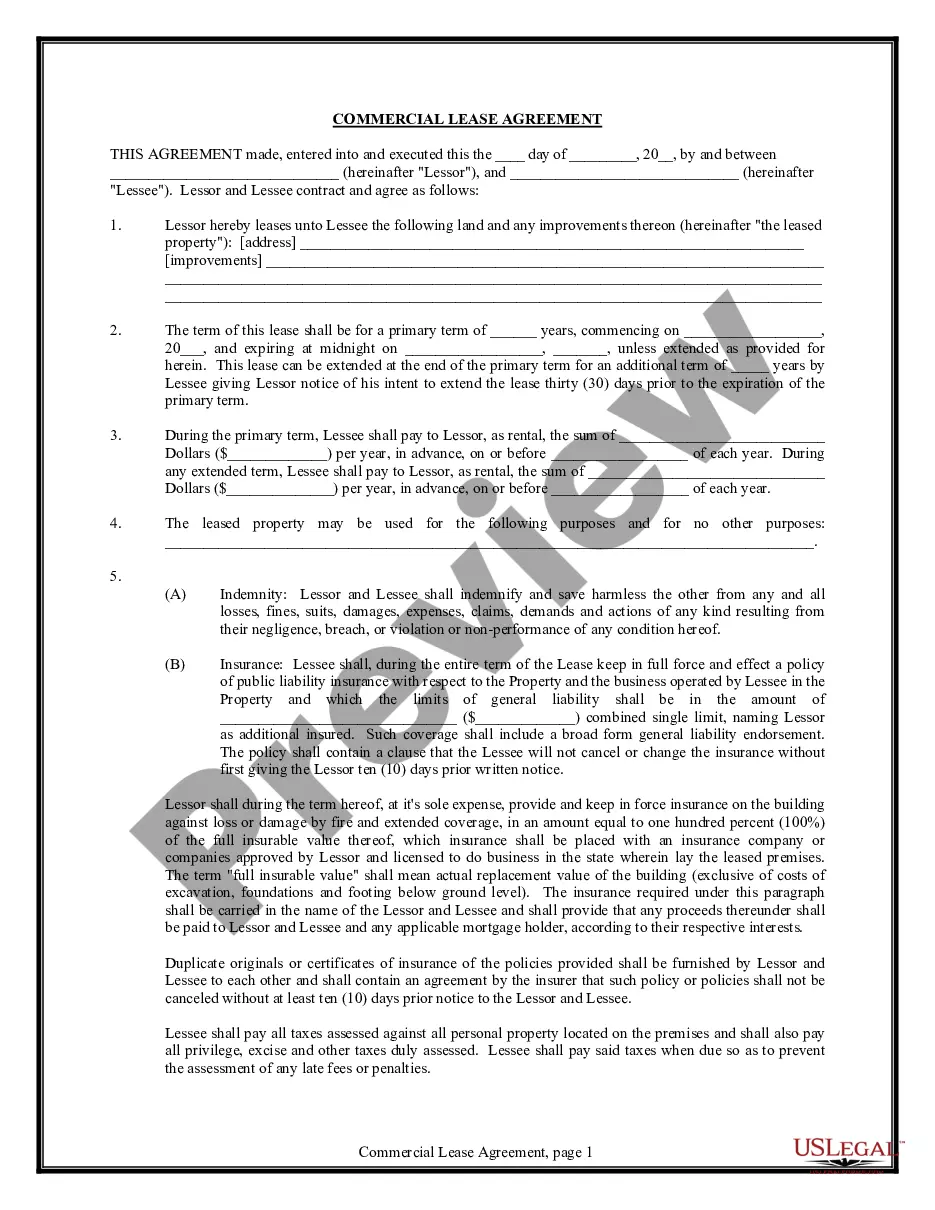
The Cooperative Lease Agreement is a legally binding document between a landlord and tenant for leasing a unit within a cooperative housing structure. It outlines the specific terms and conditions under which the tenant can occupy the space, including rental payments, security deposits, and responsibilities of both parties. This form is different from a standard residential lease due to its emphasis on the cooperative's rules and management structure.
Key components of this form
- Identification of the parties: Names and addresses of the landlord and tenant.
- Property description: Details about the unit and parking space being leased.
- Lease term: Specifies the duration of the lease and the rental amount.
- Payment terms: Outlines rental payment amounts and due dates.
- Security deposit details: Amount and conditions under which it may be withheld.
- Rules and regulations compliance: Confirmation that tenants must abide by the cooperative's bylaws.

Common use cases
This form should be used when a landlord in a cooperative housing arrangement wishes to lease a unit to a tenant. It is particularly useful in contexts where shared ownership and community rules play a significant role in living conditions, such as when specific conditions of occupancy must be established and formalized.
Who can use this document
This form is intended for:
- Landlords or property owners who manage cooperative rental units.
- Individuals looking to rent a unit within a cooperative building.
- Real estate agents or property managers facilitating cooperative rentals.
How to complete this form
- Identify the parties: Fill in the names and addresses of the landlord and tenant.
- Specify the property: Clearly describe the leased unit and any associated parking space.
- Enter lease details: Indicate the start and end dates of the lease along with the total rental amount.
- Document payment terms: Detail the rental payment schedule and deposit information.
- Review rules: Ensure all parties understand the cooperative's bylaws and regulations before signing.
Notarization guidance
Notarization is generally not required for this form. However, certain states or situations might demand it. You can complete notarization online through US Legal Forms, powered by Notarize, using a verified video call available anytime.
Get your form ready online
Our built-in tools help you complete, sign, share, and store your documents in one place.
Make edits, fill in missing information, and update formatting in US Legal Forms—just like you would in MS Word.
Download a copy, print it, send it by email, or mail it via USPS—whatever works best for your next step.
Sign and collect signatures with our SignNow integration. Send to multiple recipients, set reminders, and more. Go Premium to unlock E-Sign.
If this form requires notarization, complete it online through a secure video call—no need to meet a notary in person or wait for an appointment.
We protect your documents and personal data by following strict security and privacy standards.

Make edits, fill in missing information, and update formatting in US Legal Forms—just like you would in MS Word.

Download a copy, print it, send it by email, or mail it via USPS—whatever works best for your next step.

Sign and collect signatures with our SignNow integration. Send to multiple recipients, set reminders, and more. Go Premium to unlock E-Sign.

If this form requires notarization, complete it online through a secure video call—no need to meet a notary in person or wait for an appointment.

We protect your documents and personal data by following strict security and privacy standards.
Mistakes to watch out for
- Not specifying the lease start and end dates clearly.
- Failing to detail the security deposit terms.
- Overlooking the specific rules and regulations of the cooperative.
Why use this form online
- Convenience of downloading and filling out the form at your own pace.
- Editability allows for modifications and updates as needed.
- Reliability of having a legally vetted document prepared by licensed attorneys.
Legal use & context
- This lease agreement provides legal protection for both the landlord and tenant.
- It ensures compliance with the cooperative's rules, which are integral to the living arrangement.
- Failure to adhere to the terms could lead to eviction or legal disputes.
Summary of main points
- The Cooperative Lease Agreement is specifically designed for cooperative living arrangements.
- Clearly outlines the responsibilities of both the landlord and the tenant.
- Important for legal compliance with cooperative property rules and regulations.
Looking for another form?

Form popularity
FAQ
Instead, a cooperative stockholder has what's known as a proprietary lease. This type of lease gives the shareholder the right to live in the property until they sell or transfer their shares.
An important distinction between a co-op and a condo is that most co-op associations require a prospective purchaser to be approved by the co-op board. The upside is being able to pick your neighbors. The downside is that when you sell, the board must approve the buyer and that can delay the sale.
op owner has an interest or share in the entire building and a contract or lease that allows the owner to occupy a unit. While a condo owner owns a unit, a coop owner does not own the unit. Coops are collectively owned and managed by their residents, who own shares in a nonprofit corporation.
Florida Cooperatives In a Florida Cooperative, you don't own the land or the fixtures or the improvements built on the land. Instead, you own stock in a corporation. The corporation is the real estate owner; you are a shareholder in the corporation.
A proprietary lease is a special type of lease used for co-ops. Because co-op owners own shares in the overall corporation, rather than owning their units outright as property, the proprietary lease is what gives them the legal right to live in their unit.
The contract between the cooperative corporation and the member that sets the conditions for the right to occupy a particular unit. It sets forth the rights and obligations of the member and the cooperative to each other.
A proprietary lease is an agreement that grants shareholders in a co-op the right to live in a particular apartment space. Also known as occupancy agreements, proprietary leases stake out the rights and responsibilities of shareholders and the cooperative corporation's board of directors.