Connecticut Employment or Job Termination Package
About this form package
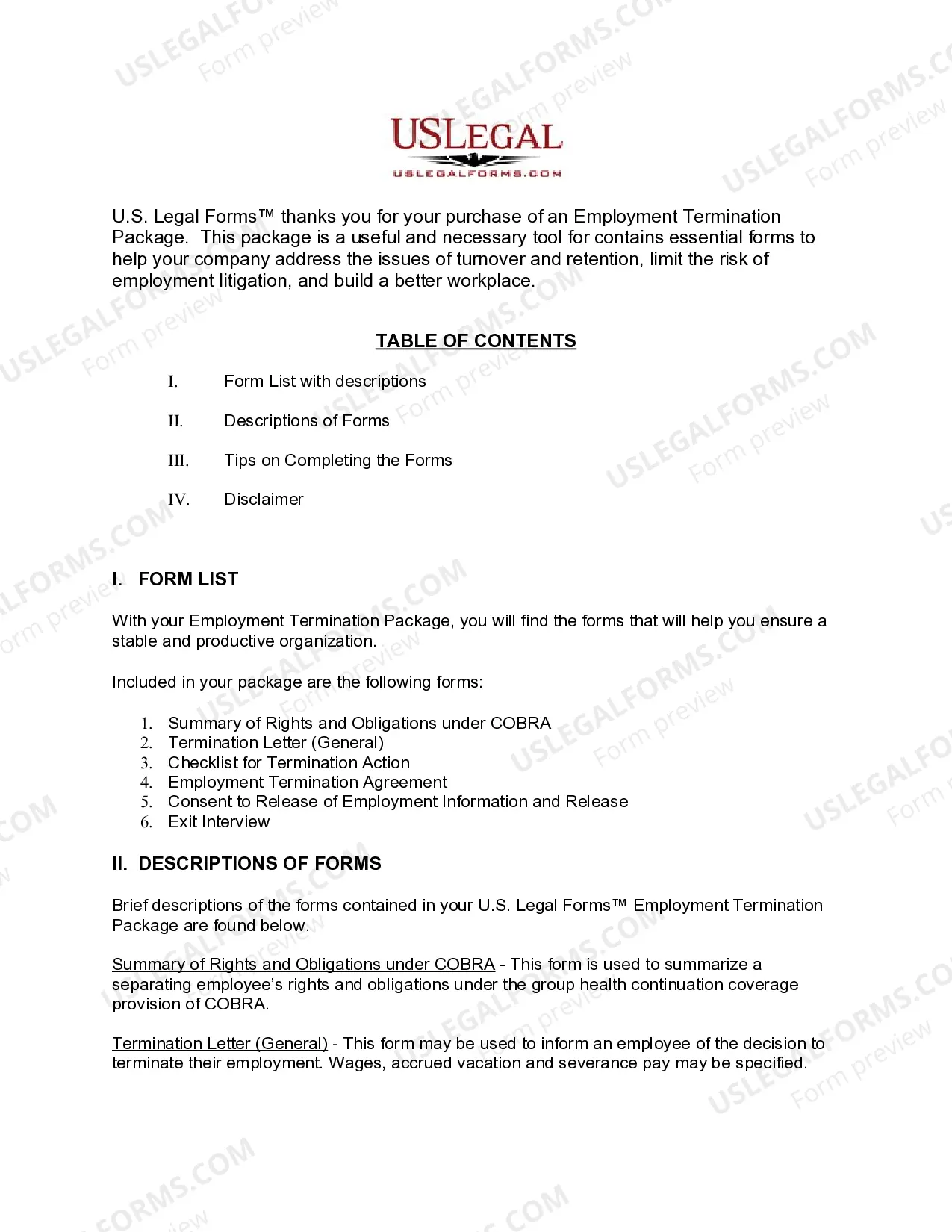
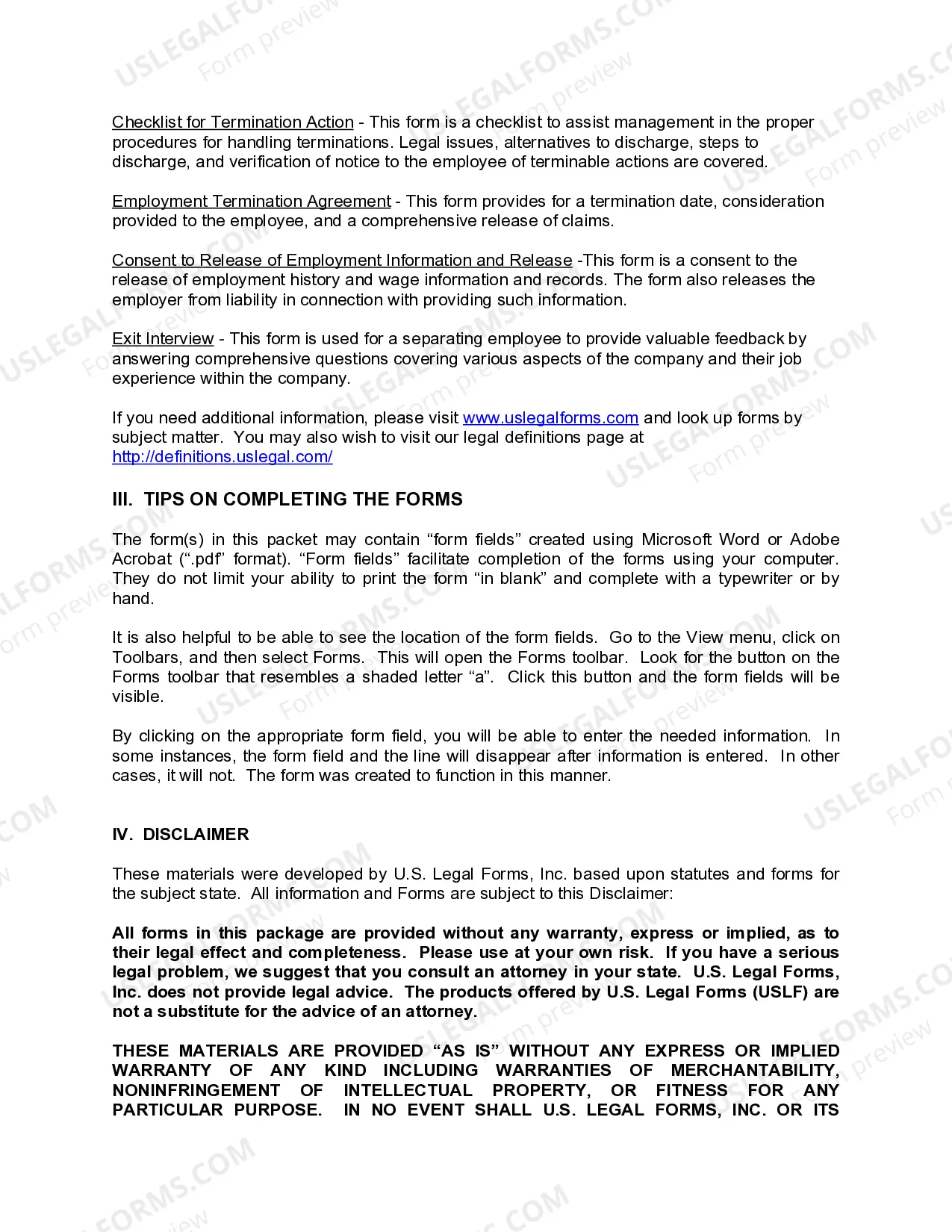
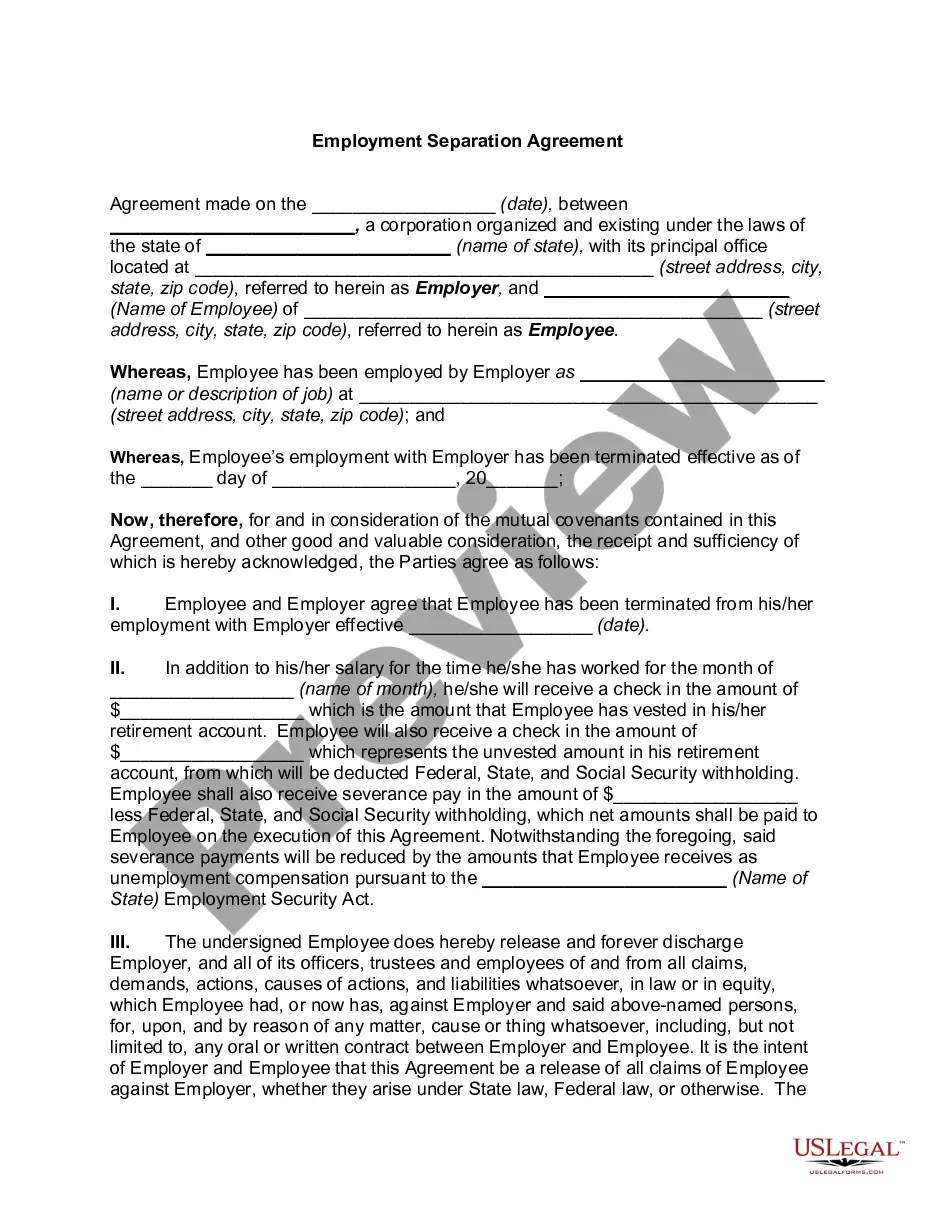
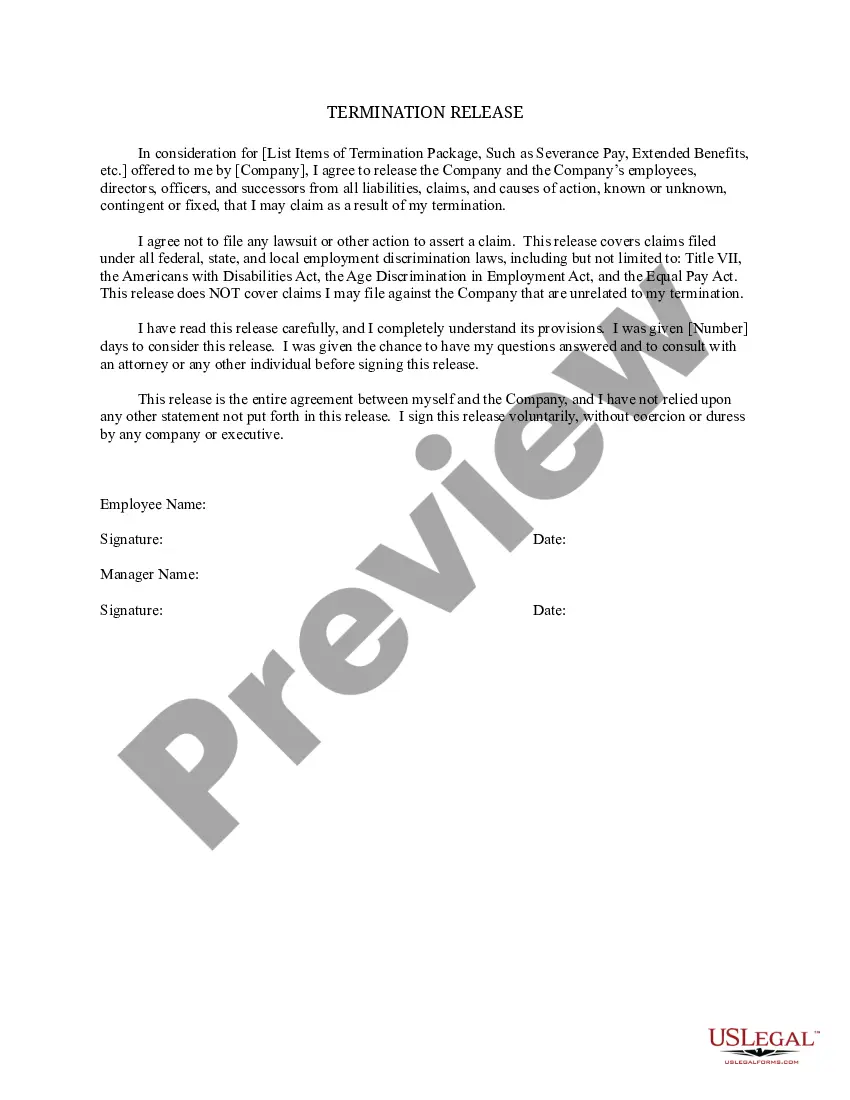
The Connecticut Employment or Job Termination Package is designed to assist employers in effectively managing employee terminations while minimizing the risk of legal issues. This comprehensive package includes critical forms drafted by licensed attorneys to ensure that all aspects of termination are handled properly. Unlike general employment forms, this package focuses specifically on the requirements and best practices for terminating employment in Connecticut, providing tailored resources for state-specific needs.
Forms provided in this package

When this form package is needed
This form package is ideal in a variety of situations, including:
- When an employee is being laid off due to organizational changes.
- When an employee is being terminated for performance-related issues.
- When you need to outline rights and obligations under COBRA.
- When conducting exit interviews to gather feedback from departing employees.
- When legally documenting the termination process to protect against potential litigation.
Who should use this form package
- Human resources professionals involved in managing employee terminations.
- Business owners looking to formalize the termination process.
- Managers needing a structured approach to handle workforce reductions.
- Employers wishing to minimize legal risks associated with wrongful termination claims.
Steps to complete these forms
- Review the included forms to familiarize yourself with the termination procedures.
- Identify the employee to be terminated and gather relevant employment information.
- Fill out the Termination Letter and Employment Termination Agreement with precise details regarding the termination.
- Utilize the Checklist for Termination Action to ensure all necessary steps are followed.
- Conduct an Exit Interview to collect feedback and insights from the departing employee.
- Ensure all completed forms are securely stored for future reference and compliance purposes.
Notarization guidance for this package
Notarization is generally not required for forms in this package. However, specific circumstances or local laws may require it. You can complete notarization remotely through US Legal Forms, powered by Notarize, with 24/7 availability.
Get your form ready online
Our built-in tools help you complete, sign, share, and store your documents in one place.
Make edits, fill in missing information, and update formatting in US Legal Forms—just like you would in MS Word.
Download a copy, print it, send it by email, or mail it via USPS—whatever works best for your next step.
Sign and collect signatures with our SignNow integration. Send to multiple recipients, set reminders, and more. Go Premium to unlock E-Sign.
If this form requires notarization, complete it online through a secure video call—no need to meet a notary in person or wait for an appointment.
We protect your documents and personal data by following strict security and privacy standards.

Make edits, fill in missing information, and update formatting in US Legal Forms—just like you would in MS Word.

Download a copy, print it, send it by email, or mail it via USPS—whatever works best for your next step.

Sign and collect signatures with our SignNow integration. Send to multiple recipients, set reminders, and more. Go Premium to unlock E-Sign.

If this form requires notarization, complete it online through a secure video call—no need to meet a notary in person or wait for an appointment.

We protect your documents and personal data by following strict security and privacy standards.
Common mistakes to avoid
- Failing to document the reasons for termination clearly.
- Not completing the Checklist for Termination Action before proceeding.
- Overlooking employee rights under COBRA in the termination process.
- Not conducting an Exit Interview to gather valuable feedback.
Why use this package online
- Convenient access to forms that can be downloaded immediately.
- Edit and customize forms easily to fit specific termination situations.
- Receive guidance based on state-specific legal requirements.
- Save time and reduce risks associated with paperwork through structured templates.
Looking for another form?
Form popularity
FAQ
Several factors can disqualify you from receiving unemployment in Connecticut. Common reasons include voluntary resignation, misconduct, or failure to meet job search requirements. Additionally, if you receive significant severance or pension payments, it may affect your unemployment claim. To navigate these challenges, utilizing US Legal Forms can help you understand your rights and options related to your Connecticut Employment or Job Termination Package.
You might be eligible for unemployment benefits in Connecticut even with a severance package in place. The key factor is how your severance is treated by the state. If it is distributed over time, for instance, it could delay the start of your unemployment benefits. Therefore, knowing the specifics of your Connecticut Employment or Job Termination Package can influence your eligibility.
Yes, you can collect unemployment benefits in Connecticut even if you receive a severance package. The severance can affect your eligibility depending on how the package is structured. Generally, if the severance does not cover your entire unemployment period, you may still qualify for benefits. Understanding the nuances of your Connecticut Employment or Job Termination Package can help clarify your situation.
When filling out a termination form, start by providing the employee's details, including full name and position. Then, specify the termination date and the reasons for the decision, ensuring to keep the language clear and direct. For a comprehensive guide, consider using a Connecticut Employment or Job Termination Package, which provides templates and examples to streamline the process.
To politely terminate an employee, begin by scheduling a private meeting to discuss the situation directly. Clearly explain the reasons for the termination while also allowing the employee to express their views. By following a respectful approach, and utilizing a Connecticut Employment or Job Termination Package, you can ensure the process remains professional and considerate.
Several factors can disqualify you from collecting unemployment benefits in Connecticut. If you were terminated for misconduct, quit without good cause, or are unable to work, you may not qualify. Additionally, failing to actively seek employment can also lead to disqualification. To ensure you understand your rights and options, consulting resources like USLegalForms can provide valuable guidance and support.
Connecticut does not legally require an employer to provide a termination letter, but it is considered good practice. A termination letter can serve as official documentation of your employment status, which could be helpful if you need to file for unemployment. Having this letter may simplify the process of applying for a Connecticut Employment or Job Termination Package. If you need help drafting a termination letter, consider using USLegalForms.
Yes, you can collect unemployment in Connecticut even if you were fired. However, eligibility depends on the circumstances surrounding your termination. If you were discharged for misconduct, you may be disqualified. Understanding these nuances is crucial, and USLegalForms offers resources to assist you in determining your eligibility.
To collect unemployment in Connecticut after being fired, you must file a claim with the Connecticut Department of Labor. You will need to provide details about your job, the reason for termination, and any relevant documentation. Once your claim is approved, you will receive weekly benefits based on your previous earnings. Utilizing resources such as USLegalForms can help you navigate this process smoothly.
A typical severance package can vary widely but often includes a few weeks to several months of salary, depending on your tenure and company policy. Additionally, it may encompass benefits such as health insurance coverage and assistance with job placement. Understanding what a Connecticut employment or job termination package generally includes can empower you during discussions with your employer. Consider leveraging resources from US Legal Forms for detailed insights into what you might expect.