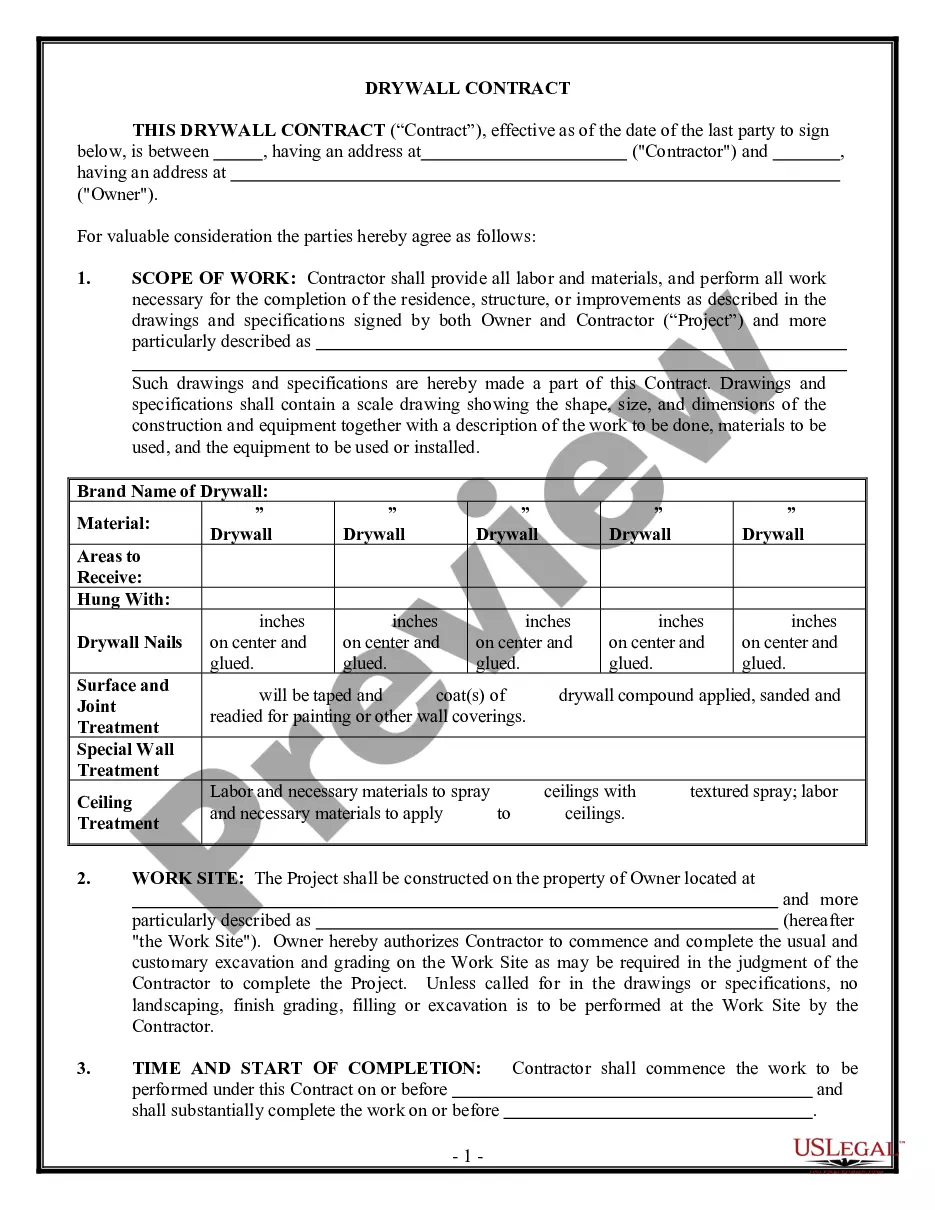
Pennsylvania Sheetrock Drywall Contract for Contractor
What is this form?
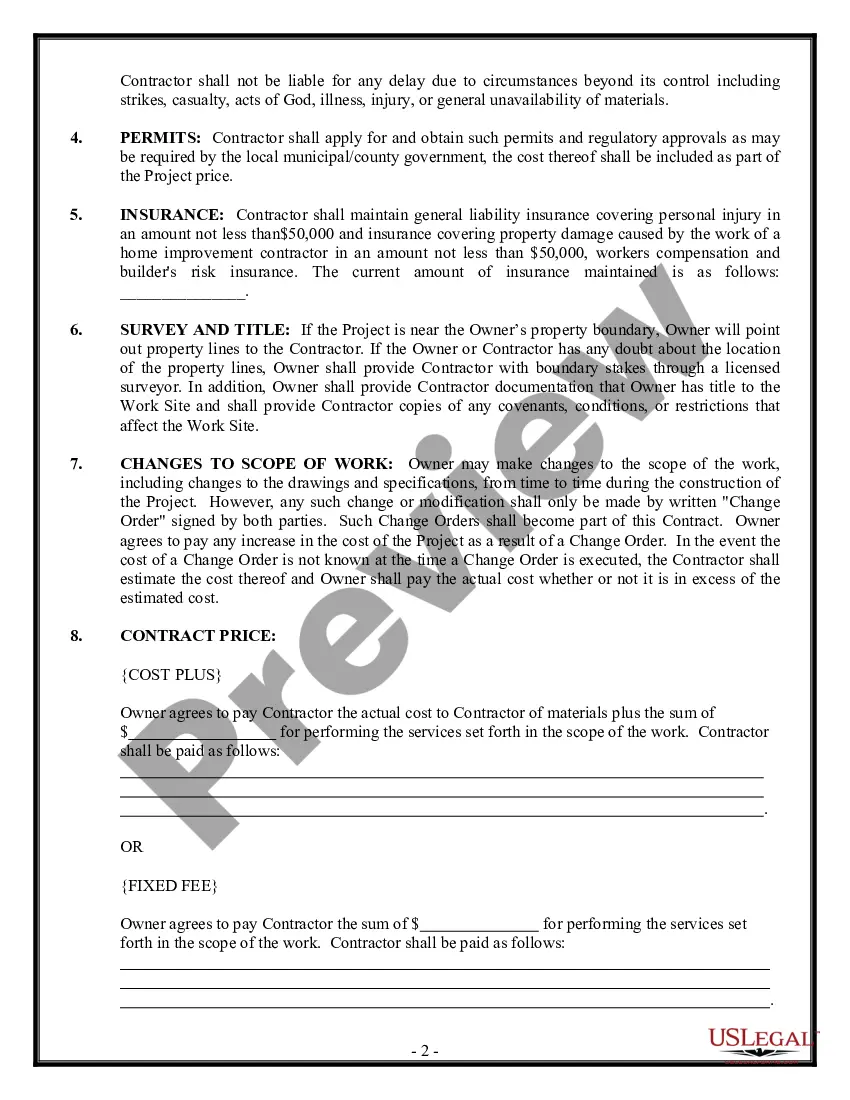
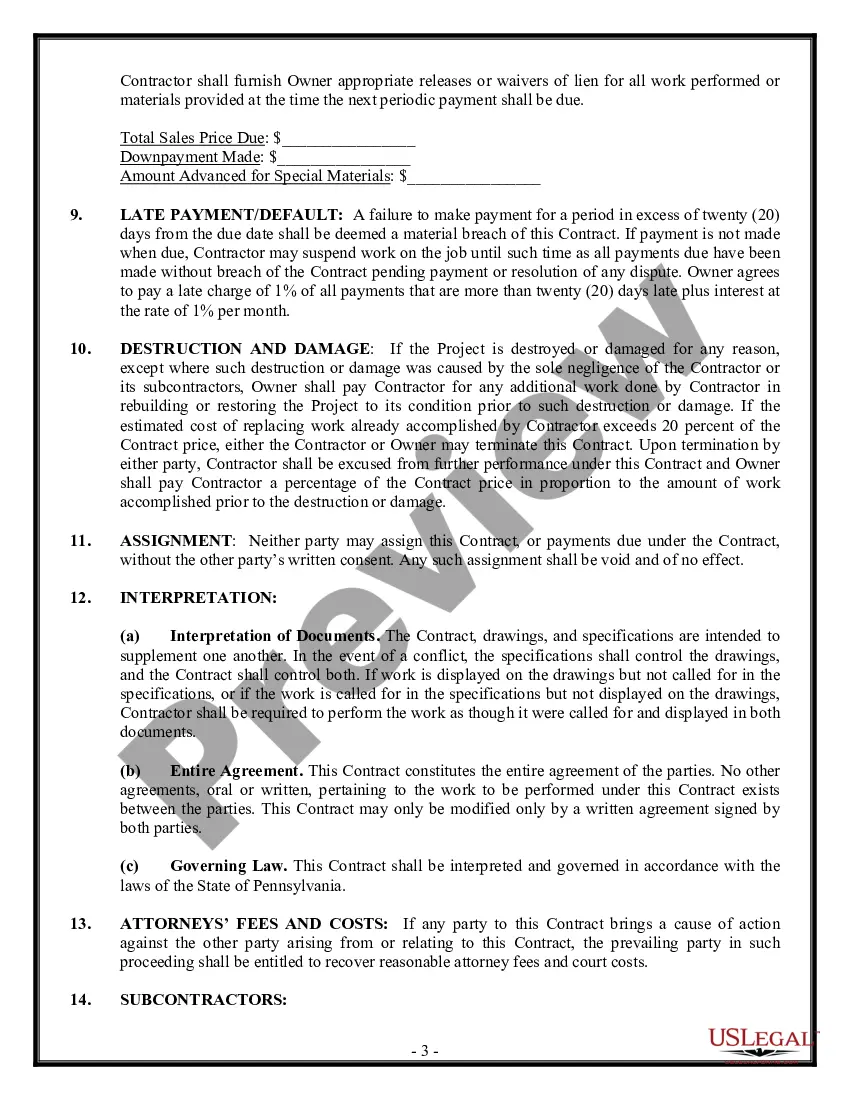
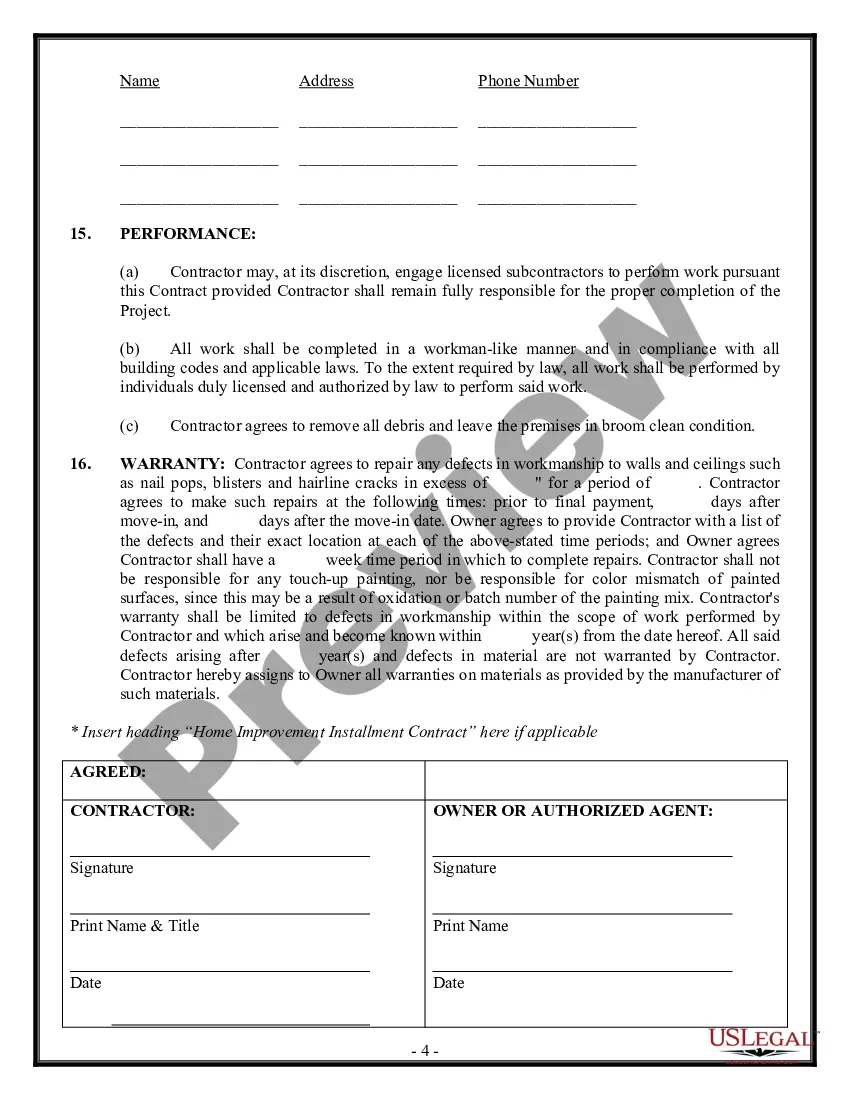
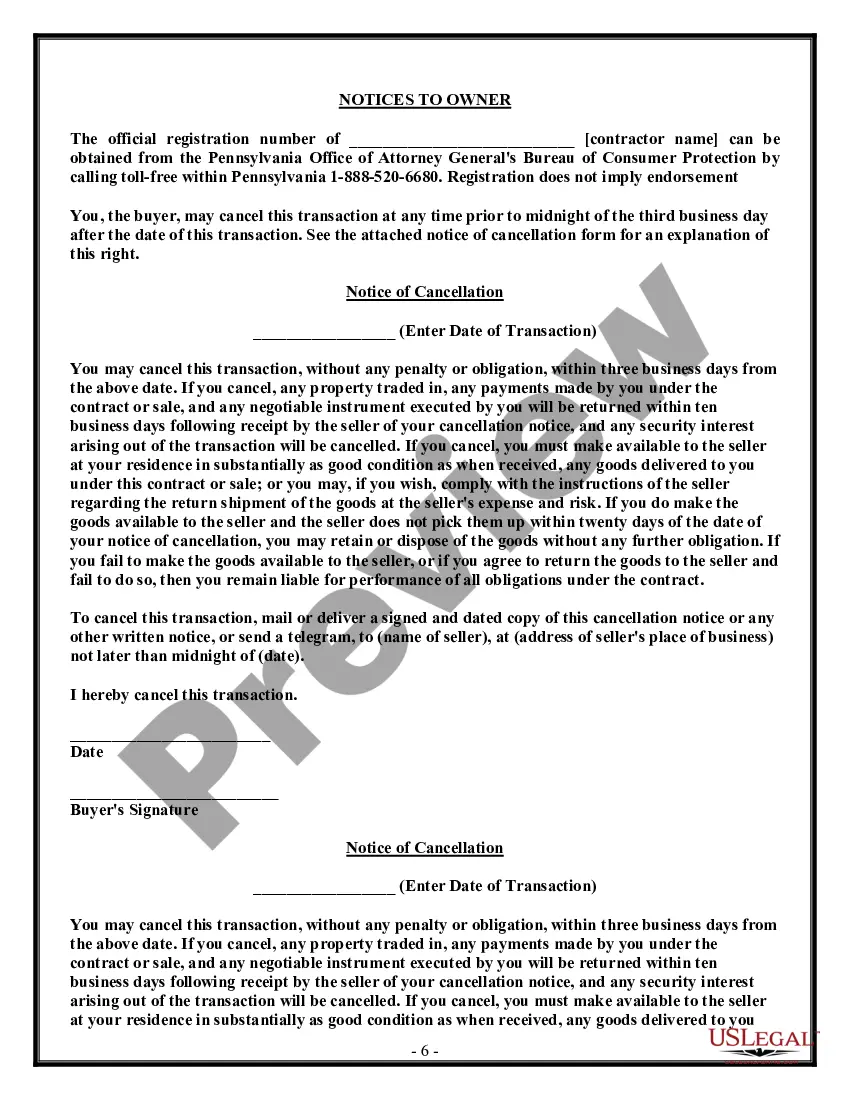
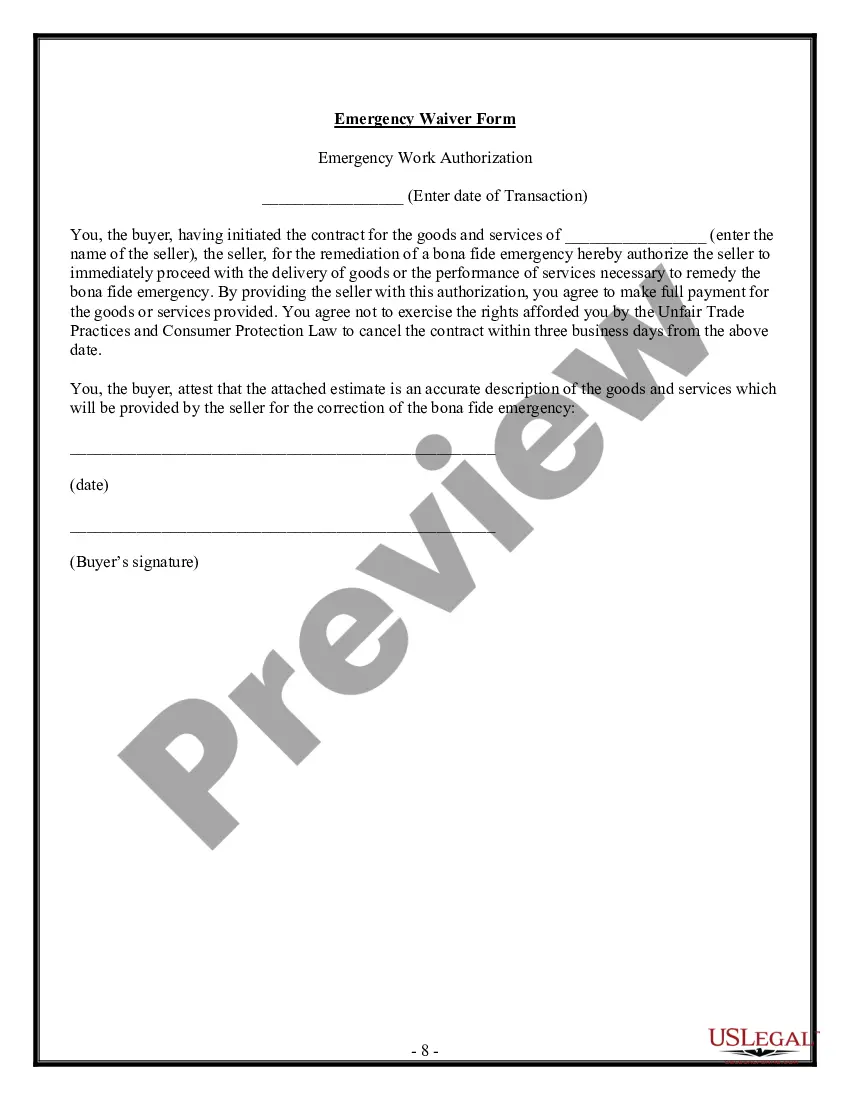
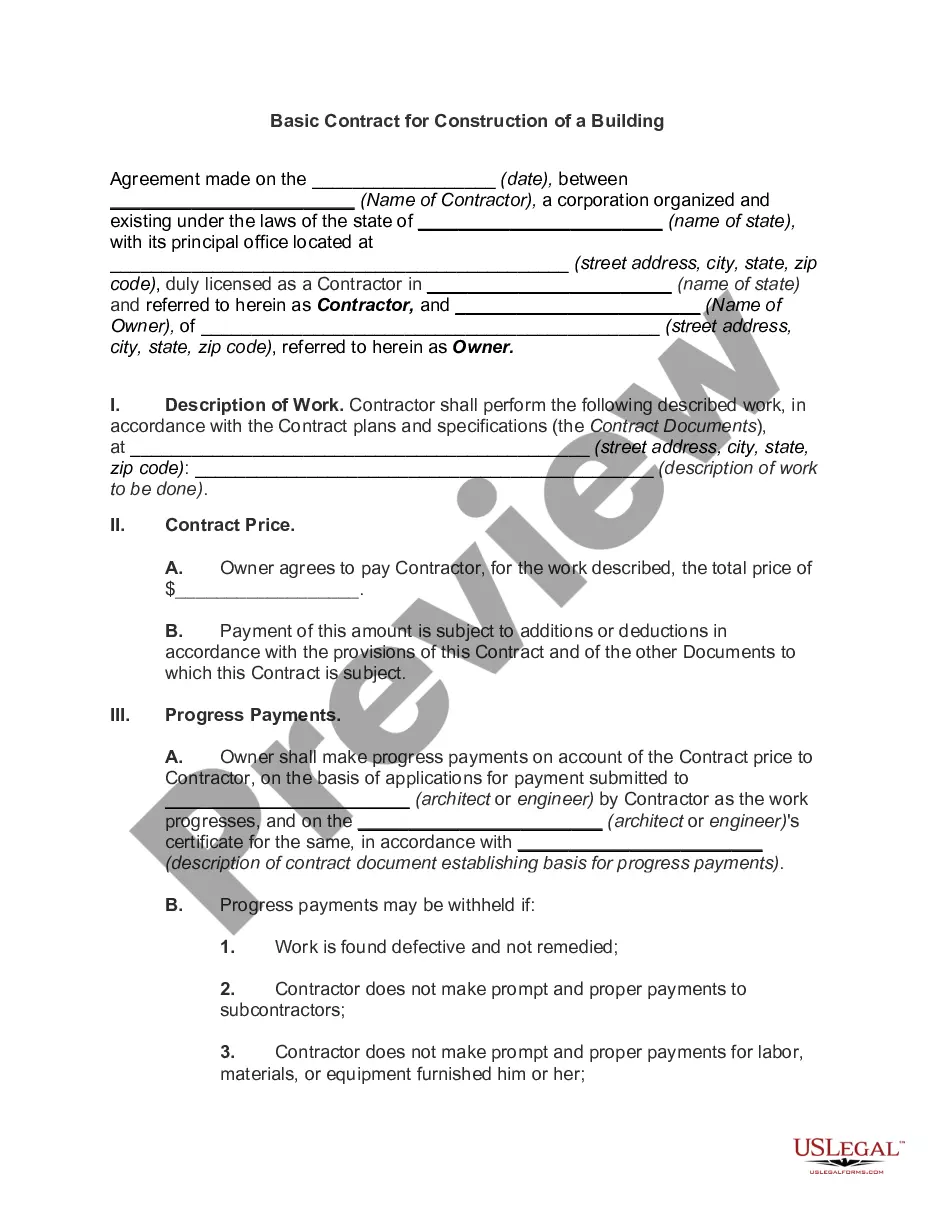
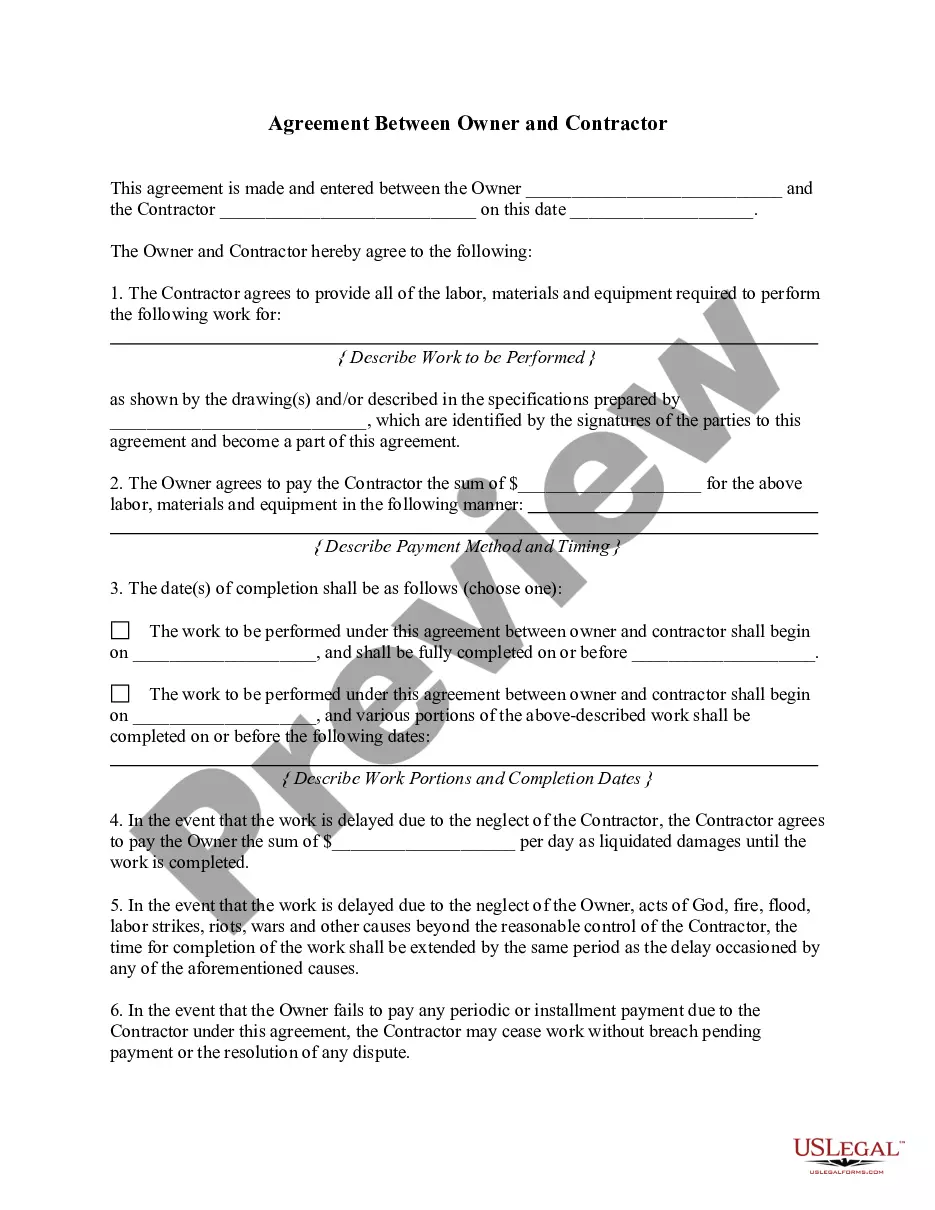
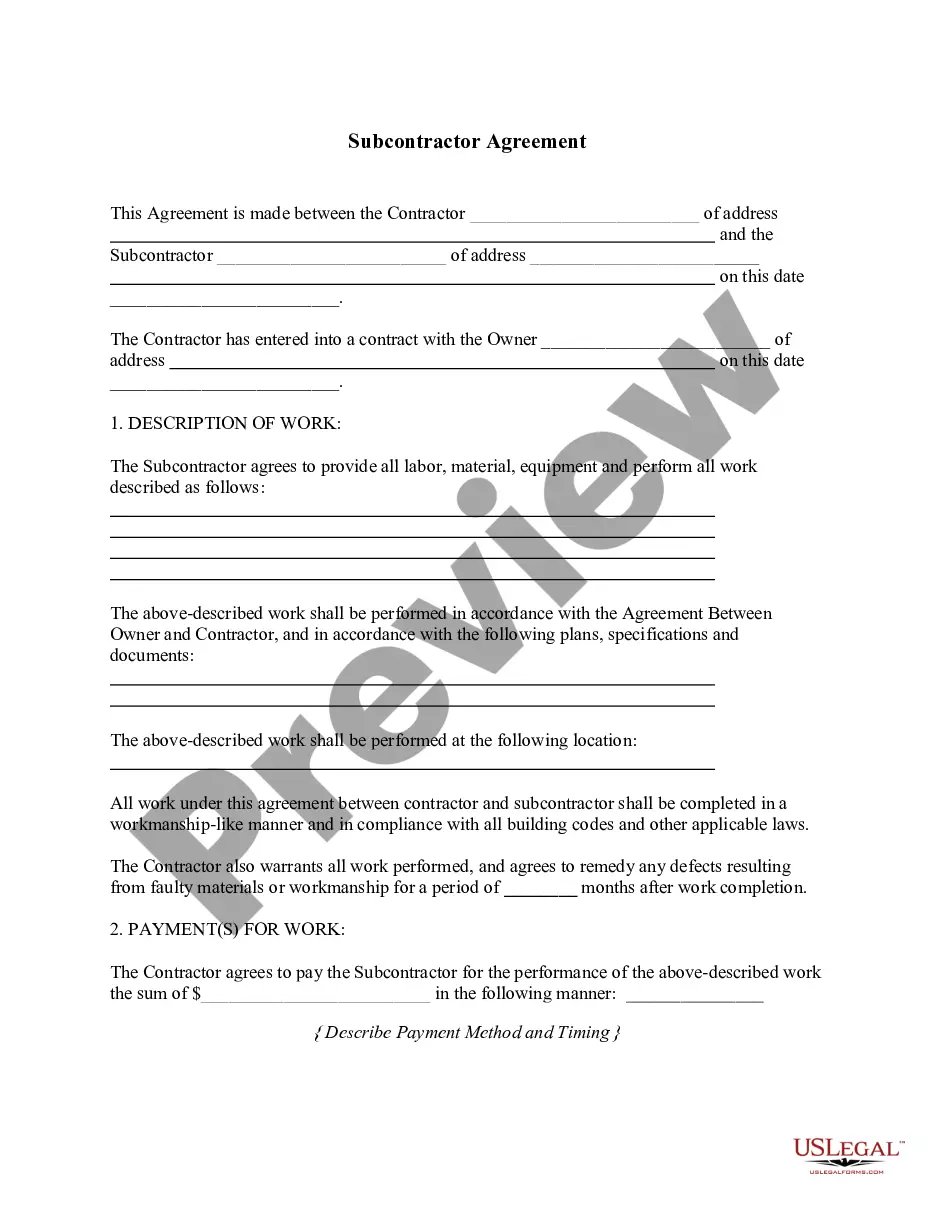
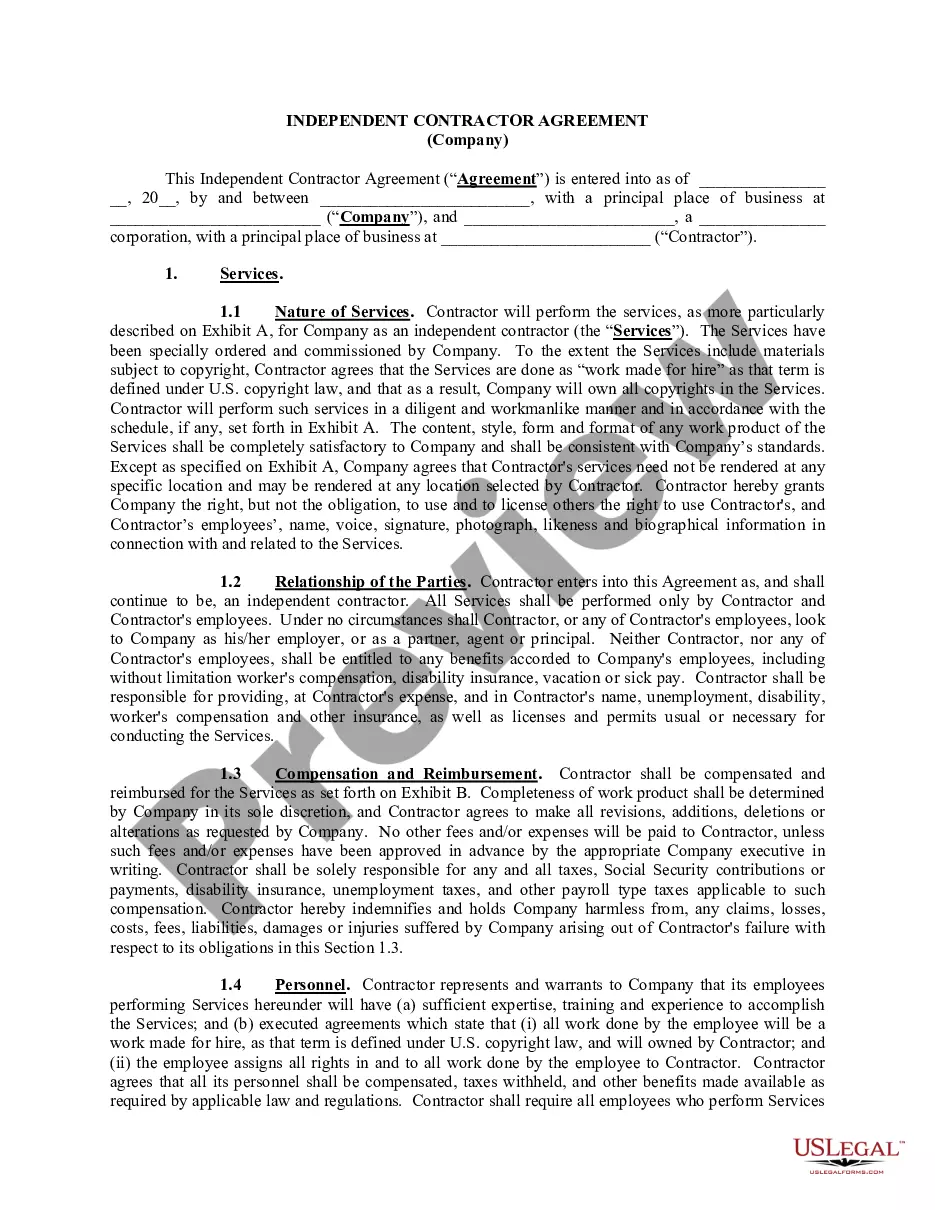
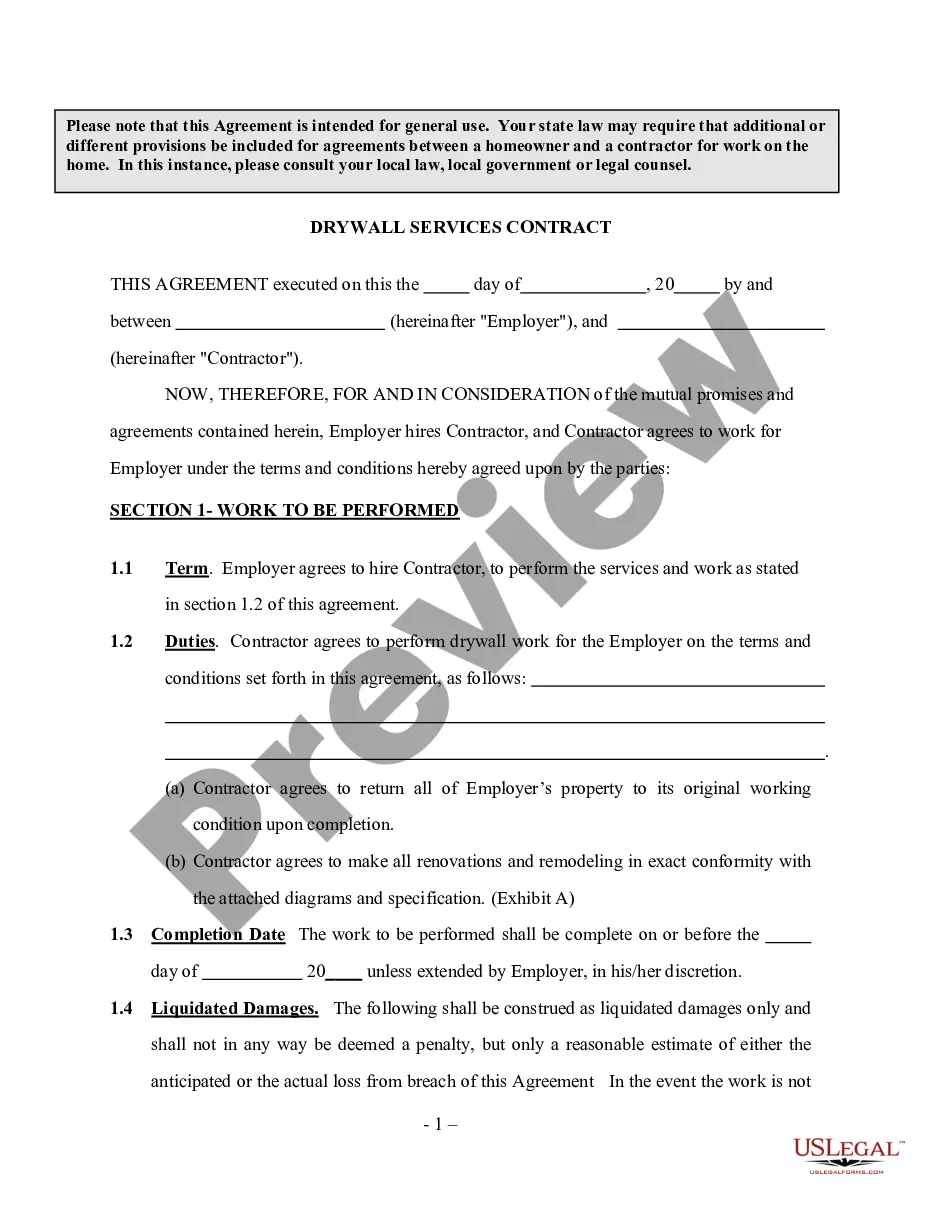
The Sheetrock Drywall Contract for Contractor is a legally binding agreement designed for use between Sheetrock or drywall contractors and property owners. This form outlines the responsibilities, payment terms, and specific conditions of a drywall installation project. Unlike other construction contracts, this contract allows for both cost-plus and fixed fee payment arrangements, ensuring clear expectations and protection for both parties involved.
Key parts of this document
- Permits requirement for local municipal approvals
- Insurance obligations for general liability and workers' compensation
- Survey and title specifications related to property boundaries
- Change order procedures for modifying the scope of work
- Payment terms, including late payment conditions and penalties
- Destruction and damage clause outlining responsibilities in case of project setbacks
- Provision for subcontractor engagement by the contractor
When this form is needed
This form should be used when a property owner hires a contractor for drywall installation or repair work. It is applicable in situations where the project entails significant costs, changes in project scope may occur, or where specific regulations mandate the use of such contracts. This contract protects both parties by clearly outlining payment methods, insurance coverage, and responsibilities.
Who needs this form
- Sheetrock or drywall contractors engaged in construction projects
- Property owners seeking professional drywall installation or repair services
- Real estate developers managing construction projects involving multiple contractors
- Construction managers overseeing drywall work and ensuring compliance with regulations
How to complete this form
- Identify the contractor and owner by entering their names and contact details.
- Specify the project location and ensure permits are applied for as needed.
- Select the payment arrangement (cost plus or fixed fee) and fill in the relevant fields.
- Detail any change orders and modifications to the scope of work by obtaining signatures from both parties.
- Ensure all required insurance details are completed accurately.
- Review and sign the contract to finalize the agreement.
Is notarization required?
This form does not typically require notarization unless specified by local law. However, it is advisable to check local regulations to ensure compliance.
Get your form ready online
Our built-in tools help you complete, sign, share, and store your documents in one place.
Make edits, fill in missing information, and update formatting in US Legal Forms—just like you would in MS Word.
Download a copy, print it, send it by email, or mail it via USPS—whatever works best for your next step.
Sign and collect signatures with our SignNow integration. Send to multiple recipients, set reminders, and more. Go Premium to unlock E-Sign.
If this form requires notarization, complete it online through a secure video call—no need to meet a notary in person or wait for an appointment.
We protect your documents and personal data by following strict security and privacy standards.

Make edits, fill in missing information, and update formatting in US Legal Forms—just like you would in MS Word.

Download a copy, print it, send it by email, or mail it via USPS—whatever works best for your next step.

Sign and collect signatures with our SignNow integration. Send to multiple recipients, set reminders, and more. Go Premium to unlock E-Sign.

If this form requires notarization, complete it online through a secure video call—no need to meet a notary in person or wait for an appointment.

We protect your documents and personal data by following strict security and privacy standards.
Typical mistakes to avoid
- Failing to specify the payment arrangement clearly, leading to potential disputes.
- Not obtaining the necessary permits, which can delay the project.
- Neglecting to include change order provisions, causing issues with project scope alterations.
- Ignoring insurance requirements, which may expose both parties to liability.
Benefits of using this form online
- Convenient downloadable format, allowing instant access to the contract.
- Editable templates that can be tailored easily to specific project needs.
- Reliable structure ensuring all essential legal components are included.
- The contract is enforceable in Pennsylvania and must adhere to state contract law.
- Both parties should retain a copy for their records to ensure clarity and accountability.
- Disputes arising from this contract may lead to litigation if not resolved through agreed-upon methods.
Summary of main points
- The Sheetrock Drywall Contract clearly outlines expectations between contractors and property owners.
- It is specifically designed for use in Pennsylvania, incorporating necessary legal provisions.
- Proper completion of this form helps protect both parties and facilitates smooth project execution.
Looking for another form?
Form popularity
FAQ
Compound, also called spackle or mud, is an important item that goes on top of drywall. After hanging and screwing drywall to wall studs, you must apply the compound to the drywall board seams using a 4-inch-wide knife.
T-square. sharp utility knife (extra blades recommended) screw gun or screw setter. drywall screws. 4" drywall knife. 8" drywall knife. 4" x 16" drywall mud pan. caulk/adhesive gun.
The cost to install drywall is about $2 per square foot. After material and labor are added in, the cost per panel ranges from $60 to $90. A typical 12 by 12 foot room, for example, will use 18 panels. This would put the cost somewhere between $1,000 and $1,600.
The primary component of drywall is the mineral gypsum. It is a light-density rock found in plentiful deposits worldwide. Each molecule of gypsum (or dihydrous calcium sulfate) is composed of two molecules of water (H 2 0) and one of calcium sulfate (CaSO 4 ).
Drywall Panels. Construction Adhesive. Mesh & Paper Drywall Tape. Joint Compound. Drywall Screws. Ring Drywall Nails. Primer. Interior Paint.
Calculate how many drywall sheets you will need by dividing the total square footage of area by 32 (if you're using 4-by-8 sheets) or by 48 (if you're using 4-by-12 sheets). If you want to get the cost, just multiply the total number of sheets by the price per sheet. Remember to add local taxes and delivery charges.
Register your drywall-finishing business name with your state's secretary of state. Fill out any necessary applications for tax identification numbers. Complete the paperwork if you plan to operate as a limited liability company, also known as an LLC, or as a corporation. Obtain a local business license.
Drywall contracting business is highly profitable especially if you have the expertise and capacity to deliver quality jobs.The success of a drywall contracting company to a large extent depends on their relationship with the biggest clients in the industry; the government of any country.
Drywall work is hard. The hanging of the large, heavy sheets is mind-numbing. If you decide to do it yourself, you can rent or buy mechanical lifts that hold the sheets up to save your back.Once the drywall is hung, then you need to finish it.
Drywall contracting business is highly profitable especially if you have the expertise and capacity to deliver quality jobs.The success of a drywall contracting company to a large extent depends on their relationship with the biggest clients in the industry; the government of any country.