Alabama Motion to Compel a Nonparty
What is this form?
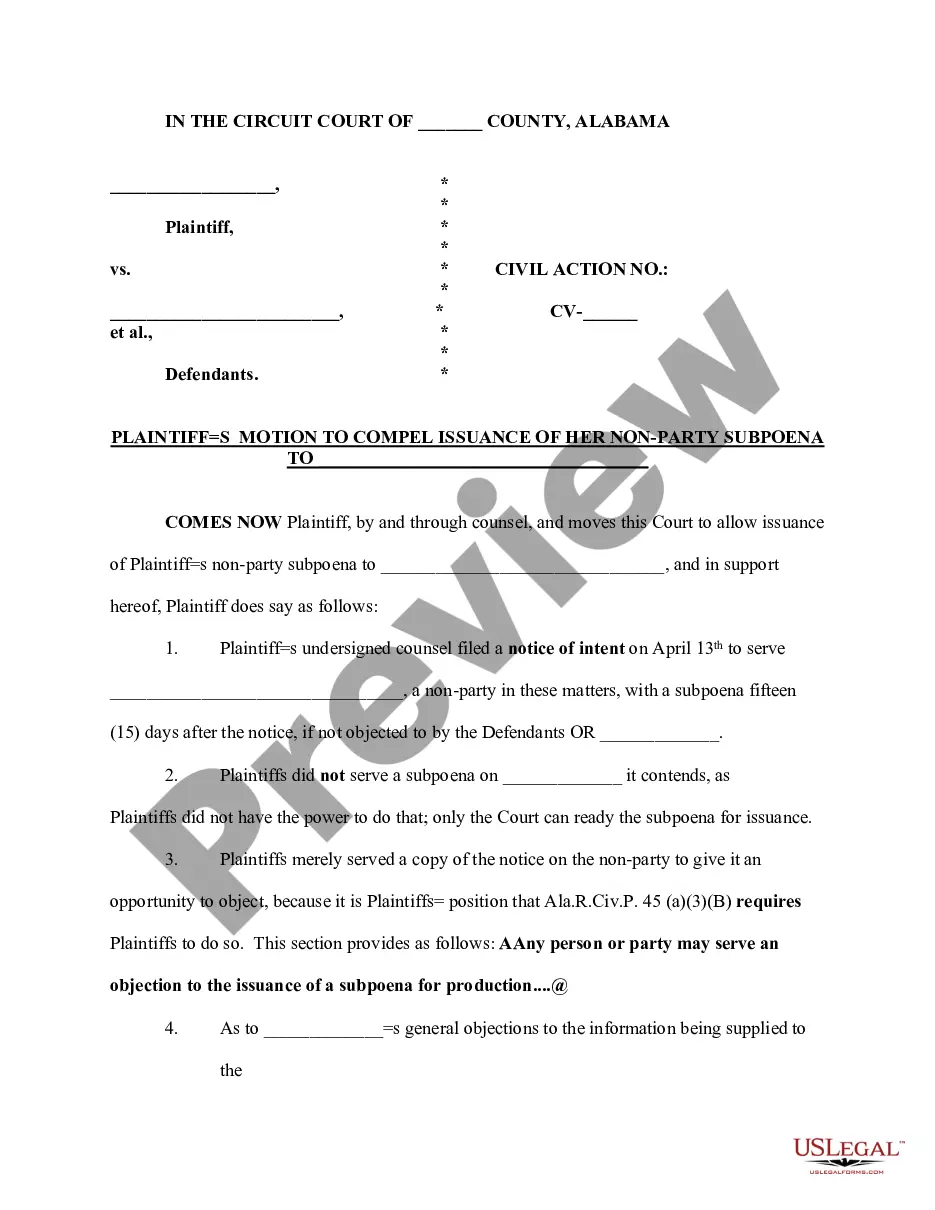
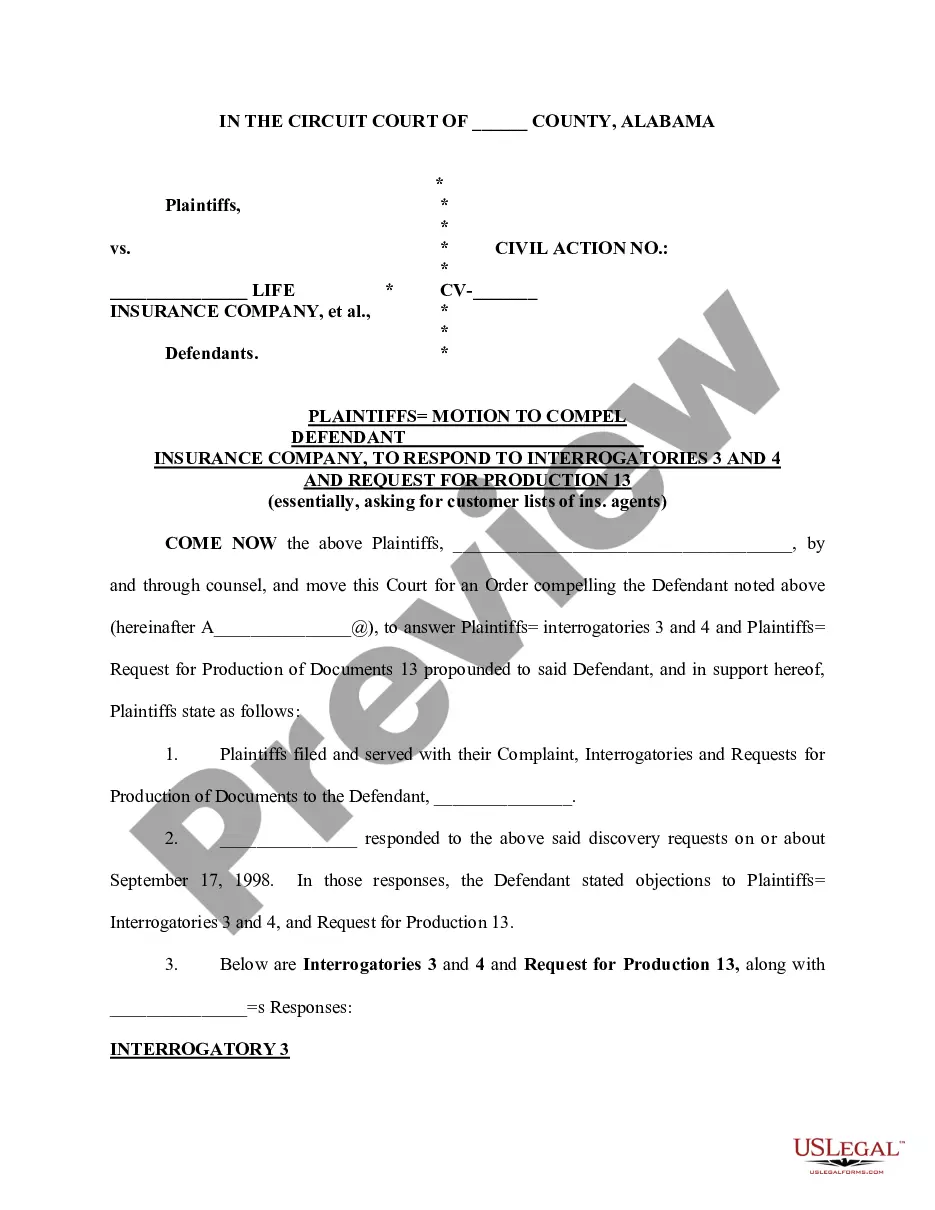
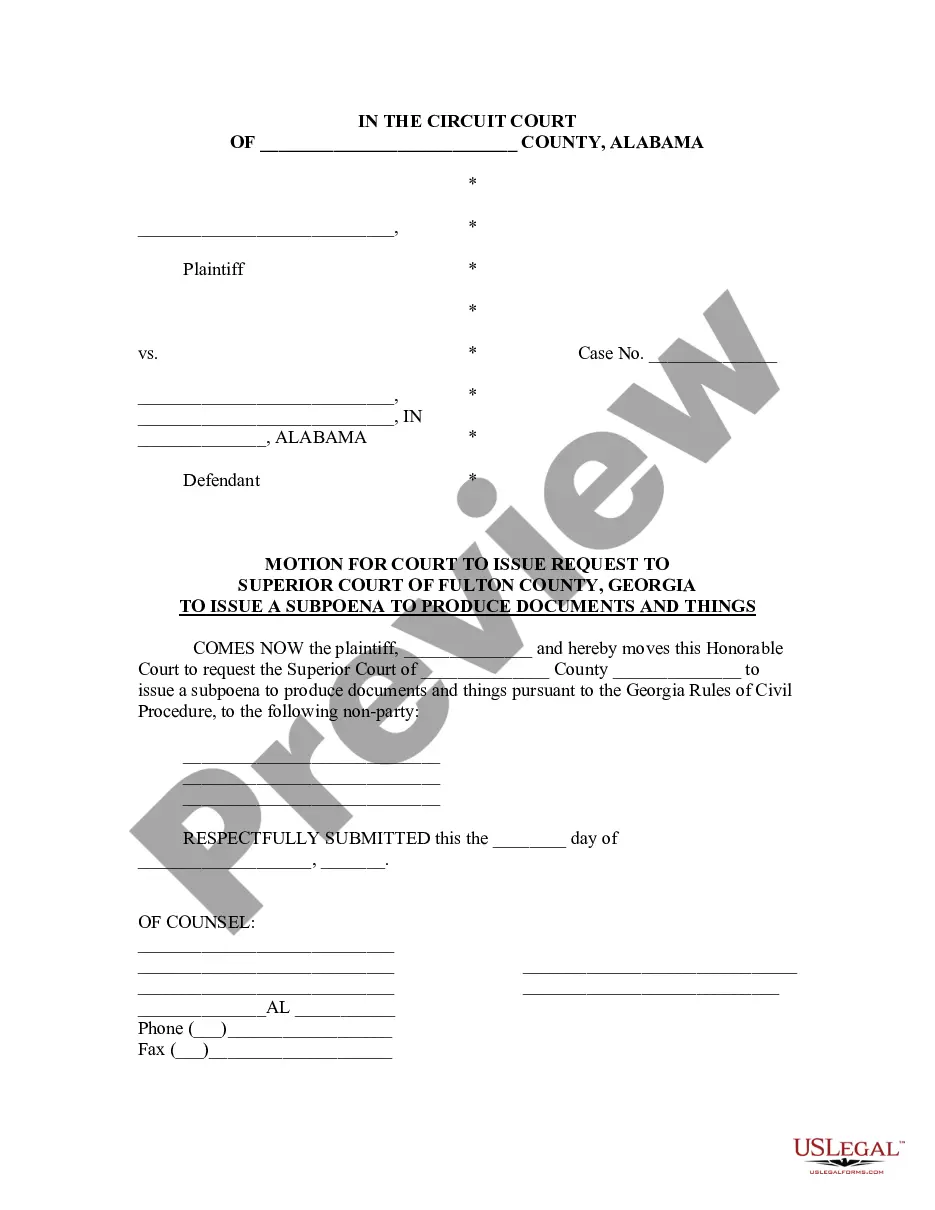
The Motion to Compel a Nonparty is a legal request filed in court to obtain a subpoena for records or testimony from a third party who is not involved in the lawsuit. This form distinguishes itself from other motions by specifically addressing nonparties, ensuring that relevant evidence can be gathered from those not directly involved in the case.
Main sections of this form
- Case information: Details about the parties involved and the civil action number.
- Motion introduction: Statement empowering the plaintiff to issue a non-party subpoena.
- Notice details: Information on the notice filed and the timeframe for objections.
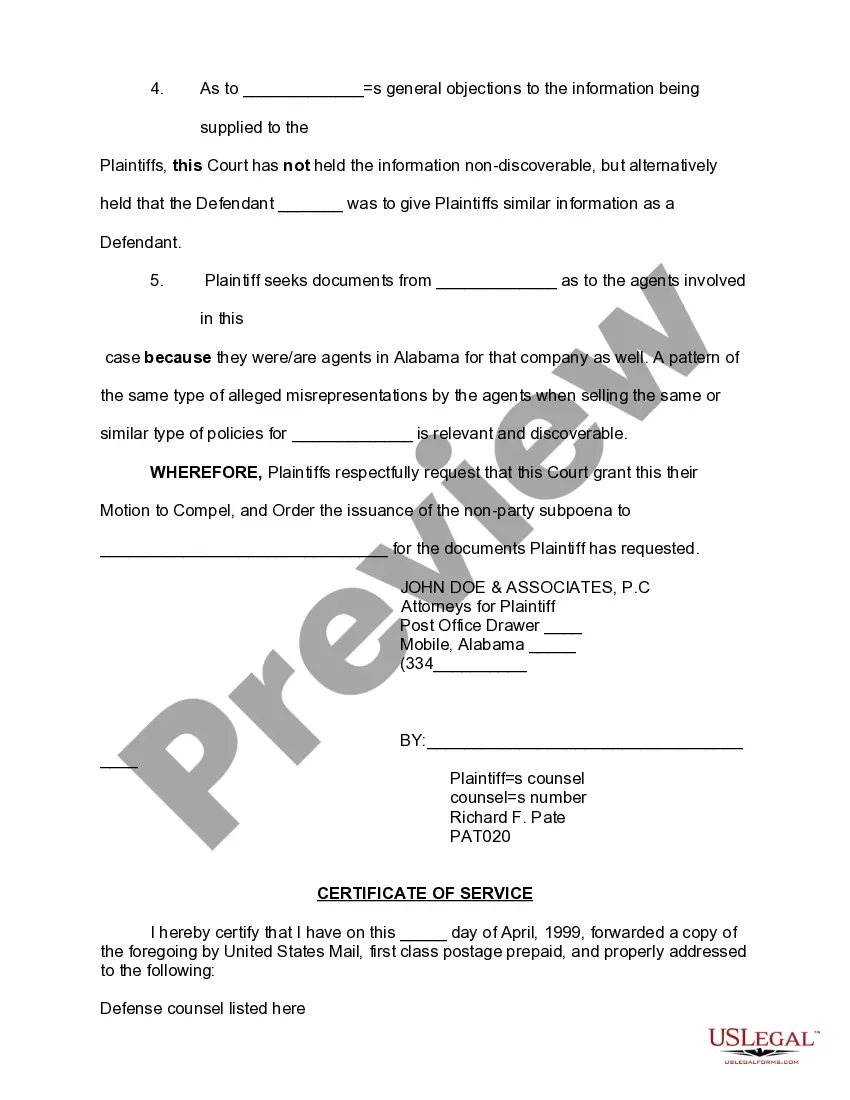
- Request for documents: Specification of requested documents and their relevance.
- Prayer for relief: The plaintiff's formal request for the court to grant the motion.
- Certificate of service: Confirmation of serving the motion to involved parties.

When this form is needed
This form is typically used when a plaintiff needs to obtain evidence or documents from a nonparty that may be crucial to the case. Situations may include needing records from a business related to the dispute, or obtaining testimony from a witness who has relevant information but is not being sued or defended in the case.
Who needs this form
- Placing parties in a civil lawsuit who require evidence from nonparties.
- Attorneys representing plaintiffs looking to gather additional information for their case.
- Individuals seeking to ensure compliance from nonparties in providing necessary documentation.
Instructions for completing this form
- Enter the names and details of the plaintiff and defendants at the top of the form.
- Specify the nonparty from whom documents are being sought in the motion introduction.
- Fill in the civil action number to link the motion to the existing case.
- Outline the documents you wish to obtain from the nonparty, providing specific reasons for their relevance.
- Ensure all service details are completed to confirm that all involved parties were appropriately notified.
Notarization guidance
Notarization is generally not required for this form. However, certain states or situations might demand it. You can complete notarization online through US Legal Forms, powered by Notarize, using a verified video call available anytime.
Get your form ready online
Our built-in tools help you complete, sign, share, and store your documents in one place.
Make edits, fill in missing information, and update formatting in US Legal Forms—just like you would in MS Word.
Download a copy, print it, send it by email, or mail it via USPS—whatever works best for your next step.
Sign and collect signatures with our SignNow integration. Send to multiple recipients, set reminders, and more. Go Premium to unlock E-Sign.
If this form requires notarization, complete it online through a secure video call—no need to meet a notary in person or wait for an appointment.
We protect your documents and personal data by following strict security and privacy standards.

Make edits, fill in missing information, and update formatting in US Legal Forms—just like you would in MS Word.

Download a copy, print it, send it by email, or mail it via USPS—whatever works best for your next step.

Sign and collect signatures with our SignNow integration. Send to multiple recipients, set reminders, and more. Go Premium to unlock E-Sign.

If this form requires notarization, complete it online through a secure video call—no need to meet a notary in person or wait for an appointment.

We protect your documents and personal data by following strict security and privacy standards.
Mistakes to watch out for
- Failing to provide a clear and specific description of the documents requested.
- Not adhering to the notice period required before issuing the subpoena.
- Omitting important case details, such as the civil action number or the names of involved parties.
Benefits of completing this form online
- Convenience of immediate access and download from any device.
- Editability to customize the form as per the specific needs of your case.
- Reliability of obtaining forms drafted by licensed attorneys familiar with current laws.
Legal use & context
- This motion must be supported by a valid reason why the information is essential for the plaintiff's case.
- The court has the discretion to deny the motion if the requested information is deemed irrelevant or overly burdensome.
- An issued subpoena can compel non-parties to provide documents or testify if the motion is granted.
Main things to remember
- The Motion to Compel a Nonparty is crucial for obtaining necessary information from outside parties.
- Properly justifying the motion is essential for its success in court.
- Understanding state-specific requirements is critical to ensure compliance and avoid delays.
Looking for another form?
Form popularity
FAQ
Typically a pro-se litigant will need the clerk to issue a subpoena as lawyers do this by virtue of being officers of the court. Responses provided represent entirely un-researched, casual opinions and cannot be relied upon in any way or manner as legal advice.
Any employee whose employment records are sought by a subpoena duces tecum may bring a motion to quash. Note that non-party employees may object to a subpoena by serving written objections. 3. Any non-party who has been served with a business records subpoena may bring a motion to quash.
Contact the lawyer who subpoenaed you and ask him/her to let you off the hook or alternatively postpone the trial. If you have a good excuse and the lawyer will not relent, get an attorney you know to contact the judge to get the case postponed.
Lawyers who are licensed in the state usually have the power to issue a subpoena. However, individuals who are a party to a lawsuit and other individuals may also be able to issue a subpoena, depending on the rules of civil or criminal procedure in the court that has jurisdiction of the case.
In CA a pro se litigant must get court approval to issue a subpoena.
Individuals acting In Pro Per can also issue a signed subpoena upon a party in a legal proceeding. Once an attorney requests a subpoena, it must be personally served on the subpoenaed party by someone who is over the age of 18 and not a party to the action.
In most instances, a subpoena can be issued and signed by an attorney on behalf of a court in which the attorney is authorized to practice law.In some cases, a non-lawyer may issue a subpoena if acting on his or her own behalf (known as pro se representation).
Failure to respond to a subpoena is punishable as contempt by either the court or agency issuing the subpoena. Punishment may include monetary sanctions (even imprisonment although extremely unlikely).
Providing objections suspends your obligation to comply with the subpoena until or unless a court orders compliance, or you reach an agreement with the party that served you with the subpoena. If you do not wish to comply with the subpoena, you may file a motion to quash it before the date set forth on the subpoena.