Alabama Motion for Court to Issue a Request to Issue a Subpoena to Produce Documents and Things to Nonparty
What this document covers
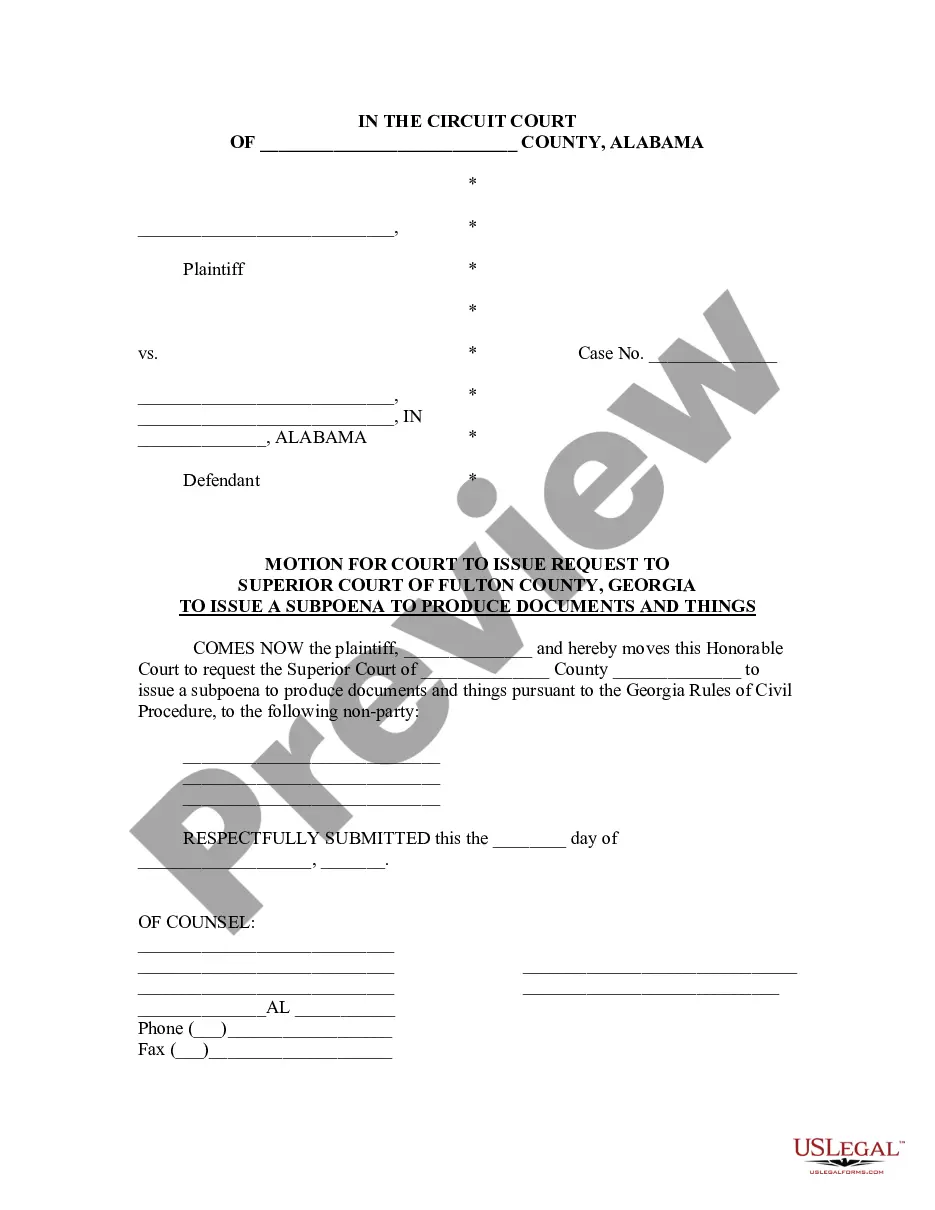
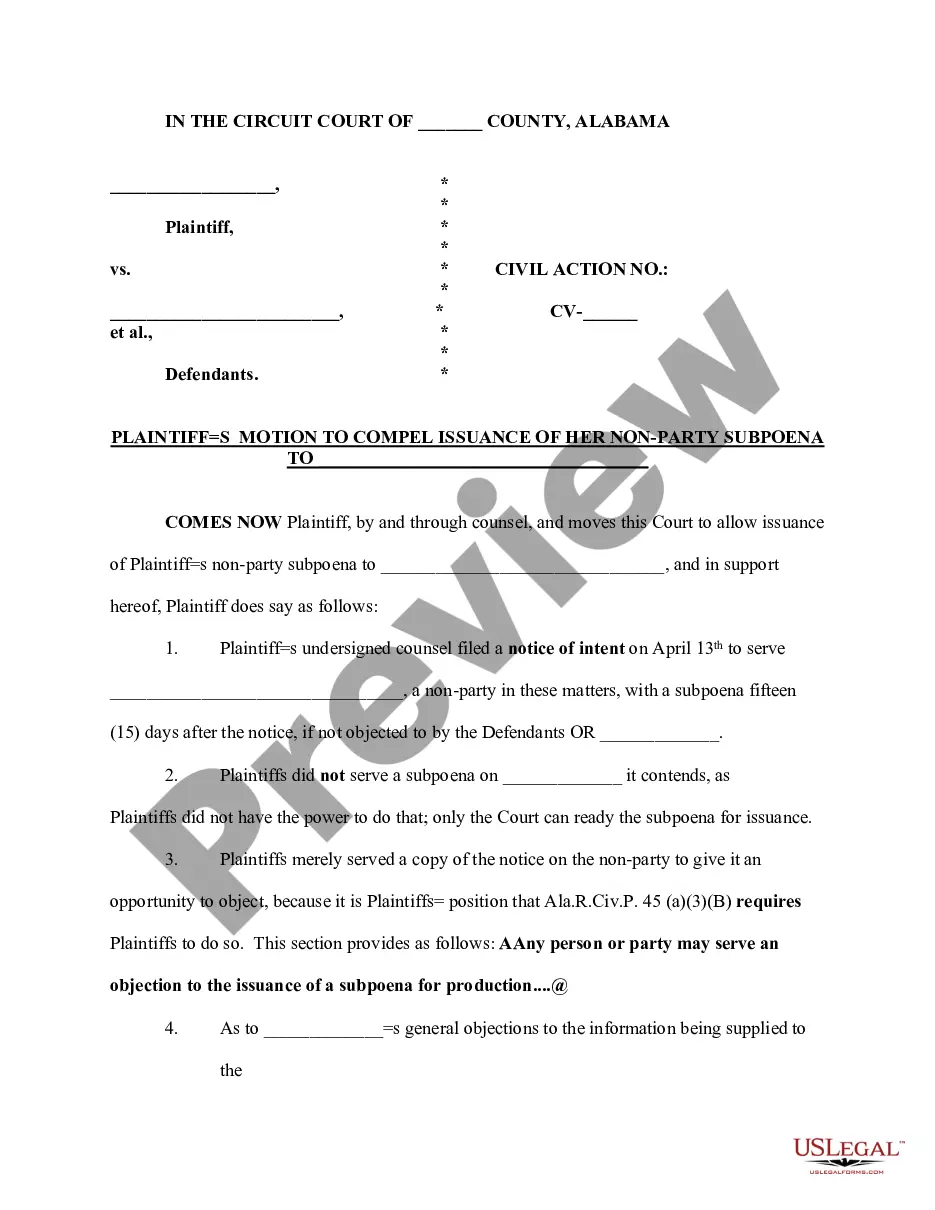
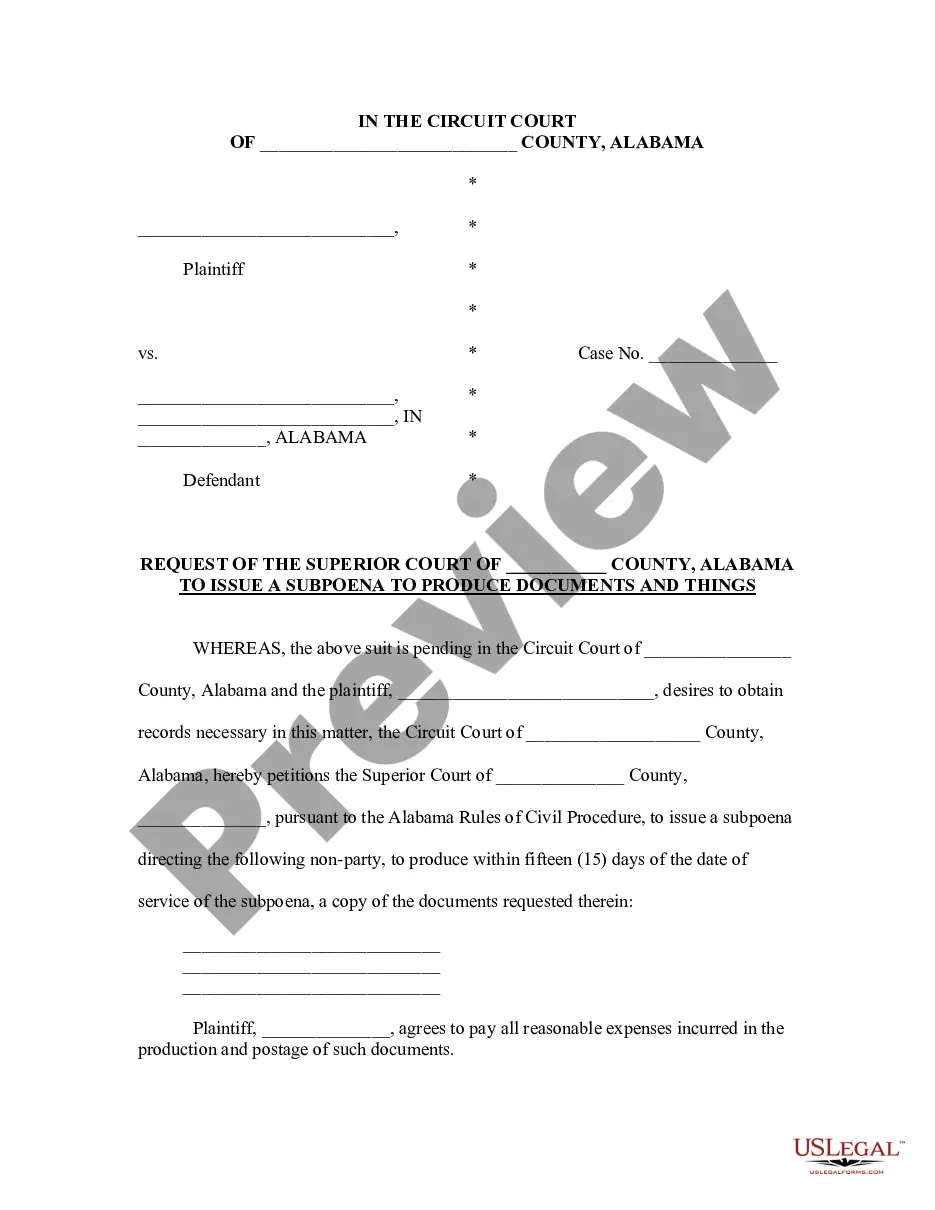
This form is a Motion for Court to Issue a Request to Issue a Subpoena to Produce Documents and Things to Nonparty. It allows a plaintiff to petition the court for a subpoena that compels a non-party to provide relevant documents and records essential for the litigation. This motion is crucial when evidence from individuals or entities outside the immediate parties is necessary to support the case.
Key parts of this document
- Case identification: Field for plaintiffs and defendants' names along with the case number.
- Motion details: Section outlining the request for the court to issue a subpoena.
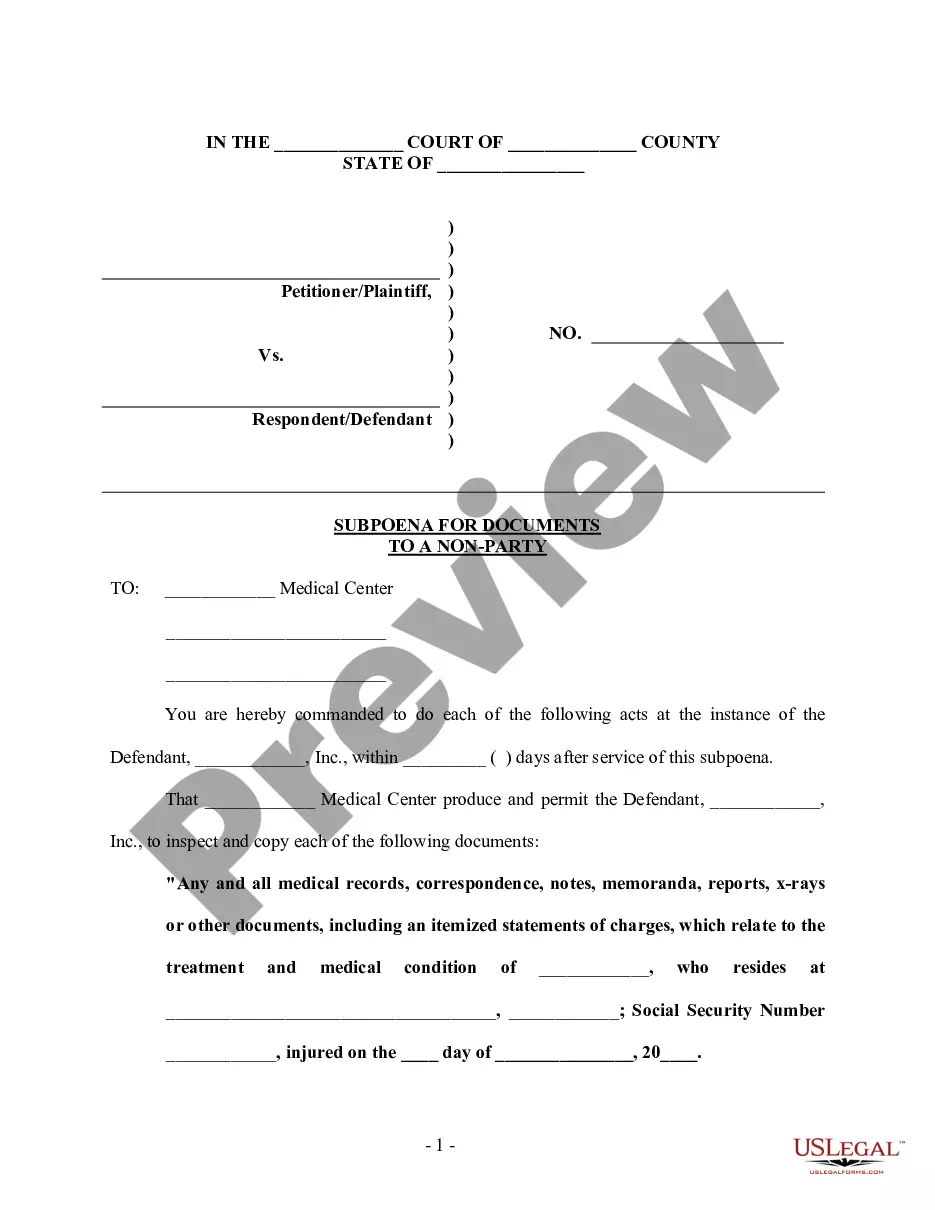
- Non-party information: Areas for entering details of the non-party from whom documents are sought.
- Signature and date: Space to sign and date the motion, certifying its submission.
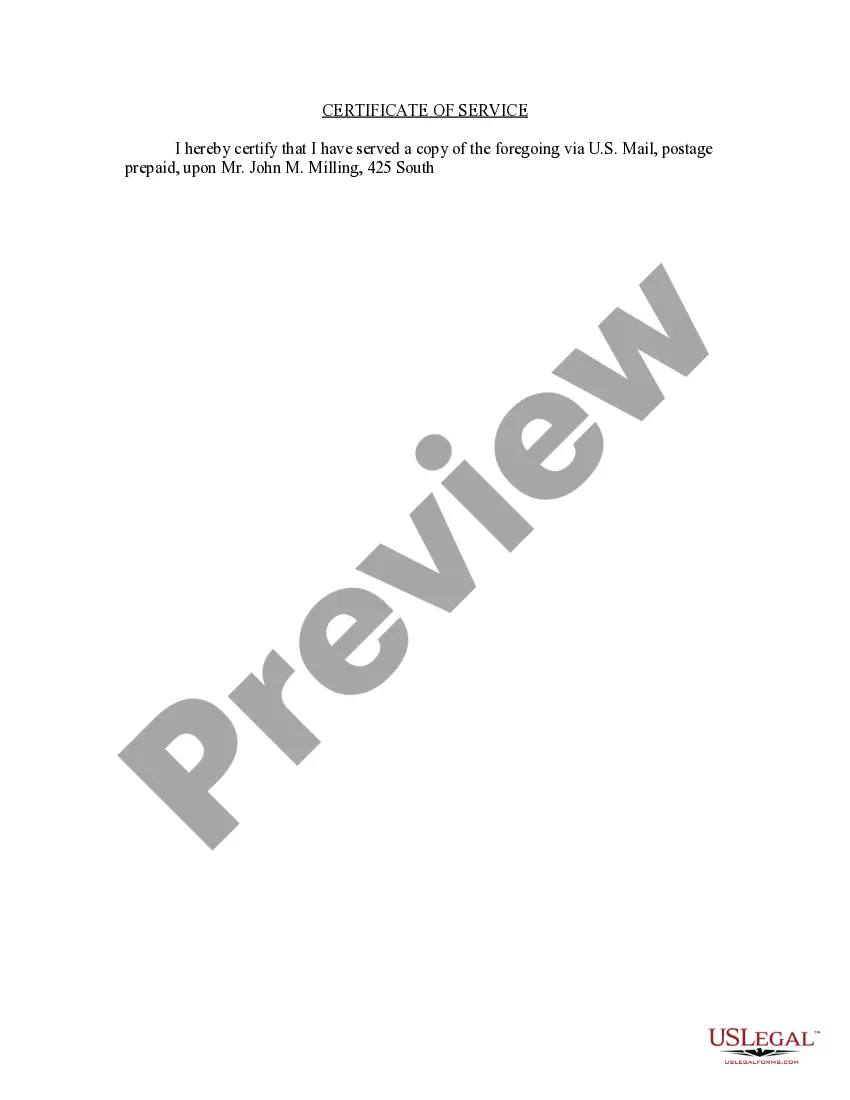
- Certificate of service: Section confirming that all relevant parties were served with the petition.
Situations where this form applies
This form should be used when a plaintiff needs to obtain documents or evidence from a non-party that are necessary to support their case in court. Such a motion is often required in civil lawsuits where relevant information is held by individuals or organizations not involved in the litigation.
Who can use this document
This motion is intended for:
- Plaintiffs who are engaged in civil litigation and require documents from a non-party.
- Legal representatives or attorneys acting on behalf of plaintiffs needing to gather evidence.
- Individuals who are unfamiliar with the legal process and need guidance in securing subpoenas.
Steps to complete this form
- Identify the parties involved: Fill in the names of the plaintiff and defendant accurately.
- Specify the case number: Enter the unique case number associated with your litigation.
- Detail the non-party: Provide complete information about the non-party you seek documents from.
- Sign and date the motion: Ensure the motion is dated and signed by the plaintiff or their counsel.
- Complete the certificate of service: Certify that you have provided a copy of the motion to all relevant parties.
Is notarization required?
Notarization is generally not required for this form. However, certain states or situations might demand it. You can complete notarization online through US Legal Forms, powered by Notarize, using a verified video call available anytime.
Get your form ready online
Our built-in tools help you complete, sign, share, and store your documents in one place.
Make edits, fill in missing information, and update formatting in US Legal Forms—just like you would in MS Word.
Download a copy, print it, send it by email, or mail it via USPS—whatever works best for your next step.
Sign and collect signatures with our SignNow integration. Send to multiple recipients, set reminders, and more. Go Premium to unlock E-Sign.
If this form requires notarization, complete it online through a secure video call—no need to meet a notary in person or wait for an appointment.
We protect your documents and personal data by following strict security and privacy standards.

Make edits, fill in missing information, and update formatting in US Legal Forms—just like you would in MS Word.

Download a copy, print it, send it by email, or mail it via USPS—whatever works best for your next step.

Sign and collect signatures with our SignNow integration. Send to multiple recipients, set reminders, and more. Go Premium to unlock E-Sign.

If this form requires notarization, complete it online through a secure video call—no need to meet a notary in person or wait for an appointment.

We protect your documents and personal data by following strict security and privacy standards.
Common mistakes to avoid
- Omitting case numbers or party names, which can delay the process.
- Failing to serve the motion to all necessary parties.
- Incorrectly filling out non-party information, leading to subpoenas that cannot be enforced.
- Neglecting to sign and date the form before submission.
Why use this form online
- Convenient access to a legally vetted template, ensuring compliance with legal standards.
- Editable format allows customization for specific needs and circumstances.
- Quick download and easy access any time, reducing the time needed to prepare your documents.
Looking for another form?

Form popularity
FAQ
A subpoena is considered valid when it meets specific legal requirements, such as being issued by an authorized court and properly served on the recipient. Additionally, the documents or testimony requested must relate to the case at hand. Understanding these criteria is important when handling any Alabama Motion for Court to Issue a Request to Issue a Subpoena to Produce Documents and Things to Nonparty.
You can deny a subpoena to testify under certain circumstances, such as if it demands information that is privileged or overly burdensome. It's essential to act promptly and file a motion to quash the subpoena if you intend to resist it. Highlighting valid objections will strengthen your case when addressing any Alabama Motion for Court to Issue a Request to Issue a Subpoena to Produce Documents and Things to Nonparty.
A motion for subpoena is a formal request made to the court, asking it to issue a subpoena to compel someone to testify or produce documents. This motion outlines the specific information or testimony needed and explains why it is relevant to the case. If you are navigating the process, consider the Alabama Motion for Court to Issue a Request to Issue a Subpoena to Produce Documents and Things to Nonparty as a key resource.
The burden of proof for a subpoena typically lies with the party who issued it, needing to demonstrate that the documents or testimony requested are relevant. If you challenge the subpoena, you can argue against its validity based on various factors such as relevance or undue burden. Understanding this burden is crucial, especially when dealing with an Alabama Motion for Court to Issue a Request to Issue a Subpoena to Produce Documents and Things to Nonparty.
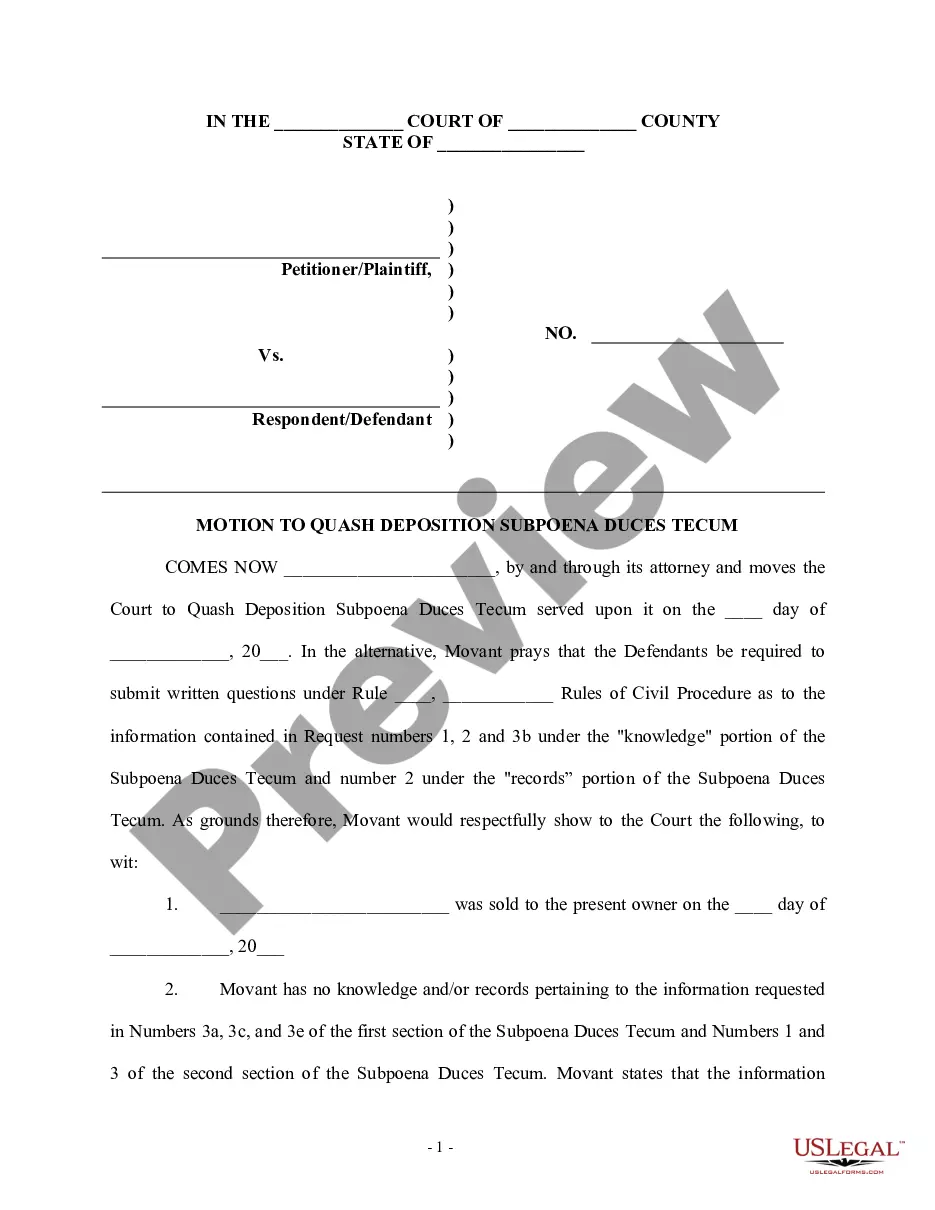
To write a motion to quash a subpoena, start by clearly stating the case name and number, and specify the documents or testimonies you want to resist. Explain your reasons for quashing the subpoena, emphasizing any legal grounds that support your argument. You may wish to include any relevant facts that strengthen your position. Using the Alabama Motion for Court to Issue a Request to Issue a Subpoena to Produce Documents and Things to Nonparty can guide your approach.
You typically file a motion to compel subpoena in the court where your case is pending. This motion requests the court to enforce compliance with a subpoena that has not been honored. To efficiently manage this process, you may consider using our platform, which provides templates and guidance for submitting an Alabama Motion for Court to Issue a Request to Issue a Subpoena to Produce Documents and Things to Nonparty, ensuring you follow the correct procedures.
A request for production of documents refers to a legal demand that a party in a case provide specific documents for review. This process allows both sides to gather essential evidence to support their claims or defenses. If you require a detailed approach, filing an Alabama Motion for Court to Issue a Request to Issue a Subpoena to Produce Documents and Things to Nonparty can facilitate acquiring information from nonparties.
A request for production is typically a formal request served between parties in a lawsuit, while a subpoena involves nonparties, compelling them to provide documents or appear in court. When you file an Alabama Motion for Court to Issue a Request to Issue a Subpoena to Produce Documents and Things to Nonparty, you initiate a powerful tool to access crucial evidence that may not otherwise be available. Understanding these distinctions helps ensure you choose the right approach for your legal needs.
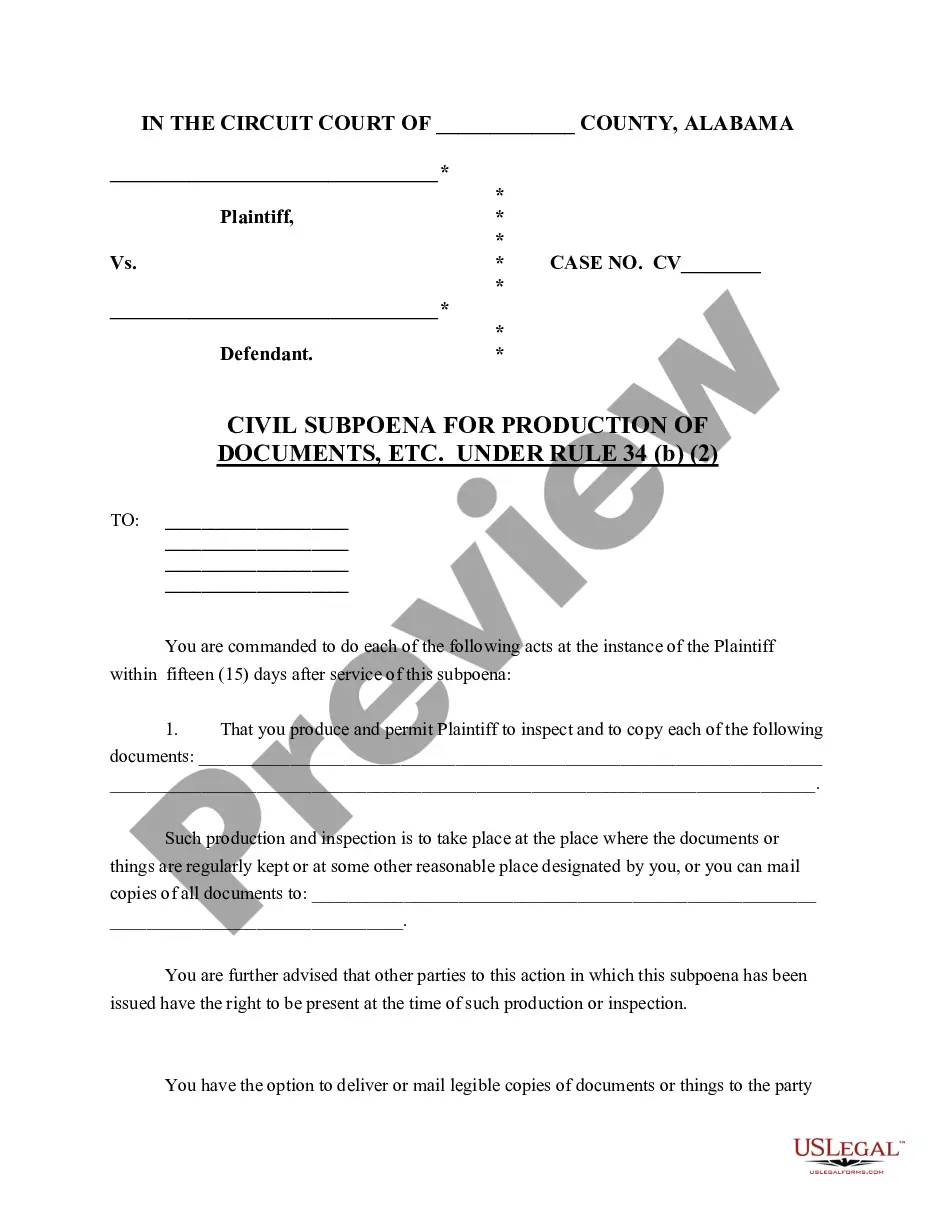
In legal terms, a subpoena for the production of documents is often referred to as a 'subpoena duces tecum'. This type of subpoena compels a nonparty to produce specific documents and tangible items relevant to a case. If you are navigating the complex process involved, consider an Alabama Motion for Court to Issue a Request to Issue a Subpoena to Produce Documents and Things to Nonparty to streamline your legal journey.
The rule 45 subpoena undue burden refers to a legal challenge that a recipient can raise against a subpoena. If the subpoena requires excessive or unreasonable effort or expense to comply, the recipient may claim that it creates an undue burden. Understanding this concept is vital when dealing with the Alabama Motion for Court to Issue a Request to Issue a Subpoena to Produce Documents and Things to Nonparty, as it can lead to negotiations or modifications of the original requests.