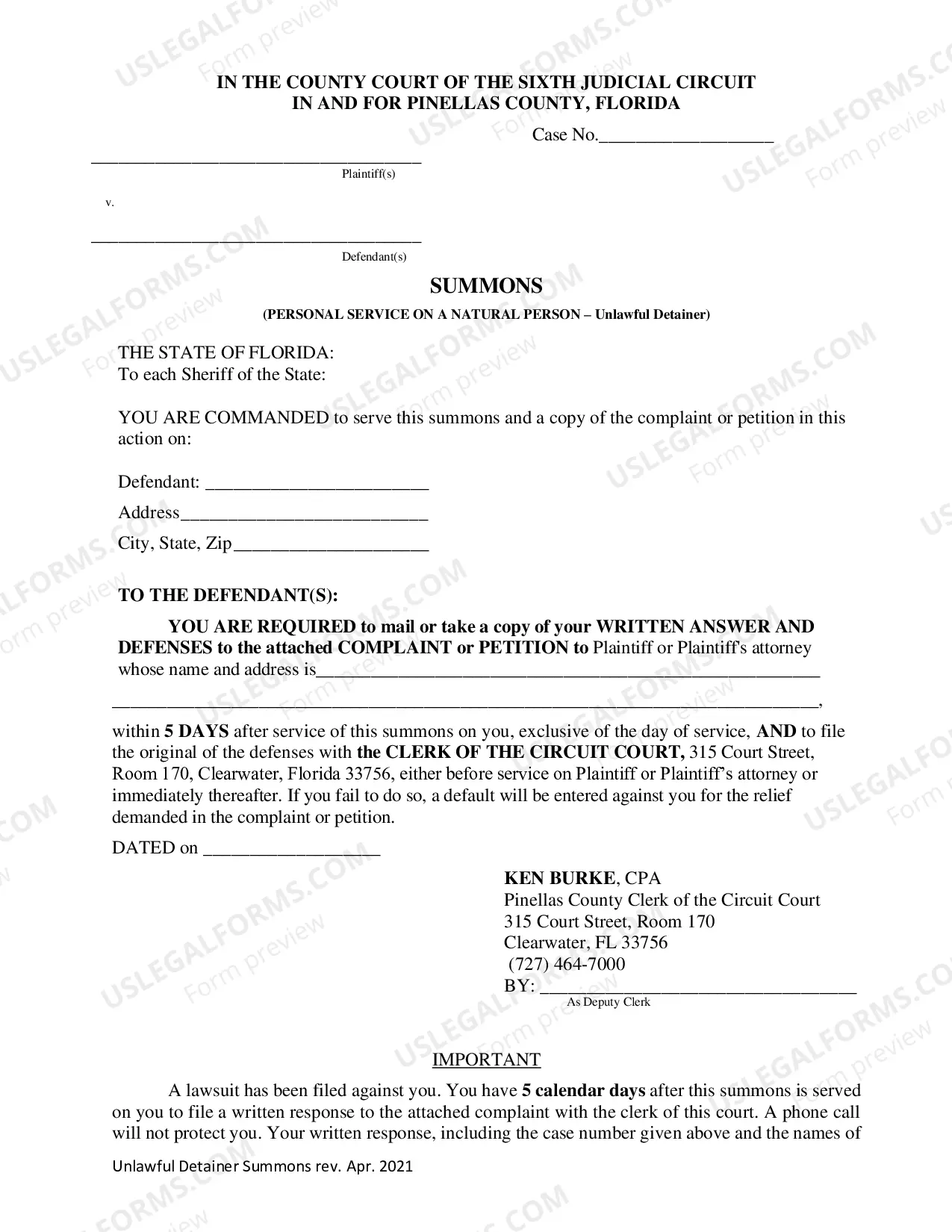
Alabama Order to Issue a Subpoena to Produce Documents and Things to Nonparty
Overview of this form
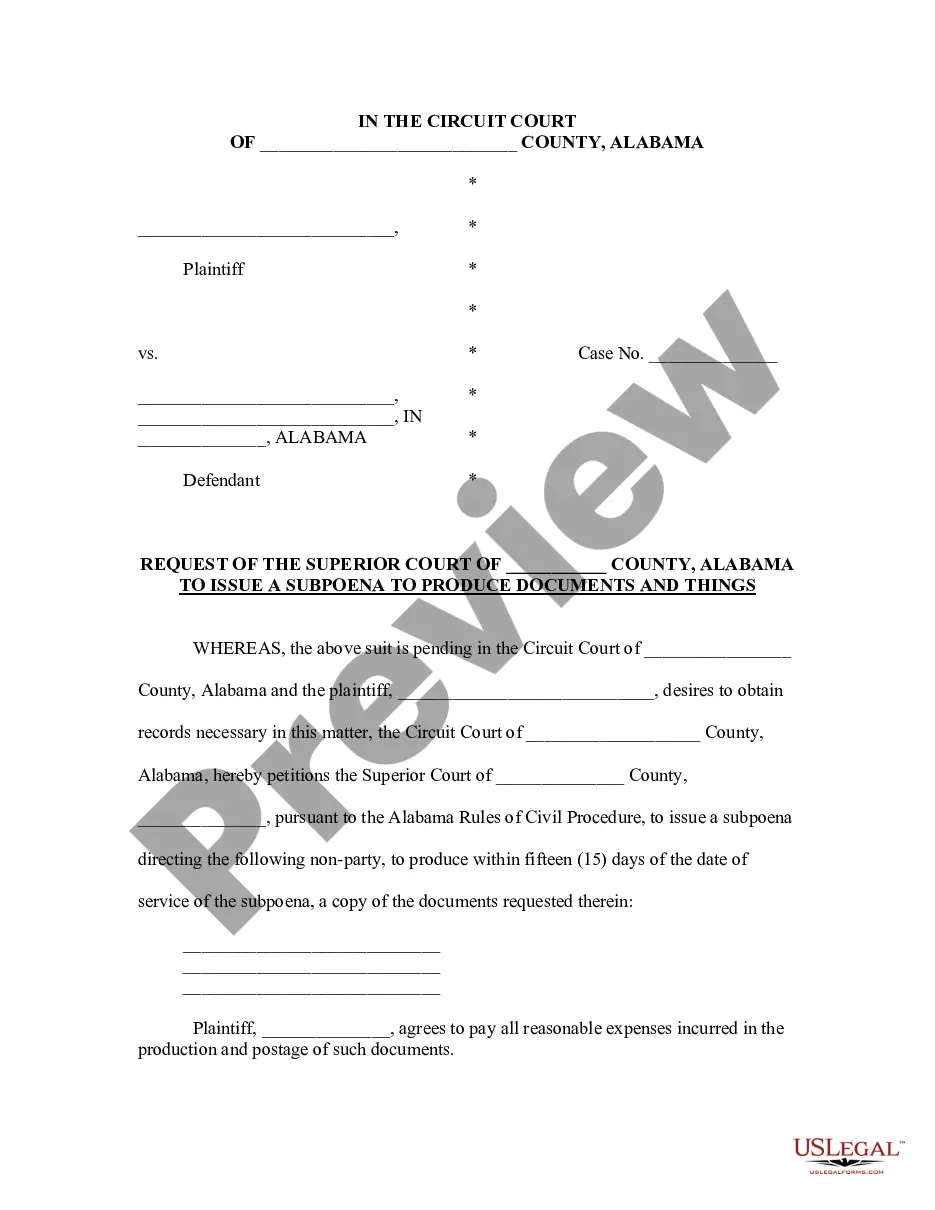
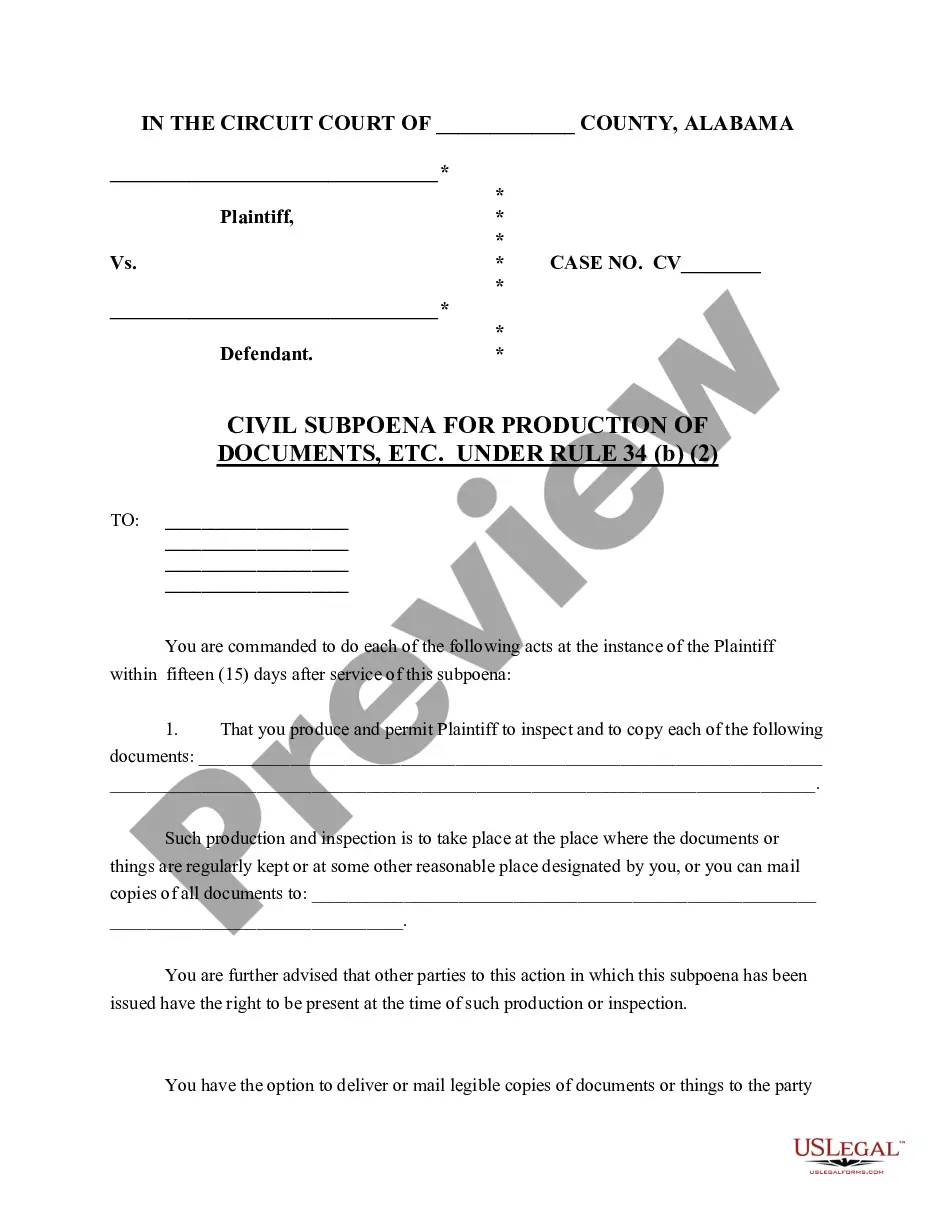
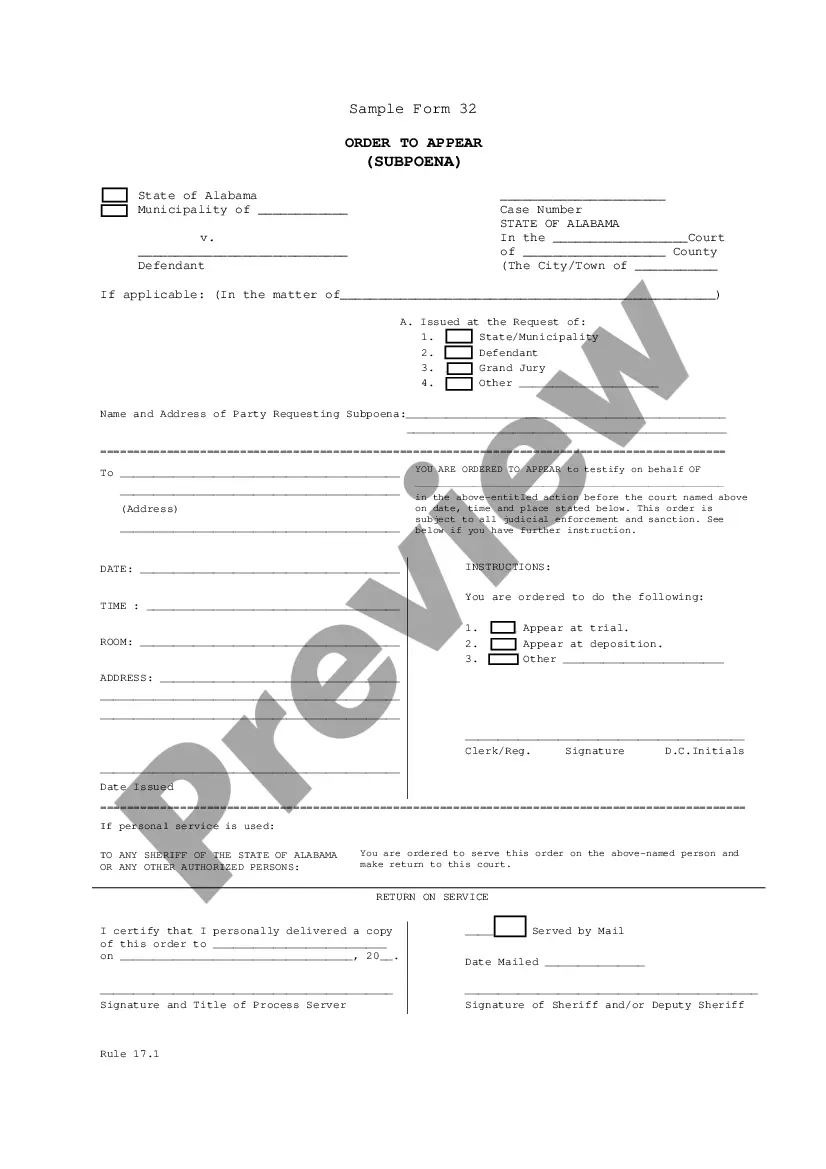
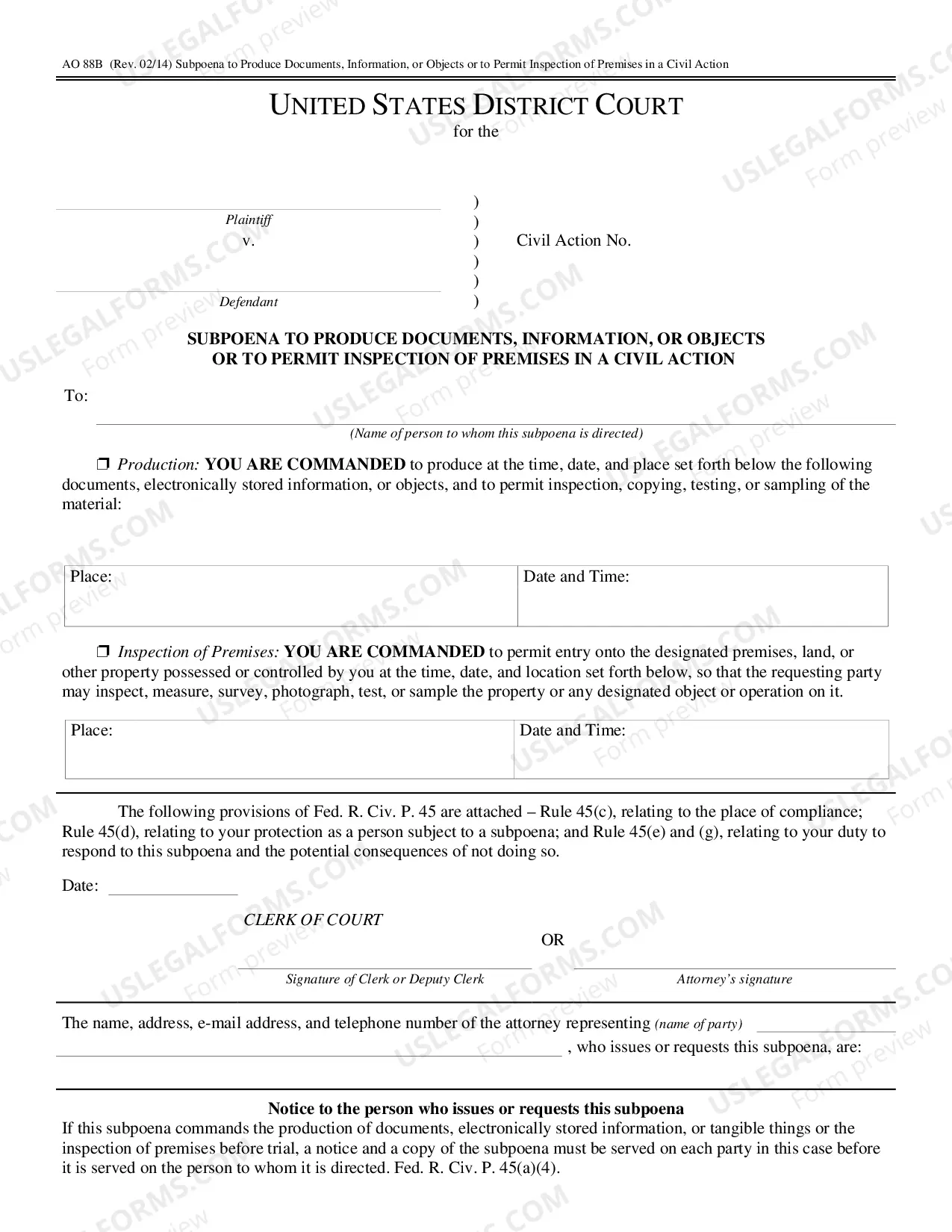
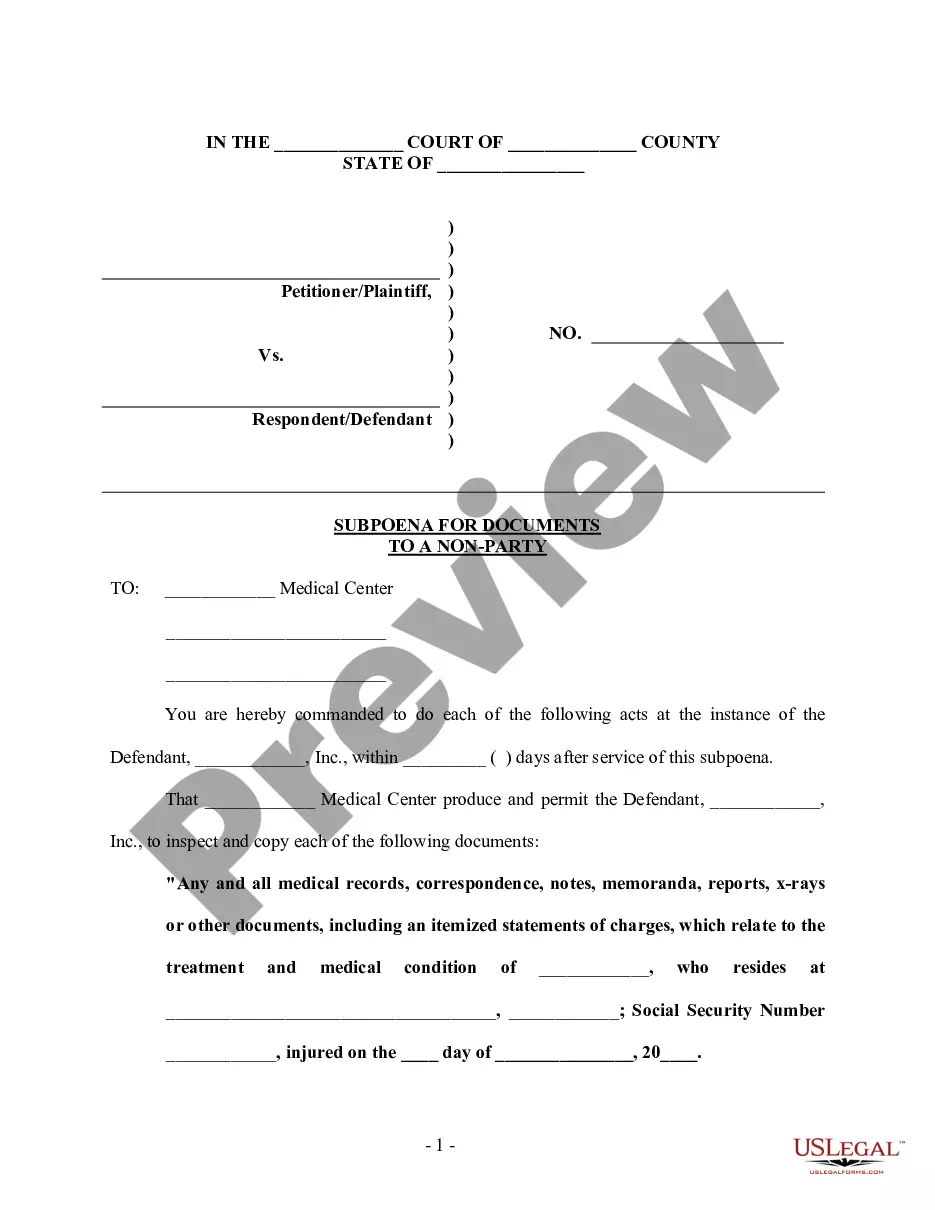
The Order to Issue a Subpoena to Produce Documents and Things to Nonparty is a legal document that allows a plaintiff to request the Circuit Court to compel a non-party to provide necessary records related to a case. This form serves a crucial role in gathering evidence that is essential for the plaintiff's argument, distinguishing it from other motions or requests for information that may involve parties to the case.
Key components of this form
- Case Information: Details about the ongoing case, including parties' names and case number.
- Request for Subpoena: A formal request for the court to issue a subpoena to a non-party for document production.
- Document List: Specifies the documents and records that the plaintiff seeks from the non-party.
- Response Timeframe: Outlines the non-party's obligation to produce documents within a specified timeframe.
- Costs Agreement: Acknowledgment from the plaintiff to cover reasonable expenses related to producing the documents.

When to use this document
This form should be used when a plaintiff needs specific documents or evidence that a non-party possesses, which are critical to support their claims in court. For example, if a case involves a contract dispute and a third party holds relevant records, this form can facilitate access to those documents to strengthen the plaintiff's position.
Intended users of this form
- Plaintiffs in civil litigation requiring documents from non-parties.
- Individuals representing themselves (pro se litigants) in court who need to gather evidence from third parties.
- Attorneys looking to obtain specific documents to support their clients' cases.
Instructions for completing this form
- Fill in the case information including the names of all parties and the case number.
- Detail the specific documents you are requesting from the non-party.
- Specify the deadline by which the non-party must produce the requested documents.
- Include a statement agreeing to cover any reasonable costs incurred by the non-party.
- Sign and date the form before submitting it to the court for approval.
Notarization guidance
This form does not typically require notarization to be legally valid. However, some jurisdictions or document types may still require it. US Legal Forms provides secure online notarization powered by Notarize, available 24/7 for added convenience.
Get your form ready online
Our built-in tools help you complete, sign, share, and store your documents in one place.
Make edits, fill in missing information, and update formatting in US Legal Forms—just like you would in MS Word.
Download a copy, print it, send it by email, or mail it via USPS—whatever works best for your next step.
Sign and collect signatures with our SignNow integration. Send to multiple recipients, set reminders, and more. Go Premium to unlock E-Sign.
If this form requires notarization, complete it online through a secure video call—no need to meet a notary in person or wait for an appointment.
We protect your documents and personal data by following strict security and privacy standards.

Make edits, fill in missing information, and update formatting in US Legal Forms—just like you would in MS Word.

Download a copy, print it, send it by email, or mail it via USPS—whatever works best for your next step.

Sign and collect signatures with our SignNow integration. Send to multiple recipients, set reminders, and more. Go Premium to unlock E-Sign.

If this form requires notarization, complete it online through a secure video call—no need to meet a notary in person or wait for an appointment.

We protect your documents and personal data by following strict security and privacy standards.
Common mistakes to avoid
- Failing to specify the documents clearly, which can lead to incomplete responses.
- Not adhering to the timeframe for document production.
- Omitting signatures or not dating the form correctly, rendering it invalid.
Why use this form online
- Convenience of downloading the form immediately and completing it at your own pace.
- Access to professionally drafted templates that ensure compliance with legal standards.
- The ability to make edits and customize the form as needed before submission.
Looking for another form?
Form popularity
FAQ
In Alabama, an Alabama Order to Issue a Subpoena to Produce Documents and Things to Nonparty can be issued by attorneys of record in a case. Additionally, certain court officials and judges have the authority to issue subpoenas as well. This ensures that pertinent information is collected effectively during legal proceedings. If you need assistance with this process, consider using the US Legal Forms platform, which provides the necessary templates and guidance.
Yes, a non-party can object to a subpoena. If you receive an Alabama Order to Issue a Subpoena to Produce Documents and Things to Nonparty that you believe is unreasonable, you have the right to file an objection. This could be based on grounds such as relevance, burden, or privilege. It is advisable to consult with a legal professional who can help determine the best course of action.
The type of subpoena that orders the production of documents is known as a subpoena duces tecum. The Alabama Order to Issue a Subpoena to Produce Documents and Things to Nonparty specifically refers to these subpoenas for document requests. This legal request helps gather vital evidence needed for your case. Keep in mind that proper service and response timelines must be adhered to for effectiveness.
A Rule 45 subpoena to produce documents is a legal tool used in the discovery phase of litigation. It falls under the Federal Rules of Civil Procedure and allows parties to request documents from non-parties. The Alabama Order to Issue a Subpoena to Produce Documents and Things to Nonparty follows similar procedures to ensure compliance. This rule is essential for gathering information that may support your case.
No, a regular person cannot issue a subpoena on their own. The process to obtain an Alabama Order to Issue a Subpoena to Produce Documents and Things to Nonparty requires involvement from a legal professional. Only attorneys can formally create and file subpoenas with the court, ensuring that all legal standards are adhered to. This protection is vital for both parties involved.
In Alabama, a subpoena can be served by a law enforcement officer, a process server, or a lawyer. The Alabama Order to Issue a Subpoena to Produce Documents and Things to Nonparty specifies that proper service is crucial for the subpoena's validity. If you're unsure, it's recommended to enlist the help of a legal professional for effective service. This guarantees that all legal requirements are met.
No, a non-party cannot issue a subpoena by themselves. The Alabama Order to Issue a Subpoena to Produce Documents and Things to Nonparty requires a court order, which is typically issued through an attorney. This ensures that the subpoena is legally binding and follows the rules set by the court. If you are a non-party needing documents, consult with a lawyer to assist you.
Yes, you can subpoena the opposing party in your case. The Alabama Order to Issue a Subpoena to Produce Documents and Things to Nonparty allows you to request specific documents or information from the other party. This legal tool helps strengthen your position by gathering relevant evidence. Make sure to follow the proper legal procedures to ensure compliance.
The three types of subpoenas are subpoenas for testimony, subpoenas duces tecum for documents, and subpoenas ad testificandum for witnesses. Each type serves a unique function in legal proceedings, allowing parties to gather vital information. An Alabama Order to Issue a Subpoena to Produce Documents and Things to Nonparty typically involves the documents category, ensuring access to essential evidence without unnecessary delays.
A request for production of documents and a subpoena serve similar purposes but are not the same. A request for production is usually part of the discovery process in a lawsuit, while a subpoena is a legal order requiring compliance. When pursuing an Alabama Order to Issue a Subpoena to Produce Documents and Things to Nonparty, ensure you understand the distinctions to protect your legal interests effectively.