Alabama Deed Reserving Life Estate
What is this form?
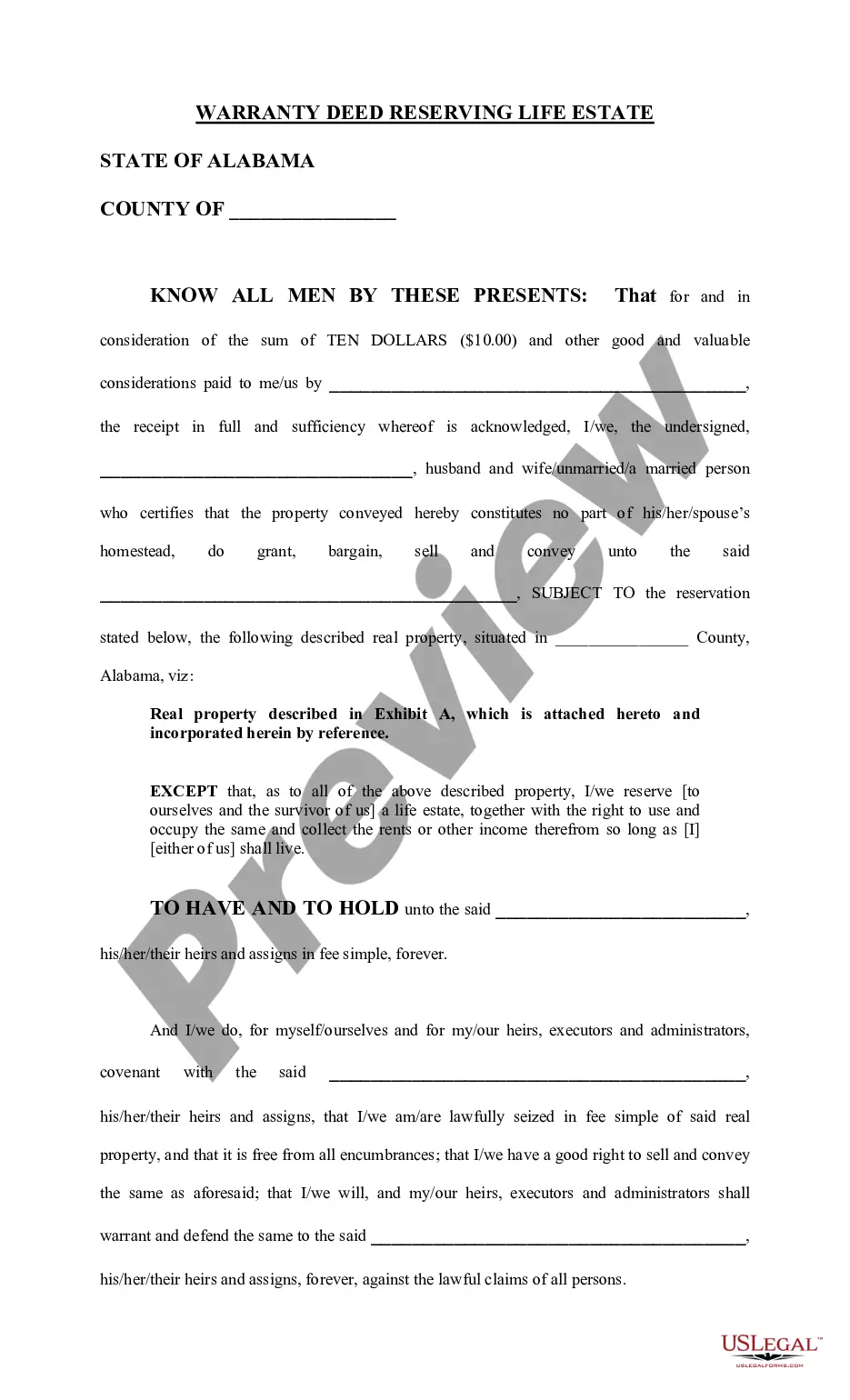
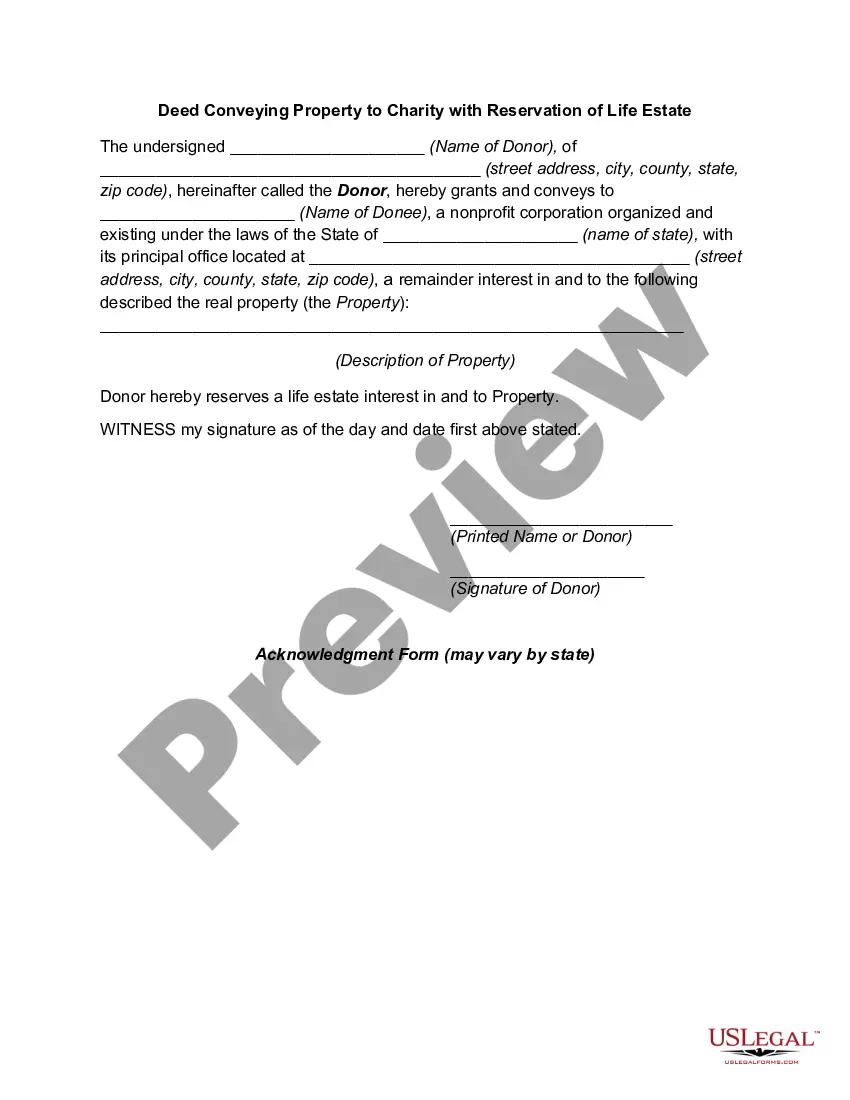
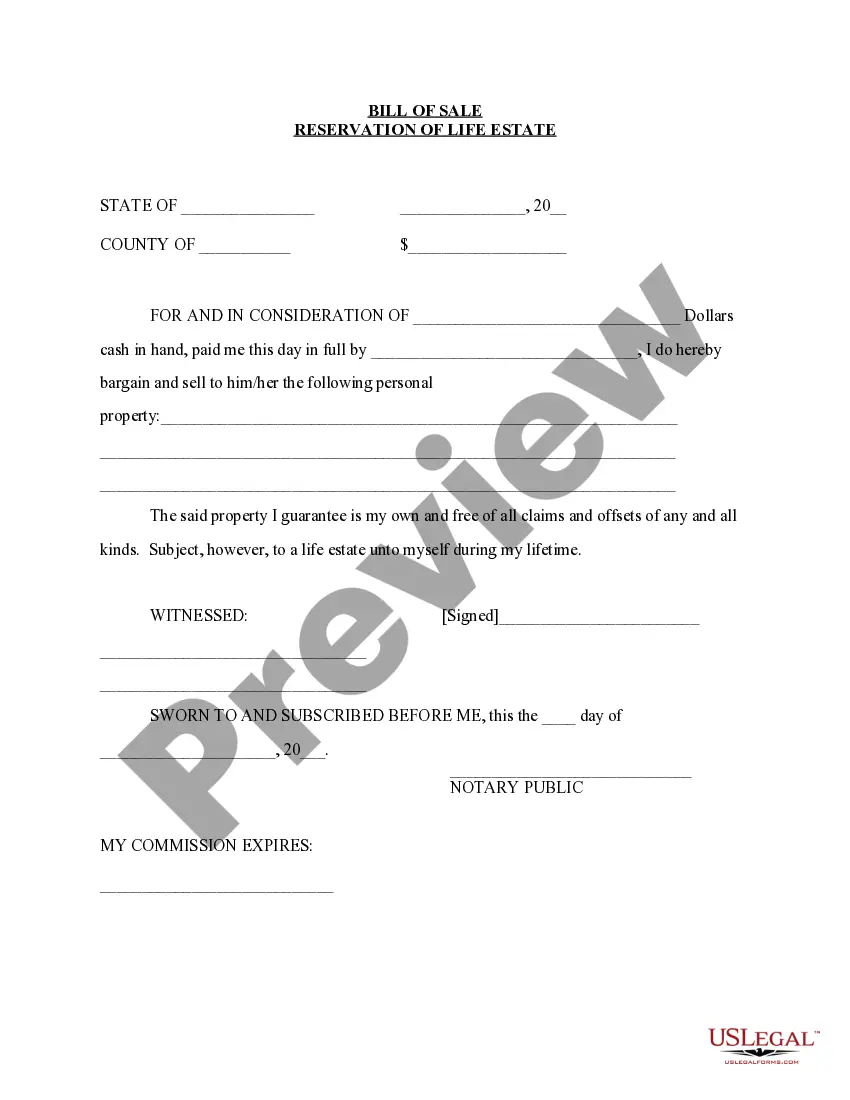
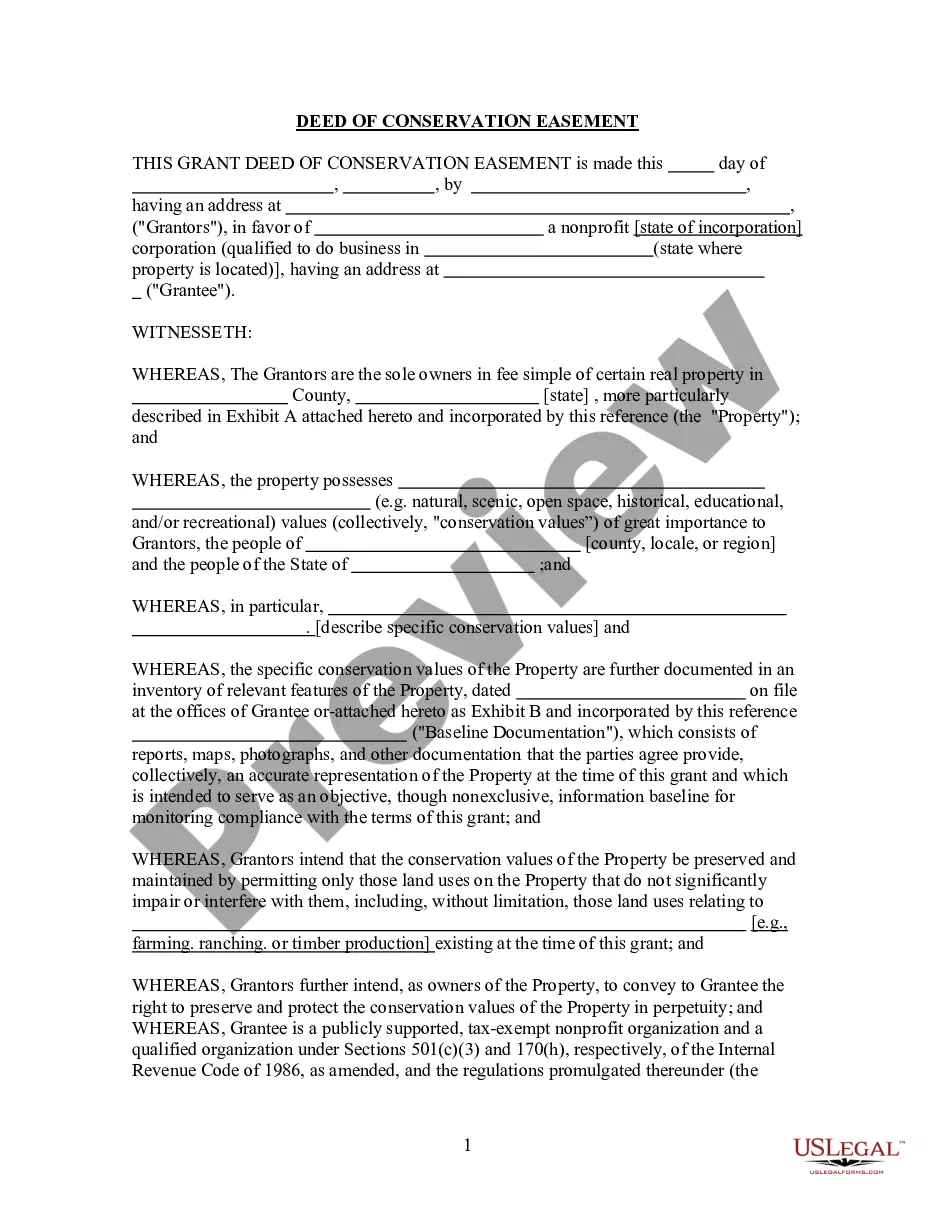
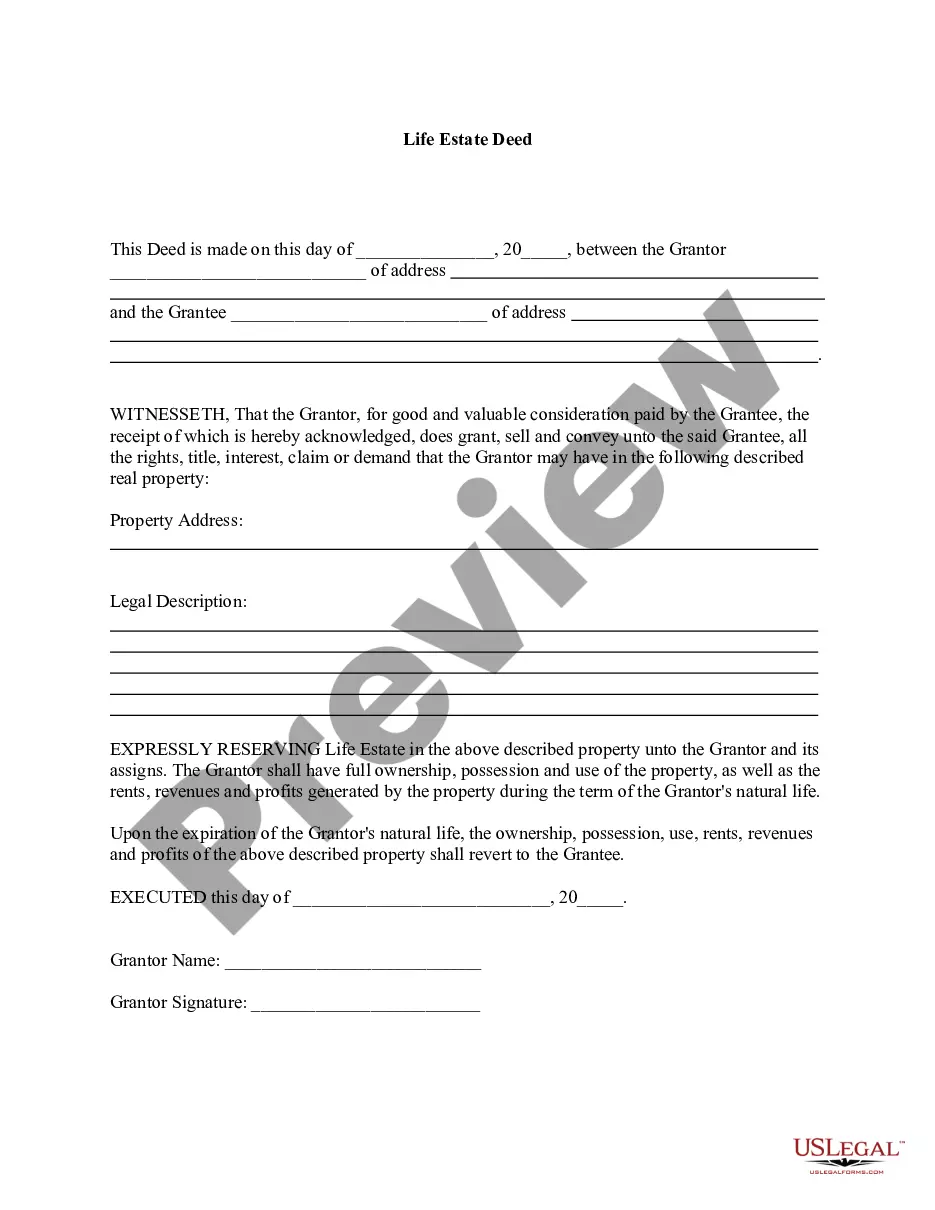
The Deed Reserving Life Estate is a legal document that allows a property owner, known as the grantor, to convey property to another party while retaining the right to live on and use the property for the remainder of their life. Unlike a standard deed where all rights are transferred, this form specifically establishes a life estate, meaning the grantor retains certain rights even after the property has been transferred to someone else. This ensures the grantor can benefit from the property until their death, making it a crucial tool for estate planning and asset management.
Key parts of this document
- Identification of the grantor and grantee, including their legal names.
- Specification of the property being conveyed, typically detailed in an attached exhibit.
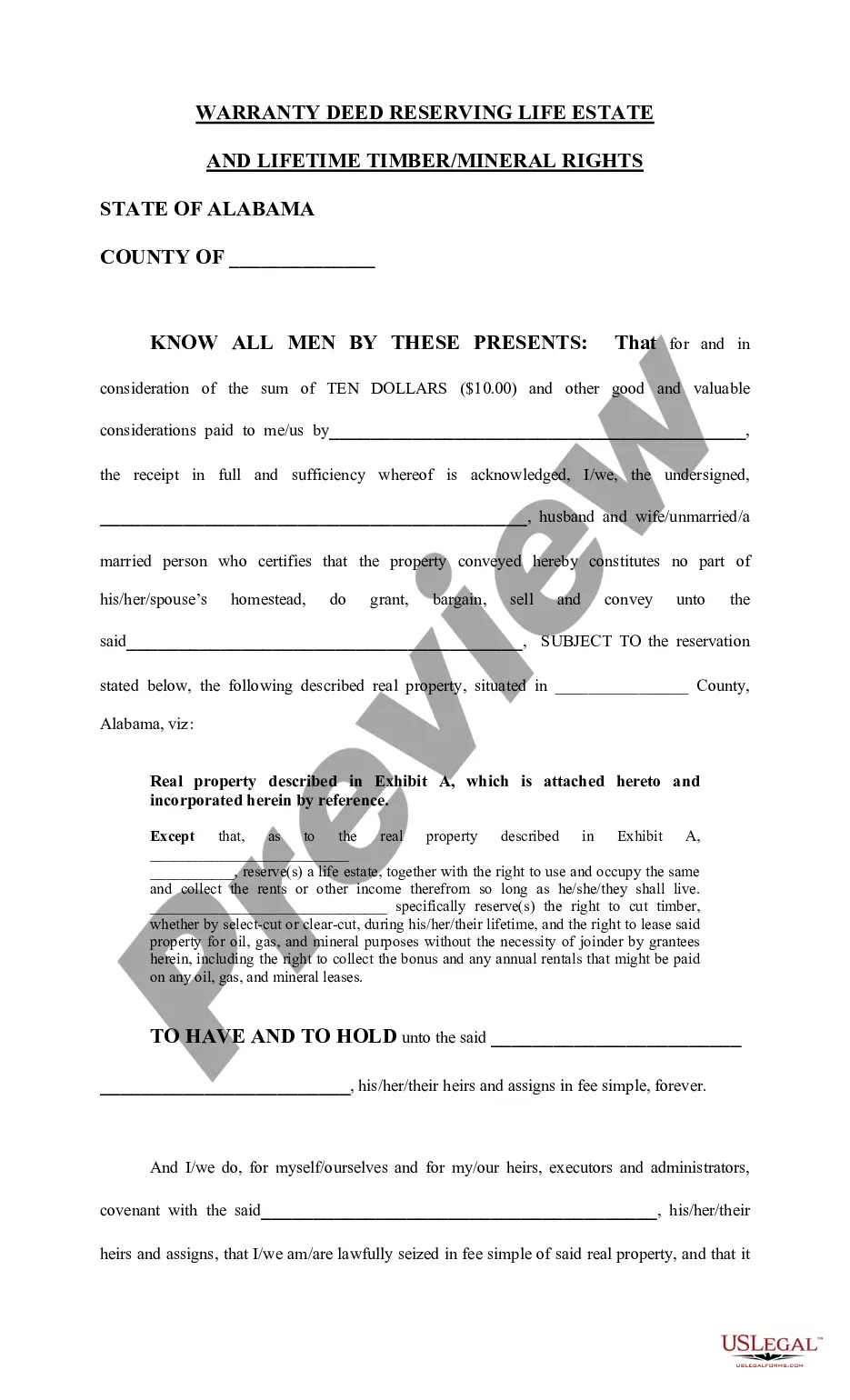
- Statement of the life estate reservation, outlining the grantor's rights to use and occupy the property.
- Legal assurances from the grantor about their ownership and the property's status.
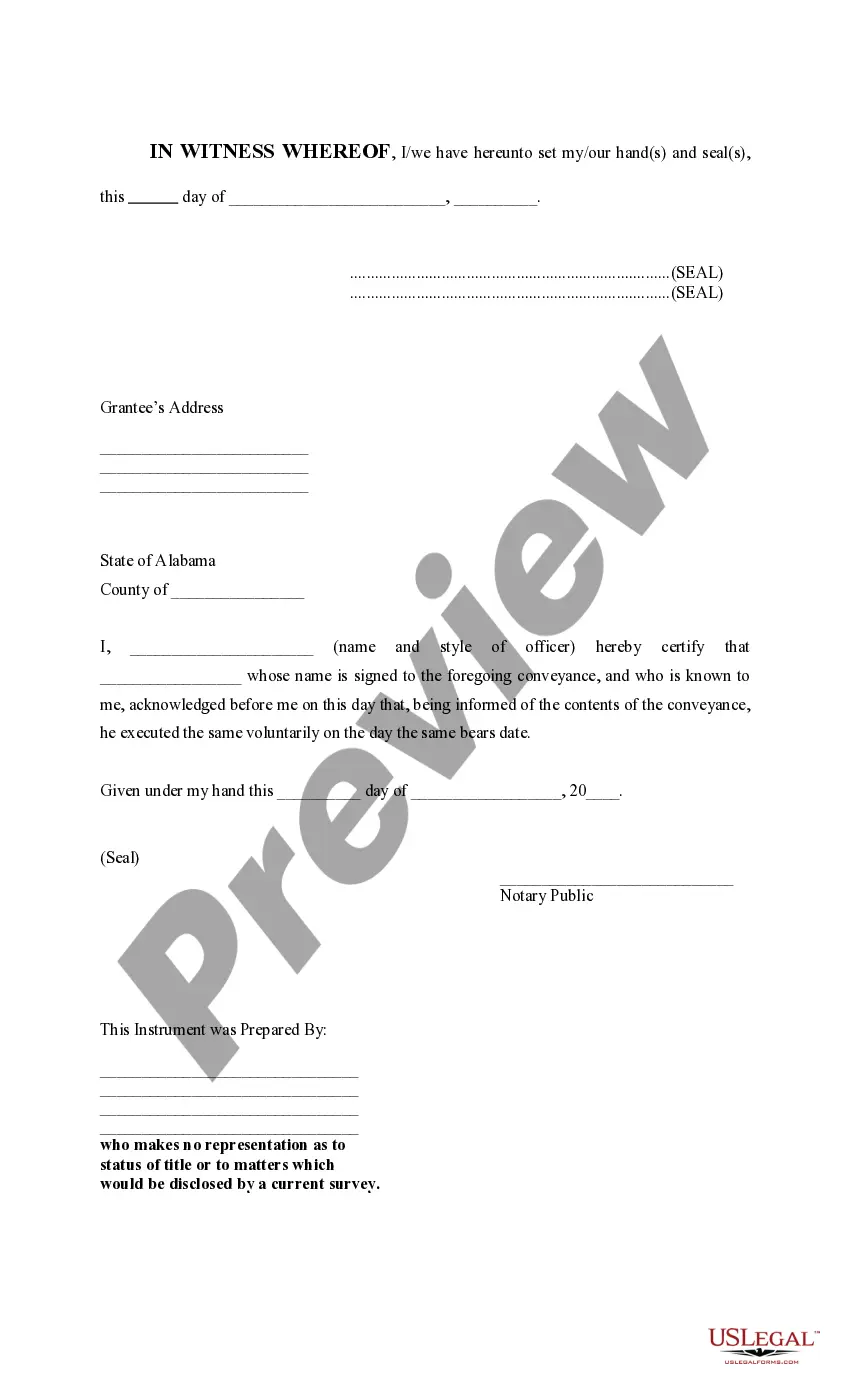
- Notary acknowledgment to verify the identities of the signers.
Common use cases
This form is commonly used in situations where an individual wishes to transfer property to a family member or other party while maintaining the right to occupy the property for the rest of their life. It is particularly useful for estate planning, allowing the grantor to ensure they have housing security while also simplifying the transfer of assets after their passing.
Who needs this form
This form is intended for:
- Property owners who want to transfer their property while retaining living rights.
- Individuals involved in estate planning looking to manage their assets effectively.
- Couples or co-owners wishing to secure their rights to a shared property after the transfer.
How to prepare this document
To complete the Deed Reserving Life Estate, follow these steps:
- Identify the parties involved by entering the full legal names of the grantor and grantee.
- Specify the property being conveyed, using legal descriptions and attaching any necessary exhibits.
- Clearly describe the life estate reservation, detailing the rights retained by the grantor.
- Ensure all parties sign the deed in the presence of a notary public for legal validity.
- Provide the date of execution and any additional details required by local laws.
Does this document require notarization?
Yes, this form must be notarized to be legally valid. The notarization process ensures that the identities of the parties are verified and that they are executing the deed voluntarily. US Legal Forms offers integrated online notarization services, allowing you to complete this step conveniently through secure video calls without having to travel.
Get your form ready online
Our built-in tools help you complete, sign, share, and store your documents in one place.
Make edits, fill in missing information, and update formatting in US Legal Forms—just like you would in MS Word.
Download a copy, print it, send it by email, or mail it via USPS—whatever works best for your next step.
Sign and collect signatures with our SignNow integration. Send to multiple recipients, set reminders, and more. Go Premium to unlock E-Sign.
If this form requires notarization, complete it online through a secure video call—no need to meet a notary in person or wait for an appointment.
We protect your documents and personal data by following strict security and privacy standards.

Make edits, fill in missing information, and update formatting in US Legal Forms—just like you would in MS Word.

Download a copy, print it, send it by email, or mail it via USPS—whatever works best for your next step.

Sign and collect signatures with our SignNow integration. Send to multiple recipients, set reminders, and more. Go Premium to unlock E-Sign.

If this form requires notarization, complete it online through a secure video call—no need to meet a notary in person or wait for an appointment.

We protect your documents and personal data by following strict security and privacy standards.
Mistakes to watch out for
- Failing to properly identify the property, leading to potential disputes about ownership.
- Omitting the life estate reservation clause, which could invalidate the grantor's retained rights.
- Not having the deed notarized, resulting in legal challenges about the documentâs authenticity.
- Leaving out or misrepresenting the consideration (e.g., payment) given for the property.
Why use this form online
- Convenient online access to templates that are easy to download and customize.
- Ability to edit the form to meet personal circumstances without legal fees.
- Secure formatting ensures the document meets necessary legal standards.
Legal use & context
- The Deed Reserving Life Estate is legally enforceable in Alabama as long as it meets the statutory requirements of a deed.
- It helps prevent potential disputes between heirs over property ownership and usage rights.
- Using this form aids in clear communication of intentions, reducing ambiguity regarding the grantor's rights to the property.
Quick recap
- The Deed Reserving Life Estate allows property owners to retain use of the property until death while transferring ownership.
- Accurate property description and specific clauses are crucial for the deed's effectiveness.
- Proper completion, including notarization, is essential to ensure the document's legal validity.
Looking for another form?
Form popularity
FAQ
An Alabama Deed Reserving Life Estate is a real estate deed that transfers property to a grantee while the grantor reserves the right to live on and use the property for life. It supports estate planning by securing housing for the grantor and simplifying posthumous asset transfer. The form requires grantor and grantee names, a property description (often via exhibit), a life estate reservation, legal assurances, and a notary acknowledgment.
A reserving life estate deed is a type of deed that conveys property to another person while reserving the grantor's life estate rights to occupy and use the property. In Alabama, this form accomplishes that arrangement for the grantor while transferring title to the grantee. Key components include grantor and grantee names, property description, life estate reservation, legal assurances, and notary acknowledgment.
Yes. In Alabama, life estate arrangements can be created by a deed that transfers property to a grantee while reserving the grantor's life use rights. The Alabama Deed Reserving Life Estate form is designed to accomplish this and includes required elements such as identification, property description, life estate reservation, legal assurances, and a notary acknowledgment.
Life estate deeds are recognized in Alabama as a valid way to transfer property while preserving life rights for the grantor. The Alabama Deed Reserving Life Estate form sets out the grantor's life occupancy, describes the property and parties, and includes required legal assurances and a notary acknowledgment to support validity.
The Alabama Deed Reserving Life Estate creates a fixed arrangement: the grantor transfers ownership to the grantee while reserving a life estate. Any attempt to undo typically requires additional legal steps beyond this form, such as a new deed or court action, and should be reviewed with a licensed attorney.
This form differentiates itself by explicitly reserving the grantor's right to live on and use the property for life while transferring title to the grantee. A standard life estate deed would transfer full ownership without retaining life occupancy, so this form uniquely preserves housing rights for the grantor.