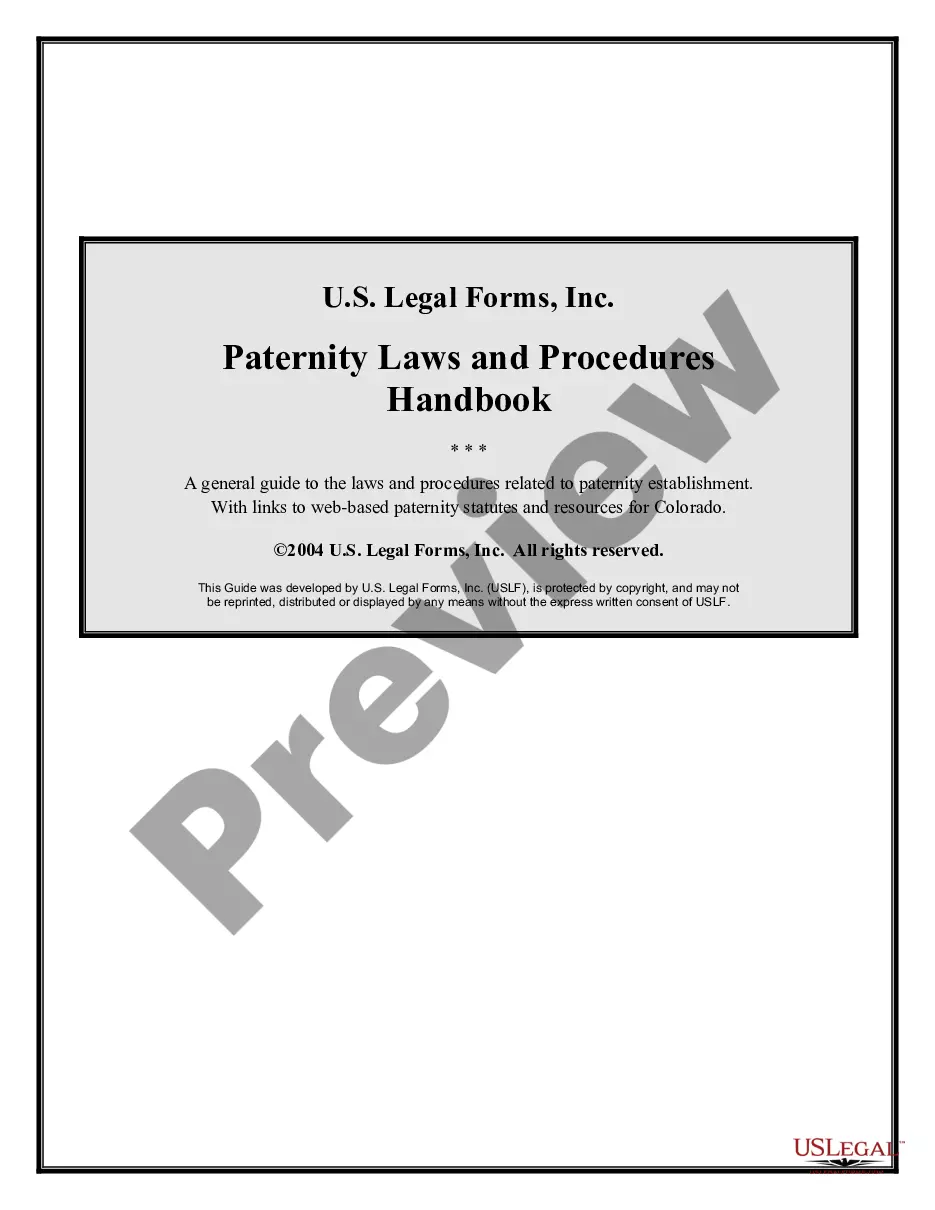
Colorado Paternity Law and Procedure Handbook
About this form
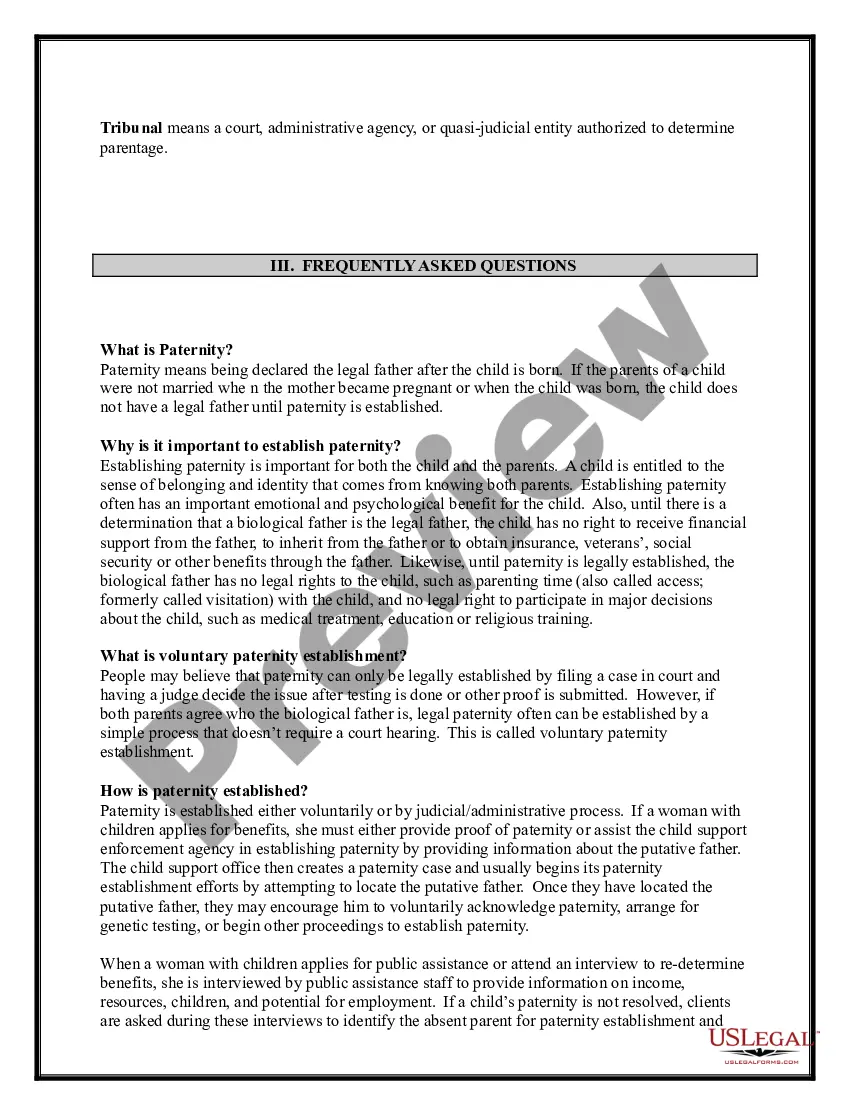
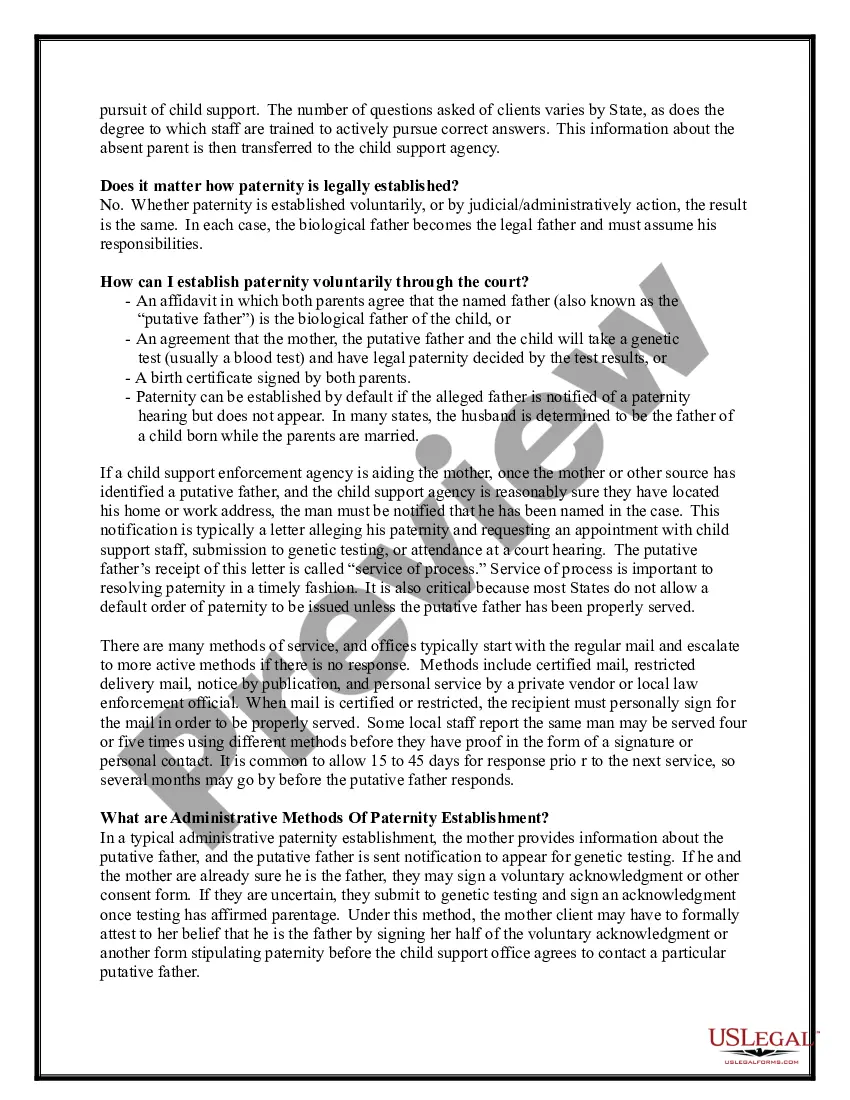
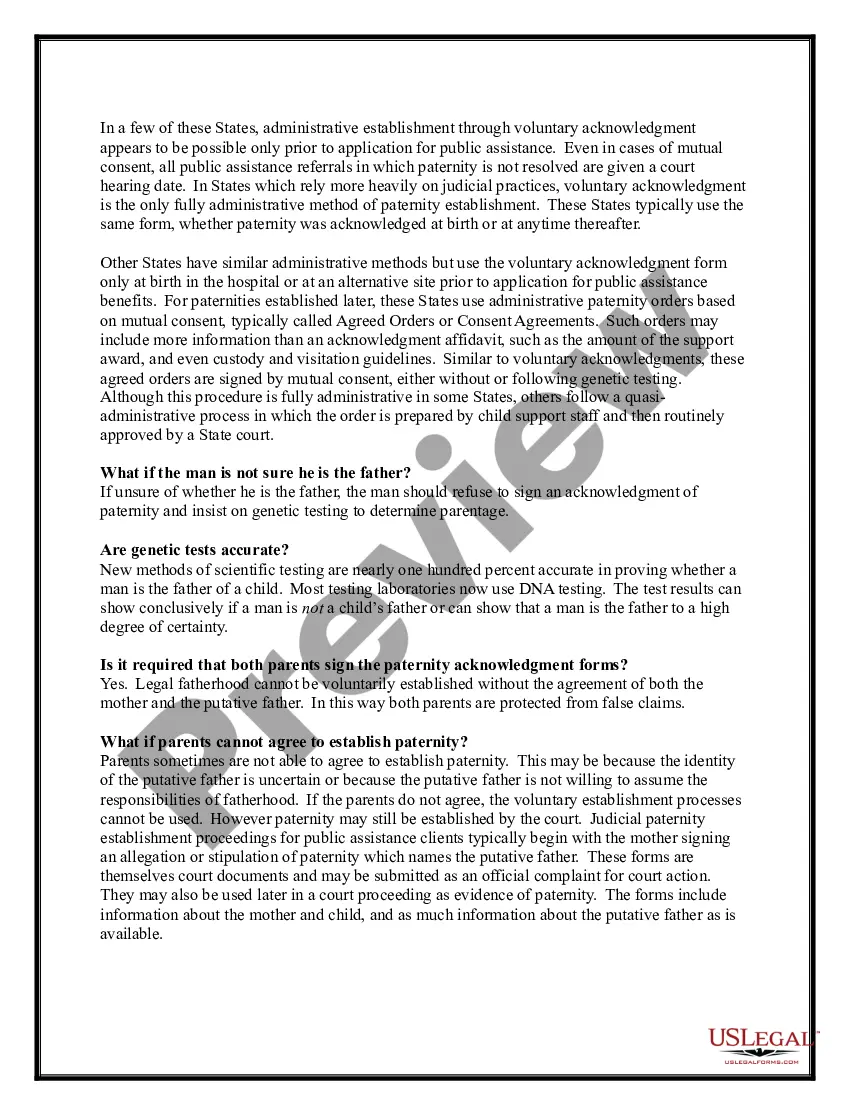
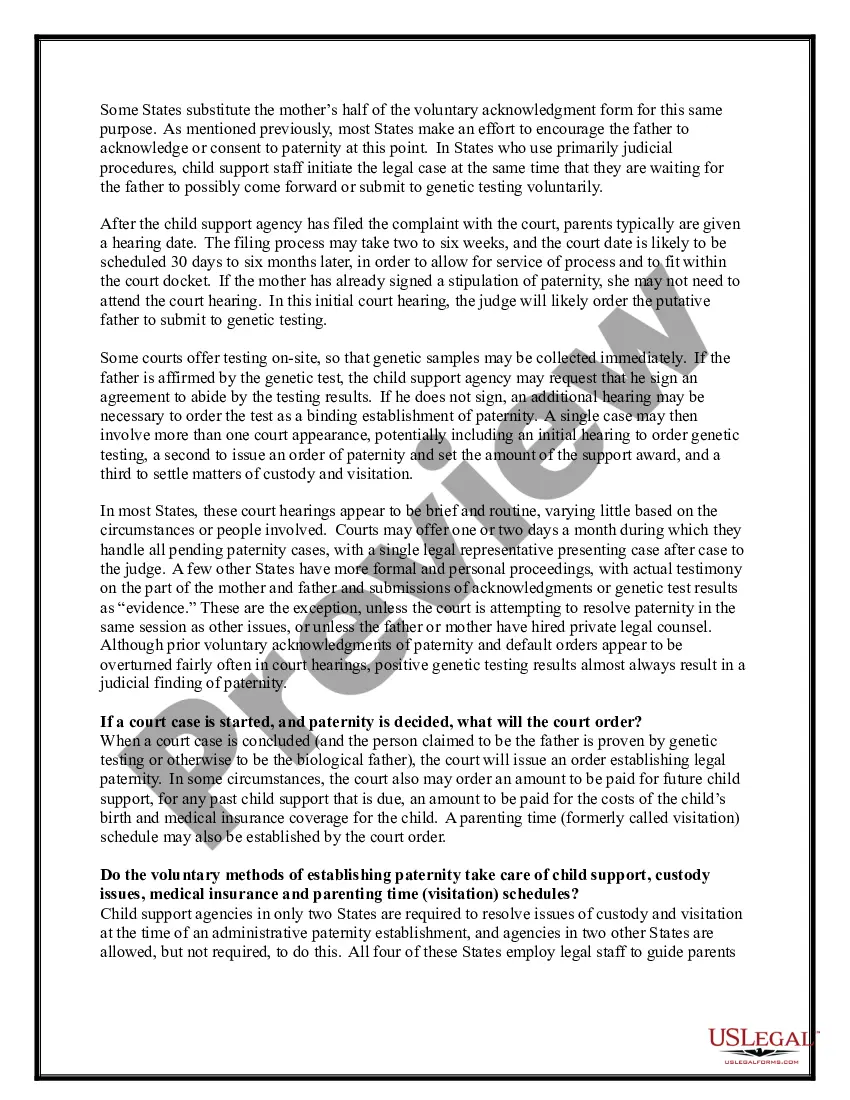
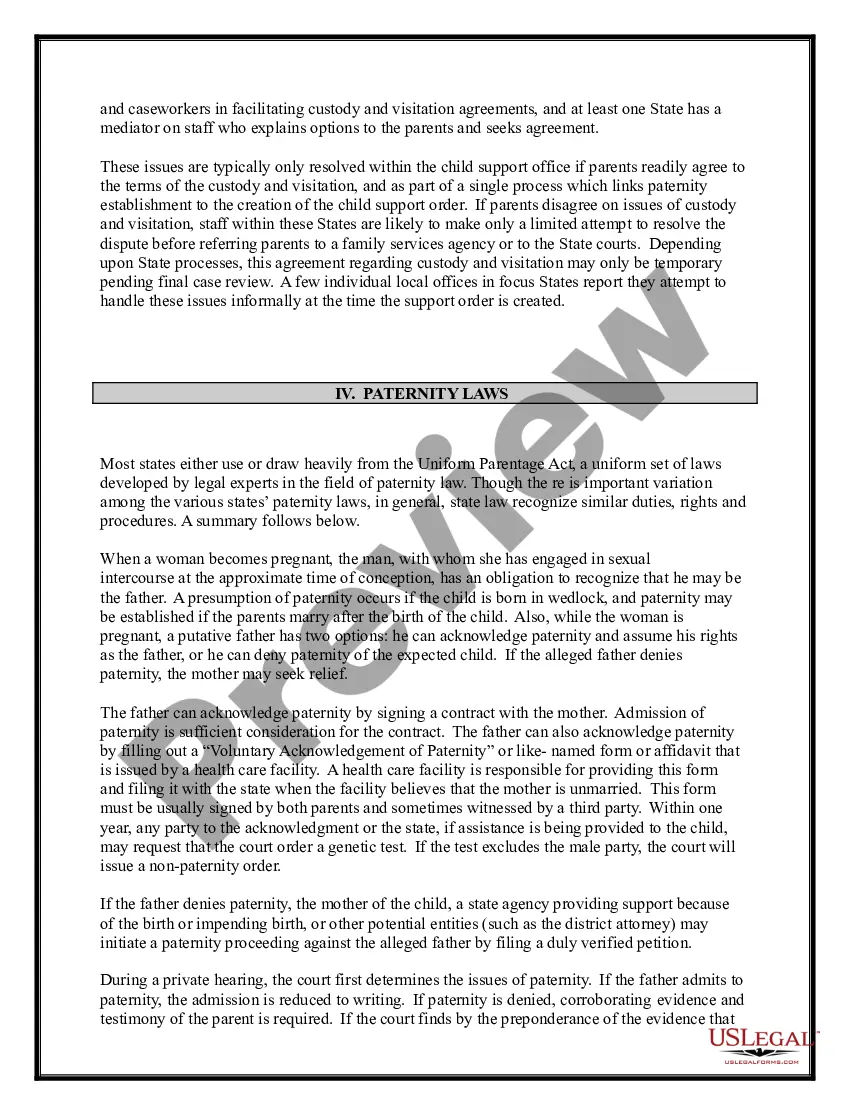
The Paternity Law and Procedure Handbook is a comprehensive guide that outlines the laws and procedures for establishing paternity across multiple states in the U.S. Unlike other legal forms that may focus on individual state statutes, this handbook provides a broad overview, including resources for both voluntary and court-established paternity. It assists individuals in understanding their rights and responsibilities regarding paternity, making it an essential resource for parents navigating these legal processes.
What’s included in this form
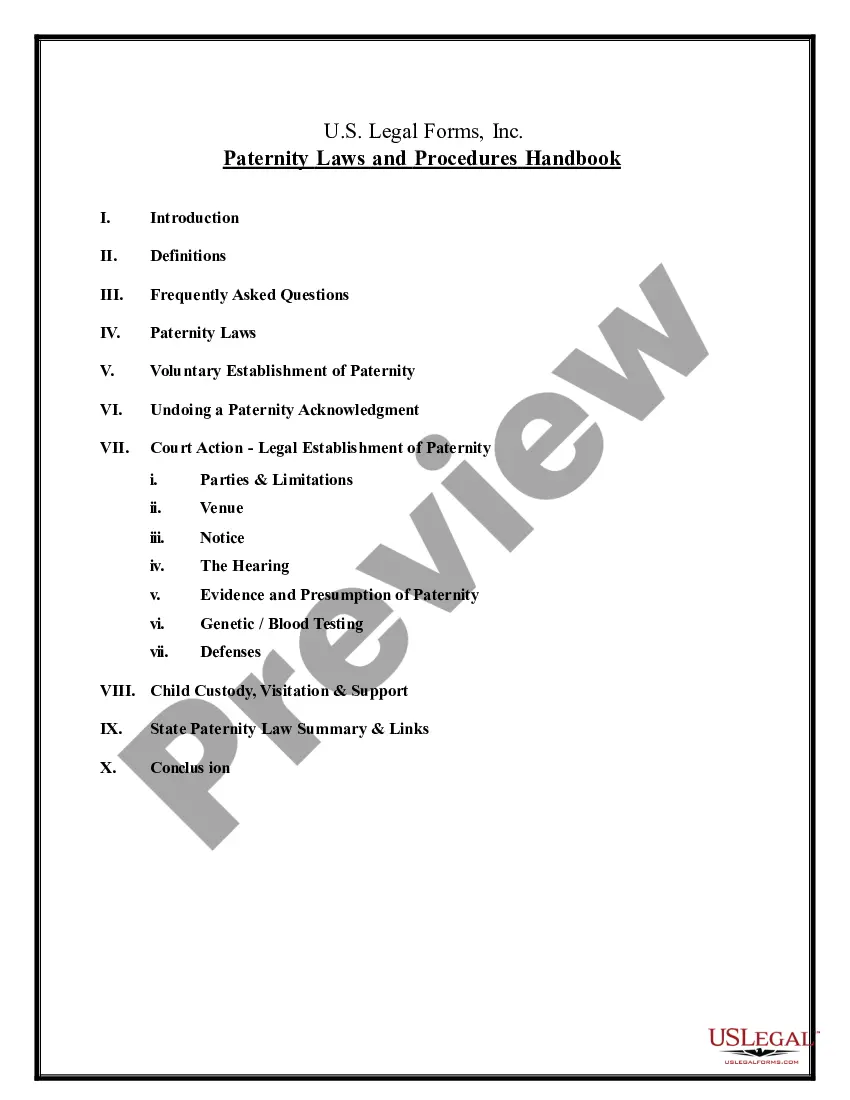
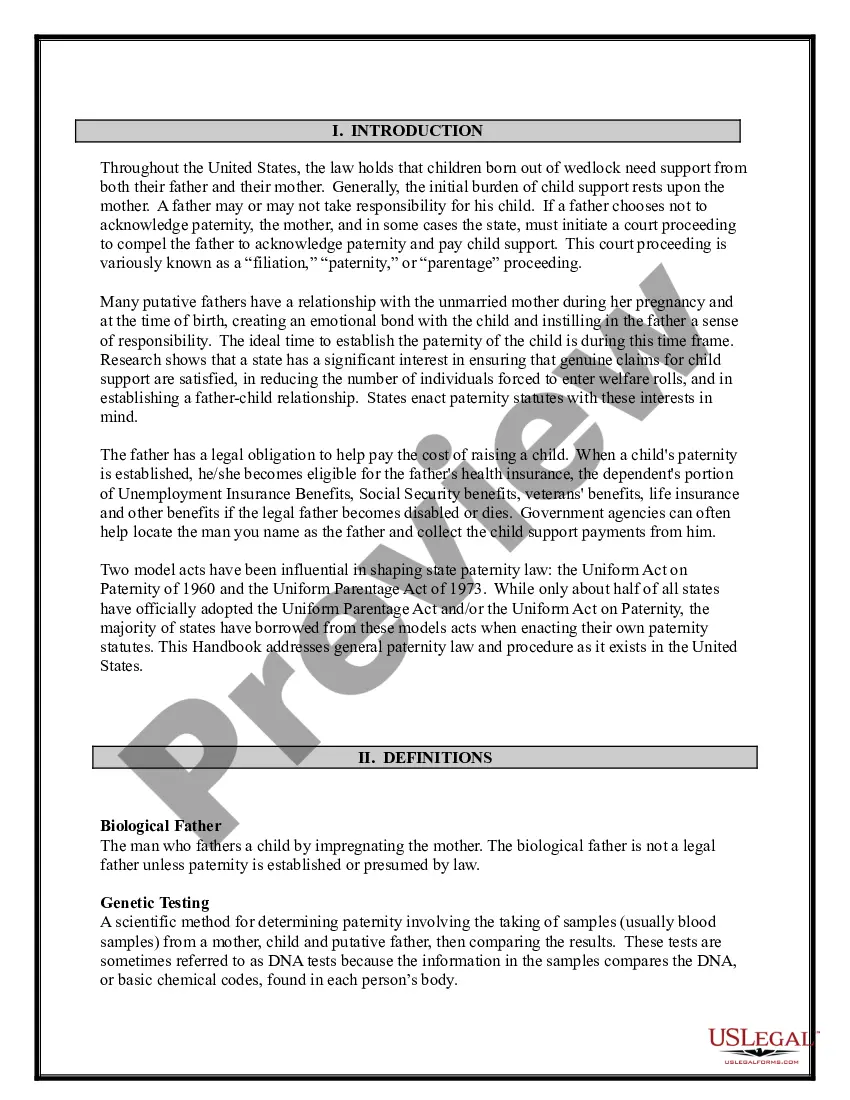
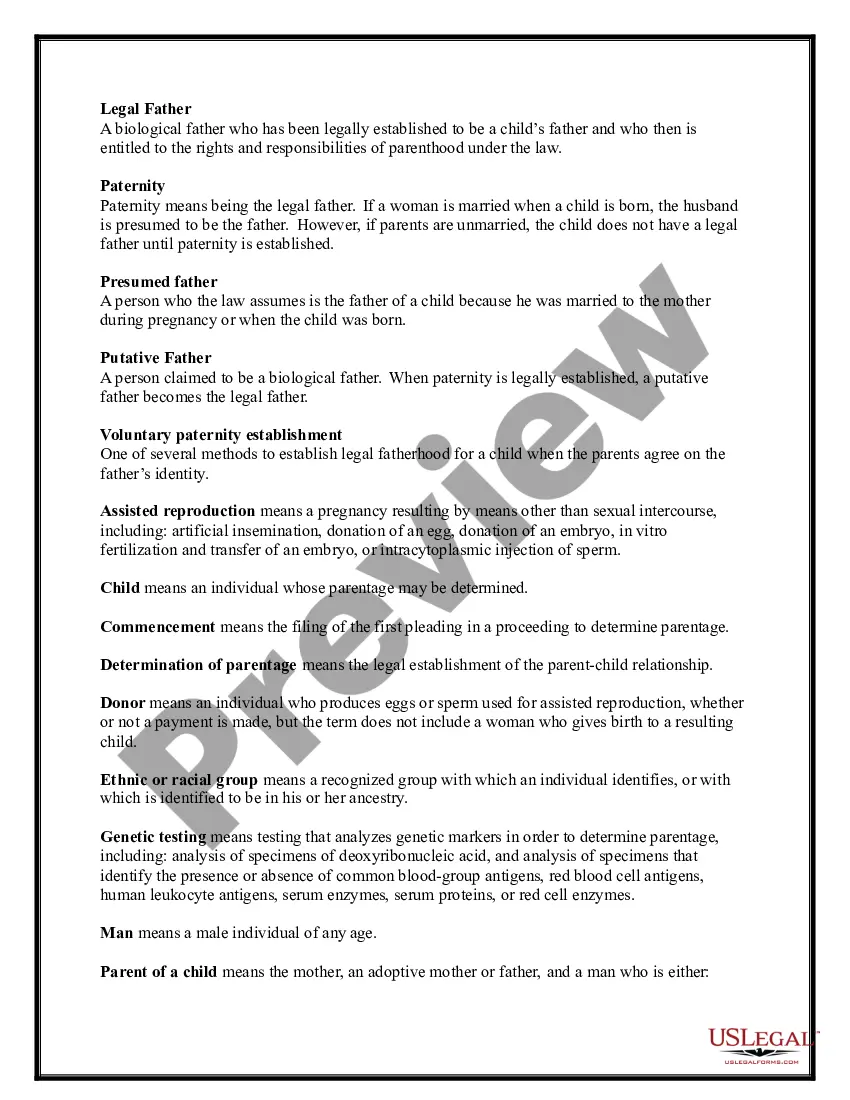
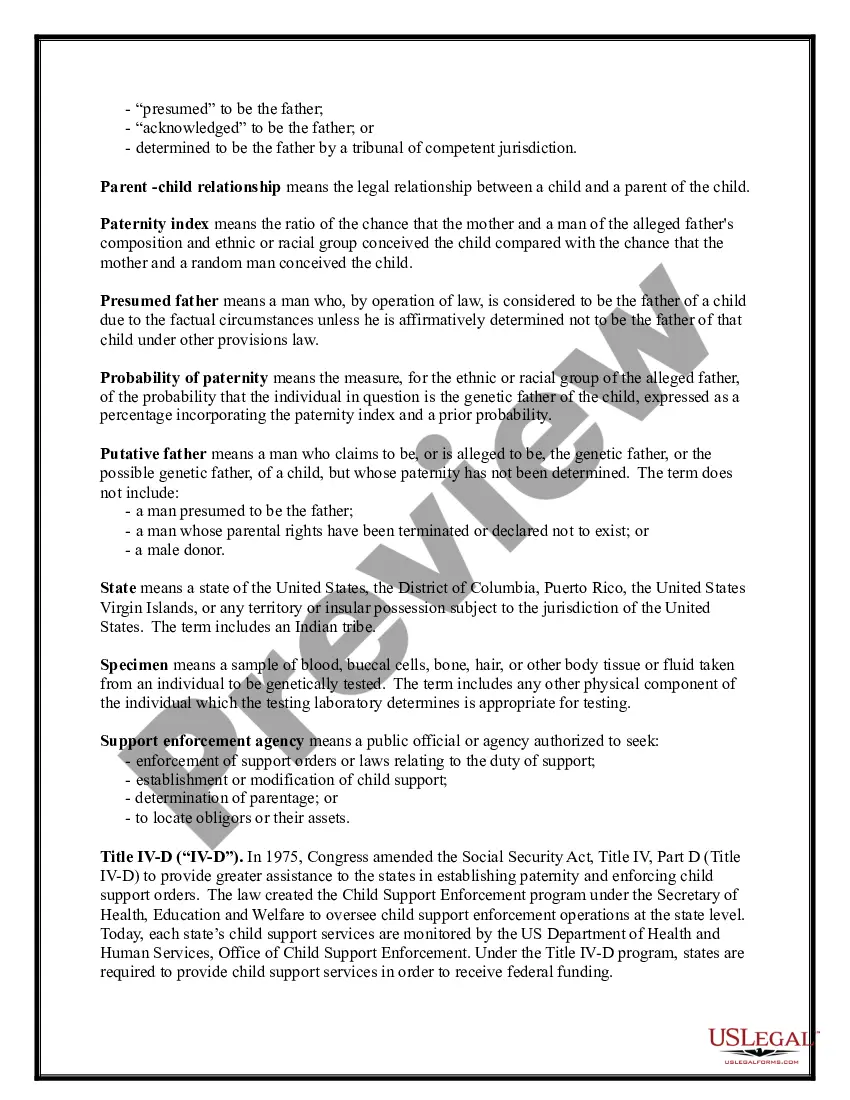
- Introduction to paternity laws and definitions of key terms.
- Frequently asked questions that address common paternity issues.
- A detailed overview of voluntary paternity establishment processes.
- Legal actions and court procedures for establishing paternity.
- State-specific summaries of paternity laws.


When to use this document
This handbook should be used when parents need guidance on establishing paternity, particularly when the father is not acknowledging his paternity. It is also useful in situations where legal action may be necessary to enforce support obligations or to assert parental rights. Individuals seeking information on paternity laws relevant to their state will benefit from the resources provided within the handbook.
Who should use this form
- Unmarried parents looking to establish paternity for their child.
- Fathers who wish to voluntarily acknowledge paternity.
- Mothers who need to enforce child support or establish legal fatherhood.
- Legal professionals or advocates assisting families with paternity issues.
- Anyone seeking to understand their rights and obligations under paternity laws.
How to complete this form
- Read the introduction to familiarize yourself with paternity laws.
- Reference the definitions section to understand key terminology related to paternity.
- Consult the frequently asked questions for common scenarios and outcomes.
- Follow the guidelines for voluntary paternity establishment or court action as applicable to your situation.
- Review your state's specific paternity laws summarized within the handbook.
Does this document require notarization?
Notarization is not commonly needed for this form. However, certain documents or local rules may make it necessary. Our notarization service, powered by Notarize, allows you to finalize it securely online anytime, day or night.
Get your form ready online
Our built-in tools help you complete, sign, share, and store your documents in one place.
Make edits, fill in missing information, and update formatting in US Legal Forms—just like you would in MS Word.
Download a copy, print it, send it by email, or mail it via USPS—whatever works best for your next step.
Sign and collect signatures with our SignNow integration. Send to multiple recipients, set reminders, and more. Go Premium to unlock E-Sign.
If this form requires notarization, complete it online through a secure video call—no need to meet a notary in person or wait for an appointment.
We protect your documents and personal data by following strict security and privacy standards.

Make edits, fill in missing information, and update formatting in US Legal Forms—just like you would in MS Word.

Download a copy, print it, send it by email, or mail it via USPS—whatever works best for your next step.

Sign and collect signatures with our SignNow integration. Send to multiple recipients, set reminders, and more. Go Premium to unlock E-Sign.

If this form requires notarization, complete it online through a secure video call—no need to meet a notary in person or wait for an appointment.

We protect your documents and personal data by following strict security and privacy standards.
Common mistakes to avoid
- Failing to understand the distinction between voluntary and court-established paternity.
- Not providing accurate information about the putative father during establishment efforts.
- Missing deadlines for initiating paternity actions before the child reaches majority.
- Assuming paternity recognition does not affect financial responsibilities.
Why complete this form online
- Access to a comprehensive guide that simplifies complex paternity laws.
- Ability to download and review the handbook at your convenience.
- Clear explanations help users navigate the paternity establishment process confidently.
- State-specific information ensures relevance to your legal situation.
Legal use & context
The Paternity Law and Procedure Handbook serves as a resource for understanding the legal proceedings related to establishing paternity. While it provides general guidance, users should consult legal professionals for specific advice tailored to their circumstances. The handbook does not constitute legal advice.
Looking for another form?




Form popularity
FAQ
In Colorado, a mother cannot keep the child away from the father once he has established his paternity rights through the court. If paternity is confirmed, both parents share custody rights. For more clarity on these regulations and what steps to take if access is denied, consult the Colorado Paternity Law and Procedure Handbook, which is designed to help you understand and navigate these issues.
While a mother can decide not to list the father on the birth certificate initially, this can change if paternity is legally established. Fathers who seek recognition on the birth certificate can pursue legal action to affirm their rights. The Colorado Paternity Law and Procedure Handbook serves as an essential resource for navigating these legal processes.
A mother may initially choose not to include the father on the birth certificate; however, this decision can be contested in court if the father establishes paternity. It's vital to know that birth certificate details hold legal significance, impacting parental rights and responsibilities. The Colorado Paternity Law and Procedure Handbook provides guidance on this important issue.
In Colorado, a mother cannot refuse access to the father if he has established paternity rights through legal means. If paternity is confirmed, both parents have equal rights to access the child. The Colorado Paternity Law and Procedure Handbook offers insight into the rights of both parents and the best steps to take for ensuring access and custody.
Yes, obtaining a paternity test without a lawyer is possible in Colorado. Individuals can request a test through various certified labs without needing legal representation. However, securing the right forms and understanding the implications of the test results is essential, which the Colorado Paternity Law and Procedure Handbook can assist with.
To establish paternity in Colorado, you can either sign a voluntary acknowledgment of paternity or pursue a court order. Acknowledging paternity voluntarily is often quicker and easier, especially when both parents agree. For more formal situations, the Colorado Paternity Law and Procedure Handbook explains the court procedures and requirements necessary to establish legal fatherhood.
In Colorado, the paternity statute outlines the legal framework for establishing paternity and securing the rights of both parents. This law is essential in cases where parentage needs to be clarified, typically for child support, custody, and inheritance issues. The Colorado Paternity Law and Procedure Handbook provides clear guidelines on how these statutes apply, ensuring you understand your rights and responsibilities.
To file for paternity in Colorado, begin by completing the necessary forms, which can be found in the Colorado Paternity Law and Procedure Handbook. Next, you should file these forms at the appropriate district court in your county. After filing, you must serve the other parent with the papers to notify them of the proceedings. Finally, attend the court hearing, where the judge will decide on the paternity case based on the evidence you present.
In Colorado, one parent cannot legally keep a child from the other parent without a court order outlining custody and visitation rights. The Colorado Paternity Law and Procedure Handbook emphasizes the importance of having documented agreements to protect both parents' rights. Attempting to restrict access without legal backing can lead to serious consequences. For clarity on your rights, the handbook serves as an essential resource.
In Colorado, a father typically has until the child turns 18 years old to establish paternity, but there are more favorable time frames for starting this process earlier. According to the Colorado Paternity Law and Procedure Handbook, it is crucial to address paternity sooner rather than later to ensure parental rights and responsibilities. Delaying the process can complicate custody and support arrangements. It's advisable to consult the handbook for guidance on timely actions.